
• siteprobathrooms

Top 8 Ensuite Designs Small for 2026

Transform Your Cramped Ensuite Into a Smart Sanctuary

You step into the ensuite at 6:30 am, turn sideways to clear the vanity, bump the door against the toilet, and realise the room is working against you before the day has even started. That problem usually comes down to planning, not floor area.

In Melbourne homes, I see the same issue again and again. Older ensuites often have tight footprints, awkward plumbing positions, and door swings that steal usable space. Small rooms can still feel refined and expensive, but only when every fitting is chosen with clearances, storage, and day-to-day use in mind.

The difference is proving the layout before construction starts.

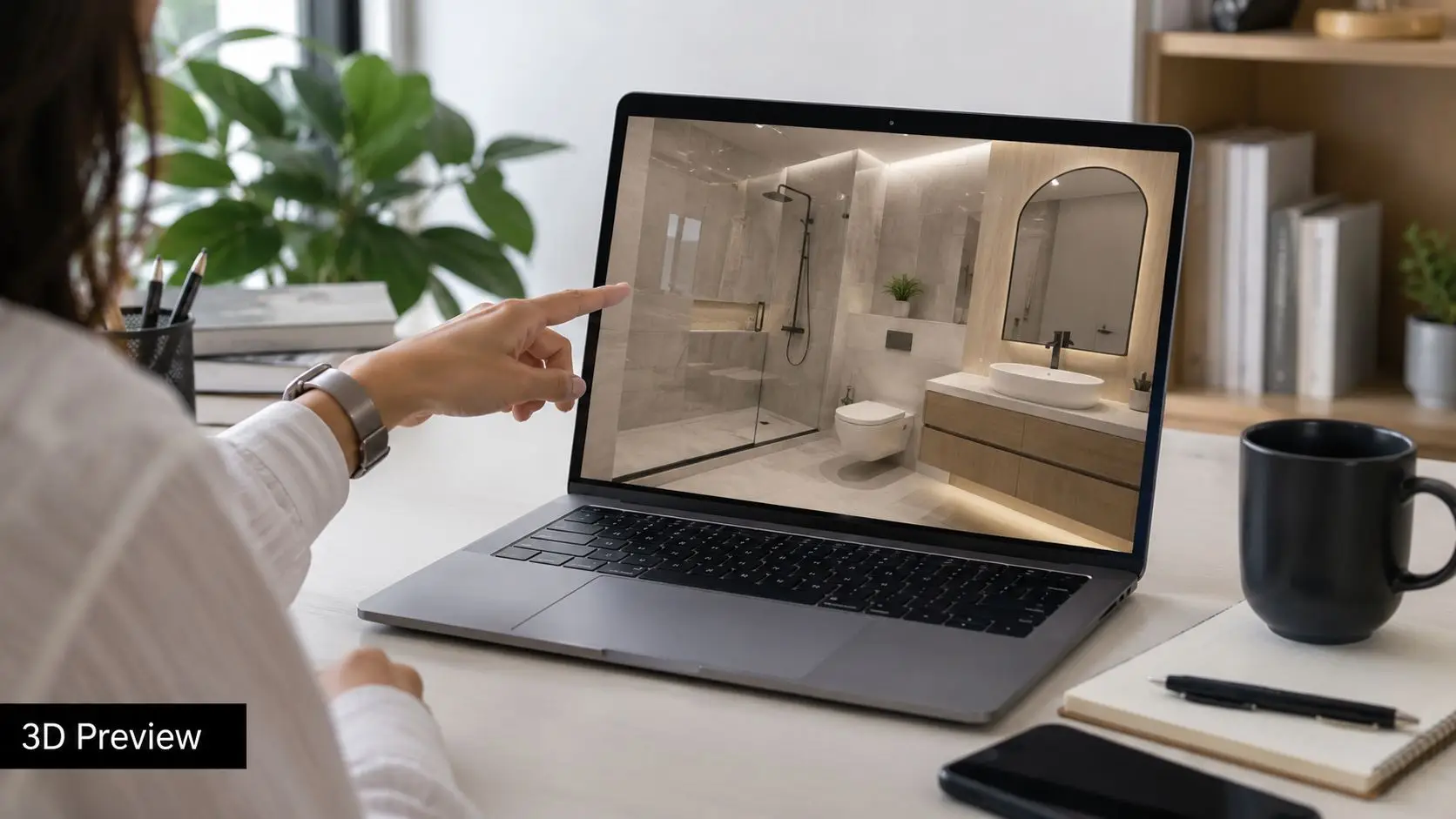
A strong small ensuite design is not just a set of ideas pulled from inspiration photos. It needs to be tested at full scale so you can see whether the vanity depth is too aggressive, whether the toilet pan crowds circulation, and whether the shower screen makes the room feel closed in. That is why 3D planning sits at the centre of the process here at SitePro Bathrooms. Clients get to assess the room properly before tiles are ordered, walls are lined, or plumbing is shifted. It saves expensive corrections and gives much better control over the final result.

Design direction matters too. If you are weighing up finishes, joinery style, or a more current layout, these 2025 bathroom design trends for Australian homes show where compact bathrooms are heading. The key is applying those ideas in a way that fits the room, rather than forcing a look that only works in a larger space.

The eight concepts below focus on that exact balance. Each one is practical to build, suited to compact ensuites, and far more effective when reviewed in 3D before work begins. That is how good small bathrooms stop being a compromise and start feeling resolved.

1. Corner-Mounted Vanity with Floating Design

A modern floating wooden corner vanity with a white basin mounted in a minimalist grey bathroom.

You open a small ensuite door and the vanity is what sets the tone straight away. If that unit projects too far, the room feels cramped before you even step in. Put the vanity into the corner and lift it off the floor, and circulation improves fast.

That combination solves two common problems at once. It uses a part of the room that often does very little, and it keeps more floor visible, which helps the ensuite read as larger and cleaner. In practical terms, it also reduces that shoulder-check feeling you get when a standard vanity sits too close to the entry or shower line.

I use this layout regularly in apartment ensuites, narrow side-by-side plans, and older homes where existing plumbing does not leave much room to move. It suits compact rooms, but it still needs discipline. A corner vanity can look sharp in drawings and still fail on site if the basin overhang is too generous, the drawer hardware clashes with the wall, or the tap set-out is left unresolved until rough-in.

A few details matter here:

  • Keep the basin projection tight: A compact bowl protects elbow room and makes the bench more usable.
  • Choose a true floating unit: The visual gain comes from seeing floor area under the cabinet, not from shaving a few millimetres off the depth.
  • Use drawers where possible: In tight ensuites, drawers are easier to use than cupboard doors that swing into your body.
  • Resolve services early: Waste position, water points, power for mirrored cabinetry, and tile set-out all need to line up before wall linings go on.

The trade-off is storage. A corner unit rarely gives the same drawer width as a full straight vanity, so the joinery has to work harder. That is why I like pairing this idea with a mirrored cabinet or recessed storage elsewhere in the room, rather than asking one small vanity to do everything.

Practical rule: If the vanity sits in the first sightline from the door, keep it light, compact, and off the floor.

This concept is also one of the easiest to test properly in 3D before construction starts. At SitePro Bathrooms, we use that planning stage to check whether the corner angle feels refined or forced, whether the basin edge interrupts movement, and whether the mirror and lighting still sit comfortably on the wall. If you are reviewing 2025 bathroom design trends for Australian homes, this layout is a strong way to bring in a current high-end look while keeping the room practical to build and use.

2. Compact Wall-Hung Toilet with Integrated Bidet

A wall-hung toilet is one of the smartest upgrades in ensuite designs small enough to feel crowded with standard floor-mounted fixtures. It clears the floor line, reduces visual bulk, and makes cleaning easier. In a room where every edge is visible, that matters.

The integrated bidet option is worth considering when you want more function without adding another fitting. Instead of trying to squeeze extra features into a layout that already struggles, you combine them into one better fixture.

What works and what doesn't

This is one area where sleek design can hide poor planning. The pan might look compact, but the in-wall cistern still needs proper wall depth, service access, and the right framing arrangement. If the builder or designer leaves that decision too late, the whole room starts making compromises for one product.

One Australian guide for small ensuites points to practical comfort targets of about 900 x 900 mm for a shower, roughly 800 mm clearance in front of the toilet, and around 700 to 800 mm circulation space, while also recommending a P3 to P4 slip rating under AS 4586 for bathroom floors in these spaces, as outlined in this Australian small ensuite article. That's the key conversation. Not just whether the toilet looks modern, but whether the room still feels comfortable and safe once everything is installed.

The best wall-hung toilet layouts don't just save space on paper. They preserve movement in front of the pan and stop the room from feeling pinched at the knees.

In practical terms, this suits compact Melbourne renovations where the brief is clean lines, easy cleaning, and less visual clutter. Brands with slim seats and concealed cistern systems often suit that look well. Add flush plates in a brushed finish and the room starts to feel considered rather than merely compressed.

If you're adding bidet functionality, make sure the electrical point is coordinated early. That's one of those details clients often assume can be “sorted later”. It can't, not cleanly.

3. Wet Room Layout with Frameless Shower Enclosure

A modern, small ensuite bathroom featuring a walk-in wet room shower with beige tiled walls and floating vanity.

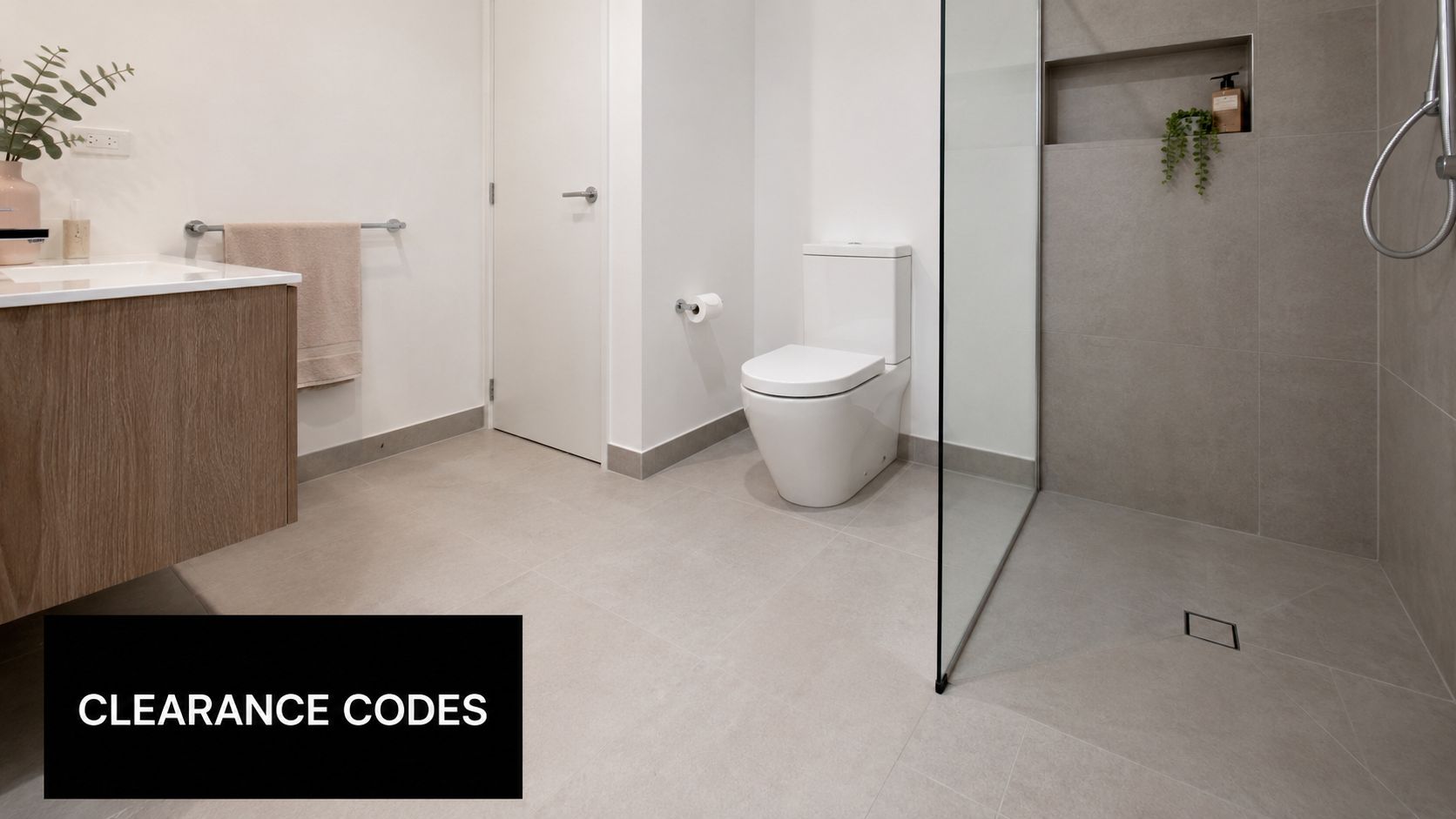
When a small ensuite feels boxed in, removing the shower cubicle can completely change the room. A wet room layout opens the floor, simplifies the lines, and lets the eye travel from wall to wall without interruption. That's why this approach keeps turning up in modern bathrooms with a luxury feel.

Frameless glass is the key part. Even a minimal fixed panel can do the job without creating a heavy visual barrier. In small rooms, the absence of chunky framing and shower hobs often makes a bigger difference than the actual floor area.

The trade-offs you need to respect

Wet rooms look effortless when they're done well. They're not effortless to build. Falls to drains, waterproofing transitions, floor levels, ventilation, and tile selection all have to be handled properly from the start.

A consistently cited benchmark for compact ensuites is the use of floating vanities, wall-mounted toilets, and larger-format tiles to increase perceived and functional space. Larger tiles reduce grout lines and help the room feel more continuous and easier to clean, as described in this ensuite design inspiration guide. In a wet room, that advice is particularly useful because too many visual breaks can make the floor feel messy and smaller than it is.

I'd also say this plainly. Wet rooms aren't ideal for every client. If you hate wiping down glass, dislike open shower spray, or have poor ventilation in the existing structure, a conventional screened shower may be the better move.

  • Use a linear drain: It makes tile set-out cleaner and simplifies the visual line.
  • Choose slip-conscious floor finishes: A beautiful floor that feels risky when wet is a bad specification.
  • Model the water zone in 3D: At this point, clients often realise whether they want fully open or semi-screened.

If you're exploring designing an ensuite, this is one of the layouts where visualisation pays for itself fast. You can test splash zones, sight lines, niche placement, and whether the room still feels warm rather than clinical.

4. Vertical Storage Solutions with Floor-to-Ceiling Cabinetry

Storage is usually the first thing people underestimate in a small ensuite. They focus on the shower, vanity, and tiles, then realise too late there's nowhere to hide daily clutter. The result is a room that looked clean at handover and messy two weeks later.

Tall cabinetry fixes that, but only if it's handled with restraint. Floor-to-ceiling joinery can make a compact room feel organised and premium, or it can make it feel like a cupboard with plumbing. The difference comes down to depth, finish, and how much open visual relief you leave in the design.

How to stop it feeling bulky

I prefer one tall storage zone rather than several medium-height units scattered around. A single vertical tower near the vanity or over the toilet wall keeps the room cleaner to read. In family homes, it's often the best way to separate daily-use items from backup products, cleaning stock, and spare towels.

A good setup usually includes:

  • Closed lower storage: This hides practical items that never improve the look of the room.
  • Lighter upper sections: Open shelving or mirrored fronts reduce the visual weight.
  • Integrated lighting: Soft cabinet lighting helps the space feel designed, not overbuilt.

For investors and landlords, this kind of storage can be a strong practical win because it improves usability without demanding more floor space. For owner-occupiers, it supports that high-end hotel feel where everything has a place.

In a small ensuite, clutter doesn't just look untidy. It makes the room feel smaller every day.

This is also where 3D design is useful for proportion checks. A cabinet can look sensible on plan and still dominate the room once visualized and rendered. I'd always rather adjust width, handle style, or colour before manufacturing than stand on site wishing it looked less heavy.

5. Pocket Door and Bi-Fold Entrance Solutions

Some of the worst small ensuites are not too small. They're just losing usable area to a swinging door. If the door arc clashes with the vanity, toilet, or a person standing at the basin, the room will always feel awkward no matter how stylish the finishes are.

A pocket door fixes that by taking the door out of the room entirely when open. A bi-fold can also work where the wall cavity can't be used. Neither option is universal, but both are far better than forcing a hinged door into a layout that doesn't want one.

Best use cases in older Victorian homes

In established suburbs, ensuite footprints are often shaped by what the original house allows. You're working around existing studs, drainage points, windows, and robe walls. That's exactly where a pocket door earns its keep. It can free up the wall where the vanity should go, or stop the entry from colliding with the toilet zone.

What I look for first:

  • Wall cavity availability: Pocket doors need clean coordination with plumbing and electrical work.
  • Privacy needs: Frosted or solid options change the feel of the adjoining room.
  • Maintenance access: Hardware quality matters. Cheap tracks become a long-term annoyance.

Bi-folds are the fallback when wall conditions are against you. They're not as integrated, but a well-made unit can still solve an entry problem without chewing up room inside the ensuite.

This is one of those changes clients often underestimate because it's “just the door”. Then they see the 3D layout with and without the swing path and the decision becomes obvious. If the entry is currently making the room feel cramped, changing the door type can transform the layout before a single tile is chosen.

6. Pedestal Sink Alternatives with Wall-Mounted Trough Sinks

Pedestal basins belong in some bathrooms. They don't belong in most small ensuites. They leave you with no meaningful storage, expose plumbing that often looks fussy, and rarely deliver enough bench utility for real daily use.

A wall-mounted trough sink is a better answer when you want a lighter look without falling into the no-storage trap of a pedestal. It gives you a slim profile, a stronger designer edge, and enough basin length to feel generous even when the room isn't.

Where this style earns its place

This works well in guest ensuites, minimalist apartments, and high-end renovations where the client wants a cleaner architectural line than a standard vanity provides. It can also suit narrow rooms where a conventional cabinet would feel too boxy.

To make it practical, pair it with something else that carries the storage load:

  • Add a recessed mirror cabinet: That keeps products hidden without making the room feel heavy.
  • Use wall-mounted accessories: Towel rails, soap ledges, and robe hooks need to be deliberate.
  • Keep the plumbing neat: Bottle traps and exposed pipework need to look intentional, not leftover.

The trough style also plays nicely with premium tapware. A wall mixer above a slim white basin, paired with stone-look tile and a large mirror, gives a compact ensuite a proper designer bathroom finish.

The mistake is treating this as a shortcut fixture. It isn't. If you remove under-basin cabinetry, the rest of the room has to compensate. In a well-planned ensuite, that trade-off can look excellent. In a poorly planned one, it turns into bench clutter and nowhere to put anything.

7. Mirror Wall Illusion and Lighting Integration for Spatial Perception

A small ensuite can be technically well laid out and still feel mean. That's usually a lighting problem, a mirror problem, or both. Good spatial perception doesn't come from one trick. It comes from how reflective surfaces, shadow lines, and task lighting work together.

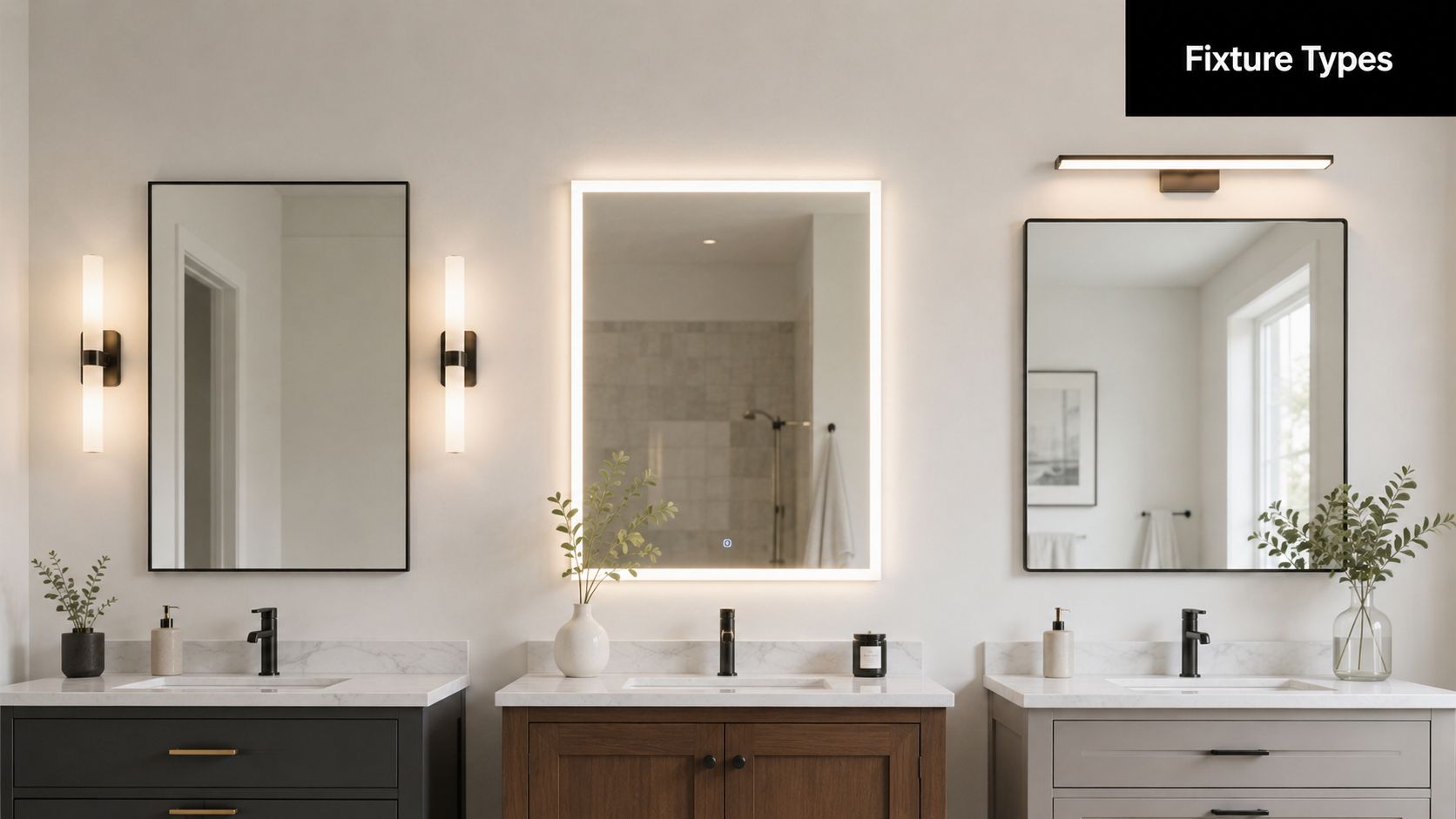
Large mirrors are one of the fastest ways to improve ensuite designs small in footprint but short on visual depth. They bounce light, widen the room visually, and reduce the stop-start effect created by too many materials or joinery breaks.

Make the mirror do more than reflect

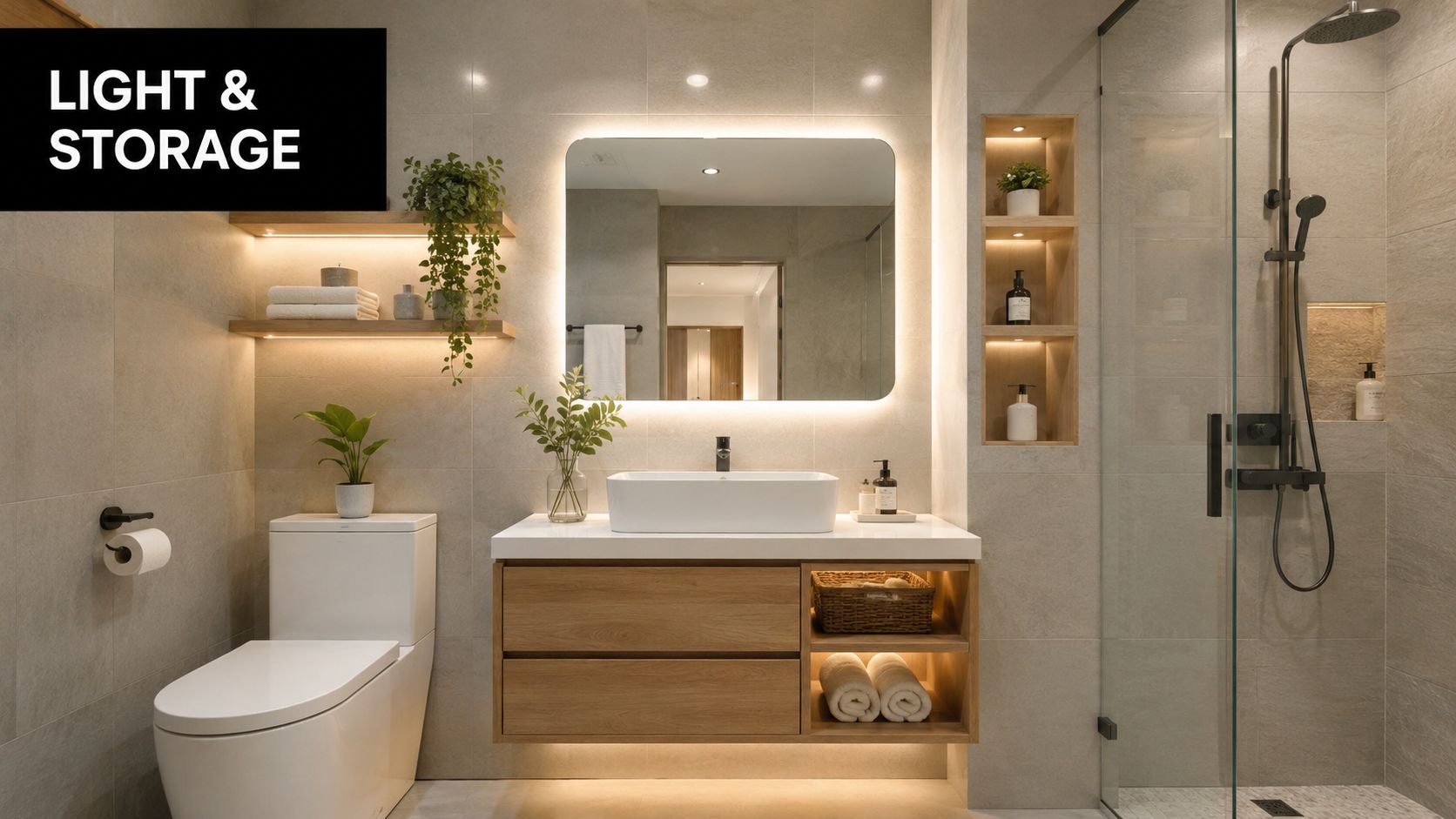
Backlit mirrors are especially effective in compact modern bathrooms because they soften the room and remove the harshness you often get from a single ceiling fitting. They also help a vanity wall feel more architectural. That's useful when you want the room to read as a complete design rather than a collection of products.

A few principles hold up well on site:

  • Run the mirror wider than the basin: It broadens the wall and stops the vanity area feeling undersized.
  • Layer lighting: Use mirror lighting for faces and ceiling or niche lighting for overall mood.
  • Control glare: Gloss everywhere can make a compact room feel harder, not larger.

“If you can't change the footprint, change how the eye reads the room.”

This is exactly the kind of move that benefits from 3D visualisation. Clients often think they want a certain mirror size until they see it in relation to the vanity, tile joints, and wall lights. Once it's modelled properly, the better choice usually becomes clear. For inspiration, these small ensuite bathroom ideas show how proportion and visual balance can carry just as much weight as the fixture list.

8. Recessed Niche Storage and Integrated Shelving Systems

Recessed storage is one of the cleanest ways to make a compact ensuite work harder without making it feel busier. Instead of adding baskets, shelves, or bulky shower caddies, you build the storage into the wall line itself. The room stays tidy, and the essentials stay close at hand.

Done properly, niches look custom and calm. Done badly, they look like afterthoughts. Position, size, waterproofing, and tile set-out all matter.

The best places to integrate it

Shower walls are the obvious location, but they're not the only one. A niche above the toilet can hold spare paper and small accessories. A slim recess beside a vanity can take daily-use bottles without crowding the benchtop. In narrow ensuites, these details often make the difference between a room that feels organised and one that always feels full.

I usually recommend multiple smaller recesses over one oversized opening. That keeps the wall composition neater and helps avoid a big dark rectangle cutting through the tile work.

Good niche design usually comes down to:

  • Set it out with the tiles: The niche should look like it belongs to the wall, not like it was carved in later.
  • Match depth to product use: Shampoo bottles need a different depth from decorative shelving.
  • Light it carefully: A subtle LED strip can improve the finish if the wiring is planned early.

This is another feature that sells the value of proper pre-construction planning. In 3D, you can test whether the niche aligns with the screen, mirror, tapware, and grout lines. That lets you create a result that feels intentional. In a compact ensuite, that level of coordination is what separates a decent renovation from a polished one.

8-Point Small Ensuite Design Comparison

A small ensuite can look great on a mood board and still fail once real dimensions, wall framing, plumbing positions, and door swings come into play. This comparison is more useful if it helps you choose what suits your room, your budget, and your renovation appetite before work starts.

That is also where 3D visualisation earns its keep. We can test these options against the actual footprint, sight lines, tile set-out, and service locations, so you are not choosing ideas in isolation.

Design option Best suited to Build risk level Maintenance level Resale appeal Best checked in 3D before approval
Corner-Mounted Vanity with Floating Design Very tight rooms where every walkway matters Medium. Plumbing location and wall support need to be right Low to medium. Easy floor cleaning, but corner clearances need thought Strong, especially in modern apartments and compact homes Vanity depth, drawer opening, mirror size, and how much circulation space it actually gives back
Compact Wall-Hung Toilet with Integrated Bidet Premium compact ensuites and projects already opening walls High. In-wall services, power, and access planning must be resolved early Medium. Cleaning is easy, servicing concealed components needs planning High if the rest of the ensuite matches the quality level Pan position, wall thickness, carrier fit, and whether the added cost is justified in the room
Wet Room Layout with Frameless Shower Enclosure Larger small ensuites, accessible layouts, and high-end renovations High. Falls, drainage, waterproofing, and ventilation must all work together Medium to high. More open spray zones mean more regular wiping and good extraction High in the right property, but only if detailing is excellent Shower spray path, drain placement, glass extent, and whether the room feels open or exposed
Vertical Storage Solutions with Floor-to-Ceiling Cabinetry Households that need real storage without using more floor area Medium. Joinery, lighting, and service locations need coordination Low to medium. Great for keeping clutter away, but tall cabinets need practical internal layout Strong for family buyers and owner-occupiers Door swings, overhead bulk, bench clearance, and whether the joinery makes the room feel tighter
Pocket Door and Bi-Fold Entrance Solutions Layouts where a standard swing door wastes usable space Medium. Pocket doors involve more wall work. Bi-folds are simpler but less refined Medium. Hardware quality matters over time Good, particularly where the space gain is obvious Door clearances, wall cavity conflicts, privacy, and how the entry feels from the bedroom
Pedestal Sink Alternatives with Wall-Mounted Trough Sinks Minimalist ensuites and shared morning-use bathrooms Low to medium. Fixing and waste placement are straightforward if planned well Medium. Open plumbing and splash zones need regular attention Moderate. Style-driven choice, not right for every buyer Tap placement, splash control, under-sink usability, and whether open space feels practical or empty
Mirror Wall Illusion and Lighting Integration Dark or visually cramped ensuites that need a stronger sense of width Low to medium. Electrical rough-in and exact mirror sizing matter Low. Good lighting lasts well if specified properly Strong, because buyers notice light and perceived space quickly Reflections, glare, shadow lines, and whether the mirror improves the room or just duplicates clutter
Recessed Niche Storage and Integrated Shelving Systems Almost any small ensuite that lacks bench or cupboard space Low to medium. Framing, waterproofing, and tile set-out need accuracy Low. Easy daily use if sizing is right Good, because it reads as built-in and intentional Height, width, product fit, grout alignment, and how each recess sits with screens, fittings, and tile lines

The key value in a comparison like this is seeing the trade-offs side by side. Some ideas save space but cost more to build. Others are affordable and effective, but only if they are proportioned properly. In a compact ensuite, one wrong call on depth, clearance, or wall build-up can undo three good decisions.

That is why we model these choices before construction. A 3D bathroom plan shows which options improve the room, which ones only look good in isolation, and where a smaller adjustment will produce a better finished result.

Ready to Visualise Your New Bathroom?

The best small ensuites aren't designed by guesswork. They're solved through planning. That means understanding what the room can realistically do, which fixtures earn their place, and where the pressure points are before demolition starts. In compact bathroom renovations, that process matters even more because there's less room to absorb mistakes.

A lot of homeowners come in with strong new bathroom ideas, but they haven't yet tested how those ideas perform together. They might love the look of a floating vanity, a wall-hung toilet, a wet room shower, and full-height tile. The problem is that every one of those choices affects movement, sight lines, service positions, and storage. Until you model it properly, you're still making assumptions.

That's why 3D visualisation is such a valuable planning tool. It bridges the gap between inspiration and buildability. You can see whether the vanity depth is too aggressive, whether a pocket door is worth the wall work, whether recessed niches line up cleanly, and whether your tile choice helps the room feel larger or more fragmented. It also helps couples and families make decisions faster because everyone is looking at the same outcome instead of imagining different versions of it.

From a builder's perspective, that early clarity reduces avoidable compromises on site. It's much easier to adjust a layout in design than to move plumbing after rough-in or discover a door clashes with a towel rail after installation. For clients, it means fewer surprises and better confidence in the final result. For registered builders unlimited in capability and scope, it's also the cleanest way to align design intent with construction reality.

SitePro Bathrooms approaches modern bathrooms and designer bathrooms with that practical mindset. The job isn't just to make the ensuite look better. It's to make it work better every single day. That applies whether you're upgrading a tired master ensuite in Highett, reworking a compact apartment bathroom, or improving a property for long-term rental appeal.

If your current ensuite feels cramped, dated, or hard to use, start with the plan, not the demolition. SitePro Bathrooms delivers end-to-end bathroom renovations backed by professional 3D design, so you can walk through your space before construction begins and refine the details with confidence. If you're ready to turn smart ideas into a finished room that feels calm, functional, and properly resolved, contact the Highett-based team for a detailed consultation and quote.

  • siteprobathrooms

Best Bathroom Heated Towel Rail: 2026 Buyer’s Guide

A lot of people start looking at a bathroom heated towel rail after the same moment. It's a cold Highett morning, the shower's done its job, and the towel hasn't. It's still damp from yesterday, the room feels chilly, and what was meant to be a fresh start feels a bit second-rate.

That's why this choice matters more than it first appears to. In real bathroom renovations, a heated towel rail affects layout, electrical rough-in, wall framing, tile set-out, and how the room feels to use every day. It sits right at the intersection of comfort, compliance, and design. If you get it right, it feels effortless. If you get it wrong, you end up with a rail that looks good on the wall but doesn't suit the room, costs more to run than expected, or lands in the wrong spot for Victorian installation rules.

Why a Heated Towel Rail Is More Than Just a Luxury

The idea that a heated towel rail is just a decorative extra is fairly modern. Its roots go back to the early 20th century, when central heating became more common and bathrooms started using heated pipework and radiator-style forms as part of the room's actual heating setup. By the 1920s, cast-iron water-heated towel warmers, often called bath radiators, were already established, which is why they still make the most sense when they're treated as part of the bathroom plan rather than an afterthought, as outlined in this history of towel radiators and bath radiators.

That history still shows up in renovation work now. The homeowners who are happiest with the result usually aren't the ones chasing a “luxury item”. They're the ones solving a practical problem. They want towels to dry properly, less lingering dampness in the room, and a bathroom that feels considered rather than pieced together.

What changes in day-to-day use

A good rail improves the routine in small but noticeable ways:

  • Towels dry between uses so they don't sit heavy and cold on the hook.
  • The room feels more finished because the rail becomes part of the wall layout, not just another accessory.
  • Storage pressure can ease in compact bathrooms because towels can hang and dry where they're used.

A bathroom heated towel rail works best when it solves a daily annoyance, not when it's chosen purely because it looks high-end in a showroom.

That's especially true in bathroom renovations where wall space is limited. In many modern bathrooms and designer bathrooms, every fitting has to earn its place. A rail can do that, but only if it matches the room, the power plan, and the way your household uses the bathroom.

Understanding the Types of Heated Towel Rails

Most homeowners are really choosing between electric and hydronic. The right answer depends less on fashion and more on what's happening behind the walls.

Electric rails

Electric rails are the most straightforward fit for many renovations. They're commonly used when you want a dedicated bathroom heated towel rail without tying it into a larger whole-home heating setup.

In practice, there are a few versions you'll come across:

  • Hardwired electric rails are fixed into the electrical system and give the cleanest finish because there's no visible lead.
  • Plug-in styles can suit some situations, but they're often less elegant in a fully renovated bathroom and can create placement limits.
  • Dry-element and liquid-filled designs behave a bit differently in how they warm up and hold heat, but from a renovation point of view the bigger issue is usually safe location, cable planning, and access for installation.

Electric rails are also often chosen because they can be controlled independently. That matters if you only want heat in the bathroom at certain times rather than running a broader heating system.

Hydronic rails

Hydronic rails connect into a plumbing-based heating system. They make the most sense when the house already uses hydronic heating or the renovation includes a broader services upgrade.

For most standard bathroom renovations, hydronic introduces more coordination. You're dealing with pipe runs, plumbing access, and how that rail ties into the rest of the heating design. It can be a very tidy solution in the right home, but it isn't usually the simplest retrofit.

Heated towel rail comparison

Feature Electric (Hardwired) Hydronic
Heat source Mains electrical connection Hot water from a hydronic system
Best fit Renovations, retrofits, apartments, single-bathroom upgrades Homes already using or adding hydronic heating
Installation trade-off Requires electrical planning and compliant placement Requires plumbing integration and broader system coordination
Control Usually easier to run independently Usually linked to the wider heating setup
Design flexibility Often simpler to position where wall space allows Depends on pipe routing and system layout
What can go wrong Wrong location, visible cabling, poor wall prep Overcomplicated install for a bathroom-only need

What works in real renovations

If the project is a standard Victorian bathroom renovation, electric is often the more practical path because it's easier to integrate into the room without redesigning other services. If the rail is being included in a larger, high-spec project with coordinated heating throughout the home, hydronic can make sense.

The mistake is choosing the technology first and asking how to make it fit later. Start with the house, the bathroom layout, and the way the room will actually be used.

That's where a lot of new bathroom ideas either become practical or fall apart. A finish sample on a display wall doesn't tell you whether the system suits your renovation.

Choosing the Right Size and Heat Output

A rail that looks right on the wall can still disappoint on a cold Highett morning. I see that often in renovations where the homeowner expects one slim rail to dry two towels and warm the whole bathroom. Sometimes it will. Often it will not.

The first decision is the job you want the rail to do. If the goal is warm, dry towels, a smaller unit can be perfectly reasonable. If you want it to help heat the room as well, size needs to be based on the bathroom itself, not just the available wall space or the look of the rail.

Room volume matters, but so does heat loss. A compact ensuite with good insulation, no large window, and an internal wall position will usually need far less output than a larger family bathroom with an external wall, older glazing, and higher ceilings. That trade-off gets missed in a lot of showroom decisions.

In many Victorian homes, especially older ones, a heated towel rail is best treated as a comfort add-on rather than the primary room heater. That is the sensible expectation to set from the start.

What changes the result

A rail's real performance depends on the room around it:

  • External walls lose heat faster in winter.
  • Windows make a noticeable difference, especially if the glazing is older.
  • Ceiling height increases the volume of air that needs warming.
  • Insulation and draught sealing affect whether the warmth stays in the room.
  • Towel load matters too. A rail carrying thick, folded towels will feel less effective than one with lighter towels spaced properly.

A larger rail is not always the better answer. Bigger units need enough clear wall area, need to suit the proportions of the room, and can push up running costs if they are used for long periods. In a tight bathroom, an oversized rail can also create practical issues around reach, cleaning, and the placement of mirrors, vanities, or shower screens.

That is why I usually weigh three things together:

  1. How many towels need to hang properly
  2. Whether the rail is expected to assist with room heating
  3. What the wall and bathroom layout can realistically accommodate

For homeowners planning modern bathroom renovations, style and practicality must align. A narrow designer rail may suit the palette and proportions, but if the room runs cold and the rail only holds one towel comfortably, the choice will feel wrong after the first winter.

Victorian compliance also affects the decision indirectly. If the rail is electric, the final position and wiring method have to work with bathroom electrical safety rules, which can limit where a larger unit can go. So the right size is not only about heat output. It also has to fit the room, the use case, and the installation rules without forcing compromises later.

Design and Placement in Modern Bathrooms

A bathroom heated towel rail shouldn't feel bolted on. In well-resolved modern bathrooms, it looks like it belonged there from the first sketch.

A modern, minimalist bathroom design featuring a floating wooden vanity, walk-in glass shower, and elegant ambient lighting.

The design decision usually starts with shape and finish. Ladder styles remain popular because they're practical and easy to use. Vertical rails can work beautifully in tighter layouts where horizontal wall space is limited. Chrome stays versatile, while matte black and brushed brass often suit newer palettes and more obviously designer bathrooms.

If you're collecting inspiration for modern bathroom renovations, the rail should be considered alongside tapware, shower frame finish, vanity hardware, mirror lighting, and robe hooks. It's part of the composition, not a separate layer.

Placement that feels natural

The best position is usually close enough to the shower or bath that the towel is easy to grab, but not so close that it compromises safety, crowding, or overall wall balance.

Good placement often follows these principles:

  • Reach matters. You want the towel close to the wet area, but not where it interferes with entry, exit, or cleaning.
  • Sightlines matter. A rail can anchor a wall, but it shouldn't fight with the vanity, mirror, niche, or feature tile.
  • Towel drop matters. Make sure the towel can hang freely without brushing the toilet, vanity edge, or floor.

What tends to work best

In practical terms, these placements usually age well:

  • Near the shower return wall where towels are easy to access but the rail isn't the first thing you see.
  • Adjacent to the vanity zone when the room needs balanced vertical elements.
  • On a clear wall opposite the wet area in tighter bathrooms where circulation is more important than direct reach.

In small bathrooms, the right rail often does double duty. It warms the towel, fills an otherwise awkward section of wall, and reduces the need for separate towel storage.

Design mistakes worth avoiding

Some choices look good on a plan and disappoint in person:

  • Overly wide rails on narrow walls can make the room feel cramped.
  • Dark finishes in low-light bathrooms can disappear unless they connect with other fixtures.
  • Rails behind doors often end up inconvenient, even if they technically fit.
  • One tiny rail in a busy family bathroom can create more frustration than comfort.

A strong result comes from treating the rail as part of the joinery, lighting, and tile set-out discussion. That's how new bathroom ideas become rooms that still work properly once people are living with them.

Installation Rules for Victorian Bathroom Renovations

Generic advice usually becomes unhelpful. In Victoria, the rail can't just go wherever it looks good. Location, wiring method, wall preparation, and bathroom zoning all matter.

A luxurious victorian style bathroom interior displayed next to six essential installation rules for renovation projects.

For electric heated towel rails, independent guidance recommends keeping them at least 60 cm away from water-contact areas such as bathtubs and showers, with placement preferably in zone 3, as explained in this electric towel rail installation and zoning guide. In practical renovation work, that single siting decision can affect tile layout, switch position, cable route, and whether the chosen rail is even suitable for the wall you had in mind.

The compliance mindset

Homeowners often ask whether a rail can sit “just next to” the shower or vanity. The answer depends on the exact room layout, the product, and the installation details. What matters is that the decision gets made before waterproofing and tiling are locked in.

The safe approach is simple:

  • Keep electric rails away from direct water exposure.
  • Plan the exact fixing point early so the electrician and builder can coordinate rough-in.
  • Check the product's rating and installation method against the intended location.
  • Don't assume a stylish product is suitable for every bathroom zone.

This is not a styling question first. It's a compliance question first.

Why pre-tiling planning matters

Once the wall is sheeted, waterproofed, and tiled, moving the rail becomes expensive. If the original position doesn't comply, you may need rework that affects finished surfaces and other fixtures.

Pre-tiling planning should cover:

  1. Cable path for a hardwired unit.
  2. Wall support so fixings land properly and don't rely on guesswork after tiling.
  3. Clearance from shower, bath, and vanity based on the actual site dimensions.
  4. Switching and control location so operation is convenient and compliant.

If the design also includes extra electrical work, details like downlights in a bathroom should be considered at the same time. Wet-area electrical planning works best when it's coordinated, not handled as a series of isolated decisions.

Who should do the work

A hardwired electric rail needs to be handled as part of a properly managed renovation. That means the electrical connection should be completed by a licensed electrician, while the overall works should be coordinated within the renovation by the appropriate qualified professionals.

For homeowners comparing bathroom renovations, this is one of the reasons working with registered builders unlimited or another suitably registered and appropriately licensed renovation team matters. The rail itself may look like a small fixture, but it crosses into bigger project issues: compliance, sequencing, and accountability.

Common installation mistakes

These are the problems that cause frustration most often:

  • Choosing the wall before checking the zone.
  • Leaving the decision until after tiles are selected.
  • Forgetting wall depth and fixing points for concealed installations.
  • Expecting the rail to sit right beside the shower because it seems convenient.
  • Assuming any electrician can solve a poor layout decision after the room is finished.
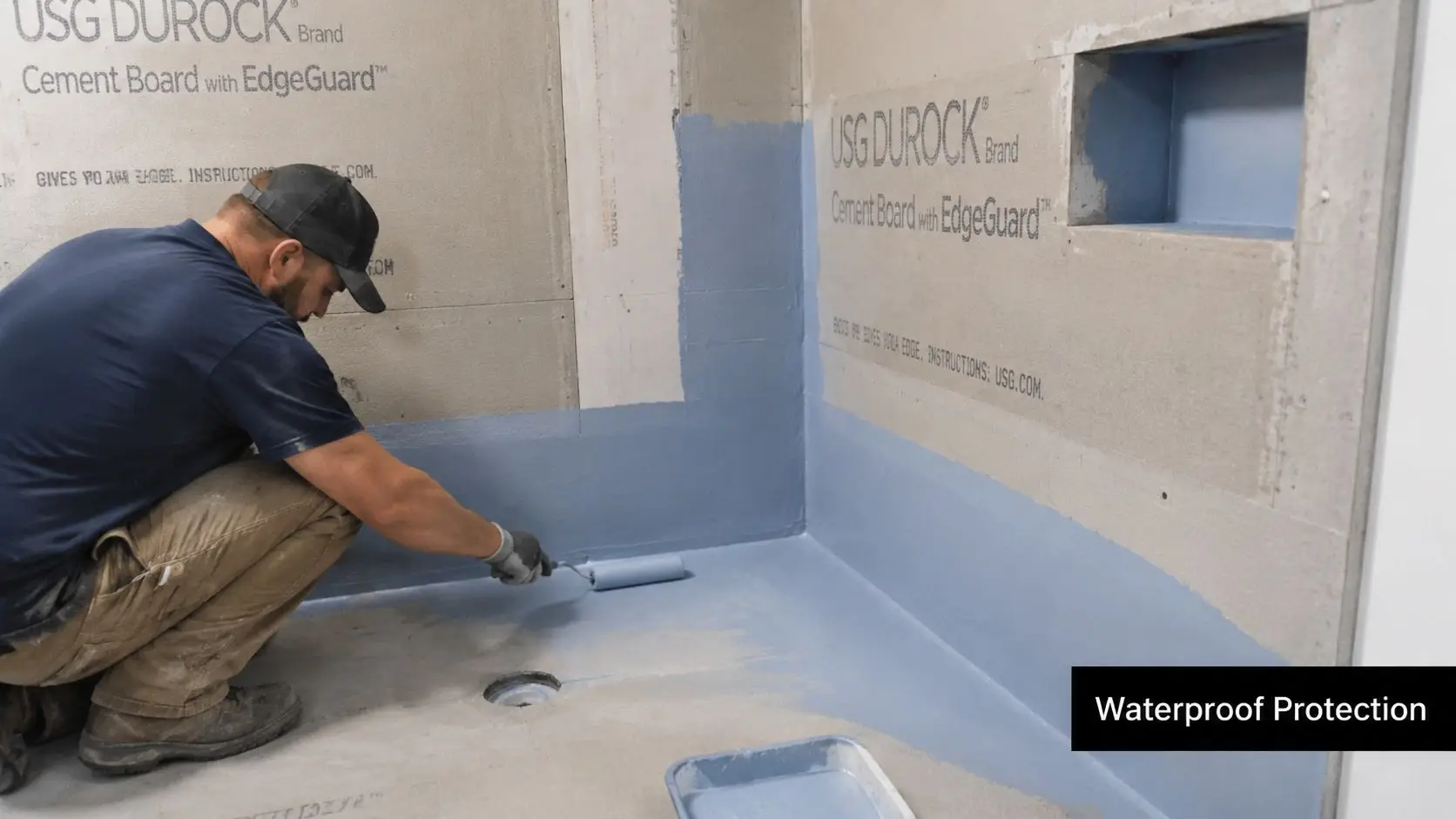
A bathroom heated towel rail should never be the item that forces compromise late in the build. If the placement is right on paper and right on site, the room comes together cleanly.

Comparing Energy Use and Running Costs

A heated towel rail usually costs less to run than many homeowners expect, but only if it is chosen for the job it can do. In Highett bathrooms, the mistake I see most often is treating the rail like a room heater when it was really bought to dry towels and take the edge off a cold space.

A comparison chart showing energy consumption and monthly costs for a portable air conditioner versus a window fan.

Cost depends on wattage, how many hours it runs, and whether the bathroom already has decent heating and extraction. A low-watt rail on a timer can be a sensible addition. A larger rail left on all day, in a bathroom that already has other heating, is where the value starts to fall away.

What you are really paying for

Most households are not buying a heated towel rail to heat the whole bathroom. They are paying for three practical benefits:

  • Drier towels between uses
  • Less damp smell in cooler months
  • A bit more comfort after showering

That can be worth it, especially in winter, but only if expectations are realistic. If the room itself feels cold because of poor ventilation, no ceiling heat, or a generally underpowered heating setup, the rail will not fix the bigger problem.

Where running costs get pushed up

Usage habits matter more than the product brochure.

Costs usually climb when:

  • the rail runs for long periods without a timer
  • the wattage is higher than the household needs
  • the rail is used as the main heat source for the room
  • towels are draped so heavily that drying is slow and the rail stays on longer

In practical terms, timed control is often the difference between a rail that feels worthwhile and one that becomes an annoyance on the power bill. For many Victorian renovations, I recommend deciding on the control method early, because a hardwired setup with the right switching arrangement is usually a better long-term result than relying on people to remember to turn it off.

The Victorian renovation angle that gets missed

Running cost should never be looked at in isolation from compliance and installation method. In Victoria, if the rail is hardwired, it needs to be planned and installed properly as part of the bathroom works. That affects not just safety and legal compliance, but also how easy it is to control the rail efficiently once the room is finished.
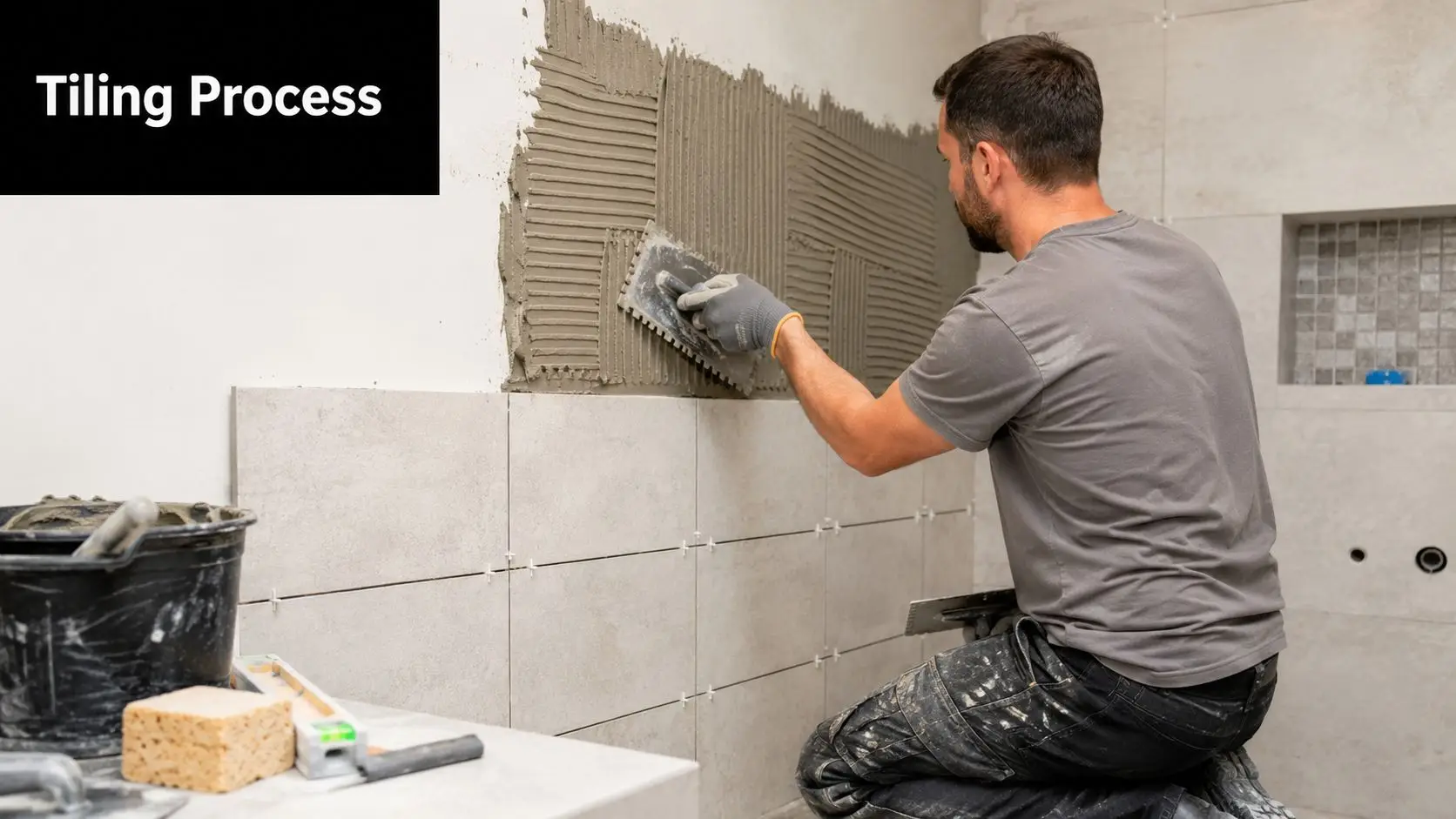
This is also one of the practical reasons to understand why using a registered builder matters for your bathroom renovation. Good coordination leads to better placement, proper rough-in, and controls that suit how the household will use the bathroom.

When a heated towel rail is good value

A rail generally makes sense when the household reuses towels, wants them dry by the next use, and does not want to rely on the rail to warm the entire room.

It makes less sense where:

  • the bathroom already performs well without it
  • the choice is driven only by appearance
  • another heating or ventilation upgrade would solve the problem more effectively

That is the trade-off many design-focused articles skip. A bathroom heated towel rail can be stylish and useful, but in a Highett renovation it should still earn its place through sensible running costs, proper controls, and a compliant installation.

Key Questions to Ask Your Bathroom Renovator

The right conversation with your renovator will usually tell you more than a product display ever will. If they can answer these clearly, the project is probably being thought through properly.

Questions that reveal whether the planning is solid

  • How will you confirm the rail location is suitable for the bathroom layout and wet-area rules?
  • Will the wall need extra framing or fixing support before sheeting and tiling?
  • Is this rail being chosen mainly for towel drying, room heating, or both?
  • What controls will be used so it isn't left running unnecessarily?

Questions about sequencing

Some of the most expensive errors happen because the rail gets considered too late. Ask:

  • When does the final rail position need to be locked in?
  • Will the electrician rough in before waterproofing and tiling?
  • How will the rail position affect tile set-out and other fittings on that wall?
  • If the chosen model doesn't suit the location, when will that be picked up?

Questions about who is responsible

A bathroom renovation runs better when responsibilities are clear from the start.

A bathroom heated towel rail is a small item with oversized consequences. Ask the right questions early, and it becomes one of the most satisfying details in the room. Ask them too late, and it can turn into an avoidable compromise.


If you're planning a bathroom renovation in Highett or elsewhere in Victoria, the right heated towel rail choice comes down to three things: compliant placement, realistic performance, and a design that suits how you live.

  • siteprobathrooms

Bathroom Tiling Cost in 2026: A Highett & VIC Guide

You pick a tile at the showroom, multiply it by the floor and wall area, and the number looks manageable. Then the quote comes back higher than expected because bathroom tiling in Victoria is priced as a wet-area system, not just a tile supply rate.

That catches plenty of Highett homeowners out.

The visible tile is only one part of the cost. A proper bathroom tiling price can also include substrate correction, sheet or liquid waterproofing, screeding to falls, corner detailing, trims, movement joints, and the labour to cut neatly around wastes, tapware, niches, and fixtures. If the room is out of plumb, the floor is uneven, or there is damage from a previous leak, the work increases before the first tile goes down.

This is the part generic online calculators usually miss. They often start and finish with square metres and tile grade. Real bathroom quotes in Victoria need to account for compliance, the condition of the existing surfaces, and whether the bathroom can be tiled as-is or needs rectification first.

In practice, the cheaper quote is not always the cheaper job. If waterproofing is skimmed over, falls are poor, or the substrate is not prepared properly, the repair cost later is usually far higher than the saving upfront.

The useful way to assess bathroom tiling cost is to look at the full installed result. You are paying for a surface that bonds properly, drains properly, meets wet-area requirements, and still looks right years after handover.

Your 2026 Guide to Bathroom Tiling Costs in Highett

A homeowner in Highett picks a tile at the showroom, works out the wall and floor area, and expects the tiling cost to sit close to that number. Then the quote arrives with waterproofing, screeding, substrate repair, trims, and labour for detailed cuts around fixtures. That gap is where a lot of budget blowouts start.

Bathroom tiling cost is rarely just about tile selection. In Victoria, the all-in price depends on whether the room is ready to tile, whether the wet area needs new waterproofing, and how much prep is required to get a straight, durable finish. A bathroom with uneven walls, poor falls, or damage from an old leak will cost more to tile properly than a room with sound, tile-ready surfaces.

That is why tiling can shift the whole renovation budget.

A proper tiling allowance needs to cover more than visible finishes. It often includes:

  • Wet-area preparation to suit Victorian compliance requirements
  • Waterproofing and detailing at junctions, corners, penetrations, and shower areas
  • Substrate correction where walls are bowed, floors are uneven, or sheeting needs replacement
  • Screeding to falls so water drains correctly to the waste
  • Labour for layout and cutting around niches, tapware, toilets, vanities, and floor wastes
  • Trims, movement joints, grout, and adhesives suited to the tile type and room conditions

The tile is the part you see. The preparation and installation standard are what determine whether the bathroom performs properly.

Early budgeting gets easier once three decisions are clear.

  1. How much of the room is being tiled
    Floor-only tiling, shower-only tiling, and full-height wall tiling sit in very different cost ranges.

  2. Whether this is a full renovation or a retile over corrected surfaces
    Demolition, rectification, and new waterproofing add scope before tiling starts.

  3. What finish standard you expect
    A simple stacked layout with standard-size tiles is priced differently from large-format porcelain, herringbone patterns, mitred edges, or feature niches.

For Highett homeowners, the useful question is not “what do tiles cost per square metre?” The better question is “what will it cost to supply and install a compliant, long-lasting tiled bathroom in the condition my room is in?” That is the number that lets you budget properly.

Understanding Tiling Prices Per Square Metre

A budgeting guide for tiling costs featuring tiles, a tape measure, a calculator, and a notebook.

A Highett homeowner might walk into a tile showroom, choose a tile at a sharp retail price, then assume the bathroom budget is largely sorted. It rarely works that way. Per-square-metre pricing is useful for comparing tile products, but it does not tell you the all-in cost of getting a bathroom tiled properly in Victoria.

The first split to make is simple. There is a supply rate for the tile itself, and there is an installed rate for a finished bathroom surface. Those numbers are not close once you allow for cutting, setting out, adhesives, trims, grout, wastage, and the extra labour that bathrooms always involve.

Supply cost versus installed cost

Supply-only pricing usually follows the tile category and finish:

Tile choice What it usually means for budget
Basic ceramic Lower material cost and often suitable for straightforward wall applications
Porcelain Higher material cost in many cases, with better suitability for floors and wet areas
Large-format or specialty finishes Higher product cost, plus more handling, more care during install, and tighter substrate tolerances

Installed pricing changes for a different reason. It reflects how much labour and site work the tile choice creates.

A low-cost tile can still be expensive to install if it needs a lot of cuts, chips easily, or has shade variation that slows the set-out. A more expensive tile can sometimes install faster if the room is simple and the format suits the space.

That trade-off catches people out.

Why square metre rates can mislead in bathrooms

Open floor areas are one thing. Bathrooms are full of interruptions.

A tiler is working around tap penetrations, wastes, corners, nib walls, toilet pans, vanities, shower screens, niches, and often out-of-square walls. Two bathrooms with the same tile area can price very differently because one is a clean rectangle and the other is a tighter room with more detailing.

Large-format tiles are a good example. They can give a clean, high-end finish with fewer grout joints, but they also demand flatter walls and floors, careful handling, and cleaner layout decisions. If you are considering that look, it helps to understand the practical side of installing large-format porcelain tiles before you compare rates by square metre alone.

A practical way to use per-metre pricing

Use square metre rates as a screening tool, not as the final budget.

They are helpful for comparing one tile product against another and for getting an early feel for whether you are shopping in an entry-level, mid-range, or premium bracket. They are less useful for working out the full cost of a compliant bathroom tiling job, because bathrooms are priced by area and by complexity.

In real quotes, the labour rate per square metre tends to rise when the job includes:

  • More cuts and edge detailing
  • Smaller rooms with more fixtures packed in
  • Patterned layouts or feature walls
  • Large-format tiles that need flatter substrates
  • Mitred corners, niches, or trimless finishes
  • Higher wastage from layout matching or tile variation

The better budgeting question

The useful question is not the retail tile rate on the box. The useful question is what each square metre will cost once the tile is installed straight, drained properly, finished neatly, and backed by the preparation the room needs.

That is why online tile calculators regularly understate bathroom costs for Victorian homeowners. They measure area. They do not measure condition, detailing, access, compliance, or finish standard.

What a Professional Tiling Quote Actually Includes

A homeowner in Highett gets three tiling quotes for the same bathroom and the prices are miles apart. In most cases, the gap is not just margin. It is scope. One quote allows for demolition, substrate correction, waterproofing, trims, silicones, waste, and final detailing. Another may only cover laying tiles onto whatever surface is already there.

That is why a proper quote needs to show the full installed scope, not just a square metre rate and a total.

The line items that should be there

A bathroom tiling quote should break the work into clear parts so you can see what is being supplied, what is being prepared, and what is being installed. In Victoria, that matters because a wet area is not priced properly unless the quote deals with both finish and compliance.

A professional quote will usually include:

  • Demolition and waste removal
    Removing old tiles, adhesives, bedding, damaged sheet substrate, and site rubbish. Disposal costs are real, especially where access is tight or the home is occupied.

  • Substrate preparation
    Floors and walls need to be flat, sound, and suitable for tiling. That can mean levelling, patching, replacing sheet substrate, correcting falls, or straightening walls before any waterproofing or tile laying starts.

  • Waterproofing scope
    This should be listed clearly, not buried inside a vague labour line. A proper quote identifies the wet areas being treated, the system being used, and who is responsible for that work.

  • Tile laying labour
    Set-out, cuts, alignment, junctions, penetrations, edges, and finishing around fixtures all sit in this part of the price. The quality of these tasks highlights a tiler's experience.

  • Adhesives, grout, trims, and sealants
    These materials affect performance and finish. Cheap quotes often leave trims or silicone work unclear, then add them later as variations.

  • Final clean and finishing
    Grout clean-up, silicone joints, checking edges, and leaving the bathroom ready for the next trade or handover.

If the quote is too brief, ask for it to be broken down. A one-line allowance makes it hard to compare one contractor with another, and it gives you very little protection if the scope shifts once work begins.

What cheap quotes often leave out

The lowest number can still become the highest final cost if the missing work appears later as variations.

The most common omissions are:

  1. Rectification of uneven or unsuitable surfaces
  2. A defined waterproofing allowance
  3. Tile trims, mitres, or exposed edge treatment
  4. Waste removal and disposal
  5. Responsibility for tile supply, breakage, and wastage
  6. Silicone sealing to corners and junctions
  7. Detailing around niches, floor wastes, and tap penetrations

These details matter more with larger tiles. Flatness tolerances are tighter, lippage is harder to hide, and the set-out needs more care around fixtures and corners. If you are considering installing large-format porcelain tiles, the quote should allow for the extra preparation and handling time rather than pricing them like a standard small-format wall tile.

A good bathroom tiling quote shows where the money is going, what condition the room is assumed to be in, and what happens if that assumption is wrong.

What to check before you accept the price

Read the quote as if you are checking for gaps, not just totals.

A useful quote answers these questions clearly:

Quote question Why it matters
Who supplies the tiles Avoids disputes about lead times, breakage, shade variation, and wastage
What condition the quote assumes Stops surprises if demolition reveals rotten sheeting, poor falls, or movement
What preparation is included Shows whether flattening, patching, or substrate replacement has been allowed for
How waterproofing is handled Confirms the wet-area work has been priced and assigned properly
What finish standard is included Edge trims, mitred corners, niches, feature patterns, and layout centring all affect labour
What is excluded Helps you compare quotes on a like-for-like basis before signing

In practice, the best quote is usually the clearest one. It gives you an all-in picture of the tiling cost for your bathroom, including the hidden work that generic calculators skip and Victorian wet areas regularly need.

Key Factors That Raise or Lower Your Tiling Budget

An infographic listing key factors that raise or lower the overall budget for professional bathroom tiling projects.

A bathroom can look straightforward on paper, then cost more once the old finishes come off. In Highett and across older Melbourne homes, the swing factor is often the condition underneath the tiles, not the tile you picked in the showroom.

That is why online tile calculators regularly miss the mark. They tend to price visible area. A real bathroom tiling budget in Victoria also has to allow for substrate correction, wet-area preparation, waterproofing, set-out, and the detailing needed to leave the room compliant and usable.

The biggest budget movers

If the price changes after inspection or demolition, these are usually the reasons.

Surface condition

Tiling goes faster, and gives a better result, when the room is straight, solid, and dry. If the floor is out of level, the falls are wrong, the walls are bowed, or the sheeting is not suitable, those issues need to be fixed before tiling starts.

This is one of the biggest cost variables because prep work is hard to see in a finished bathroom, but it controls the finish. Poor surfaces lead to lipping, bad drainage, cracked grout lines, and ongoing movement.

Waterproofing scope

Waterproofing is part of the job, not an optional extra. In a Victorian bathroom renovation, the quote needs to reflect the wet-area requirements, the number of junctions and penetrations, and how much area is being treated.

A simple room with standard shower detailing is quicker to handle than one with recessed niches, an awkward hob, multiple tap penetrations, or transitions into adjoining flooring.

Bathroom size and layout

Small bathrooms often cost more per square metre than larger ones. There is less room to work, more cutting around fixtures, and less tolerance for set-out mistakes. A compact room can still carry the fixed labour involved in protection, preparation, waterproofing, and clean-up.

That is one reason a small bathroom remodel cost in Melbourne can surprise homeowners during early budgeting.

Tile format and finish quality

Standard ceramic or porcelain in a practical size is usually quicker to install than large-format tiles, rectified edges, mosaics, or patterned layouts. The tighter the joints and the more visible the alignment, the more labour goes into the set-out and installation.

Finish expectations matter too. Centre lines, niche alignment, balanced cuts at corners, and tidy edge treatment all take time. Good tiling is not just sticking tiles to a wall. It is planning the layout so the room looks right when everything is in.

Features that add labour quickly

Area alone does not set the price. Detailing does.

These common items can lift the tiling budget even when the room size stays the same:

  • Shower niches with internal falls, waterproof detailing, and clean edge finishing
  • Feature walls where pattern alignment and cut placement are obvious at eye level
  • Strip drains and custom falls that require tighter floor-setting accuracy
  • Boxed services, nib walls, and hob walls that create extra corners and edge work
  • Decorative patterns or mixed tile sizes that slow the set-out and increase cutting

If the room needs correction before tiling, the preparation work will often drive the cost more than the tile selection.

What helps keep tiling costs under control

The most cost-effective bathrooms are usually the ones that work with the room, not against it. Simple choices often produce the best value.

Budget-friendly factor Why it helps
Straightforward layout Reduces difficult cuts and speeds up set-out
Standard tile sizes Makes handling, cutting, and spacing more predictable
Sound, suitable substrate Cuts down on rectification before waterproofing and tiling
Fewer custom details Reduces labour on trims, corners, returns, and alignment
Practical fixture locations Avoids extra penetrations and awkward finishing around fittings

The cheapest quote is not always the lower-cost outcome. If preparation, waterproofing, or substrate repairs are underallowed, the room still needs that work done. A clear all-in quote usually gives a better picture of what the bathroom will cost to tile properly in Victoria.

Sample Tiling Budgets for Common Bathroom Sizes

Homeowners usually want a working number, even if it's only a planning range. The safest way to treat any early estimate is as a budgeting guide, not a fixed quote, because the final scope depends on what demolition and site inspection reveal.

The table below uses broad Victorian planning logic based on common bathroom types and the installed bathroom tiling cost ranges already discussed for standard work. It's intended to help you think in terms of project scale, not to replace a measured quote.

Estimated Tiling Budgets for Highett Bathroom Renovations 2026

Bathroom Type Tiled Area (Approx.) Estimated Tiling Cost Range
Small powder room Small floor area with limited wall tiling Often toward the lower end of standard installed rates, but small-job labour premiums can make the effective rate feel higher
Standard family bathroom Moderate floor area plus shower walls and selected full-height walls Often sits in the middle of the standard installed range, depending on preparation and tile format
Master ensuite with premium detailing Larger wall-and-floor coverage, more features, higher finish expectations Often pushes above standard ranges once complex detailing, premium tiles, or extra prep are involved

How to use these examples properly

A powder room can surprise people. It looks small, but fixed setup time still applies. Protection, cutting, transport, mixing, cleanup, and finishing don't shrink in proportion to the floor area.

A family bathroom is where many modern bathrooms sit. If the layout is straightforward and the tile choice is sensible, this is often the easiest room to budget with some confidence.

An ensuite with niches, feature walls, large-format tiles, or high-end trims moves closer to a custom installation. That's where the bathroom tiling cost starts to follow detail level more than room size.

The better way to estimate your own bathroom

If you're trying to plan your budget before requesting quotes, use these checks:

  • Measure likely tiled surfaces, not just floor area
  • Decide whether walls are full height or part height
  • List every feature such as niches, benches, hobs, and feature patterns
  • Assume older bathrooms may need more prep
  • Compare the tiling spend to the full renovation spend, not in isolation

For very compact spaces, it also helps to look at how layout choices affect the whole renovation budget, not just the tiling package. This guide to small bathroom remodel cost is useful when the room is tight and every decision has a bigger cost impact.

How to Achieve a Designer Look Without Overspending

A stylishly decorated living room featuring a sofa, coffee table, and bookshelves, demonstrating budget-friendly interior design tips.

A common mistake is spending heavily on the tile you can see, then being forced to cut corners on the work underneath it. In Victoria, the better result usually comes from the reverse. Keep the waterproofing, preparation, falls, and finishing to a proper standard, then use tile selection and placement to create the visual impact.

That is how bathrooms stay on budget without looking cheap.

Spend in the areas that do the visual work

Most bathrooms do not need a premium tile on every surface. They need a clear focal point and a consistent background around it.

Good value choices often include:

  • One feature wall behind the vanity or in the shower, instead of wrapping the full room
  • A statement tile in a niche while the main wall tile stays simple and easier to lay
  • A clean floor tile that supports the rest of the room rather than competing with it
  • Matching field tiles in larger wall areas where repetition helps the room feel calm and more expensive

This approach controls both supply cost and labour time. It also reduces the risk of the room feeling busy once fittings, mirrors, lighting, and joinery go in.

Choose tile formats with the installation in mind

Homeowners often focus on the tile price per box. The labour side can shift the total just as much.

Small tiles, mosaics, and patterned layouts usually mean more set-out time, more joints, more cuts, and more finishing. Large-format tiles can create a cleaner look, but only if the walls are prepared properly and the tile size suits the room. A cheap quote can ignore that reality. A proper quote allows for the substrate work needed to get a flat, lasting finish.

If you are still weighing up style against practicality, this guide on how to choose bathroom tiles will help you narrow down finishes that suit both the room and the budget.

Where to simplify without losing the designer feel

These are the trade-offs I recommend most often:

  1. Use one hero tile
    Let one tile carry the look, then support it with a simpler wall or floor tile.

  2. Be selective with patterns
    Herringbone, kit-kat, and mosaic finishes can look excellent, but they should be used in small areas where the detail earns its cost.

  3. Keep trims and edges neat
    Straight lines, tidy junctions, and well-finished corners usually make a bathroom look more expensive than an extra feature tile does.

  4. Choose consistency over novelty
    A restrained colour palette and repeatable tile size are easier to execute well and easier to live with long term.

  5. Do not cut the compliance items
    The waterproofing system, screed falls, sheet preparation, and movement joints are part of the finished bathroom cost. They are not optional extras you remove to afford a better-looking tile.

A designer result usually comes from restraint, not from loading the room with costly materials and complicated patterns. In real projects around Highett, the bathrooms that age best are the ones with a solid base, a simple layout, and a few smart feature decisions.

How We Calculate Your Tiling Cost and Next Steps

The most useful tiling quote starts on site, not from a message with rough room dimensions. Bathroom tiling cost depends on what's being tiled, what sits underneath it, and what standard of finish you want.

A proper process usually starts with an inspection of the existing bathroom. The measurements matter, but so does everything around them. The condition of the substrate, access into the home, whether the room is occupied, the tile format you prefer, and whether the job is part of a full renovation all affect the final scope.

What should happen before you get a price

A transparent quoting process should include:

  • Site measure and inspection so the quote reflects the actual room
  • Discussion of finish level from practical family bathroom to high-detail modern bathroom
  • Clarification of supply responsibilities so there's no confusion about owner-supplied tiles
  • Itemised inclusions covering preparation, waterproofing, tiling, and finishing

If the project is a full renovation rather than a re-tile, the quote should also reflect builder coordination, sequencing, and compliance responsibilities. That matters when plumbing, electrical, carpentry, waterproofing, and final fit-off all interact.

Why itemised quotes matter

Homeowners don't need a long quote because they enjoy paperwork. They need it because hidden gaps create disputes and budget blowouts.

The clearest quote usually creates the smoothest renovation. Everyone knows what's included, what isn't, and what standard is being priced.

If you're planning bathroom renovations in Highett and want a measured, itemised proposal from a local team, SitePro Bathrooms can help. As a specialist renovation company and registered builders unlimited service provider for end-to-end bathroom projects, the team works through design, scope, construction, and finish with a clear quoting process. You can contact SitePro Bathrooms to arrange a consultation and get a personalized estimate for your space.


Your Bathroom Tiling Questions Answered

Is bathroom tiling usually charged by the square metre

Often, yes, but that only tells part of the story. Square-metre pricing is useful for broad budgeting, yet bathrooms also carry fixed labour, setup, compliance, and detailing costs that don't scale neatly with area. That's why two bathrooms with similar coverage can still price differently.

Why is the tile shop total so different from the renovation quote

Because the tile shop total is usually only the material purchase. A renovation quote may also include demolition, waste removal, substrate correction, waterproofing, adhesives, trims, grout, sealants, laying labour, and final finishing. In wet areas, that difference is normal.

Can I save money by supplying my own tiles

Sometimes, but only if the tile is selected properly and ordered correctly. Owner-supplied tiles can create delays if there are shortages, shade variation, damaged boxes, or the wrong format for the intended area. If you do supply your own tiles, confirm lead times, edge trims, slip suitability, and whether extra pieces are available if breakage occurs.

Is a small bathroom always cheaper to tile

Not necessarily. A small bathroom can have more cuts, tighter access, and more concentrated detailing around fixtures. Small jobs also still need setup, protection, waterproofing, and finishing. The room may be compact, but the trade sequence is still substantial.

Is it risky to tile over existing tiles

It can be. Sometimes the old surface isn't sound, sometimes levels become problematic, and sometimes the existing substrate or waterproofing is already the issue. Tiling over failed or suspect work doesn't remove the problem. It hides it. In many bathroom renovations, removal and proper rebuild is the safer path.

Do large tiles always cost more to install

Not always. Large-format tiles can require better substrate preparation and more careful handling, but they may also reduce grout joints and simplify the visual finish. Whether they save or cost more depends on the room shape, access, and how flat the surfaces are.

Should I choose mosaics for the shower floor

They can work well in the right application, especially where more joints help follow falls, but they are also more labour-intensive. They create more grout lines and usually take longer to install neatly. They should be chosen because they suit the floor and the design, not because they seem like a simple decorative add-on.

Why does waterproofing matter so much in the quote

Because bathroom tiling is only as good as the wet-area build-up underneath it. If the substrate and membrane aren't right, the finished tile surface won't protect the room properly. Waterproofing is not the place to trim the scope.

Do I need a registered builder or just a tiler

If you're doing isolated tiling work, a tiler may be the main trade you engage. If you're doing a full bathroom renovation, a registered builder matters because the project usually involves coordination across demolition, carpentry, waterproofing, plumbing, electrical, and final fit-off. For homeowners wanting one accountable party managing the full result, that builder-led approach is often the safer path.

How do I keep costs under control without ending up with a plain bathroom

Be selective, not cheap. Use a feature tile in a focused area. Keep the main field tile simple. Avoid patterns that add labour unless they genuinely improve the design. Prioritise clean set-out, good lighting, and proper detailing. That combination usually delivers a better result than spending heavily on every surface.

What's the best first step if I'm still in the ideas stage

Start with the room you have. Measure it, list what you want changed, and separate must-haves from nice-to-haves. Then get a site-based, itemised quote that reflects your specific bathroom, not a generic calculator result. That's when the bathroom tiling cost becomes clear and manageable.

  • siteprobathrooms

Remodelling Bathroom Cost: A 2026 VIC Guide

A standard bathroom renovation in Victoria typically costs A$20,000 to A$35,000, but the full range is wider. A cosmetic update can sit around A$10,000 to A$20,000, while a premium designer bathroom can run A$35,000 to A$50,000+.

If you're standing in a tired bathroom in Highett, looking at cracked grout, a swollen vanity, old fittings and poor storage, you're probably asking the same question most homeowners ask first. What will this cost once the walls open up and the trades start?

That's the right question. Bathroom renovations look small on a floor plan, but they're one of the most trade-heavy spaces in any house. The room might be compact, yet the work still pulls in demolition, plumbing, waterproofing, tiling, electrical, ventilation, fit-off and final finishing. That's why remodelling bathroom cost in Victoria is rarely about tiles alone. Labour, compliance and layout decisions shape the number far more than many online guides admit.

Embarking on Your Bathroom Renovation Journey

A lot of bathroom projects start the same way. You don't wake up one morning thinking about waterproof membranes or plumbing rough-ins. You notice the shower leaks onto the floor, the vanity no longer suits the family, or the room feels stuck in another decade.

For some homeowners, it's a lifestyle issue. The bathroom doesn't function well before work, school drop-off, or evening routines. For others, it's a property decision. They know the room needs attention before leasing, refinancing or selling.

That pressure has become more common. In Australia, renovation activity climbed sharply through the early 2020s, and bathrooms remained one of the most frequently upgraded rooms because they combine daily utility with strong resale appeal. Market guides also show that full-scale bathroom work often starts around A$20,000 and can go beyond A$50,000.

Why homeowners get caught out

The surprise usually isn't that a bathroom costs money. It's where the money goes.

A homeowner may begin with a simple idea. Replace the shower, update the vanity, retile the floor, maybe make it look more like the modern bathrooms they've saved online. Then the quote lands and the number feels high. In most cases, that's because the visible finishes are only one layer of the job.

Bathrooms are expensive because they stack specialist work into a very small footprint.

In older Melbourne homes, that stack can get heavier. Once demolition starts, you may uncover uneven framing, outdated plumbing, moisture damage, poor ventilation or earlier work that doesn't meet current expectations. None of that is glamorous, but it matters more than the colour of the tapware.

The real starting point

If the layout stays broadly the same and you want a full, durable result, most homeowners should budget for the middle of the market, not the bottom. That means thinking in terms of a proper renovation rather than hoping for a bargain figure that won't survive first contact with trade labour and compliance.

A practical way to frame it is:

  • Cosmetic work: best for a bathroom that's tired but sound
  • Mid-range renovation: best for most family bathrooms that need full replacement
  • Premium renovation: best for layout changes, custom finishes and designer bathrooms

That's the point where planning starts to save money. Not by cutting essentials, but by making the right decisions early.

Typical Bathroom Remodelling Costs in Victoria for 2026

In Victoria, the cleanest way to estimate remodelling bathroom cost is by scope, not just by room size. National guidance places a basic cosmetic update at A$10,000 to A$20,000, a mid-range renovation at A$20,000 to A$35,000, and a premium bathroom at A$35,000 to A$50,000+. It also notes that the total can rise quickly once plumbing, waterproofing, tiling and electrical work are combined.

The three cost tiers most homeowners work within

Some bathrooms only need a refresh. Others need a complete strip-out and rebuild. The difference matters because the labour profile changes fast.

Tier Estimated Cost Typical Inclusions
Basic cosmetic update A$10,000 to A$20,000 Surface-level improvements, selected fixture replacement, limited layout change, simpler finishes
Mid-range full renovation A$20,000 to A$35,000 Full strip-out, new waterproofing, new tiling, replacement fixtures, vanity, shower, toilet, lighting, ventilation improvements
Premium or designer renovation A$35,000 to A$50,000+ Layout changes, premium finishes, custom joinery, feature lighting, larger-format tiles, upgraded shower or bath zone, more detailed design work

What each tier usually means in practice

Basic isn't the same as cheap. It generally suits bathrooms where the layout still works and the hidden structure is in decent shape. The goal is to improve appearance and function without turning the room inside out.

Mid-range is the bracket most family bathroom renovations fall into. This is usually the sweet spot for homeowners wanting a fresh room, better storage, reliable waterproofing and a finish that feels current without pushing into luxury detailing.

Premium is where the brief starts to change. The bathroom may become an ensuite retreat, a statement room, or part of a larger home upgrade. This is also where new bathroom ideas often move from inspiration to cost reality, especially when custom joinery, feature tile work or plumbing relocation enters the picture.

Why small bathrooms don't always mean small budgets

A compact bathroom can still cost more than expected because a lot of key costs don't shrink in proportion with floor area. Demolition still happens. Waterproofing still has to be done correctly. Trades still need to come through the room in sequence.

Practical rule: A small bathroom can use fewer materials, but it doesn't avoid the fixed labour and compliance steps that make bathrooms expensive.

That's why comparing your room to someone else's by square metres alone rarely helps. Two bathrooms of similar size can land in very different cost brackets depending on access, age, layout and finish level.

The Anatomy of a Bathroom Renovation Budget

The best way to read a bathroom quote is to stop thinking of it as one number and start reading it like a build sequence. Every line item represents a trade, a material package, or a compliance step that has to happen in the right order.

A laptop screen displaying a detailed project budget breakdown spreadsheet on a wooden desk with architectural plans.

If you want to sense-check your project early, a bathroom renovation cost calculator for Melbourne projects can help frame the budget before you start requesting formal quotes.

What sits inside a real renovation budget

When homeowners ask where the money goes, this is usually what they're paying for:

  • Demolition and removal
    Old tiles, fittings, sheeting, shower screens, vanity units and waste all have to come out safely and be removed from site.

  • Carpentry and preparation
    Walls and floors often need straightening, backing, repairs or adjustment before new materials can go in properly.

  • Plumbing rough-in and fit-off
    This covers the service work behind the walls and the final installation of fixtures.

  • Electrical and ventilation
    Lighting, power points, exhaust systems and any upgrades to the room's functionality sit here.

  • Waterproofing
    This is one of the most important stages in any Australian bathroom. If it's rushed or skipped, the nice-looking finishes above it won't matter for long.

  • Tiling and tile preparation
    This includes substrate preparation, tile laying, grout work, trims and finishing detail.

  • Joinery and vanity work
    Off-the-shelf vanities cost less. Custom cabinetry usually gives a better fit and storage result but pushes the budget up.

  • Fixtures and accessories
    Toilet, tapware, shower fittings, mirror, basin, bath, rails and hardware all add up.

  • Project coordination
    Good sequencing matters. Delays between trades cost time, and rushed handovers often cost quality.

Why bathrooms feel expensive even when they're small

Australian guidance puts a standard bathroom at about A$25,000 to A$35,000, and a key reason is that a bathroom is a high-trade-density space. Waterproofing, plumbing, electrical work, tiling and fit-off overlap tightly, and labour represents a major share of the total. It also notes that moving fixtures or altering plumbing layout materially increases spend because re-routing services, extra demolition and re-tiling are involved.

That aligns with what happens on site. A bathroom doesn't give trades much room to work, so every stage needs more precision. There's little tolerance for mistakes and no spare space to hide poor preparation.

What a homeowner should scan for in a quote

A quote should show enough detail that you can tell whether the builder has allowed for the full job or only the visible parts.

Look for these points:

Budget area What you want to see
Demolition Clear allowance for strip-out and waste removal
Waterproofing Explicit inclusion, not assumed or buried
Plumbing Whether fixtures stay in place or move
Electrical Lights, fan, power points and connection work
Tiling What surfaces are tiled and what finish is assumed
Fixtures Allowance level or nominated products
Joinery Custom, semi-custom or standard supply
Management Who coordinates the trades and defects process

If a quote looks low, check what's missing before you assume you've found value.

The cheapest quote often becomes the most expensive once variations begin. In bathroom renovations, omitted work doesn't disappear. It comes back later as a problem, a delay or a cost increase.

Key Factors That Drive Your Renovation Cost Up or Down

The total doesn't move randomly. A handful of decisions do most of the heavy lifting.

Some choices keep a project controlled and efficient. Others trigger a chain reaction across multiple trades. That's why two bathrooms with a similar footprint can finish far apart in final cost.

Keep the plumbing where it is if you can

The single biggest budget lever in many bathroom renovations is the layout. If the toilet, shower and vanity stay where they are, the project is usually cleaner, faster and easier to coordinate. Once you start moving them, the builder often has to open more of the room, reroute services and repair a wider area.

That's particularly relevant in Victoria because the labour side of the job often outweighs the savings you think you're making on fixtures.

Finish level changes the feel and the spend

There's nothing wrong with wanting a better-looking bathroom. In fact, many modern bathrooms get their impact from a few well-chosen upgrades rather than an all-out luxury spec.

Cost usually rises when you choose:

  • Larger or more complex tiles that demand more precise setting out
  • Custom vanities instead of standard units
  • Feature tapware and fittings with a higher finish level
  • Frameless glazing or statement baths that become focal points
  • Detailed niches, trims and lighting that increase installation time

The mistake is assuming every visible upgrade adds equal value. It doesn't. In many homes, better storage, better lighting and a cleaner shower layout improve daily use more than an expensive feature finish.

Older homes create more uncertainty

Highett and surrounding Melbourne suburbs have a broad mix of housing stock. Older bathrooms often hide the kinds of issues that don't show up in the first mood board.

These commonly include:

  • Moisture damage behind tiles or around the shower base
  • Out-of-square walls or floors that need correction
  • Previous patch-up work that has to be redone properly
  • Ventilation problems that contributed to mould or paint failure
  • Service access issues that slow down trade work

A bathroom renovation gets expensive fastest when the original room looked cosmetic, but the structure behind it wasn't.

Customisation versus restraint

Designer bathrooms are built on detail. Recessed storage, floating joinery, feature strips, special lighting and carefully layered materials can look excellent. But every custom move asks for more time, more coordination and often more risk control.

That doesn't mean you should avoid custom work. It means you should decide where it matters.

A restrained design usually spends money well in three places:

  1. Waterproofing and preparation
  2. A practical layout
  3. Durable finishes you won't regret in two years

The rest should support those priorities, not crowd them out.

Sample Budgets for Modern and Designer Bathroom Renovations

Examples help because they turn broad cost bands into real decisions. These aren't claims about a specific past project. They're realistic planning scenarios based on the cost ranges already discussed and the sort of choices Melbourne homeowners commonly make.

A modern, bright bathroom with double vanity, glass shower, and freestanding bathtub with gold hardware and accents.

If you're exploring higher-end inspiration, it helps to look at designer bathrooms in Melbourne with a practical eye. The question isn't just what looks good. It's which features justify their cost in your home.

The A$28,000 modern family bathroom

This is the kind of renovation many households should aim for first. The room is dated, the shower is tired, storage is poor, but the basic layout works. The smartest move is to keep the plumbing footprint largely intact and spend the money on a full rebuild with durable finishes.

The brief for a modern family bathroom usually looks like this:

  • A walk-in shower with simple, easy-to-clean detailing
  • A practical vanity with better drawer storage
  • Full waterproofing and fresh tiling
  • Updated lighting and ventilation
  • A more current look without drifting into overdesigned territory

The result feels completely new because the visible surfaces change, but the cost stays within a controlled range because the hidden services don't need major relocation.

A budget at this level usually leans on smart restraint:

Area Likely focus
Layout Mostly retained
Vanity Functional, clean-lined, not heavily customised
Tiles Durable and contemporary rather than highly specialised
Shower Better screen, fittings and drainage detail
Lighting Improved task and general lighting
Finish style Fresh, simple, low-maintenance

This is often the best-value category for families. It gives you the reliability of a full renovation and enough design improvement to feel modern without paying premium-room prices.

The A$55,000 designer ensuite

At the upper end, the job changes character. This isn't just about replacing what's there. It's about creating a room around experience, visual impact and custom detail.

A premium ensuite might include:

  • A freestanding bath
  • A larger frameless shower
  • Custom vanity joinery
  • Higher-end tile selection
  • Layered lighting
  • More sculptural fittings
  • A reworked layout for better flow

That's how a project pushes beyond the standard premium range and into a more bespoke build outcome. The price rises not because one item is outrageously expensive, but because many choices each add complexity.

Premium bathrooms cost more because almost every element asks more from the trades. More set-out. More finishing detail. More coordination.

The homeowner who gets good value here is the one who wants a genuine upgrade in daily use and design quality, not just a room full of expensive products.

Which example is right for you

If you're weighing new bathroom ideas, ask yourself three things:

  • Do I want a better bathroom, or a different bathroom?
  • Can I keep the layout and still solve the room's problems?
  • Will custom features improve how we use the space, or only how it photographs?

Those questions usually separate a strong mid-range renovation from a premium project that's worth its cost.

How to Save Money and Get Accurate Quotes in Melbourne

Saving money on a bathroom renovation doesn't mean chasing the lowest number. It means protecting the parts of the build that matter and trimming the parts that don't.

That starts with understanding where Victoria-specific costs often get missed. Australian guidance notes that many cost articles skip over local labour and compliance detail, even though licensed trades, plumbing relocation and waterproofing compliance are major cost drivers in Australian homes. It also highlights the value of asking what costs are usually missed in a first quote.

A person reviewing a detailed renovation cost estimate with architectural material samples on a desk.

Where to save without creating future problems

There are smart ways to cut cost, and there are false economies.

Smart savings usually include:

  • Keep the existing layout
    If the room functions reasonably well, this is often the best budget decision available.

  • Use simpler tile formats
    A clean porcelain tile can look sharp and reduce labour pressure compared with more intricate layouts.

  • Choose one feature, not five
    A statement mirror, vanity or wall tile can carry the design without forcing every finish into premium territory.

  • Prioritise storage and lighting
    These usually improve the room more than decorative extras.

  • Be careful sourcing your own fixtures
    It can work, but only if dimensions, lead times and compatibility are confirmed before site work begins.

For homeowners wanting a tighter plan, these budget bathroom renovation ideas for Melbourne homes are useful when the goal is controlled spending rather than stripped-back quality.

What usually goes wrong with cheap quotes

The low quote often wins because it feels simple. Then the problems start.

A quote may look attractive because it leaves out one or more of the following:

  • Detailed demolition allowances
  • Adequate waterproofing scope
  • Realistic tile preparation
  • Ventilation upgrades
  • Waste removal
  • Clear fixture allowances
  • Project management responsibility
  • Variation rules if hidden issues appear

That's where homeowners get caught. The quote wasn't wrong in arithmetic. It was incomplete in scope.

Why builder oversight matters

For full bathroom renovations, coordination matters as much as craftsmanship. A tiler can tile. A plumber can plumb. But a successful bathroom renovation depends on sequencing, accountability and one party taking responsibility for the whole room.

That's why many homeowners feel safer with a registered builder unlimited managing the project rather than a loose collection of individual trades. The issue isn't just convenience. It's clarity around scope, timing, defects and who owns the final result.

A good quote should clearly state:

Quote item Why it matters
Scope of works Shows exactly what is and isn't included
Product assumptions Prevents disputes about fixture level
Compliance items Confirms the job accounts for critical wet-area work
Timeline Helps you plan access and disruption
Variation process Reduces surprises if hidden issues appear
Warranty detail Clarifies post-completion support

Don't judge a bathroom quote by the bottom line first. Judge it by how well it predicts the real job.

That's the difference between a quote that sells a project and a quote that prepares you for one.

ROI, Resale Value, and Your Renovation Questions Answered

A bathroom renovation is partly a comfort decision and partly an asset decision. In suburbs like Highett, buyers and renters notice bathrooms quickly because they use them every day and because defects in wet areas can signal broader maintenance issues.

A well-executed renovation usually does two things at once. It improves how the home lives now, and it protects the property from looking tired against competing listings. That doesn't mean every upgrade needs to be luxurious. It means the room should feel clean, functional, durable and coherent with the rest of the home.

Where value usually comes from

The bathrooms that hold value best tend to get the basics right:

  • A layout that works
  • Storage that suits daily use
  • Reliable waterproofing and ventilation
  • Finishes that feel current but not trendy for trend's sake
  • Workmanship that looks neat in every corner and junction

Modern bathrooms usually perform well in the market because they appeal broadly. Designer bathrooms can also add strong appeal, but only when the spend matches the home and the suburb.

Common renovation questions

Do I need a council permit for a bathroom renovation in Victoria

Sometimes yes, sometimes no. It depends on the scope of work and whether structural changes or other approval-triggering work are involved. This is something you should confirm before build decisions are locked in.

How disruptive is a bathroom renovation

More disruptive than many people expect, because the room is out of service while multiple trades move through in sequence. The practical issue isn't only noise. It's access, dust control, scheduling and whether your household has another usable bathroom.

What's the difference between waterproofing and tiling

They are not the same thing. Waterproofing is the protective system behind the finished surface. Tiling sits over prepared substrates and waterproofed areas. Good tiles do not replace proper waterproofing.

Is a cosmetic update enough

Sometimes. If the bathroom is structurally sound, the layout works and there are no underlying moisture or compliance concerns, a cosmetic update may be sensible. If the room has deeper issues, surface improvements often just delay the proper renovation.

A good bathroom should still look good years later, not just on handover day.


If you're planning a bathroom renovation in Highett or greater Melbourne and want a quote that reflects the actual work involved, not just the showroom items, SitePro Bathrooms can help you map out a clear scope, realistic budget and finish level that suits your home.

  • siteprobathrooms

Adding a Bathroom: A Victoria Homeowner’s Guide (2026)

If your home has reached that stage where mornings feel like a queue, guests always need to “just wait a minute”, or the kids have somehow taken over the only shower, adding a bathroom starts to feel less like a luxury and more like the obvious next step. In a lot of Melbourne homes, that pressure point arrives well before the family is ready to move.

That's especially true in older houses across bayside suburbs, where the floor plan often made sense decades ago but doesn't suit how people live now. A second bathroom can mean a private ensuite, a proper family bathroom renovation strategy, or a basic toilet and shower where they're needed most. It can also be the difference between making your current house work for another ten years and deciding you've outgrown it.

The catch is that adding a bathroom isn't just about picking tiles and tapware. In Victoria, the job sits at the intersection of layout, drainage, waterproofing, permits, structural work, and compliance. That's where many first-time renovators get tripped up. The nicest new bathroom ideas still fail if the location is wrong, the plumbing run is awkward, or the approvals haven't been handled properly.

Is Adding a Bathroom the Right Move for Your Home

A typical scenario goes like this. A family buys a solid home in Highett because the block is good, the schools are close, and the location works. A few years later, the one original bathroom starts causing friction. One person needs the shower, another needs the basin, and guests are walking past bedrooms to get to the toilet.

That's usually the moment people start looking at adding a bathroom instead of moving house.

A modern bathroom vanity with natural wood cabinets, brass hardware, and a dark marble bowl sink.

When the project makes sense

The best bathroom additions solve a daily problem first. Value matters, but function matters more. If the house has one bathroom serving a growing family, no guest facility, or no ensuite for the main bedroom, the project often pays off in day-to-day comfort long before resale enters the conversation.

There's also a property angle. Bathroom additions in Victoria have been linked with resale uplift, particularly when the new room is practical, well-located, and built to suit the home rather than forced into it. That's one reason so many owners now look at modern bathrooms and smarter layouts as part of a larger upgrade plan rather than a cosmetic renovation alone.

A good bathroom addition doesn't feel “added on”. It feels like the house should always have had it.

What works and what doesn't

Some additions are straightforward wins. Turning underused floor area into a compact ensuite, reworking a laundry, or converting part of a garage can transform the way a house functions. These projects tend to work because they use space the home already has.

What doesn't work is chasing a bathroom at any cost. If the room ends up dark, cramped, or dependent on difficult plumbing runs, the final result can feel compromised. The same applies when homeowners start with finishes instead of planning. Designer bathrooms only work when the bones are right first.

A better approach is to test three things early:

  • Daily use: Who needs the room, and when?
  • Placement: Can it sit near existing services or in a structurally sensible spot?
  • Long-term fit: Will it still suit the home in five or ten years?

Lifestyle first, style second

Many strong projects begin to take shape, driven by varied needs. A family might want a hard-wearing bathroom near the kids' bedrooms. A couple might want a calm ensuite with cleaner lines and more storage. An investor might focus on adding an extra shower and toilet to make the property more attractive to future buyers or tenants.

All three are valid. The right answer depends on the house, not on trends.

Finding the Perfect Spot Feasibility and Layout Planning

The location drives almost everything. Cost, complexity, approvals, plumbing, natural light, and how the bathroom feels once it's finished all start with one decision. Where will it go?

Before you think about finishes, walk through the house and look for wasted or underperforming space. In many homes, the answer isn't an extension. It's a better use of existing floor area.

A conceptual floor plan overlaying a bathroom layout onto a hallway and doorway interior design perspective.

The most common locations

A few spots come up again and again because they're practical.

  • Laundry conversion: If the laundry is oversized or poorly laid out, it can often absorb a shower room or combined bathroom.
  • Garage conversion: Useful when internal space is tight, but structural and approval issues need close attention.
  • Upstairs reconfiguration: A common move in older homes where a robe, retreat, or part of a hall can become an ensuite.
  • Ground-floor extension: Best when the existing plan offers no sensible internal option, though this usually carries more build complexity.
  • Large walk-in storage area: Sometimes the simplest answer, especially near existing plumbing.

Each option has trade-offs. A converted internal space often saves money and shortens the build path. An extension gives more freedom but adds more structural, envelope, and drainage work.

What to check first

The first walkthrough should be practical, not aspirational. Ask:

  1. How close is the new room to existing water and waste lines? Shorter runs are usually simpler.
  2. Does the floor structure support the change? Upstairs additions often need more scrutiny.
  3. Can the room ventilate properly? Bathrooms without natural airflow need careful mechanical ventilation planning.
  4. Will the new layout damage another room? A second bathroom shouldn't ruin circulation or storage elsewhere.
  5. Is there enough door clearance and usable floor space? A plan can fit on paper and still feel awkward in real life.

If you're considering an ensuite, looking at examples of ensuite design layouts and planning ideas can help you understand how circulation, vanity position, and shower placement affect the final feel of the room.

Practical rule: The cheapest square metre in a bathroom addition is often the one that already exists inside the house.

Layout matters more than room size

A bathroom doesn't need to be huge to work well. What matters is sequence. If the first thing you hit is the toilet, the room feels clumsy. If the vanity steals the walkway, the room feels tight. If the shower door opens into the traffic line, the room feels badly planned even when the finishes are beautiful.

That's why early visualisation matters. Good 3D planning helps homeowners test whether a nib wall improves privacy, whether a cavity slider frees up circulation, or whether swapping a hinged shower screen for a fixed panel gives the room more breathing space.

Here's what usually improves the layout fast:

  • Place the vanity where it's easy to access
  • Keep the toilet out of the direct sightline where possible
  • Use shower screens and door swings to preserve movement
  • Build in storage from the start
  • Future-proof with walk-in access if the household may need it later

Natural light and privacy

The nicest bathrooms balance light and privacy. A frosted window, skylight, or borrowed light from an adjacent zone can lift a room dramatically. But privacy should be handled early, especially in side setbacks, garages, or upper-level additions overlooking neighbours.

A bright room feels larger. A private room gets used comfortably. You need both.

Budgeting Your Victorian Bathroom Addition A Realistic Cost Breakdown

A bathroom addition can look straightforward on paper, then shift fast once the hidden work is priced properly. In Victoria, the budget is usually driven by drainage, waterproofing, structure, ventilation, and access before anyone starts talking about tile patterns or tapware finishes.

For a full bathroom addition in Victoria, I'd usually tell homeowners to allow about AU$25,000 to AU$60,000 as a practical working range based on SitePro's project experience across Melbourne. A compact bathroom carved from existing internal space can sit at the lower end. An upstairs addition, garage conversion, or new extension can move well beyond that range once structural changes and longer service runs are involved.

Where the money usually goes

The spending pattern is fairly consistent, even though every house throws up its own issues.

Expense Category Estimated Cost (AU$) Percentage of Total Budget
Fixtures and fittings AU$10,000 to AU$20,000 45%
Plumbing and electrical AU$8,000 to AU$12,000 30%
Structural work AU$5,000 to AU$15,000 25%

Those percentages are best treated as a guide, not a fixed formula. In an older Melbourne home, plumbing and structural work often take a bigger share because the existing house was never set up for an extra wet area. In a cleaner internal conversion with easy access to waste lines, more of the budget can go into finishes and joinery.

The biggest budgeting mistake is assuming visible items control the final cost. They don't. A cheaper basin mixer will not offset a new drainage connection under a slab, floor levelling, or reinforcement for an upper-floor bathroom.

What usually pushes the budget up

Some costs are easy to see early. Others only show themselves after site inspection and opening works.

  • Longer plumbing and drainage runs increase labour, materials, and coordination
  • Concrete slab work can add excavation, cutting, and reinstatement costs
  • Garage and upstairs conversions often need structural engineering and floor reinforcement
  • Older homes can uncover out-of-level floors, dated pipework, and framing adjustments
  • Tight side access slows delivery, waste removal, and trades
  • Higher-end selections such as custom vanities, full-height feature tiling, and niche fittings add up quickly

A separate toilet can also affect the number, especially if you are adding or relocating it as part of the new layout. If that forms part of the wider scope, it helps to understand the cost differences in a toilet renovation or relocation project before locking in the final design.

The trade-off that matters most

The clearest cost split is usually conversion versus extension.

Using existing internal space is often the more controlled option because the roof, external walls, and footprint are already there. The trade-off is that you may be working around awkward dimensions or existing doors and windows.

Building outward gives you more freedom with layout and can produce a better end result for family use. It also brings extra costs such as footings, framing, cladding, roofing, insulation, and external weatherproofing. In Victoria, it can also make the approval pathway more involved, which affects both time and consultant costs.

A budgeting approach that works in practice

Start with a realistic range, then rank your priorities. For most households, that means deciding what matters most out of function, storage, durability, and finish level.

A good budget usually includes:

  • the base build cost
  • fixture and fitting selections
  • a contingency for hidden conditions
  • consultant and permit-related costs where required

Keep some room in reserve. In existing homes, surprises are common. Rotten subfloors, pipe relocations, and framing changes are not rare events. They are part of bathroom building, especially in older Victorian housing stock.

The projects that stay under control are usually the ones where the owners are clear on what they are paying for. Better layout, proper storage, easy-clean surfaces, and reliable waterproofing usually give more long-term value than chasing expensive finishes in the wrong room shape.

Navigating Council Permits and Victorian Building Codes

A lot of bathroom additions in Victoria go off track before any tiles are laid. The plans look straightforward, the room seems small, and the owner assumes approvals will be simple. Then the drainage set-out does not suit the existing pipe run, the window is too small for ventilation requirements, or structural changes have already started before a permit is in place.

That is where experience matters. In Victoria, adding a bathroom is regulated building work once you involve structural changes, new plumbing, drainage alterations, or work that triggers a building permit. If those parts are handled poorly, the room may look finished but still create problems at inspection, handover, or resale.

A clipboard with a construction permit application form sits on a wooden desk with papers.

The approvals side

For many bathroom additions, a building permit is required. The plumbing and drainage also need to comply with the applicable standards, including AS/NZS 3500.3. Whether council is directly involved depends on the scope, the siting, and whether planning controls affect the property. That point catches plenty of homeowners in Melbourne, especially on older blocks, heritage-affected sites, or projects that push into an extension.

In practice, projects run by licensed trades and properly documented from the start pass inspections far more reliably than jobs pieced together on the fly. The common failures are predictable. Incorrect pipe fall, poor ventilation to internal rooms, incomplete waterproofing details, and site conditions that were never checked properly before work began.

What homeowners should expect

A compliant bathroom addition usually involves more than one approval path and more than one party checking the work.

  1. Site assessment and measured drawings
    Existing floor levels, wall locations, drainage points, and structural conditions need to be confirmed on site.

  2. Permit documentation
    If a building permit is required, the drawings and supporting details have to reflect what will be built.

  3. Licensed trade work
    Plumbing, electrical, and any structural changes must be carried out by the right registered or licensed professionals.

  4. Mandatory inspections and certificates
    The job needs to be inspected at the right stages, not just at the end when everything is covered up.

For smaller linked projects, such as folding a separate WC into a new bathroom, the layout choices can affect both plumbing and approval requirements. This guide to renovating a toilet within a bathroom reconfiguration is useful if you are trying to connect old and new wet areas without creating compliance issues.

Why builder oversight matters

On a bathroom addition, someone needs to take responsibility for the whole job. Not just the tiling. Not just the plumbing. The whole chain, from drawings and permits through to waterproofing, ventilation, drainage, and final sign-off.

That is why builder oversight matters on regulated work.

I see the same mistake with first-time renovators. They speak with individual trades, get a rough idea of costs, and assume the pieces will come together on site. They usually do not. One trade works from an old plan, another makes a site decision without checking the permit drawings, and the owner gets left sorting out delays and variation costs.

Common trouble spots in Victoria

Some issues come up again and again on Melbourne bathroom additions:

  • Drainage runs that looked fine on paper but do not work with the actual floor height
  • Internal bathrooms without adequate mechanical ventilation
  • Structural alterations started before permit approval
  • Assumptions that a small room means permit-free work
  • Waterproofing details that do not suit the substrate or room design
  • Older homes hiding rotten framing, uneven floors, or outdated services

Older Victorian housing stock adds another layer. Weatherboard homes, post-war brick veneers, and terrace-style renovations often carry hidden conditions that affect compliance as much as cost. A bathroom addition in a new home and one in a 1930s house are rarely the same exercise.

The jobs that stay under control are the ones where compliance is treated as part of the build from day one. Not as paperwork to sort out after the room is already closed up.

The Construction Sequence From Frame to Taps

A bathroom addition can look like it is racing ahead one week, then lose time fast because one step was done too early or checked too late. On Melbourne jobs, the build itself is usually straightforward. Keeping the sequence tight is what protects the budget, the finish, and the compliance side of the work.

An unfinished room under construction showing exposed wooden wall studs and newly installed copper and PVC plumbing pipes.

The first physical stage is usually demolition or strip-out, if the new bathroom is going into an existing room, part of a laundry, a garage conversion, or an upstairs rework. Once the room is opened up, the condition of the house becomes clear. I often find floor levels out by more than expected, old pipework in the wrong spot, or framing that needs repair before any new work starts.

From there, the structure and services get set in place.

  • Framing: new walls, door openings, shower hobs, wall niches, and any structural changes are built to the approved layout
  • Plumbing rough-in: water, waste, and drainage points are set before the room is lined
  • Electrical rough-in: lighting, switches, power, heated rails, and exhaust wiring are positioned before surfaces are closed

This stage gives the builder one of the last chances to catch layout issues cheaply. A shifted waste point or a niche that clashes with pipework is manageable here. It is expensive once waterproofing, tile, and fit-off have started.

The waterproofing checkpoint

Waterproofing is the part of the job that deserves the least guesswork. Industry data consistently shows that a large share of bathroom rectification work comes back to moisture ingress. In practice, that means small mistakes at junctions, penetrations, and floor-to-wall transitions can lead to major repair work later.

In Victoria, wet area waterproofing needs to suit the substrate, the room layout, and the intended use of the space. The membrane system matters, but so does the preparation underneath it. If the floor is uneven, the falls are wrong, or the sheeting is not installed properly, the membrane is already starting from a weak position.

Rushing this stage is one of the costliest mistakes on a bathroom addition.

The finishing sequence

Once rough-ins are checked and waterproofing has cured, the room starts to look like a bathroom. The order still matters.

  1. Wall linings and floor preparation
  2. Tiling and grout
  3. Cabinetry, toilet, shower fittings, tapware, and screens
  4. Electrical fit-off
  5. Painting, sealing, testing, and final adjustments

This is also the point where poor planning becomes obvious. A vanity can crowd a doorway. A shower screen can leave too little clearance. A towel rail can end up fighting for the same wall space as a switch plate. Good documentation reduces that, but site checking still matters because older Melbourne homes rarely give perfectly square rooms or level floors.

If you want a realistic sense of timing between rough-in, waterproofing, tiling, and fit-off, this guide on how long a bathroom remodel should take helps set expectations.

Small build choices that make a big difference

A lot of value gets decided before the taps go on. If the room might need easier access later, frame for it now. A wider doorway, a hobless shower, or noggings for future grab rails cost far less during construction than after the bathroom is finished.
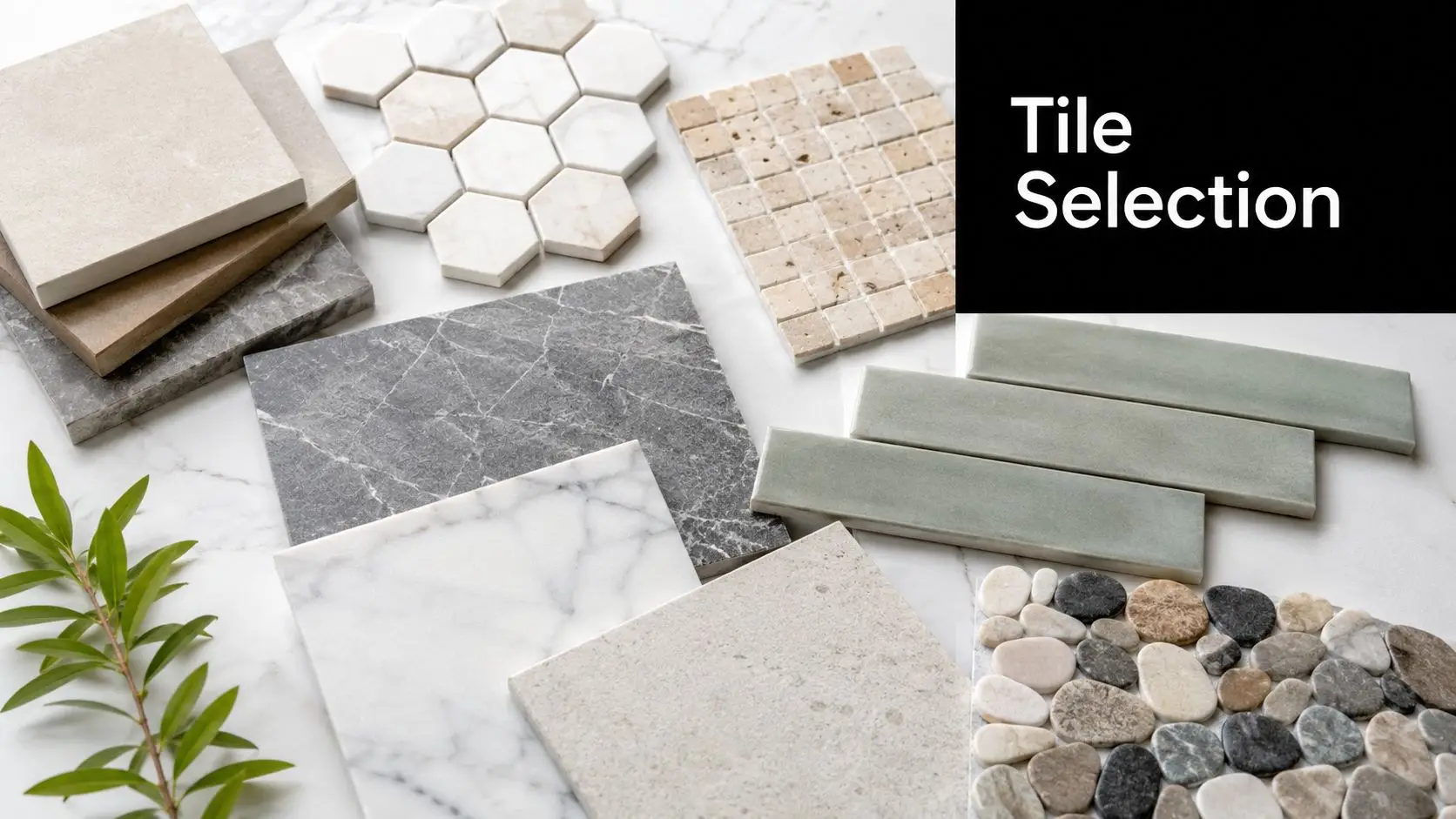
Other choices that usually pay off are straightforward:

  • Recessed niches to keep storage off the floor area
  • Wall-hung vanities where every millimetre counts
  • Cleaner shower detailing to reduce maintenance
  • Stronger mechanical ventilation in internal or low-airflow bathrooms
  • Simple alignment of fittings and fixtures so the room feels deliberate and balanced

A good bathroom addition is built in layers. Each layer has to be right before the next one starts. That is how you get from bare frame to finished taps without paying twice for the same work.

Choosing Your Builder and Finalising Your Design

The builder you choose will shape the outcome as much as the budget or the plan. A bathroom addition asks for more than decent workmanship. It needs coordination. The room has to be designed properly, documented clearly, built in the right order, and handed over without unresolved compliance issues.

That's why homeowners should spend more time vetting the builder than choosing feature tiles.

What to ask before signing

The basics matter. Ask whether the builder is appropriately registered, fully insured, and experienced with structural bathroom additions rather than cosmetic bathroom renovations alone. Then go further.

Ask how they handle:

  • Documentation and approvals
  • Trade sequencing
  • Waterproofing responsibility
  • Variations and cost changes
  • Communication during the build
  • Defect management after completion

You're looking for clarity, not charm. A strong builder can explain the build pathway in plain language.

Why design should be locked in early

Many expensive problems don't come from bad construction. They come from unfinished decisions. A homeowner changes the vanity width once plumbing is roughed in. The shower screen conflicts with a light switch. The wall niche lands in the same space as pipework. Suddenly the build is absorbing changes that should have been solved before work started.

That's where detailed visual planning helps. Internal project data from more than 50 Victorian bathroom projects shows that 3D modelling can cut mid-project changes by up to 25%, making budgets and timelines more reliable. That's the strongest argument for resolving layout, fixture positions, and joinery before demolition begins.

The difference between a quote and a build plan

A cheap quote can hide a vague scope. A better quote usually reflects better thinking. It shows what is included, what assumptions have been made, and where allowances sit. That clarity matters most on bathroom additions because small omissions become expensive once walls are opened.

If you want a project that feels organised from the start, work with a team that handles the process end to end. SitePro Bathrooms does exactly that, from concept and 3D planning through construction and handover. If you're ready to price your project properly, you can request a tailored bathroom renovation quote from SitePro Bathrooms.

Frequently Asked Questions About Bathroom Additions

Is adding a bathroom worth it in Victoria

Usually, yes, if it fixes a real problem in the way the home works.

A second bathroom often makes the biggest difference in older Melbourne homes with one original bathroom and a growing family, regular guests, or a main bedroom that would benefit from an ensuite. In resale terms, buyers respond well to practical improvements they can use straight away. The best return usually comes from adding the right bathroom in the right spot, not from overspending on finishes that do not suit the area or the house.

Is it better to convert space or build an extension

If you have usable internal space, a conversion is often the simpler and cheaper option. Converting part of a laundry, rear hallway, oversized bedroom, or underused study can reduce structural work and keep approval pathways more straightforward.

An extension can still make sense, especially if the existing floorplan is already tight. But once you push outside the current building envelope, costs usually rise fast. Footings, external walls, roofing, stormwater, setbacks, and site access all start to matter more, and in Victoria that can also mean a more involved permit process.

Can I add a bathroom in an apartment

Sometimes, but apartment bathrooms are rarely simple.

The main limits are strata approval, waterproofing requirements, acoustic treatment, and where existing waste pipes and water services run. If the proposed bathroom sits a long way from the stack, the design may need reworking or the project may stop making financial sense. In older blocks around Melbourne, that question comes up a lot.

How do I know if the layout is workable

A workable layout needs more than fittings that physically fit on paper. It needs enough clearance to use the room comfortably, practical door swings, proper ventilation, compliant waterproofing details, and plumbing runs that can be built without creating bigger problems elsewhere.

If the toilet is jammed behind a door, the vanity has no useful storage, or the shower only works with custom compromises everywhere, the plan needs more work.

What's the biggest mistake homeowners make

Committing to the idea before testing the site.

The expensive mistakes usually start with assumptions. Homeowners see an unused corner and assume it can take a bathroom. Then the floor wastes do not fall the right way, the wall carries load, the ceiling space is too tight for exhaust ducting, or a permit issue appears late. In Victoria, those details matter early. A quick feasibility check saves far more than it costs.

If you're planning on adding a bathroom in Highett or anywhere across greater Melbourne, the smartest first step is a proper site-based assessment. SitePro Bathrooms can help with design, layout planning, 3D visualisation, construction, and a clear quote that matches the actual conditions of your home.

  • siteprobathrooms

Small Bathroom Remodel Cost in Highett: 2026 Price Guide

A small bathroom remodel cost in Victoria typically sits between AUD $25,000 and $45,000 in 2026. In Highett, that range is usually shaped less by room size alone and more by plumbing changes, waterproofing requirements, and the level of finish you choose.

If you're standing in a cramped ensuite or dated family bathroom wondering why quotes vary so much, you're not alone. Most homeowners start by searching online, then quickly realise the numbers are all over the place and often written for the US market, not Melbourne.

That's where confusion starts. A tiny room doesn't automatically mean a tiny budget. Bathrooms pack a lot of technical work into a small footprint, and in Victoria the cost is heavily tied to licensed trades, compliant waterproofing, and how much of the existing layout can stay put.

Thinking About a Small Bathroom Renovation

A small bathroom usually becomes a problem long before it becomes a project. The vanity is too bulky, the shower feels tight, storage is poor, and the whole room can look tired even when it's clean. In older Highett homes, the bigger frustration is often function, not style. The bathroom doesn't work for how the household lives now.

A person gesturing with their hands in a small bathroom with blue cabinets and yellow striped wallpaper.

A proper renovation fixes more than surface finishes. It can improve movement through the room, make cleaning easier, add storage, and turn an awkward layout into something calm and practical. That applies whether you're planning simple bathroom renovations, collecting new bathroom ideas, or aiming for a more refined result with modern bathrooms or designer bathrooms.

What catches homeowners out

The biggest mistake is treating a bathroom like a paint-and-fittings update. In practice, even a small room can involve demolition, substrate repairs, waterproofing, tiling, plumbing, electrical work, ventilation, glazing, joinery, and final fit-off.

Practical rule: If water is involved, compliance matters more than cosmetics.

That's why online price guides often feel misleading. Many of them quote overseas numbers or leave out the work hidden behind the tiles. The room might be compact, but the trade coordination isn't.

What usually works best

For most homes, the smartest path is to decide early what matters most:

  • Keep the layout: This usually protects the budget better than moving the toilet or shower.
  • Spend where you touch the room daily: Vanity design, storage, lighting, and shower function change the experience more than novelty finishes.
  • Choose durable finishes: In small bathrooms, every surface is close-up. Cheap selections tend to show wear faster.
  • Build for the house: A rental, family home, and long-term forever home should not be specified the same way.

Homeowners who get the best outcome usually start with a clear brief, realistic allowances, and a builder who explains the trade-offs plainly.

Typical Small Bathroom Renovation Costs in Victoria

A Highett homeowner with a compact 1980s bathroom and a clear brief will usually spend very differently from someone renovating an older Melbourne home with out-of-level floors, dated plumbing, or hidden water damage. In Victoria, a realistic allowance for a proper small bathroom renovation often lands around AUD $25,000 to $45,000, depending on layout changes, finish level, site conditions, and the amount of compliance work required.

That range reflects Melbourne labour rates, licensed trade costs, waste removal, waterproofing, and the finishing items homeowners expect in a completed bathroom. It also reflects the fact that small rooms are not cheap rooms. They still need plumbers, electricians, waterproofers, tilers, and final fit-off, even when the floor area is modest.

Budget-conscious end of the range

At the lower end, the projects that stay under control usually keep the plumbing layout close to existing positions. That means the toilet, shower, and vanity remain where they are, or move only slightly to suit new fixtures.

Typical inclusions at this level are:

  • Existing layout mostly retained: Less plumbing and drainage alteration keeps labour down.
  • Off-the-shelf fixtures and fittings: Standard vanities, tapware, and screens are usually better value than custom pieces.
  • Simple tile format and layout: Large format wall tiles or straight-set patterns are faster to install than intricate designs.
  • Limited rectification work: Budgets hold up better when framing, flooring, and sheeting are still serviceable.

This price point suits owners who want a clean, durable result and better function without paying for custom detailing that adds labour but not much day-to-day benefit.

Mid-range and most common

The middle of the range is where many Highett and Bayside bathroom projects sit. The room is still small, but the expectations are higher. Homeowners often want better storage, stronger lighting, a more practical shower, and finishes that feel right for the age and value of the home.

Typical upgrades here include a wall-hung vanity, a recessed shower niche, a frameless or semi-frameless screen, better ventilation, and more considered tile selection. None of those items sounds dramatic on its own. Together, they can shift the price quickly because each one affects labour, coordination, or both.

If your bathroom project also includes a separate WC, this guide on renovating a toilet is worth reviewing early so the scope is clear before quoting starts.

Higher-end small bathrooms

At the top end, the room size stops being the main pricing factor. Detail takes over.

Custom joinery, feature lighting, full-height tiling, premium tapware, complex tile patterns, concealed fixtures, and layout rework all add time. In older Melbourne homes, higher-end jobs also tend to uncover more preparation work behind the walls and under the floor, which pushes the budget further.

A well-designed high-end bathroom can be money well spent. A poorly planned one can burn through budget on details that look impressive in photos but make very little difference in daily use. The best results usually come from being selective. Spend on storage, lighting, waterproofing quality, and fixtures you use every day. Be careful with upgrades that mainly add installation complexity.

A Detailed Line-Item Cost Breakdown

When homeowners ask what they're paying for, the best answer is to pull the project apart. A bathroom quote isn't one big number created out of thin air. It's a stack of trade packages, materials, compliance tasks, and finishing work that all need to line up in the right order.

For a mid-range small bathroom remodel, the table below shows a practical allowance structure. The percentages are estimated ranges, not fixed rates, because one item often grows when another is simplified.

Estimated Cost Breakdown for a Mid-Range Small Bathroom Remodel

Expense Item Estimated Cost (AUD) Percentage of Budget Notes
Demolition and waste removal Qualitative only Estimated portion of budget Removal of old tiles, fixtures, sheeting, shower screen, and waste disposal
Carpentry and substrate preparation Qualitative only Estimated portion of budget Floor levelling, wall straightening, framing corrections, backing for fixtures
Plumbing labour and fit-off Qualitative only Estimated portion of budget Licensed plumbing work, fixture rough-in, drainage and final connections
Electrical labour and fit-off Qualitative only Estimated portion of budget Lighting, switches, power points, fan connection and compliance work
Waterproofing Qualitative only Estimated portion of budget Wet area preparation and compliant membrane application
Tiling and tile installation Qualitative only Estimated portion of budget Floor and wall tiling, trims, adhesive, grout, set-out labour
Vanity and joinery Qualitative only Estimated portion of budget Stock or custom vanity, shaving cabinet, storage components
Fixtures and fittings Qualitative only Estimated portion of budget Toilet, basin, tapware, shower fittings, accessories, screen
Painting and silicone finishing Qualitative only Estimated portion of budget Ceiling, door trims, final sealing and presentation work
Project management and coordination Qualitative only Estimated portion of budget Scheduling, site supervision, trade sequencing, procurement handling
Permits or approvals if required Qualitative only Estimated portion of budget Depends on project scope and building conditions
Contingency for hidden conditions Qualitative only Estimated portion of budget Helps absorb issues found after strip-out

Why demolition isn't just “rip out and go”

Demolition is fast compared with the rest of the job, but it sets the tone for everything that follows. Careless strip-out can damage substrate, crack adjoining finishes, or hide problems until later. A tidy demolition phase also matters in occupied homes where dust, access, and waste removal affect the rest of the property.

In older bathrooms, strip-out often reveals uneven walls, moisture damage, or previous work that needs correction before new finishes can go on. That's not overservicing. It's the difference between a bathroom that lasts and one that starts failing early.

The expensive parts are often the invisible ones

Plumbing and electrical work carry a lot of value because they involve licensed trades and strict sequencing. Homeowners naturally notice the tapware and tiles, but the rough-in behind the walls is what makes the room safe and functional.

Waterproofing sits in the same category. It's one of the least visible parts of the project once completed, but one of the most important. If someone tries to save money there, they usually create a bigger bill later.

  • Plumbing costs climb quickly when fixtures move, access is tight, or the original layout doesn't suit the new design.
  • Electrical costs rise when the room needs better lighting, improved ventilation, or additional outlets.
  • Tiling labour changes a lot depending on tile size, pattern, substrate condition, and how many corners, niches, and trims are involved.

Cheap-looking bathrooms are often the result of rushed preparation, not just cheap products.

Where budget decisions actually make a difference

Some items are easier to control than others. Vanity selection, mirror style, tile format, and shower screen choices can usually move up or down without affecting the technical backbone of the renovation.

By contrast, these areas are poor places to cut back:

  1. Waterproofing and wet area preparation
    If this fails, the repair is invasive and expensive.

  2. Licensed trade work
    Plumbing and electrical compliance protect both the home and the owner.

  3. Substrate correction
    Tiles only look as good as the surface beneath them.

  4. Ventilation
    A bathroom that can't clear moisture won't age well.

If you want a sharper early estimate before requesting a formal quote, one practical option is the SitePro Bathrooms calculator tool, which lets homeowners test room size, fixtures, materials, and upgrades to build a planning-level cost picture.

Key Factors That Change Your Renovation Price

Two bathrooms can look similar in photos and still have very different costs. The difference usually comes down to complexity, not just style. The cheapest-looking decision on paper can become the expensive one once trade work starts.

Layout changes versus in-place replacement

Moving fixtures is one of the fastest ways to lift the small bathroom remodel cost. Replacing old with new in roughly the same location is usually cleaner, faster, and easier to coordinate. Once a toilet, shower waste, or vanity plumbing shifts, the job becomes more involved.

That doesn't mean layout changes are a bad idea. Sometimes they're the whole reason the renovation is worth doing. But they should solve a genuine problem, such as an unusable shower entry or a vanity that blocks circulation.

Finish selection and installation labour

Material cost matters, but labour often matters more. A simple tile installed on a straightforward set-out can be efficient. A premium tile with difficult cuts, feature layouts, or strict pattern matching can add a lot of installation time.

The same applies to joinery and screens. A clean modular vanity may give you nearly all the function you need without the cost of full custom cabinetry. On the other hand, if the room has awkward dimensions, custom joinery can be money well spent because it solves dead space.

  • Large-format tiles can reduce grout lines and create a cleaner look, but they demand flatter surfaces.
  • Feature niches and trims sharpen the finish, though they require more precise planning.
  • Custom vanities improve storage in tricky rooms, but fabrication and installation are slower.

Condition of the existing bathroom

Many older bathrooms in Melbourne look serviceable until demolition starts. Then the underlying issues emerge. Water damage, poor past renovations, out-of-plumb walls, or deteriorated sheeting all affect labour and materials.

This is why experienced builders are careful with early pricing. A quote can be honest and still need room for hidden conditions. No one can see through finished tile before strip-out.

A bathroom isn't priced only on what you want to build. It's also priced on what has to be corrected first.

Compliance and risk

The technical side of bathrooms isn't optional. Waterproofing, ventilation, plumbing, and electrical work all need to be treated as core scope. Trying to dodge them rarely saves money in the long run.

In Victoria, that matters even more on small projects because the room is compact and moisture concentrates fast. A weak fan, poor sealing detail, or rushed membrane job can affect the whole space.

Design ambition versus daily use

Some of the best modern bathrooms are surprisingly restrained. They don't rely on expensive gimmicks. They use proportion, storage, lighting, and durable finishes well.

When reviewing new bathroom ideas, ask a hard question. Does this detail improve how the room works every morning, or does it just look good in a photo? That one filter protects a lot of budgets.

A practical brief often includes:

  • Better movement through the room
  • Storage that reduces bench clutter
  • Shower design that's easy to clean
  • Finishes that suit the house, not just current trends

If you keep those priorities in front of the design, the final number is more likely to feel justified.

Sample Budgets Inspiring New Bathroom Ideas

Budgets make more sense when you can picture the finished room. The three examples below aren't case studies or fixed-price promises. They're realistic ways homeowners in Highett often frame a project.

A display of four unique bathroom vanity designs with various tiles arranged on stone pedestals and pebbles.

The efficient ensuite upgrade

This is the project for a tired ensuite that works poorly but doesn't need major relocation of fixtures. The layout stays familiar, but the room is rebuilt with better storage, cleaner lines, and finishes that are easier to maintain.

The spend focuses on a compact vanity, a more practical shower screen, updated tiles, and a calmer palette. This is often the best-value route for owners who want modern bathrooms without paying for unnecessary structural changes.

The modern family bathroom

This version suits a main bathroom that gets daily use and needs to work harder. The brief is usually less about luxury and more about better organisation, stronger lighting, and a layout that makes the room feel bigger than it is.

A wall-hung vanity, walk-in shower feel, recessed storage, and carefully chosen tile sizes can completely change the room. For homeowners collecting small bathroom ideas in Australia, this is often where practical design and visual polish meet.

The most convincing upgrades are usually the ones that make the room feel easier to use, not just newer.

The compact designer retreat

This is the small bathroom with a bigger design ambition. It may include custom joinery, more refined tile detailing, concealed storage, upgraded tapware, and a layout tweak that improves circulation or sightlines.

Designer bathrooms at this scale work best when every upgrade earns its place. In a small room, overdesign is easy. The strongest outcomes feel intentional, not crowded.

Common inclusions at this level might be:

  • Custom vanity design to use every millimetre well
  • Sharper tile detailing around niches, trims, and shower edges
  • Improved lighting layers for task use and atmosphere
  • Cleaner visual lines through recessed or concealed elements

The right brief here isn't “add everything.” It's “make the room feel resolved.”

The Return on Investment of a Quality Bathroom Renovation

A small bathroom renovation often starts with a daily frustration. The vanity has no usable storage, the exhaust fan leaves the room damp, and the shower layout makes a tight space feel tighter. Fix those problems well, and the gain is immediate. The room works better every day, and the home presents better when it is time to sell.

A modern, stylish bathroom featuring a wooden vanity, a walk-in shower, and patterned green floor tiles.

In Highett and across Melbourne, the return is usually strongest when the bathroom solves practical issues buyers notice straight away. Good ventilation, sensible lighting, durable finishes, and a layout that feels easy to use all help. Cheap cosmetic work can photograph well, but it rarely holds up in person.

Why build quality affects value

Buyers may not ask about waterproofing certificates or fall lines to the waste, but poor workmanship still shows. Cracked grout, swollen cabinetry, loose tapware, and bad tile set-out all raise questions about the rest of the house.

Quality matters because bathrooms are dense with trade work. Plumbing, electrical, waterproofing, tiling, glazing, and joinery all meet in a very small footprint. In Victoria, that detail has to be handled properly, and the room needs to perform in real conditions, not just look good on handover day.

A renovation that supports value usually has three things behind it. Clear planning, compliant construction, and finishes chosen for service life rather than showroom appeal.

What usually adds the most value

  • A layout that makes the room easier to use
  • Storage that reduces bench clutter
  • Ventilation and lighting that improve comfort
  • Materials that wear well in a wet area
  • Workmanship that feels straight, solid, and well resolved

The best return often comes from restraint. In a small bathroom, one smart layout fix or a better vanity can do more for value than a long list of upgrades that push the budget without improving function.

For homeowners weighing cost against payoff, it also helps to understand the full project timeline before committing. This guide on how long a bathroom remodel should take is useful because delays, access issues, and rework can affect both cost and outcome.

A quality bathroom renovation does not guarantee a specific resale figure, and I would be cautious of anyone who suggests otherwise. What it does do is strengthen buyer confidence, reduce visible defects, and make the home easier to live in now. In practice, that is where the return sits.

Begin Your Transformation & FAQs

The best bathroom projects start with clear decisions, not guesswork. If you know your priorities, keep the brief realistic, and work through the technical requirements early, the cost becomes much easier to manage. That's true whether you're planning a clean functional update or something closer to a designer finish.

For homeowners in Highett, the most useful next step is usually a measured consultation, a defined scope, and a design that tests the layout before construction starts. If you're comparing options, this guide on how long a bathroom remodel should take helps frame the planning side properly.

Common questions homeowners ask

Do small bathrooms cost less just because they're smaller?
Not always. Bathrooms contain dense trade work, and the technical components don't shrink as much as people expect. A compact room can still require full demolition, waterproofing, plumbing, electrical, and tiling.

Is it cheaper to keep the existing layout?
Usually, yes. Retaining the general fixture positions often helps control labour and complexity. When a layout change solves a real usability issue, though, it can still be worth the added spend.

Do I need a registered builder?
For most homeowners, using properly qualified, insured professionals is the safer path. Bathrooms involve wet area detailing, licensed trades, coordination, and compliance. This isn't a room where shortcuts age well.

What should I prioritise if the budget is tight?
Keep the layout efficient, protect the technical work, and spend on the items that improve daily use. Good storage, a functional shower, and durable finishes usually matter more than novelty upgrades.


If your current bathroom feels too small, too dated, or too hard to use, the smartest move is to price the project based on real Victorian conditions, not generic overseas guides. A clear scope and honest advice at the start will save far more than hopeful assumptions later.

  • siteprobathrooms

Laundries In Bathrooms: Layouts, Costs & VIC Rules

If you're standing in a bathroom wondering where a washing machine could possibly go without turning the room into a squeeze point, you're not alone. In Highett and across Melbourne’s tighter blocks, the old separate laundry often feels like wasted floor area in one room and missing function in another.

That’s why laundries in bathrooms keep coming up in renovation briefs. Homeowners want one space that works harder, looks cleaner, and doesn’t feel like a compromise. Done well, a combined layout can make everyday use easier, sharpen resale appeal, and give older homes a far more organised footprint. Done badly, it creates noise, damp, awkward circulation, and compliance headaches hidden behind tiles.

Why Combining Your Laundry and Bathroom Is a Smart Move

You see the same problem in a lot of Melbourne renovations. The bathroom is tight, the old laundry is stuck in a lean-to or back passage, and both rooms waste space in different ways. One is too small to work properly. The other takes up floor area without adding much value to daily use.

Combining them can fix that.

In older Victorian homes around Highett and the bayside suburbs, it often makes more sense to build one well-resolved wet area than keep two underperforming rooms. Grouping the bathroom and laundry together can shorten plumbing runs, reduce duplicated joinery, and free up area for storage or circulation elsewhere in the house. That matters on compact blocks and in homes where every square metre has to earn its keep.

The value is practical before it is cosmetic. A combined room can make washing, bathing, linen storage, and cleaning products easier to manage in one location. It also removes the need to walk baskets through living areas or maintain a second service room that is cold, dated, or poorly ventilated.

In Victoria, the main advantage is often in the buildability.

I regularly see DIY plans and builder-drafted layouts that look efficient on paper but ignore what the room needs to comply and last. A laundry inside a bathroom changes the demands on waterproofing, ventilation, drainage falls, appliance clearances, power locations, and service access. If those items are treated as an afterthought, the room becomes harder to certify, harder to maintain, and more expensive to fix once the tiling is finished.
Why it works in real homes

The best combined rooms solve two problems at once. They improve function now, and they simplify the floor plan for the long term. Instead of splitting storage, wet services, and cleaning tasks across separate rooms, the house gets one organised utility zone that is easier to heat, clean, and use.

That does not mean every home should combine them. In larger family homes with enough width for a proper walk-through laundry, keeping the spaces separate can still be the better call. But in many post-war and mid-century homes across Melbourne, especially where the existing laundry is an add-on with poor insulation or awkward levels, combining the spaces is often the cleaner renovation move.

Practical rule: A bathroom laundry should still read as a bathroom first. The laundry function should be integrated into joinery, not left visually exposed as the dominant feature.

A good result usually comes from restraint. Keep the appliance setup simple. Give the washer and dryer proper ventilation and service access. Make sure wet-zone detailing is resolved before cabinetry is drawn. That approach produces a room that looks calm and works hard.

Better use of space, with fewer hidden problems

The old assumption was that a bathroom laundry was a compromise made only in small apartments. That is not how I see it on site. In many Victorian renovations, it is a deliberate design decision that gets rid of wasted circulation and improves how the home works every day.

It also forces better discipline early in the project. Once a washing machine, vanity, shower, toilet, storage, and door swings share one room, poor planning shows up fast. That pressure is useful because it exposes structural limits, service conflicts, and compliance risks before they turn into site variations.

Handled properly, a combined bathroom laundry is not a fallback. It is a tighter, more efficient solution that suits many Melbourne homes far better than the original layout ever did.

Planning Your Perfect Bathroom Laundry Layout

A layout can look fine on a floor plan and still fail once the room is built. I see this often in Melbourne renovations, especially in older brick homes where wall thickness, uneven floors, and tight existing drainage points limit what can go where. The right layout is the one that works with those conditions, not against them.

Start with circulation and servicing, not cabinetry. In a combined bathroom laundry, people still need to enter the room, use the vanity, access the shower, and open the machine without turning sideways or stepping around doors. In Victoria, that also means allowing enough room to keep power points, switches, and joinery clear of wet areas, while making sure waterproofing and drainage are resolved before the cabinet maker starts drawing up panels.

In compact rooms, the cleanest solution is usually a concealed laundry cupboard. In larger rooms, a full wall of joinery can work well if it does not dominate the bathroom or crowd the fittings. The exact footprint depends on the appliance model, wall construction, ventilation path, and door clearances, so I prefer to measure the selected machines first and build the joinery around real dimensions rather than generic allowances.

Bathroom Laundry Layout Comparison

Layout Type Typical Footprint (W x D) Pros Cons
Stacked in a cupboard Tall cabinet zone sized to the selected appliances Preserves floor area, easier to conceal, suits tighter rooms Needs careful ventilation, service access, and cabinet depth planning
Side-by-side under bench Full bench run along one wall Gives usable bench space, easier loading and unloading Uses more wall length and can make the room feel joinery-heavy
Washer-dryer combo in joinery Single appliance bay within a tall or under-bench cabinet Reduces appliance count and simplifies the layout Longer cycle times and less flexibility for larger households

What works best in smaller bathrooms

For small and medium bathrooms, stacked units usually give the best result because they protect the clear path through the room. That matters once the vanity projection, toilet set-out, shower screen, and open appliance door are all shown properly.

Side-by-side layouts suit wider rooms or renovations where one long wall can carry the vanity, machines, and storage without making the room feel flat. They are easier to live with day to day, but they demand more discipline in the design. If the bench line is too long or too deep, the bathroom starts reading like a laundry with a shower added to it.

A combo machine can be the right call in apartments and smaller townhouses where space is tight and service routes are limited. I only recommend that path after checking how the household washes. A neat plan on paper means very little if the machine setup frustrates the people using it every day.

The questions that should be settled before demolition

These are the checks I would lock in before any wall linings come off:

  • Door swings: The bathroom door, shower screen, appliance door, and cupboard doors must all open without conflict.
  • Standing space: Allow enough room to load the machine and stand at the vanity comfortably.
  • Hamper position: Give baskets a proper landing spot so they do not block the toilet or walkway.
  • Wet-zone separation: Keep detergent, GPO locations, and appliance controls outside the main splash areas.
  • Service access: Taps, traps, power, and shut-offs need to stay accessible after the joinery is installed.
  • Wall capacity: In older Victorian homes, check whether the wall can take recessed services or stacked appliance loads without extra framing.

If the room only works when every door is closed and no one is using the vanity, the layout is not resolved.

Why 3D planning matters

I rely on 3D layouts for this type of renovation because they expose problems early. You can test appliance depth against vanity depth, overhead cupboard height, mirror placement, and the line of sight from the doorway before any waterproofing starts.

That matters even more in Victorian homes, where existing walls are rarely as straight or as generous as the original sketch suggests. A few millimetres lost to render, battens, or wall correction can affect machine clearance, cabinet door operation, and compliance around fixtures. Sorting that out in design is far cheaper than rebuilding joinery or shifting services after rough-in.

Choosing the Right Appliances for a Bathroom Laundry

Appliance choice drives more than convenience in a bathroom laundry. It affects moisture load, cabinet detailing, service access, and whether the room performs properly once the door is shut.

I usually narrow it to three workable setups. A stacked washer and dryer, a side-by-side pair, or a combo unit. The right answer depends on the household’s wash volume, the room width, and how much ventilation and service space the build can support under Victorian requirements.

A modern black washing machine installed in a bright room with wooden floors and large windows.

Dryer type matters more in a bathroom

Dryer selection causes more problems than the washing machine. In a dedicated laundry, a poor dryer choice is inconvenient. In a bathroom, it can add condensation, affect waterproofed finishes, and create defects that are expensive to rectify later.

Heat pump dryers usually suit these rooms better because they do not rely on the same external venting approach as a vented unit. They also tend to make more sense where the appliance is being concealed in joinery and the room already has shower steam to manage. The trade-off is purchase price, longer cycle times on some models, and tighter manufacturer clearance requirements around the cabinet.

Vented dryers are the units I treat cautiously in bathrooms. If the duct run is too long, poorly terminated, or squeezed into a wall that was never framed for it, performance drops and moisture ends up where it should not. In older homes around Highett and across Melbourne bayside suburbs, that is often where DIY planning comes unstuck. The appliance may fit on paper, but the wall cavity, ceiling path, or external discharge point does not.

For Victorian compliance detail, I always check appliance selection against the service design and the relevant bathroom renovation regulations in Victoria before joinery is finalised.

A practical appliance checklist

Before ordering the machine, check these points:

  • Overall depth, not brochure depth: Allow for hoses, taps, plugs, drainage bends, and the ventilation space required by the manufacturer.
  • Door swing and user clearance: The appliance door needs to open fully without hitting a vanity, toilet, or shower screen.
  • Dryer technology: Heat pump, condenser, and vented units behave differently. The wrong type can load the room with moisture or force awkward ducting.
  • Noise and vibration: This matters in ensuites, apartments, and homes with lightweight timber floors where spin cycles can travel through the structure.
  • Stacking suitability: Not every washer and dryer pair can be safely stacked, and the cabinet needs fixing points and tolerance for movement.
  • Maintenance access: Filters, isolation taps, traps, and power points must remain accessible after the cabinetry goes in.
  • Finish and controls: If the appliance sits in view, the fascia, handle profile, and control layout should suit the rest of the bathroom joinery.

What tends to work, and where the compromises sit

A stacked pair usually gives the best result for families who run frequent loads and want one load drying while the next is washing. It uses height instead of floor area, which is often the smarter trade in a compact bathroom. The catch is structural and joinery coordination. The wall, cabinet carcass, and fixing method all need to be planned properly so the installation stays stable and serviceable.

A side-by-side pair works well in larger rooms where there is enough bench length above for folding and storage. It is easier to access and often simpler to maintain. It also uses more wall space, which can put pressure on vanity width or linen storage.

A combo unit suits low to moderate laundry demand where concealment and space saving are the top priorities. It keeps the room tidy and reduces the number of service connections. The compromise is throughput. One machine cannot process back-to-back family loads as efficiently as separate appliances.

The best appliance is the one that fits the room, the framing, and the service design you can build to standard the first time.

Navigating Plumbing Electrical and Waterproofing Needs

A bathroom laundry can look straightforward on the plan. The problems usually start once the wall is opened up. In Highett and across Melbourne’s older housing stock, I regularly see shallow framing, awkward floor levels, dated wiring, and pipe runs that were never designed to carry both bathroom and laundry services in one room.

That is where DIY jobs and general bathroom fit-outs often come unstuck. The room still has to satisfy wet-area requirements, electrical safety rules, drainage falls, ventilation needs, and access for maintenance after the cabinetry goes in. If those decisions are left until rough-in, the fix is usually more framing, more patching, and a more expensive job.

A modern laundry unit and blue marble pedestal sink in a luxurious, tiled bathroom interior.

Plumbing behind the wall

A combined room only works if the service wall is designed for the pipework from the start. In many Victorian renovations, that means checking stud depth, drilling zones, nogging positions, and whether the existing wall can carry waste, water, and vent connections without weakening the structure.

The common mistake is trying to force laundry drainage into a wall or floor zone that does not have enough room for compliant falls and fittings. Builders then start notching or over-drilling timbers to make it fit. That can create a structural problem and a plumbing problem in the same spot.

For this kind of work, I set the layout around the services early. The washing machine location, trap position, isolation taps, and any dryer duct route need to be resolved before the room is sheeted. In apartments and townhouse work, penetrations and discharge points also need closer checking because body corporate rules, fire separation, and existing slab conditions can limit what is possible.

Electrical and ventilation

Power in a bathroom laundry needs proper circuit planning by a licensed electrician. This is a wet area with high-load appliances, heat, steam, and metal fixtures in close proximity. Power point placement, appliance supply, switching, and safety protection all need to suit the room layout and the relevant Australian rules.

Ventilation is where a lot of combined rooms underperform. A fan sized for shower moisture alone may not be enough once the room is also handling washing, drying, and closed cupboard spaces around appliances. If the dryer is ducted, the path has to be short, serviceable, and installed to the manufacturer’s requirements. Long flexible duct runs are one of the first things I look for on problem jobs.

Poor extraction shows up fast. Condensation sits on mirrors and ceilings, cabinet interiors stay damp, and mould starts in the corners or behind joinery.

Waterproofing has to allow for appliance risk

In a bathroom laundry, waterproofing is not limited to the shower zone. The floor and wall junctions need detailing that accounts for routine bathroom moisture and the kind of leaks laundries produce, such as hose failures, loose waste connections, or an overflowing machine tray.

Victorian compliance matters here. Wet area work should align with NCC requirements and AS 3740, and any plumbing and electrical work must be carried out by licensed trades to the applicable standards. For strata and apartment projects, Victorian bathroom renovation regulations are worth checking early because shared walls, waterproofing interfaces, penetrations, and approvals can affect the design before demolition even starts.

I also want service points left accessible wherever the layout allows. Hidden taps, inaccessible traps, and power points buried behind fixed joinery turn a small maintenance issue into a cabinet removal job.

What I insist on getting right

These are the items I treat as required on a bathroom laundry build:

  1. Framing and set-out that suit the actual pipework and ducting, rather than cutting timbers to rescue a bad layout.
  2. Licensed plumbing and electrical design, with appliance loads, outlet locations, and wet-area safety resolved before rough-in.
  3. Mechanical ventilation sized for how the room will really be used, not just the minimum someone hopes will pass.
  4. Waterproofing addressing the whole risk profile of the room, including appliance-related leaks outside the shower area.
  5. Access for isolation, cleaning, and future repairs, so the room stays serviceable after the joinery and tiles are finished.
The neat tiled finish is the easy part. Getting the hidden work right is what makes a bathroom laundry last.

Smart Storage and Accessibility in Designer Bathrooms

The best combined rooms don’t just fit a washing machine. They remove the clutter that usually gathers around it. That’s the difference between a functional bathroom and a room that feels resolved.
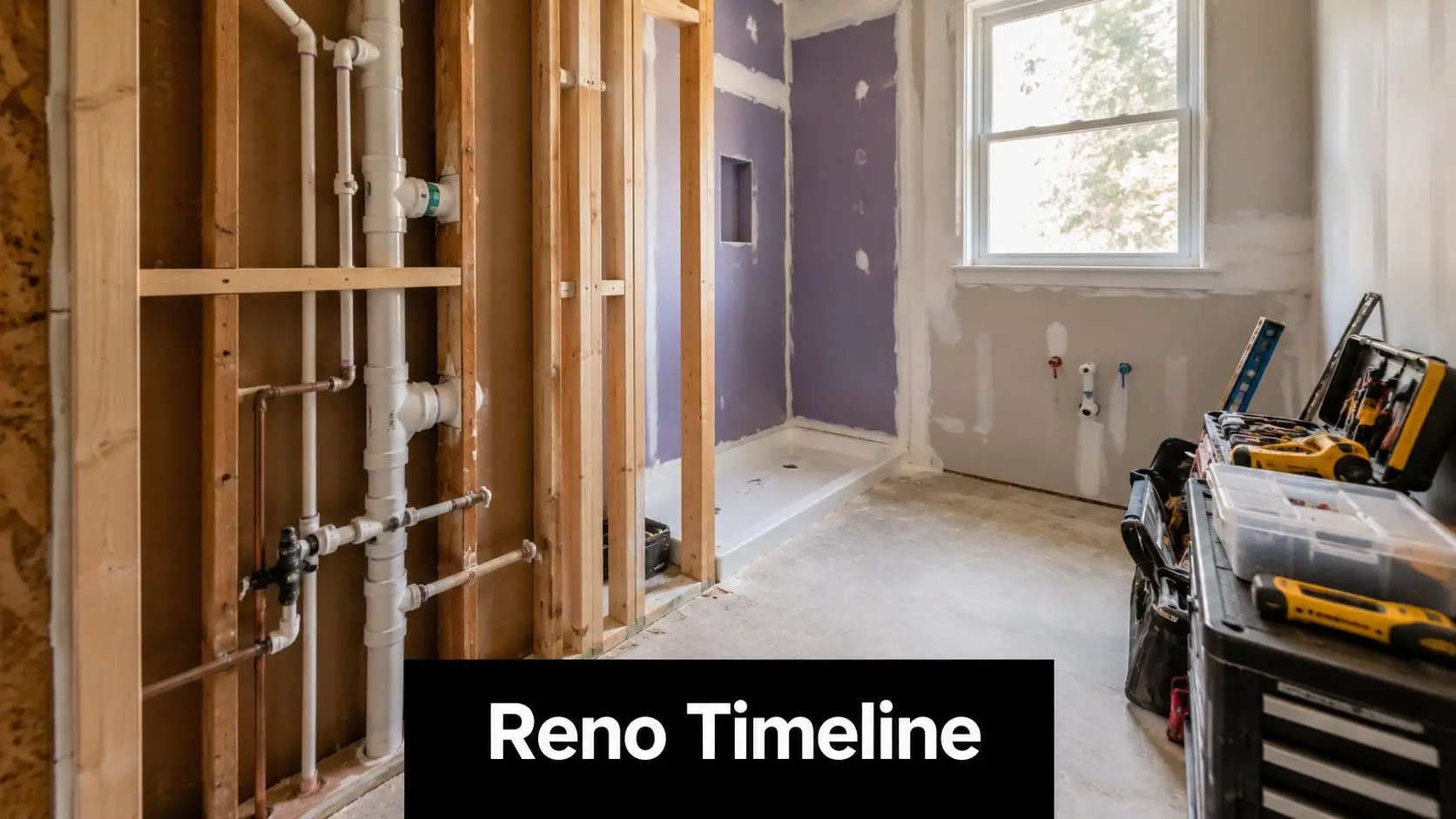
Storage needs to work on two levels. First, the room has to hide detergent, baskets, cleaning products, spare towels, and daily mess. Second, it has to make those things easy to reach without forcing awkward bending, overreaching, or constant reshuffling.

A modern bathroom featuring built-in wooden laundry storage cabinets, organized shelves, and a bathtub with green surfaces.

Storage that earns its floor space

In a good designer bathroom, every cabinet has a job. Tall cupboards can conceal stacked appliances and still leave room above for bulk items. A shallow overhead can hold light-use products. A base cabinet beside the machine can take a pull-out hamper or laundry basket shelf.

Useful storage ideas include:

  • Tall linen towers: Good for towels and backup supplies without taking over the vanity wall.
  • Internal shelves above appliances: Best for detergents and items you don’t want left on display.
  • Pull-out hampers: Keeps dirty clothes contained and off the floor.
  • Benchtop landing area: Even a short section matters for folding, sorting, or placing a basket.
  • Closed joinery fronts: Keeps the room reading as one clean composition.

Accessibility matters in everyday use

Accessibility isn’t only about formal compliance. It’s about reducing strain and making the room easier to use over time. Front-loading machines raised within joinery can reduce bending. Handle placement, shelf height, and door clearances all affect whether the room feels effortless or annoying.

Bench height and appliance alignment need to be thought through together. This makes standard benchtop height guidance for renovation planning practical, not cosmetic. It helps set cabinetry at a level that works for daily tasks rather than just matching a visual line on an elevation.

A designer bathroom isn’t defined by expensive finishes. It’s defined by how calmly the room handles everyday use.

Small details that improve the room

Some of the strongest new bathroom ideas are quiet ones. A recessed power point inside a cupboard. A shelf tall enough for detergent bottles without wasted voids. Cabinet doors that open clear of the vanity. A towel rail placed where it doesn’t fight with appliance doors.

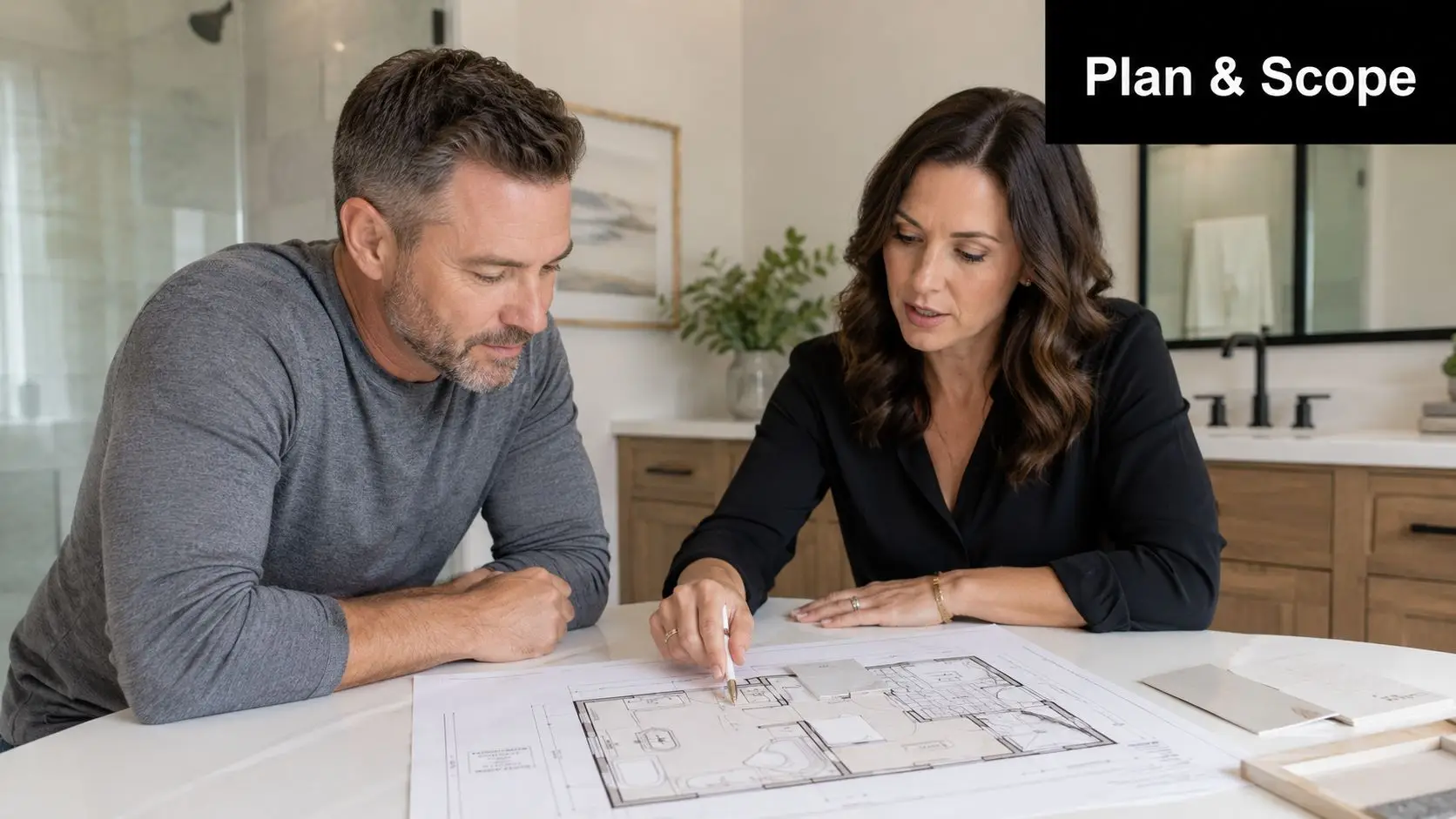
These choices don’t shout. They just make the room easier to live with. In modern bathrooms, that’s often what gives the space its polished feel.

Project Costs Permits and Partnering with a Builder

A combined bathroom laundry can look straightforward on plan. Then demolition starts, the wall depth is wrong for services, the floor waste falls the wrong way, or the owners corporation asks for documents no one allowed for. That is where budgets usually shift in Victorian renovations, not because the idea was ambitious, but because the build was under-scoped from the start.

In Highett and across Melbourne, I see the same pattern. The rooms that run over budget usually involve hidden framing problems, extra plumbing work, switchboard upgrades, slab penetrations, or waterproofing details that were never properly resolved before tiles were selected.

What usually drives the cost

The biggest cost items are rarely decorative. They are the parts behind the walls and under the floor that have to be done properly the first time.

  • Structural changes: Removing or altering walls, adjusting noggings, or creating enough depth for drainage and ducting can add labour and engineering input.
  • Service relocation: Moving waste points, hot and cold lines, power, lighting, exhaust, and appliance connections costs more than working with the existing layout.
  • Custom joinery: Cabinetry that conceals machines, protects ventilation clearances, and still allows maintenance access takes more planning and better detailing.
  • Apartment conditions: Access restrictions, booking lifts, protecting common areas, and working within owners corporation rules all affect labour time and sequencing.
  • Finish complexity: Full-height tiling, recessed niches, custom screens, feature stone, and tight appliance integration leave less room for installation error.

A cheap quote can miss half of that.

Permits, approvals, and compliance in Victoria

Victoria is strict on wet-area work for good reason. Bathroom laundries combine plumbing, electrical, waterproofing, ventilation, and often structural changes in one compact room. If one trade gets the set-out wrong, the rest of the build can unravel quickly.

Not every project needs the same approvals, but assumptions cause trouble. In apartments and units, owners corporation approval may be required where works affect common property, service penetrations, membranes, acoustic performance, or external venting. In houses, the key questions are whether the proposed work triggers building permit requirements, whether structural work is involved, and whether all plumbing and electrical work will be carried out and certified by the right licensed practitioners.

The Victorian Building Authority sets the expectations around compliant building and plumbing work in this state. A registered builder should be checking those requirements before work starts, not after demolition.

Why the right builder changes the outcome

A bathroom laundry has very little tolerance for guesswork. Appliance sizes, door swings, waste locations, waterproofing set-downs, ventilation paths, and joinery clearances all compete for the same small footprint. General building knowledge helps, but renovation-specific experience matters more here.

The builder should be asking practical questions early. Can the existing floor system take the new drainage route without weakening the structure? Is there enough wall depth for pipework and recessed storage? Will the exhaust path comply and still perform properly? Can the washing machine be serviced without dismantling half the cabinetry?

Those questions protect the finish, the program, and the compliance side of the job.

If you are weighing up who should manage the work, this guide on why using a registered builder matters for your bathroom renovation explains what accountability should look like in a Victorian renovation.

The best value usually comes from a build that does not need rectification, reapproval, or trade call-backs six months later.

A combined bathroom laundry is a smart use of space, but only when the cost plan reflects the construction work involved. Good projects are priced around structure, services, approvals, and execution. The styling sits on top of that.

  • siteprobathrooms

How Long Should A Bathroom Remodel Take: Expert Timelines

A simple cosmetic update can take 2 to 3 weeks, a standard remodel usually takes 4 to 8 weeks, and a full-gut renovation with layout changes commonly takes 8 to 12 weeks or more in Victoria. Those are useful starting points, not promises, because permits, trade coordination, apartment approvals, and material choices can all change the pace of the job.

If you’re planning bathroom renovations in Highett or elsewhere in Melbourne, that timing question usually comes up before anything else. You want to know how long you’ll be without the room, how disruptive the job will be, and whether the timeline you’ve been given is realistic or just optimistic sales talk.

The honest answer is that scope decides the base timeline, and Victorian compliance requirements decide how much margin you need around it. A like-for-like update in the same footprint moves far faster than a project that relocates plumbing, changes waterproofed areas, or needs Body Corporate approval. That’s especially true when people want modern bathrooms or more ambitious designer bathrooms, because the finish level may be higher even if the room is small.

Your Bathroom Renovation Timeline at a Glance

A blueprint roll lies on a marble countertop in a modern renovated bathroom during construction.

Most delays happen because people treat all bathroom projects as if they’re the same job. They’re not. If you want a realistic answer to how long should a bathroom remodel take, start by placing your project into the right category.

Cosmetic update

This is the quickest version. The layout stays put, plumbing points remain where they are, and the work focuses on surface-level improvement. Think new tapware, updated fixtures, painting, a vanity swap, or replacing selected finishes without rebuilding the room.

A cosmetic update is the closest thing to a short timeline in bathroom work. It’s also the least disruptive option for owners who want a fresh result without opening up the whole room.

Standard remodel

This is the middle ground and the most common type of family bathroom project. You’re replacing most finishes, likely updating the shower area, vanity, lighting, tiling, and fittings, but you’re not dramatically changing the room’s structure.

This type of remodel allows for many good new bathroom ideas. The bathroom can look completely different at the end, but the job remains manageable because the wet areas and services are still broadly where the original design placed them.

Full-gut renovation

A full-gut renovation takes the longest because you’re rebuilding rather than refreshing. Walls may need adjustment, fixtures may move, older plumbing may need replacement, and permit requirements become much more important.

According to Housing Industry Association data on Melbourne bathroom renovation timing, 68% of full bathroom renovations in Melbourne suburbs take 8 to 12 weeks on average, with professional contractors completing 85% within this window, while DIY efforts extend to 16+ weeks in 42% of cases due to inspection delays.

Practical rule: The more you move, the longer it takes. Moving the room’s bones is what stretches a schedule, not choosing prettier tiles.

A quick way to classify your project

Project type What it usually involves Typical timing
Cosmetic update Surface changes, same layout, minimal service changes 2 to 3 weeks
Standard remodel Full finish replacement, better function, same general footprint 4 to 8 weeks
Full-gut renovation Layout changes, major plumbing or structural work, full rebuild 8 to 12 weeks or more

Two homeowners can both say, “We’re doing the bathroom,” and be talking about completely different programmes of work. One is replacing finishes. The other is effectively rebuilding a wet area under Victorian compliance rules.

If you’re aiming for modern bathrooms with cleaner lines, improved storage, and better lighting, you may still stay in the standard-remodel category. If you’re chasing high-end designer bathrooms with custom layouts, relocated fixtures, or a larger walk-in shower, you’re usually in full-gut territory whether the room is large or not.

The Stage-by-Stage Renovation Breakdown

A construction site featuring renovation supplies like tiles, a drill, and scaffolding for bathroom remodel work.

A bathroom timeline makes more sense when you stop looking at it as “one job” and start looking at it as a sequence. Each stage has its own purpose, and some stages can’t be rushed without creating defects.

Planning and approvals

A standard Victorian bathroom renovation commonly begins with planning and 3D design for 1 to 2 weeks, followed by permit approval for 2 to 4 weeks. The same benchmark places demolition and rough-in at 3 to 5 days, with finishing, including tiling and fixtures, at 1 to 2 weeks, while allowing 48 to 72 hours of cure time for epoxy grouts under AS 3958 as outlined in this Victorian bathroom renovation timeline reference.

That early planning period matters more than clients expect. It’s where selections are locked, measurements are checked, the layout is resolved, and any permit-triggering work is identified before the room is opened up.

If those decisions are vague at the start, the rest of the programme becomes stop-start. That’s when trades arrive ready to work, then lose time waiting for missing instructions or missing products.

Demolition and rough-in

Demolition looks fast because the room changes quickly. In practical terms, it is fast. But it only works well when the team already knows what’s replacing everything that comes out.

Once the room is stripped back, rough-in work follows. This involves the hidden services: plumbing lines, drainage points, electrical wiring, and any framing or wall preparation needed for the new layout.

Rough-in is the stage that decides whether the finished bathroom works properly. If levels, falls, set-outs, or service positions are wrong here, the room may still look nice later, but it won’t perform the way it should.

Waterproofing and tiling

This is the stage owners most often underestimate. Waterproofing isn’t paint. It’s a controlled system, and the work around it has to be sequenced properly.

Tiling also takes longer than many people assume because tile setting, alignment, cuts, trims, junctions, and curing all matter. A rushed tiling stage usually shows up later as uneven lines, weak detailing, or cracking around movement points.

Here’s what tends to happen on well-run projects:

  • Surface preparation: Walls and floors are corrected before membrane work begins.
  • Waterproofing application: Wet areas are treated as a system, not as isolated patches.
  • Cure time: This waiting period isn’t wasted time. It protects the work.
  • Tile installation: Floors, walls, niches, and shower areas are laid in the right sequence.
  • Grout and finishing: Final sealing and curing must happen before heavy use.

Final fix and handover

The final stage includes the visible items clients care about most: vanity, toilet, shower fittings, mirrors, lighting, accessories, and finishing details. It also includes testing, defect checking, cleaning, and any required inspection sign-offs.

This stage should feel calm, not chaotic. If the project has been organised well, the room comes together cleanly because the hard decisions were made earlier.

That’s why the smoothest bathroom renovations aren’t the ones with the fastest demo day. They’re the ones with the clearest planning, the best sequencing, and enough respect for curing, compliance, and finishing standards.

Hidden Factors That Can Delay Your Project

A half-finished bathroom renovation featuring green tiles and a bathtub filling with water during a delay.

The timeline on paper is the ideal path. The timeline in real life depends on what sits around the build itself. In Victoria, those external factors are often what separate a tidy renovation from a drawn-out one.

Apartments and Body Corporate approvals

Apartment owners usually assume the builder can start once the quote is signed. That’s often not the case. If the work affects shared building interests, access arrangements, noise conditions, or major wet-area changes, approvals can slow the start before a tradesperson touches a tool.

Under the Owners Corporations Act 2006 in Victoria, 75% owner approval can be required for major works, and that often delays bathroom renovation starts by 4 to 8 weeks in apartments. The same source notes an average of 7.5 weeks for apartment renovations versus 4.5 weeks for houses in Victoria, as detailed in this summary of strata-related bathroom renovation delays.

That doesn’t mean apartment projects are bad candidates for renovation. It means they need earlier paperwork, clearer communication, and a schedule built around approval reality rather than wishful timing.

Permits, compliance and inspections

Victorian bathroom work can trigger permit and compliance obligations that owners don’t always see at first glance. Structural changes, plumbing changes, and waterproofing-related inspection points all add administration and sequencing.

The common mistake is treating permit time as separate from the renovation. It isn’t. Permit and inspection timing is part of the programme, not an optional extra.

Materials and unforeseen site conditions

Products can also hold up work. A standard vanity or stock tile is far easier to schedule around than custom joinery, made-to-order shower screens, or selected finishes with long lead times.

Then there’s the condition of the existing room. Once demolition begins, older bathrooms can reveal corroded plumbing, poor previous work, damaged substrates, or wall and floor issues that must be corrected before finishes go back in.

Common delay points include:

  • Late selections: Tile, fittings, and joinery choices still unresolved after the start date.
  • Older homes: Hidden defects only show themselves once walls or floors are opened.
  • Access limits: Apartment lift bookings, parking constraints, and site access windows.
  • Approval gaps: Missing Body Corporate paperwork or unclear scope submissions.
  • Trade bottlenecks: One delayed trade affects every trade booked after them.

If a project stalls, it’s rarely because one task took slightly longer. It’s usually because a decision, approval, or product wasn’t ready when the next trade needed it.

What works better in practice

The jobs that stay on time usually have a very ordinary advantage. They are organised before they become urgent.

That means selections made early, approvals lodged early, site access discussed early, and realistic allowances for what might be hiding behind an older bathroom. In Melbourne, especially in established suburbs, that preparation matters just as much as workmanship.

Sample Bathroom Renovation Schedules

A schedule becomes easier to trust when you can picture the flow of work. Below are two realistic examples based on common project types.

Sample 6-Week Standard Bathroom Renovation Schedule

This type of job suits a family bathroom where the room is fully renewed, the layout is broadly retained, and the project is managed in a disciplined sequence.

Week Key Activities
Week 1 Final site check, protection of surrounding areas, demolition, strip-out, waste removal
Week 2 Rough plumbing and electrical work, substrate preparation, framing adjustments if needed
Week 3 Waterproofing system application, cure time, pre-tiling checks
Week 4 Wall and floor tiling, set-out adjustments, trim installation, grout preparation
Week 5 Vanity, toilet, fittings, shower screen measuring or installation depending on sequencing
Week 6 Final electrical fit-off, painting touch-ups, accessories, testing, clean, handover

This isn’t a promise for every standard bathroom. It’s a practical model of how a coordinated project runs when planning is settled before the start date.

If you want to see what a finished local renovation can look like once that sequencing is executed properly, this bathroom renovation in Sandringham shows the sort of end result many homeowners are aiming for when they want a clean, updated family space.

Compact ensuite update

Smaller ensuites often move faster because the work area is tighter, the fixture count is lower, and the project can stay in a straightforward pull-and-replace format.

For compact ensuite remodels under 4m², a pull-and-replace process can be completed in 3 to 5 weeks, with on-site works taking 10 to 14 days total. That includes demolition in 1 day, rough plumbing and electrical in 2 to 3 days, waterproofing in 2 days with cure time, and tiling and fixtures in 4 to 5 days. 65% of these projects finish within 4 weeks when layout changes are avoided, according to this compact ensuite renovation benchmark.

A typical ensuite schedule often looks like this:

  • Pre-start period: Final selections, access planning, confirmation of all fixtures and finishes
  • Start of on-site work: Quick demolition and immediate rough-in preparation
  • Middle of project: Waterproofing, curing, tiling, and fixture installation
  • Final days: Testing, touch-ups, clean, and handover

Small doesn’t automatically mean simple. A compact ensuite can run quickly, but only if the layout stays stable and every fitting has already been chosen.

That’s why investors and busy homeowners often get caught out on small rooms. They assume a smaller footprint means fewer planning demands. In reality, a compact room has less margin for error. A poorly chosen vanity depth, misjudged tile set-out, or late fitting decision can cause just as much disruption as it would in a larger bathroom.

How to Keep Your Bathroom Renovation on Track

A modern bathroom vanity featuring wooden cabinets, a marble sink, and green marble wall tiles.

Most bathroom projects don’t drift off schedule because bathrooms are unpredictable. They drift because too many moving parts are left unmanaged.

A major Victorian audit found the same pattern. A 2022 VBA audit of 500 Victorian jobs found that 78% of compliance-related delays that pushed a 3-week remodel to 5 to 7 weeks came from uncoordinated or non-compliant work by separate, unmanaged trades, as reported in this VBA delay summary.

Lock decisions before demolition

The first protection against delay is simple. Don’t start demolition while key selections are still floating.

That includes tiles, tapware, vanity dimensions, mirror sizing, lighting positions, shower screen type, and any layout adjustments. If these aren’t fixed early, trades start making temporary assumptions, and temporary assumptions are expensive.

A cleaner process usually follows this order:

  1. Define the scope clearly: Know whether you’re refreshing, remodelling, or rebuilding.
  2. Finalise selections early: Every item that affects set-out or installation should be chosen before work begins.
  3. Confirm availability: Make sure the chosen products will arrive when needed.
  4. Sequence the trades: Each trade should know when they start and what condition the room must be in before they arrive.

Use one coordinated project lead

Registered builders unlimited and properly managed renovation teams matter. The issue isn’t only technical skill. It’s control of sequencing, compliance, and responsibility.

When one party coordinates the work, decisions are clearer, defects are caught earlier, and inspection requirements are easier to manage. When multiple separate trades are left to self-coordinate, gaps appear between them. Those gaps are where delays usually start.

This practical guide on project management essentials for staying on schedule and under budget explains why renovation timing improves when one team controls communication, scheduling, and handover standards.

Build in sensible contingencies

Even well-run projects can uncover hidden issues. That’s normal in bathrooms, especially in older properties. What matters is whether the schedule has enough breathing room to absorb them without collapsing.

Useful habits include:

  • Allowing approval time: Especially for apartments or more involved wet-area work
  • Ordering early: Long-lead items should be on hand or confirmed well before install dates
  • Keeping communication tight: Clients who respond quickly keep trades moving
  • Respecting cure and inspection time: These pauses protect the finished result
  • Avoiding mid-project design changes: Late “small tweaks” often have large scheduling consequences

On-site habit: The fastest projects aren’t the ones where everyone rushes. They’re the ones where nobody has to stop and ask what happens next.

If you want a bathroom that lasts, speed alone can’t be the goal. The primary goal is controlled progress. That’s what keeps a project moving without cutting corners on waterproofing, set-out accuracy, compliance, or finish quality.

Start Your Timely Renovation with Confidence

A bathroom remodel should take as long as the scope and compliance requirements demand, no less and no more. For most owners in Victoria, that means thinking in practical ranges rather than fixed promises: a quick cosmetic refresh at one end, a standard remodel in the middle, and a longer full-gut renovation when layout and services change.

The clearest pattern across Melbourne projects is straightforward. Simple bathrooms move quickly. Complex bathrooms move well only when they’re properly planned. If approvals, product selections, and trade sequencing are all organised before demolition, the timeline becomes far more predictable.

That matters whether you’re updating an ensuite for an investment property, rebuilding a worn family bathroom, or creating one of those polished modern bathrooms that needs both strong aesthetics and solid day-to-day function. The room has to look right, but it also has to pass the practical test of waterproofing, compliance, access, ventilation, and long-term durability.

For homeowners in Highett and across Victoria, the safest way to reduce timeline stress is to work with a team that can handle design, approvals, and construction as one connected process. That’s also why using a registered builder for your bathroom renovation matters. It brings accountability to the whole programme, not just the build itself.


If you want a realistic timeline for your own project, SitePro Bathrooms can help you plan it properly from the start. Their end-to-end service covers 3D design, permit handling, trade coordination, and construction, giving homeowners a clearer path to well-executed bathroom renovations, modern bathrooms, and designer bathrooms without the usual guesswork around timing.