

You notice the bathroom every morning. The shower leaks at the screen, grout keeps cracking, the exhaust fan never quite clears the steam, and part of you wonders whether a quick cosmetic update will do the job. Then someone starts talking about waterproofing, permits, and what might be hiding behind the wall, and the whole project suddenly feels less like decorating and more like a financial risk.
That is the point many homeowners in Victoria get caught out. They choose a contractor the same way they choose tiles. On appearance, price, and a few nice photos. A bathroom renovation is safer when you treat contractor selection as a risk-control decision first. The expensive part is often what no one sees once the job is finished. Waterproofing quality, sequencing, contract detail, compliance, hidden-condition allowances, and how a builder handles problems on site will affect the result long after the fittings go in.
Older housing adds another layer of risk. Victorian bathrooms often sit inside homes with ageing pipework, uneven walls, damaged substrates, old sheet linings, and the occasional surprise once demolition starts. In some properties, that surprise is rot. In others, it is asbestos or non-compliant past work. The 2021 Census finding that Australian dwellings have a median age of 39 years helps explain why an older bathroom can turn into more than a simple rip-out and replace.
A good bathroom remodel contractor is not just supplying labour and finishes. They are making judgement calls that protect your budget, your timeline, and the wet-area performance of the room itself. That starts well before demolition.
Planning Your Bathroom Renovation Before You Call a Pro
A bathroom renovation usually goes off track before demolition starts. The pattern is familiar. A homeowner has saved dozens of photos, picked a vanity style, and asked for a quote, but no one has pinned down what must stay, what can move, what standard of finish is expected, or how much risk the budget can carry if the room opens up badly.
That early planning stage is not just about design. It is your first layer of risk control. If the brief is vague, the quote will be vague. If the quote is vague, the contract leaves too much room for cost creep, disputes, and shortcuts once work begins.
Start with the job the bathroom needs to do.
Define what the bathroom must do
A family bathroom, an ensuite in a rental, and a long-term bathroom for ageing in place should not be planned the same way. Set function before finishes. Storage, shower access, ventilation, cleaning, durability, and waterproofing performance all affect the layout, the trade scope, and the final price.

A brief is usually ready for pricing when it answers these questions:
- Primary purpose: daily family use, resale, ageing in place, tenant appeal, or a high-spec upgrade
- Required function: walk-in shower, better extraction, more storage, easier cleaning, or a full waterproofing rebuild
- Layout decision: keep plumbing positions close to existing, or rework the room completely
- Finish level: practical and durable, or more custom with feature tiles, joinery, and upgraded fittings
If those answers are fuzzy, expect wide quote ranges and plenty of allowances.
One more point often gets missed. Decide early whether you want a contractor who can take full responsibility for the build, permits, sequencing, and compliance, or whether you are trying to coordinate part of the job yourself. In Victoria, that decision affects both risk and accountability. It is worth understanding why using a registered builder for your bathroom renovation reduces compliance and contract risk before you start collecting prices.
Split your ideas into needs and wants
This is one of the easiest ways to protect the budget.
Homeowners get caught when every item is treated as equally important. It never is. A larger shower, proper substrate repair, and an extraction upgrade belong in a different category from a fluted vanity, premium mirror cabinet, or a complex tile pattern that adds labour.
Use two columns and be strict:
| Need now | Want if budget allows |
|---|---|
| Proper waterproofing rebuild | Feature lighting |
| Better shower size | Niche detailing |
| More practical vanity storage | Premium tile pattern |
| Ventilation upgrade | Custom mirror design |
That list helps with contractor discussions later. It also gives you a clean way to make cuts if demolition exposes damage.
Set a preliminary budget with a real contingency
Bathrooms in older Victorian homes can look straightforward until the strip-out starts. Then you find rotten flooring around the shower, out-of-level walls, failed past waterproofing, old plumbing that should have been replaced years ago, or sheet material that needs to be treated as asbestos until proven otherwise.
Those are not rare edge cases. They are part of renovating existing homes.
Build your early budget around four buckets:
- Base construction: demolition, plumbing, electrical, substrate repairs, waterproofing, tiling, fit-off
- Selections: tiles, vanity, tapware, shower screen, toilet, lighting, accessories
- Site constraints: access, parking, waste removal, apartment rules, working hours
- Contingency: a separate reserve for hidden conditions and necessary changes
A lot of homeowners make the same mistake here. They treat contingency as upgrade money. It is not. Keep a 10% to 20% contingency for hidden conditions and unavoidable variations. That buffer is what stops a bad surprise behind the wall from turning into a budget blowout.
If you are budgeting off inspiration images alone, assume the first numbers will be wrong. Photos do not show the screed correction, the framing repair, the waterproofing rebuild, or the compliance work. Those hidden items are often where the bulk of the money goes.
Finding and Vetting Potential Bathroom Contractors
A bathroom contractor is not just someone who delivers the look you want. In an older Victorian home, they are the person you trust to find risk early, price it fairly, and keep the job compliant when the room opens up and the surprises start.
Nice photos do not prove that.
What matters is whether the contractor regularly works in existing homes with uneven walls, tired plumbing, movement in the floors, and evidence of previous patch repairs. Bathrooms in older houses often hide the expensive problems until demolition. That is why contractor selection is a risk-management decision first, and a design decision second.
Where to look without relying on one source
Start with people who have completed a bathroom renovation recently, preferably in a home similar to yours. A recommendation from a neighbour in a 1970s brick veneer is more useful than one from someone who renovated a new townhouse. The build conditions are different, and that affects how realistic the pricing and timeline will be.
Then look at completed projects with a sharper eye. A contractor who mainly posts finished styling shots may still be good, but a stronger sign is seeing work across the messy parts of the build. Before-and-after photos, stripped-back rooms, corrected floors, rebuilt shower bases, and neatly resolved out-of-square walls tell you more than tapware close-ups.
Use a shortlist test that focuses on job fit:
- Relevant project history: Have they completed bathrooms in homes like yours, not just bathrooms that photograph well?
- Clear scope responsibility: Are they taking responsibility for the full renovation, or expecting you to coordinate parts of it?
- Straight answers: Can they explain likely problem areas, realistic timing, and what usually triggers variations?
- Site awareness: Do they ask about access, parking, apartment rules, or working-hour restrictions early?
Contractors who ask practical questions upfront usually run tighter jobs.
Check Victorian registration and trade responsibility
Homeowners often get caught out here. They assume the person quoting the job is also the person carrying legal and practical responsibility for the build.
Confirm who is responsible for supervision, trade coordination, and compliance-related work. Ask for registration details where required, and do not leave builder classification to guesswork or casual wording on a website. Homeowners trying to understand builder classifications sometimes search for terms like “registered builders unlimited”. In practice, the safer approach is simpler. Confirm that the contractor is properly set up for the scope of your project and willing to state that responsibility clearly in writing.
For a clearer explanation, read why using a registered builder matters for your bathroom renovation.
Ask direct questions:
- Who supervises the work on site?
- Who coordinates plumbing, electrical, waterproofing, and tiling?
- Who handles compliance documents and any required permits?
- Who is responsible if hidden damage is found after demolition?
- Who approves and prices variations before extra work starts?
Those answers should be specific. “We'll sort it out” is not a useful answer.
Read portfolios and testimonials properly
A good portfolio shows decision-making, not just finishes. Look closely at tile set-out, niche placement, silicone lines, transitions at doorways, and how the vanity meets walls that may not be perfectly straight. In older Victorian bathrooms, tidy detail often reflects good preparation behind the tiles.
Testimonials need the same filter. Praise for a “beautiful bathroom” is fine, but it does not tell you much about how the contractor handled delays, damaged framing, product backorders, or a failed substrate uncovered mid-job. Stronger reviews mention communication, cleanliness, variation control, punctuality, and how problems were explained.
That is the ultimate test.
A contractor earns trust by how they deal with the room once it is opened up, not by how polished the final photo looks. Be careful with businesses that stay vague on process, avoid discussing hidden-condition risk, or brush past asbestos, waterproofing, and documentation. In Victorian bathroom renovations, those are not side issues. They are where budgets and disputes usually start.
How to Get and Compare Detailed Renovation Quotes
A bathroom quote usually looks tidy before demolition starts. Then the wall comes off, the floor is out of level, the shower area has old water damage, or there is asbestos in backing materials, and the cheap price stops looking cheap.
That is why quote quality is a risk question first and a price question second. If the paperwork leaves too much open to interpretation, you are the one carrying that risk once the room is opened up.
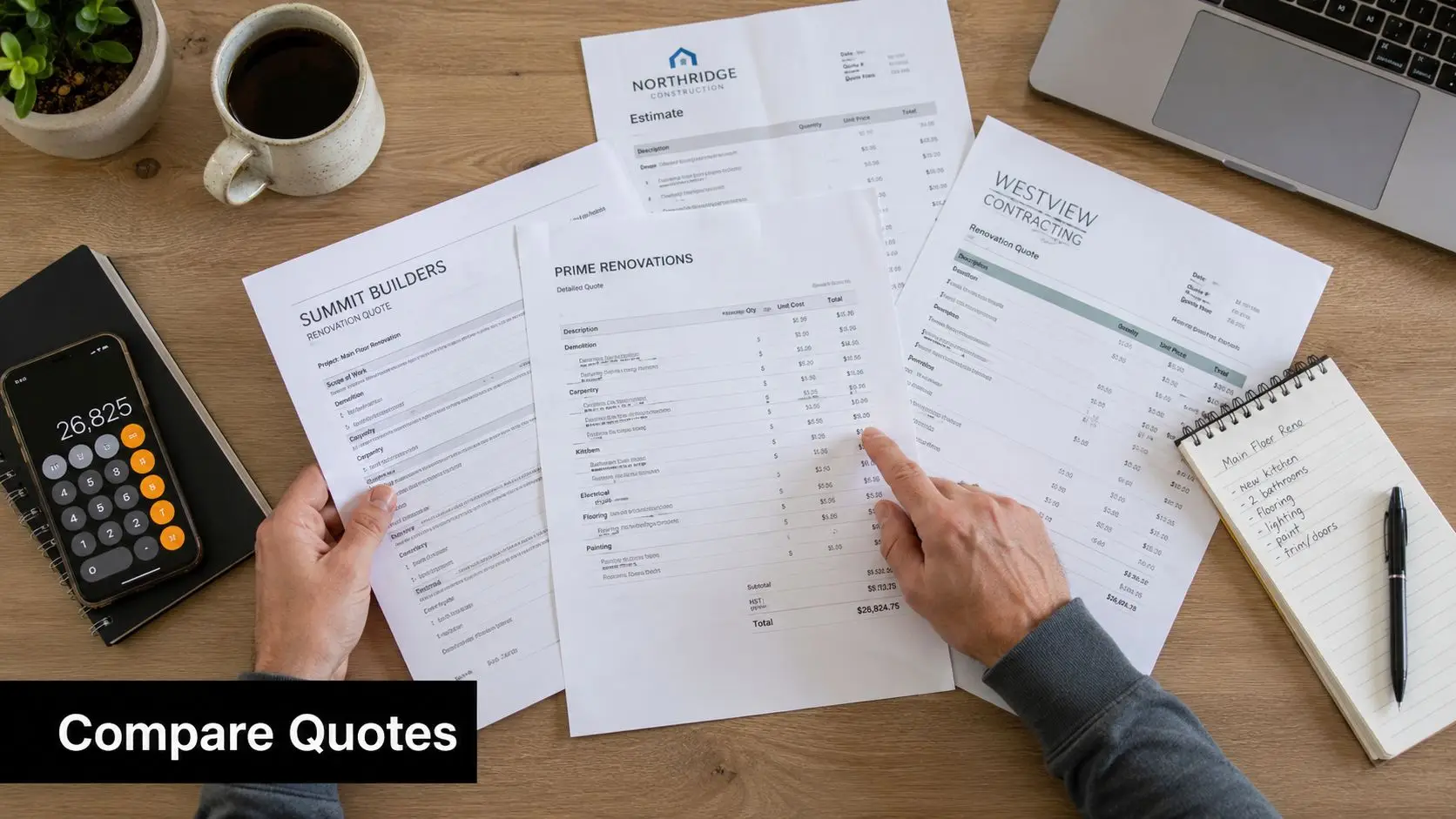
What a proper quote should spell out
A usable quote reads like a scope document. It should show what the contractor has allowed for, what they have not allowed for, and where the price could change if hidden conditions are found.
Look for detail in these areas:
- Demolition: what is being removed, whether strip-out is full or partial, and who is paying for waste removal
- Pre-lining and pre-tiling work: wall straightening, floor levelling, substrate replacement, screeds, falls, and waterproofing preparation
- Services: plumbing rough-in, drainage changes, electrical work, lighting, heating, exhaust fans, and final fit-off
- Fixtures and finishes: actual products, or clear allowance amounts for tiles, tapware, vanity, toilet, shower screen, mirror, and accessories
- Completion items: painting, silicone, final clean, rubbish removal, and defect rectification
In older Victorian homes, one line on “prep as required” is not enough. Preparation is often where the job is won or lost. A bathroom with out-of-plumb walls or a failed sheet substrate needs more labour than a newer room with sound surfaces, and the quote should show whether that has been allowed for.
Compare scope line by line
Do not compare quotes by total alone. Put them side by side and check how each builder has treated the same parts of the job.
| Quote area | Transparent quote | Risky quote |
|---|---|---|
| Scope | Breaks work into stages with clear inclusions | Broad summary with little detail |
| Materials | Names products or lists realistic allowances | Uses vague wording like “owner to select” without allowance detail |
| Site preparation | States what prep is included and what is excluded | Hides prep inside general labour |
| Variations | Explains how extra work is priced and approved | Leaves variation process unclear |
| Exclusions | Lists omitted work plainly | Says nothing about exclusions |
| Payment schedule | Tied to clear milestones | Heavy deposit or front-loaded payments |
Two prices can be close and still represent very different levels of risk.
One contractor may have allowed for proper floor correction, compliant waterproofing, and realistic fixture allowances. Another may have kept the number down by excluding difficult prep, underallowing finishes, or leaving half the room to future variations.
Watch the wording that causes budget blowouts
Some phrases deserve a hard follow-up before you accept a quote:
- “Allow as needed”
- “Standard preparation”
- “Make good where required”
- “PC items” or “provisional sum” without enough detail
- “All works complete” without a breakdown
Those phrases are not always dishonest. Sometimes they are a sign the contractor does not yet have enough information. But if they stay vague after a site visit and product discussion, you should assume the price is still soft.
Ask direct questions:
- What condition have you assumed the wall framing and floor substrate are in?
- Have you allowed for replacing water-damaged sheeting or rotten timber if found?
- Is asbestos testing or removal included, excluded, or not yet assessed?
- Are tile trims, niches, underfloor heating, and floor waste relocation included?
- Are fixture allowances realistic for the products we are considering?
That last point catches a lot of people. A quote can look competitive because the allowances are too low to buy the fittings you want. If you need a rough starting point before requesting site-specific pricing, a bathroom renovation cost calculator for Victoria projects can help you set a sensible budget range.
Check exclusions as closely as inclusions
Homeowners usually read the included items and skim the exclusions. Do the opposite as well.
The exclusions often tell you where the contractor expects cost pressure to appear. Common examples are asbestos removal, structural repairs, switchboard upgrades, rotten framing, council or building permit costs where required, and supply delays on owner-selected products.
That does not mean the quote is poor. It means the contractor is showing you where uncertainty sits. Clear exclusions are safer than a low number that assumes nothing will go wrong.
Cost check: If you cannot tell what would trigger extra charges, the quote is not detailed enough.
A good quote gives you enough detail to challenge assumptions before the contract stage. That is how you protect the budget.
Understanding the Contract and Project Kick-off
You are standing in a 1960s Victorian bathroom with a signed quote in hand, and it feels like the hard part is over. It is not. The contract stage is where a tidy-looking renovation either stays under control or turns into an argument about who pays for rotten framing, asbestos testing, or extra plumbing work once the walls are opened.
A contractor selection decision does not stop at price and presentation. It carries straight into risk control. Good paperwork reduces disputes, sets out who is responsible for approvals and licensed trades, and gives you a clear process when hidden conditions are found. Poor paperwork leaves too much open to interpretation, and that usually costs the homeowner.
Read the contract like a risk document
In Victoria, the contract matters as much as the workmanship because it sets the rules before the pressure starts. Friendly meetings and quick replies are useful, but they do not protect you if the scope is vague or the variation process is loose.
Read the document closely and check that written contracts clearly define the scope of work, price changes, and dispute resolution process. If those points are thin, the job is not ready to sign off.
A solid bathroom contract should state:
- exactly what is being demolished, rebuilt, supplied, installed, and finished
- who supplies each fixture and finish
- how variations are priced, approved, and recorded before extra work starts
- what each progress payment relates to
- who arranges permits or other approvals if they are required
- what happens if asbestos, water damage, or structural defects are found during demolition
- how delays, defects, and disputes are handled
That last point gets missed. In older Victorian homes, hidden damage is not a remote possibility. It is a known risk. The contract should say how the contractor will stop work, document the issue, price the change, and wait for written approval before proceeding.
Lock decisions before the room is opened up
The cleanest projects are usually the least exciting at kick-off. Selections are settled, drawings match the fixtures, lead times are checked, and the first week of work is already mapped out.
Late changes create expensive rework. A different vanity can affect plumbing set-out. A larger tile can change falls and floor waste detailing. A new tap choice can require a different rough-in depth inside the wall. None of those are design problems only. They are cost and sequencing problems.
Where available, 3D design helps because it exposes practical issues early. I would rather find an awkward door swing or a niche clash on a screen than after waterproofing has been applied.
Clarify compliance before work starts
A bathroom renovation in Victoria is not just a cosmetic update. Plumbing, electrical work, waterproofing, ventilation, and sometimes structural changes all carry compliance obligations. If the property is an apartment, owner corporation rules can add another layer around access, waste removal, delivery times, and protection of common areas.
Before kick-off, the contractor should be able to explain:
- whether permits or approvals are needed
- who is responsible for getting them
- which trades must be licensed
- what certificates or compliance documents you should receive at the end
- how site access, parking, rubbish, and material storage will be handled
If those answers are vague, the risk has not disappeared. It has just been pushed down the track.
What a well-run kick-off actually looks like
A proper start to site works should feel organised, even a bit dull. That is a good sign.
You want confirmed scope documents, final or near-final selections, an inclusions schedule, a payment schedule tied to real milestones, access arrangements, product lead-time checks, and a clear point of contact. You also want to know what happens on day one, what gets protected before demolition, and when you will be asked to inspect or approve anything.
If a contractor wants to begin demolition while key fixtures are still undecided or special-order items have not been confirmed, treat that as a warning sign. The fastest start is not always the safest start.
The right contract and kick-off process do one job well. They make surprises easier to contain before they become budget blowouts.
Managing the Build and Spotting Common Red Flags
A Victorian bathroom can look tired but stable right up until demolition exposes what has really been happening behind the tiles. I have seen wall framing softened by years of slow leaks, failed sheeting around showers, and old materials that turn a simple refit into a repair job. That is the point where contractor selection stops being a design decision and becomes a risk-control decision.
The right contractor does not push past that moment to keep the schedule looking tidy. They stop the job, photograph the problem, explain whether it affects structure, waterproofing, plumbing, or compliance, and price the extra work in writing before anything changes on site. If there is suspected asbestos, work should pause until the material is properly assessed. If rot has spread into framing or flooring, the rebuild scope needs to be reset before the bathroom is closed up again.
A contingency fund matters here. Hidden conditions are common in older Victorian homes, especially where past waterproofing has failed or previous renovations were done poorly. If you want a practical benchmark, set aside a 10% to 20% contingency fund for hidden demolition findings and controlled variations. That buffer protects your decisions when the job uncovers something real.
What you should watch during key milestones
You do not need to stand over trades. You do need a clear view of a few inspection points where mistakes get expensive if they are missed.
During the build, pay attention to:
- Demolition: Any decay, mould, termite damage, movement, or suspect materials should be documented and explained straight away.
- Rough-in: Waste locations, tap positions, niches, power points, and lighting points should match the approved layout before walls are closed.
- Substrate prep and waterproofing: Shortcuts in this stage cause long-term damage. Ask when you are meant to inspect, and what records will be kept.
- Tiling and set-out: Check falls, tile alignment, trim details, and how cuts land around corners, grates, and fittings.
- Fit-off: Confirm the installed fixtures match the quoted model numbers, not a substitute chosen because the original item was never ordered.
Photos help. Written updates help more.
A disciplined contractor will also tell you early if lead times, access issues, apartment rules, or hidden repairs are affecting the sequence of work. Silence is what causes budget shock.
Red flags that usually mean trouble
Some warning signs show up in the first week.
Watch for these:
- Problems discovered but not priced properly: If extra work starts before you approve a written variation, cost control is already slipping.
- Trade work happening out of sequence: Waterproofing, tiling, and fit-off rely on each earlier step being right. Rushed sequencing usually leads to rework.
- Repeated changes to the same area: One correction can happen on any site. Several usually point to poor supervision or unclear documentation.
- Selections still being chased during construction: Late decisions often lead to substitutions, delays, and arguments about who caused them.
- Compliance questions answered vaguely: If you ask what certificate or handover document you will receive and the answer is fuzzy, treat that seriously.
- A site that looks unmanaged: Persistent disorder, unprotected finishes, or materials left exposed to weather usually reflect weak site control.
If your contractor cannot explain a delay, a variation, or a defect in plain language, they do not have firm control of the build.
You are not looking for a perfect renovation with no surprises. You are looking for a contractor who contains surprises before they turn into leakage, defects, disputes, or a much bigger final invoice.
Your Bathroom Remodel Questions Answered
Do apartment bathroom renovations need approval in Victoria
Often, yes. For Victorians in apartments, guidance from Consumer Affairs and Owners Corporations makes it clear that renovations affecting common property require approval, which is why strata experience matters when choosing a bathroom remodel contractor (Victorian apartment renovation approval guidance).
That matters if your work affects waterproofing interfaces, penetrations, waste connections, access routes, acoustic expectations, or anything that could impact common property. A contractor who understands apartment work can help you avoid delays caused by incomplete approval steps.
What should investors prioritise over flashy design
For rental property work, durability usually beats novelty. Tenants notice easy-clean surfaces, practical storage, reliable ventilation, decent lighting, and fittings that don't feel flimsy. Owners also benefit from finishes that are easier to maintain between tenancies.
That's why the best bathroom renovations for investors often focus on solid layout choices, simpler detailing, and products that can be serviced or replaced without drama. The right contractor for that job may not be the one selling the boldest new bathroom ideas. It's often the one who understands staged work, low disruption, and compliance.
What makes designer bathrooms different from standard updates
A designer bathroom isn't just a bathroom with expensive tiles. It's a room where the layout, storage, scale, lighting, and material transitions have been resolved properly.
Typical differences include:
- Better planning: fixture spacing, sightlines, door swing, and circulation feel intentional
- Custom integration: joinery, recessed storage, mirror planning, and feature lighting work together
- More disciplined detailing: tile set-out, trims, junctions, and proportions are considered early
Plenty of modern bathrooms look good in photos. Fewer still feel comfortable, easy to maintain, and well resolved in daily use.
Should I choose style first or process first
Process first. Always.
Style is important. But in wet areas, beautiful finishes can sit over poor prep. If the contractor's planning, quoting, contract detail, and site discipline are weak, even the best-looking bathroom can become an expensive lesson.
If you're planning bathroom renovations in Victoria and want a team that handles design, buildability, and project control together, SitePro Bathrooms is worth contacting for a personalized discussion about your space.