• siteprobathrooms

Adding a Bathroom: A Victoria Homeowner’s Guide (2026)

If your home has reached that stage where mornings feel like a queue, guests always need to “just wait a minute”, or the kids have somehow taken over the only shower, adding a bathroom starts to feel less like a luxury and more like the obvious next step. In a lot of Melbourne homes, that pressure point arrives well before the family is ready to move.

That's especially true in older houses across bayside suburbs, where the floor plan often made sense decades ago but doesn't suit how people live now. A second bathroom can mean a private ensuite, a proper family bathroom renovation strategy, or a basic toilet and shower where they're needed most. It can also be the difference between making your current house work for another ten years and deciding you've outgrown it.

The catch is that adding a bathroom isn't just about picking tiles and tapware. In Victoria, the job sits at the intersection of layout, drainage, waterproofing, permits, structural work, and compliance. That's where many first-time renovators get tripped up. The nicest new bathroom ideas still fail if the location is wrong, the plumbing run is awkward, or the approvals haven't been handled properly.

Is Adding a Bathroom the Right Move for Your Home

A typical scenario goes like this. A family buys a solid home in Highett because the block is good, the schools are close, and the location works. A few years later, the one original bathroom starts causing friction. One person needs the shower, another needs the basin, and guests are walking past bedrooms to get to the toilet.

That's usually the moment people start looking at adding a bathroom instead of moving house.

A modern bathroom vanity with natural wood cabinets, brass hardware, and a dark marble bowl sink.

When the project makes sense

The best bathroom additions solve a daily problem first. Value matters, but function matters more. If the house has one bathroom serving a growing family, no guest facility, or no ensuite for the main bedroom, the project often pays off in day-to-day comfort long before resale enters the conversation.

There's also a property angle. Bathroom additions in Victoria have been linked with resale uplift, particularly when the new room is practical, well-located, and built to suit the home rather than forced into it. That's one reason so many owners now look at modern bathrooms and smarter layouts as part of a larger upgrade plan rather than a cosmetic renovation alone.

A good bathroom addition doesn't feel “added on”. It feels like the house should always have had it.

What works and what doesn't

Some additions are straightforward wins. Turning underused floor area into a compact ensuite, reworking a laundry, or converting part of a garage can transform the way a house functions. These projects tend to work because they use space the home already has.

What doesn't work is chasing a bathroom at any cost. If the room ends up dark, cramped, or dependent on difficult plumbing runs, the final result can feel compromised. The same applies when homeowners start with finishes instead of planning. Designer bathrooms only work when the bones are right first.

A better approach is to test three things early:

  • Daily use: Who needs the room, and when?
  • Placement: Can it sit near existing services or in a structurally sensible spot?
  • Long-term fit: Will it still suit the home in five or ten years?

Lifestyle first, style second

Many strong projects begin to take shape, driven by varied needs. A family might want a hard-wearing bathroom near the kids' bedrooms. A couple might want a calm ensuite with cleaner lines and more storage. An investor might focus on adding an extra shower and toilet to make the property more attractive to future buyers or tenants.

All three are valid. The right answer depends on the house, not on trends.

Finding the Perfect Spot Feasibility and Layout Planning

The location drives almost everything. Cost, complexity, approvals, plumbing, natural light, and how the bathroom feels once it's finished all start with one decision. Where will it go?

Before you think about finishes, walk through the house and look for wasted or underperforming space. In many homes, the answer isn't an extension. It's a better use of existing floor area.

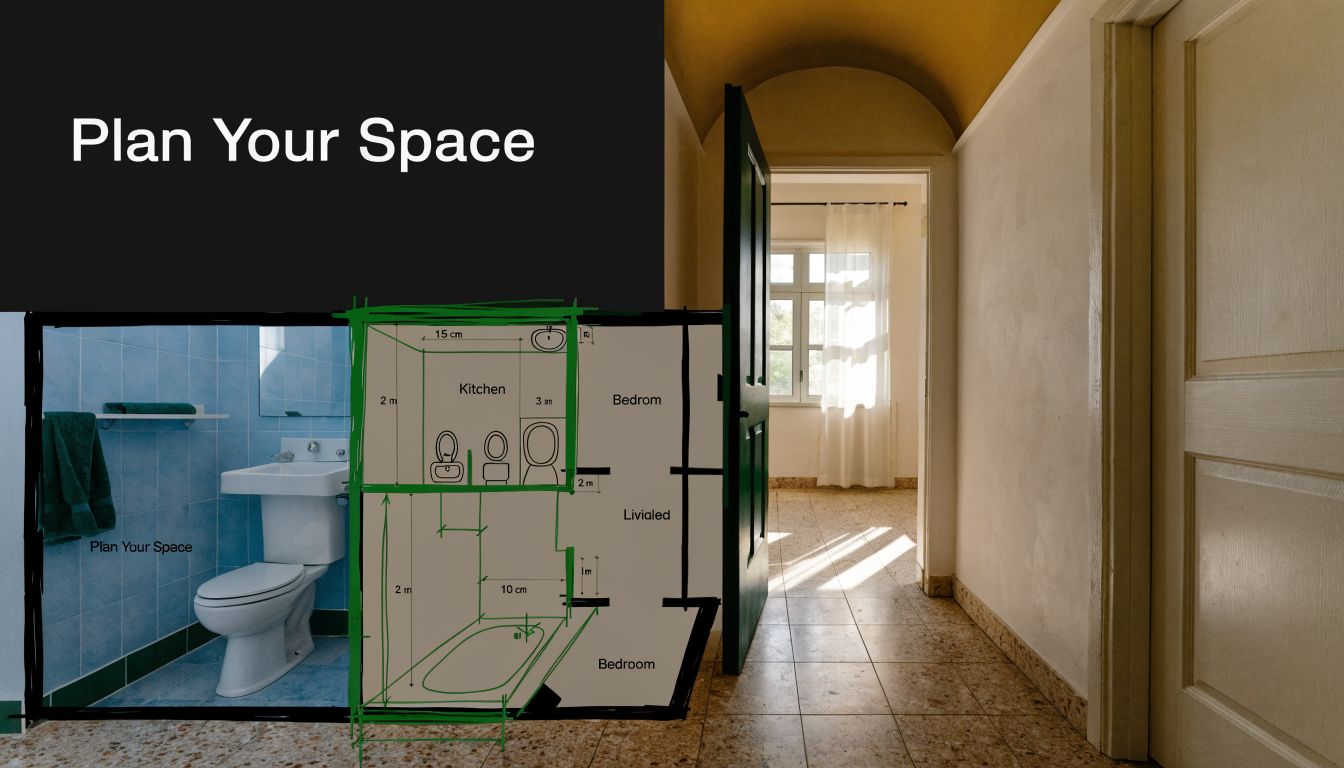
A conceptual floor plan overlaying a bathroom layout onto a hallway and doorway interior design perspective.

The most common locations

A few spots come up again and again because they're practical.

  • Laundry conversion: If the laundry is oversized or poorly laid out, it can often absorb a shower room or combined bathroom.
  • Garage conversion: Useful when internal space is tight, but structural and approval issues need close attention.
  • Upstairs reconfiguration: A common move in older homes where a robe, retreat, or part of a hall can become an ensuite.
  • Ground-floor extension: Best when the existing plan offers no sensible internal option, though this usually carries more build complexity.
  • Large walk-in storage area: Sometimes the simplest answer, especially near existing plumbing.

Each option has trade-offs. A converted internal space often saves money and shortens the build path. An extension gives more freedom but adds more structural, envelope, and drainage work.

What to check first

The first walkthrough should be practical, not aspirational. Ask:

  1. How close is the new room to existing water and waste lines? Shorter runs are usually simpler.
  2. Does the floor structure support the change? Upstairs additions often need more scrutiny.
  3. Can the room ventilate properly? Bathrooms without natural airflow need careful mechanical ventilation planning.
  4. Will the new layout damage another room? A second bathroom shouldn't ruin circulation or storage elsewhere.
  5. Is there enough door clearance and usable floor space? A plan can fit on paper and still feel awkward in real life.

If you're considering an ensuite, looking at examples of ensuite design layouts and planning ideas can help you understand how circulation, vanity position, and shower placement affect the final feel of the room.

Practical rule: The cheapest square metre in a bathroom addition is often the one that already exists inside the house.

Layout matters more than room size

A bathroom doesn't need to be huge to work well. What matters is sequence. If the first thing you hit is the toilet, the room feels clumsy. If the vanity steals the walkway, the room feels tight. If the shower door opens into the traffic line, the room feels badly planned even when the finishes are beautiful.

That's why early visualisation matters. Good 3D planning helps homeowners test whether a nib wall improves privacy, whether a cavity slider frees up circulation, or whether swapping a hinged shower screen for a fixed panel gives the room more breathing space.

Here's what usually improves the layout fast:

  • Place the vanity where it's easy to access
  • Keep the toilet out of the direct sightline where possible
  • Use shower screens and door swings to preserve movement
  • Build in storage from the start
  • Future-proof with walk-in access if the household may need it later

Natural light and privacy

The nicest bathrooms balance light and privacy. A frosted window, skylight, or borrowed light from an adjacent zone can lift a room dramatically. But privacy should be handled early, especially in side setbacks, garages, or upper-level additions overlooking neighbours.

A bright room feels larger. A private room gets used comfortably. You need both.

Budgeting Your Victorian Bathroom Addition A Realistic Cost Breakdown

A bathroom addition can look straightforward on paper, then shift fast once the hidden work is priced properly. In Victoria, the budget is usually driven by drainage, waterproofing, structure, ventilation, and access before anyone starts talking about tile patterns or tapware finishes.

For a full bathroom addition in Victoria, I'd usually tell homeowners to allow about AU$25,000 to AU$60,000 as a practical working range based on SitePro's project experience across Melbourne. A compact bathroom carved from existing internal space can sit at the lower end. An upstairs addition, garage conversion, or new extension can move well beyond that range once structural changes and longer service runs are involved.

Where the money usually goes

The spending pattern is fairly consistent, even though every house throws up its own issues.

Expense Category Estimated Cost (AU$) Percentage of Total Budget
Fixtures and fittings AU$10,000 to AU$20,000 45%
Plumbing and electrical AU$8,000 to AU$12,000 30%
Structural work AU$5,000 to AU$15,000 25%

Those percentages are best treated as a guide, not a fixed formula. In an older Melbourne home, plumbing and structural work often take a bigger share because the existing house was never set up for an extra wet area. In a cleaner internal conversion with easy access to waste lines, more of the budget can go into finishes and joinery.

The biggest budgeting mistake is assuming visible items control the final cost. They don't. A cheaper basin mixer will not offset a new drainage connection under a slab, floor levelling, or reinforcement for an upper-floor bathroom.

What usually pushes the budget up

Some costs are easy to see early. Others only show themselves after site inspection and opening works.

  • Longer plumbing and drainage runs increase labour, materials, and coordination
  • Concrete slab work can add excavation, cutting, and reinstatement costs
  • Garage and upstairs conversions often need structural engineering and floor reinforcement
  • Older homes can uncover out-of-level floors, dated pipework, and framing adjustments
  • Tight side access slows delivery, waste removal, and trades
  • Higher-end selections such as custom vanities, full-height feature tiling, and niche fittings add up quickly

A separate toilet can also affect the number, especially if you are adding or relocating it as part of the new layout. If that forms part of the wider scope, it helps to understand the cost differences in a toilet renovation or relocation project before locking in the final design.

The trade-off that matters most

The clearest cost split is usually conversion versus extension.

Using existing internal space is often the more controlled option because the roof, external walls, and footprint are already there. The trade-off is that you may be working around awkward dimensions or existing doors and windows.

Building outward gives you more freedom with layout and can produce a better end result for family use. It also brings extra costs such as footings, framing, cladding, roofing, insulation, and external weatherproofing. In Victoria, it can also make the approval pathway more involved, which affects both time and consultant costs.

A budgeting approach that works in practice

Start with a realistic range, then rank your priorities. For most households, that means deciding what matters most out of function, storage, durability, and finish level.

A good budget usually includes:

  • the base build cost
  • fixture and fitting selections
  • a contingency for hidden conditions
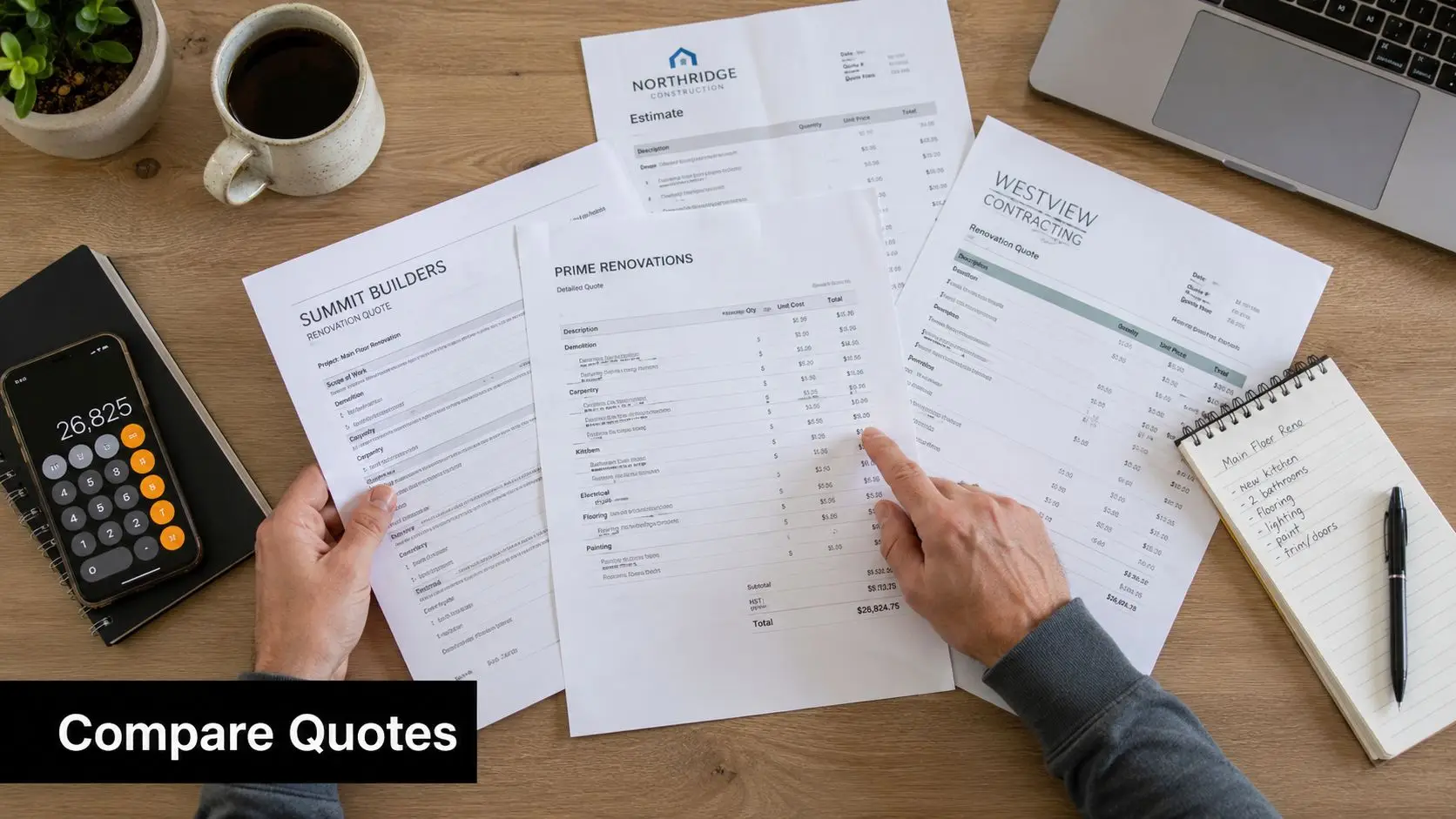
  • consultant and permit-related costs where required

Keep some room in reserve. In existing homes, surprises are common. Rotten subfloors, pipe relocations, and framing changes are not rare events. They are part of bathroom building, especially in older Victorian housing stock.

The projects that stay under control are usually the ones where the owners are clear on what they are paying for. Better layout, proper storage, easy-clean surfaces, and reliable waterproofing usually give more long-term value than chasing expensive finishes in the wrong room shape.

Navigating Council Permits and Victorian Building Codes

A lot of bathroom additions in Victoria go off track before any tiles are laid. The plans look straightforward, the room seems small, and the owner assumes approvals will be simple. Then the drainage set-out does not suit the existing pipe run, the window is too small for ventilation requirements, or structural changes have already started before a permit is in place.

That is where experience matters. In Victoria, adding a bathroom is regulated building work once you involve structural changes, new plumbing, drainage alterations, or work that triggers a building permit. If those parts are handled poorly, the room may look finished but still create problems at inspection, handover, or resale.

A clipboard with a construction permit application form sits on a wooden desk with papers.

The approvals side

For many bathroom additions, a building permit is required. The plumbing and drainage also need to comply with the applicable standards, including AS/NZS 3500.3. Whether council is directly involved depends on the scope, the siting, and whether planning controls affect the property. That point catches plenty of homeowners in Melbourne, especially on older blocks, heritage-affected sites, or projects that push into an extension.

In practice, projects run by licensed trades and properly documented from the start pass inspections far more reliably than jobs pieced together on the fly. The common failures are predictable. Incorrect pipe fall, poor ventilation to internal rooms, incomplete waterproofing details, and site conditions that were never checked properly before work began.

What homeowners should expect

A compliant bathroom addition usually involves more than one approval path and more than one party checking the work.

  1. Site assessment and measured drawings
    Existing floor levels, wall locations, drainage points, and structural conditions need to be confirmed on site.

  2. Permit documentation
    If a building permit is required, the drawings and supporting details have to reflect what will be built.

  3. Licensed trade work
    Plumbing, electrical, and any structural changes must be carried out by the right registered or licensed professionals.

  4. Mandatory inspections and certificates
    The job needs to be inspected at the right stages, not just at the end when everything is covered up.

For smaller linked projects, such as folding a separate WC into a new bathroom, the layout choices can affect both plumbing and approval requirements. This guide to renovating a toilet within a bathroom reconfiguration is useful if you are trying to connect old and new wet areas without creating compliance issues.

Why builder oversight matters

On a bathroom addition, someone needs to take responsibility for the whole job. Not just the tiling. Not just the plumbing. The whole chain, from drawings and permits through to waterproofing, ventilation, drainage, and final sign-off.

That is why builder oversight matters on regulated work.

I see the same mistake with first-time renovators. They speak with individual trades, get a rough idea of costs, and assume the pieces will come together on site. They usually do not. One trade works from an old plan, another makes a site decision without checking the permit drawings, and the owner gets left sorting out delays and variation costs.

Common trouble spots in Victoria

Some issues come up again and again on Melbourne bathroom additions:

  • Drainage runs that looked fine on paper but do not work with the actual floor height
  • Internal bathrooms without adequate mechanical ventilation
  • Structural alterations started before permit approval
  • Assumptions that a small room means permit-free work
  • Waterproofing details that do not suit the substrate or room design
  • Older homes hiding rotten framing, uneven floors, or outdated services

Older Victorian housing stock adds another layer. Weatherboard homes, post-war brick veneers, and terrace-style renovations often carry hidden conditions that affect compliance as much as cost. A bathroom addition in a new home and one in a 1930s house are rarely the same exercise.

The jobs that stay under control are the ones where compliance is treated as part of the build from day one. Not as paperwork to sort out after the room is already closed up.

The Construction Sequence From Frame to Taps

A bathroom addition can look like it is racing ahead one week, then lose time fast because one step was done too early or checked too late. On Melbourne jobs, the build itself is usually straightforward. Keeping the sequence tight is what protects the budget, the finish, and the compliance side of the work.

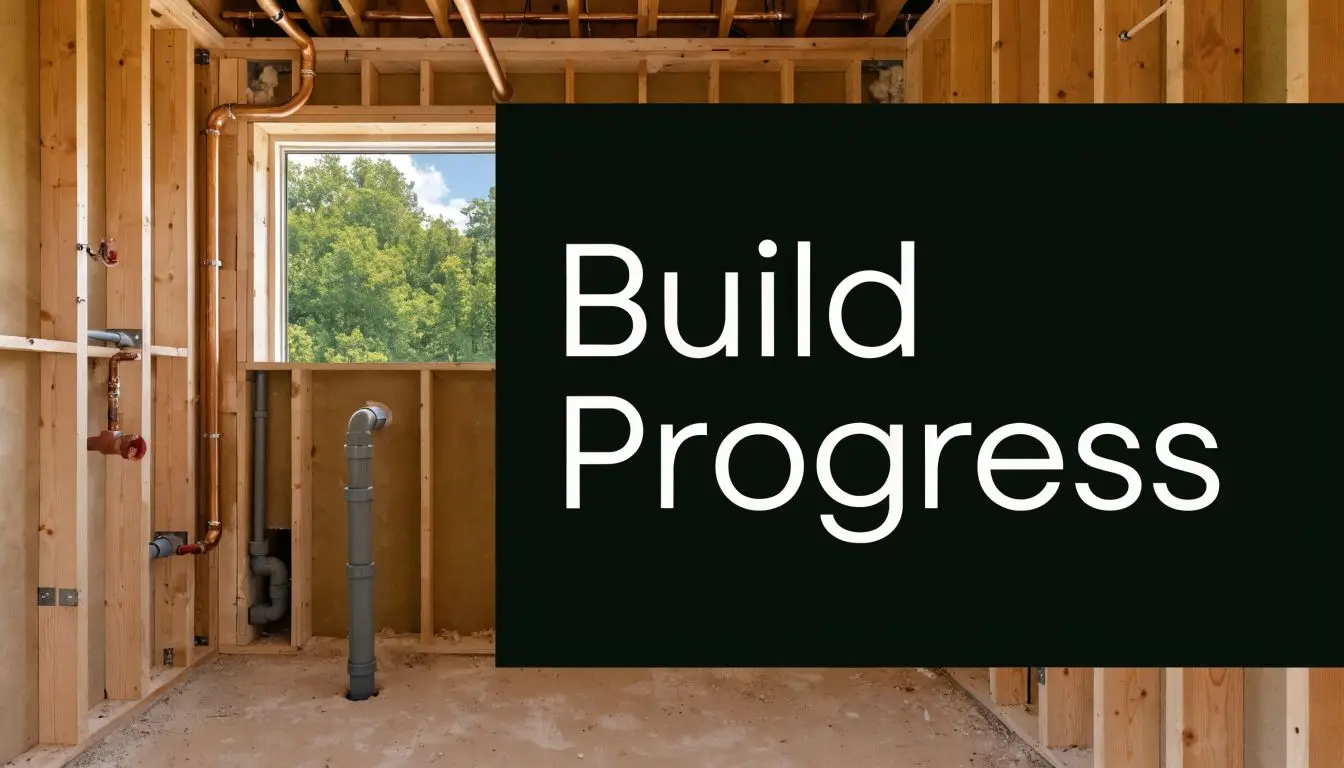
An unfinished room under construction showing exposed wooden wall studs and newly installed copper and PVC plumbing pipes.

The first physical stage is usually demolition or strip-out, if the new bathroom is going into an existing room, part of a laundry, a garage conversion, or an upstairs rework. Once the room is opened up, the condition of the house becomes clear. I often find floor levels out by more than expected, old pipework in the wrong spot, or framing that needs repair before any new work starts.

From there, the structure and services get set in place.

  • Framing: new walls, door openings, shower hobs, wall niches, and any structural changes are built to the approved layout
  • Plumbing rough-in: water, waste, and drainage points are set before the room is lined
  • Electrical rough-in: lighting, switches, power, heated rails, and exhaust wiring are positioned before surfaces are closed

This stage gives the builder one of the last chances to catch layout issues cheaply. A shifted waste point or a niche that clashes with pipework is manageable here. It is expensive once waterproofing, tile, and fit-off have started.

The waterproofing checkpoint

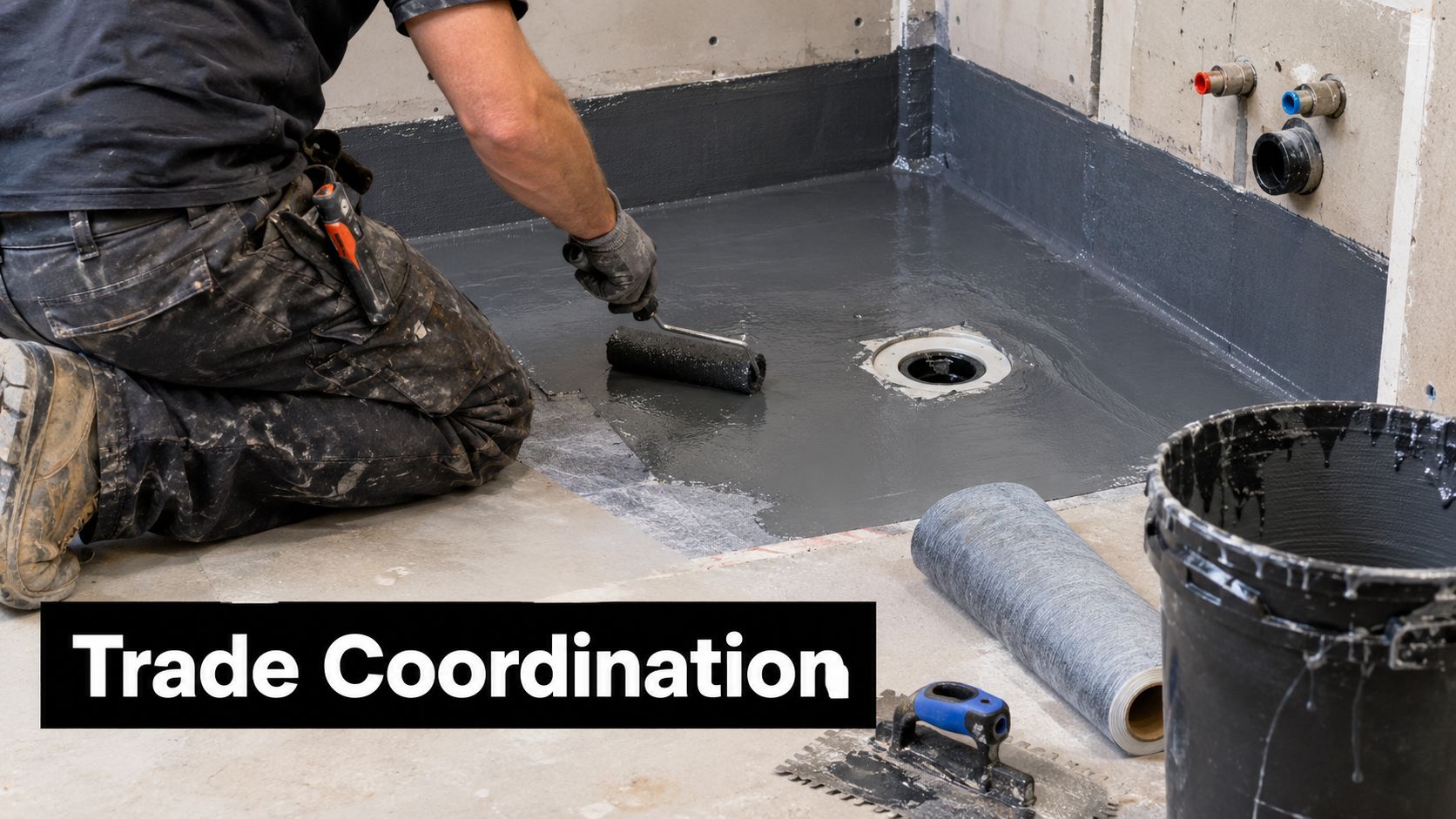
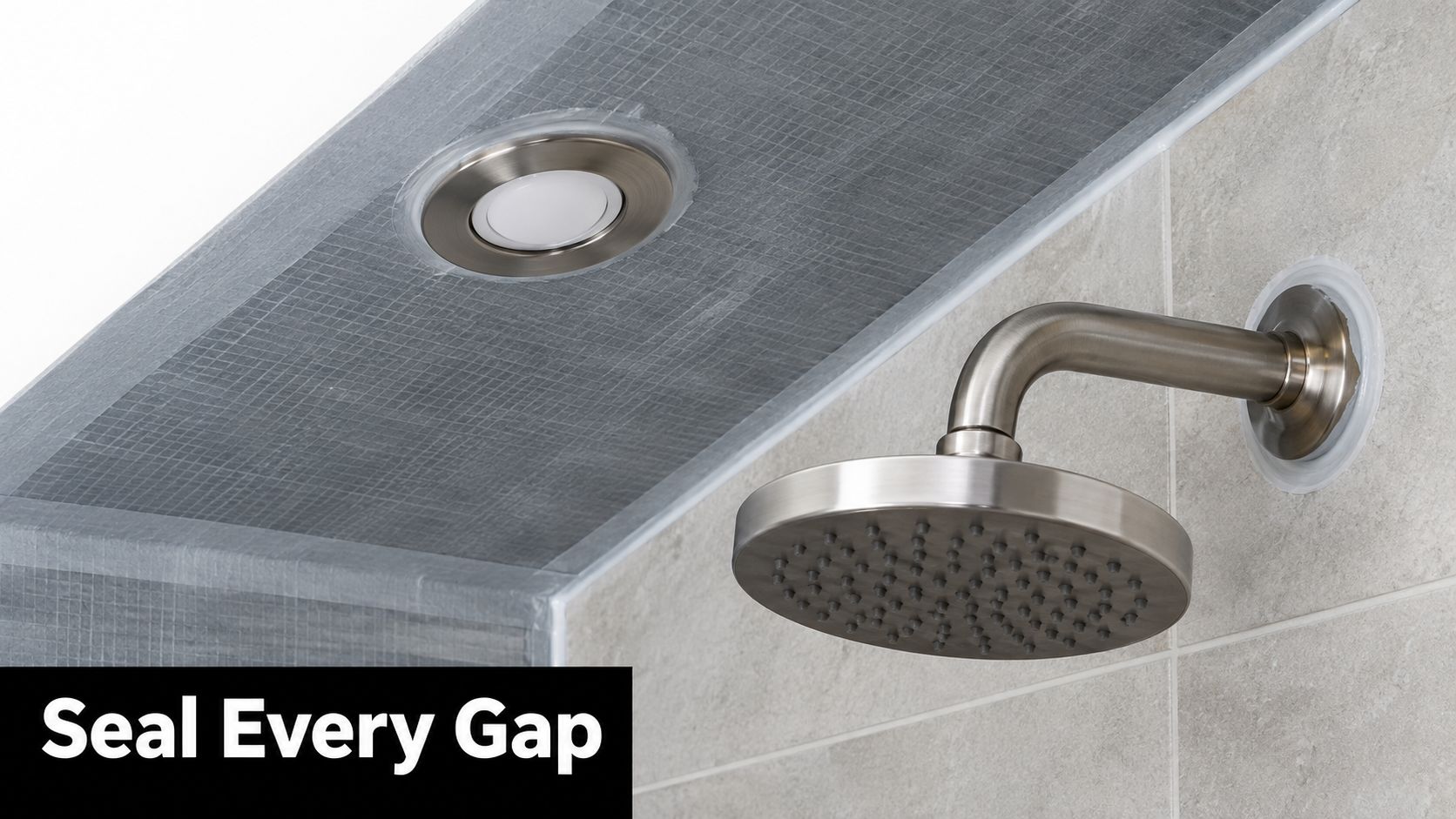
Waterproofing is the part of the job that deserves the least guesswork. Industry data consistently shows that a large share of bathroom rectification work comes back to moisture ingress. In practice, that means small mistakes at junctions, penetrations, and floor-to-wall transitions can lead to major repair work later.

In Victoria, wet area waterproofing needs to suit the substrate, the room layout, and the intended use of the space. The membrane system matters, but so does the preparation underneath it. If the floor is uneven, the falls are wrong, or the sheeting is not installed properly, the membrane is already starting from a weak position.

Rushing this stage is one of the costliest mistakes on a bathroom addition.

The finishing sequence

Once rough-ins are checked and waterproofing has cured, the room starts to look like a bathroom. The order still matters.

  1. Wall linings and floor preparation
  2. Tiling and grout
  3. Cabinetry, toilet, shower fittings, tapware, and screens
  4. Electrical fit-off
  5. Painting, sealing, testing, and final adjustments

This is also the point where poor planning becomes obvious. A vanity can crowd a doorway. A shower screen can leave too little clearance. A towel rail can end up fighting for the same wall space as a switch plate. Good documentation reduces that, but site checking still matters because older Melbourne homes rarely give perfectly square rooms or level floors.

If you want a realistic sense of timing between rough-in, waterproofing, tiling, and fit-off, this guide on how long a bathroom remodel should take helps set expectations.

Small build choices that make a big difference

A lot of value gets decided before the taps go on. If the room might need easier access later, frame for it now. A wider doorway, a hobless shower, or noggings for future grab rails cost far less during construction than after the bathroom is finished.

Other choices that usually pay off are straightforward:

  • Recessed niches to keep storage off the floor area
  • Wall-hung vanities where every millimetre counts
  • Cleaner shower detailing to reduce maintenance
  • Stronger mechanical ventilation in internal or low-airflow bathrooms
  • Simple alignment of fittings and fixtures so the room feels deliberate and balanced

A good bathroom addition is built in layers. Each layer has to be right before the next one starts. That is how you get from bare frame to finished taps without paying twice for the same work.

Choosing Your Builder and Finalising Your Design

The builder you choose will shape the outcome as much as the budget or the plan. A bathroom addition asks for more than decent workmanship. It needs coordination. The room has to be designed properly, documented clearly, built in the right order, and handed over without unresolved compliance issues.

That's why homeowners should spend more time vetting the builder than choosing feature tiles.

What to ask before signing

The basics matter. Ask whether the builder is appropriately registered, fully insured, and experienced with structural bathroom additions rather than cosmetic bathroom renovations alone. Then go further.

Ask how they handle:

  • Documentation and approvals
  • Trade sequencing
  • Waterproofing responsibility
  • Variations and cost changes
  • Communication during the build
  • Defect management after completion

You're looking for clarity, not charm. A strong builder can explain the build pathway in plain language.

Why design should be locked in early

Many expensive problems don't come from bad construction. They come from unfinished decisions. A homeowner changes the vanity width once plumbing is roughed in. The shower screen conflicts with a light switch. The wall niche lands in the same space as pipework. Suddenly the build is absorbing changes that should have been solved before work started.

That's where detailed visual planning helps. Internal project data from more than 50 Victorian bathroom projects shows that 3D modelling can cut mid-project changes by up to 25%, making budgets and timelines more reliable. That's the strongest argument for resolving layout, fixture positions, and joinery before demolition begins.

The difference between a quote and a build plan

A cheap quote can hide a vague scope. A better quote usually reflects better thinking. It shows what is included, what assumptions have been made, and where allowances sit. That clarity matters most on bathroom additions because small omissions become expensive once walls are opened.

If you want a project that feels organised from the start, work with a team that handles the process end to end. SitePro Bathrooms does exactly that, from concept and 3D planning through construction and handover. If you're ready to price your project properly, you can request a tailored bathroom renovation quote from SitePro Bathrooms.

Frequently Asked Questions About Bathroom Additions

Is adding a bathroom worth it in Victoria

Usually, yes, if it fixes a real problem in the way the home works.

A second bathroom often makes the biggest difference in older Melbourne homes with one original bathroom and a growing family, regular guests, or a main bedroom that would benefit from an ensuite. In resale terms, buyers respond well to practical improvements they can use straight away. The best return usually comes from adding the right bathroom in the right spot, not from overspending on finishes that do not suit the area or the house.

Is it better to convert space or build an extension

If you have usable internal space, a conversion is often the simpler and cheaper option. Converting part of a laundry, rear hallway, oversized bedroom, or underused study can reduce structural work and keep approval pathways more straightforward.

An extension can still make sense, especially if the existing floorplan is already tight. But once you push outside the current building envelope, costs usually rise fast. Footings, external walls, roofing, stormwater, setbacks, and site access all start to matter more, and in Victoria that can also mean a more involved permit process.

Can I add a bathroom in an apartment

Sometimes, but apartment bathrooms are rarely simple.

The main limits are strata approval, waterproofing requirements, acoustic treatment, and where existing waste pipes and water services run. If the proposed bathroom sits a long way from the stack, the design may need reworking or the project may stop making financial sense. In older blocks around Melbourne, that question comes up a lot.

How do I know if the layout is workable

A workable layout needs more than fittings that physically fit on paper. It needs enough clearance to use the room comfortably, practical door swings, proper ventilation, compliant waterproofing details, and plumbing runs that can be built without creating bigger problems elsewhere.

If the toilet is jammed behind a door, the vanity has no useful storage, or the shower only works with custom compromises everywhere, the plan needs more work.

What's the biggest mistake homeowners make

Committing to the idea before testing the site.

The expensive mistakes usually start with assumptions. Homeowners see an unused corner and assume it can take a bathroom. Then the floor wastes do not fall the right way, the wall carries load, the ceiling space is too tight for exhaust ducting, or a permit issue appears late. In Victoria, those details matter early. A quick feasibility check saves far more than it costs.

If you're planning on adding a bathroom in Highett or anywhere across greater Melbourne, the smartest first step is a proper site-based assessment. SitePro Bathrooms can help with design, layout planning, 3D visualisation, construction, and a clear quote that matches the actual conditions of your home.

  • siteprobathrooms

Renovating a Toilet: Victoria Permits & Costs Guide

You’re usually at the same point when renovating a toilet first becomes urgent. The old suite still works, technically, but the room feels tired, harder to clean, and increasingly out of step with the rest of the house. In older Highett homes, that often comes with deeper worries too. What’s behind the wall, what’s happening under the floor, and whether a “simple swap” is really simple once the work starts.

That’s why a toilet renovation should never be treated as a one-item upgrade. The toilet sits inside a wet area, connects to plumbing and drainage, and affects layout, waterproofing, ventilation, accessibility, and resale value. If you’re planning your first major bathroom project in Victoria, the right approach is to think like a renovator from day one. Start with planning, confirm the rules, open the room carefully, then build it back properly.

The Foundation Planning, Budgeting, and Design Inspiration

Most homeowners start with appearance. They want a cleaner look, a better layout, or one of those new bathroom ideas that makes a small room feel sharper and calmer. That’s a good instinct, but design only works when it begins with the actual room you have.

A toilet renovation in Victoria should start with three questions. What’s staying, what’s moving, and what’s essential? If the waste position stays where it is, the job is usually more straightforward. If the toilet needs to shift, the layout, plumbing route, and floor build-up all need a closer look.

In resale terms, bathrooms remain one of the stronger places to spend money. In Australia, mid-range bathroom renovations, including toilet upgrades, recoup approximately 65-73% of costs at resale, according to 2026 Cost vs. Value reporting adapted for the local market. That’s one reason many Highett owners renovate the bathroom before touching more ambitious projects elsewhere in the home.

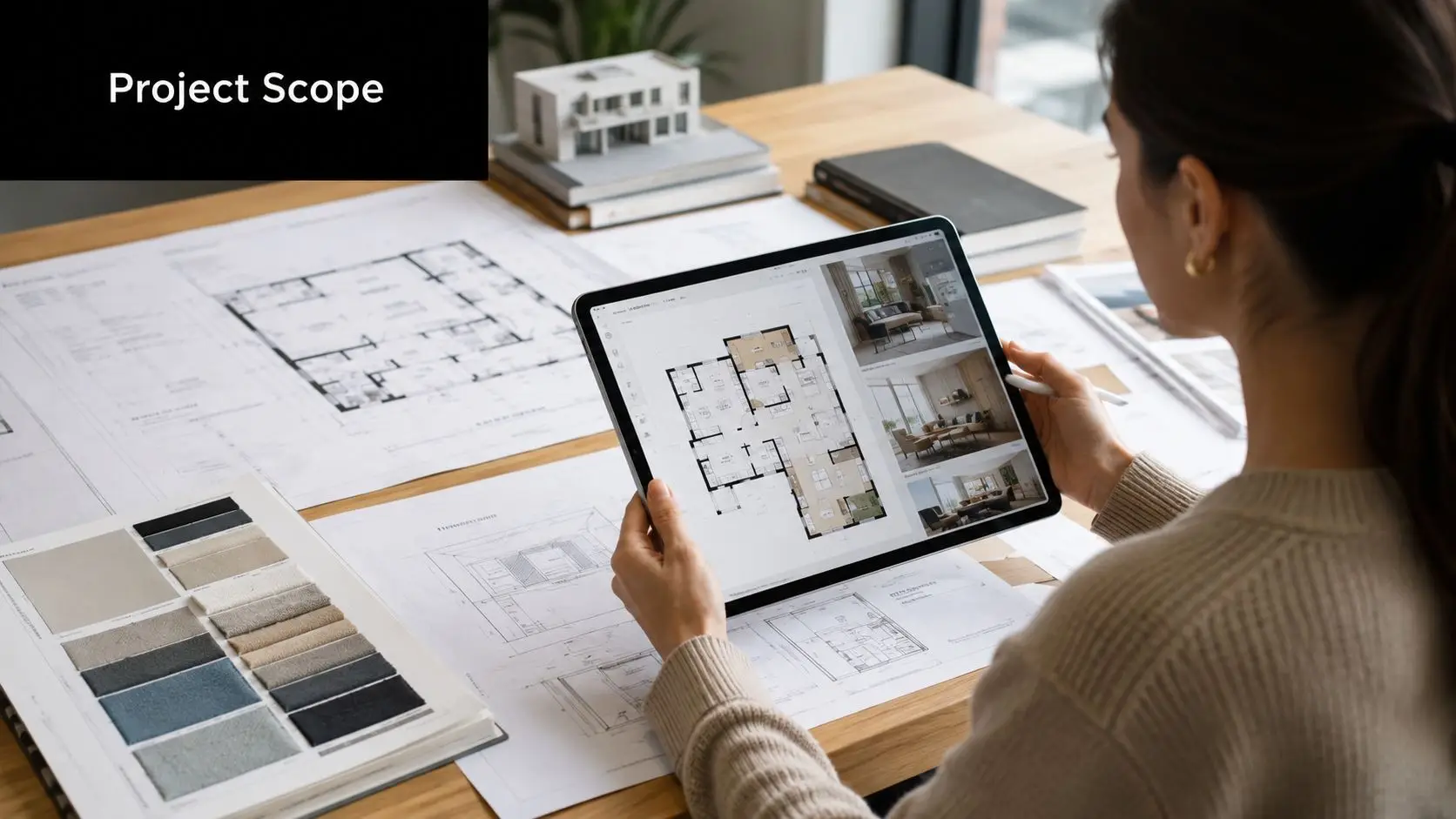
A wooden table featuring a tablet with room planning software, architectural sketches, material samples, and coffee.

Start with the room, not the showroom

A good site assessment is more valuable than a long wishlist. Measure the room. Check the wall positions. Look at the door swing. Confirm where the sewer outlet sits. If the house is older, assume there may be hidden repairs needed until proven otherwise.

I tell clients to separate ideas into two groups:

  • Functional upgrades: better toilet position, easier cleaning, stronger ventilation, more practical storage, wider circulation space
  • Visual upgrades: wall-hung vanity, fluted tile, brushed finishes, niche shelving, feature lighting, larger mirror

That split helps you protect the essentials when choices get tighter.

Practical rule: If you spend your budget on finishes before solving layout and moisture issues, the room may look expensive and still perform badly.

Modern bathrooms and designer bathrooms mean different things

People often use those terms as if they’re interchangeable. They’re not.

A modern bathroom usually prioritises clean lines, simple detailing, practical fixtures, and easy maintenance. That might mean a back-to-wall toilet, large-format tiles, a floating vanity, and restrained colour choices.

A designer bathroom is more composition-driven. It leans harder into material contrast, lighting, feature stone, custom joinery, and carefully resolved sightlines. Done well, it feels cohesive. Done badly, it can become difficult to maintain and too specific for the rest of the house.

A first renovation usually lands best in the middle. Borrow the clarity of modern bathrooms, then add a few designer bathrooms ideas where they’ll matter most. A shaped mirror, warmer lighting, or a stronger tile selection will do more than overloading the room with statement pieces.

Build a planning framework before demolition

The planning stage should answer more than colour and tile questions. It should also define how the room will be used.

Use this checklist before you approve a design:

  1. Who uses the bathroom most often
    A family bathroom needs different clearances and storage than a compact powder room or ensuite.

  2. Whether the toilet location stays or moves
    This affects plumbing complexity, floor prep, and sequencing.

  3. What level of finish suits the home
    A modest home can still have a beautifully detailed bathroom, but the room should feel consistent with the property.

  4. How much visual maintenance you can live with
    Matte tiles, textured grout lines, and dark fittings can look excellent, but they don’t all wear the same way.

  5. How the renovation timeline affects the household
    If this is your only toilet, staging and access matter. A clear programme matters even more. This guide on how long a bathroom remodel should take helps frame the practical side of scheduling before work begins.

Why 3D planning saves expensive mistakes

Most toilet renovation errors happen before demolition. The toilet ends up too close to the vanity, the in-wall cistern conflicts with framing, or the tile set-out leaves awkward cuts at eye level.

That’s where detailed drawings and 3D visualisation earn their place. You don’t need them for decoration. You need them to test the room before trades arrive. They show whether a toilet pan projects too far, whether the vanity edge crowds the entry, and whether the wall finish and floor finish work together in the light your room gets.

SitePro Bathrooms offers end-to-end renovation services that include concept development and detailed 3D design, which is useful when you want the layout, finishes, and construction details resolved before demolition starts.

Navigating Victorian Regulations and Finding a Registered Builder

A toilet renovation feels small until it intersects with Victorian compliance. Then it stops being a decorating project and becomes building work with legal and practical consequences.

That’s especially true when the renovation changes plumbing, alters waterproofed areas, affects accessibility, or sits inside a strata property. This is the part many generic online guides skip. In Victoria, the rules around wet areas, approvals, and trade responsibility aren’t optional.

Why approvals matter more than homeowners expect

If you own an apartment, townhouse, or unit under an owners corporation, approval can be part of the job before any trade starts. In Victoria, 28% of households are in strata schemes, and toilet renovations in those properties require body corporate approval. Non-compliance can lead to fines up to $10,000 per breach, and 65% of strata renovations without pre-approval exceed timelines by 40%, according to the Victorian strata renovation data referenced here.

That matters because toilet works can affect shared services, acoustic separation, waterproofing responsibility, and access for inspections. Even when the room is wholly inside your lot, the works may still trigger approval requirements.

A simple way to think about it:

Situation What usually matters
Freestanding home Scope of plumbing, building compliance, wet area standards
Apartment or strata unit Owners corporation approval, building rules, shared infrastructure
Older home in Highett Existing condition, hidden repairs, compliance upgrades once room is opened

What a registered builder unlimited means in practice

Homeowners often ask for a “registered builder unlimited” because they’ve heard the phrase, but they’re not always sure what they’re asking for. In practice, you’re looking for a properly registered professional who can take responsibility for the work, coordinate licensed trades, and manage compliance in a wet area.

That matters for three reasons:

  • Accountability: one party coordinates sequencing instead of leaving you to manage separate trades
  • Compliance: plumbing, waterproofing, and structural changes are handled within the right regulatory framework
  • Protection: documentation, trade oversight, and defect responsibility are clearer

If a renovator shrugs off permits, approvals, or certification, that’s not efficiency. It’s risk shifted onto you.

The fastest renovation on paper is often the slowest one in real life once approvals, rework, or disputes catch up.

Before engaging anyone, review why using a registered builder matters for your bathroom renovation. It’s one of the easiest ways to separate a coordinated project from a patchwork one.

Council, access, and local practicalities

Highett projects also bring local practical issues that aren’t glamorous but matter a lot on site. Waste removal, parking, noise management, apartment access times, and material delivery can all affect how smoothly the renovation runs. A builder who works locally will usually raise those points early.

For homeowners, the practical test is simple. Ask who is handling approvals, who is booking inspections where required, and who is responsible if existing conditions trigger changes once demolition starts. If the answer is vague, the project isn’t ready.

The Transformation Begins Demolition and Plumbing Rough-In

Demolition is where optimism meets reality. Until the old toilet, tiles, and sheeting come out, you’re still working from assumptions. Once the room is open, you finally see the substrate, the waste line position, the state of the framing, and whether previous work was done properly.

This stage is noisy, dusty, and disruptive, but it’s also where a renovation is either set up for success or compromised early.

A white toilet inside a room undergoing renovation with exposed wooden wall studs and plumbing pipes.

What proper demolition looks like

In a toilet renovation, demolition should be controlled, not fast for the sake of speed. The sequence matters. Water is shut off. The toilet is flushed and drained properly. The cistern and pan are removed without leaving water trapped inside. Fixtures are disconnected carefully. Then the floor and wall linings come out in a way that protects surrounding rooms and makes it easier to inspect what’s underneath.

The drainage stage is where many DIY attempts go wrong. The demolition and drainage process is where 28% of DIY renovation failures occur, according to this bathroom renovation checklist reference. That aligns with what trades see on site. Spills, cracked fittings, damaged flooring, and rushed removal create mess and extra repair work before the new room has even started.

What professionals look for after the room is stripped

Once the floor is visible, the next job isn’t installing anything. It’s assessing the base.

In older Highett homes, the subfloor deserves close attention. Professionals find and rectify subfloor rot in an estimated 35% of pre-1970 Highett homes, which is exactly why this stage can’t be rushed. A new toilet installed over a compromised floor may look fine at handover and still fail later through movement, moisture, or poor fixing.

Key checks after demolition usually include:

  • Subfloor integrity: soft spots, prior water damage, delamination, or uneven sections
  • Wall framing condition: swelling, mould history, poor previous repairs, or framing conflicts with a new cistern setup
  • Waste and water service positions: whether the intended fixture layout matches the existing pipework
  • Level and squareness: tile set-out and toilet alignment depend on this more than is often appreciated

Open walls and floors are an opportunity. If you ignore what they reveal, the finished bathroom only hides the problem.

Rough-in is where the layout becomes real

Rough-in is the point where the plan turns into fixed positions. The toilet waste location, water feed, any electrical changes, ventilation route, and vanity services are all set before the room is closed up again.

This is also where practical trade-offs show up. Keeping the toilet in the existing position usually saves complexity. Moving it may improve circulation or sightlines, but only if the plumbing route and floor depth can support it properly. The right choice isn’t always the boldest one. It’s the one that works structurally and spatially.

For first-time renovators, the main lesson is simple. Don’t judge progress by how quickly fixtures return to the room. Judge it by whether the hidden stages were checked, documented, and corrected while access was still easy.

Waterproofing and Tiling Building a Resilient Wet Area

If there’s one stage that decides whether a toilet renovation lasts, it’s waterproofing. Homeowners rarely see most of it once the room is finished, yet it protects the very parts of the renovation that cost the most to repair later.

That’s why waterproofing shouldn’t be discussed as a product choice alone. It’s a system. Surface prep, falls, membrane application, curing, junction treatment, and tile installation all have to work together.

A close-up view of tiles being installed on a floor with waterproof sealant and adhesive paste.

What compliance actually means in a Victorian bathroom

In Victoria, waterproofing in wet areas must comply with AS 3740-2010. That standard affects how the substrate is prepared, how transitions are treated, and how water is directed to waste.

The issue that trips up many projects isn’t just membrane coverage. It’s the fall. Water has to move where it’s meant to move. When the floor is too flat, or falls are inconsistent, water sits, tracks, and eventually finds weak points.

According to this waterproofing reference, professional success rates are near 96%, while DIY success drops to 65%, and inadequate fall is the cause of 40% of waterproofing failures in Victoria. That tells you where to focus. Not on marketing language, but on floor preparation and workmanship.

The shortcuts that fail

Bad waterproofing usually comes from one of a few familiar mistakes:

  • Uneven screed: the floor looks level to the eye but doesn’t drain correctly
  • Poor junction treatment: wall-to-floor transitions and penetrations aren’t resolved properly
  • Tiling over rushed prep: adhesives and membranes are asked to compensate for substrate problems
  • Wrong sealing assumptions: silicone is treated as the waterproofing instead of a finishing component

A tiled floor can still leak if what’s underneath is wrong. Homeowners often judge tile by colour, size, and pattern. Trades judge it by fall, bond, edge control, and movement management. The second view is the one that protects the room.

Choosing tiles that work in real life

Porcelain is often the practical choice for a toilet or bathroom floor because it handles moisture well and wears hard. Ceramic can still work in the right application, but the decision should be based on performance as much as appearance.

When selecting tiles, think beyond the showroom sample:

Consideration What it affects
Tile size Set-out, drainage, and how easily falls can be formed
Surface finish Slip resistance, cleaning effort, visual softness or sharpness
Grout choice Staining resistance, maintenance, and edge definition
Edge details How cleanly the room finishes around doorways and fixtures

Waterproofing doesn’t fail because the tile looked wrong. It fails because the layers under that tile weren’t built with enough discipline.

The rooms that age best aren’t always the most elaborate. They’re the ones where the floor drains properly, the membrane system is respected, and the tiling is set out to suit the room rather than forcing the room to suit the tile.

The Final Fit-Out Installing Fixtures and Finishing Touches

The fit-out is where the room starts to feel worth the disruption. The walls are finished, the floor is tiled, and the bathroom finally shifts from construction zone to usable space. But this stage still needs precision. A crooked pan, poorly sealed basin, or badly placed accessory can spoil work that was excellent up to that point.

Homeowners are also more fixture-conscious than they used to be. The global market for bathroom fixtures like toilets was valued at USD 51.3 billion in 2025 and is projected to grow at a 5.1% CAGR, according to this bathroom fixtures market report. In practical terms, that reflects a broader move toward better-looking, more water-efficient, better-performing fixtures.

A modern bathroom vanity with a white bowl sink and a sleek black toilet set against blue marble.

Installing the toilet properly

A toilet installation isn’t just a matter of setting the pan in place and tightening it down. The floor level must be right. The set-out must be right. The seal must be right. And the finished position has to feel intentional within the room.

A well-installed toilet should:

  • Sit level on the finished floor without rocking or being forced into place
  • Align cleanly with wall lines, joinery, and tile set-out
  • Seal properly at the connection point and around the pan where required
  • Allow practical cleaning access instead of cramming the fixture into a visually neat but awkward gap

Style and practicality finally meet. Back-to-wall suites usually make cleaning easier. Wall-faced toilets can sharpen the look of modern bathrooms. A more sculptural pan may suit designer bathrooms, but only if the room is large enough to carry the form.

Vanities, lighting, and the details that finish the room

The toilet may be the focus of the renovation, but the room succeeds or fails as a whole. Vanity height, mirror size, lighting temperature, and ventilation all affect how the bathroom feels every day.

A few finishing choices make a bigger difference than people expect:

  • Lighting at face level: better for grooming and less harsh than relying on one ceiling point
  • Storage that hides clutter: especially important in compact bathrooms where every object becomes visible
  • Paint suited to humidity: standard interior paint in a wet room is a false economy
  • Ventilation sized to the room: the right fan protects grout, paint, and cabinetry over time

If you’re choosing lighting, this guide to bathroom downlight planning is a useful reference before final electrical positions are locked in.

What works and what doesn’t

Here’s the trade view.

Works well Usually disappoints
Simple fixture forms with good cleaning access Overly bulky fixtures in tight rooms
Consistent finishes across tapware and accessories Too many finish changes in one compact space
Vanity and toilet scaled to the room Showroom-sized pieces forced into modest bathrooms
Lighting layered for task and ambience A single bright fitting that flattens the room

The best fit-outs don’t try to impress in every corner. They make the room easy to use, easy to clean, and visually calm. That’s the point where new bathroom ideas become a finished space that improves daily life.

Your Renovation Checklist and Frequently Asked Questions

A good toilet renovation doesn’t come down to luck. It comes down to selecting the right team, asking better questions early, and understanding where corners should never be cut. If you’re hiring for bathroom renovations in Victoria, this is the checklist I’d use before signing anything.

The hiring checklist for a Victorian toilet renovation

Ask these questions in plain language and expect clear answers.

  • Registration and trade responsibility
    Are you properly registered for this type of renovation, and who is responsible for coordinating the licensed trades?

  • Scope clarity
    Does the quote cover demolition, plumbing, waterproofing, tiling, fixture installation, waste removal, and final finishing, or are some of those left out?

  • Compliance pathway
    How will you handle approvals, certifications, and inspection requirements if they apply to my property?

  • Strata and owners corporation experience
    If the property is under an owners corporation, who prepares the information needed for approval and who manages access requirements?

  • Waterproofing method
    How is the waterproofing system documented, and how do you confirm the room has the right falls before tiling starts?

  • Existing condition risks
    What happens if demolition reveals damaged framing, subfloor problems, or previous non-compliant work?

  • Design sign-off
    Can the layout and finishes be resolved before construction starts so there’s less guesswork on site?

  • Programme and communication
    Who updates me during the project, and how are variations handled if the scope changes?

A professional answer is usually specific, even when the answer is “we need to inspect first”. A vague answer during quoting often becomes a vague answer during construction.

A quick homeowner pre-start list

Before renovating a toilet, get these items straight in your own mind:

  1. Your must-haves Better cleaning access, more storage, improved appearance, accessibility, or resale value

  2. What you’ll compromise on
    Feature tile, custom joinery, premium fittings, or layout changes

  3. Whether the home has another usable toilet
    This affects staging and daily disruption

  4. Whether the property is strata-titled
    If it is, approval steps should be confirmed early

  5. How the new bathroom should feel
    Quiet and minimal, warm and layered, or more architectural and bold

Frequently asked questions

How long will I be without a toilet

That depends on scope, whether the toilet is being moved, and whether this is a standalone toilet room or part of full bathroom renovations. If it’s your only toilet, raise that at the first meeting. Sequencing matters, and temporary arrangements may need to be planned before demolition starts.

Do I need approval for renovating a toilet in an apartment

Often, yes. In Victoria, strata properties commonly require owners corporation approval for wet area works, plumbing changes, or works that affect common property responsibilities. This should be confirmed before materials are ordered.

Is renovating a toilet worth it if I’m selling soon

Often, yes, if the existing room is visibly dated, difficult to clean, or functionally poor. Buyers respond well to bathrooms that feel maintained, practical, and current. The strongest value usually comes from balanced upgrades rather than overcapitalising.

What’s the difference between a P-trap and an S-trap toilet

The difference is where the waste exits. One discharges through the wall and the other through the floor. Which one suits your renovation depends on the existing plumbing layout and whether that layout is being altered.

Can I keep the same layout and still get a much better result

Yes. In many projects, keeping the waste position and improving the room through better fixture selection, tiling, lighting, and joinery is the smartest move. A layout change can help, but it isn’t always necessary to make the bathroom feel new.

Are modern bathrooms always the best option for resale

Not automatically. Buyers usually respond to bathrooms that are coherent, durable, and easy to maintain. A modern bathroom often fits that brief, but the finish level should still suit the age and style of the home.

Do I need a builder for a small toilet renovation

If the work touches plumbing, waterproofing, layout, or multiple trades, professional coordination matters. Small rooms are less forgiving than large ones. There’s less room to hide bad set-outs, poor sequencing, or weak detailing.


If you’re planning on renovating a toilet in Highett or elsewhere in Victoria, treat it as a building project first and a styling project second. That approach protects your budget, your timeline, and the finished result. The room will look better because it was built better.

  • siteprobathrooms

Cost of a New Kitchen: A 2026 Highett & VIC Guide

A new kitchen in Victoria usually starts around AUD $20,000 to $50,000 for a standard mid-range renovation, while higher-end custom kitchens can exceed AUD $100,000. For many Highett homeowners, a realistic working range is enough to cover a proper renovation, but the final figure moves quickly depending on layout changes, labour, finishes, and compliance.

Many homeowners begin in the same place. They know the existing kitchen is tired, awkward, or no longer works for the way the household lives. What they usually don’t know is whether they’re looking at a cosmetic update, a full rebuild, or a renovation that expands once trades open walls and see what’s really there.

That’s where kitchen budgeting in Victoria gets different from the generic advice you’ll find online. Local labour, council conditions, licensed trade requirements, and the age of homes around Highett all affect the cost of a new kitchen. If you’re planning carefully, it helps to understand not just the number, but what drives it.

Your Guide to Kitchen Renovation Costs in Victoria

A kitchen renovation is one of the easiest projects to underestimate. A homeowner might think they’re replacing cabinets and benchtops, then realise the old layout wastes space, the appliances need new services, and the electrical setup doesn’t suit a modern kitchen.

Across Australia, the average cost of a new kitchen renovation in 2023 ranged from AUD $20,000 to $50,000 for a standard mid-range project, with high-end custom kitchens exceeding AUD $100,000, according to the Housing Industry Association kitchen cost data. That broad range is useful because it tells you one thing straight away. Kitchens don’t have one price. They have a price band tied to scope.

In Highett and nearby Victorian suburbs, the most reliable starting point is to decide which of these three paths you’re on:

  • Refresh the existing footprint. Keep services where they are, update cabinetry, benchtops, splashback, and finishes.
  • Improve the layout. Rework storage, circulation, and appliance positions without turning it into a major structural project.
  • Rebuild for long-term value. Treat the kitchen as part of a larger home upgrade and design it properly from the start.

Practical rule: The cheapest kitchen on paper often becomes the expensive one if the quote ignores electrical upgrades, service relocations, or the condition of an older Victorian home.

A registered builder gives you a more realistic number because the quote isn’t built around cabinetry alone. It reflects demolition, preparation, compliance, coordination of licensed trades, installation quality, and the details that determine whether the room still performs well in ten years.

If you want to review what a full-service local approach looks like, the kitchen renovation service in Highett by SitePro Bathrooms shows the kind of end-to-end scope that helps keep planning grounded.

Budget Brackets What Your New Kitchen Could Cost

Most homeowners don’t need a perfect number on day one. They need the right bracket. That’s what makes decisions easier, because the cost of a new kitchen is usually shaped less by floor area alone and more by what level of finish and disruption you’re aiming for.

In Victoria, a mid-range renovation for a 15 to 20 square metre kitchen typically costs between AUD 50,000 and AUD 80,000, with licensed trade labour making up 40 to 50% of the total expenditure, according to Victorian kitchen renovation cost guidance. That labour component matters because it explains why even a modest room can cost more than expected once plumbing, electrical, and compliant installation are involved.

Kitchen Renovation Budget Tiers in Victoria 2026 Estimates

Feature Budget-Friendly (approx. $15k – $30k) Mid-Range (approx. $30k – $60k) Premium (approx. $60k+)
Cabinetry Stock or simple flat-pack style joinery, limited internal storage features Semi-custom joinery with better storage planning and cleaner finishes Fully tailored joinery, detailed finishes, integrated storage, strong design focus
Benchtops Laminate or simple entry-level surface selections Durable engineered stone-look or other mid-market finish options Premium benchtop selections with feature detailing and matching returns
Splashback Basic tiled splashback or painted wall where suitable Full tiled splashback with more considered layout and finish Full-height feature splashback with a designer look
Appliances Reuse some existing appliances or select standard replacements New matched appliance package with better function and finish Higher-spec appliance package chosen to suit cooking habits and layout
Layout changes Best kept minimal Some reworking possible, depending on services and structure Greater freedom for reconfiguration, subject to budget and compliance
Lighting and power Basic replacements Improved lighting plan and additional practical power points Layered lighting, statement fittings, refined electrical planning
Best for Rentals, resale tidy-up, functional refresh Family homes wanting durability and a noticeably better kitchen Long-term homes, high-finish projects, designer kitchens

What works in each bracket

A budget-friendly kitchen works best when the existing layout is already decent. If the sink, cooktop, and major appliances stay where they are, you avoid a lot of cost that doesn’t show in the finished photos. This bracket is often about making the room cleaner, more usable, and easier to maintain.

Mid-range is where most family kitchens land. This is the range where you can improve storage, replace tired finishes, update services where needed, and end up with a room that feels properly resolved rather than patched together.

Premium projects are usually not expensive because of one single item. They cost more because every decision pushes upward at the same time. Better joinery, more detailed installation, layout reworking, higher-spec appliances, upgraded lighting, and a tighter finish standard all stack together.

A premium result isn’t only about expensive materials. It’s about the amount of coordination required to make the whole room look and function as one design.

The common mistake

The biggest budgeting mistake is expecting a mid-range outcome on a budget-friendly scope. Homeowners often want a new island, relocated sink, integrated appliances, better pantry storage, cleaner sightlines, and refined finishes, but they still benchmark the project against a cosmetic refresh.

That mismatch causes friction early. A solid builder will call it out straight away, because a realistic brief saves time, avoids redraws, and stops the quote process turning into guesswork.

The 6 Biggest Drivers of Your Kitchen Renovation Cost

Victorian homeowners spent an average of AUD $35,000 on full kitchen makeovers in 2024, and 62% of projects involved layout changes that can inflate costs by up to 40% due to plumbing relocations under Victorian Building Authority regulations, according to this Victorian renovation cost breakdown. That aligns with what happens on site. The fastest way to increase cost is to move services.

An unfinished kitchen construction site with exposed framing, concrete block walls, and tiled flooring in progress.

Layout changes and structural work

If you keep the footprint, pricing stays more controlled. Shift the sink, oven, or island and the job starts involving more demolition, rerouting, patching, certification, and coordination.

That’s why some kitchens with a modest finish still cost plenty. The room itself may look simple when complete, but the work behind the walls wasn’t.

Cabinetry and joinery

Cabinetry is where design intent becomes real. Cheap joinery can look acceptable on handover day, but poor internal layout, weak hardware, and rough installation show up quickly in everyday use.

Good joinery isn’t only about door fronts. It’s about how the pantry opens, how corner storage works, how bin storage is handled, and whether appliance positions make sense. Those practical decisions do more for a family kitchen than chasing a fashionable finish.

Benchtops and splashbacks

Benchtops and splashbacks influence both price and labour. Large-format, full-height, or highly detailed selections require more precise installation and often tighter sequencing with cabinets, electrical, and final fit-off.

If you’re still deciding proportions, this guide to standard benchtop height in Australian kitchens is worth reviewing before locking in cabinetry and appliance positions.

On site, this is the usual rule: if a finish needs everything around it to be perfect, the labour cost will rise with it.

Appliances and fittings

Appliances can either support the design or force awkward compromises. A project often runs more smoothly when appliance dimensions, ventilation needs, and service points are confirmed early.

The same applies to taps, sinks, lighting, and power. Small upgrades don’t look like budget-breakers in isolation, but they often trigger adjustments to cabinetry, stone cut-outs, or electrical rough-in.

Labour and trade coordination

Using a registered builder is vital. Kitchens aren’t one trade. They’re a chain of dependent trades that need to arrive in the right order and work to the same plan.

For larger residential scopes, homeowners often ask about “registered builders unlimited” because they want one accountable party managing structural, plumbing, electrical, and finishing work under one roof. That’s the right instinct. When trades are fragmented, rework usually follows.

Compliance and older-home conditions

Victorian homes often bring hidden cost drivers. Older walls may not be straight. Floors may need levelling. Existing wiring or plumbing may not suit the new layout. Pre-1980s homes can also carry hazardous material issues, which need proper handling rather than shortcuts.

This is the part homeowners can’t judge from a showroom sample. It’s why an experienced local builder prices more carefully than someone who only looks at the visible finishes.
Real Highett Kitchens Two Budgets Two Stories

The numbers make more sense when you attach them to actual decisions. In Highett, two kitchens can sit on the same street and land in very different brackets for good reasons.

A warm, traditional kitchen interior featuring oak wood cabinetry, blue countertops, and bright green window trim.

The practical family kitchen

One common brief is straightforward. The household wants more bench space, better pantry storage, easier cleaning, and stronger day-to-day function. They don’t want the kitchen to become a design exercise. They want it to work.

In that type of project, the best cost control usually comes from respecting the existing services. Keep the sink close to where it is, avoid unnecessary wall changes, and put the budget into joinery layout, drawer storage, durable surfaces, and lighting that improves how the room feels at night.
This kind of kitchen usually performs well because the money goes into practical gains:

  • Storage that makes sense. Deep drawers where pots are stored, pantry shelves that are easy to reach, and bin storage that doesn’t waste space.
  • Finishes that wear well. Selections that don’t require delicate treatment from a busy household.
  • Layout discipline. Enough change to improve flow, not so much that the project turns into a services-heavy rebuild.

The end result isn’t flashy. It’s the kitchen people enjoy six months later because it works every morning.

The higher-finish whole-home update

A different brief comes from owners renovating more broadly and wanting the kitchen to match updated bathrooms and the rest of the house. That’s where designer kitchens and designer bathrooms often start to connect. The project isn’t only about replacing one room. It’s about making the whole home feel coherent.

This is also where new bathroom ideas often get discussed in parallel, especially if the owners want the same palette, joinery language, or fixtures carried across the home. Modern bathrooms and kitchens don’t need to match exactly, but they should look like they belong to the same renovation.

A strong renovation feels consistent without feeling repetitive. That comes from proportion, finish balance, and clear planning, not from copying the same detail into every room.

In these higher-finish kitchen projects, 3D design is useful because it helps resolve details before construction begins. It becomes much easier to judge bulkheads, appliance panels, aisle widths, and visual balance before trades start.

What usually doesn’t work is trying to build a designer result from a vague brief. If the owners want refined joinery lines, stronger feature lighting, and a cleaner integrated look, those decisions need to be settled early. Otherwise the project ends up paying premium rates for rushed choices.

Maximising Your Return on Investment and Financing

A kitchen renovation isn’t only a spending decision. In many homes, it’s a value decision. The kitchen is one of the first spaces buyers and tenants judge, and it shapes how people read the condition of the whole property.

Earlier market data referenced in the source set shows kitchen upgrades in Victoria and Melbourne can recoup a meaningful share of their cost on resale, particularly when the work improves function as well as appearance. The key point isn’t to chase every trend. It’s to renovate in a way that suits the property, the suburb, and the likely buyer.

What adds value

The best return usually comes from improvements that are obvious in daily use:

  • A layout that flows. Better circulation, clearer prep zones, and less crowding.
  • Storage that feels generous. Buyers notice drawer storage and pantry planning straight away.
  • A finish level that matches the home. An overbuilt kitchen in an otherwise modest house doesn’t always make financial sense.
  • Quality installation. Crooked lines, weak detailing, and rushed finishing are easy to spot.

A kitchen also supports value indirectly. When the room feels settled and complete, buyers assume the home has been cared for properly. That confidence matters.

What doesn’t always pay back

Not every premium choice improves resale. Highly specific design statements can limit broad appeal. Overly delicate finishes can also work against family buyers who want something durable.

There’s a difference between a kitchen that photographs well and a kitchen that sells well. Usually the best-performing projects are balanced. They feel current, but not so personalised that the next owner feels they need to start again.

Paying for the project

Most homeowners fund a kitchen renovation through savings, home equity, or a personal lending facility arranged independently. The right option depends on your broader plans for the property and whether the kitchen is being renovated on its own or alongside bathroom renovations and other works.

If the renovation is part of a larger home plan, budget the whole sequence first. A kitchen can absorb funds quickly and leave the remaining rooms compromised if the order of works isn’t thought through.

The smart move is to decide your priorities early. Spend on the things that are hard to change later, such as layout, joinery quality, and compliant building work. Decorative upgrades are easier to phase than structural or service-related corrections.

Understanding the Renovation Timeline and Process

The kitchen doesn’t start when demolition starts. It starts when the decisions stop moving. That’s why the planning phase matters so much.

A person interacting with a kitchen renovation design project on a computer monitor in an office.

Post-2024 supply chain issues have inflated cabinetry prices by 15 to 25% in Victoria, and 30% of recent projects in Highett used 3D visualisation for cost optimisation, reducing budget overruns by an average of 15% according to a 2026 kitchen planning survey summary. That reflects something practical. The more decisions you resolve before ordering, the fewer mistakes you pay for later.

The usual project flow

A typical kitchen renovation follows a sequence like this:

  1. Consultation and site measure
    The room is assessed properly, including access, existing services, and any likely constraints.

  2. Design and selections
    Layout, joinery, finishes, appliances, and functional details are resolved before construction starts.

  3. Quoting and scope confirmation
    At this stage, the budget becomes real. Clear inclusions matter more than low headline pricing.

  4. Demolition and preparation
    The old kitchen comes out, and the site is prepared for rough-in work.

  5. Rough-in and installation
    Plumbing, electrical, cabinetry, benchtops, splashback, and fit-off happen in sequence.

  6. Final handover
    Defects are checked, finishes are reviewed, and the kitchen is completed for use.

Why one builder-led process helps

A kitchen is easier to deliver when one party manages the order of works. That becomes even more important if the kitchen is being renovated alongside bathroom renovations, because access, trade timing, and household disruption all need tighter control.

For homeowners trying to understand how scheduling affects cost, this article on staying on schedule and under budget during renovation projects is a useful companion.

Delays don’t only waste time. They often create extra site visits, repeated trade call-outs, and rushed decisions that weaken the final result.

What homeowners can do to keep the project moving

  • Finalise selections early. Appliance changes and late finish swaps often affect cabinetry and services.
  • Be honest about your budget. It saves redesigning a project that was never aligned.
  • Treat temporary kitchen arrangements seriously. Renovation fatigue sets in fast when household routines aren’t planned.
  • Leave compliance to licensed professionals. DIY enthusiasm has limits in kitchens.

Frequently Asked Questions About Kitchen Costs

Are there hidden costs in older Highett homes

Yes, especially in older properties. In Victorian suburbs like Highett, asbestos abatement can add AUD 5,000 to 15,000 to a renovation project, and approximately 40% of homes built before 1980 contain asbestos materials, according to Safe Work Australia figures cited here. If the home is older, assume investigation and proper handling are part of responsible planning.

Can I save money by doing part of the work myself

Sometimes, but only at the edges of the project. Simple prep or painting may be manageable for some owners, but kitchens rely on sequencing. If owner-supplied or DIY work holds up cabinetry, electrical fit-off, or final installation, the savings can disappear quickly.

Is a small kitchen always cheaper

Not necessarily. Small kitchens can still be expensive because they need the same core trades, careful joinery planning, and compliant installation. A compact room often gives you less room for error, not less complexity.

How does a kitchen compare with modern bathrooms on cost pressure

Kitchens usually carry more joinery and appliance coordination. Bathrooms often concentrate cost into waterproofing, tiling, fixtures, and drainage details. Both need licensed trades and disciplined sequencing, which is why homeowners planning modern bathrooms and kitchens together should budget the projects as one coordinated program rather than as isolated rooms.

What’s the best first step if I want a realistic number

Get the scope right before chasing prices. That means site measure, layout thinking, finish level, appliance intent, and an honest discussion about what stays and what moves.

If you’re planning a kitchen, bathroom renovations, or a whole-home update in Highett, the best next step is to request a custom quote and design consultation through SitePro Bathrooms. A clear plan, proper 3D design, and builder-led coordination will give you a far more reliable cost of a new kitchen than any generic online calculator ever will.