
• siteprobathrooms

Kitchen Benchtop Materials A Complete Guide (2026)

If you're planning a kitchen renovation in Victoria right now, the benchtop decision probably feels bigger than it used to. It isn't just about colour, edge profile, or whether you prefer a stone look over timber. You also need to think about safety, compliance, how the material will be fabricated, and whether it still makes sense for the way your household lives.

That shift has caught plenty of homeowners off guard. A material that was once the default upgrade path is no longer an option in the same way, so people are reassessing what they want from their kitchen benchtop materials. In practice, that's not a bad thing. It forces better questions. Will this surface cope with family cooking? Will it stain? Will it scorch? Will it suit the rest of the house if you later tackle bathroom renovations or start collecting new bathroom ideas for the next project?

The right benchtop isn't the one that looks best in a showroom sample. It's the one that still works after school lunches, hot pans, red sauce, clutter, cleaning, and years of use.

Choosing Your Perfect Kitchen Benchtop in 2026

Most kitchen renovations start the same way. You save a few inspiration photos, narrow down your cabinet colour, then realise the benchtop will drive half the final look and a lot of the budget. That's why this choice needs more than a style-first approach.

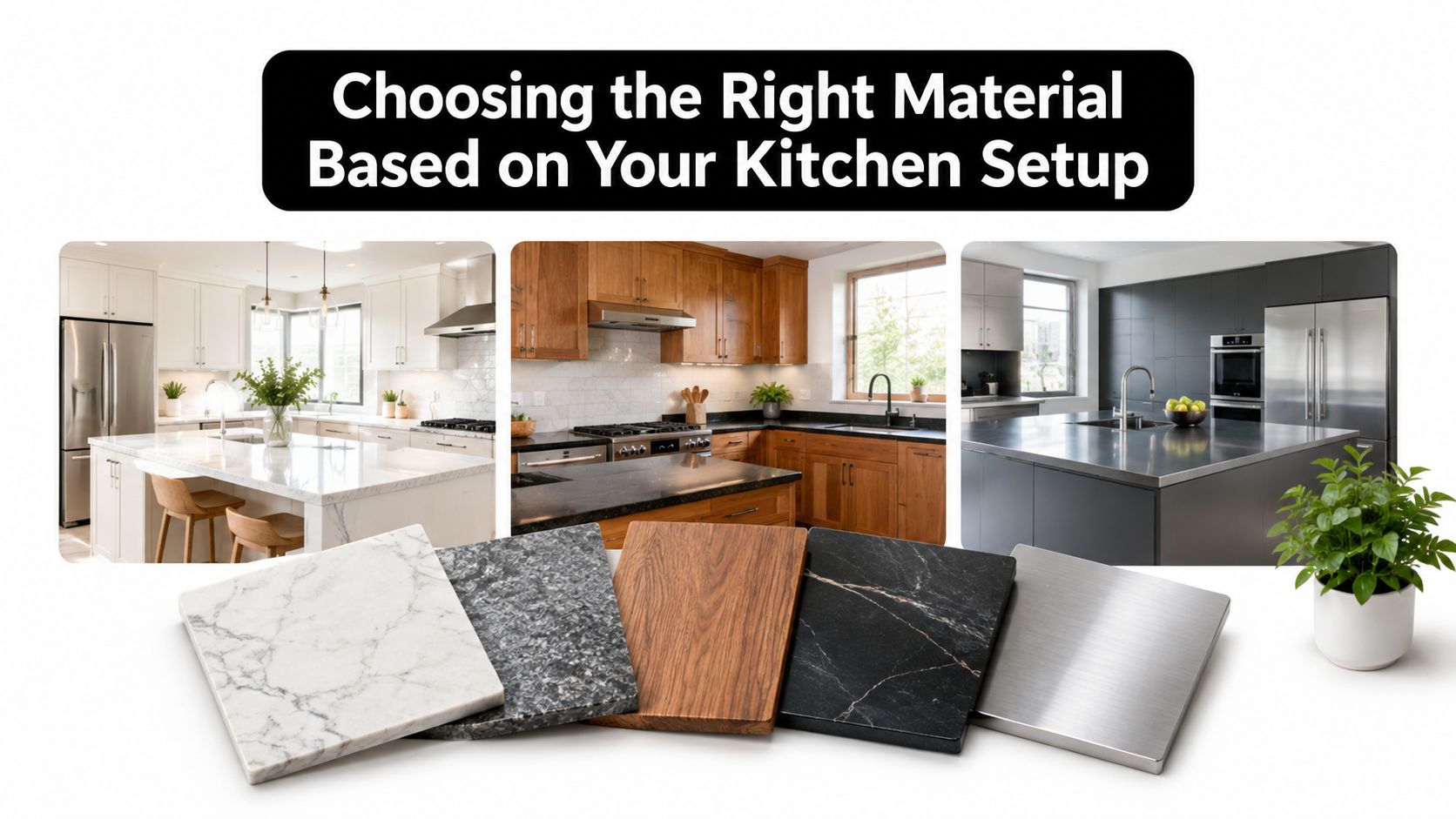
A person standing in a bright kitchen viewing various marble and wooden rectangular benchtop material samples.

For Australian homeowners, the biggest change has already happened. A nationwide ban on the manufacture, supply, processing, and installation of engineered stone products took effect in Australia in 2024, following concerns about respirable crystalline silica exposure for workers, and that changed the benchtop market immediately for renovation clients who now need alternatives (Australian engineered stone ban overview).

What that means in a real renovation

In Victoria, that change affects more than product selection. It affects quoting, lead times, fabrication methods, and how your builder plans the job. A benchtop now has to be assessed through four lenses at once:

  • Daily performance. Can it handle spills, prep work, and regular cleaning without becoming high-maintenance?
  • Heat and impact tolerance. Some surfaces cope well with rough treatment, others need more discipline.
  • Visual fit. Your benchtop has to work with cabinetry, flooring, splashbacks, and the overall tone of the home.
  • Compliance and installation risk. A good-looking material isn't a good choice if it creates avoidable safety issues during fabrication.

The practical upside is that homeowners are looking harder at materials they might once have dismissed. Porcelain, laminate, stainless steel, natural stone, solid surface, and timber all have a place. The best option depends less on trends and more on how you cook, who uses the kitchen, and how much maintenance you're prepared to accept.

Practical rule: Start with function, then narrow by appearance. Renovations run more smoothly when the material suits the household before it tries to impress guests.

Get the basics right before choosing the surface

Benchtop material and benchtop layout should be decided together. Height, overhang, sink type, appliance positions, and junctions with tall cabinetry all affect what's practical. If you're still sorting proportions, it helps to understand standard benchtop height before locking in a material that may need a particular thickness or edge detail.

A smart benchtop choice in 2026 isn't just stylish. It's compliant, durable, and realistic for the way Victorian homes are renovated now.

A Practical Comparison of Modern Benchtop Materials

The fastest way to narrow kitchen benchtop materials is to stop asking which one is “best” and start asking what each one does well. Every material asks for a trade-off. Some give you low maintenance. Some give you warmth. Some handle heat better. Some look expensive without being expensive.

Before the 2024 ban, engineered stone was a dominant choice in Australia because of its consistency and low maintenance, and its removal has accelerated the adoption of alternatives with similar or stronger performance profiles (Australian benchtop market context). That's why Victorian homeowners are now seeing a much wider field of viable options.

Benchtop materials at a glance

Material Cost Guide Durability Maintenance Best For
Porcelain $$$ High, especially against stains and scratches Low Busy family kitchens, modern homes, indoor-outdoor links
Laminate $ Good for general use, less forgiving with heat and impact Low Budget-conscious renovations, rentals, fast updates
Natural stone $$$ Strong, but depends on stone type and finish Medium to high Premium kitchens, feature islands, timeless designs
Timber $$ Moderate, can mark and move with use High Warm, character-led kitchens
Solid surface $$ to $$$ Good, but can mark and react to heat Low to medium Seamless contemporary designs
Stainless steel $$$ Very high in working kitchens Low Serious cooks, utility-focused kitchens, minimalist spaces

Where each material fits

Porcelain has become one of the strongest post-ban choices because it suits modern design and doesn't ask for much day to day. It works especially well in homes where the island is a visual focal point and the kitchen opens into living space.

Laminate remains one of the most practical materials on the market. It won't give you the same slab feel as porcelain or natural stone, but good design can make it look far better than people expect. It's often the right answer for investment properties or staged renovations.

Natural stone still has a place when the brief is texture, variation, and a more premium feel. The catch is that natural stone asks for acceptance of movement, marking, or maintenance depending on the exact stone and finish.

Timber brings warmth that hard surfaces can't replicate. It softens white joinery, works beautifully in coastal and character homes, and feels welcoming. It also shows life quickly, which some people love and others regret.

Solid surface sits in a useful middle ground. It suits curved details, integrated looks, and cleaner contemporary lines. It's often chosen by homeowners who want a sleek finish without the visual weight of stone.

Stainless steel is about function first. In the right kitchen, it looks sharp and intentional. In the wrong one, it can feel cold. This is a material for people who value hygiene, heat tolerance, and utility over softness.

The strongest benchtop choice is usually the one that solves your daily frustrations, not the one that wins the showroom lighting test.

A quick filter for decision-making

If you're comparing options, use this shortlist approach:

  • Choose porcelain if you want a refined look with low daily fuss.
  • Choose laminate if budget discipline matters and you still want style flexibility.
  • Choose natural stone if unique pattern and premium character matter more than perfect uniformity.
  • Choose timber if warmth is essential and you don't mind upkeep.
  • Choose stainless steel if performance and hygiene come first.
  • Choose solid surface if you like a smooth, contemporary finish.

That usually narrows the field from six options to two.

Deep Dive Into Leading Benchtop Choices

Once a shortlist is in place, the actual decision-making starts. At this stage, broad preferences need to meet daily reality. A benchtop can look ideal on a sample board and still be wrong for the household using it.

The most important technical trade-offs are porosity and heat tolerance. Non-porous materials such as porcelain and stainless steel resist stains and bacteria, while stainless steel has the highest heat tolerance. Laminate and solid surface need more care around hot cookware.

A hand touches a polished green slab next to a rolled material and a blue marble block.

Porcelain for low fuss and clean lines

Porcelain is one of the easiest materials to recommend when a homeowner wants a crisp, modern kitchen that's simple to live with. Because it's low-porosity, it handles everyday spills well and suits households where the kitchen gets used properly, not just admired.

It also works nicely in Victorian homes with indoor-outdoor flow. If the benchtop extends visually toward an alfresco zone or large rear opening, porcelain usually holds that clean visual line better than softer, more reactive surfaces.

What doesn't work so well is careless impact on exposed edges. Thin-profile designs look sharp, but they need sensible detailing and careful installation. On family jobs, I often steer clients toward edge treatments that look refined without creating a fragile corner at every busy point of the kitchen.

Porcelain suits you if:

  • You want low maintenance and don't want to think much about sealing or special cleaning.
  • Your kitchen gets heavy use from kids, cooking, and regular traffic.
  • You like a contemporary finish with minimal visual noise.
  • You want continuity between benchtop, splashback, and sometimes island cladding.

Laminate for smart value

Laminate is often underestimated because people remember older products that looked flat or dated. Current laminate options can work very well when the joinery design is strong and the kitchen layout is well resolved.

Its biggest advantage is value. If you want to direct more of the renovation budget into cabinetry, appliances, layout changes, or another stage of work later, laminate keeps pressure off the benchtop allowance. That can matter a lot in a whole-home plan where the kitchen is only one part of the spending.

The limits are straightforward. Laminate is less forgiving with heat, and once it's badly damaged, repairs are rarely invisible. It's a material that performs best when the household uses trivets, chopping boards, and a bit of common sense.

If your renovation budget has to stretch across several priorities, laminate can be the material that makes the rest of the project possible.

Natural stone for character and visual depth

Natural stone appeals to homeowners who don't want a perfectly uniform surface. Every slab has movement, variation, and a more organic look. In a kitchen with simple cabinetry, that can be exactly what gives the room personality.

This is also where expectations need to be mature. Natural stone isn't for people who want a surface to look untouched forever. Depending on the stone you choose and the finish you prefer, there may be more maintenance, more visible change over time, or a greater need for prompt cleaning after spills.

That doesn't make it impractical. It just means it suits a homeowner who values natural variation enough to accept that the benchtop may develop some history.

Stainless steel for serious function

Stainless steel is still unmatched if your first question is, “Can I put hot cookware down without worrying?” It's highly practical, hygienic, and honest. There's no pretending it's precious.

The design challenge is balance. Full stainless can feel hard in some homes, especially if the rest of the kitchen is stark. It usually works best when paired with warmer joinery, softer flooring, or a more restrained palette elsewhere.

Best uses for stainless steel include:

  • Cooking-focused kitchens where heat and cleanup matter more than softness
  • Butler's pantries and secondary prep zones
  • Minimalist renovations where a professional look suits the architecture

A well-chosen benchtop should feel right on Monday morning, not just on handover day.

Budgeting Your Kitchen Benchtop in Victoria

Most homeowners ask about cost early, but the better question is where the benchtop sits in the whole renovation budget. A cheap surface that doesn't last is poor value. An expensive surface that forces compromises everywhere else can also be the wrong move.

In Victorian projects, benchtop pricing usually rises or falls based on more than the material itself. Fabrication complexity, cut-outs, edge details, slab handling, access to the property, splashback returns, and installation conditions all affect the final figure. That's why two kitchens with the same footprint can still price very differently.

Think in total project terms

When reviewing quotes, look beyond the slab or sheet cost. The useful figure is the all-in installed cost. That typically includes site check, measure, template, fabrication, delivery, installation, cut-outs, and finishing around sinks, cooktops, and joins.

A practical budgeting approach is to split benchtop thinking into three bands:

  • Value-first choices such as laminate, where the material helps control overall spend.
  • Balanced mid-range choices such as some solid surface or timber applications, where appearance and function sit in the middle.
  • Premium choices such as porcelain, natural stone, or stainless steel in custom applications, where fabrication and handling often add complexity.

Where to spend and where to hold back

If the kitchen layout already works well, a benchtop upgrade can deliver a major visual change without rewriting the whole room. But if you're changing cabinetry, plumbing points, appliances, and flooring, the benchtop has to compete with bigger structural priorities.

That's where discipline matters. A cleaner, cost-effective benchtop choice can free up budget for items that affect daily use more than people expect, such as better drawer hardware, improved storage, lighting, or a stronger ventilation setup. It can also leave room for later works elsewhere in the home, including modern bathrooms or future designer bathrooms that carry the same finish language.

A renovation budget works best when every surface earns its place. Benchtops shouldn't consume money that the layout or storage needs more.

Use the kitchen budget as part of a broader plan

Many clients don't renovate one room in isolation. They stage work over time. If that sounds familiar, it helps to understand the wider cost of a new kitchen before deciding whether the benchtop should be the hero item or just one solid, sensible part of the package.

The best budgeting decisions usually come from clearly ranking priorities. If you cook constantly, spend more on performance. If you're preparing a rental or resale update, durability and visual neatness may matter more than premium material prestige.

Matching Your Benchtop to Your Lifestyle and Design

The right benchtop should match the way the kitchen is used, not the way it looks in a photo. Households live very differently. Some kitchens cop school bags, meal prep, and constant wiping. Others are calmer, more design-led spaces used mainly for entertaining. The material has to suit that rhythm.

Best matches by household type

A busy family kitchen usually benefits from low-maintenance, lower-porosity materials and edge details that don't chip easily. Consequently, porcelain often earns its place, while some natural stones can become frustrating if the household expects a no-fuss surface.

A keen entertainer's kitchen can justify a more expressive material if the owner values visual impact and is willing to maintain it properly. Feature islands, bolder veining, and waterfall ends make sense when the kitchen is part workspace, part social centre.

A rental property or investment update usually needs a different mindset. Here, visual neatness, replacement simplicity, and manageable cost often matter more than statement finishes. Laminate frequently performs well in this category because it keeps the renovation practical.

A design-led home renovation might use the benchtop as one element in a much bigger palette. In those homes, the material has to relate to joinery colour, floor tone, handles, lighting, and adjacent rooms.

Design decisions that matter more than people think

Material is only half the story. The way it's detailed changes the result.

  • Waterfall ends make a kitchen feel more architectural, but they increase the importance of good edge selection and visual alignment.
  • Splashback continuity can create a calm, premium feel when the benchtop material carries upward in a controlled way.
  • Thickness and profile influence whether the kitchen feels refined, chunky, minimal, or heavy.
  • Colour temperature matters. Warm benchtops can soften white joinery, while cooler surfaces can sharpen a more contemporary palette.

If you're still selecting joinery finishes, it helps to look at kitchen cabinets materials alongside the benchtop so the whole composition works together.

A well-designed kitchen rarely relies on one expensive surface. It succeeds because all the materials agree with each other.

Think beyond the kitchen

A kitchen renovation often sets the tone for the next part of the house. If bathroom renovations are on your longer-term list, keep that in mind now. You don't need to match rooms exactly, but there should be some relationship in tone, texture, or finish quality.

That's how homes feel consistent. A porcelain-look kitchen with sharp black details may lead naturally into modern bathrooms. A warmer timber-and-stone kitchen may point you towards softer, more layered designer bathrooms later on. Good design continuity doesn't happen by accident. It starts with material choices that have range.

Installation Renovation and Compliance Considerations

The benchtop selection isn't finished when you choose the material. The installation pathway matters just as much. A good result depends on measure, fabrication, transport, fitting, and the way trades manage risk inside an occupied home.

In Australian kitchens, fabrication can raise serious safety issues because some materials generate hazardous dust such as respirable crystalline silica during cutting. Professional installers use controlled methods including wet-cutting and on-tool extraction, which is why choosing a qualified, compliant builder is critical for health and safety during a renovation.

What the process usually looks like

For most renovations, the sequence is fairly consistent:

  1. Final cabinet installation happens first, because benchtops are measured to the finished base units.
  2. Check measure or templating confirms exact dimensions, cut-outs, wall irregularities, and overhangs.
  3. Fabrication takes place off site where material handling and cutting can be controlled properly.
  4. Delivery and installation follow once the benchtop is ready and the room is prepared.
  5. Final fitting includes sinks, taps, sealing at junctions, and clean-up.

The key point is that benchtops are not a loose item that can be guessed early and dropped in later. They depend on precision.

Why builder choice matters

This part of the job is where professionalism shows. A compliant renovation team plans access, protects finishes, coordinates trades, and understands the fabrication limits of each material. That's especially important in occupied Victorian homes where dust control and staging affect the whole household.

If you're comparing renovation providers, ask practical questions:

  • How do they handle templating and site tolerances
  • What fabrication controls apply to the chosen material
  • Who manages the sequencing between cabinets, plumbing, and benchtop install
  • Are they operating to an appropriate professional standard, such as registered builders unlimited where the project scope requires it

For homeowners who want a single company to manage design, documentation, and renovation coordination, SitePro Bathrooms provides end-to-end kitchen and bathroom renovation services, including 3D design and construction management, which can simplify benchtop planning within a larger project.

A benchtop install should feel organised from the client side. If the process feels vague before work starts, it usually gets harder once the room is out of action.

Your Benchtop Questions Answered

Can I replace just the benchtop and keep the existing cabinets

Sometimes, yes. It depends on cabinet condition, level, layout, and whether the new material requires different support or creates issues around sinks, cooktops, or wall lines. Older cabinets can make a benchtop-only upgrade less straightforward than it sounds.

If the joinery is structurally sound and the kitchen layout still works, replacing only the benchtop can be a sensible refresh. If the cabinets are tired, out of square, or poorly configured, it often makes more sense to treat the benchtop as part of a broader kitchen renovation.

Which benchtop is best for a family that cooks every day

In most cases, low-maintenance and low-porosity materials are the safest starting point. They tend to be easier to clean and less stressful to live with. For a busy family, the wrong benchtop is usually one that demands too much care or punishes minor mistakes.

The better question is what kind of household discipline you have. If no one reliably uses trivets or cutting boards, don't pick a material that depends on perfect behaviour.

Is timber a good idea in a kitchen

It can be, but only for the right owner. Timber looks warm and inviting, and it works beautifully in certain homes, especially where the kitchen needs softness. It also needs ongoing care and is less forgiving around water and wear.

Many homeowners like timber in smaller applications, such as an island accent or a seating section, rather than across every work surface.

How do I make the kitchen feel consistent with future bathroom renovations

Focus on finish language, not direct matching. Repeat the same overall temperature and mood. If the kitchen is clean-lined and restrained, your future bathroom renovations will usually feel more coherent if they follow that same approach. That's where new bathroom ideas often become clearer. You're not starting from scratch. You're extending an existing design direction.

Are designer bathrooms and kitchens supposed to match exactly

No. Exact matching can feel forced. Good homes share a common thread instead. That might be a preference for soft neutrals, warm timber notes, brushed metal finishes, or a sharper modern look. Designer bathrooms often feel connected to the kitchen because the material choices belong to the same house, not because they copy each other.

What's the safest way to future-proof my benchtop choice

Keep the design simple enough to age well and practical enough to suit changing needs. Highly specific trends date faster than balanced material selections. Future-proofing usually comes from three things:

  • Choose a material you can live with, not one you'll baby.
  • Keep edge details and colours disciplined, so the kitchen doesn't age too quickly.
  • Think whole-home, especially if modern bathrooms or other updates are likely later.

Start Your Transformation with a 3D Design

A good benchtop choice balances performance, maintenance, visual fit, budget, and compliance. In Victoria, that decision now needs even more care because material selection and safe installation are closely linked.

The smartest renovations don't rely on guesswork. They test proportions, finishes, layout, and practical use before construction starts. That's why a 3D design stage is so useful. It lets you see how the benchtop works with cabinetry, splashbacks, flooring, and the rest of the room before anything is ordered.

If you're weighing kitchen benchtop materials and want clarity before committing, the next step is a personalized renovation quote and a detailed 3D concept. That gives you a realistic view of what will work in your home, what should be avoided, and how to build a kitchen that still feels right years from now.

  • siteprobathrooms

Designer Bathrooms Melbourne: 2026 Trends and Cost Guide

You've probably already saved a folder full of inspiration shots. Floating vanities. Oversized tiles. Brushed tapware. Maybe a wet-room layout that makes a small space look like a boutique hotel. Then reality hits. Your current bathroom has awkward plumbing, limited storage, an old window in the wrong spot, and no room for error once demolition starts.

That's where most Melbourne bathroom projects either sharpen up or drift off course.

A good designer bathroom isn't just a pretty room. It has to work every morning, survive steam and moisture, meet local requirements, and still feel current years after the renovation is finished. That's why the strongest bathroom renovations don't begin with a tile sample. They begin with layout, compliance, sequencing, and a clear idea of where the money should go.

Across Australia, homeowners are clearly putting money into fitted bathroom upgrades, not just surface changes. The Australia bathroom furniture market generated USD 1,141.5 million in 2024 and is projected to reach USD 1,749.4 million by 2030, with a 7.8% CAGR from 2025 to 2030. In that same market, bathroom cabinets were the largest category in 2024, and vanities were identified as the fastest-growing segment. That lines up with what adds value on site. Better storage, better joinery, and better planning usually outperform decorative upgrades on their own.

Embarking on Your Melbourne Bathroom Renovation

Starting with style is common. This involves thinking about modern bathrooms in terms of colour, texture, and fittings. That's natural, but it's only part of the job.

In Melbourne, the better starting point is function. How many people use the room? Does the bathroom need to handle a school-morning rush, a compact apartment footprint, or an ageing-in-place brief for the future? The answers shape everything that follows, from vanity width to tile selection to where the shower screen should stop.

What designer really means on a renovation site

A lot of homeowners hear “designer bathroom” and picture something high-end but fragile. In practice, the best designer bathrooms melbourne projects are usually the opposite. They're organised, durable, and specific to the way the home is used.

That usually means:

  • Storage that disappears into the design: drawers where dead space used to be, mirrored cabinets that don't dominate the room, and joinery that fits the wall properly.
  • Materials that suit the household: easy-clean surfaces for family bathrooms, more expressive finishes in powder rooms, and less maintenance around splash zones.
  • A layout that solves a problem: better circulation, a larger shower, or a vanity that finally gives two people enough working room.

A bathroom can look luxurious in photos and still be frustrating to live with. Layout is what separates a showroom idea from a successful renovation.

Why Melbourne homeowners are upgrading differently

The strongest projects now aren't driven by fashion alone. They're driven by a mix of comfort, resale, maintenance, and smarter use of space. That's why bathroom renovations in older Melbourne homes often involve more than replacing fixtures like-for-like. They usually need rethinking.

In period homes, the room may be undersized or arranged around old plumbing locations. In apartments, access, drainage, ventilation, and strata conditions can all limit what's achievable. In family homes, the issue is often storage and durability rather than floor area.

That's why the practical side matters early. Before you commit to new bathroom ideas, make sure the room can support them. If it can, the result is far more convincing than a trend-led update that ignores how the room will perform.

New Bathroom Ideas Shaping Melbourne Homes in 2026

Once you approve a beautiful bathroom scheme and construction begins, the actual questions arrive. Will the floor fall work with a curbless shower. Can the vanity drawers open fully past the door swing. Is that feature tile still practical once lighting, grout lines, and cleaning are factored in. In Melbourne projects, the strongest ideas are the ones that survive those questions.

Design in 2026 is becoming more individual, but the better projects are also more disciplined. Homeowners are asking for richer colour, textured finishes, warmer timber tones, and less predictable material pairings. The difference now is that these choices are being judged against compliance, maintenance, and day-to-day use, not just a mood board.

A luxurious marble bowl sink and a twisted pedestal stand displayed in a modern bathroom interior.

Wet rooms that feel bigger

Wet-room layouts are still one of the smartest options for compact bathrooms, especially in older Melbourne homes where every visual break makes the room feel smaller. Keeping the floor finish continuous and reducing heavy partitions can make the space read more clearly and improve movement through the room.

The catch is technical. Wet rooms rely on correct falls, careful drainage placement, and waterproofing detail that suits the room, not just the look. A local planning guide connects successful wet-room design with AS 3740-2021 waterproofing compliance, particularly around falls, drainage, and junctions (wet-room planning and waterproofing guidance).

What tends to work well:

  • A clear drainage plan: water has to move quickly to the waste without ponding near the entry or vanity.
  • Controlled glazing: enough glass to manage splash, without carving the room into smaller pieces.
  • Consistent surface selection: fewer changes in tile and trim help the room feel larger.

Common mistakes:

  • Treating a wet room as a styling move first: it is a construction and waterproofing decision.
  • Ignoring cleaning and servicing: wastes, channels, and junctions need to stay accessible.
  • Using the layout in the wrong room: some bathrooms are better served by a defined shower zone.

Vanities are getting more considered

Vanity design is doing more work than it used to. It sets the storage capacity, affects circulation, and often determines whether the bathroom feels resolved or cramped.

Industry guidance on standard bathroom dimensions and vanity clearances shows why this matters. In a typical main bathroom footprint, clear space in front of the vanity and sensible side clearances around the basin have a direct effect on comfort. On site, I look at drawer projection, mirror cabinet depth, towel placement, and how two people will move through the room during a rushed weekday morning. Plans can hide a lot.

Practical rule: if you have to turn sideways to use the vanity comfortably, the layout isn't finished.

Wall-hung vanities remain popular because they open up floor area visually and make cleaning easier. They are not always the right answer. In a family bathroom, a floor-mounted unit can offer more storage and a sturdier feel. The right choice depends on who uses the room and how much joinery the layout can carry without becoming bulky.

Style ideas worth borrowing carefully

The ideas with the best staying power usually solve a practical problem at the same time. Recessed niches reduce clutter around the shower. Mirror lighting improves grooming more than a decorative pendant ever will. A restrained material palette with one stronger element often ages better than trying to make every surface a statement.

For inspiration that still fits Australian homes, this guide to bathroom décor in Australia is a useful starting point.

In Melbourne, the best designer bathrooms in 2026 are less about chasing a trend and more about making deliberate choices that hold up under real use, local building requirements, and the budget needed to build them properly.

How to Budget for a Designer Bathroom in Melbourne

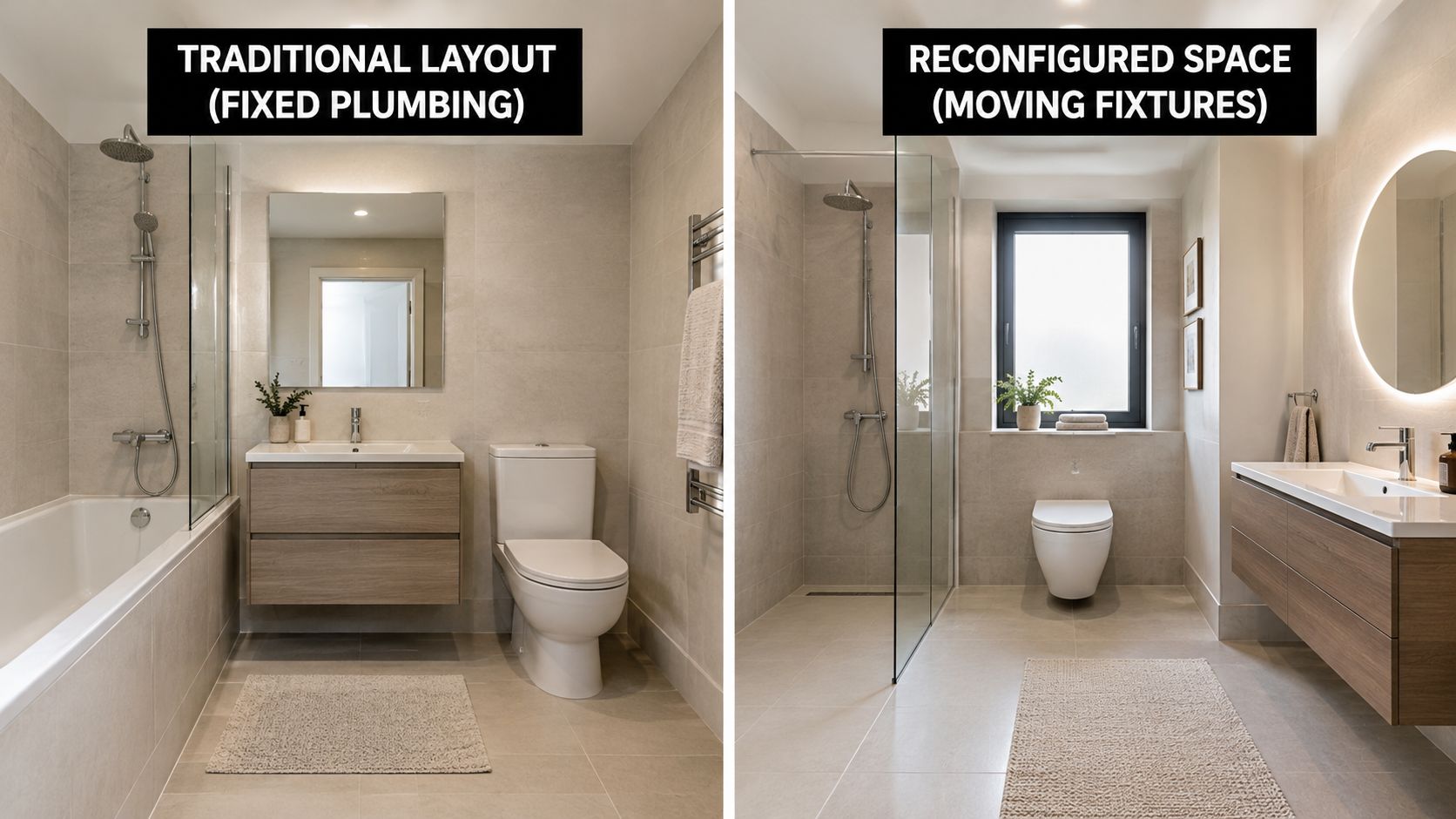
Budgeting for a designer bathroom isn't about chasing a single figure. Price moves with scope. A room that keeps the plumbing where it is will budget very differently from one that shifts walls, relocates waste points, or adds custom joinery.

That's why homeowners get into trouble when they compare their project to a generic online estimate. Two bathrooms can look similar in photos and be completely different jobs behind the walls.

What drives the price up

The biggest cost drivers are usually layout changes, labour complexity, waterproofing detail, tile format, and joinery. Large-format tiles can reduce grout lines and look excellent, but they often demand flatter substrates, cleaner set-out, and more careful cutting. Concealed plumbing can sharpen the visual result, but it can also make future access harder if it isn't planned sensibly.

Custom joinery is another major lever. It's often worth it because vanities and mirrored cabinets do so much of the visual and functional work in designer bathrooms. But once you move from off-the-shelf pieces to made-to-measure cabinetry, you're paying for design resolution as well as the product itself.

Here's a practical way to think about budget tiers.

Melbourne Designer Bathroom Budget Ranges 2026 Estimates

Budget Tier Estimated Cost Range Typical Inclusions
Cosmetic refresh Lower end of the market Retaining much of the existing layout, replacing selected fixtures and finishes, limited joinery changes
Mid-range full renovation Mid-market investment Full strip-out, new tiling, upgraded fixtures, improved storage, revised lighting, better layout within the existing footprint
Premium designer renovation Upper end of the market Structural or layout reconfiguration, custom vanity and cabinetry, higher-end finishes, detailed lighting, more complex waterproofing and plumbing coordination

This table is intentionally qualitative. Real pricing depends on access, apartment conditions, structural constraints, and the finish schedule you choose.

Where smart savings actually sit

Trying to save money by stripping quality out of waterproofing, prep, or labour usually backfires. Better savings tend to come from controlled selections and disciplined scope.

Good examples include:

  • Keep plumbing points where practical: moving every fixture can turn a tidy renovation into a complex rebuild.
  • Use feature finishes selectively: one hero wall or statement vanity often lands better than expensive material on every surface.
  • Spend on joinery before novelty items: storage usually improves daily use more than decorative extras.
  • Choose fixtures with operating costs in mind: efficiency matters after handover.

Long-term cost matters more than many cost guides admit. Products covered by Australia's Water Efficiency Labelling and Standards scheme let homeowners compare the efficiency of common bathroom fixtures, and that can influence ongoing household water and energy use. A Melbourne bathroom trends article notes that specifying fixtures with stronger WELS ratings can improve long-term operating efficiency over the life of the bathroom (WELS-focused bathroom planning insight).

Cheap to install and expensive to live with is still expensive.

If you want to sense-check project scope before requesting quotes, a bathroom renovation cost calculator can help frame the conversation. It won't replace a site inspection, but it can help you separate a cosmetic update from a full renovation budget.

Your Bathroom Renovation Process From Start to Finish

You approve a layout, order the tiles, and expect demolition to start the following week. Then the site inspection picks up a fall issue in the floor, the vanity lead time blows out, and access rules in your apartment building limit when materials can come in. That is a normal bathroom renovation in Melbourne. The projects that run well are not the ones without constraints. They are the ones where those constraints are found early and managed in the right order.

A bathroom is a small room with very little margin for error. Every trade works on top of someone else's work, and hidden mistakes become expensive once surfaces are closed up. Good process protects budget, programme, and finish quality at the same time.

A collection of plumbing tools and equipment arranged on a floor for a bathroom renovation project.

The planning phase

The quiet part of the renovation does the heavy lifting. Before any strip-out starts, the room needs to be measured properly, the layout tested, fixtures selected, and trade sequencing sorted out. If those decisions are left loose, the site pays for it later.

In Melbourne homes, early planning often exposes conditions that design inspiration boards never show. Older houses can have uneven walls, dated plumbing positions, or timber floors that need correction before tiling. Apartments add another layer. Lift bookings, waste removal, delivery windows, parking, and strata rules can all affect how the job is staged.

A sound planning sequence usually includes:

  1. Initial brief and site inspection
    The project manager reviews how you use the bathroom now, what needs to change, and what the room will realistically allow.

  2. Existing-condition checks
    Levels, wall condition, service locations, ventilation, and access are reviewed before final decisions are made.

  3. Layout development
    Shower size, vanity depth, door swing, storage, and circulation are resolved before finishes distract from the fundamentals.

  4. Selections and procurement
    Tiles, tapware, lighting, joinery, and glazing are chosen with lead times in mind, not just appearance.

  5. Documentation and trade booking
    Clear set-outs and confirmed selections let trades price accurately and arrive prepared.

One decision at this stage affects the whole job. Builder selection. Working with a team that understands sequencing, trade coordination, and compliance reduces avoidable delays and rework. It also helps to understand why using a registered builder matters for your bathroom renovation before contracts are signed.

Construction in the right order

Once demolition starts, the best projects have already made the hard decisions. Changes can still happen, but they usually trigger extra labour, material waste, and delays because completed work has to be reopened.

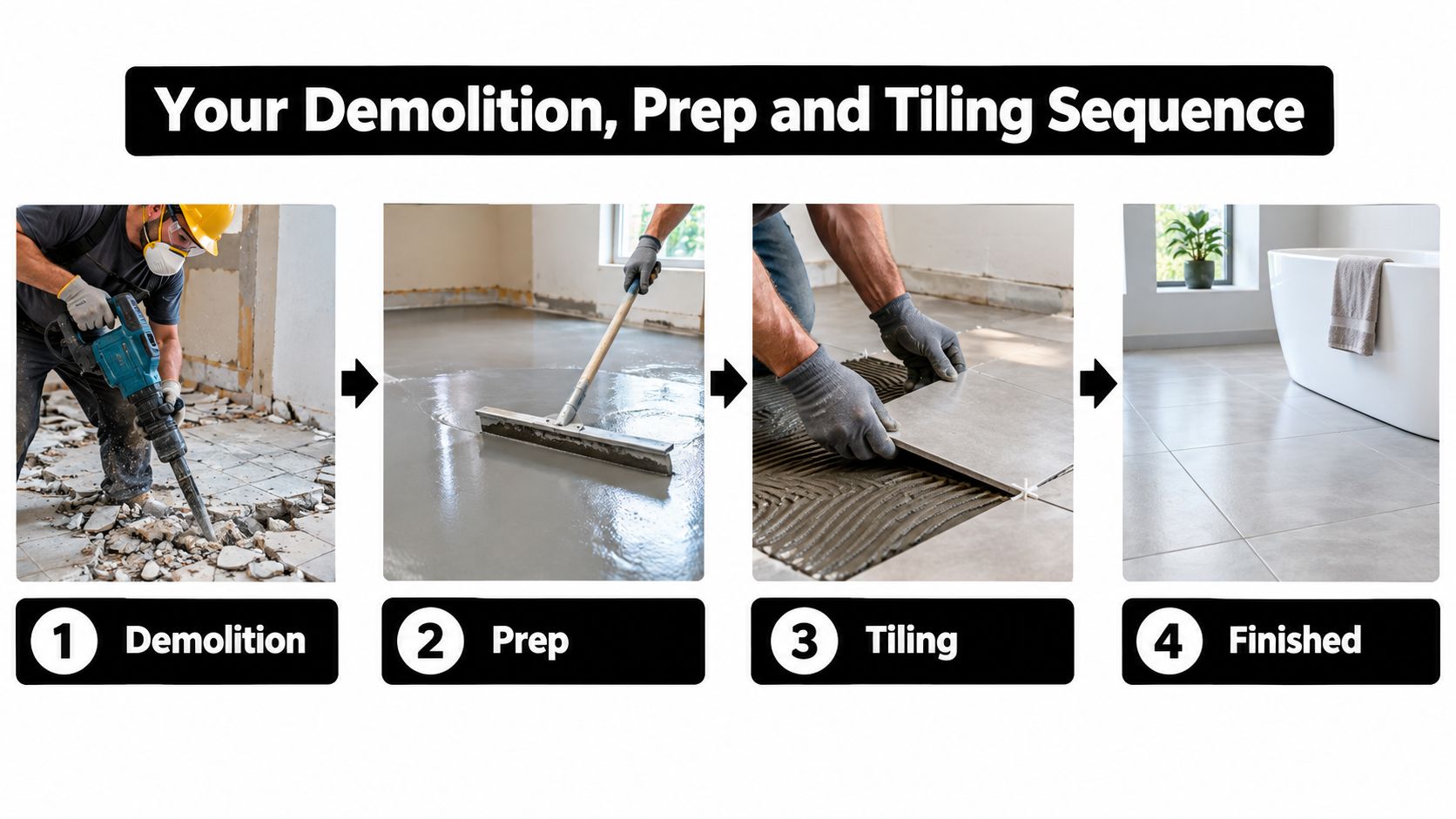
The site sequence is usually straightforward, even if the coordination behind it is not:

  • Demolition and strip-out: remove fixtures, wall linings, floor finishes, and any damaged substrate.
  • Rough-in work: set plumbing and electrical points to suit the approved layout.
  • Carpentry and substrate preparation: straighten walls, correct floors, and build any framing needed for niches, in-wall cisterns, or joinery support.
  • Waterproofing: apply the system to the prepared surfaces before any finish goes over the top.
  • Tiling: install floor and wall tiles to the agreed set-out.
  • Fit-off: complete cabinetry, plumbing fixtures, electrical fittings, mirrors, shower screens, and accessories.
  • Final checks and handover: test fixtures, review defects, and close out the last details before sign-off.

The visible finish gets the attention. The hidden layer decides whether the bathroom lasts.

Where projects slow down

Homeowners often judge bathroom timelines by room size. That is misleading. Bathrooms concentrate more trades, services, and wet-area risk into one footprint than almost any other room in the house.

Delays usually come from a short list of causes. Late selections. Products that arrive damaged or out of stock. Site conditions that only become clear after demolition. Custom items that were approved without checking lead times. In apartments, access restrictions can stretch what would be a simple delivery in a house into a booked and managed exercise.

The trade-off is simple. Customisation gives you a more bespoke result, but it also reduces flexibility if anything shifts. Off-the-shelf items are often easier to replace quickly, though they may limit layout or storage options. Good project management is largely the work of balancing those trade-offs before they become site problems.

A well-run bathroom renovation rarely looks dramatic day to day. It looks organised. Materials arrive when they should, trades know what they are walking into, and decisions are made early enough to keep the programme intact. That is how a designer bathroom gets built properly in Melbourne.

Navigating Melbourne's Building Codes and Regulations

A bathroom renovation only counts as successful if it's compliant. That isn't paperwork for its own sake. It's what protects the room from leaks, trapped moisture, poor ventilation, and expensive failures that show up after the project is paid for.

This matters even more in established Melbourne homes and apartments, where old conditions don't automatically line up with current standards.

Why compliance belongs at the centre of design

The Victorian Building Authority enforces mandatory requirements around building work, and bathroom waterproofing is one of the areas where standards are especially important. A Melbourne bathroom article highlights that, for older homes and apartments, compliance is critical and points directly to the VBA's role and the importance of AS 3740 waterproofing standards in avoiding defects and supporting durability (registered builder and waterproofing compliance context).

That changes the conversation. The key question isn't just whether a detail looks clean. It's whether the room can be built cleanly, ventilated properly, drained correctly, and serviced later if anything goes wrong.

The common trouble spots are predictable:

  • Waterproofing failures: often hidden until damage appears outside the bathroom.
  • Poor ventilation planning: moisture lingers, finishes deteriorate, and mould risk rises.
  • Overly concealed services: sleek on day one, frustrating when maintenance is needed.
  • Apartment-specific constraints: access, penetrations, and approvals can all affect what's feasible.

What registered builders unlimited means in practice

Homeowners often hear the phrase registered builders unlimited without a clear explanation of why it matters. In practical terms, registration is about accountability, licensing, and working within the proper framework for the project. “Unlimited” relates to the class and scope of building work a builder is permitted to undertake.

For a homeowner, the key point is simpler. You want a builder whose registration suits the scale and nature of the work, and who understands how bathroom renovations intersect with waterproofing, drainage, ventilation, and coordination across trades.

If you want a more detailed explanation of the renovation implications, this article on why using a registered builder matters for your bathroom renovation is a helpful starting point.

A non-compliant bathroom can still look polished on completion day. The problem is that defects don't care how good the photos look.

Visualise Your New Bathroom with 3D Design

A lot of bathroom mistakes happen before construction starts. The homeowner thinks the vanity will look lighter. The niche seemed bigger on paper. The tile felt subtle in the showroom, then overwhelms the room once it covers every wall.

That's where 3D design earns its place. It doesn't just help you imagine the bathroom. It helps you test the decisions before they become expensive.

A digital tablet displaying a luxurious bathroom interior featuring marble textures and artistic wall decor.

What a good 3D render actually solves

A flat plan can show measurements, but it won't tell most homeowners how the room will feel. A 3D view can.

It helps answer practical questions like:

  • Does the vanity dominate the entry view
  • Will the mirror cabinet feel bulky
  • Are the tile proportions right for the wall height
  • Does the lighting land where people need it

Those are not cosmetic questions. They affect cost, comfort, and whether mid-project changes are likely.

Why it reduces risk

The best reason to use 3D design isn't presentation. It's change control. When homeowners can see the room more clearly, they make better decisions before materials are ordered and trades are booked.

That matters especially in designer bathrooms melbourne projects, where multiple finishes interact in a compact space. If a room includes custom joinery, feature lighting, large-format tiles, and a wet-zone detail, even a small change can ripple through several trades.

One practical example is vanity sizing. On plan, a longer vanity often seems like an obvious upgrade. In 3D, you may realise it tightens the entry too much, crowds the toilet zone, or throws the wall lighting off balance. That's the kind of adjustment you want to make before rough-in, not after tiles arrive.

SitePro Bathrooms offers bathroom renovation planning that includes detailed 3D design as part of an end-to-end process. That kind of visual planning is useful when the goal is to lock in layout and material decisions before construction begins.

Your Bathroom Renovation Questions Answered

A few questions come up on almost every first bathroom project. The answers usually determine whether you're planning a quick upgrade or a full renovation with proper design and compliance built in.

A professional interior designer posing in a modern bathroom with gold fixtures and a marble countertop.

Is a cosmetic update enough

Sometimes, yes. If the layout works, the substrate is sound, and the room mainly needs visual improvement, a cosmetic update can make sense.

It's not enough when the bathroom has poor storage, dated plumbing positions, waterproofing concerns, weak ventilation, or a layout that frustrates daily use. In those cases, resurfacing the room usually postpones a proper renovation rather than replacing it.

How do I choose between modern bathrooms styles

Start with the house and the household. A sleek apartment ensuite can carry stronger finishes than a hard-working family bathroom. A period home often benefits from contrast, but not if the bathroom starts fighting the rest of the house.

Use this filter:

  • Choose one main statement such as the vanity, tile, or lighting.
  • Keep the background finishes quieter so the room doesn't feel crowded.
  • Prioritise cleaning and maintenance in splash zones and corners.
  • Think long-term rather than choosing a finish just because it's prominent right now.

Are bold new bathroom ideas risky

They can be, but usually only when they ignore the room's structure or daily use. A bold tile colour isn't the risky part. A hard-to-maintain surface, a poor layout, or inaccessible plumbing is.

That's why the strongest designer bathrooms combine expression with restraint. They're memorable because the room is resolved, not because every surface is competing for attention.

What should I ask a builder before signing

Ask direct questions.

  • Who manages the project day to day
  • How are waterproofing and trade sequencing handled
  • What selections need to be locked in before work starts
  • How are variations dealt with if site conditions change
  • What level of registration suits this scope of work

What's the next practical step

Shortlist your must-haves, your nice-to-haves, and the features you're willing to drop if the room or budget pushes back. Then get the space measured properly and have the layout tested before you become attached to specific finishes.

That approach gives you a far better outcome than selecting products first and hoping they fit later.


If you're planning designer bathrooms melbourne homeowners can live with comfortably, start with the room's constraints, not just the mood board. A clear brief, realistic budget, sound compliance, and resolved design will do more for the final result than any trend on its own. For customized advice on bathroom renovations, project scope, and 3D planning, contact SitePro Bathrooms for a personalised quote.

  • siteprobathrooms

9 Bathroom Trend 2025 Ideas for Your Next Renovation

Planning a bathroom renovation and wondering which 2025 trends will still make sense after the first few months of real use?

That question matters more than the mood boards. A bathroom can photograph well and still fail in daily life. Tight clearances, poor storage, weak lighting, slippery finishes, and hard-to-clean tile choices show up fast once the room is in use. In Melbourne homes, especially older properties around Highett, the better renovations balance style with layout, ventilation, waterproofing, and materials that suit the household.

From what we're seeing on site, homeowners are asking for bathrooms that feel calmer, work harder, and age better. Some want a cleaner, more minimal look. Others want warmth, colour, or better accessibility for the next stage of life. The common thread is practical performance. Good design now means choosing what earns its place, not filling the room with features that add cost and maintenance.

That is the lens for this guide.

Across these nine bathroom trend 2025 ideas, the focus is on what actually changes the result. Each trend includes a before-and-after style scenario, notes on likely cost and value for Highett and wider Melbourne projects, and implementation advice grounded in how registered builders approach planning, compliance, and construction.

Recent renovation reporting also points to the same broad shift toward wellness, accessibility, and larger-scope bathroom updates. Houzz's 2025 U.S. Bathroom Trends Study, cited in Qualified Remodeler's summary of the research, found strong homeowner interest in accessibility features, wet rooms, and substantial remodels. The figures are U.S.-based, but the direction is familiar in Victoria, where clients are spending more carefully and expecting more from every square metre.

The trends ahead are worth considering because they affect how the room feels, what it costs to maintain, and how well it serves the home over time.

1. Spa-Like Wellness Bathrooms

A luxurious modern bathroom featuring a natural stone bathtub and a walk-in glass shower with marble walls.

A wellness bathroom works when it feels calm on a Monday morning, not just impressive on quote day. The best versions aren't overloaded. They usually centre on one hero feature, then support it with quieter choices like softer lighting, warmer finishes, and a layout that separates splash zones from dry zones.

A common before-and-after scenario in Highett is an older bathroom with a boxed-in shower, bulky vanity, and cold lighting. The after version often swaps that for a larger walk-in shower, cleaner wall lines, better extraction, and one indulgent feature such as underfloor heating or a deep soaking bath. It feels more expensive even when the material palette is restrained.

What actually works

Statista's 2025 survey of U.S. experts projected spa-like bathrooms as a leading direction, favoured by over 70% of respondents, with organic materials also featuring strongly in the same trend set, according to Statista's bathroom design trends survey. In practice, that lines up with what many Melbourne homeowners ask for: less visual noise, more retreat-like finishes.

The mistake is trying to build a day spa into a standard suburban footprint. Steam showers, freestanding baths, stone walls, heated floors, feature lighting, and custom joinery can work together, but only if the ventilation, waterproofing, and circulation space are designed first.

  • Start with one luxury move: Heated flooring, a larger shower, or a better bath usually gives more day-to-day value than trying to add everything.
  • Protect the build behind the tiles: Wellness bathrooms create more moisture. Membranes, falls, drainage and extraction need to be right before the nice finishes go in.
  • Keep the room easy to clean: Frameless glass and natural stone look great, but they need more maintenance than many homeowners expect.

Practical rule: If the room can't be ventilated properly, don't treat it like a steam zone.

2. Sustainable And Eco-Friendly Bathrooms

A luxurious rustic bathroom vanity with a raw stone basin and wooden table overlooking a green forest.

Sustainability is one of the easiest trends to get wrong because some products market themselves as eco-friendly while performing poorly in wet conditions. In bathroom renovations, sustainable choices need to do two jobs. They need to reduce waste or resource use, and they need to hold up under daily moisture, cleaning, and wear.

For a practical Melbourne example, think of a family bathroom where the old setup had dated laminate, a leaking shower base, and poor task lighting. A better sustainable update might use water-efficient fixtures, durable porcelain instead of fragile trend materials, low-toxicity finishes, and a vanity made from responsibly sourced or recycled content. It's less about signalling and more about long-term performance.

Better choices for real homes

Master Builders Australia reported that bathroom renovations made up 25% of 2024 residential projects, while sustainability-focused features such as water-saving fixtures rose 40% year-on-year, as cited in the verified data tied to this House Beautiful trend roundup reference. That doesn't mean every project needs advanced systems. It means efficient fixtures and durable material selections are moving into the mainstream.

A good rule is to choose high-impact basics first. Water-efficient tapware, dual-flush toilets, LED lighting, and long-life surfaces do more for most homes than chasing niche products with weak local support.

If you're weighing materials, sustainable construction building for the future with eco-friendly materials is a sensible starting point for thinking beyond the showroom label.

  • Choose proven wet-area materials: Recycled content is a bonus, but bathroom-grade performance comes first.
  • Think about replacement cycles: A cheap fitting that fails early creates more waste than a better product that lasts.
  • Source for maintenance, not just looks: Timber-look finishes and textured surfaces can be easier to live with than delicate porous products.

The most sustainable bathroom is often the one that doesn't need to be redone in a few years.

3. Smart Bathrooms With Connected Technology

A modern bathroom vanity with gold faucets, a digital control panel, and a wall-mounted shower fixture.

Smart bathroom tech has moved past novelty. When it's planned properly, it solves real annoyances. Better mirror lighting for morning routines, timed heating, demisters, sensor lighting for night use, and app-controlled comfort features can all make sense.

The problem is that many smart bathroom ideas get added too late. If wiring, switching, Wi-Fi coverage, and manual overrides aren't thought through during design, the room ends up more complicated than useful.

A realistic upgrade path

One practical scenario is a compact ensuite for busy professionals. Before renovation, the room has one harsh ceiling light, no power where it's needed, and a mirror that fogs up every morning. After renovation, the same footprint can feel far more current with backlit mirrors, integrated demister pads, niche lighting, heated towel rails on timers, and power placement that suits hair tools and charging.

According to the Houzz study PDF referenced in the verified data, user satisfaction reached 92% for projects that used 3D design visualisation pre-construction, with change orders reduced by 30% and perceived value lifted by 18%, as cited in the 2025 U.S. Houzz Bathroom Trends Study PDF. For smart bathrooms, that matters because technology needs coordination early, not after tiling.

What works best is selective integration:

  • Start with daily-use tech: Mirror demisters, motion lighting, underfloor heating controls, and heated rails are easier to justify than novelty screens.
  • Keep a manual backup: If a system goes down, you still need the fan, lights, and shower to work.
  • Coordinate with the electrical plan early: Retrofits are usually messier and more expensive than proper rough-in during renovation.

A modern bathroom should still be simple to use for guests, tenants, and future buyers. If the controls need a tutorial, it's too much.

4. Minimalist And Japandi Design

A modern bathroom vanity with a wooden cabinet and countertop, featuring a minimalist sink and black fixtures.

Minimalist and Japandi bathrooms look effortless when they're done well. They are some of the hardest modern bathrooms to execute because every decision is more visible. You can't hide poor proportions, awkward tile cuts, or cheap fittings in a pared-back room.

This style suits smaller Melbourne bathrooms particularly well because it relies on calm repetition rather than visual clutter. Floating vanities, timber accents, off-white or stone tones, and concealed storage can make a compact room feel more settled.

The trade-off nobody mentions

Minimalist design only works if storage is handled aggressively. Open benches and clean walls look great for photos, but real bathrooms still need toothbrushes, skincare, spare rolls, cleaning products, and kids' bath gear somewhere.

NKBA's 2025 trend direction highlighted demand for larger showers, wall removals, bathtub eliminations, and dual-function layouts, all of which support cleaner, less crowded bathroom planning in the bathroom trend 2025 conversation. That trend is easy to understand on site. When the room is stripped back visually, the layout has to carry more of the design weight.

A common before-and-after example is a family bathroom with too many finishes, a mirrored shaving cabinet that dominates the wall, and storage spilling onto every surface. A cleaner redesign might use one timber vanity, one tapware finish, one wall tile, and one floor tile, then hide the rest behind joinery.

  • Limit the palette: Two or three tones are enough.
  • Repeat materials deliberately: Repetition creates calm and makes smaller rooms feel more resolved.
  • Spend on joinery accuracy: In a minimalist room, crooked lines stand out immediately.

Restraint is only convincing when the workmanship is sharp.

5. Bold Colours And Statement Tiles

Want a bathroom that feels memorable the moment the door opens? Colour and pattern can do that fast, but only when the room has one clear focal point and the rest of the finishes know their role.

In practice, this trend lands best in powder rooms, ensuites, and smaller renovations where a bold move feels intentional instead of scattered. A common Highett before-and-after is a flat builder-grade ensuite with white gloss wall tiles, a basic mirror, and no visual anchor. The stronger version keeps the layout, then swaps in a patterned porcelain floor or a deep-toned feature wall, adds a vanity in olive, navy, or oxblood, and warms up the scheme with brushed metal or timber.

The main trade-off is longevity. Statement tiles photograph well, but they are harder to replace later if the pattern dates or the batch is discontinued. I usually steer clients toward one hero surface only. That keeps the room interesting without locking the whole renovation to one bold choice.

For period-inspired homes, colour works especially well when the detailing has some discipline. An Art Deco bathroom approach can bring in stronger geometry and richer tones without making the room feel theatrical.

A few builder-level checks matter before anything is ordered:

  • Choose one feature zone: Floor, shower recess, or vanity wall. One is usually enough.
  • Check slip rating and grout width: Great-looking tiles still need to perform in wet areas.
  • View samples under the actual lighting plan: Dark greens, rusts, and charcoal tones can read very differently once downlights and natural light hit them.
  • Price for wastage early: Patterned tiles often need more cuts, more labour, and extra spare stock for future repairs.

In Melbourne projects, the cost jump usually comes less from the tile itself and more from labour, substrate prep, and layout accuracy. A simple rectangular tile is forgiving. A patterned encaustic-look tile or stacked feature wall is not. If budget is tight, put the money into a smaller hero area and keep the remaining tile field simple.

Lighting also carries more weight in a bold bathroom, as noted earlier. Stronger colours absorb light, and heavy pattern can flatten out if shadows are wrong. Good mirror lighting and careful downlight placement stop the room feeling smaller than it is.

6. Maximalist And Vintage Revival Bathrooms

Maximalism isn't about cramming in every interesting thing you find. The good version feels layered and collected. The bad version feels unresolved and hard to clean.

This trend suits character homes, heritage renovations, and clients who want something less predictable than contemporary showroom styling. Think fluted timber, checkerboard floors, antique-look mirrors, coloured basins, decorative sconces, or period references mixed with new waterproof construction behind the scenes.

Old character, new build quality

A realistic before-and-after scenario is a dated bathroom in a Victorian home where the original charm has already been stripped out, leaving a room that feels neither classic nor modern. A vintage revival approach can bring back identity through panel detailing, richer colours, and decorative fittings, while still upgrading plumbing, waterproofing, and ventilation to current standards.

If Art Deco is your reference point, art deco bathroom shows how to carry that influence without turning the room into a theme set.

The trade-offs are practical:

  • Source pieces early: Vintage mirrors, wall lights, and furniture-style vanities can affect rough-in points.
  • Mix periods carefully: One or two historical influences are easier to control than five.
  • Respect cleaning realities: Ornate details look beautiful, but every ledge and groove collects dust and moisture.

Natural materials are part of why this trend is returning. Statista's 2025 survey also noted organic materials at nearly 50% within the expert trend mix linked earlier. That supports the move towards warmer, less sterile bathroom finishes, even in more expressive spaces.

7. Luxe Materials And Premium Finishes

Luxury doesn't come from using expensive material on every surface. It comes from choosing one or two standout elements and installing them properly. A marble vanity top, terrazzo floor, brushed brass tapware, or full-height stone splashback can enhance a room quickly if the rest of the selections stay disciplined.

The rooms that miss the mark usually chase too many premium touches at once. Marble wall tiles, stone basins, brass everything, feature lighting, and highly patterned floors can start competing with each other.

Spend where people notice and where it lasts

For Highett and greater Melbourne homeowners, a common premium upgrade path is replacing a standard vanity and acrylic shower base with custom joinery, tiled shower floors, higher-grade tapware, and one hero material. That shift gives the room a designer bathrooms feel without forcing every finish into the luxury category.

Verified data linked to Australian proxies notes median AU bathroom renovation costs hovering around AUD 20,000 to AUD 30,000 through HIA-based references within the same Statista-backed trend summary. That reinforces a practical point. Most projects have a ceiling, so premium selections need to be targeted rather than scattered.

Buy fewer better things. You'll usually get a stronger result than spreading the budget thinly across every surface.

A few material realities matter:

  • Natural stone needs sealing and ongoing care.
  • Brass and special finishes vary a lot by manufacturer.
  • Large-format premium tiles need skilled set-out to avoid awkward cuts and lippage.

In modern bathrooms, luxury is often less about excess and more about precision.

8. Accessible And Universal Design Bathrooms

What makes a bathroom easier to use now without dating it later?

Accessible and universal design answers that question better than almost any other 2025 bathroom trend. In practice, this is less about specialist products and more about planning the room so it works for older homeowners, growing families, guests with limited mobility, and anyone who wants a safer bathroom with fewer awkward movements.

The best results are almost invisible. A step-free shower, better task lighting, clear circulation space, easy-to-grip tapware, stronger contrast between surfaces, and flooring with appropriate slip resistance make the room feel calmer and more forgiving to use every day.

Plan for access early, not after a fall

A common before-and-after scenario in Melbourne renovations starts with a bathroom that has a raised shower hob, a tight vanity corner, poor lighting at the mirror, and floor tiles that look good in the showroom but become risky under soap and steam. The revised layout opens the entry path, removes the shower step, allows easier turning space, and includes wall reinforcement for future grab rails. The finished room looks current, not clinical, which is exactly the point.

As noted earlier, recent homeowner trend reporting shows accessibility is shifting from a reactive decision to a standard part of bathroom planning. I see the same pattern on site. Clients often start by asking for a cleaner look or easier shower access, then realise those choices also support ageing in place and improve resale appeal.

For Highett and wider Melbourne homes, the cost difference is often modest if these decisions are made during the strip-out stage. Reinforcing walls, adjusting set-outs, specifying a hobless shower, and allowing better clearances usually cost far less during a full renovation than retrofitting them later after waterproofing and tiling are complete. The return is practical first. Better safety, easier cleaning, and a bathroom that does not need to be redone when household needs change.

Victorian compliance should be checked against current Australian Standards, the National Construction Code, and official Victorian Building Authority guidance relevant to the project scope, especially for slip resistance, waterproofing transitions, and layout constraints in small bathrooms. Registered builders should confirm what applies before fixtures are locked in.

A few implementation choices consistently pay off:

  • Reinforce shower and toilet walls during renovation. Even if rails are not needed now, the room can be adapted later without opening finished walls.
  • Choose floor tiles for grip, not just colour. Slip resistance matters more in real use than a polished showroom finish.
  • Protect circulation space. Oversized vanities, nib walls, and inward-swinging doors can make an otherwise attractive bathroom frustrating to use.
  • Use showers with minimal thresholds. They improve access, simplify cleaning, and usually make compact bathrooms feel larger.

Universal design works best when it is built into the layout, not added as a correction later. That is why this trend has staying power. It solves real problems while still delivering a bathroom that feels modern and well resolved.

9. Nature-Inspired And Biophilic Bathrooms

A nature-led bathroom isn't just about adding a plant to the vanity. The stronger version uses daylight, texture, stone-look finishes, timber tones, and softer colour transitions to make the room feel less synthetic.

This trend works especially well in homes where the bathroom currently feels closed in. A dated room with glossy wall tiles, no visual warmth, and poor artificial light can be transformed with a skylight, warmer neutrals, textured porcelain, and a vanity finish that brings in some grain and depth.

The version that lasts

There's a difference between biophilic design and high-maintenance styling. Real bathrooms need materials that can handle steam, cleaning products, and irregular airflow. That's why many successful projects use nature-inspired finishes rather than too many living elements.

One local-style example would be a family bathroom that replaces shiny grey surfaces with stone-look porcelain, brushed metal fixtures, a timber-look vanity, and a few moisture-tolerant plants near natural light. It feels softer straight away, but it still behaves like a practical bathroom.

Verified trend data also notes that wet rooms are often chosen for space optimisation, aesthetics, and accessibility in projects where homeowners want a more open, relaxed layout, as summarised in the previously cited Houzz report coverage. That links naturally with biophilic planning because open shower zones and visual continuity help a room feel less boxed in.

  • Use natural references, not fragile materials everywhere: Stone-look porcelain often outperforms real stone in busy households.
  • Choose plants carefully: Moisture-loving varieties are easier to keep healthy in bathrooms.
  • Make ventilation part of the aesthetic plan: Timber tones, greenery, and warm textures all suffer if condensation isn't controlled.

Bathroom Trends 2025, 9-Point Comparison

Style / Trend Implementation complexity Resource requirements Expected outcomes Ideal use cases Key advantages
Spa-Like Wellness Bathrooms High, steam/heating/plumbing integration Premium fixtures, professional installers, higher energy use Luxury feel, increased property value, improved wellbeing High-end homes, ensuite upgrades, investor premium listings Strong ROI; daily spa experience; wellness positioning
Sustainable & Eco-Friendly Bathrooms Medium, fixture swaps and plumbing planning Water-efficient fixtures, recycled materials, certification checks Lower utility bills, improved indoor air, eco credibility Eco-conscious homes, rebates-driven renovations, rentals Reduced running costs; market differentiation; rebates
Smart Bathrooms with Connected Technology High, IoT integration, wiring, software Smart devices, robust Wi‑Fi, integrator expertise Convenience, automation, energy/water monitoring Tech-forward apartments, younger renter markets, luxury homes Differentiation; accessibility; automated efficiency
Minimalist & Japandi Design Medium, careful layout and storage planning Natural materials, bespoke cabinetry, quality finishes Calm, timeless aesthetic; perceived larger space; low clutter Small apartments, broad-market renovations, show homes Broad appeal; easy maintenance; longevity of style
Bold Colours & Statement Tiles Medium, precise tiling and colour coordination Custom/premium tiles, specialist installers, quality grout Strong visual impact; memorable listings; hides wear Creative or boutique rentals, feature ensuites, marketing shoots Distinctive look; photogenic; expressive design
Maximalist & Vintage Revival Bathrooms High, curated sourcing and complex layering Vintage pieces, bespoke fixtures, skilled design input Unique, narrative-driven spaces; niche appeal Owner-occupied homes, creative rentals, boutique properties Memorable character; high visual interest; storytelling
Luxe Materials & Premium Finishes High, specialist handling and installation Marble, brass, terrazzo, custom joinery, expert trades Maximum property value uplift; durable elegant finish Luxury developments, premium renovations, show homes Highest perceived quality; long-term durability; strong ROI
Accessible & Universal Design Bathrooms Medium–High, standards compliance and layout changes Accessible fixtures, non-slip surfaces, specialist consultants Greater market reach; safety and future-proofing Aging-in-place homes, inclusive rentals, social housing Broad tenant pool; reduced modification costs; increased safety
Nature-Inspired & Biophilic Bathrooms Medium, plant care, waterproofing and ventilation Living plants, natural stone/wood, ventilation, lighting Calming, restorative spaces; wellness benefits; premium appeal Wellness-focused homes, retreats, nature-connected urban flats Mental wellbeing benefits; timeless natural appeal; sensory richness

Ready to Build Your 2025 Dream Bathroom?

The top bathroom trend 2025 takeaway isn't a single tile colour, tap finish, or layout trick. It's the move towards bathrooms that are more personal, more functional, and more considered from the start. That's why the best results don't come from copying a showroom display. They come from matching the right idea to the way your household lives.

For some homes, that means a spa-like ensuite with better lighting and a calmer material palette. For others, it means an accessible walk-in shower, smarter storage, or finishes that can handle family life without looking tired in two years. Investors might care more about durability and broad appeal. Owner-occupiers might prioritise comfort, layout flow, and details that make mornings easier. Both approaches can work if the renovation is planned properly.

The common thread across modern bathrooms is intention. Good design is no longer just visual. It includes waterproofing strategy, fixture placement, storage planning, electrical coordination, and realistic material choices. That's where many new bathroom ideas either become a durable upgrade or an expensive compromise.

This is also where experienced renovation delivery matters. A beautiful concept can still fail if the fall to waste is wrong, the vanity feels oversized in the room, the extraction is underpowered, or the tile set-out hasn't been thought through before installation. Registered builders see those issues before they happen. That's the difference between a project that looks impressive on handover day and one that still performs years later.

At SitePro Bathrooms, we approach bathroom renovations with that full-picture view. As registered builders unlimited in Highett, we help clients shape designer bathrooms that suit their space, budget, and long-term goals. The process isn't just about picking finishes. It's about turning ideas into a buildable plan, then managing the job from concept through construction and final detailing.

If you're weighing layouts, finishes, or which bathroom trend 2025 direction makes sense for your home, the smartest next step is to get clarity before work begins. SitePro Bathrooms can help you explore options through 3D design, refine the practical details, and deliver a bathroom that feels current without becoming hard to live with. Contact the team to start planning a bathroom that's built for the way you live now, and for the way your home needs to work next.

  • siteprobathrooms

Bathroom Renovation Cost Calculator: A 2026 Highett Guide

A lot of Highett homeowners start in the same place. They know the bathroom has to change, but they don't yet know whether they're looking at a sensible update, a full strip-out, or a project that will grow the moment tiles come off the wall.

That uncertainty is what stops most projects before they start. You might have saved inspiration for modern bathrooms, compared tapware, and talked about better storage or a larger shower, but none of that feels real until you can attach a workable budget to it.

A bathroom renovation cost calculator helps with that first step. Used properly, it turns a vague wish list into a planning range you can work with. It won't replace a site inspection or a professional quote, but it does help you test ideas early, spot budget pressure points, and avoid going into meetings blind.

For Victorian homes, and especially bayside suburbs like Highett, local detail matters. Soil movement, waterproofing rules, digital estimating expectations, labour rates, and the age of the housing stock all affect the actual cost. Generic online figures often miss those issues completely.

Your First Step to a New Bathroom Starts Here

The biggest mistake people make is treating the budget as something to sort out later. In bathroom renovations, that usually creates more stress, not less. The smarter approach is to price the project before you commit to layouts, finishes, or demolition.

A bathroom renovation cost calculator gives you a controlled starting point. You enter the details you already know, such as room size, whether the layout stays the same, the type of fixtures you want, and the general finish level. From there, you get a ballpark figure that helps answer the practical questions first.

Start with the decisions that change cost fastest

Before you get carried away with new bathroom ideas, answer these four basics:

  • Room type: Is it a compact ensuite, a main family bathroom, or a larger master bathroom?
  • Layout changes: Are the shower, toilet, and vanity staying put, or moving?
  • Finish level: Are you aiming for a straightforward update, quality mid-range finish, or one of the more polished designer bathrooms you see in magazines?
  • Condition of the existing room: Is this likely to be a clean rebuild, or could there be hidden issues once demolition starts?

Those answers shape the budget more than colour palettes do.

Practical rule: If you don't know whether you're changing layout, you don't yet know your likely renovation bracket.

For homeowners in Victoria, budgeting also needs to line up with compliance. Waterproofing, ventilation, licensed trades, and proper project coordination aren't optional extras. They're part of the job. That's also why it matters to understand why using a registered builder matters for your bathroom renovation, especially when you're comparing online estimates with real-world project delivery.

Use the calculator as a planning tool, not a promise

The right mindset is simple. A calculator is there to help you:

  1. Set a realistic range
  2. Test different options before committing
  3. Prepare for the quote stage with better questions

That's where confidence starts. Not with a random average, but with a clearer idea of what your own bathroom might cost in your own suburb.

What Is a Bathroom Renovation Cost Calculator

A bathroom renovation cost calculator gives you an early budgeting range based on the scope you select. It helps you test whether your plan looks like a basic update, a full renovation, or something in between before you start requesting quotes.

A green pen resting on a technical drawing of a bathroom layout next to a plan.

For Highett homeowners, that can be useful early on. A calculator can show the likely cost difference between keeping plumbing where it is and moving it, or between choosing builder-grade fixtures and higher-spec fittings. That sort of comparison saves time because it tells you quickly which ideas fit your budget and which ones need reworking.

The catch is simple. Generic calculators often miss the things that change real project costs in Victoria.

They usually do a reasonable job on visible selections like tiles, tapware, vanities, and baths. They are much weaker on site conditions, access, compliance, and the small construction details that push a bathroom from straightforward to expensive. In this part of Melbourne, I would treat any online figure as a planning number only until someone has looked at the room properly.

What the calculator is actually measuring

A good calculator should convert your choices into a rough cost range across three areas:

  • the amount of demolition and rebuilding involved
  • the level of finishes and fixtures you want
  • the likely labour and compliance load tied to that scope

That last point matters more in Victoria than many online tools allow for. Bathroom work here needs to line up with current building standards, waterproofing requirements, ventilation expectations, and the use of appropriately licensed trades where required. If a calculator ignores those items, the estimate can look tidy on screen and still be short once the job is priced properly.

Why local context matters in Highett

Two bathrooms of the same size can land in very different budget ranges in Highett because the room itself is only part of the story. Older homes can hide uneven subfloors, dated pipework, wall damage, or previous renovation work that needs correcting. Ground conditions and slab details also matter if the job involves drainage changes or toilet relocations. A generic calculator rarely asks those questions.

I see the same problem with compliance allowances. Many calculators assume a clean, standard installation. Real projects in Victoria often need extra work to meet waterproofing standards, improve ventilation, correct falls, or deal with defects exposed during demolition. None of that means the calculator is useless. It means the calculator is only as reliable as the assumptions behind it.

A useful calculator gives you a budget starting point. A site inspection turns that starting point into a quote you can rely on.

What a good calculator should help you decide

Question Why it matters
How big is the job really? Replacing finishes is a different cost category from rebuilding the room and relocating services.
Which choices are adding cost fastest? Layout changes, custom joinery, premium fixtures, and rectification work can shift the budget quickly.
Am I ready to ask for quotes? Clear inputs lead to better conversations with builders and fewer surprises later.

Used properly, a calculator is a filter. It helps rule out unrealistic ideas, set a workable range, and prepare you for the quote stage. What it cannot do is inspect your bathroom, confirm hidden conditions, or price the Victorian-specific compliance work that may sit behind the finishes.

Decoding the Key Inputs for an Accurate Estimate

A calculator gets more useful when the inputs match the job you are planning in Highett. A clean looking online estimate can drift a long way from the final cost if you leave out layout changes, compliance work, or the condition of the existing room.

A person uses a tablet to input renovation preferences into a digital bathroom design calculator app.

Size and layout

Floor area matters, but the plan matters more.

Two bathrooms with the same square metre rate can end up in different price bands once the toilet moves, the shower is enlarged, or the vanity wall changes. A useful calculator should ask whether plumbing points stay where they are, whether walls are changing, and whether the room is being opened up for better movement. If it only asks for size, it is giving you a rough range, not a reliable budget.

That is especially true in older Highett homes where the existing setout often reflects how bathrooms were built decades ago, not how people want to use them now.

Scope of works

The biggest budgeting mistake I see is calling a full rebuild a simple update.

If you are replacing tiles, waterproofing, fixtures, lighting, ventilation, and damaged wall linings, that is a renovation. If you are altering drainage, rebuilding shower bases, or correcting poor falls, the scope has moved well beyond a cosmetic refresh. A calculator needs to separate those levels clearly so the estimate reflects the amount of demolition, preparation, and licensed trade work involved.

A practical way to enter scope is to choose the closest fit:

  • Cosmetic update: keep the layout, replace selected finishes and fixtures
  • Full renovation: strip out the room and rebuild it to current standard
  • Reconfiguration: relocate plumbing, adjust walls, or change the room plan
  • Custom fitout: add detailed joinery, premium surfaces, feature lighting, or niche detailing

For compact rooms, it also helps to compare your ideas against realistic cost ranges for a small bathroom remodel, because small spaces often cost more per square metre once custom planning and tight trade access are involved.

Fixtures and finishes

This input changes budgets fast.

A standard acrylic bath, builder-range toilet suite, and semi-frameless screen sit in a very different cost bracket from a freestanding bath, wall-hung pan, stone-top vanity, full-height tiling, and frameless glass. The calculator should let you choose finish levels in a way that reflects how bathrooms are priced. Entry level, mid-range, and premium is usually enough for planning.

Selections also affect labour. Larger format tiles, recessed shaving cabinets, wall-hung vanities, and tiled niches can all add time on site. The product cost is only part of the story.

Structural and local conditions

This is the area generic calculators handle poorly.

Bathrooms in Victoria can carry extra cost before the new fittings even arrive. Subfloor movement, older framing, out-of-level surfaces, and hidden water damage all affect what has to be repaired before waterproofing and tiling start. In bayside areas such as Highett, site conditions and past settlement can also influence floor preparation if the job involves drainage changes or correcting movement-related cracking.

Compliance matters too. Victorian bathroom work has to align with current requirements for waterproofing, ventilation, plumbing, and electrical safety. If demolition exposes defects, the room still has to be rebuilt properly. A calculator cannot inspect any of that. It can only assume average conditions.

Labour and licensed trades

Bathrooms are trade-dense projects. Plumbers, electricians, waterproofers, tilers, carpenters, and installers all need to work in the right order, and delays in one trade can push costs elsewhere.

That is why labour should never sit in the calculator as a generic allowance. In Victoria, a key issue is whether the work is being carried out and coordinated by properly registered and licensed professionals, with the right checks and documentation where required under VBA rules. Cheap allowances usually mean something has been left out.

The better your inputs, the better your estimate. But even a well-set-up calculator cannot see under tiles, test falls, confirm substrate condition, or price rectification after demolition. It gets you to a sensible budget range. A site inspection gets you to numbers you can build around.

Typical Bathroom Renovation Costs in Highett Victoria

A Highett bathroom can look like a straightforward update on paper and still price like a full rebuild once actual work starts. I see that often in older bayside homes. Owners budget for tiles, tapware, and a new vanity, then demolition exposes floor correction, wall straightening, drainage adjustments, or ventilation upgrades that a generic calculator never allowed for.

That is why local budget ranges matter more than broad national averages. In Highett, labour rates, access, product choices, and Victorian compliance requirements usually push bathroom costs above the numbers you see in generic online tools.

What these ranges look like in practice

Use these figures as early planning ranges for a complete renovation in Highett. They help set a sensible budget before you commit to selections or request a fixed quote.

Bathroom Type Typical Size Budget Range (Basic Finish) Mid-Range (Quality Finish) High-End / Luxury (Designer Finish)
Small ensuite Under 4 sqm $15,000 to $25,000 $15,000 to $25,000 $25,000+
Standard family bathroom 6 to 10 sqm $30,000 to $50,000 $30,000 to $50,000 $50,000 to $60,000+
Larger primary bathroom 6 to 10 sqm and above with premium inclusions $30,000+ $30,000 to $50,000 $60,000+

Those overlaps are not a mistake.

In Victoria, the fixed cost of doing the room properly is a large part of the budget. Demolition, waste removal, plumbing and electrical rough-in, waterproofing, screeding or floor prep, tiling, fit-off, and final installation all stack up before you get to premium upgrades. A basic finish can still cost more than expected if the room needs rectification work or the existing layout is inefficient.

Why one Highett bathroom costs more than another

The biggest cost swings usually come from a few practical decisions and local site conditions:

  • Keeping the layout or changing it: Leaving the shower, vanity, and toilet in place usually protects the budget. Moving wastes or water points often adds plumbing time, floor work, and patching.
  • Condition of the existing room: Older homes around Highett can hide moisture damage, uneven substrates, outdated services, or previous renovation shortcuts.
  • Floor and drainage work: If falls are poor or drainage needs correction, the cost rises quickly. In some homes, soil movement and past settlement also show up in cracked tiles or out-of-level floors, which means more preparation before waterproofing starts.
  • Product selection: Large-format tiles, custom joinery, recessed shaving cabinets, frameless glass, underfloor heating, and premium fixtures all lift the price.
  • Victorian compliance requirements: Work has to be carried out to current standards. That can affect waterproofing details, ventilation, plumbing, electrical work, and documentation under VBA-related requirements.

Small bathrooms catch people out for the same reason. The footprint is smaller, but the job still needs most of the same trades and the same sequence.

A compact ensuite is rarely cheap per square metre.

That is why a tiny room with full-height tiling, a custom vanity, and difficult access can end up costing more than expected, even when the layout stays put. If you are planning a tighter space, this guide to small bathroom remodel cost factors will help you budget more realistically.

How to use these numbers well

Use the table to set a range, then test your brief against the room you have. If your Highett bathroom is in an older home, has signs of movement, or needs drainage changes, budget toward the middle or upper end rather than the entry number.

The lower end only makes sense when the layout stays the same, the room is in sound condition, and the finishes are controlled. Once you add structural repairs, higher-spec materials, or custom detailing, the calculator range becomes a starting point rather than a likely final cost.

Sample Calculations Putting It All Together

A Highett homeowner can enter the same room size into a calculator as someone in another suburb and still end up thousands apart once the job reaches site. That usually comes down to scope, access, existing building condition, and local compliance details the calculator cannot see.

A table detailing the estimated and actual costs for a bathroom renovation project including materials, labour, and subcontractors.

Scenario one, compact ensuite with a restrained brief

Start with a small ensuite in a solid, straightforward home. The owners want a cleaner finish, better storage, and fixtures that feel current, but they are not chasing a full redesign.

The shower stays put. The vanity stays put. The toilet stays put.

That single decision usually keeps the estimate closer to reality because the plumber, waterproofer, tiler, and electrician can work within an existing layout instead of rebuilding the room around new service points. In practical terms, the calculator should be set up around a like-for-like renovation with upgraded finishes, not a reconfiguration.

A sensible allowance in this type of project usually includes:

  • demolition and strip-out
  • waterproofing and tiling
  • replacement vanity, tapware, toilet, and shower screen
  • lighting, mirrors, paint, and basic accessories
  • labour for standard installation without major service relocation

This is also the kind of job where timing is easier to predict. If you are budgeting around access to the bathroom during works, this guide on how long a bathroom remodel should take helps put the estimate in context.

Scenario two, family bathroom with layout changes

Now take a family bathroom in an older Highett home where the owners want the room to function better day to day. They want a larger shower, a better vanity position, and more open floor space, so fixtures need to move.

That changes the budget fast.

Moving plumbing points often means opening more of the floor and walls, adjusting waste locations, coordinating new set-outs, and checking falls still work properly. In Victoria, that can become more involved if the existing slab, subfloor, or drainage layout gives you little room to work with. On some sites, even a modest layout change leads to extra labour before new finishes have even been ordered.

I see this regularly in older properties. What looks like a simple shift on a plan can turn into drainage changes, floor correction, or additional making-good work once demolition starts.

What the calculator is helping you compare

The useful part of the calculator is not the headline number. It is the gap between one scope and another.

Decision Budget effect
Keep fixture locations Lower installation complexity and a more stable early estimate
Move one key fixture Higher plumbing labour and more coordination on site
Move multiple fixtures Larger jump in cost risk, especially in older bathrooms
Add custom or premium finishes Higher material spend and more installation time

Use it to price two versions of the same room. One version keeps the layout and tightens the finish schedule. The other includes the changes you would like if budget was less constrained.

That comparison usually gives homeowners a clearer answer than a single average ever will. It shows whether the extra spend is going into function, appearance, resale value, or hidden site work that a generic online tool cannot price properly in advance. In Highett and across Victoria, that last category matters more than many people expect.

From Estimate to Quote Where Calculators End

A Highett homeowner can enter room size, tile allowance, tapware level, and labour assumptions into a calculator and get a useful budget range in minutes. Then demolition starts, the floor falls away to one corner, the waterproofing underneath has failed, and the existing plumbing does not suit the new layout. That is the point where an estimate stops being enough.

Online calculators are good for early planning. They help you test scope before you commit to design meetings, product selections, and site visits. They do not inspect the room, and they do not price the hidden work that often drives the difference between a rough estimate and a contract figure.

In Victoria, that gap matters.

A proper quote takes account of site conditions, current product pricing, and compliance requirements that a generic calculator cannot verify from a screen. In older Highett homes, I would also expect the builder to check how the existing floor, wall framing, drainage falls, and ventilation setup will affect the build. If the property has movement, moisture damage, or previous work that would not pass current standards, the budget can change for good reason.

What a quote adds that a calculator cannot

A site-based quote should do three practical jobs.

  1. Measure and inspect the actual room
    This includes checking levels, wall condition, access, service locations, and the likely amount of rectification work before new finishes go in.

  2. Test the design against Victorian requirements
    Waterproofing, ventilation, drainage, electrical work, and plumbing all need to suit current expectations. If permits, licensed trades, or VBA-related compliance steps apply, they need to be allowed for before the job starts, not discovered halfway through.

  3. Set out inclusions, exclusions, and variation risk clearly
    A good quote shows exactly what is priced and where hidden conditions may still affect cost. That is how homeowners avoid false confidence from a low starting number.

Material pricing can shift between the day you use a calculator and the day you approve fixtures and tiles. Lead times can shift too. A live quote reflects what suppliers are charging at the time of pricing, which is far more useful than an average pulled from a broad national range.

Why local quoting matters in Highett

Local housing stock creates its own cost pattern. Some bathrooms are straightforward cosmetic upgrades. Others involve concrete slab work, reactive clay movement, dated pipework, or awkward drainage positions that limit what can be moved without extra labour.

Those are not edge cases in Victoria. They are common budgeting issues.

A local specialist should price with those risks in mind and explain the trade-off clearly. Keeping the existing layout may protect budget. Moving the shower and toilet might improve function, but it can trigger extra plumbing, floor preparation, and compliance checks. That is the kind of decision a calculator helps compare, but only a quote can price with enough confidence to sign off on.

Timing matters as well. Product selection, trade sequencing, and inspection requirements all affect total cost, which is why it helps to review how long a bathroom remodel should take before you lock in your budget and start date.

Use the calculator to narrow the brief and set a realistic range. Then get an on-site quote from a bathroom specialist who understands Highett homes, Victorian compliance, and the hidden work that online tools cannot see.

  • siteprobathrooms

Unlock Savings: How to Renovate a Bathroom on a Budget

If you're standing in a bathroom with tired tiles, weak lighting, swollen cabinetry and a layout that feels older than the house listing photos, you're not alone. Most Victorian homeowners start in the same place. They want a cleaner, sharper, more functional room, but the quotes for full bathroom renovations can feel miles away from the budget they have.

The good news is that learning how to renovate a bathroom on a budget isn't about cutting every corner. It's about choosing the right corners to leave alone. The biggest savings usually come from smart planning, selective upgrades, and knowing when a cheap decision will cost more later.

A budget bathroom can still look polished. It can still feel like one of those modern bathrooms you save for inspiration. It just needs discipline from day one.

Your Budget Renovation Blueprint

That old bathroom usually tells you where the money will disappear. It might be the awkward shower base, the vanity with no storage, or the plumbing layout that tempts you to move everything around. Before buying a single fitting, define what success looks like for your space.

For some households, success means a hard-wearing family bathroom that cleans easily. For others, it means one of those designer bathrooms with better lighting, calmer colours and smarter storage, but without the full designer price tag. If you don't pin this down early, you'll keep changing direction mid-project. That's how budgets drift.

A dated, vintage bathroom featuring floral wallpaper, a pedestal sink, and a green toilet with retro tiles.

Start with the numbers that matter

In Australia, the average cost of a full bathroom renovation ranges from AUD 20,000 to AUD 35,000, while budget-conscious renovations can be achieved for AUD 8,000 to AUD 20,000 if you focus on high-impact choices and keep the plumbing layout in place. Retaining that layout can save up to AUD 5,000 to AUD 8,000 in relocation costs, according to this Australian budget renovation cost guide.

That one decision changes everything. If the toilet, shower and vanity stay broadly where they are, your spend goes into visible improvements instead of hidden pipework.

Run a renovation audit before you design

A proper budget plan starts with a blunt audit. Walk through the room and sort each element into one of three categories:

  • Must replace. Failed waterproofing signs, damaged vanity carcasses, cracked pans, unstable fixtures, severe mould issues.
  • Can refresh. Cabinet fronts, mirrors, handles, wall colour, grout appearance, lighting style.
  • Leave alone. Sound plumbing positions, decent room proportions, serviceable windows, functional towel rails in secondary spaces.

Practical rule: If an item is sound, compliant, and not ruining the look of the room, keep it.

This is the point where many homeowners stop thinking in terms of a full rip-out and start seeing a staged, workable plan.

Set guardrails before ideas get expensive

Budget projects need fixed guardrails, not wish lists. Decide these items early:

  1. Your maximum spend
  2. Whether you're keeping the existing layout
  3. Which finishes need to look premium
  4. Which jobs require trades
  5. Whether the work will happen all at once or in stages

If you're still pricing up possibilities, this guide to small bathroom remodel cost helps frame what different levels of work usually involve.

New bathroom ideas are useful only when they fit the room, the building, and the money. The homeowners who stay on budget don't chase every idea. They choose a direction, protect the layout, and spend where the eye lands first.

Smart Savings on Materials and Fixtures

Budget bathrooms look expensive when the spending is deliberate. They don't look expensive when every item is the cheapest thing available. The difference is usually in where the money lands.

In Victoria, budget bathroom renovations can yield a 70-85% return on investment, and a common framework is the 40-30-20-10 rule: 40% for fixtures and vanity, 30% for surfaces, 20% for labour, and 10% for contingency, as outlined in this Victorian budget renovation guide.

An aesthetic flatlay of various interior design material samples, textures, and faucets for home renovation planning.

Where to spend for maximum visual return

Most bathrooms have two or three focal points. Usually it's the vanity, the shower area, and the wall or floor finish. Put your cleaner-looking selections there.

A few practical examples:

  • Vanity front and benchtop look matter more than an elaborate cabinet interior in a compact room.
  • Tapware finish consistency matters more than chasing unusual shapes.
  • Lighting and mirror scale can lift the whole room faster than another decorative feature.

If you want the room to read as modern, keep the visual language simple. Straight lines, quiet finishes, and fewer materials usually beat a long list of “features”.

Where to save without the room looking cheap

Budget jobs are won in this phase.

  • Keep the cabinet carcass if it's solid. Refinish doors or replace fronts rather than rebuilding the whole vanity.
  • Choose simple tile profiles. Fancy laying patterns and fiddly edges often add labour pressure.
  • Use a restrained palette. Too many feature moments make a small bathroom feel cluttered.
  • Standard sizes help. Custom dimensions can look excellent, but they rarely support a tight budget.

Expensive-looking bathrooms are often simpler than people expect. Fewer finish changes usually mean cleaner lines and fewer labour headaches.

Surfaces are one area where homeowners often overspend trying to recreate showroom drama. In a real bathroom, durable and easy-to-maintain usually beats visually busy.

A practical way to apply the 40-30-20-10 split

Use the framework as a discipline tool, not a rigid formula. If your vanity and fixtures are the hero elements, keep the rest calm and efficient.

Spend area What it usually covers Budget mindset
Fixtures and vanity Vanity, toilet, tapware, shower fittings, mirror Make this look deliberate
Surfaces Wall finish, flooring, tile, paint Keep it cohesive, not flashy
Labour Install, fit-off, prep, compliance tasks Don't squeeze this too hard
Contingency Unknowns behind walls and under floors Protect the project

One more rule matters here. Buy for the whole room, not one item at a time. A vanity that looked perfect in isolation can force dearer tile choices, different plumbing connections, or awkward spacing around the toilet.

If you're weighing finishes, this article on how to choose bathroom tiles is a useful starting point for balancing look, maintenance and budget.

The best budget bathrooms don't try to look luxurious in every detail. They aim for one clear result: a room that feels organised, current and easy to live with.

Deciding Between DIY and Professional Trades

A Melbourne bathroom reno often goes off budget the same way. The owner takes on one licensed job to save a few thousand dollars, the waterproofing or plumbing gets delayed, and the room sits half-finished while trades reshuffle their schedules. The original saving disappears in rework, call-out fees, and extra time without a working bathroom.

DIY still has a place. It just needs to stay in the safe, low-risk parts of the job.

Two people holding home renovation tools up against a sky background with a text overlay.

Good DIY jobs

Owners can save real money on preparation and finishing work, especially in straightforward cosmetic updates.

These tasks are usually suitable if you're organised, have the right tools, and know your limits:

  • Strip-out support work. Removing mirrors, accessories, shelves, and other non-service items after the area is made safe.
  • Painting. Walls, ceilings, trims, and some cabinetry if the substrate is sound and the coating system suits a wet area.
  • Flat-pack assembly. Putting together vanities or storage units before installation.
  • Accessory installation. Hooks, towel rails, freestanding storage, and styling items where no concealed plumbing or wiring is involved.
  • Site prep and clean-up. Protecting floors, managing rubbish, and keeping access clear for trades.

The best DIY tasks are easy to inspect, easy to redo, and unlikely to cause hidden damage.

Jobs that should stay with trades

In Victoria, bathrooms are not the room to guess your way through. Waterproofing, plumbing, electrical, and many fit-off tasks need licensed people, and for good reason. If these parts fail, the damage usually sits behind tiles, under floors, or inside walls until the repair bill gets ugly.

Body corporate rules can add another layer. In apartments and some townhouses, works that affect waterproofing, services, penetrations, or waste lines may need approval before the job starts. Owners who skip that step can end up paying to open finished work for inspection or reverse unauthorised changes.

Use this test before deciding a task is DIY-friendly:

Task DIY suitable Trade required
Remove old accessories Yes No
Paint walls and ceiling Yes No
Move plumbing points No Yes
Electrical changes No Yes
Waterproofing No Yes
Install and certify key wet-area work No Yes

If a mistake can cause leaks, electrical risk, failed compliance checks, or damage to another lot, hand it to a trade.

Where homeowners get caught out

The expensive part is rarely the first mistake. It's the chain reaction after it.

A tap set out a few millimetres wrong can force tile cuts to shift. A vanity installed before final service checks can come back off the wall. An unlicensed waterproofing shortcut can hold up the whole fit-off because no reliable trade wants to inherit the risk.

I see the same trade-off on budget projects all the time. Save on labour where the work is visible, simple, and separate from compliance. Pay for licensed work where sequencing, certification, and long-term performance matter.

When a builder or project manager makes sense

Some bathrooms need more than booking a plumber, tiler, and electrician one by one. If the renovation includes layout changes, apartment approvals, older Melbourne housing stock, or tight access, coordination becomes part of the budget equation.

A registered builder can be the right choice when structural work or broader building scope is involved. A renovation project manager also adds value on budget-conscious jobs by handling trade sequencing, product lead times, and site decisions before they turn into variation costs. Add 3D design early and you can solve spacing problems on screen instead of on site, which is much cheaper.

That approach is not about making the project bigger. It's about keeping a modest bathroom renovation controlled, compliant, and finished properly the first time.

High-Impact Quick Wins and Phased Renovations

Not every bathroom needs a full demolition to improve fast. Some rooms are structurally fine but visually dated. Others need bigger work, just not all in one hit. That's where quick wins and phased renovations make sense.

Quick wins that change the room fast

Cosmetic changes work best when they target what your eye notices immediately. In most bathrooms, that means dated finishes, poor lighting and tired hardware.

Good quick wins include:

  • Updating tapware and shower fittings when the existing setup allows like-for-like replacement
  • Replacing mirrors with a better-proportioned option
  • Changing cabinet handles and accessories so the room reads as one scheme
  • Painting walls or cabinetry where the substrate is sound
  • Refreshing grout appearance or replacing tired silicone where appropriate
  • Improving lighting to make the room feel cleaner and brighter

These aren't glamorous decisions, but they do a lot of visual lifting. A bathroom feels newer when the room looks cleaner, lighter and more intentional.

How to phase a bathroom renovation properly

A staged approach only works if each stage leaves the room usable and doesn't undo the previous one. Random upgrades cost more because one new item often exposes three old ones.

A practical sequence is:

  1. Stabilise the room first
    Fix leaks, fan issues, damaged seals, storage problems and anything affecting daily use.

  2. Upgrade visible surfaces next
    Paint, mirror, lighting, accessories and vanity refinishing can give the biggest immediate lift.

  3. Tackle fixtures and major wet-area work later
    Keep this stage for when you've built enough budget to do it properly.

A phased renovation works when each phase solves a real problem. It fails when each phase is just a temporary patch.

This is also the right approach if you're collecting ideas for modern bathrooms but don't yet have the funds for a full reset. Do the work that improves function and visual calm first. Save the major plumbing and shower-area changes for the stage when you can complete them without compromise.

When to Engage a Specialist for Your Renovation

A budget bathroom renovation often stops being a budget renovation the moment the owner has to reschedule three trades, answer a body corporate manager, and reorder a vanity that does not fit the as-built room. I see that pattern a lot in Melbourne apartments. The job looks simple until approvals, access rules, and wet-area compliance start affecting every decision.

A professional interior designer and client reviewing a floor plan layout while sitting on a couch.

Apartment bathrooms change the budget equation

In Victoria, apartment and townhouse bathrooms usually come with extra layers of control. Body corporate or owners corporation approval may be required before demolition starts, especially if the work affects waterproofing, services, acoustic performance, waste pipes, or common property. Some buildings also restrict working hours, lift use, rubbish removal, parking, and where materials can be stored.

Those rules cost time if they are handled late. They also affect money. A cheap quote can unravel fast once the contractor has to work around booking windows, protection requirements for common areas, or extra documentation for management approval.

That is usually the point where a specialist earns their fee.

What a specialist actually changes

True value lies beyond simple trade coordination. It involves minimizing costly errors before they occur.

A specialist team can help by:

  • confirming site constraints early, including access, services, wall positions and fixture clearances
  • locking selections before demolition so plumbing and electrical rough-ins suit the final layout
  • preparing drawings and scope clearly for owners corporation review where needed
  • sequencing trades properly so waterproofing, tiling, glazing and fit-off do not clash
  • assigning responsibility for compliance, defects and variations

That last point matters in Victoria. If several trades are booked separately and one step goes wrong, each contractor can blame the previous one. Homeowners end up stuck in the middle. Working with a team that understands why using a registered builder matters for your bathroom renovation gives you a clearer line of responsibility.

Why 3D planning is worth it on a tight budget

3D design is not just for high-end bathrooms. On a tighter budget, it can save more because there is less room for corrections once materials are ordered.

It helps test the details that usually cause rework. Vanity depth. Door swings. Mirror centring. Niche placement. Towel rail positions. Whether the room feels balanced once tile sizes and grout lines are set out.

I would rather adjust a layout on screen than after waterproofing is done.

One local example is SitePro Bathrooms, which handles bathroom planning, 3D design and construction coordination. That setup suits homeowners who want fewer handover points and fewer chances for miscommunication.

If your bathroom is in an apartment, if approvals are likely, or if you cannot manage trades and compliance around work and family life, bringing in a specialist is often the lower-risk budget decision.

Common Pitfalls and Your Sample Timeline

Most overspends happen before the room starts looking better. They come from hidden issues, poor sequencing and decisions that should've been settled earlier.

Two of the biggest traps are beneath the finishes. Failing to inspect the subfloor after demolition can reveal rot that inflates budgets by an average of 15%. Ignoring waterproofing requirements is another major problem, with 28% of budget renovations failing council inspection on that point and causing 4 to 6 week delays.

The mistakes that hurt most

Some problems are obvious in hindsight, but not during the rush of demolition and ordering.

  • Skipping subfloor checks. Once fixtures and tiles are out, inspect properly. If you don't, hidden deterioration can force disruptive changes later.
  • Treating waterproofing like a minor step. It isn't a paint job. It affects compliance, longevity and whether the bathroom can be handed over without drama.
  • Buying finishes before confirming site conditions. A vanity, shower screen or tile selection can look perfect online and still be wrong for the actual room.
  • Starting without a sequence. Bathroom work is unforgiving when trades overlap badly or arrive before the room is ready.

Waterproofing and substrate condition aren't “back-end details”. They're the project.

A realistic sample timeline

A budget renovation doesn't need to be chaotic. It does need a clean order of operations. Here's a simple planning guide you can use as a reference point.

Budget Tier Typical Scope of Works Estimated Timeline
Cosmetic refresh Paint, mirror, accessories, hardware, minor fixture updates, surface refresh where suitable Short timeline, often planned as a light refresh
Mid-range budget update Vanity replacement, fixture upgrades, partial surface work, licensed trade involvement, layout retained Moderate timeline with allowance for ordering and trade coordination
Full budget-conscious renovation Demolition, waterproofing, new fixtures and finishes, full fit-off while keeping core layout Longer timeline, especially if approvals or hidden repairs arise

Your pre-start checklist

Before work begins, make sure you can answer these clearly:

  1. What are you keeping no matter what
  2. What will be replaced if demolition exposes problems
  3. Who is handling waterproofing and service work
  4. Whether approvals are needed
  5. What your contingency is reserved for

A budget renovation succeeds when the unseen parts are handled as carefully as the visible ones. That's what gives you the finished room people notice, and the durability you notice years later.


If you're planning bathroom renovations in Highett or elsewhere in Victoria, start with the layout, the compliance requirements, and the items that deliver the biggest visual return. That's how you get fresh new bathroom ideas into a room that looks current, functions properly and stays inside budget.

  • siteprobathrooms

Adding a Bathroom: A Victoria Homeowner’s Guide (2026)

If your home has reached that stage where mornings feel like a queue, guests always need to “just wait a minute”, or the kids have somehow taken over the only shower, adding a bathroom starts to feel less like a luxury and more like the obvious next step. In a lot of Melbourne homes, that pressure point arrives well before the family is ready to move.

That's especially true in older houses across bayside suburbs, where the floor plan often made sense decades ago but doesn't suit how people live now. A second bathroom can mean a private ensuite, a proper family bathroom renovation strategy, or a basic toilet and shower where they're needed most. It can also be the difference between making your current house work for another ten years and deciding you've outgrown it.

The catch is that adding a bathroom isn't just about picking tiles and tapware. In Victoria, the job sits at the intersection of layout, drainage, waterproofing, permits, structural work, and compliance. That's where many first-time renovators get tripped up. The nicest new bathroom ideas still fail if the location is wrong, the plumbing run is awkward, or the approvals haven't been handled properly.

Is Adding a Bathroom the Right Move for Your Home

A typical scenario goes like this. A family buys a solid home in Highett because the block is good, the schools are close, and the location works. A few years later, the one original bathroom starts causing friction. One person needs the shower, another needs the basin, and guests are walking past bedrooms to get to the toilet.

That's usually the moment people start looking at adding a bathroom instead of moving house.

A modern bathroom vanity with natural wood cabinets, brass hardware, and a dark marble bowl sink.

When the project makes sense

The best bathroom additions solve a daily problem first. Value matters, but function matters more. If the house has one bathroom serving a growing family, no guest facility, or no ensuite for the main bedroom, the project often pays off in day-to-day comfort long before resale enters the conversation.

There's also a property angle. Bathroom additions in Victoria have been linked with resale uplift, particularly when the new room is practical, well-located, and built to suit the home rather than forced into it. That's one reason so many owners now look at modern bathrooms and smarter layouts as part of a larger upgrade plan rather than a cosmetic renovation alone.

A good bathroom addition doesn't feel “added on”. It feels like the house should always have had it.

What works and what doesn't

Some additions are straightforward wins. Turning underused floor area into a compact ensuite, reworking a laundry, or converting part of a garage can transform the way a house functions. These projects tend to work because they use space the home already has.

What doesn't work is chasing a bathroom at any cost. If the room ends up dark, cramped, or dependent on difficult plumbing runs, the final result can feel compromised. The same applies when homeowners start with finishes instead of planning. Designer bathrooms only work when the bones are right first.

A better approach is to test three things early:

  • Daily use: Who needs the room, and when?
  • Placement: Can it sit near existing services or in a structurally sensible spot?
  • Long-term fit: Will it still suit the home in five or ten years?

Lifestyle first, style second

Many strong projects begin to take shape, driven by varied needs. A family might want a hard-wearing bathroom near the kids' bedrooms. A couple might want a calm ensuite with cleaner lines and more storage. An investor might focus on adding an extra shower and toilet to make the property more attractive to future buyers or tenants.

All three are valid. The right answer depends on the house, not on trends.

Finding the Perfect Spot Feasibility and Layout Planning

The location drives almost everything. Cost, complexity, approvals, plumbing, natural light, and how the bathroom feels once it's finished all start with one decision. Where will it go?

Before you think about finishes, walk through the house and look for wasted or underperforming space. In many homes, the answer isn't an extension. It's a better use of existing floor area.

A conceptual floor plan overlaying a bathroom layout onto a hallway and doorway interior design perspective.

The most common locations

A few spots come up again and again because they're practical.

  • Laundry conversion: If the laundry is oversized or poorly laid out, it can often absorb a shower room or combined bathroom.
  • Garage conversion: Useful when internal space is tight, but structural and approval issues need close attention.
  • Upstairs reconfiguration: A common move in older homes where a robe, retreat, or part of a hall can become an ensuite.
  • Ground-floor extension: Best when the existing plan offers no sensible internal option, though this usually carries more build complexity.
  • Large walk-in storage area: Sometimes the simplest answer, especially near existing plumbing.

Each option has trade-offs. A converted internal space often saves money and shortens the build path. An extension gives more freedom but adds more structural, envelope, and drainage work.

What to check first

The first walkthrough should be practical, not aspirational. Ask:

  1. How close is the new room to existing water and waste lines? Shorter runs are usually simpler.
  2. Does the floor structure support the change? Upstairs additions often need more scrutiny.
  3. Can the room ventilate properly? Bathrooms without natural airflow need careful mechanical ventilation planning.
  4. Will the new layout damage another room? A second bathroom shouldn't ruin circulation or storage elsewhere.
  5. Is there enough door clearance and usable floor space? A plan can fit on paper and still feel awkward in real life.

If you're considering an ensuite, looking at examples of ensuite design layouts and planning ideas can help you understand how circulation, vanity position, and shower placement affect the final feel of the room.

Practical rule: The cheapest square metre in a bathroom addition is often the one that already exists inside the house.

Layout matters more than room size

A bathroom doesn't need to be huge to work well. What matters is sequence. If the first thing you hit is the toilet, the room feels clumsy. If the vanity steals the walkway, the room feels tight. If the shower door opens into the traffic line, the room feels badly planned even when the finishes are beautiful.

That's why early visualisation matters. Good 3D planning helps homeowners test whether a nib wall improves privacy, whether a cavity slider frees up circulation, or whether swapping a hinged shower screen for a fixed panel gives the room more breathing space.

Here's what usually improves the layout fast:

  • Place the vanity where it's easy to access
  • Keep the toilet out of the direct sightline where possible
  • Use shower screens and door swings to preserve movement
  • Build in storage from the start
  • Future-proof with walk-in access if the household may need it later

Natural light and privacy

The nicest bathrooms balance light and privacy. A frosted window, skylight, or borrowed light from an adjacent zone can lift a room dramatically. But privacy should be handled early, especially in side setbacks, garages, or upper-level additions overlooking neighbours.

A bright room feels larger. A private room gets used comfortably. You need both.

Budgeting Your Victorian Bathroom Addition A Realistic Cost Breakdown

A bathroom addition can look straightforward on paper, then shift fast once the hidden work is priced properly. In Victoria, the budget is usually driven by drainage, waterproofing, structure, ventilation, and access before anyone starts talking about tile patterns or tapware finishes.

For a full bathroom addition in Victoria, I'd usually tell homeowners to allow about AU$25,000 to AU$60,000 as a practical working range based on SitePro's project experience across Melbourne. A compact bathroom carved from existing internal space can sit at the lower end. An upstairs addition, garage conversion, or new extension can move well beyond that range once structural changes and longer service runs are involved.

Where the money usually goes

The spending pattern is fairly consistent, even though every house throws up its own issues.

Expense Category Estimated Cost (AU$) Percentage of Total Budget
Fixtures and fittings AU$10,000 to AU$20,000 45%
Plumbing and electrical AU$8,000 to AU$12,000 30%
Structural work AU$5,000 to AU$15,000 25%

Those percentages are best treated as a guide, not a fixed formula. In an older Melbourne home, plumbing and structural work often take a bigger share because the existing house was never set up for an extra wet area. In a cleaner internal conversion with easy access to waste lines, more of the budget can go into finishes and joinery.

The biggest budgeting mistake is assuming visible items control the final cost. They don't. A cheaper basin mixer will not offset a new drainage connection under a slab, floor levelling, or reinforcement for an upper-floor bathroom.

What usually pushes the budget up

Some costs are easy to see early. Others only show themselves after site inspection and opening works.

  • Longer plumbing and drainage runs increase labour, materials, and coordination
  • Concrete slab work can add excavation, cutting, and reinstatement costs
  • Garage and upstairs conversions often need structural engineering and floor reinforcement
  • Older homes can uncover out-of-level floors, dated pipework, and framing adjustments
  • Tight side access slows delivery, waste removal, and trades
  • Higher-end selections such as custom vanities, full-height feature tiling, and niche fittings add up quickly

A separate toilet can also affect the number, especially if you are adding or relocating it as part of the new layout. If that forms part of the wider scope, it helps to understand the cost differences in a toilet renovation or relocation project before locking in the final design.

The trade-off that matters most

The clearest cost split is usually conversion versus extension.

Using existing internal space is often the more controlled option because the roof, external walls, and footprint are already there. The trade-off is that you may be working around awkward dimensions or existing doors and windows.

Building outward gives you more freedom with layout and can produce a better end result for family use. It also brings extra costs such as footings, framing, cladding, roofing, insulation, and external weatherproofing. In Victoria, it can also make the approval pathway more involved, which affects both time and consultant costs.

A budgeting approach that works in practice

Start with a realistic range, then rank your priorities. For most households, that means deciding what matters most out of function, storage, durability, and finish level.

A good budget usually includes:

  • the base build cost
  • fixture and fitting selections
  • a contingency for hidden conditions
  • consultant and permit-related costs where required

Keep some room in reserve. In existing homes, surprises are common. Rotten subfloors, pipe relocations, and framing changes are not rare events. They are part of bathroom building, especially in older Victorian housing stock.

The projects that stay under control are usually the ones where the owners are clear on what they are paying for. Better layout, proper storage, easy-clean surfaces, and reliable waterproofing usually give more long-term value than chasing expensive finishes in the wrong room shape.

Navigating Council Permits and Victorian Building Codes

A lot of bathroom additions in Victoria go off track before any tiles are laid. The plans look straightforward, the room seems small, and the owner assumes approvals will be simple. Then the drainage set-out does not suit the existing pipe run, the window is too small for ventilation requirements, or structural changes have already started before a permit is in place.

That is where experience matters. In Victoria, adding a bathroom is regulated building work once you involve structural changes, new plumbing, drainage alterations, or work that triggers a building permit. If those parts are handled poorly, the room may look finished but still create problems at inspection, handover, or resale.

A clipboard with a construction permit application form sits on a wooden desk with papers.

The approvals side

For many bathroom additions, a building permit is required. The plumbing and drainage also need to comply with the applicable standards, including AS/NZS 3500.3. Whether council is directly involved depends on the scope, the siting, and whether planning controls affect the property. That point catches plenty of homeowners in Melbourne, especially on older blocks, heritage-affected sites, or projects that push into an extension.

In practice, projects run by licensed trades and properly documented from the start pass inspections far more reliably than jobs pieced together on the fly. The common failures are predictable. Incorrect pipe fall, poor ventilation to internal rooms, incomplete waterproofing details, and site conditions that were never checked properly before work began.

What homeowners should expect

A compliant bathroom addition usually involves more than one approval path and more than one party checking the work.

  1. Site assessment and measured drawings
    Existing floor levels, wall locations, drainage points, and structural conditions need to be confirmed on site.

  2. Permit documentation
    If a building permit is required, the drawings and supporting details have to reflect what will be built.

  3. Licensed trade work
    Plumbing, electrical, and any structural changes must be carried out by the right registered or licensed professionals.

  4. Mandatory inspections and certificates
    The job needs to be inspected at the right stages, not just at the end when everything is covered up.

For smaller linked projects, such as folding a separate WC into a new bathroom, the layout choices can affect both plumbing and approval requirements. This guide to renovating a toilet within a bathroom reconfiguration is useful if you are trying to connect old and new wet areas without creating compliance issues.

Why builder oversight matters

On a bathroom addition, someone needs to take responsibility for the whole job. Not just the tiling. Not just the plumbing. The whole chain, from drawings and permits through to waterproofing, ventilation, drainage, and final sign-off.

That is why builder oversight matters on regulated work.

I see the same mistake with first-time renovators. They speak with individual trades, get a rough idea of costs, and assume the pieces will come together on site. They usually do not. One trade works from an old plan, another makes a site decision without checking the permit drawings, and the owner gets left sorting out delays and variation costs.

Common trouble spots in Victoria

Some issues come up again and again on Melbourne bathroom additions:

  • Drainage runs that looked fine on paper but do not work with the actual floor height
  • Internal bathrooms without adequate mechanical ventilation
  • Structural alterations started before permit approval
  • Assumptions that a small room means permit-free work
  • Waterproofing details that do not suit the substrate or room design
  • Older homes hiding rotten framing, uneven floors, or outdated services

Older Victorian housing stock adds another layer. Weatherboard homes, post-war brick veneers, and terrace-style renovations often carry hidden conditions that affect compliance as much as cost. A bathroom addition in a new home and one in a 1930s house are rarely the same exercise.

The jobs that stay under control are the ones where compliance is treated as part of the build from day one. Not as paperwork to sort out after the room is already closed up.

The Construction Sequence From Frame to Taps

A bathroom addition can look like it is racing ahead one week, then lose time fast because one step was done too early or checked too late. On Melbourne jobs, the build itself is usually straightforward. Keeping the sequence tight is what protects the budget, the finish, and the compliance side of the work.

An unfinished room under construction showing exposed wooden wall studs and newly installed copper and PVC plumbing pipes.

The first physical stage is usually demolition or strip-out, if the new bathroom is going into an existing room, part of a laundry, a garage conversion, or an upstairs rework. Once the room is opened up, the condition of the house becomes clear. I often find floor levels out by more than expected, old pipework in the wrong spot, or framing that needs repair before any new work starts.

From there, the structure and services get set in place.

  • Framing: new walls, door openings, shower hobs, wall niches, and any structural changes are built to the approved layout
  • Plumbing rough-in: water, waste, and drainage points are set before the room is lined
  • Electrical rough-in: lighting, switches, power, heated rails, and exhaust wiring are positioned before surfaces are closed

This stage gives the builder one of the last chances to catch layout issues cheaply. A shifted waste point or a niche that clashes with pipework is manageable here. It is expensive once waterproofing, tile, and fit-off have started.

The waterproofing checkpoint

Waterproofing is the part of the job that deserves the least guesswork. Industry data consistently shows that a large share of bathroom rectification work comes back to moisture ingress. In practice, that means small mistakes at junctions, penetrations, and floor-to-wall transitions can lead to major repair work later.

In Victoria, wet area waterproofing needs to suit the substrate, the room layout, and the intended use of the space. The membrane system matters, but so does the preparation underneath it. If the floor is uneven, the falls are wrong, or the sheeting is not installed properly, the membrane is already starting from a weak position.

Rushing this stage is one of the costliest mistakes on a bathroom addition.

The finishing sequence

Once rough-ins are checked and waterproofing has cured, the room starts to look like a bathroom. The order still matters.

  1. Wall linings and floor preparation
  2. Tiling and grout
  3. Cabinetry, toilet, shower fittings, tapware, and screens
  4. Electrical fit-off
  5. Painting, sealing, testing, and final adjustments

This is also the point where poor planning becomes obvious. A vanity can crowd a doorway. A shower screen can leave too little clearance. A towel rail can end up fighting for the same wall space as a switch plate. Good documentation reduces that, but site checking still matters because older Melbourne homes rarely give perfectly square rooms or level floors.

If you want a realistic sense of timing between rough-in, waterproofing, tiling, and fit-off, this guide on how long a bathroom remodel should take helps set expectations.

Small build choices that make a big difference

A lot of value gets decided before the taps go on. If the room might need easier access later, frame for it now. A wider doorway, a hobless shower, or noggings for future grab rails cost far less during construction than after the bathroom is finished.

Other choices that usually pay off are straightforward:

  • Recessed niches to keep storage off the floor area
  • Wall-hung vanities where every millimetre counts
  • Cleaner shower detailing to reduce maintenance
  • Stronger mechanical ventilation in internal or low-airflow bathrooms
  • Simple alignment of fittings and fixtures so the room feels deliberate and balanced

A good bathroom addition is built in layers. Each layer has to be right before the next one starts. That is how you get from bare frame to finished taps without paying twice for the same work.

Choosing Your Builder and Finalising Your Design

The builder you choose will shape the outcome as much as the budget or the plan. A bathroom addition asks for more than decent workmanship. It needs coordination. The room has to be designed properly, documented clearly, built in the right order, and handed over without unresolved compliance issues.

That's why homeowners should spend more time vetting the builder than choosing feature tiles.

What to ask before signing

The basics matter. Ask whether the builder is appropriately registered, fully insured, and experienced with structural bathroom additions rather than cosmetic bathroom renovations alone. Then go further.

Ask how they handle:

  • Documentation and approvals
  • Trade sequencing
  • Waterproofing responsibility
  • Variations and cost changes
  • Communication during the build
  • Defect management after completion

You're looking for clarity, not charm. A strong builder can explain the build pathway in plain language.

Why design should be locked in early

Many expensive problems don't come from bad construction. They come from unfinished decisions. A homeowner changes the vanity width once plumbing is roughed in. The shower screen conflicts with a light switch. The wall niche lands in the same space as pipework. Suddenly the build is absorbing changes that should have been solved before work started.

That's where detailed visual planning helps. Internal project data from more than 50 Victorian bathroom projects shows that 3D modelling can cut mid-project changes by up to 25%, making budgets and timelines more reliable. That's the strongest argument for resolving layout, fixture positions, and joinery before demolition begins.

The difference between a quote and a build plan

A cheap quote can hide a vague scope. A better quote usually reflects better thinking. It shows what is included, what assumptions have been made, and where allowances sit. That clarity matters most on bathroom additions because small omissions become expensive once walls are opened.

If you want a project that feels organised from the start, work with a team that handles the process end to end. SitePro Bathrooms does exactly that, from concept and 3D planning through construction and handover. If you're ready to price your project properly, you can request a tailored bathroom renovation quote from SitePro Bathrooms.

Frequently Asked Questions About Bathroom Additions

Is adding a bathroom worth it in Victoria

Usually, yes, if it fixes a real problem in the way the home works.

A second bathroom often makes the biggest difference in older Melbourne homes with one original bathroom and a growing family, regular guests, or a main bedroom that would benefit from an ensuite. In resale terms, buyers respond well to practical improvements they can use straight away. The best return usually comes from adding the right bathroom in the right spot, not from overspending on finishes that do not suit the area or the house.

Is it better to convert space or build an extension

If you have usable internal space, a conversion is often the simpler and cheaper option. Converting part of a laundry, rear hallway, oversized bedroom, or underused study can reduce structural work and keep approval pathways more straightforward.

An extension can still make sense, especially if the existing floorplan is already tight. But once you push outside the current building envelope, costs usually rise fast. Footings, external walls, roofing, stormwater, setbacks, and site access all start to matter more, and in Victoria that can also mean a more involved permit process.

Can I add a bathroom in an apartment

Sometimes, but apartment bathrooms are rarely simple.

The main limits are strata approval, waterproofing requirements, acoustic treatment, and where existing waste pipes and water services run. If the proposed bathroom sits a long way from the stack, the design may need reworking or the project may stop making financial sense. In older blocks around Melbourne, that question comes up a lot.

How do I know if the layout is workable

A workable layout needs more than fittings that physically fit on paper. It needs enough clearance to use the room comfortably, practical door swings, proper ventilation, compliant waterproofing details, and plumbing runs that can be built without creating bigger problems elsewhere.

If the toilet is jammed behind a door, the vanity has no useful storage, or the shower only works with custom compromises everywhere, the plan needs more work.

What's the biggest mistake homeowners make

Committing to the idea before testing the site.

The expensive mistakes usually start with assumptions. Homeowners see an unused corner and assume it can take a bathroom. Then the floor wastes do not fall the right way, the wall carries load, the ceiling space is too tight for exhaust ducting, or a permit issue appears late. In Victoria, those details matter early. A quick feasibility check saves far more than it costs.

If you're planning on adding a bathroom in Highett or anywhere across greater Melbourne, the smartest first step is a proper site-based assessment. SitePro Bathrooms can help with design, layout planning, 3D visualisation, construction, and a clear quote that matches the actual conditions of your home.

  • siteprobathrooms

How To Choose Bathroom Tiles: Your 2026 Expert Guide

You’ve probably got a dozen tile tabs open right now. One looks perfect in the showroom, another seems cheaper online, and a third keeps showing up in modern bathrooms on social media. The problem is that bathroom tile isn’t just a style choice. In a Victorian home, it’s also a building decision.

A good tile choice has to do three jobs at once. It has to suit the way the room is used, handle moisture properly, and still look right once it’s installed under your actual lighting, next to your vanity, tapware, and shower screen. That’s where many bathroom renovations go off track. People choose a tile they like before they’ve worked out what the room needs.

If you want to know how to choose bathroom tiles properly, start with function and finish with style. That order matters.

Planning Your Foundation Before You Browse

Most homeowners start with colour. Builders start with use.

A family bathroom in Highett has different demands from a guest powder room or a quiet ensuite. The first gets daily traffic, wet feet, dropped products, stronger cleaning chemicals, and more wear around the shower and vanity. The second may barely see use. If you treat those rooms the same, you often end up overspending in one or under-specifying the other.

Start with how the bathroom is actually used

Before you visit a showroom, answer four practical questions:

  1. Who uses the room every day
    Kids, older adults, tenants, guests, or just two adults all create different wear patterns and safety needs.

  2. Where are the wet zones
    The shower floor, shower walls, bath surround, and floor outside the shower don’t all need the same tile.

  3. How much natural light is there
    A soft grey tile in a bright north-facing bathroom can look very different in a darker south-facing room.

  4. What are you renovating around
    Existing windows, nib walls, floor falls, recessed niches, and door clearances all affect tile size and layout.

That last point gets missed a lot. A tile may look balanced on a sample board and awkward in a compact bathroom once cuts start appearing around the vanity, waste, and corners.

Practical rule: choose the room type first, then the floor tile, then the wall tile, then any feature tile. That sequence keeps the project grounded.

Break the bathroom into zones

A bathroom isn’t one tiled box. It’s a set of zones with different demands.

  • Shower floor
    This is the highest-risk area for slipping and one of the most demanding for drainage. Grip matters more than visual simplicity.

  • Main floor
    This needs durability, cleaning practicality, and a finish that still looks good when wet.

  • Walls in splash areas
    These need a surface that handles regular moisture and is easy to wipe down.

  • Vanity or feature wall
    Here, you can take more design freedom because the performance demands are lower.

If you’re working with a builder, this early planning stage is also when compliance and scope should be locked in. That’s one reason using a registered builder for your bathroom renovation matters. Bathrooms don’t forgive loose planning.

Test the tile in your real light

Showroom lighting flatters almost everything. Your bathroom won’t.

Take samples home and check them at three times of day. Morning light, late afternoon light, and artificial lighting can all change how a tile reads. Warm whites can turn creamy. Cool greys can become blue. Gloss tiles can bounce light well on one wall and show every splash mark on another.

A simple pre-selection checklist helps:

  • Check scale
    Hold the sample against the room dimensions, not just in your hand.
  • Check reflection
    Look at the tile under downlights and window light.
  • Check maintenance
    Rub water on the surface and see what marks show.
  • Check neighbouring finishes
    Put the sample next to cabinetry, benchtops, and paint.

That groundwork makes the rest of the decision much easier.

Material Matters for Victorian Homes

A bathroom in Melbourne can look dry at 10 am and still carry moisture in the air well into the afternoon. In older Victorian homes, that gets amplified by cooler rooms, limited ventilation, and wall and floor substrates that are rarely as flat or stable as they first appear. Tile choice has to suit those conditions, not just the showroom sample.

A selection of various durable tile samples including stone, ceramic, and marble textures for home renovation.

Porcelain, ceramic and stone compared

The material sets the baseline for how the bathroom will wear, how much maintenance it will need, and how forgiving it will be in a wet Victorian climate.

Material Where it works well Where it can fall short
Porcelain Floors, showers, family bathrooms, high-use ensuites Usually costs more than basic ceramic and can be harder to cut and drill
Ceramic Walls, lower-wear areas, some lighter-use bathrooms Less durable on hard-working floors and in consistently wet areas
Natural stone Feature walls, high-end bathrooms, spa-style finishes Needs sealing, more maintenance, and tighter installation control

For most Victorian homes, porcelain is the safest all-round choice. It is denser, absorbs less water, and stands up better to regular wetting, cleaning, and temperature swings between colder mornings and heated interiors. That matters in suburbs closer to the bay, but I also see it matter in inland Melbourne bathrooms where condensation lingers because the room never really dries out.

Ceramic still has a place. It is often good value on walls, easier on the budget, and available in a huge range of finishes. The limitation is wear. On floors that cop daily traffic, dropped products, and repeated cleaning, ceramic can show its age sooner than a good porcelain tile.

Natural stone gives a bathroom a different character, but it asks more from the owner and the installer. Stone needs the right sealer, the right adhesive system, and realistic expectations about upkeep. If a client wants stone in a period renovation or a higher-end ensuite, I make sure they understand the maintenance before we order. That is the same approach I recommend when designing an ensuite for a tighter footprint, because premium finishes have to perform, not just photograph well.

PEI and slip resistance are practical selection checks

A good-looking tile can still be the wrong tile.

PEI rating helps you judge how the surface will handle wear. For bathroom walls, the demand is low. For an ensuite floor, the load is still fairly modest, but it is constant. For a family bathroom, traffic, grit on feet, and stronger cleaning products all add up. If the tile is too lightly rated for the job, the finish dulls or scratches long before the waterproofing system is due for inspection.

Slip resistance matters even more in real use. In Australia, bathroom floor tiles should be checked against AS 4586, not chosen on appearance alone. A polished tile can look sharp on a display board and become a liability once soap film, overspray, and steam hit the surface. For shower floors in particular, a suitable slip rating and a surface that still feels secure when wet are worth paying for.

What works in Victorian bathrooms

These are the combinations I recommend most often across Melbourne renovations:

  • For shower floors
    Use smaller format tiles or a textured surface so the floor follows the fall properly and gives better grip underfoot.

  • For main bathroom floors
    Choose porcelain with confirmed slip performance and a wear rating that suits family use, not just guest use.

  • For walls
    Ceramic often works well because the wear is lower and the cleaning is straightforward, provided the tile is installed over the right substrate in wet areas.

  • For feature areas
    Stone or specialty finishes can work, but only if sealing, cleaning, and long-term upkeep are acceptable to the owner.

  • For any tile you are seriously considering
    Ask for the technical data sheet. Check water absorption, slip classification, and whether the tile is rated for the location you plan to use it in.

The tile itself is only part of the decision. In Victoria, the material has to work with the waterproofing system, the substrate, the room ventilation, and how the household uses the bathroom. That is why a tile that suits a powder room wall may be a poor choice for a shower floor in a busy family home.

Sizing Up Your Style With Finishes and Shapes

Once the technical side is sorted, the design decisions become much clearer. New bathroom ideas begin to take shape. The tile still has to perform, but now it can also set the mood of the room.

An artistic arrangement of various colored, shaped, and textured ceramic and stone sample tiles.

Large format versus small format

Large-format tiles often suit modern bathrooms because they create a calmer visual field. Fewer grout lines usually means the room feels less busy, and in a smaller bathroom that can make the space read larger.

Small tiles do a different job. They add texture, movement, and often better practicality underfoot in the shower. Mosaics are especially useful where the floor needs to follow fall lines cleanly toward the waste.

A simple comparison helps:

  • Large-format tiles
    Best for a sleek appearance, easier visual continuity, and cleaner wall expanses.

  • Medium-format tiles
    Good when you want balance and easier handling around standard bathroom dimensions.

  • Mosaics and smaller tiles
    Strong for shower floors, niches, curved details, and feature moments.

Gloss, matte and textured finishes

Finish changes how a tile looks and how it behaves.

Gloss tiles reflect more light, so they can brighten an ensuite or make a narrow bathroom feel more open. They’re often useful on walls, especially where you want a crisp, polished feel. The downside is that they tend to show splash marks, smudges, and uneven wall light more readily.

Matte and textured finishes feel quieter and more architectural. They usually suit floors better because they look more grounded and are less visually slippery. In designer bathrooms, a matte tile can also make stone-look finishes read more naturally.

Builder’s note: if you love a glossy tile, keep it on the wall. Let the floor do the hard work.

Shape changes the personality of the room

The same colour palette can feel classic, sharp, soft, or bold depending on shape and layout.

Shape Effect in the room Best use
Subway Familiar and adaptable Walls, niches, splashback-style areas
Square Calm and balanced Floors or walls in minimalist bathrooms
Hexagon More graphic and contemporary Feature areas, powder rooms, small impact zones
Kitkat or finger mosaics Vertical texture and movement Curved walls, niches, vanity features

If you’re aiming for designer bathrooms rather than trend-driven bathrooms, restraint usually wins. One hero tile, one supporting field tile, and a consistent colour story tend to age better than mixing too many shapes and finishes in one room.

Beyond the Tile Grout Layout and Substrate

A bathroom can have beautiful tile and still fail if the supporting work is poor. The finished look depends on what’s underneath, what sits between the tiles, and how the whole layout is set out before the first piece is fixed.

A professional tiler in a blue uniform and green beanie installing ceramic bathroom floor tiles.

Grout affects both look and maintenance

People often treat grout as an afterthought. It isn’t.

A grout colour that matches the tile creates a more unified finish. A contrasting grout makes the pattern stand out and can sharpen the geometry of subway, stack bond, or herringbone layouts. Neither is right or wrong. It depends on whether you want the tile shape to disappear or become part of the design.

Grout width also matters. Narrow joints can look refined on rectified porcelain, while slightly wider joints may better suit handmade-look finishes that have natural variation.

  • Matching grout
    Better when you want a calm, continuous surface.

  • Contrasting grout
    Better when shape and pattern are part of the design intent.

  • High-moisture areas
    Need a grout selection that stands up to regular cleaning and damp conditions.

Layout decides whether the room feels polished

Layout is where trade skill becomes visible.

A centred layout around the vanity or rear wall often feels deliberate and balanced. Poor planning leaves you with awkward slivers at edges, messy cuts at the doorway, or feature walls that aren’t visually centred to the fittings. This is one of the reasons tile should never be selected in isolation from the room measurements.

If you’re considering bigger tile formats, installing large-format porcelain tiles requires tighter planning around substrate flatness, lipping control, and set-out. The larger the tile, the less forgiving the room becomes.

Set-out should respond to the room, not force the room to obey the tile packet.

The substrate and waterproofing do the hidden heavy lifting

No tile system is better than the surface beneath it.

The substrate has to be sound, level, and suitable for a wet area build-up. Floor falls need to be correct before tiling begins. Waterproofing needs to be completed properly, with junctions, penetrations, and transitions treated as critical details rather than quick prep.

Experienced bathroom renovations separate from cosmetic updates. A bathroom might look excellent on completion and still hide movement, moisture problems, or weak prep that leads to failure later. In practice, the best-looking result usually starts with the least glamorous work.

Designer Bathroom Inspiration in Action

Good tile selection becomes easier when you can see how the decisions work together. The room type drives the palette, the finish, and the layout. That’s true whether you’re aiming for practical family use or a more refined designer bathroom feel.

A luxurious bathroom featuring bold green marble countertops, blue and beige tile flooring, and dark wall accents.

A family bathroom that can take daily use

A busy shared bathroom usually works best with a restrained base. Think matte porcelain on the floor in a mid tone that hides marks well, then simpler wall tiles that keep the room bright without asking for too much maintenance.

The feature can sit behind the vanity rather than in the shower. That keeps the high-design moment in the driest visual zone and leaves the most demanding areas easy to clean and easy to live with.

A compact ensuite that feels bigger than it is

An ensuite often benefits from lighter wall tiles and a simpler tile count. Gloss on the walls can help bounce light around, while a smaller, more tactile tile underfoot in the shower gives grip and solves the drainage geometry neatly.

In tight rooms, keeping the floor tile consistent through the open floor and into the shower usually helps the space feel less chopped up.

A seamless main bathroom with a luxury finish

For higher-end modern bathrooms, one stone-look porcelain used across floor and selected walls can create a quiet, spa-style result. The success here usually comes from discipline. Minimal transitions, carefully selected grout, and clean set-outs do more than adding extra colours or feature strips.

Luxury in a bathroom rarely comes from using more materials. It usually comes from using fewer materials more carefully.

Your Final Checklist for a Perfect Choice

A tile sample can look right in the showroom and still be wrong for a Victorian bathroom once steam, winter temperatures, cleaning, and daily foot traffic come into play. The final check is where costly mistakes get caught before the order is placed.

Price per square metre rarely tells the full story. The actual cost sits in the whole assembly: surface preparation, waterproofing, falls, trims, waste from cuts, grout selection, and the extra labour some tiles demand. I have seen inexpensive tiles turn into expensive jobs because they arrived with edge variation, chipped during cutting, or forced awkward set-outs around wastes and niches.

Before you order, run through these points:

  • Use check
    Match the tile to the room’s actual job. A hard-wearing family bathroom needs a different floor tile from a low-use powder room or ensuite.

  • Wet-zone check
    Confirm the shower floor, main floor, and walls are suited to their location. In Melbourne homes, that usually means paying close attention to grip underfoot and ease of cleaning on larger wall areas.

  • Performance check
    Read the technical data sheet. Check water absorption, slip rating where relevant, tile variation, and whether the product suits internal wet areas under Australian requirements.

  • Lighting check
    View the sample in your own bathroom, in daylight and at night. South-facing rooms, poor natural light, and warm artificial lighting can all change how colour and texture read.

  • Layout check
    Make sure the tile size works with the room dimensions, floor wastes, niches, windows, and tap set-outs. Good tile choices still fail visually if the layout creates thin cuts in obvious places.

  • Installation check
    Confirm the substrate is suitable, the waterproofing system is specified correctly, and the installer has allowed for movement joints, falls, and the right adhesive for the tile type.

Professional specification usually pays for itself because it removes guesswork from the parts homeowners do not always see. The tile has to work with the substrate, the waterproofing, the room dimensions, and the way the bathroom will be used through Melbourne’s colder months and humid summer periods. That is what gives you a bathroom that still looks right and performs properly years after handover.

If you’re ready to turn your shortlist into a finished bathroom, SitePro Bathrooms can help with practical selection, 3D planning, and build execution that balances new bathroom ideas with real-world performance in Victorian homes.

If you want expert help choosing tiles for modern bathrooms, family bathrooms, ensuites, or more refined designer bathrooms, contact SitePro Bathrooms to discuss your renovation.

  • siteprobathrooms

Renovating a Toilet: Victoria Permits & Costs Guide

You’re usually at the same point when renovating a toilet first becomes urgent. The old suite still works, technically, but the room feels tired, harder to clean, and increasingly out of step with the rest of the house. In older Highett homes, that often comes with deeper worries too. What’s behind the wall, what’s happening under the floor, and whether a “simple swap” is really simple once the work starts.

That’s why a toilet renovation should never be treated as a one-item upgrade. The toilet sits inside a wet area, connects to plumbing and drainage, and affects layout, waterproofing, ventilation, accessibility, and resale value. If you’re planning your first major bathroom project in Victoria, the right approach is to think like a renovator from day one. Start with planning, confirm the rules, open the room carefully, then build it back properly.

The Foundation Planning, Budgeting, and Design Inspiration

Most homeowners start with appearance. They want a cleaner look, a better layout, or one of those new bathroom ideas that makes a small room feel sharper and calmer. That’s a good instinct, but design only works when it begins with the actual room you have.

A toilet renovation in Victoria should start with three questions. What’s staying, what’s moving, and what’s essential? If the waste position stays where it is, the job is usually more straightforward. If the toilet needs to shift, the layout, plumbing route, and floor build-up all need a closer look.

In resale terms, bathrooms remain one of the stronger places to spend money. In Australia, mid-range bathroom renovations, including toilet upgrades, recoup approximately 65-73% of costs at resale, according to 2026 Cost vs. Value reporting adapted for the local market. That’s one reason many Highett owners renovate the bathroom before touching more ambitious projects elsewhere in the home.

A wooden table featuring a tablet with room planning software, architectural sketches, material samples, and coffee.

Start with the room, not the showroom

A good site assessment is more valuable than a long wishlist. Measure the room. Check the wall positions. Look at the door swing. Confirm where the sewer outlet sits. If the house is older, assume there may be hidden repairs needed until proven otherwise.

I tell clients to separate ideas into two groups:

  • Functional upgrades: better toilet position, easier cleaning, stronger ventilation, more practical storage, wider circulation space
  • Visual upgrades: wall-hung vanity, fluted tile, brushed finishes, niche shelving, feature lighting, larger mirror

That split helps you protect the essentials when choices get tighter.

Practical rule: If you spend your budget on finishes before solving layout and moisture issues, the room may look expensive and still perform badly.

Modern bathrooms and designer bathrooms mean different things

People often use those terms as if they’re interchangeable. They’re not.

A modern bathroom usually prioritises clean lines, simple detailing, practical fixtures, and easy maintenance. That might mean a back-to-wall toilet, large-format tiles, a floating vanity, and restrained colour choices.

A designer bathroom is more composition-driven. It leans harder into material contrast, lighting, feature stone, custom joinery, and carefully resolved sightlines. Done well, it feels cohesive. Done badly, it can become difficult to maintain and too specific for the rest of the house.

A first renovation usually lands best in the middle. Borrow the clarity of modern bathrooms, then add a few designer bathrooms ideas where they’ll matter most. A shaped mirror, warmer lighting, or a stronger tile selection will do more than overloading the room with statement pieces.

Build a planning framework before demolition

The planning stage should answer more than colour and tile questions. It should also define how the room will be used.

Use this checklist before you approve a design:

  1. Who uses the bathroom most often
    A family bathroom needs different clearances and storage than a compact powder room or ensuite.

  2. Whether the toilet location stays or moves
    This affects plumbing complexity, floor prep, and sequencing.

  3. What level of finish suits the home
    A modest home can still have a beautifully detailed bathroom, but the room should feel consistent with the property.

  4. How much visual maintenance you can live with
    Matte tiles, textured grout lines, and dark fittings can look excellent, but they don’t all wear the same way.

  5. How the renovation timeline affects the household
    If this is your only toilet, staging and access matter. A clear programme matters even more. This guide on how long a bathroom remodel should take helps frame the practical side of scheduling before work begins.

Why 3D planning saves expensive mistakes

Most toilet renovation errors happen before demolition. The toilet ends up too close to the vanity, the in-wall cistern conflicts with framing, or the tile set-out leaves awkward cuts at eye level.

That’s where detailed drawings and 3D visualisation earn their place. You don’t need them for decoration. You need them to test the room before trades arrive. They show whether a toilet pan projects too far, whether the vanity edge crowds the entry, and whether the wall finish and floor finish work together in the light your room gets.

SitePro Bathrooms offers end-to-end renovation services that include concept development and detailed 3D design, which is useful when you want the layout, finishes, and construction details resolved before demolition starts.

Navigating Victorian Regulations and Finding a Registered Builder

A toilet renovation feels small until it intersects with Victorian compliance. Then it stops being a decorating project and becomes building work with legal and practical consequences.

That’s especially true when the renovation changes plumbing, alters waterproofed areas, affects accessibility, or sits inside a strata property. This is the part many generic online guides skip. In Victoria, the rules around wet areas, approvals, and trade responsibility aren’t optional.

Why approvals matter more than homeowners expect

If you own an apartment, townhouse, or unit under an owners corporation, approval can be part of the job before any trade starts. In Victoria, 28% of households are in strata schemes, and toilet renovations in those properties require body corporate approval. Non-compliance can lead to fines up to $10,000 per breach, and 65% of strata renovations without pre-approval exceed timelines by 40%, according to the Victorian strata renovation data referenced here.

That matters because toilet works can affect shared services, acoustic separation, waterproofing responsibility, and access for inspections. Even when the room is wholly inside your lot, the works may still trigger approval requirements.

A simple way to think about it:

Situation What usually matters
Freestanding home Scope of plumbing, building compliance, wet area standards
Apartment or strata unit Owners corporation approval, building rules, shared infrastructure
Older home in Highett Existing condition, hidden repairs, compliance upgrades once room is opened

What a registered builder unlimited means in practice

Homeowners often ask for a “registered builder unlimited” because they’ve heard the phrase, but they’re not always sure what they’re asking for. In practice, you’re looking for a properly registered professional who can take responsibility for the work, coordinate licensed trades, and manage compliance in a wet area.

That matters for three reasons:

  • Accountability: one party coordinates sequencing instead of leaving you to manage separate trades
  • Compliance: plumbing, waterproofing, and structural changes are handled within the right regulatory framework
  • Protection: documentation, trade oversight, and defect responsibility are clearer

If a renovator shrugs off permits, approvals, or certification, that’s not efficiency. It’s risk shifted onto you.

The fastest renovation on paper is often the slowest one in real life once approvals, rework, or disputes catch up.

Before engaging anyone, review why using a registered builder matters for your bathroom renovation. It’s one of the easiest ways to separate a coordinated project from a patchwork one.

Council, access, and local practicalities

Highett projects also bring local practical issues that aren’t glamorous but matter a lot on site. Waste removal, parking, noise management, apartment access times, and material delivery can all affect how smoothly the renovation runs. A builder who works locally will usually raise those points early.

For homeowners, the practical test is simple. Ask who is handling approvals, who is booking inspections where required, and who is responsible if existing conditions trigger changes once demolition starts. If the answer is vague, the project isn’t ready.

The Transformation Begins Demolition and Plumbing Rough-In

Demolition is where optimism meets reality. Until the old toilet, tiles, and sheeting come out, you’re still working from assumptions. Once the room is open, you finally see the substrate, the waste line position, the state of the framing, and whether previous work was done properly.

This stage is noisy, dusty, and disruptive, but it’s also where a renovation is either set up for success or compromised early.

A white toilet inside a room undergoing renovation with exposed wooden wall studs and plumbing pipes.

What proper demolition looks like

In a toilet renovation, demolition should be controlled, not fast for the sake of speed. The sequence matters. Water is shut off. The toilet is flushed and drained properly. The cistern and pan are removed without leaving water trapped inside. Fixtures are disconnected carefully. Then the floor and wall linings come out in a way that protects surrounding rooms and makes it easier to inspect what’s underneath.

The drainage stage is where many DIY attempts go wrong. The demolition and drainage process is where 28% of DIY renovation failures occur, according to this bathroom renovation checklist reference. That aligns with what trades see on site. Spills, cracked fittings, damaged flooring, and rushed removal create mess and extra repair work before the new room has even started.

What professionals look for after the room is stripped

Once the floor is visible, the next job isn’t installing anything. It’s assessing the base.

In older Highett homes, the subfloor deserves close attention. Professionals find and rectify subfloor rot in an estimated 35% of pre-1970 Highett homes, which is exactly why this stage can’t be rushed. A new toilet installed over a compromised floor may look fine at handover and still fail later through movement, moisture, or poor fixing.

Key checks after demolition usually include:

  • Subfloor integrity: soft spots, prior water damage, delamination, or uneven sections
  • Wall framing condition: swelling, mould history, poor previous repairs, or framing conflicts with a new cistern setup
  • Waste and water service positions: whether the intended fixture layout matches the existing pipework
  • Level and squareness: tile set-out and toilet alignment depend on this more than is often appreciated

Open walls and floors are an opportunity. If you ignore what they reveal, the finished bathroom only hides the problem.

Rough-in is where the layout becomes real

Rough-in is the point where the plan turns into fixed positions. The toilet waste location, water feed, any electrical changes, ventilation route, and vanity services are all set before the room is closed up again.

This is also where practical trade-offs show up. Keeping the toilet in the existing position usually saves complexity. Moving it may improve circulation or sightlines, but only if the plumbing route and floor depth can support it properly. The right choice isn’t always the boldest one. It’s the one that works structurally and spatially.

For first-time renovators, the main lesson is simple. Don’t judge progress by how quickly fixtures return to the room. Judge it by whether the hidden stages were checked, documented, and corrected while access was still easy.

Waterproofing and Tiling Building a Resilient Wet Area

If there’s one stage that decides whether a toilet renovation lasts, it’s waterproofing. Homeowners rarely see most of it once the room is finished, yet it protects the very parts of the renovation that cost the most to repair later.

That’s why waterproofing shouldn’t be discussed as a product choice alone. It’s a system. Surface prep, falls, membrane application, curing, junction treatment, and tile installation all have to work together.

A close-up view of tiles being installed on a floor with waterproof sealant and adhesive paste.

What compliance actually means in a Victorian bathroom

In Victoria, waterproofing in wet areas must comply with AS 3740-2010. That standard affects how the substrate is prepared, how transitions are treated, and how water is directed to waste.

The issue that trips up many projects isn’t just membrane coverage. It’s the fall. Water has to move where it’s meant to move. When the floor is too flat, or falls are inconsistent, water sits, tracks, and eventually finds weak points.

According to this waterproofing reference, professional success rates are near 96%, while DIY success drops to 65%, and inadequate fall is the cause of 40% of waterproofing failures in Victoria. That tells you where to focus. Not on marketing language, but on floor preparation and workmanship.

The shortcuts that fail

Bad waterproofing usually comes from one of a few familiar mistakes:

  • Uneven screed: the floor looks level to the eye but doesn’t drain correctly
  • Poor junction treatment: wall-to-floor transitions and penetrations aren’t resolved properly
  • Tiling over rushed prep: adhesives and membranes are asked to compensate for substrate problems
  • Wrong sealing assumptions: silicone is treated as the waterproofing instead of a finishing component

A tiled floor can still leak if what’s underneath is wrong. Homeowners often judge tile by colour, size, and pattern. Trades judge it by fall, bond, edge control, and movement management. The second view is the one that protects the room.

Choosing tiles that work in real life

Porcelain is often the practical choice for a toilet or bathroom floor because it handles moisture well and wears hard. Ceramic can still work in the right application, but the decision should be based on performance as much as appearance.

When selecting tiles, think beyond the showroom sample:

Consideration What it affects
Tile size Set-out, drainage, and how easily falls can be formed
Surface finish Slip resistance, cleaning effort, visual softness or sharpness
Grout choice Staining resistance, maintenance, and edge definition
Edge details How cleanly the room finishes around doorways and fixtures

Waterproofing doesn’t fail because the tile looked wrong. It fails because the layers under that tile weren’t built with enough discipline.

The rooms that age best aren’t always the most elaborate. They’re the ones where the floor drains properly, the membrane system is respected, and the tiling is set out to suit the room rather than forcing the room to suit the tile.

The Final Fit-Out Installing Fixtures and Finishing Touches

The fit-out is where the room starts to feel worth the disruption. The walls are finished, the floor is tiled, and the bathroom finally shifts from construction zone to usable space. But this stage still needs precision. A crooked pan, poorly sealed basin, or badly placed accessory can spoil work that was excellent up to that point.

Homeowners are also more fixture-conscious than they used to be. The global market for bathroom fixtures like toilets was valued at USD 51.3 billion in 2025 and is projected to grow at a 5.1% CAGR, according to this bathroom fixtures market report. In practical terms, that reflects a broader move toward better-looking, more water-efficient, better-performing fixtures.

A modern bathroom vanity with a white bowl sink and a sleek black toilet set against blue marble.

Installing the toilet properly

A toilet installation isn’t just a matter of setting the pan in place and tightening it down. The floor level must be right. The set-out must be right. The seal must be right. And the finished position has to feel intentional within the room.

A well-installed toilet should:

  • Sit level on the finished floor without rocking or being forced into place
  • Align cleanly with wall lines, joinery, and tile set-out
  • Seal properly at the connection point and around the pan where required
  • Allow practical cleaning access instead of cramming the fixture into a visually neat but awkward gap

Style and practicality finally meet. Back-to-wall suites usually make cleaning easier. Wall-faced toilets can sharpen the look of modern bathrooms. A more sculptural pan may suit designer bathrooms, but only if the room is large enough to carry the form.

Vanities, lighting, and the details that finish the room

The toilet may be the focus of the renovation, but the room succeeds or fails as a whole. Vanity height, mirror size, lighting temperature, and ventilation all affect how the bathroom feels every day.

A few finishing choices make a bigger difference than people expect:

  • Lighting at face level: better for grooming and less harsh than relying on one ceiling point
  • Storage that hides clutter: especially important in compact bathrooms where every object becomes visible
  • Paint suited to humidity: standard interior paint in a wet room is a false economy
  • Ventilation sized to the room: the right fan protects grout, paint, and cabinetry over time

If you’re choosing lighting, this guide to bathroom downlight planning is a useful reference before final electrical positions are locked in.

What works and what doesn’t

Here’s the trade view.

Works well Usually disappoints
Simple fixture forms with good cleaning access Overly bulky fixtures in tight rooms
Consistent finishes across tapware and accessories Too many finish changes in one compact space
Vanity and toilet scaled to the room Showroom-sized pieces forced into modest bathrooms
Lighting layered for task and ambience A single bright fitting that flattens the room

The best fit-outs don’t try to impress in every corner. They make the room easy to use, easy to clean, and visually calm. That’s the point where new bathroom ideas become a finished space that improves daily life.

Your Renovation Checklist and Frequently Asked Questions

A good toilet renovation doesn’t come down to luck. It comes down to selecting the right team, asking better questions early, and understanding where corners should never be cut. If you’re hiring for bathroom renovations in Victoria, this is the checklist I’d use before signing anything.

The hiring checklist for a Victorian toilet renovation

Ask these questions in plain language and expect clear answers.

  • Registration and trade responsibility
    Are you properly registered for this type of renovation, and who is responsible for coordinating the licensed trades?

  • Scope clarity
    Does the quote cover demolition, plumbing, waterproofing, tiling, fixture installation, waste removal, and final finishing, or are some of those left out?

  • Compliance pathway
    How will you handle approvals, certifications, and inspection requirements if they apply to my property?

  • Strata and owners corporation experience
    If the property is under an owners corporation, who prepares the information needed for approval and who manages access requirements?

  • Waterproofing method
    How is the waterproofing system documented, and how do you confirm the room has the right falls before tiling starts?

  • Existing condition risks
    What happens if demolition reveals damaged framing, subfloor problems, or previous non-compliant work?

  • Design sign-off
    Can the layout and finishes be resolved before construction starts so there’s less guesswork on site?

  • Programme and communication
    Who updates me during the project, and how are variations handled if the scope changes?

A professional answer is usually specific, even when the answer is “we need to inspect first”. A vague answer during quoting often becomes a vague answer during construction.

A quick homeowner pre-start list

Before renovating a toilet, get these items straight in your own mind:

  1. Your must-haves Better cleaning access, more storage, improved appearance, accessibility, or resale value

  2. What you’ll compromise on
    Feature tile, custom joinery, premium fittings, or layout changes

  3. Whether the home has another usable toilet
    This affects staging and daily disruption

  4. Whether the property is strata-titled
    If it is, approval steps should be confirmed early

  5. How the new bathroom should feel
    Quiet and minimal, warm and layered, or more architectural and bold

Frequently asked questions

How long will I be without a toilet

That depends on scope, whether the toilet is being moved, and whether this is a standalone toilet room or part of full bathroom renovations. If it’s your only toilet, raise that at the first meeting. Sequencing matters, and temporary arrangements may need to be planned before demolition starts.

Do I need approval for renovating a toilet in an apartment

Often, yes. In Victoria, strata properties commonly require owners corporation approval for wet area works, plumbing changes, or works that affect common property responsibilities. This should be confirmed before materials are ordered.

Is renovating a toilet worth it if I’m selling soon

Often, yes, if the existing room is visibly dated, difficult to clean, or functionally poor. Buyers respond well to bathrooms that feel maintained, practical, and current. The strongest value usually comes from balanced upgrades rather than overcapitalising.

What’s the difference between a P-trap and an S-trap toilet

The difference is where the waste exits. One discharges through the wall and the other through the floor. Which one suits your renovation depends on the existing plumbing layout and whether that layout is being altered.

Can I keep the same layout and still get a much better result

Yes. In many projects, keeping the waste position and improving the room through better fixture selection, tiling, lighting, and joinery is the smartest move. A layout change can help, but it isn’t always necessary to make the bathroom feel new.

Are modern bathrooms always the best option for resale

Not automatically. Buyers usually respond to bathrooms that are coherent, durable, and easy to maintain. A modern bathroom often fits that brief, but the finish level should still suit the age and style of the home.

Do I need a builder for a small toilet renovation

If the work touches plumbing, waterproofing, layout, or multiple trades, professional coordination matters. Small rooms are less forgiving than large ones. There’s less room to hide bad set-outs, poor sequencing, or weak detailing.


If you’re planning on renovating a toilet in Highett or elsewhere in Victoria, treat it as a building project first and a styling project second. That approach protects your budget, your timeline, and the finished result. The room will look better because it was built better.

  • siteprobathrooms

Your Guide to a Downlight in Bathroom Renovations

A lot of bathroom renovations start the same way. Homeowners spend weeks choosing tiles, tapware and a vanity profile, then lighting gets left until the electrical rough-in is already booked. That’s usually the moment the questions start. How many fittings do you need, what IP rating is required, and will a downlight in bathroom spaces make the room feel sharp and modern or harsh and clinical?

In Highett, I see this often in both compact ensuites and larger family bathrooms. The room looks straightforward on plan, but bathrooms are one of the trickiest spaces in the house to light properly. Water, steam, mirrors, ceiling heights and daily grooming all change the way light behaves. A fitting that works perfectly in a hallway can be the wrong choice above a shower or vanity.

Good lighting does two jobs at once. It keeps the room safe and compliant, and it makes the space easier to use every day. In designer bathrooms, it also helps the finishes look expensive, balanced and calm. That’s why the lighting layout needs the same attention as waterproofing, joinery and tile set-out.

Setting the Scene for Your Bathroom Lighting

You’re probably at the stage where the new bathroom ideas are starting to feel real. Tile samples are on the bench, the vanity size is locked in, and you’re trying to picture how the room will feel at 6:30 in the morning and again at night when you want the space to be softer. That’s exactly where lighting decisions matter most.

A modern bathroom under construction featuring tan stone tiles, a floating vanity, and a glass shower stall.

One common pattern in bathroom renovations is that clients know the look they want, but not how to achieve it with lighting. They’ll say they want modern bathrooms with a clean ceiling line, or designer bathrooms that feel hotel-like without being gloomy. Recessed downlights are usually part of that answer, but only when they’re selected and positioned properly.

A bathroom isn’t lit like a living room. You need useful light at the mirror, safe fittings in wet areas, and enough control so the room doesn’t feel overlit at night. If the renovation timeline is already on your mind, it helps to understand how long a bathroom remodel should take before electrical choices start affecting the build sequence.

Practical rule: If lighting is being discussed after tiles are ordered and ceilings are framed, you’re already giving away design control.

The best results come when lighting is planned early. That’s when the builder, electrician and designer can coordinate mirror position, fan placement, ceiling battens, insulation clearance and switch locations before anyone starts cutting holes.

Understanding Bathroom Downlights

A downlight is a recessed ceiling fitting that directs light downward. In bathrooms, that usually means a cleaner ceiling, less visual clutter and a more architectural finish than a central oyster light or bulky decorative fitting. That’s why downlights are so popular in modern bathrooms.

Why homeowners choose them

Downlights work well when you want the ceiling to disappear visually. In smaller rooms, that matters. A compact ensuite can feel less crowded when the fittings sit flush and the eye isn’t pulled up to hanging fixtures.

They also suit a wide range of layouts. A single room can use downlights for general ambient light, tighter task lighting near a vanity, and feature lighting over a shower niche or textured wall if the overall plan is handled properly.

Where they work well and where they don’t

The biggest strength of a downlight in bathroom design is simplicity. The biggest weakness is that simplicity can fool people into thinking placement doesn’t matter. It does.

Here’s the trade-off in practical terms:

  • Clean look: Recessed fittings support minimalist, high-end bathrooms and keep sightlines tidy.
  • Flexible planning: They can be used in ensuites, family bathrooms and powder rooms with different beam spreads and trim sizes.
  • Low visual bulk: They’re useful where ceiling height is modest and you don’t want fittings hanging into the room.

But there are drawbacks:

  • Poor placement causes shadows: A fitting directly over the user at the vanity can make grooming harder, not easier.
  • Too many create glare: A ceiling dotted with fittings often looks busy and feels uncomfortable.
  • Wrong product choice shortens life: Bathrooms expose fittings to steam and moisture, so general-purpose products often disappoint.

A sleek ceiling isn’t the same thing as a good lighting plan.

The balanced view

If you want a simple answer, downlights are usually the right starting point for bathroom renovations, but not always the full solution. They give you the base layer. They don’t automatically solve vanity lighting, mirror glare or mood. That’s where beam angle, CRI, zoning and layout start to matter.

Critical Safety Regulations for Bathroom Lighting

This is the part that should never be guessed. In Victoria, bathroom electrical compliance is governed by AS/NZS 3000 wiring rules. Bathroom zones then determine what level of moisture protection a light fitting needs under AS/NZS 60598.

A person is installing a recessed downlight in a bathroom ceiling while performing electrical wiring work.

The simplest way to think about it is this. The closer the fitting is to direct water exposure, the higher the protection level needs to be. That protection level is shown as the IP rating. If the wrong fitting goes in the wrong zone, the issue isn’t only cosmetic or administrative. It creates a real safety and durability problem.

A cited industry summary notes that in Victoria, Zone 1 above a shower requires a minimum IP44 rating, but many professionals recommend IP65 to limit steam ingress, which can reduce a downlight’s lifespan by up to 50%. The same source notes that 28% of Victorian bathroom electrical faults stem from incorrectly IP-rated fittings, which is why licensed installation matters (bathroom IP rating and fault summary).

How the bathroom zones work

Bathrooms are divided into zones based on water exposure. In practice, the most critical areas are inside the bath or shower, directly above those fixtures, and the surrounding splash zone.

Zone Location Description Minimum IP Rating SitePro Recommended Rating
Zone 0 Inside bath or shower basin IPX7 / IP67 IP67
Zone 1 Above bath or shower to 2.25m height IP44 to IPX4-IPX5 minimum IP65
Zone 2 Around fixtures, generally 0.6m from water source to 2.25m IP44 / IPX2-IPX4 minimum IP65 where practical
Outside zones Areas outside defined splash zones IPX0 IP44 or higher for added durability

That table is the conversation I want clients to have with their builder and electrician before final selections are made.

What this means on a real project

On site, the mistakes are usually predictable. Someone chooses fittings by appearance alone. Or they assume the centre of the ceiling is automatically outside the risk area. In a steamy room, that assumption can be expensive.

These are the checks that matter most:

  • Check the actual zone: Don’t estimate from memory. Measure from the bath and shower footprint and confirm the ceiling height.
  • Read the fitting specification: The trim style tells you nothing about compliance. The IP rating does.
  • Match the fitting to the ceiling build-up: Insulation, cut-out size and fire separation all affect what can be installed safely.
  • Use licensed trades: Wet-area electrical work isn’t a DIY area.

For broader site safety thinking during a renovation, it also helps to understand worker safety on construction sites, because bathroom lighting decisions sit inside a much bigger compliance process.

On site advice: If a fitting is only “probably fine” for a wet area, it isn’t the right fitting.

Why the recommended rating is often higher than the minimum

Minimum compliance and best practice aren’t always the same thing. A bathroom in regular use creates steam, condensation and repeated moisture cycling. That’s why many builders and electricians prefer a higher rating than the bare minimum, especially over showers and in homes where the bathroom sees heavy daily use.

For homeowners, that usually means fewer callbacks, fewer failed fittings and a better result long after handover.

Choosing the Best Downlight Types for Your Space

Once safety and zoning are sorted, product choice becomes a design decision. It determines whether many bathrooms either become calm and usable, or end up looking bright on paper and uncomfortable in real life.

Various modern designer LED lighting fixtures of different shapes, materials, and colors displayed on a reflective surface.

Fixed, fire-rated and adjustable options

A standard fixed LED downlight is usually the workhorse. It handles general illumination well and suits most ceilings where you want a neat, consistent finish.

A fire-rated downlight matters where the ceiling system needs to maintain fire performance. In upper-level rooms or where there’s habitable space above, this isn’t a decorative upgrade. It’s part of a compliant ceiling strategy.

An adjustable or gimbal-style fitting has a narrower use, but it can solve specific problems. It’s useful when you need to direct light away from a mirror, bring light onto a feature wall, or avoid a harsh drop straight onto a user’s face.

CRI matters more than most people realise

If you only remember one lighting term for the vanity area, make it CRI, or Colour Rendering Index. This tells you how accurately a light source shows colours and skin tones.

A verified industry summary notes that for vanity lighting, downlights placed directly overhead can cast shadows that accentuate wrinkles. The same summary says a Dulux AU lighting study found LEDs with a CRI above 95 can reduce makeup application errors by 40%, while only 22% of Melbourne renovations use them (beam angle and CRI summary).

That lines up with what works in practice. Cheap, low-quality light makes faces look dull, tired or patchy. High-CRI light gives a more natural reading of skin, hair and finishes.

Beam angle changes the feel of the room

Beam angle controls how wide the light spreads. That affects both comfort and function.

A tighter beam is more focused. It can help with targeted light over a shower or niche, but if it’s used carelessly over a vanity, it creates hotspots. A wider beam can soften general lighting, but too much width in a small room can flatten the space and increase glare.

I usually explain it this way:

  • Narrower beam: Better for control, accenting and avoiding spill into every corner.
  • Wider beam: Better for broad ambient coverage, but easier to overdo in compact rooms.
  • Balanced scheme: Best result for most bathrooms, with one beam approach for general light and another for key task areas.

Good bathroom lighting doesn’t blast every surface equally. It puts light where people actually need it.

What works best in modern bathrooms

For most modern bathrooms, the strongest combination is simple. Use quality LED fittings, choose fire-rated products where the ceiling build-up requires them, and prioritise high CRI around the vanity. If a fitting can tilt, use that feature deliberately rather than as a gimmick.

For designer bathrooms, restraint usually wins. Fewer, better-chosen fittings create a cleaner result than overcomplicating the ceiling with too many fixture types.

Perfect Placement and Spacing for Downlights

The layout is where the whole scheme either starts to make sense or falls apart. You can buy a compliant, high-quality fitting and still get a poor result if the spacing is wrong.

A modern bathroom vanity featuring a large mirror with reflection of downlights and scenic window views.

For compact Victorian ensuites sized 3 to 5m², guidance supports 2 to 4 inch fittings, with one downlight per 1.5 to 2m² and enough illumination to achieve 300 to 500 lux for task lighting over sinks. In lower-ceiling homes of 2.4 to 2.7m, this more precise approach can reduce multi-shadowing by up to 40% compared with larger wide-angle lights (compact ensuite placement guidance).

Start with layers, not a grid

The mistake I see most is people trying to centre lights by eye and create a neat row pattern. Bathrooms don’t need a runway grid. They need layered light.

Think in three parts:

  1. Ambient light for the whole room.
  2. Task light where people shave, apply makeup, brush teeth and clean.
  3. Accent light only if there’s a feature worth highlighting.

That approach is more useful than trying to make the ceiling look mathematically symmetrical.

Practical placement for common bathroom areas

A better layout usually follows how the room is used.

  • At the vanity: Don’t rely on one fitting directly above the user’s head. That tends to put the brow and nose into shadow. Slightly offset placement works better, especially when combined with mirror or side lighting.
  • In the shower zone: Use the correct wet-area fitting, but avoid making it the brightest point in the room unless the shower is enclosed and dark.
  • In the centre of the room: One fitting may help with circulation space, but only if it supports the full layout rather than creating glare on glossy tiles.
  • Near feature finishes: If you have stone texture, a niche, or a detailed wall tile, controlled light can help. Random extra fittings usually won’t.

Compact ensuite example

A small Highett ensuite often needs restraint more than output. With a low ceiling and limited floor area, oversized fittings or broad flood beams can make the room feel flatter and brighter than intended.

A better approach is:

  • Use smaller-diameter fittings
  • Space them to suit room function, not just room shape
  • Keep vanity lighting flattering rather than top-heavy
  • Include dimming so the room can shift from morning task use to evening comfort

If you’re planning a small room, designing an ensuite properly from the start helps the lighting plan make more sense because vanity depth, mirror width and shower location all affect placement.

The right number of downlights is the number that lights the room properly. Not the number that fills the ceiling.

Why dimming is worth including

Bathrooms do double duty. They’re workspaces in the morning and wind-down spaces at night. Dimming gives you flexibility without changing the fittings themselves.

In practical terms, that means the same layout can support bright, useful task lighting when needed and a softer feel when the room is being used for a bath or late-night routine.

Common Downlight Mistakes to Avoid in Your Renovation

Most bathroom lighting problems aren’t caused by one dramatic error. They come from a series of small decisions that were never coordinated.

The first and most serious mistake is using the wrong IP-rated fitting in the wrong area. That can create safety issues, shorten product life and complicate final compliance. Homeowners sometimes assume all recessed lights sold for bathrooms are suitable everywhere in the room. They aren’t.

The next problem is overlighting. People worry a bathroom will feel dim, so they keep adding fittings. The result is often a ceiling full of evenly spaced circles that produce glare off tiles, mirrors and stone tops. The room feels more like a treatment room than a home.

Mistakes that keep showing up on site

  • Treating the vanity like general space: The vanity is a task zone. If the downlight sits directly overhead, facial shadows get worse.
  • Ignoring insulation and ceiling conditions: Not every fitting suits every ceiling build-up. Insulation contact, fire separation and cut-out depth all need checking.
  • Choosing on trim colour alone: A black, white or brushed finish might suit the palette, but appearance doesn’t tell you whether the fitting is appropriate.
  • Skipping dimmers: That usually seems like a small omission at quote stage and a daily annoyance after handover.

What doesn’t work in real bathrooms

A common assumption is that more downlights automatically means a better bathroom. It usually means the opposite. Strong bathrooms use fewer fittings with better purpose.

Another weak move is leaving lighting until the electrician is already roughing in. By then, the mirror size, joinery height and shower set-out may already be fixed, and the opportunity for a refined layout is gone.

Bad bathroom lighting is rarely a product problem alone. It’s usually a planning problem.

If you’re chasing designer bathrooms rather than just functional ones, avoid the temptation to solve every issue with another hole in the ceiling.

Working With Your Renovator for Flawless Lighting

Lighting gets better when it’s resolved before construction, not adjusted during it. A good renovator should be able to explain where each fitting goes, why it belongs there, what rating it needs, and how it will interact with the mirror, ceiling, fan and tile layout.

That matters because bathroom renovations involve more than selecting a fitting from a display board. The layout has to work with framing, waterproofing, electrical rough-in, insulation, ceiling cut-outs and final usability. Homeowners don’t need to manage all of that themselves, but they should expect clear answers.

Questions worth asking early

Ask your renovator these things:

  • How are the wet-area zones being assessed
  • What CRI is being specified near the vanity
  • Will the room rely only on ceiling light, or is it layered
  • Is the lighting shown in the design before installation starts

A professionally modelled design can do more than improve confidence. Verified guidance notes that integrating lighting plans into 3D designs can reduce energy consumption by 20 to 30% when placement is simulated and efficient LED fixtures are selected to meet AS 1680 goals (3D lighting design and energy savings).

That’s one reason experienced, registered builders unlimited in practical knowledge tend to protect the client from expensive guesswork. You see the lighting intent early, not after the plaster is patched.


If you’re planning a bathroom renovation in Highett or elsewhere in Victoria and want a lighting plan that balances compliance, comfort and clean design, SitePro Bathrooms can help. Their end-to-end bathroom renovations process includes 3D design, practical layout planning and a build approach focused on modern bathrooms, designer bathrooms and durable results that work in everyday life.

  • siteprobathrooms

Cost of a New Kitchen: A 2026 Highett & VIC Guide

A new kitchen in Victoria usually starts around AUD $20,000 to $50,000 for a standard mid-range renovation, while higher-end custom kitchens can exceed AUD $100,000. For many Highett homeowners, a realistic working range is enough to cover a proper renovation, but the final figure moves quickly depending on layout changes, labour, finishes, and compliance.

Many homeowners begin in the same place. They know the existing kitchen is tired, awkward, or no longer works for the way the household lives. What they usually don’t know is whether they’re looking at a cosmetic update, a full rebuild, or a renovation that expands once trades open walls and see what’s really there.

That’s where kitchen budgeting in Victoria gets different from the generic advice you’ll find online. Local labour, council conditions, licensed trade requirements, and the age of homes around Highett all affect the cost of a new kitchen. If you’re planning carefully, it helps to understand not just the number, but what drives it.

Your Guide to Kitchen Renovation Costs in Victoria

A kitchen renovation is one of the easiest projects to underestimate. A homeowner might think they’re replacing cabinets and benchtops, then realise the old layout wastes space, the appliances need new services, and the electrical setup doesn’t suit a modern kitchen.

Across Australia, the average cost of a new kitchen renovation in 2023 ranged from AUD $20,000 to $50,000 for a standard mid-range project, with high-end custom kitchens exceeding AUD $100,000, according to the Housing Industry Association kitchen cost data. That broad range is useful because it tells you one thing straight away. Kitchens don’t have one price. They have a price band tied to scope.

In Highett and nearby Victorian suburbs, the most reliable starting point is to decide which of these three paths you’re on:

  • Refresh the existing footprint. Keep services where they are, update cabinetry, benchtops, splashback, and finishes.
  • Improve the layout. Rework storage, circulation, and appliance positions without turning it into a major structural project.
  • Rebuild for long-term value. Treat the kitchen as part of a larger home upgrade and design it properly from the start.

Practical rule: The cheapest kitchen on paper often becomes the expensive one if the quote ignores electrical upgrades, service relocations, or the condition of an older Victorian home.

A registered builder gives you a more realistic number because the quote isn’t built around cabinetry alone. It reflects demolition, preparation, compliance, coordination of licensed trades, installation quality, and the details that determine whether the room still performs well in ten years.

If you want to review what a full-service local approach looks like, the kitchen renovation service in Highett by SitePro Bathrooms shows the kind of end-to-end scope that helps keep planning grounded.

Budget Brackets What Your New Kitchen Could Cost

Most homeowners don’t need a perfect number on day one. They need the right bracket. That’s what makes decisions easier, because the cost of a new kitchen is usually shaped less by floor area alone and more by what level of finish and disruption you’re aiming for.

In Victoria, a mid-range renovation for a 15 to 20 square metre kitchen typically costs between AUD 50,000 and AUD 80,000, with licensed trade labour making up 40 to 50% of the total expenditure, according to Victorian kitchen renovation cost guidance. That labour component matters because it explains why even a modest room can cost more than expected once plumbing, electrical, and compliant installation are involved.

Kitchen Renovation Budget Tiers in Victoria 2026 Estimates

Feature Budget-Friendly (approx. $15k – $30k) Mid-Range (approx. $30k – $60k) Premium (approx. $60k+)
Cabinetry Stock or simple flat-pack style joinery, limited internal storage features Semi-custom joinery with better storage planning and cleaner finishes Fully tailored joinery, detailed finishes, integrated storage, strong design focus
Benchtops Laminate or simple entry-level surface selections Durable engineered stone-look or other mid-market finish options Premium benchtop selections with feature detailing and matching returns
Splashback Basic tiled splashback or painted wall where suitable Full tiled splashback with more considered layout and finish Full-height feature splashback with a designer look
Appliances Reuse some existing appliances or select standard replacements New matched appliance package with better function and finish Higher-spec appliance package chosen to suit cooking habits and layout
Layout changes Best kept minimal Some reworking possible, depending on services and structure Greater freedom for reconfiguration, subject to budget and compliance
Lighting and power Basic replacements Improved lighting plan and additional practical power points Layered lighting, statement fittings, refined electrical planning
Best for Rentals, resale tidy-up, functional refresh Family homes wanting durability and a noticeably better kitchen Long-term homes, high-finish projects, designer kitchens

What works in each bracket

A budget-friendly kitchen works best when the existing layout is already decent. If the sink, cooktop, and major appliances stay where they are, you avoid a lot of cost that doesn’t show in the finished photos. This bracket is often about making the room cleaner, more usable, and easier to maintain.

Mid-range is where most family kitchens land. This is the range where you can improve storage, replace tired finishes, update services where needed, and end up with a room that feels properly resolved rather than patched together.

Premium projects are usually not expensive because of one single item. They cost more because every decision pushes upward at the same time. Better joinery, more detailed installation, layout reworking, higher-spec appliances, upgraded lighting, and a tighter finish standard all stack together.

A premium result isn’t only about expensive materials. It’s about the amount of coordination required to make the whole room look and function as one design.

The common mistake

The biggest budgeting mistake is expecting a mid-range outcome on a budget-friendly scope. Homeowners often want a new island, relocated sink, integrated appliances, better pantry storage, cleaner sightlines, and refined finishes, but they still benchmark the project against a cosmetic refresh.

That mismatch causes friction early. A solid builder will call it out straight away, because a realistic brief saves time, avoids redraws, and stops the quote process turning into guesswork.

The 6 Biggest Drivers of Your Kitchen Renovation Cost

Victorian homeowners spent an average of AUD $35,000 on full kitchen makeovers in 2024, and 62% of projects involved layout changes that can inflate costs by up to 40% due to plumbing relocations under Victorian Building Authority regulations, according to this Victorian renovation cost breakdown. That aligns with what happens on site. The fastest way to increase cost is to move services.

An unfinished kitchen construction site with exposed framing, concrete block walls, and tiled flooring in progress.

Layout changes and structural work

If you keep the footprint, pricing stays more controlled. Shift the sink, oven, or island and the job starts involving more demolition, rerouting, patching, certification, and coordination.

That’s why some kitchens with a modest finish still cost plenty. The room itself may look simple when complete, but the work behind the walls wasn’t.

Cabinetry and joinery

Cabinetry is where design intent becomes real. Cheap joinery can look acceptable on handover day, but poor internal layout, weak hardware, and rough installation show up quickly in everyday use.

Good joinery isn’t only about door fronts. It’s about how the pantry opens, how corner storage works, how bin storage is handled, and whether appliance positions make sense. Those practical decisions do more for a family kitchen than chasing a fashionable finish.

Benchtops and splashbacks

Benchtops and splashbacks influence both price and labour. Large-format, full-height, or highly detailed selections require more precise installation and often tighter sequencing with cabinets, electrical, and final fit-off.

If you’re still deciding proportions, this guide to standard benchtop height in Australian kitchens is worth reviewing before locking in cabinetry and appliance positions.

On site, this is the usual rule: if a finish needs everything around it to be perfect, the labour cost will rise with it.

Appliances and fittings

Appliances can either support the design or force awkward compromises. A project often runs more smoothly when appliance dimensions, ventilation needs, and service points are confirmed early.

The same applies to taps, sinks, lighting, and power. Small upgrades don’t look like budget-breakers in isolation, but they often trigger adjustments to cabinetry, stone cut-outs, or electrical rough-in.

Labour and trade coordination

Using a registered builder is vital. Kitchens aren’t one trade. They’re a chain of dependent trades that need to arrive in the right order and work to the same plan.

For larger residential scopes, homeowners often ask about “registered builders unlimited” because they want one accountable party managing structural, plumbing, electrical, and finishing work under one roof. That’s the right instinct. When trades are fragmented, rework usually follows.

Compliance and older-home conditions

Victorian homes often bring hidden cost drivers. Older walls may not be straight. Floors may need levelling. Existing wiring or plumbing may not suit the new layout. Pre-1980s homes can also carry hazardous material issues, which need proper handling rather than shortcuts.

This is the part homeowners can’t judge from a showroom sample. It’s why an experienced local builder prices more carefully than someone who only looks at the visible finishes.

Real Highett Kitchens Two Budgets Two Stories

The numbers make more sense when you attach them to actual decisions. In Highett, two kitchens can sit on the same street and land in very different brackets for good reasons.

A warm, traditional kitchen interior featuring oak wood cabinetry, blue countertops, and bright green window trim.

The practical family kitchen

One common brief is straightforward. The household wants more bench space, better pantry storage, easier cleaning, and stronger day-to-day function. They don’t want the kitchen to become a design exercise. They want it to work.

In that type of project, the best cost control usually comes from respecting the existing services. Keep the sink close to where it is, avoid unnecessary wall changes, and put the budget into joinery layout, drawer storage, durable surfaces, and lighting that improves how the room feels at night.

This kind of kitchen usually performs well because the money goes into practical gains:

  • Storage that makes sense. Deep drawers where pots are stored, pantry shelves that are easy to reach, and bin storage that doesn’t waste space.
  • Finishes that wear well. Selections that don’t require delicate treatment from a busy household.
  • Layout discipline. Enough change to improve flow, not so much that the project turns into a services-heavy rebuild.

The end result isn’t flashy. It’s the kitchen people enjoy six months later because it works every morning.

The higher-finish whole-home update

A different brief comes from owners renovating more broadly and wanting the kitchen to match updated bathrooms and the rest of the house. That’s where designer kitchens and designer bathrooms often start to connect. The project isn’t only about replacing one room. It’s about making the whole home feel coherent.

This is also where new bathroom ideas often get discussed in parallel, especially if the owners want the same palette, joinery language, or fixtures carried across the home. Modern bathrooms and kitchens don’t need to match exactly, but they should look like they belong to the same renovation.

A strong renovation feels consistent without feeling repetitive. That comes from proportion, finish balance, and clear planning, not from copying the same detail into every room.

In these higher-finish kitchen projects, 3D design is useful because it helps resolve details before construction begins. It becomes much easier to judge bulkheads, appliance panels, aisle widths, and visual balance before trades start.

What usually doesn’t work is trying to build a designer result from a vague brief. If the owners want refined joinery lines, stronger feature lighting, and a cleaner integrated look, those decisions need to be settled early. Otherwise the project ends up paying premium rates for rushed choices.

Maximising Your Return on Investment and Financing

A kitchen renovation isn’t only a spending decision. In many homes, it’s a value decision. The kitchen is one of the first spaces buyers and tenants judge, and it shapes how people read the condition of the whole property.

Earlier market data referenced in the source set shows kitchen upgrades in Victoria and Melbourne can recoup a meaningful share of their cost on resale, particularly when the work improves function as well as appearance. The key point isn’t to chase every trend. It’s to renovate in a way that suits the property, the suburb, and the likely buyer.

What adds value

The best return usually comes from improvements that are obvious in daily use:

  • A layout that flows. Better circulation, clearer prep zones, and less crowding.
  • Storage that feels generous. Buyers notice drawer storage and pantry planning straight away.
  • A finish level that matches the home. An overbuilt kitchen in an otherwise modest house doesn’t always make financial sense.
  • Quality installation. Crooked lines, weak detailing, and rushed finishing are easy to spot.

A kitchen also supports value indirectly. When the room feels settled and complete, buyers assume the home has been cared for properly. That confidence matters.

What doesn’t always pay back

Not every premium choice improves resale. Highly specific design statements can limit broad appeal. Overly delicate finishes can also work against family buyers who want something durable.

There’s a difference between a kitchen that photographs well and a kitchen that sells well. Usually the best-performing projects are balanced. They feel current, but not so personalised that the next owner feels they need to start again.

Paying for the project

Most homeowners fund a kitchen renovation through savings, home equity, or a personal lending facility arranged independently. The right option depends on your broader plans for the property and whether the kitchen is being renovated on its own or alongside bathroom renovations and other works.

If the renovation is part of a larger home plan, budget the whole sequence first. A kitchen can absorb funds quickly and leave the remaining rooms compromised if the order of works isn’t thought through.

The smart move is to decide your priorities early. Spend on the things that are hard to change later, such as layout, joinery quality, and compliant building work. Decorative upgrades are easier to phase than structural or service-related corrections.

Understanding the Renovation Timeline and Process

The kitchen doesn’t start when demolition starts. It starts when the decisions stop moving. That’s why the planning phase matters so much.

A person interacting with a kitchen renovation design project on a computer monitor in an office.

Post-2024 supply chain issues have inflated cabinetry prices by 15 to 25% in Victoria, and 30% of recent projects in Highett used 3D visualisation for cost optimisation, reducing budget overruns by an average of 15% according to a 2026 kitchen planning survey summary. That reflects something practical. The more decisions you resolve before ordering, the fewer mistakes you pay for later.

The usual project flow

A typical kitchen renovation follows a sequence like this:

  1. Consultation and site measure
    The room is assessed properly, including access, existing services, and any likely constraints.

  2. Design and selections
    Layout, joinery, finishes, appliances, and functional details are resolved before construction starts.

  3. Quoting and scope confirmation
    At this stage, the budget becomes real. Clear inclusions matter more than low headline pricing.

  4. Demolition and preparation
    The old kitchen comes out, and the site is prepared for rough-in work.

  5. Rough-in and installation
    Plumbing, electrical, cabinetry, benchtops, splashback, and fit-off happen in sequence.

  6. Final handover
    Defects are checked, finishes are reviewed, and the kitchen is completed for use.

Why one builder-led process helps

A kitchen is easier to deliver when one party manages the order of works. That becomes even more important if the kitchen is being renovated alongside bathroom renovations, because access, trade timing, and household disruption all need tighter control.

For homeowners trying to understand how scheduling affects cost, this article on staying on schedule and under budget during renovation projects is a useful companion.

Delays don’t only waste time. They often create extra site visits, repeated trade call-outs, and rushed decisions that weaken the final result.

What homeowners can do to keep the project moving

  • Finalise selections early. Appliance changes and late finish swaps often affect cabinetry and services.
  • Be honest about your budget. It saves redesigning a project that was never aligned.
  • Treat temporary kitchen arrangements seriously. Renovation fatigue sets in fast when household routines aren’t planned.
  • Leave compliance to licensed professionals. DIY enthusiasm has limits in kitchens.

Frequently Asked Questions About Kitchen Costs

Are there hidden costs in older Highett homes

Yes, especially in older properties. In Victorian suburbs like Highett, asbestos abatement can add AUD 5,000 to 15,000 to a renovation project, and approximately 40% of homes built before 1980 contain asbestos materials, according to Safe Work Australia figures cited here. If the home is older, assume investigation and proper handling are part of responsible planning.

Can I save money by doing part of the work myself

Sometimes, but only at the edges of the project. Simple prep or painting may be manageable for some owners, but kitchens rely on sequencing. If owner-supplied or DIY work holds up cabinetry, electrical fit-off, or final installation, the savings can disappear quickly.

Is a small kitchen always cheaper

Not necessarily. Small kitchens can still be expensive because they need the same core trades, careful joinery planning, and compliant installation. A compact room often gives you less room for error, not less complexity.

How does a kitchen compare with modern bathrooms on cost pressure

Kitchens usually carry more joinery and appliance coordination. Bathrooms often concentrate cost into waterproofing, tiling, fixtures, and drainage details. Both need licensed trades and disciplined sequencing, which is why homeowners planning modern bathrooms and kitchens together should budget the projects as one coordinated program rather than as isolated rooms.

What’s the best first step if I want a realistic number

Get the scope right before chasing prices. That means site measure, layout thinking, finish level, appliance intent, and an honest discussion about what stays and what moves.

If you’re planning a kitchen, bathroom renovations, or a whole-home update in Highett, the best next step is to request a custom quote and design consultation through SitePro Bathrooms. A clear plan, proper 3D design, and builder-led coordination will give you a far more reliable cost of a new kitchen than any generic online calculator ever will.