• siteprobathrooms

Unlock Savings: How to Renovate a Bathroom on a Budget

If you're standing in a bathroom with tired tiles, weak lighting, swollen cabinetry and a layout that feels older than the house listing photos, you're not alone. Most Victorian homeowners start in the same place. They want a cleaner, sharper, more functional room, but the quotes for full bathroom renovations can feel miles away from the budget they have.

The good news is that learning how to renovate a bathroom on a budget isn't about cutting every corner. It's about choosing the right corners to leave alone. The biggest savings usually come from smart planning, selective upgrades, and knowing when a cheap decision will cost more later.

A budget bathroom can still look polished. It can still feel like one of those modern bathrooms you save for inspiration. It just needs discipline from day one.

Your Budget Renovation Blueprint

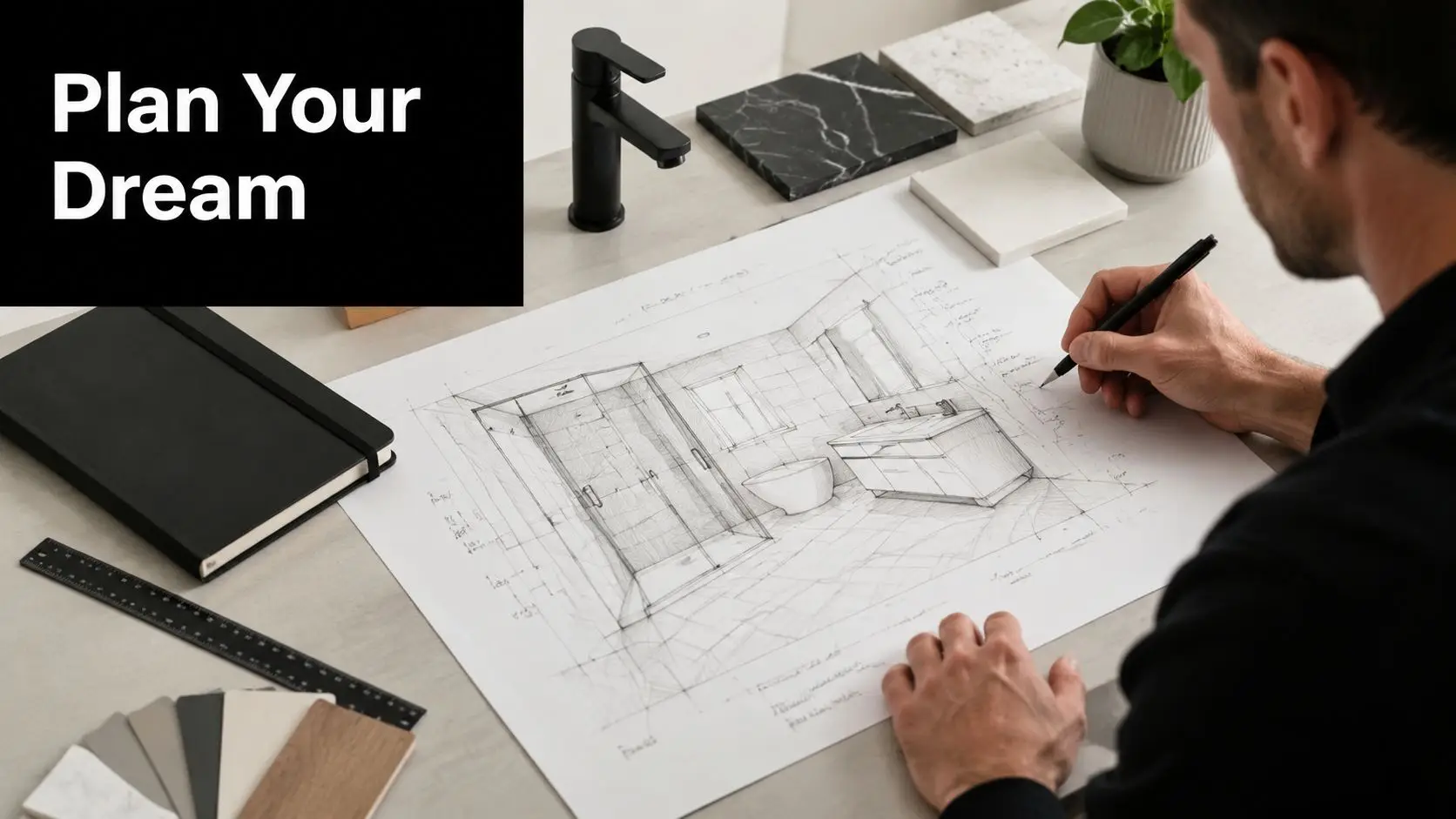
That old bathroom usually tells you where the money will disappear. It might be the awkward shower base, the vanity with no storage, or the plumbing layout that tempts you to move everything around. Before buying a single fitting, define what success looks like for your space.

For some households, success means a hard-wearing family bathroom that cleans easily. For others, it means one of those designer bathrooms with better lighting, calmer colours and smarter storage, but without the full designer price tag. If you don't pin this down early, you'll keep changing direction mid-project. That's how budgets drift.

A dated, vintage bathroom featuring floral wallpaper, a pedestal sink, and a green toilet with retro tiles.

Start with the numbers that matter

In Australia, the average cost of a full bathroom renovation ranges from AUD 20,000 to AUD 35,000, while budget-conscious renovations can be achieved for AUD 8,000 to AUD 20,000 if you focus on high-impact choices and keep the plumbing layout in place. Retaining that layout can save up to AUD 5,000 to AUD 8,000 in relocation costs, according to this Australian budget renovation cost guide.

That one decision changes everything. If the toilet, shower and vanity stay broadly where they are, your spend goes into visible improvements instead of hidden pipework.

Run a renovation audit before you design

A proper budget plan starts with a blunt audit. Walk through the room and sort each element into one of three categories:

  • Must replace. Failed waterproofing signs, damaged vanity carcasses, cracked pans, unstable fixtures, severe mould issues.
  • Can refresh. Cabinet fronts, mirrors, handles, wall colour, grout appearance, lighting style.
  • Leave alone. Sound plumbing positions, decent room proportions, serviceable windows, functional towel rails in secondary spaces.

Practical rule: If an item is sound, compliant, and not ruining the look of the room, keep it.

This is the point where many homeowners stop thinking in terms of a full rip-out and start seeing a staged, workable plan.

Set guardrails before ideas get expensive

Budget projects need fixed guardrails, not wish lists. Decide these items early:

  1. Your maximum spend
  2. Whether you're keeping the existing layout
  3. Which finishes need to look premium
  4. Which jobs require trades
  5. Whether the work will happen all at once or in stages

If you're still pricing up possibilities, this guide to small bathroom remodel cost helps frame what different levels of work usually involve.

New bathroom ideas are useful only when they fit the room, the building, and the money. The homeowners who stay on budget don't chase every idea. They choose a direction, protect the layout, and spend where the eye lands first.

Smart Savings on Materials and Fixtures

Budget bathrooms look expensive when the spending is deliberate. They don't look expensive when every item is the cheapest thing available. The difference is usually in where the money lands.

In Victoria, budget bathroom renovations can yield a 70-85% return on investment, and a common framework is the 40-30-20-10 rule: 40% for fixtures and vanity, 30% for surfaces, 20% for labour, and 10% for contingency, as outlined in this Victorian budget renovation guide.

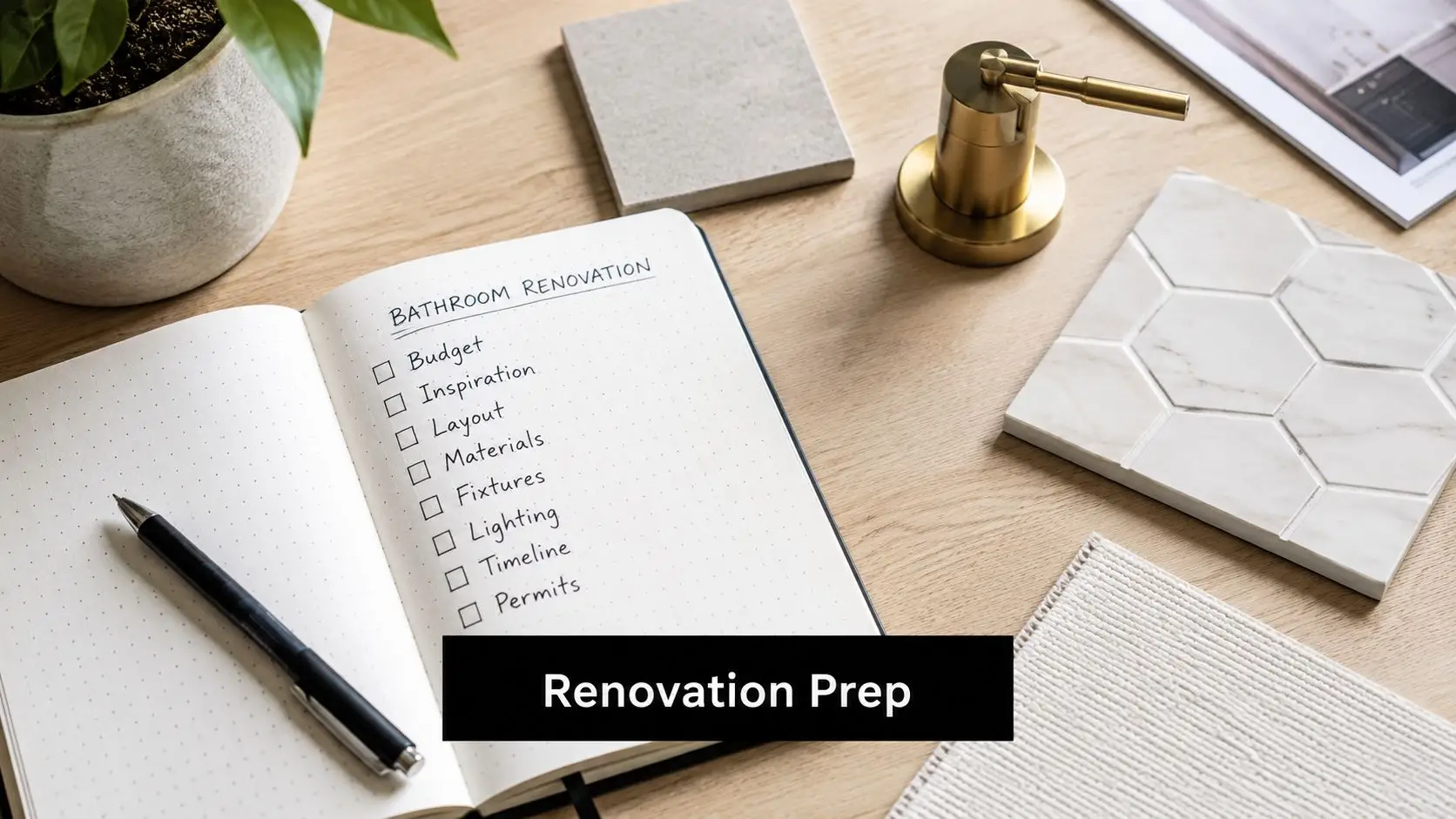
An aesthetic flatlay of various interior design material samples, textures, and faucets for home renovation planning.

Where to spend for maximum visual return

Most bathrooms have two or three focal points. Usually it's the vanity, the shower area, and the wall or floor finish. Put your cleaner-looking selections there.

A few practical examples:

  • Vanity front and benchtop look matter more than an elaborate cabinet interior in a compact room.
  • Tapware finish consistency matters more than chasing unusual shapes.
  • Lighting and mirror scale can lift the whole room faster than another decorative feature.

If you want the room to read as modern, keep the visual language simple. Straight lines, quiet finishes, and fewer materials usually beat a long list of “features”.

Where to save without the room looking cheap

Budget jobs are won in this phase.

  • Keep the cabinet carcass if it's solid. Refinish doors or replace fronts rather than rebuilding the whole vanity.
  • Choose simple tile profiles. Fancy laying patterns and fiddly edges often add labour pressure.
  • Use a restrained palette. Too many feature moments make a small bathroom feel cluttered.
  • Standard sizes help. Custom dimensions can look excellent, but they rarely support a tight budget.

Expensive-looking bathrooms are often simpler than people expect. Fewer finish changes usually mean cleaner lines and fewer labour headaches.

Surfaces are one area where homeowners often overspend trying to recreate showroom drama. In a real bathroom, durable and easy-to-maintain usually beats visually busy.

A practical way to apply the 40-30-20-10 split

Use the framework as a discipline tool, not a rigid formula. If your vanity and fixtures are the hero elements, keep the rest calm and efficient.

Spend area What it usually covers Budget mindset
Fixtures and vanity Vanity, toilet, tapware, shower fittings, mirror Make this look deliberate
Surfaces Wall finish, flooring, tile, paint Keep it cohesive, not flashy
Labour Install, fit-off, prep, compliance tasks Don't squeeze this too hard
Contingency Unknowns behind walls and under floors Protect the project

One more rule matters here. Buy for the whole room, not one item at a time. A vanity that looked perfect in isolation can force dearer tile choices, different plumbing connections, or awkward spacing around the toilet.

If you're weighing finishes, this article on how to choose bathroom tiles is a useful starting point for balancing look, maintenance and budget.

The best budget bathrooms don't try to look luxurious in every detail. They aim for one clear result: a room that feels organised, current and easy to live with.

Deciding Between DIY and Professional Trades

A Melbourne bathroom reno often goes off budget the same way. The owner takes on one licensed job to save a few thousand dollars, the waterproofing or plumbing gets delayed, and the room sits half-finished while trades reshuffle their schedules. The original saving disappears in rework, call-out fees, and extra time without a working bathroom.

DIY still has a place. It just needs to stay in the safe, low-risk parts of the job.

Two people holding home renovation tools up against a sky background with a text overlay.

Good DIY jobs

Owners can save real money on preparation and finishing work, especially in straightforward cosmetic updates.

These tasks are usually suitable if you're organised, have the right tools, and know your limits:

  • Strip-out support work. Removing mirrors, accessories, shelves, and other non-service items after the area is made safe.
  • Painting. Walls, ceilings, trims, and some cabinetry if the substrate is sound and the coating system suits a wet area.
  • Flat-pack assembly. Putting together vanities or storage units before installation.
  • Accessory installation. Hooks, towel rails, freestanding storage, and styling items where no concealed plumbing or wiring is involved.
  • Site prep and clean-up. Protecting floors, managing rubbish, and keeping access clear for trades.

The best DIY tasks are easy to inspect, easy to redo, and unlikely to cause hidden damage.

Jobs that should stay with trades

In Victoria, bathrooms are not the room to guess your way through. Waterproofing, plumbing, electrical, and many fit-off tasks need licensed people, and for good reason. If these parts fail, the damage usually sits behind tiles, under floors, or inside walls until the repair bill gets ugly.

Body corporate rules can add another layer. In apartments and some townhouses, works that affect waterproofing, services, penetrations, or waste lines may need approval before the job starts. Owners who skip that step can end up paying to open finished work for inspection or reverse unauthorised changes.

Use this test before deciding a task is DIY-friendly:

Task DIY suitable Trade required
Remove old accessories Yes No
Paint walls and ceiling Yes No
Move plumbing points No Yes
Electrical changes No Yes
Waterproofing No Yes
Install and certify key wet-area work No Yes

If a mistake can cause leaks, electrical risk, failed compliance checks, or damage to another lot, hand it to a trade.

Where homeowners get caught out

The expensive part is rarely the first mistake. It's the chain reaction after it.

A tap set out a few millimetres wrong can force tile cuts to shift. A vanity installed before final service checks can come back off the wall. An unlicensed waterproofing shortcut can hold up the whole fit-off because no reliable trade wants to inherit the risk.

I see the same trade-off on budget projects all the time. Save on labour where the work is visible, simple, and separate from compliance. Pay for licensed work where sequencing, certification, and long-term performance matter.

When a builder or project manager makes sense

Some bathrooms need more than booking a plumber, tiler, and electrician one by one. If the renovation includes layout changes, apartment approvals, older Melbourne housing stock, or tight access, coordination becomes part of the budget equation.

A registered builder can be the right choice when structural work or broader building scope is involved. A renovation project manager also adds value on budget-conscious jobs by handling trade sequencing, product lead times, and site decisions before they turn into variation costs. Add 3D design early and you can solve spacing problems on screen instead of on site, which is much cheaper.

That approach is not about making the project bigger. It's about keeping a modest bathroom renovation controlled, compliant, and finished properly the first time.

High-Impact Quick Wins and Phased Renovations

Not every bathroom needs a full demolition to improve fast. Some rooms are structurally fine but visually dated. Others need bigger work, just not all in one hit. That's where quick wins and phased renovations make sense.

Quick wins that change the room fast

Cosmetic changes work best when they target what your eye notices immediately. In most bathrooms, that means dated finishes, poor lighting and tired hardware.

Good quick wins include:

  • Updating tapware and shower fittings when the existing setup allows like-for-like replacement
  • Replacing mirrors with a better-proportioned option
  • Changing cabinet handles and accessories so the room reads as one scheme
  • Painting walls or cabinetry where the substrate is sound
  • Refreshing grout appearance or replacing tired silicone where appropriate
  • Improving lighting to make the room feel cleaner and brighter

These aren't glamorous decisions, but they do a lot of visual lifting. A bathroom feels newer when the room looks cleaner, lighter and more intentional.

How to phase a bathroom renovation properly

A staged approach only works if each stage leaves the room usable and doesn't undo the previous one. Random upgrades cost more because one new item often exposes three old ones.

A practical sequence is:

  1. Stabilise the room first
    Fix leaks, fan issues, damaged seals, storage problems and anything affecting daily use.

  2. Upgrade visible surfaces next
    Paint, mirror, lighting, accessories and vanity refinishing can give the biggest immediate lift.

  3. Tackle fixtures and major wet-area work later
    Keep this stage for when you've built enough budget to do it properly.

A phased renovation works when each phase solves a real problem. It fails when each phase is just a temporary patch.

This is also the right approach if you're collecting ideas for modern bathrooms but don't yet have the funds for a full reset. Do the work that improves function and visual calm first. Save the major plumbing and shower-area changes for the stage when you can complete them without compromise.

When to Engage a Specialist for Your Renovation

A budget bathroom renovation often stops being a budget renovation the moment the owner has to reschedule three trades, answer a body corporate manager, and reorder a vanity that does not fit the as-built room. I see that pattern a lot in Melbourne apartments. The job looks simple until approvals, access rules, and wet-area compliance start affecting every decision.

A professional interior designer and client reviewing a floor plan layout while sitting on a couch.

Apartment bathrooms change the budget equation

In Victoria, apartment and townhouse bathrooms usually come with extra layers of control. Body corporate or owners corporation approval may be required before demolition starts, especially if the work affects waterproofing, services, acoustic performance, waste pipes, or common property. Some buildings also restrict working hours, lift use, rubbish removal, parking, and where materials can be stored.

Those rules cost time if they are handled late. They also affect money. A cheap quote can unravel fast once the contractor has to work around booking windows, protection requirements for common areas, or extra documentation for management approval.

That is usually the point where a specialist earns their fee.

What a specialist actually changes

True value lies beyond simple trade coordination. It involves minimizing costly errors before they occur.

A specialist team can help by:

  • confirming site constraints early, including access, services, wall positions and fixture clearances
  • locking selections before demolition so plumbing and electrical rough-ins suit the final layout
  • preparing drawings and scope clearly for owners corporation review where needed
  • sequencing trades properly so waterproofing, tiling, glazing and fit-off do not clash
  • assigning responsibility for compliance, defects and variations

That last point matters in Victoria. If several trades are booked separately and one step goes wrong, each contractor can blame the previous one. Homeowners end up stuck in the middle. Working with a team that understands why using a registered builder matters for your bathroom renovation gives you a clearer line of responsibility.

Why 3D planning is worth it on a tight budget

3D design is not just for high-end bathrooms. On a tighter budget, it can save more because there is less room for corrections once materials are ordered.

It helps test the details that usually cause rework. Vanity depth. Door swings. Mirror centring. Niche placement. Towel rail positions. Whether the room feels balanced once tile sizes and grout lines are set out.

I would rather adjust a layout on screen than after waterproofing is done.

One local example is SitePro Bathrooms, which handles bathroom planning, 3D design and construction coordination. That setup suits homeowners who want fewer handover points and fewer chances for miscommunication.

If your bathroom is in an apartment, if approvals are likely, or if you cannot manage trades and compliance around work and family life, bringing in a specialist is often the lower-risk budget decision.

Common Pitfalls and Your Sample Timeline

Most overspends happen before the room starts looking better. They come from hidden issues, poor sequencing and decisions that should've been settled earlier.

Two of the biggest traps are beneath the finishes. Failing to inspect the subfloor after demolition can reveal rot that inflates budgets by an average of 15%. Ignoring waterproofing requirements is another major problem, with 28% of budget renovations failing council inspection on that point and causing 4 to 6 week delays.

The mistakes that hurt most

Some problems are obvious in hindsight, but not during the rush of demolition and ordering.

  • Skipping subfloor checks. Once fixtures and tiles are out, inspect properly. If you don't, hidden deterioration can force disruptive changes later.
  • Treating waterproofing like a minor step. It isn't a paint job. It affects compliance, longevity and whether the bathroom can be handed over without drama.
  • Buying finishes before confirming site conditions. A vanity, shower screen or tile selection can look perfect online and still be wrong for the actual room.
  • Starting without a sequence. Bathroom work is unforgiving when trades overlap badly or arrive before the room is ready.

Waterproofing and substrate condition aren't “back-end details”. They're the project.

A realistic sample timeline

A budget renovation doesn't need to be chaotic. It does need a clean order of operations. Here's a simple planning guide you can use as a reference point.

Budget Tier Typical Scope of Works Estimated Timeline
Cosmetic refresh Paint, mirror, accessories, hardware, minor fixture updates, surface refresh where suitable Short timeline, often planned as a light refresh
Mid-range budget update Vanity replacement, fixture upgrades, partial surface work, licensed trade involvement, layout retained Moderate timeline with allowance for ordering and trade coordination
Full budget-conscious renovation Demolition, waterproofing, new fixtures and finishes, full fit-off while keeping core layout Longer timeline, especially if approvals or hidden repairs arise

Your pre-start checklist

Before work begins, make sure you can answer these clearly:

  1. What are you keeping no matter what
  2. What will be replaced if demolition exposes problems
  3. Who is handling waterproofing and service work
  4. Whether approvals are needed
  5. What your contingency is reserved for

A budget renovation succeeds when the unseen parts are handled as carefully as the visible ones. That's what gives you the finished room people notice, and the durability you notice years later.


If you're planning bathroom renovations in Highett or elsewhere in Victoria, start with the layout, the compliance requirements, and the items that deliver the biggest visual return. That's how you get fresh new bathroom ideas into a room that looks current, functions properly and stays inside budget.

  • siteprobathrooms

Your Guide to a Downlight in Bathroom Renovations

A lot of bathroom renovations start the same way. Homeowners spend weeks choosing tiles, tapware and a vanity profile, then lighting gets left until the electrical rough-in is already booked. That’s usually the moment the questions start. How many fittings do you need, what IP rating is required, and will a downlight in bathroom spaces make the room feel sharp and modern or harsh and clinical?

In Highett, I see this often in both compact ensuites and larger family bathrooms. The room looks straightforward on plan, but bathrooms are one of the trickiest spaces in the house to light properly. Water, steam, mirrors, ceiling heights and daily grooming all change the way light behaves. A fitting that works perfectly in a hallway can be the wrong choice above a shower or vanity.

Good lighting does two jobs at once. It keeps the room safe and compliant, and it makes the space easier to use every day. In designer bathrooms, it also helps the finishes look expensive, balanced and calm. That’s why the lighting layout needs the same attention as waterproofing, joinery and tile set-out.

Setting the Scene for Your Bathroom Lighting

You’re probably at the stage where the new bathroom ideas are starting to feel real. Tile samples are on the bench, the vanity size is locked in, and you’re trying to picture how the room will feel at 6:30 in the morning and again at night when you want the space to be softer. That’s exactly where lighting decisions matter most.

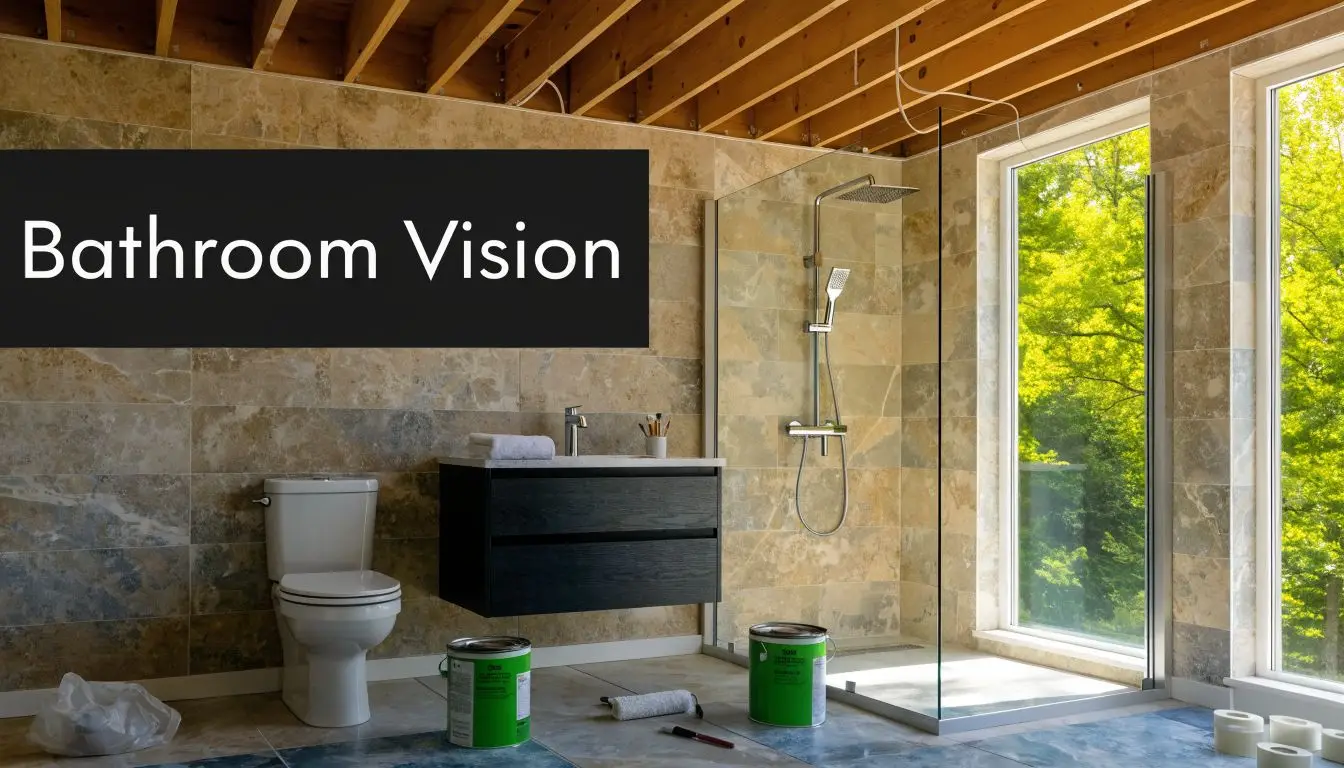
A modern bathroom under construction featuring tan stone tiles, a floating vanity, and a glass shower stall.

One common pattern in bathroom renovations is that clients know the look they want, but not how to achieve it with lighting. They’ll say they want modern bathrooms with a clean ceiling line, or designer bathrooms that feel hotel-like without being gloomy. Recessed downlights are usually part of that answer, but only when they’re selected and positioned properly.

A bathroom isn’t lit like a living room. You need useful light at the mirror, safe fittings in wet areas, and enough control so the room doesn’t feel overlit at night. If the renovation timeline is already on your mind, it helps to understand how long a bathroom remodel should take before electrical choices start affecting the build sequence.

Practical rule: If lighting is being discussed after tiles are ordered and ceilings are framed, you’re already giving away design control.

The best results come when lighting is planned early. That’s when the builder, electrician and designer can coordinate mirror position, fan placement, ceiling battens, insulation clearance and switch locations before anyone starts cutting holes.

Understanding Bathroom Downlights

A downlight is a recessed ceiling fitting that directs light downward. In bathrooms, that usually means a cleaner ceiling, less visual clutter and a more architectural finish than a central oyster light or bulky decorative fitting. That’s why downlights are so popular in modern bathrooms.

Why homeowners choose them

Downlights work well when you want the ceiling to disappear visually. In smaller rooms, that matters. A compact ensuite can feel less crowded when the fittings sit flush and the eye isn’t pulled up to hanging fixtures.

They also suit a wide range of layouts. A single room can use downlights for general ambient light, tighter task lighting near a vanity, and feature lighting over a shower niche or textured wall if the overall plan is handled properly.

Where they work well and where they don’t

The biggest strength of a downlight in bathroom design is simplicity. The biggest weakness is that simplicity can fool people into thinking placement doesn’t matter. It does.

Here’s the trade-off in practical terms:

  • Clean look: Recessed fittings support minimalist, high-end bathrooms and keep sightlines tidy.
  • Flexible planning: They can be used in ensuites, family bathrooms and powder rooms with different beam spreads and trim sizes.
  • Low visual bulk: They’re useful where ceiling height is modest and you don’t want fittings hanging into the room.

But there are drawbacks:

  • Poor placement causes shadows: A fitting directly over the user at the vanity can make grooming harder, not easier.
  • Too many create glare: A ceiling dotted with fittings often looks busy and feels uncomfortable.
  • Wrong product choice shortens life: Bathrooms expose fittings to steam and moisture, so general-purpose products often disappoint.

A sleek ceiling isn’t the same thing as a good lighting plan.

The balanced view

If you want a simple answer, downlights are usually the right starting point for bathroom renovations, but not always the full solution. They give you the base layer. They don’t automatically solve vanity lighting, mirror glare or mood. That’s where beam angle, CRI, zoning and layout start to matter.

Critical Safety Regulations for Bathroom Lighting

This is the part that should never be guessed. In Victoria, bathroom electrical compliance is governed by AS/NZS 3000 wiring rules. Bathroom zones then determine what level of moisture protection a light fitting needs under AS/NZS 60598.

A person is installing a recessed downlight in a bathroom ceiling while performing electrical wiring work.

The simplest way to think about it is this. The closer the fitting is to direct water exposure, the higher the protection level needs to be. That protection level is shown as the IP rating. If the wrong fitting goes in the wrong zone, the issue isn’t only cosmetic or administrative. It creates a real safety and durability problem.

A cited industry summary notes that in Victoria, Zone 1 above a shower requires a minimum IP44 rating, but many professionals recommend IP65 to limit steam ingress, which can reduce a downlight’s lifespan by up to 50%. The same source notes that 28% of Victorian bathroom electrical faults stem from incorrectly IP-rated fittings, which is why licensed installation matters (bathroom IP rating and fault summary).

How the bathroom zones work

Bathrooms are divided into zones based on water exposure. In practice, the most critical areas are inside the bath or shower, directly above those fixtures, and the surrounding splash zone.

Zone Location Description Minimum IP Rating SitePro Recommended Rating
Zone 0 Inside bath or shower basin IPX7 / IP67 IP67
Zone 1 Above bath or shower to 2.25m height IP44 to IPX4-IPX5 minimum IP65
Zone 2 Around fixtures, generally 0.6m from water source to 2.25m IP44 / IPX2-IPX4 minimum IP65 where practical
Outside zones Areas outside defined splash zones IPX0 IP44 or higher for added durability

That table is the conversation I want clients to have with their builder and electrician before final selections are made.

What this means on a real project

On site, the mistakes are usually predictable. Someone chooses fittings by appearance alone. Or they assume the centre of the ceiling is automatically outside the risk area. In a steamy room, that assumption can be expensive.

These are the checks that matter most:

  • Check the actual zone: Don’t estimate from memory. Measure from the bath and shower footprint and confirm the ceiling height.
  • Read the fitting specification: The trim style tells you nothing about compliance. The IP rating does.
  • Match the fitting to the ceiling build-up: Insulation, cut-out size and fire separation all affect what can be installed safely.
  • Use licensed trades: Wet-area electrical work isn’t a DIY area.

For broader site safety thinking during a renovation, it also helps to understand worker safety on construction sites, because bathroom lighting decisions sit inside a much bigger compliance process.

On site advice: If a fitting is only “probably fine” for a wet area, it isn’t the right fitting.

Why the recommended rating is often higher than the minimum

Minimum compliance and best practice aren’t always the same thing. A bathroom in regular use creates steam, condensation and repeated moisture cycling. That’s why many builders and electricians prefer a higher rating than the bare minimum, especially over showers and in homes where the bathroom sees heavy daily use.

For homeowners, that usually means fewer callbacks, fewer failed fittings and a better result long after handover.

Choosing the Best Downlight Types for Your Space

Once safety and zoning are sorted, product choice becomes a design decision. It determines whether many bathrooms either become calm and usable, or end up looking bright on paper and uncomfortable in real life.

Various modern designer LED lighting fixtures of different shapes, materials, and colors displayed on a reflective surface.

Fixed, fire-rated and adjustable options

A standard fixed LED downlight is usually the workhorse. It handles general illumination well and suits most ceilings where you want a neat, consistent finish.

A fire-rated downlight matters where the ceiling system needs to maintain fire performance. In upper-level rooms or where there’s habitable space above, this isn’t a decorative upgrade. It’s part of a compliant ceiling strategy.

An adjustable or gimbal-style fitting has a narrower use, but it can solve specific problems. It’s useful when you need to direct light away from a mirror, bring light onto a feature wall, or avoid a harsh drop straight onto a user’s face.

CRI matters more than most people realise

If you only remember one lighting term for the vanity area, make it CRI, or Colour Rendering Index. This tells you how accurately a light source shows colours and skin tones.

A verified industry summary notes that for vanity lighting, downlights placed directly overhead can cast shadows that accentuate wrinkles. The same summary says a Dulux AU lighting study found LEDs with a CRI above 95 can reduce makeup application errors by 40%, while only 22% of Melbourne renovations use them (beam angle and CRI summary).

That lines up with what works in practice. Cheap, low-quality light makes faces look dull, tired or patchy. High-CRI light gives a more natural reading of skin, hair and finishes.

Beam angle changes the feel of the room

Beam angle controls how wide the light spreads. That affects both comfort and function.

A tighter beam is more focused. It can help with targeted light over a shower or niche, but if it’s used carelessly over a vanity, it creates hotspots. A wider beam can soften general lighting, but too much width in a small room can flatten the space and increase glare.

I usually explain it this way:

  • Narrower beam: Better for control, accenting and avoiding spill into every corner.
  • Wider beam: Better for broad ambient coverage, but easier to overdo in compact rooms.
  • Balanced scheme: Best result for most bathrooms, with one beam approach for general light and another for key task areas.

Good bathroom lighting doesn’t blast every surface equally. It puts light where people actually need it.

What works best in modern bathrooms

For most modern bathrooms, the strongest combination is simple. Use quality LED fittings, choose fire-rated products where the ceiling build-up requires them, and prioritise high CRI around the vanity. If a fitting can tilt, use that feature deliberately rather than as a gimmick.

For designer bathrooms, restraint usually wins. Fewer, better-chosen fittings create a cleaner result than overcomplicating the ceiling with too many fixture types.

Perfect Placement and Spacing for Downlights

The layout is where the whole scheme either starts to make sense or falls apart. You can buy a compliant, high-quality fitting and still get a poor result if the spacing is wrong.

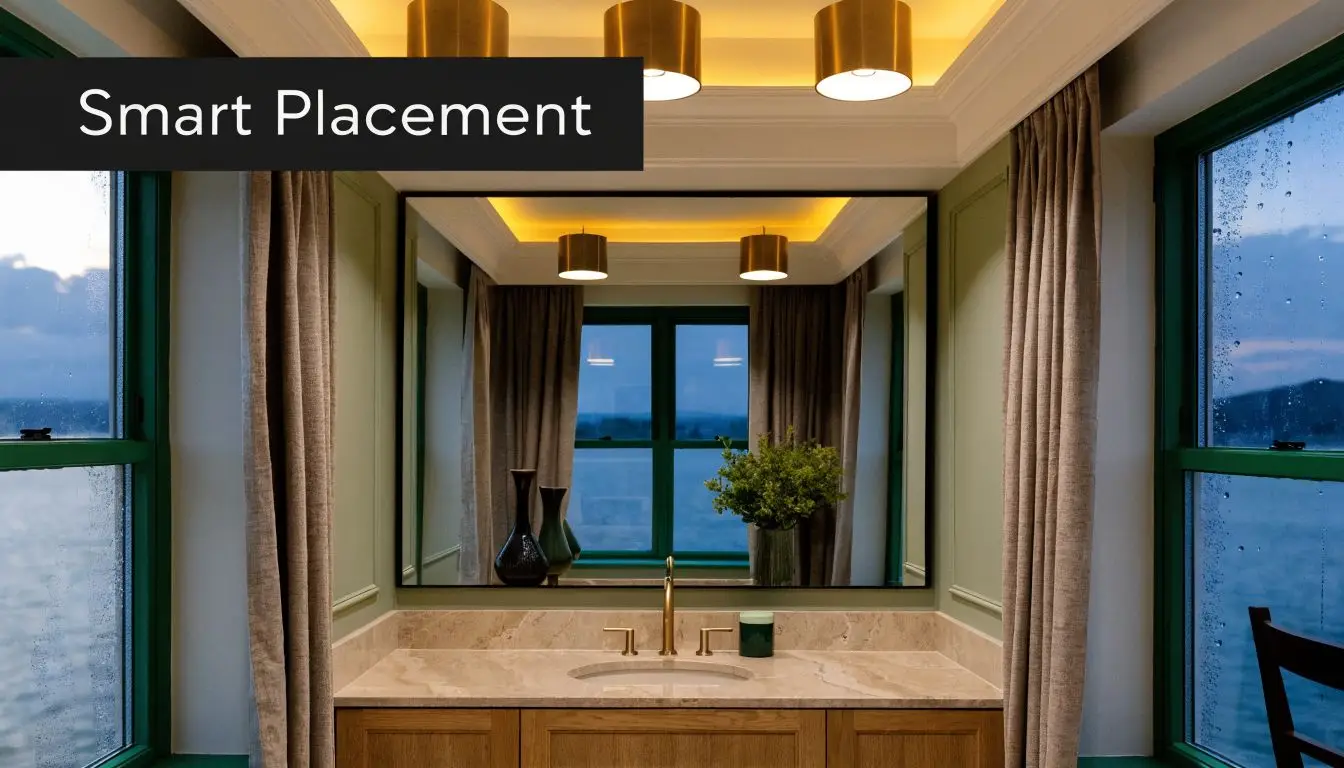
A modern bathroom vanity featuring a large mirror with reflection of downlights and scenic window views.

For compact Victorian ensuites sized 3 to 5m², guidance supports 2 to 4 inch fittings, with one downlight per 1.5 to 2m² and enough illumination to achieve 300 to 500 lux for task lighting over sinks. In lower-ceiling homes of 2.4 to 2.7m, this more precise approach can reduce multi-shadowing by up to 40% compared with larger wide-angle lights (compact ensuite placement guidance).

Start with layers, not a grid

The mistake I see most is people trying to centre lights by eye and create a neat row pattern. Bathrooms don’t need a runway grid. They need layered light.

Think in three parts:

  1. Ambient light for the whole room.
  2. Task light where people shave, apply makeup, brush teeth and clean.
  3. Accent light only if there’s a feature worth highlighting.

That approach is more useful than trying to make the ceiling look mathematically symmetrical.

Practical placement for common bathroom areas

A better layout usually follows how the room is used.

  • At the vanity: Don’t rely on one fitting directly above the user’s head. That tends to put the brow and nose into shadow. Slightly offset placement works better, especially when combined with mirror or side lighting.
  • In the shower zone: Use the correct wet-area fitting, but avoid making it the brightest point in the room unless the shower is enclosed and dark.
  • In the centre of the room: One fitting may help with circulation space, but only if it supports the full layout rather than creating glare on glossy tiles.
  • Near feature finishes: If you have stone texture, a niche, or a detailed wall tile, controlled light can help. Random extra fittings usually won’t.

Compact ensuite example

A small Highett ensuite often needs restraint more than output. With a low ceiling and limited floor area, oversized fittings or broad flood beams can make the room feel flatter and brighter than intended.

A better approach is:

  • Use smaller-diameter fittings
  • Space them to suit room function, not just room shape
  • Keep vanity lighting flattering rather than top-heavy
  • Include dimming so the room can shift from morning task use to evening comfort

If you’re planning a small room, designing an ensuite properly from the start helps the lighting plan make more sense because vanity depth, mirror width and shower location all affect placement.

The right number of downlights is the number that lights the room properly. Not the number that fills the ceiling.

Why dimming is worth including

Bathrooms do double duty. They’re workspaces in the morning and wind-down spaces at night. Dimming gives you flexibility without changing the fittings themselves.

In practical terms, that means the same layout can support bright, useful task lighting when needed and a softer feel when the room is being used for a bath or late-night routine.

Common Downlight Mistakes to Avoid in Your Renovation

Most bathroom lighting problems aren’t caused by one dramatic error. They come from a series of small decisions that were never coordinated.

The first and most serious mistake is using the wrong IP-rated fitting in the wrong area. That can create safety issues, shorten product life and complicate final compliance. Homeowners sometimes assume all recessed lights sold for bathrooms are suitable everywhere in the room. They aren’t.

The next problem is overlighting. People worry a bathroom will feel dim, so they keep adding fittings. The result is often a ceiling full of evenly spaced circles that produce glare off tiles, mirrors and stone tops. The room feels more like a treatment room than a home.

Mistakes that keep showing up on site

  • Treating the vanity like general space: The vanity is a task zone. If the downlight sits directly overhead, facial shadows get worse.
  • Ignoring insulation and ceiling conditions: Not every fitting suits every ceiling build-up. Insulation contact, fire separation and cut-out depth all need checking.
  • Choosing on trim colour alone: A black, white or brushed finish might suit the palette, but appearance doesn’t tell you whether the fitting is appropriate.
  • Skipping dimmers: That usually seems like a small omission at quote stage and a daily annoyance after handover.

What doesn’t work in real bathrooms

A common assumption is that more downlights automatically means a better bathroom. It usually means the opposite. Strong bathrooms use fewer fittings with better purpose.

Another weak move is leaving lighting until the electrician is already roughing in. By then, the mirror size, joinery height and shower set-out may already be fixed, and the opportunity for a refined layout is gone.

Bad bathroom lighting is rarely a product problem alone. It’s usually a planning problem.

If you’re chasing designer bathrooms rather than just functional ones, avoid the temptation to solve every issue with another hole in the ceiling.

Working With Your Renovator for Flawless Lighting

Lighting gets better when it’s resolved before construction, not adjusted during it. A good renovator should be able to explain where each fitting goes, why it belongs there, what rating it needs, and how it will interact with the mirror, ceiling, fan and tile layout.

That matters because bathroom renovations involve more than selecting a fitting from a display board. The layout has to work with framing, waterproofing, electrical rough-in, insulation, ceiling cut-outs and final usability. Homeowners don’t need to manage all of that themselves, but they should expect clear answers.

Questions worth asking early

Ask your renovator these things:

  • How are the wet-area zones being assessed
  • What CRI is being specified near the vanity
  • Will the room rely only on ceiling light, or is it layered
  • Is the lighting shown in the design before installation starts

A professionally modelled design can do more than improve confidence. Verified guidance notes that integrating lighting plans into 3D designs can reduce energy consumption by 20 to 30% when placement is simulated and efficient LED fixtures are selected to meet AS 1680 goals (3D lighting design and energy savings).

That’s one reason experienced, registered builders unlimited in practical knowledge tend to protect the client from expensive guesswork. You see the lighting intent early, not after the plaster is patched.


If you’re planning a bathroom renovation in Highett or elsewhere in Victoria and want a lighting plan that balances compliance, comfort and clean design, SitePro Bathrooms can help. Their end-to-end bathroom renovations process includes 3D design, practical layout planning and a build approach focused on modern bathrooms, designer bathrooms and durable results that work in everyday life.