Renovation Cost Per M2 Australia: 2026 Breakdown
A good-quality renovation in Australia usually sits around A$3,000–A$5,000 per m². But a bathroom renovation often lands at A$15,000–A$30,000, and that's why small rooms can make cost per square metre look much higher than a whole-house average.
That gap catches homeowners out all the time. A compact bathroom can look expensive on paper even when the actual spend is still in the normal range for bathrooms, kitchens, and other wet areas.
Understanding the Australian Renovation Cost Range
The first mistake most homeowners make is treating renovation cost per m2 Australia as if it were one fixed national number. It isn't. A practical starting point is the broad Australian range of about A$3,000–A$5,000 per m² for a good-quality renovation, with basic cosmetic work often closer to A$1,000–A$2,500 per m² and high-end or luxury work able to exceed A$7,000 per m² (Custom Homes Online).
That range matters because the figure shifts with scope, finish level, and the type of room you're renovating. A whole-house quote spreads costs across larger areas and softer trades, while a bathroom or kitchen concentrates labour, compliance, waterproofing, tiling, and fixtures into a very small footprint.
Why a small bathroom skews the maths
A 6-square-metre bathroom in Highett can still need the same specialist trades as a much larger wet area. The floor area is tiny, but the fixed costs are not. Demolition, waterproofing, plumbing, electrical work, tiling, and fixtures all have to happen whether the room is 4 m² or 14 m².
That is why homeowners often see a per-m² number for a bathroom that looks far above the national average. The room is not overpriced just because the ratio is high. It usually means the project has fixed trade costs that do not shrink just because the room is small.
The trend from 2024 to 2026 supports that reading. Earlier guidance often sat closer to the lower thousands per square metre, but recent Australian guides place standard work in the A$3,000–A$5,000 per m² band and higher-end work above that, reflecting pressure from labour, materials, and trade availability.
Practical rule: use per-m² pricing to sanity-check a whole-home budget, but use room-specific budgeting for bathrooms and kitchens. That is where the numbers actually hold up.
For homeowners planning bathroom renovations, the better question is not “what's the average per m²?”. It is “what finish level am I buying, and what work is hidden inside that room?”
For kitchen planning, a room-by-room budget is more reliable than a blanket m² estimate. A useful starting point is the cost of a new kitchen guide, then adjust for joinery, appliance quality, plumbing moves, and how much structural work the room needs.
How Room Type Changes Your Cost Per Square Metre
Bathrooms and kitchens sit at the top of the cost stack because they're packed with trades and compliance work. A dry room, like a bedroom or living area, is mostly about surfaces. A wet area needs waterproofing, drainage, plumbing, electrical coordination, tiling, and joinery that must all line up properly.
That's why a cost per square metre figure can be useful for some rooms and misleading for others. A bedroom renovation can look relatively modest on a per-m² basis, while a bathroom can look shockingly expensive even when the absolute spend is still quite normal.
| Room Type | Per-Project Range | Per-m² Range |
|---|---|---|
| Bathroom | A$10,221–A$20,443 | Best estimated from scope rather than area |
| Kitchen | A$8,179–A$20,443 | Best estimated from scope rather than area |
| Tiling | A$36–A$92 per m² | A$36–A$92 per m² |
| Flooring | A$46–A$112 per m² | A$46–A$112 per m² |
Those project-level bathroom and kitchen benchmarks come straight from national Australian renovation market guidance, which also notes that tiling in Melbourne runs A$37–A$94 per m² (What's the Damage). That regional lift is modest on paper, but it still matters when you're comparing Highett, Melbourne, and broader national averages.
For a kitchen planning reference, a room-by-room approach is more reliable than a blanket m² estimate. If you want a useful comparison point, see the structure of a new kitchen cost breakdown and compare it with your actual scope.
What pushes wet areas higher
Bathrooms and kitchens are expensive because the cost drivers are stacked. Waterproofing is not optional. Plumbing relocations are rarely cheap. Electrical upgrades, extra cabinetry, and specialty finishes all add weight to the quote.
Wet-area pricing is built from fixed trade work first, and floor area second.
That's why modern bathrooms and designer bathrooms often sit at the upper end of the market. The room might be small, but the service load is dense.
The Finish Level Multiplier and What Your Budget Buys
Finish level is the main multiplier. Two bathrooms can share the same footprint and still sit in very different budget bands, because one is a basic cosmetic refresh and the other is a full rebuild with upgraded services and premium finishes.
In Victoria, a standard renovation benchmark sits at A$3,500–A$5,100 per m², cosmetic work is A$2,200–A$3,400 per m², and high-end work rises to A$4,800–A$7,200 per m² (CO-Architecture). That spread shows why “renovation” is not one product, and why bathroom and kitchen owners get the most misleading answers from a simple per-m² figure.

Cosmetic, standard, and high-end are not the same job
A cosmetic bathroom update usually keeps the layout, refreshes the finishes, and replaces tired visible items. That can deliver a clean result without opening the slab, moving plumbing, or redesigning the whole room.
A standard renovation goes further. It usually means a more complete reset, with better fixtures, smarter layout choices, and a stronger finish across the room. High-end work moves into custom joinery, premium surfaces, more design time, and tighter detailing.
The trade-off is simple. A homeowner can lift a room sharply with proper waterproofing, well-chosen tiles, and durable fixtures, without paying for luxury where it will not return value. A careful standard finish often looks more balanced than a flashy mix of expensive items dropped into a poor layout.
Spend on the parts you cannot easily change later, then keep the decorative layers disciplined.
That matters most in bathrooms, where layout and services are expensive to redo. If you are planning new bathroom ideas, use finish level to decide how far to go, not just what looks impressive in a showroom.
For reference, the national renovation benchmark also sits in a similar middle band, with quality projects commonly around A$3,000–A$5,000 per m² and high-end work able to reach A$5,000–A$7,000+ per m² (Three Birds Renovations).
Hidden Cost Drivers That Catch Homeowners by Surprise
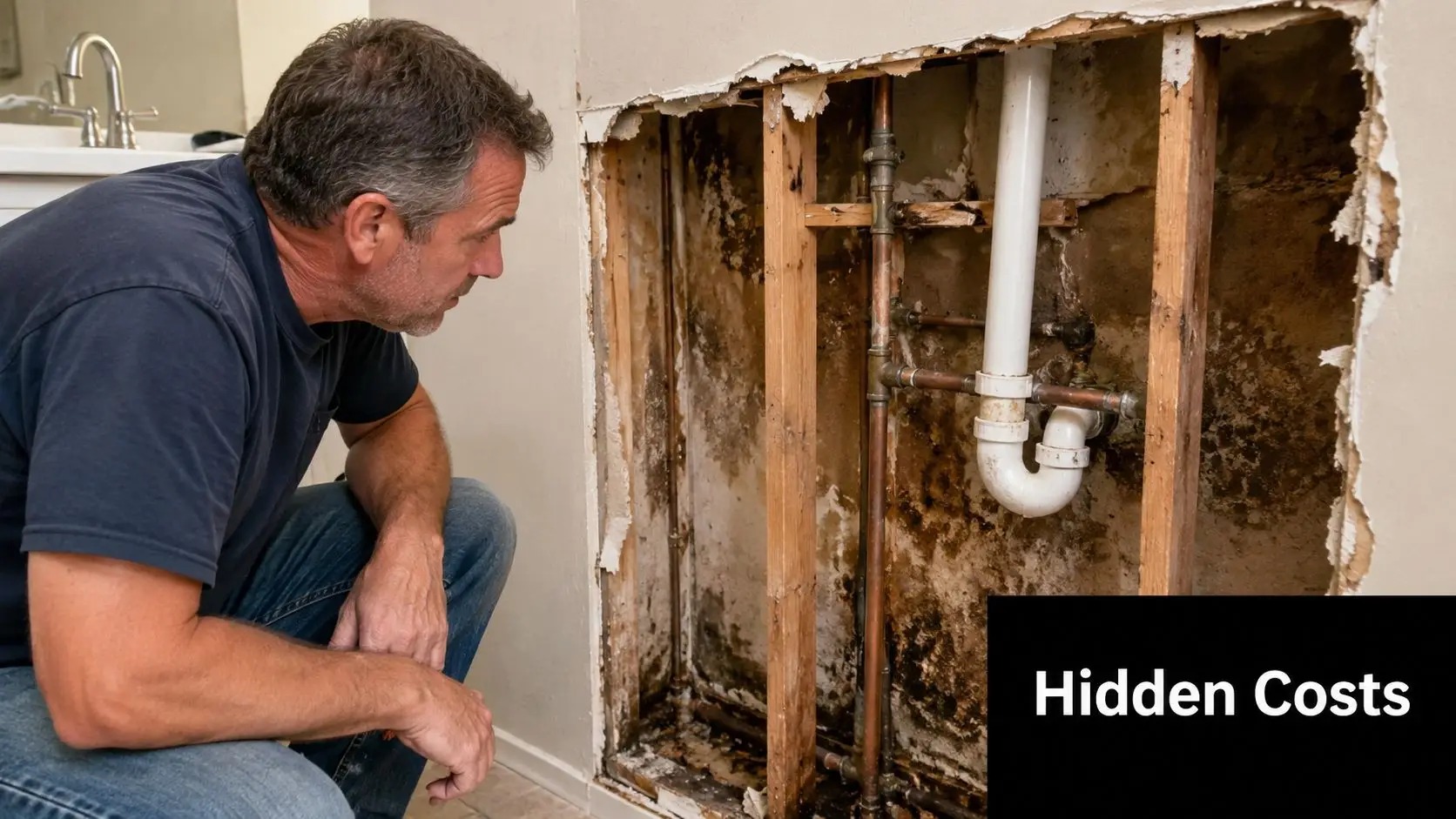
Most budget blowouts don't come from the visible items. They come from what's under the old bathroom, behind the walls, or built into the way the house was originally constructed. In older Victorian homes, that's where the quote can change fast.

The work that rarely looks expensive at the start
Old waterproofing is the big one. If the membrane has failed, the room often needs a more thorough rebuild than the homeowner expected. That can force extra demolition, more labour, and a deeper reset before the new finishes even go in.
Access is another hidden issue. Tight hallways, awkward staircases, and older building layouts make materials harder to move and labour slower to complete. Waste removal also gets more expensive when the site is constrained and skips can't be placed conveniently.
Then there's the planning layer. Renovation cost indicators for broader Australian projects say to estimate by adding the structural cost of new construction, the fit-out cost of the kitchen, bathrooms and laundry, the cost of upgrades to the existing home, and costs for decks, verandas, garages, and carports (Caulfield Krivanek). That framework matters because bathrooms are rarely just “a bathroom”. They're a fit-out line item sitting inside a bigger structural reality.
Questions to ask before you sign
- Does the quote include demolition and rubbish removal? If not, that cost often lands later.
- Is waterproofing included as a complete system? Partial wording can hide extra work.
- Are plumbing relocations priced, or only like-for-like replacement? That difference changes the budget quickly.
- Do permits, certifications, and final inspections sit inside the quote? They shouldn't be an afterthought.
- Are electrical upgrades included, or allowed for separately? Bathrooms often need more than a surface refresh.
A 1960s Highett bathroom is a classic case where the room looks simple but the quote grows once the old structure is exposed. That doesn't mean the builder has padded the job. It usually means the room needed more than the surface plan suggested.
Sample Budgeting Calculations for a Highett Bathroom
A 5-square-metre bathroom is small enough to distort per-m² thinking and big enough to carry real costs. That makes it a useful planning example for Highett homeowners who want a realistic budget before seeking quotes.
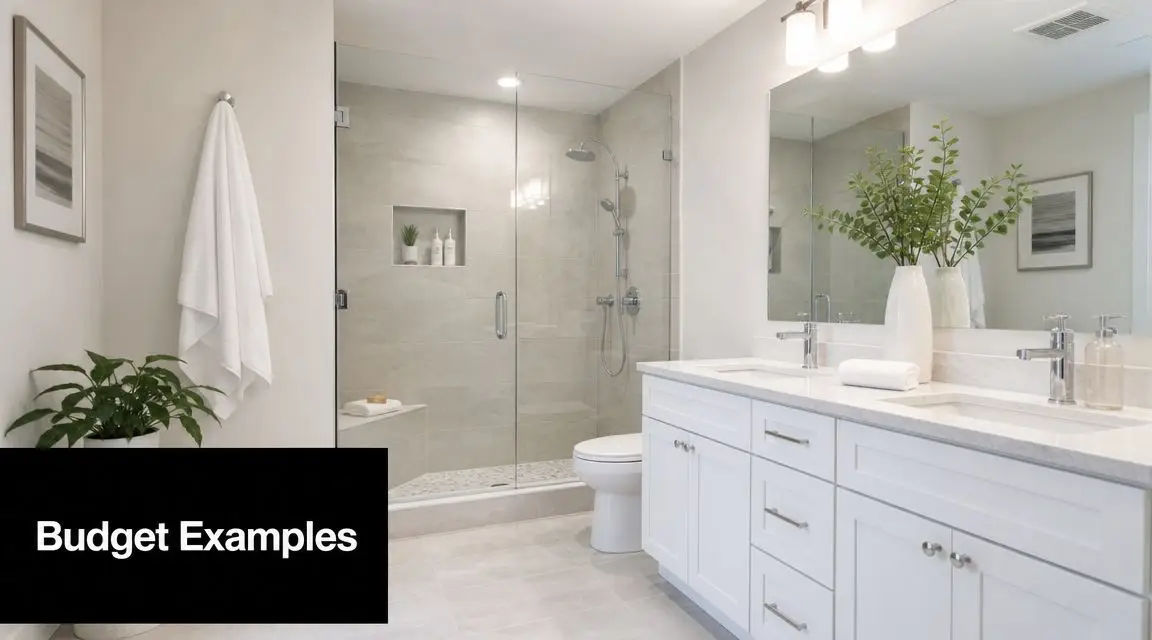
For a room like this, a cosmetic refresh can plausibly sit around A$12,000–A$18,000. A standard renovation may land around A$18,000–A$28,000. A modern bathroom or designer bathrooms project can move into A$28,000–A$40,000+ once better fixtures, more complex finishes, and extra coordination are added.
The national bathroom benchmark helps frame that range. Hipages lists a typical Australian bathroom renovation at A$15,000–A$30,000 in 2026, which lines up with the idea that bathrooms are a defined room category, not a generic home-wide average.
A simple working budget
For a 5 m² bathroom, a practical scope might look like this in broad terms.
- Demolition and removal, if the old room needs stripping back properly.
- Waterproofing and tiling, which usually take a meaningful share of the budget.
- Plumbing relocations, if the layout is changing rather than staying put.
- Cabinetry and fixtures, including vanity, toilet, shower fittings, and tapware.
- Electrical upgrades, especially where lighting or power needs updating.
- Permits and certifications, where required.
- Contingency, because old bathrooms often reveal more than they promise.
For a structured budgeting workflow, use the bathroom renovation cost calculator to test different finish levels before you commit to a builder's quote.
The budgeting discipline that actually works
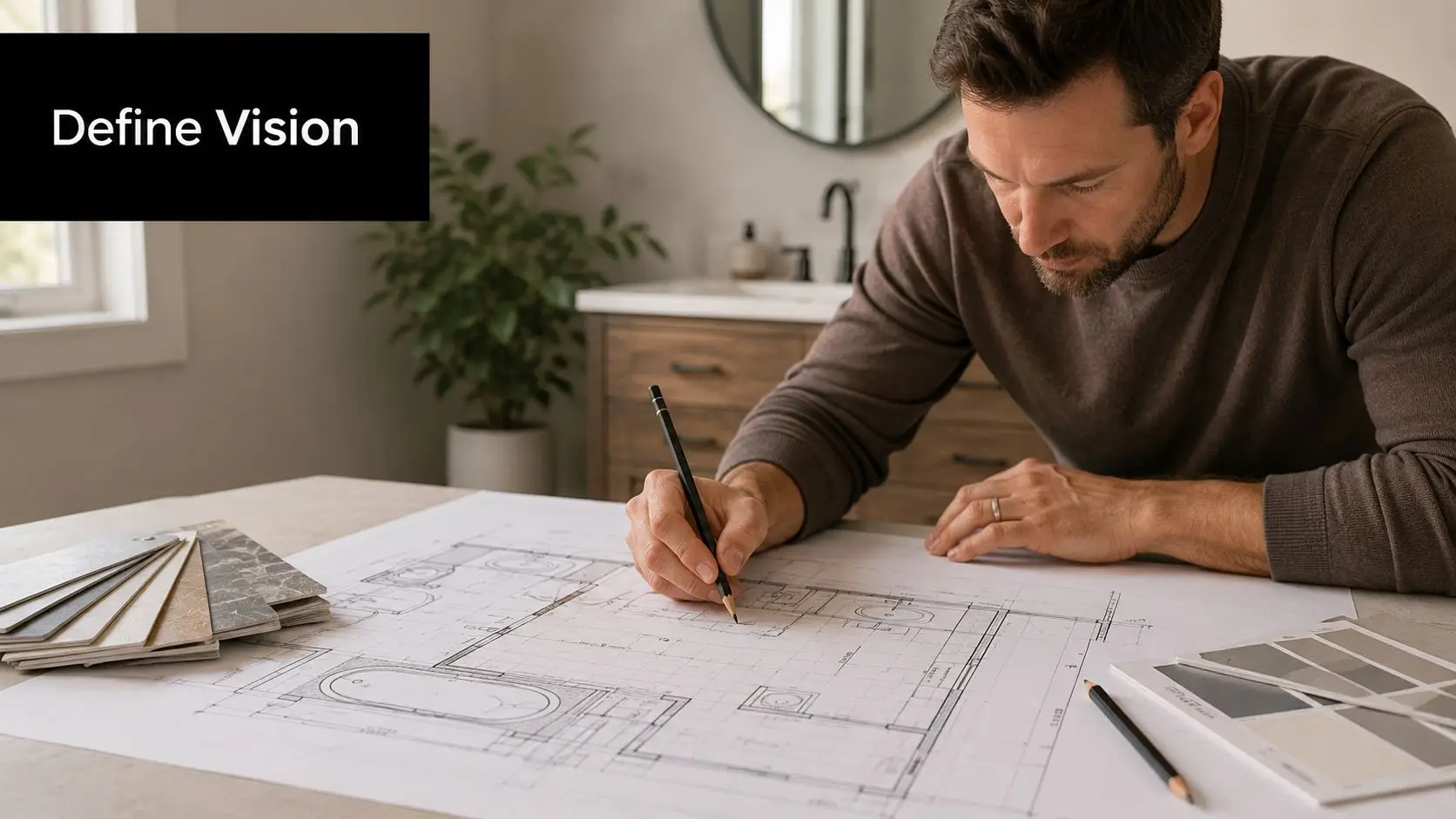
Start with the room layout, then price the waterproofing and services, then layer finishes on top. That order matters because the hidden trades are what make a bathroom expensive, not the tapware alone.
If you want to avoid underquoting, set your budget around the likely room level first, then trim finishes if you need to. Do not start with the cheapest decorative items and hope the rest will somehow fit.
Smart Cost Reduction Strategies That Do Not Compromise Quality
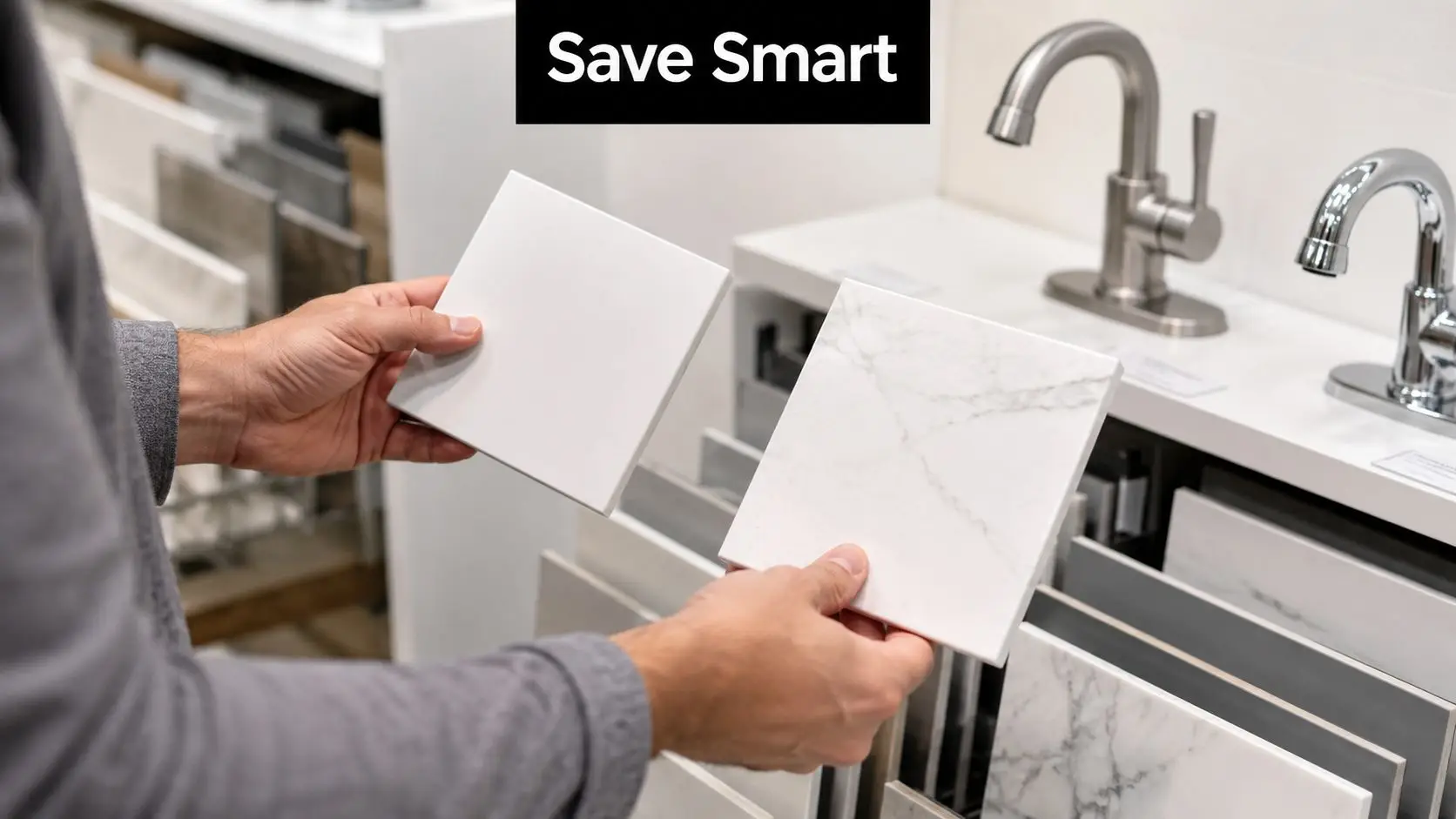
The quickest way to save money is to cut scope early. Every plumbing move, structural change, and layout change adds trades, time, and coordination. Real savings usually come from disciplined decisions, not from chasing the cheapest item on every line.
Start by matching the finish level to the room's job and the property's value. A bathroom does not need luxury in every detail to work well. It needs a sound shell, a practical layout, and finishes that can cope with daily use without constant maintenance.
Where to save and where not to
Keep the plumbing where it already makes sense. Reusing the existing layout often removes a lot of complexity, especially in older homes where moving services starts a chain reaction across the room.
Put money into waterproofing, substrates, and anything that protects the structure. Those are poor places to bargain hunt. Save on decorative items that can be changed later, such as accessories or lighter styling choices.
Design detail also reduces change orders. 3D design visualisation helps the client and builder agree on the layout before demolition starts, which lowers the risk of expensive mid-build decisions. It is not a flashy step, but it often saves money by avoiding rework.
The cheapest renovation is usually the one that gets designed properly before the first wall comes down.
Three Birds Renovations notes that renovation pricing can vary widely by finish level and scope. That spread is the point. It shows why a bathroom or kitchen budget should be built around the room's likely workload first, then adjusted through finish choices rather than hope.
For homeowners considering whether to bring in SitePro Bathrooms, the practical question is whether the project needs coordinated design, quoting, and construction instead of piecemeal management. In a wet area, that coordination can mean the difference between a clean handover and weeks of avoidable rework.
The budgeting discipline that works
Price the room in this order, layout first, waterproofing and services next, finishes last. That sequence reflects how bathroom costs are built. The hidden trades drive the budget more than the visible fittings, and the small room format makes that even more obvious.
For kitchens and bathrooms, this approach matters because per-m² pricing can mislead. A compact room can look expensive on paper while still sitting inside a sensible room-level budget. The better method is to set a realistic allowance for the room, then decide where higher-grade finishes earn their place and where a standard spec is enough.
Keep one contingency line in the budget. Older bathrooms rarely open up exactly as planned once the walls or floor are exposed. If the room needs extra rectification, that reserve protects the quality of the final result without forcing cuts in the wrong places.
When to Engage a Registered Builder for Your Renovation
Bathroom projects are where compliance risk climbs fastest. Waterproofing, plumbing, electrical work, and finishing all need to line up properly, and a missed detail can turn into a costly fix later. That's why a registered builder often makes sense when the room is more than a cosmetic refresh.
What to check before you hire
Look for registered builder status first. Then check whether the builder can show completed wet-area work, not just general renovation photos. A portfolio with new bathroom ideas, modern bathrooms, and designer bathrooms gives you a much better sense of real experience than a polished sales pitch.
You should also confirm the service scope. Some builders only price construction. Others handle concept development, 3D design, build coordination, and finishing as one integrated process. That broader scope is usually more useful for homeowners who want one accountable team.
A specialist option in Highett is SitePro Bathrooms' guide on why using a registered builder matters. The point isn't the brand name, it's the model. Wet-area renovation works best when design, quoting, and construction are coordinated from the start.
Why the upfront fee isn't the whole story
A professional team can cost more at the quote stage, but that doesn't automatically mean a higher final spend. Better scope definition reduces variations. Proper sequencing reduces delays. Accurate quoting reduces the shock of missing items that reappear halfway through the build.
The test is net value. If a builder prevents waterproofing errors, rework, and scope drift, the job often ends up better controlled than a cheaper quote that leaves too many gaps.
Frequently Asked Questions About Renovation Cost Per m²
Is per-m² pricing reliable for bathrooms?
Only as a rough guide. Per-m² pricing is useful for broad budgeting, but bathrooms distort the figure because a small room carries the same fixed trade costs as a larger area. Waterproofing, plumbing, electrical work, demolition, and fit-off all get squeezed into a compact footprint, so the cost per square metre can look inflated even when the actual room budget is normal for a quality renovation.
Why do Melbourne and Highett quotes often feel higher than national averages?
Victorian jobs usually carry firmer labour costs, tighter compliance requirements, and stronger expectations around finish quality. A standard renovation in Victoria commonly sits around A$3,500–A$5,100 per m² (CO-Architecture). That is one reason Melbourne quotes often sit near the upper side of national guidance, especially for kitchens and bathrooms where labour density is high.
What should be included in a proper bathroom quote?
A proper quote should clearly cover demolition, waterproofing, tiling, plumbing, electrical, fixtures, cabinetry, and any certification or permit work that applies to the job. If those items are left vague, the final price is still moving. Homeowners usually feel that gap only after work starts.
A detailed scope also makes the comparison fair. Two quotes can look close on paper while one is missing demolition disposal, licensed trades, or finish items that the other has already allowed for.
How do I tell whether a quote is underdone?
Check for broad allowances, missing trade categories, and wording that only covers like-for-like replacement. Bathrooms rarely stay like-for-like once the wall linings come off. Hidden damage, old services, and out-of-square framing can all push the job beyond the first number.
If the quote reads clean but the scope is thin, it is probably light on reality. That is where budgets get strained, because the missing work arrives later as variations.
Has renovation cost per m² Australia changed much in 2026?
The pressure is clearer at the top end. Recent guidance still places standard work around A$3,000–A$5,000 per m², with high-end work higher again, and the pressure is strongest where kitchens and bathrooms absorb more labour and specialist trades (Shaf Build, Three Birds Renovations). The main shift is not the idea of per-m² pricing itself, it is how fast the number climbs once finish level and hidden scope are included.
The safest approach has not changed. Set the room scope first, choose the finish level second, and price the hidden work before you get attached to the decorative details.
If you are planning a bathroom or kitchen renovation in Highett or greater Victoria, start with a room-level budget, not a broad m² assumption. Then ask for a detailed, scope-based quote so you can compare like with like and avoid the surprises that usually surface after demolition.