• siteprobathrooms

Small Bathroom Remodel on a Budget: A 2026 AU Guide

You're probably standing in a bathroom that feels too small, too dated, or too tired to keep ignoring. Maybe the tiles are stained, the vanity has seen better days, and every quote you've heard makes a fresh start feel out of reach.

A small bathroom remodel on a budget is possible in Australia. But the projects that stay affordable aren't the ones driven by impulse. They're the ones planned properly from the start, with a clear line between cosmetic upgrades, structural issues, and compliance jobs that can't be faked your way through.

That's the difference between a bathroom that looks better for a few months and one that performs well for years. Good bathroom renovations start long before you choose tapware or scroll new bathroom ideas. They start with the bones of the room.

The Foundation of Your Budget Bathroom Renovation

Treat your existing bathroom like a problem-solving exercise first. Before you think about colours, modern bathrooms, or designer bathrooms, inspect what's already there and ask one question. What could force this job off budget later?
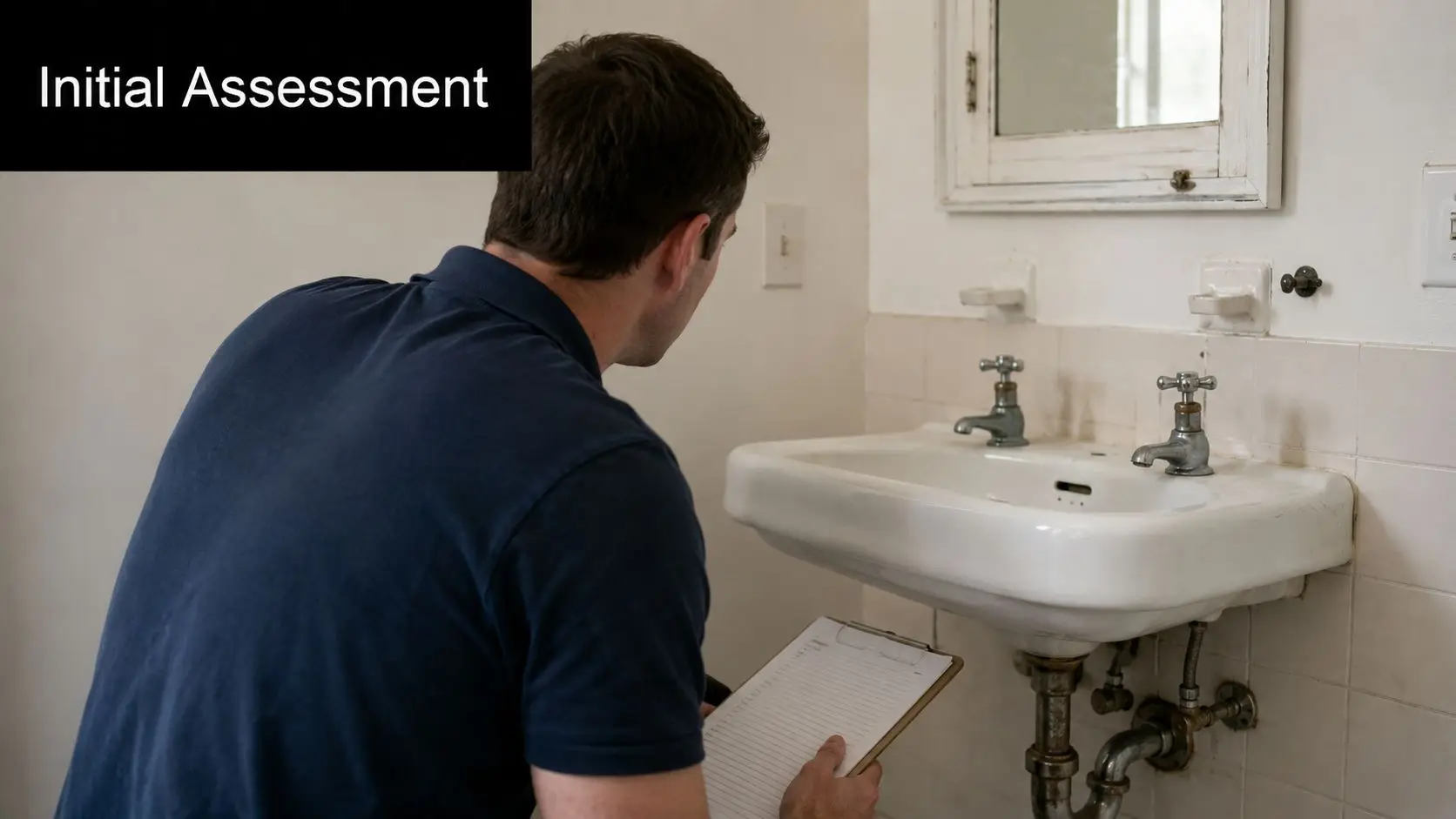
A professional inspector in a blue shirt performs an initial assessment of an old bathroom sink.

What to inspect before choosing finishes

Start with what you can see and smell:

  • Check for moisture clues like swollen skirting, loose tiles, peeling paint, mould marks, or a musty smell that lingers after the room dries.
  • Look at ventilation. If mirrors stay fogged for ages and surfaces never dry properly, moisture is hanging around too long.
  • Test fixtures and drainage. Slow waste lines, drips under the vanity, and movement around tapware can point to bigger plumbing issues.
  • Watch the floor underfoot. A soft or springy feel near the shower or toilet needs attention before any cosmetic work begins.

These aren't small details. They shape the whole budget.

According to recent case studies on hidden bathroom water damage in Australia, 60% of budget renovations in Australia fail within 12 months because underlying structural issues like water-damaged subfloors or leaky plumbing are ignored until after tiling and painting. The same source states that 28% of post-renovation complaints in Victoria in 2024 to 2025 were due to water intrusion not addressed in initial planning.

Practical rule: If water is getting in where it shouldn't, paint and new fittings won't solve the problem. They'll just hide it briefly.

Separate needs from wants

Homeowners often save or lose money at this point.

A need is anything tied to durability, safety, drainage, waterproofing, ventilation, or known leaks. A want is the visual layer. Mirror shape, feature tile, black fittings, niche styling, and upgraded handles all sit in the second category.

A simple shortlist helps:

  1. Must fix now
    Leaks, damaged substrate, failed sealant, ventilation problems, or plumbing defects.

  2. Worth doing while the room is open
    Storage improvements, better lighting position, vanity replacement, and shower screen upgrade.

  3. Can be scaled up or down
    Tapware finish, tile extent, statement mirror, feature wall, and accessories.

Keep the layout unless there's a strong reason to move it

On tight budgets, the existing footprint usually wins. Once you start shifting plumbing points or changing the room structure, labour rises quickly and the chance of hidden surprises goes up with it.

That doesn't mean the room has to stay ugly. It means your best value often comes from fixing defects first, keeping the service locations sensible, and spending the visible budget where it changes the room most.

A well-planned budget bathroom doesn't begin with shopping. It begins with honest diagnosis.

Realistic Budgeting and Sample Cost Breakdowns

The biggest budgeting mistake is treating the whole project as one lump sum. A small bathroom remodel on a budget works better when you split the spend into buckets and accept that some costs aren't optional.

In Australia, the average cost for a small bathroom renovation ranges from $8,000 to $25,000, while council building permit fees can add $500 to $1,000, according to this Australian bathroom renovation cost guide. The same source recommends allowing an additional 10 to 20% for unexpected surprises.

Where the money usually goes

In a compact bathroom, the expensive parts aren't always the ones you notice first. Labour, prep, disposal, waterproofing, plumbing connections, and making old surfaces ready for new finishes often eat more budget than homeowners expect.

That's why a cheap-looking quote can become an expensive project later. If key tasks are missing from the allowance, the price hasn't disappeared. It's just waiting for variation.

If you want a rough planning tool before getting formal pricing, use a bathroom renovation cost calculator for Australian projects. It won't replace a site inspection, but it helps frame the likely budget range.

Sample $8,000 Small Bathroom Budget Breakdown

Item Estimated Cost (AUD) Percentage of Budget
Demolition and waste removal $700 8.75%
Waterproofing $1,100 13.75%
Plumbing labour and fittings $1,100 13.75%
Tiling labour and materials allowance $1,600 20%
Vanity, basin and tapware $1,100 13.75%
Shower screen $600 7.5%
Lighting, accessories and painting $800 10%
Permit fees allowance $500 6.25%
Contingency reserve $500 6.25%

This isn't a universal template. It's a planning model that shows how quickly the “invisible” items take up space in the budget.

What this breakdown tells you

A few lessons jump out straight away:

  • Waterproofing isn't a side note. It takes a meaningful share because it protects the whole room.
  • Fixtures should match the budget tier. Overspending on one vanity or tap set can starve the project elsewhere.
  • Permit costs need a place in the numbers. If they apply, they can't be treated as an afterthought.
  • Contingency is part of the budget, not extra to it. If nothing unexpected happens, great. If something does, you're still in control.

The calmest renovations usually belong to homeowners who planned for bad news before demolition started.

Budget renovations can look sharp and feel well resolved. They just need disciplined choices. If the room needs structural correction, spend there first. If the room is sound, you've got more freedom to chase style without exposing yourself later.

Smart Design Ideas for Small Modern Bathrooms

A small room can still feel generous. The trick is to choose design moves that create visual space instead of filling every corner with product.

The strongest small-bathroom layouts do three things well. They keep the floor line visible, reduce visual interruption, and bounce available light around the room. That's how modest spaces start to feel like modern bathrooms rather than cramped utility zones.

A completed room helps make that feel more achievable.
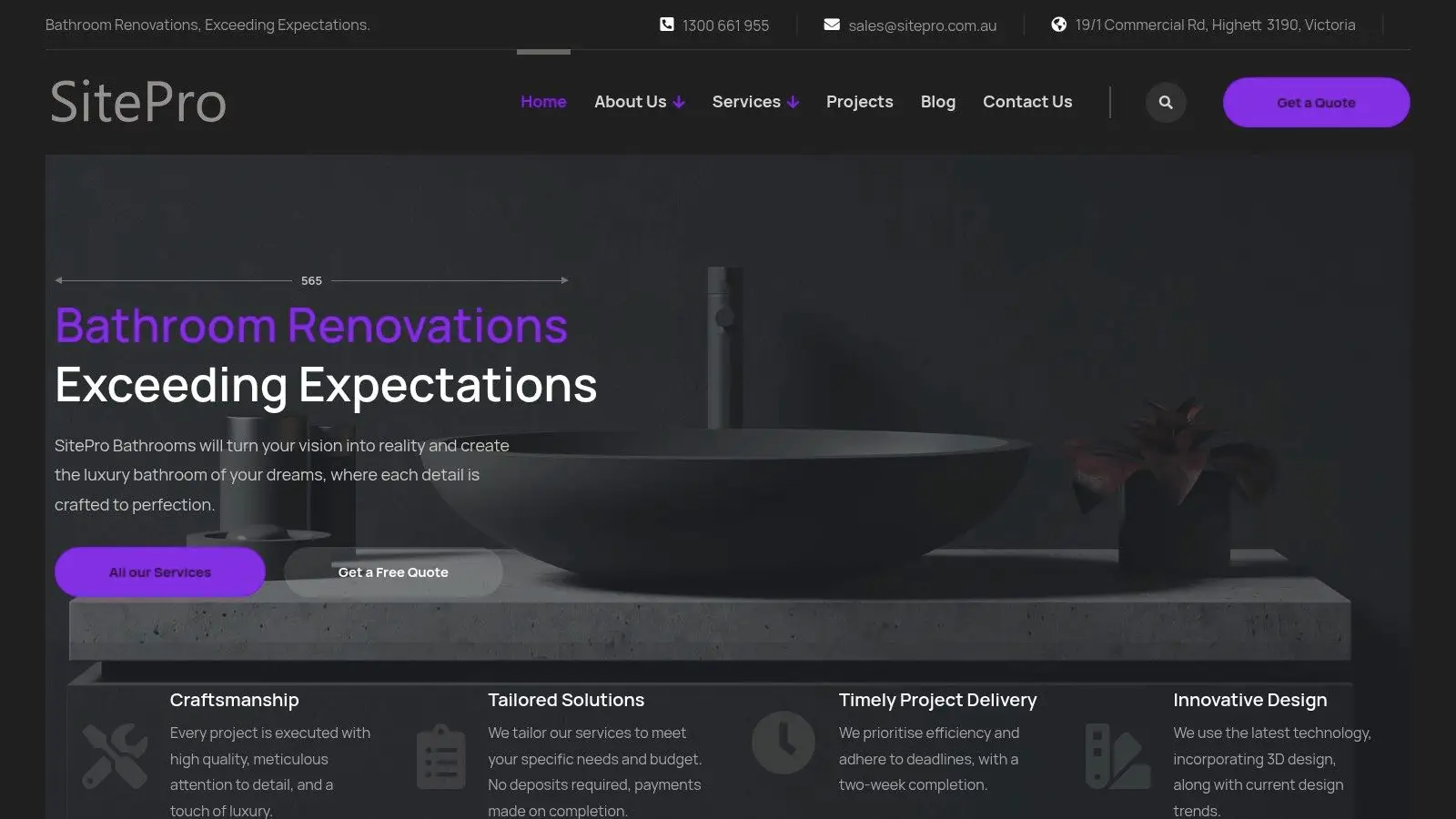
Screenshot from https://siteprobathrooms.com.au

Design moves that make a small bathroom feel bigger

For a high-impact, low-cost upgrade, this guide to small budget bathroom planning in Australia recommends wall-mounted or floating vanities, large-format tiles such as 600x300mm, and frameless glass shower panels to maximise visible floor area, reduce grout lines, and improve light flow.

Each of those choices does more than look current.

  • Floating vanity
    It exposes more floor, which makes the room read larger at a glance. It also gives the joinery a lighter, less bulky presence.

  • Large-format tiles
    Fewer grout lines means less visual noise. In compact bathrooms, that matters more than people expect.

  • Frameless glass
    It keeps sightlines open. The room feels less boxed in because your eye travels further.

If you're collecting small bathroom ideas in Australia, focus on combinations of these moves rather than one-off styling features.

Build one focal point, not five

Budget rooms usually fall apart when every finish tries to be the hero. If the vanity has a bold timber grain, the mirror is oversized and sculptural, the wall tile is patterned, the tapware is dramatic, and the lighting is decorative, the room shrinks visually.

A better approach is restraint.

Choose one statement element that lifts the rest of the room. It could be:

  • A distinctive mirror with a soft curve
  • Feature lighting beside the mirror
  • A single tile feature area inside the shower recess
  • A refined vanity finish with simpler surrounding materials

Good design in small bathrooms is often about what you leave out.

Light, reflection and storage

Lighting changes how a bathroom feels more than almost any decorative finish. A single harsh ceiling light tends to flatten the room and create shadows at the mirror. Layered lighting works better. Overhead light covers the room, while mirror or wall lighting gives better function where you stand.

Storage matters too, but it needs to stay visually quiet. Recessed niches, mirrored cabinets, and practical vanity drawers keep clutter off benches. That's one reason some budget bathrooms still feel polished while others don't. The successful ones don't ask everyday items to become part of the décor.

For homeowners chasing fresh new bathroom ideas, the upgrade isn't adding more. It's making fewer elements work harder.

Choosing Affordable Materials and Finishes

Budget-friendly doesn't mean disposable. The best material decisions come from knowing where appearance matters most, where durability matters most, and where a lower-cost finish can still give you a clean result.

In many small bathroom projects, the smartest spend is not full replacement. It's selective renewal.
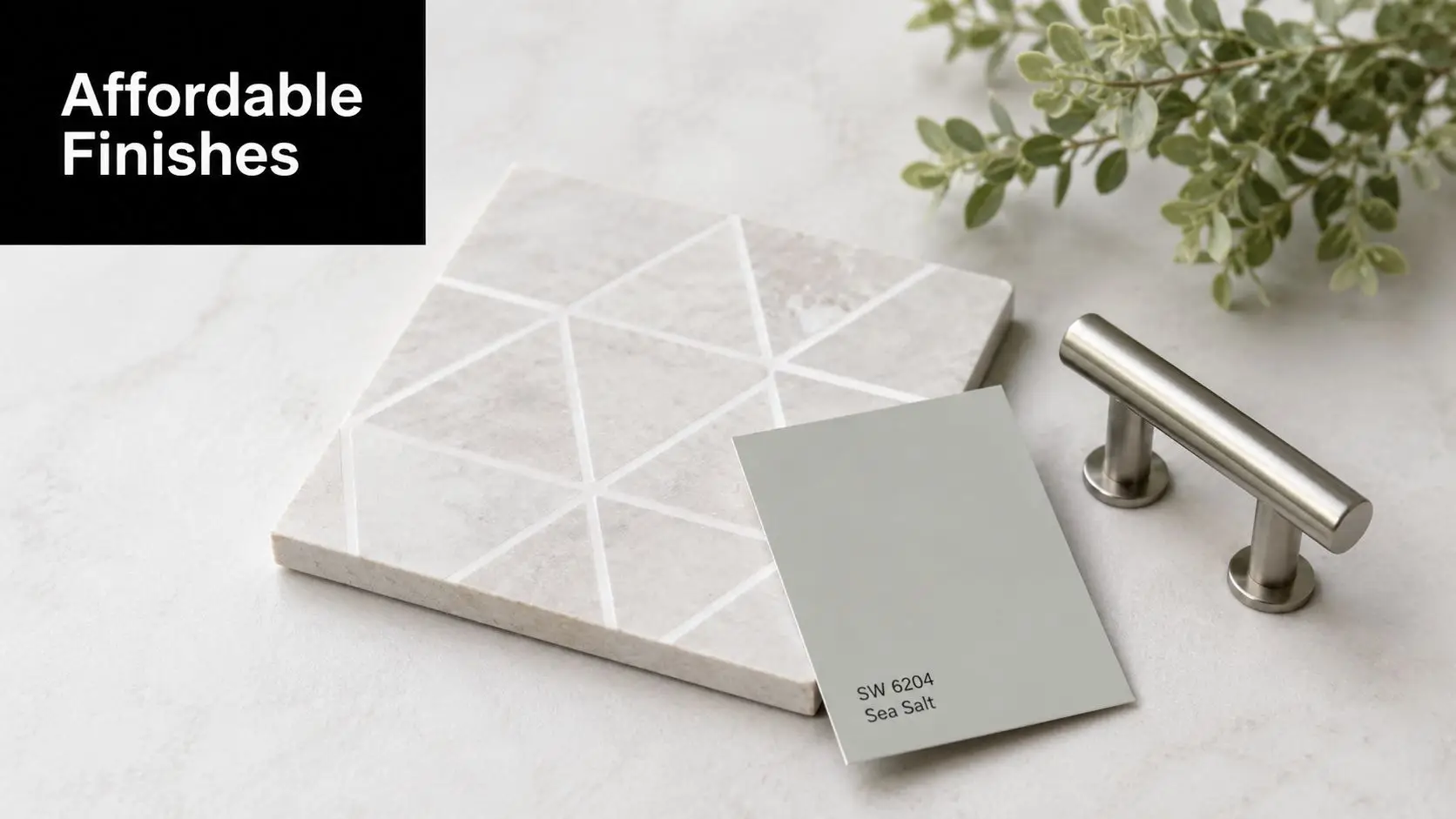
A flat lay of stone tile samples, a Sea Salt paint swatch, and brushed nickel cabinet hardware.

Where low-cost updates work well

According to this budget bathroom makeover guide for Australian homeowners, a visually impressive result is possible for as little as $5,000 when the job focuses on economical cosmetic upgrades. The same source notes that tile paint can cost around AU$90 and that new cabinet knobs can cost as little as $2 to $20 each, making a simple hardware update possible for under $100.

That points to a useful rule. If the existing surfaces are sound and the room doesn't need major corrective work, surface-level improvements can go a long way.

Compare the common choices

Finish choice Higher-cost route Budget-conscious route Best use case
Wall tiles Full tile removal and replacement Tile paint where existing tiles are stable Cosmetic refresh without layout change
Vanity look Custom joinery Simple vanity with upgraded handles Clean visual update
Splash of style Full feature walls One focal area or standout mirror Controlled statement
Hardware refresh Full cabinet replacement New knobs and pulls Quick aesthetic lift

Some trade-offs are worth making. Others aren't.

  • Worth saving on
    Handles, mirrors, paint, selected accessories, and the extent of decorative tile.

  • Usually not worth cutting too hard
    Wet area prep, waterproofing, substrate correction, and core plumbing work.

A practical way to choose finishes

Use this filter before buying anything:

  1. Will this finish be exposed to constant moisture?
    If yes, durability matters more than trend.

  2. Is the current surface structurally sound?
    If yes, refinishing may be smarter than replacing.

  3. Will anyone notice the upgrade immediately?
    If yes, small-cost visual items can deliver strong value.

A budget bathroom looks expensive when the visible details are tidy and the hidden work is done properly.

This is why some affordable rooms feel sharper than bigger spends. They don't chase every premium finish. They choose a few materials that look clean together, modernise the obvious dated elements, and avoid spending the whole budget where it won't be seen.

The DIY vs Registered Builder Decision

DIY can absolutely help on a budget. Painting, installing simple accessories, or assembling furniture-style components can trim labour spend. But bathrooms have a hard boundary where enthusiasm needs to stop and licensed trades need to take over.

The biggest risk area is waterproofing.

What homeowners can usually handle

Safe DIY tasks are generally the low-risk cosmetic ones:

  • Painting dry area surfaces if the preparation is right
  • Swapping cabinet handles and other simple hardware
  • Styling storage with baskets, mirrors, and accessories
  • Flat-pack assembly where it doesn't interfere with plumbing or waterproofed zones

That kind of work can improve the room without exposing you to compliance trouble.

Where the line needs to be drawn

Many online budget guides blur the legal and technical difference between refreshing a room and rebuilding a wet area. That's where projects get expensive.

According to this Australian guide on budget bathroom renovation compliance, shower recesses must be professionally waterproofed to meet Australian Standard AS 3740, and 42% of DIY bathroom renovations in Australia failed waterproofing inspections in 2025.

That matters for cost, legality, and risk. Once waterproofing fails, the damage usually doesn't stay neatly inside the shower area.

Non-negotiable: If the work touches the wet zone system, it needs professional handling and proper certification.

The role of registered builders unlimited and the right licensed trades is paramount. Not because every small bathroom needs a deluxe project team, but because the wrong shortcut in a wet area can undo every saving you thought you made. If you want the compliance side explained clearly, this guide on why using a registered builder matters for your bathroom renovation is worth reading.

A smart budget renovation uses DIY selectively. It doesn't use DIY emotionally. If the task affects waterproofing, plumbing, drainage, or electrical work, the cheap option often becomes the most expensive one.

Your Project Plan and Getting Expert Help

Once your scope is clear, turn it into a simple action list. This keeps the project moving and stops last-minute decisions from blowing the budget.

A straightforward planning checklist

  • Confirm the scope
    Write down what stays, what gets replaced, and what must be repaired before finishes go in.

  • Lock the layout early
    Keeping plumbing points stable usually makes a small bathroom remodel on a budget more achievable.

  • Choose materials in one pass
    Select tiles, vanity, screen, lighting, and hardware together so the room feels cohesive.

  • Check approvals and documentation
    If permits or compliance paperwork apply, organise them before demolition starts.

  • Book the critical trades first
    Waterproofing, plumbing, and electrical work need to align properly with the rest of the sequence.

  • Keep a written allowance list
    If something changes mid-project, compare it against the original allowance instead of deciding on the spot.

What good planning feels like in practice

A well-run bathroom job doesn't feel rushed, even when the room is small. Materials are chosen before they're needed. Trades know the sequence. The budget has room for surprises. The visual upgrades support the layout instead of fighting it.

That's how compact bathrooms end up both practical and attractive. It's also how homeowners avoid the common cycle of spending carefully on finishes, then losing control when hidden issues or compliance gaps appear.

If you're ready to turn your ideas into a buildable plan, SitePro Bathrooms can help with the full process from concept and 3D design through construction and handover. For homeowners in Highett and across Victoria who want bathroom renovations handled properly, the team focuses on practical layouts, clear communication, and finished spaces that feel polished without losing sight of real-world budgets.


If you want expert help planning your small bathroom remodel on a budget, contact SitePro Bathrooms to discuss your project and request a customized quote.
  • siteprobathrooms

Unlock Savings: How to Renovate a Bathroom on a Budget

If you're standing in a bathroom with tired tiles, weak lighting, swollen cabinetry and a layout that feels older than the house listing photos, you're not alone. Most Victorian homeowners start in the same place. They want a cleaner, sharper, more functional room, but the quotes for full bathroom renovations can feel miles away from the budget they have.

The good news is that learning how to renovate a bathroom on a budget isn't about cutting every corner. It's about choosing the right corners to leave alone. The biggest savings usually come from smart planning, selective upgrades, and knowing when a cheap decision will cost more later.

A budget bathroom can still look polished. It can still feel like one of those modern bathrooms you save for inspiration. It just needs discipline from day one.

Your Budget Renovation Blueprint

That old bathroom usually tells you where the money will disappear. It might be the awkward shower base, the vanity with no storage, or the plumbing layout that tempts you to move everything around. Before buying a single fitting, define what success looks like for your space.

For some households, success means a hard-wearing family bathroom that cleans easily. For others, it means one of those designer bathrooms with better lighting, calmer colours and smarter storage, but without the full designer price tag. If you don't pin this down early, you'll keep changing direction mid-project. That's how budgets drift.

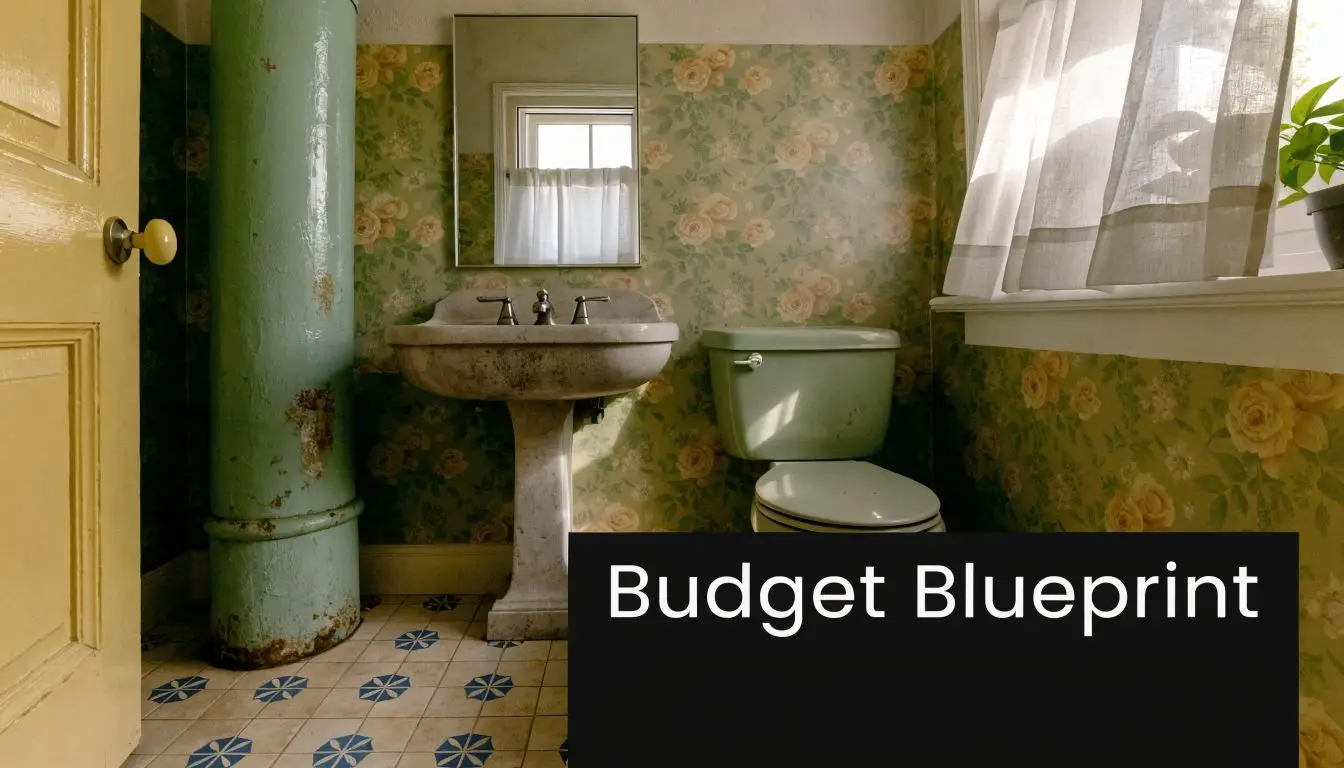
A dated, vintage bathroom featuring floral wallpaper, a pedestal sink, and a green toilet with retro tiles.

Start with the numbers that matter

In Australia, the average cost of a full bathroom renovation ranges from AUD 20,000 to AUD 35,000, while budget-conscious renovations can be achieved for AUD 8,000 to AUD 20,000 if you focus on high-impact choices and keep the plumbing layout in place. Retaining that layout can save up to AUD 5,000 to AUD 8,000 in relocation costs, according to this Australian budget renovation cost guide.

That one decision changes everything. If the toilet, shower and vanity stay broadly where they are, your spend goes into visible improvements instead of hidden pipework.

Run a renovation audit before you design

A proper budget plan starts with a blunt audit. Walk through the room and sort each element into one of three categories:

  • Must replace. Failed waterproofing signs, damaged vanity carcasses, cracked pans, unstable fixtures, severe mould issues.
  • Can refresh. Cabinet fronts, mirrors, handles, wall colour, grout appearance, lighting style.
  • Leave alone. Sound plumbing positions, decent room proportions, serviceable windows, functional towel rails in secondary spaces.

Practical rule: If an item is sound, compliant, and not ruining the look of the room, keep it.

This is the point where many homeowners stop thinking in terms of a full rip-out and start seeing a staged, workable plan.

Set guardrails before ideas get expensive

Budget projects need fixed guardrails, not wish lists. Decide these items early:

  1. Your maximum spend
  2. Whether you're keeping the existing layout
  3. Which finishes need to look premium
  4. Which jobs require trades
  5. Whether the work will happen all at once or in stages

If you're still pricing up possibilities, this guide to small bathroom remodel cost helps frame what different levels of work usually involve.

New bathroom ideas are useful only when they fit the room, the building, and the money. The homeowners who stay on budget don't chase every idea. They choose a direction, protect the layout, and spend where the eye lands first.

Smart Savings on Materials and Fixtures

Budget bathrooms look expensive when the spending is deliberate. They don't look expensive when every item is the cheapest thing available. The difference is usually in where the money lands.

In Victoria, budget bathroom renovations can yield a 70-85% return on investment, and a common framework is the 40-30-20-10 rule: 40% for fixtures and vanity, 30% for surfaces, 20% for labour, and 10% for contingency, as outlined in this Victorian budget renovation guide.

An aesthetic flatlay of various interior design material samples, textures, and faucets for home renovation planning.

Where to spend for maximum visual return

Most bathrooms have two or three focal points. Usually it's the vanity, the shower area, and the wall or floor finish. Put your cleaner-looking selections there.

A few practical examples:

  • Vanity front and benchtop look matter more than an elaborate cabinet interior in a compact room.
  • Tapware finish consistency matters more than chasing unusual shapes.
  • Lighting and mirror scale can lift the whole room faster than another decorative feature.

If you want the room to read as modern, keep the visual language simple. Straight lines, quiet finishes, and fewer materials usually beat a long list of “features”.

Where to save without the room looking cheap

Budget jobs are won in this phase.

  • Keep the cabinet carcass if it's solid. Refinish doors or replace fronts rather than rebuilding the whole vanity.
  • Choose simple tile profiles. Fancy laying patterns and fiddly edges often add labour pressure.
  • Use a restrained palette. Too many feature moments make a small bathroom feel cluttered.
  • Standard sizes help. Custom dimensions can look excellent, but they rarely support a tight budget.

Expensive-looking bathrooms are often simpler than people expect. Fewer finish changes usually mean cleaner lines and fewer labour headaches.

Surfaces are one area where homeowners often overspend trying to recreate showroom drama. In a real bathroom, durable and easy-to-maintain usually beats visually busy.

A practical way to apply the 40-30-20-10 split

Use the framework as a discipline tool, not a rigid formula. If your vanity and fixtures are the hero elements, keep the rest calm and efficient.

Spend area What it usually covers Budget mindset
Fixtures and vanity Vanity, toilet, tapware, shower fittings, mirror Make this look deliberate
Surfaces Wall finish, flooring, tile, paint Keep it cohesive, not flashy
Labour Install, fit-off, prep, compliance tasks Don't squeeze this too hard
Contingency Unknowns behind walls and under floors Protect the project

One more rule matters here. Buy for the whole room, not one item at a time. A vanity that looked perfect in isolation can force dearer tile choices, different plumbing connections, or awkward spacing around the toilet.

If you're weighing finishes, this article on how to choose bathroom tiles is a useful starting point for balancing look, maintenance and budget.

The best budget bathrooms don't try to look luxurious in every detail. They aim for one clear result: a room that feels organised, current and easy to live with.

Deciding Between DIY and Professional Trades

A Melbourne bathroom reno often goes off budget the same way. The owner takes on one licensed job to save a few thousand dollars, the waterproofing or plumbing gets delayed, and the room sits half-finished while trades reshuffle their schedules. The original saving disappears in rework, call-out fees, and extra time without a working bathroom.

DIY still has a place. It just needs to stay in the safe, low-risk parts of the job.

Two people holding home renovation tools up against a sky background with a text overlay.

Good DIY jobs

Owners can save real money on preparation and finishing work, especially in straightforward cosmetic updates.

These tasks are usually suitable if you're organised, have the right tools, and know your limits:

  • Strip-out support work. Removing mirrors, accessories, shelves, and other non-service items after the area is made safe.
  • Painting. Walls, ceilings, trims, and some cabinetry if the substrate is sound and the coating system suits a wet area.
  • Flat-pack assembly. Putting together vanities or storage units before installation.
  • Accessory installation. Hooks, towel rails, freestanding storage, and styling items where no concealed plumbing or wiring is involved.
  • Site prep and clean-up. Protecting floors, managing rubbish, and keeping access clear for trades.

The best DIY tasks are easy to inspect, easy to redo, and unlikely to cause hidden damage.

Jobs that should stay with trades

In Victoria, bathrooms are not the room to guess your way through. Waterproofing, plumbing, electrical, and many fit-off tasks need licensed people, and for good reason. If these parts fail, the damage usually sits behind tiles, under floors, or inside walls until the repair bill gets ugly.

Body corporate rules can add another layer. In apartments and some townhouses, works that affect waterproofing, services, penetrations, or waste lines may need approval before the job starts. Owners who skip that step can end up paying to open finished work for inspection or reverse unauthorised changes.

Use this test before deciding a task is DIY-friendly:

Task DIY suitable Trade required
Remove old accessories Yes No
Paint walls and ceiling Yes No
Move plumbing points No Yes
Electrical changes No Yes
Waterproofing No Yes
Install and certify key wet-area work No Yes

If a mistake can cause leaks, electrical risk, failed compliance checks, or damage to another lot, hand it to a trade.

Where homeowners get caught out

The expensive part is rarely the first mistake. It's the chain reaction after it.

A tap set out a few millimetres wrong can force tile cuts to shift. A vanity installed before final service checks can come back off the wall. An unlicensed waterproofing shortcut can hold up the whole fit-off because no reliable trade wants to inherit the risk.

I see the same trade-off on budget projects all the time. Save on labour where the work is visible, simple, and separate from compliance. Pay for licensed work where sequencing, certification, and long-term performance matter.

When a builder or project manager makes sense

Some bathrooms need more than booking a plumber, tiler, and electrician one by one. If the renovation includes layout changes, apartment approvals, older Melbourne housing stock, or tight access, coordination becomes part of the budget equation.

A registered builder can be the right choice when structural work or broader building scope is involved. A renovation project manager also adds value on budget-conscious jobs by handling trade sequencing, product lead times, and site decisions before they turn into variation costs. Add 3D design early and you can solve spacing problems on screen instead of on site, which is much cheaper.

That approach is not about making the project bigger. It's about keeping a modest bathroom renovation controlled, compliant, and finished properly the first time.

High-Impact Quick Wins and Phased Renovations

Not every bathroom needs a full demolition to improve fast. Some rooms are structurally fine but visually dated. Others need bigger work, just not all in one hit. That's where quick wins and phased renovations make sense.

Quick wins that change the room fast

Cosmetic changes work best when they target what your eye notices immediately. In most bathrooms, that means dated finishes, poor lighting and tired hardware.

Good quick wins include:

  • Updating tapware and shower fittings when the existing setup allows like-for-like replacement
  • Replacing mirrors with a better-proportioned option
  • Changing cabinet handles and accessories so the room reads as one scheme
  • Painting walls or cabinetry where the substrate is sound
  • Refreshing grout appearance or replacing tired silicone where appropriate
  • Improving lighting to make the room feel cleaner and brighter

These aren't glamorous decisions, but they do a lot of visual lifting. A bathroom feels newer when the room looks cleaner, lighter and more intentional.

How to phase a bathroom renovation properly

A staged approach only works if each stage leaves the room usable and doesn't undo the previous one. Random upgrades cost more because one new item often exposes three old ones.

A practical sequence is:

  1. Stabilise the room first
    Fix leaks, fan issues, damaged seals, storage problems and anything affecting daily use.

  2. Upgrade visible surfaces next
    Paint, mirror, lighting, accessories and vanity refinishing can give the biggest immediate lift.

  3. Tackle fixtures and major wet-area work later
    Keep this stage for when you've built enough budget to do it properly.

A phased renovation works when each phase solves a real problem. It fails when each phase is just a temporary patch.

This is also the right approach if you're collecting ideas for modern bathrooms but don't yet have the funds for a full reset. Do the work that improves function and visual calm first. Save the major plumbing and shower-area changes for the stage when you can complete them without compromise.

When to Engage a Specialist for Your Renovation

A budget bathroom renovation often stops being a budget renovation the moment the owner has to reschedule three trades, answer a body corporate manager, and reorder a vanity that does not fit the as-built room. I see that pattern a lot in Melbourne apartments. The job looks simple until approvals, access rules, and wet-area compliance start affecting every decision.

A professional interior designer and client reviewing a floor plan layout while sitting on a couch.

Apartment bathrooms change the budget equation

In Victoria, apartment and townhouse bathrooms usually come with extra layers of control. Body corporate or owners corporation approval may be required before demolition starts, especially if the work affects waterproofing, services, acoustic performance, waste pipes, or common property. Some buildings also restrict working hours, lift use, rubbish removal, parking, and where materials can be stored.

Those rules cost time if they are handled late. They also affect money. A cheap quote can unravel fast once the contractor has to work around booking windows, protection requirements for common areas, or extra documentation for management approval.

That is usually the point where a specialist earns their fee.

What a specialist actually changes

True value lies beyond simple trade coordination. It involves minimizing costly errors before they occur.

A specialist team can help by:

  • confirming site constraints early, including access, services, wall positions and fixture clearances
  • locking selections before demolition so plumbing and electrical rough-ins suit the final layout
  • preparing drawings and scope clearly for owners corporation review where needed
  • sequencing trades properly so waterproofing, tiling, glazing and fit-off do not clash
  • assigning responsibility for compliance, defects and variations

That last point matters in Victoria. If several trades are booked separately and one step goes wrong, each contractor can blame the previous one. Homeowners end up stuck in the middle. Working with a team that understands why using a registered builder matters for your bathroom renovation gives you a clearer line of responsibility.

Why 3D planning is worth it on a tight budget

3D design is not just for high-end bathrooms. On a tighter budget, it can save more because there is less room for corrections once materials are ordered.

It helps test the details that usually cause rework. Vanity depth. Door swings. Mirror centring. Niche placement. Towel rail positions. Whether the room feels balanced once tile sizes and grout lines are set out.

I would rather adjust a layout on screen than after waterproofing is done.

One local example is SitePro Bathrooms, which handles bathroom planning, 3D design and construction coordination. That setup suits homeowners who want fewer handover points and fewer chances for miscommunication.

If your bathroom is in an apartment, if approvals are likely, or if you cannot manage trades and compliance around work and family life, bringing in a specialist is often the lower-risk budget decision.

Common Pitfalls and Your Sample Timeline

Most overspends happen before the room starts looking better. They come from hidden issues, poor sequencing and decisions that should've been settled earlier.

Two of the biggest traps are beneath the finishes. Failing to inspect the subfloor after demolition can reveal rot that inflates budgets by an average of 15%. Ignoring waterproofing requirements is another major problem, with 28% of budget renovations failing council inspection on that point and causing 4 to 6 week delays.

The mistakes that hurt most

Some problems are obvious in hindsight, but not during the rush of demolition and ordering.

  • Skipping subfloor checks. Once fixtures and tiles are out, inspect properly. If you don't, hidden deterioration can force disruptive changes later.
  • Treating waterproofing like a minor step. It isn't a paint job. It affects compliance, longevity and whether the bathroom can be handed over without drama.
  • Buying finishes before confirming site conditions. A vanity, shower screen or tile selection can look perfect online and still be wrong for the actual room.
  • Starting without a sequence. Bathroom work is unforgiving when trades overlap badly or arrive before the room is ready.

Waterproofing and substrate condition aren't “back-end details”. They're the project.

A realistic sample timeline

A budget renovation doesn't need to be chaotic. It does need a clean order of operations. Here's a simple planning guide you can use as a reference point.

Budget Tier Typical Scope of Works Estimated Timeline
Cosmetic refresh Paint, mirror, accessories, hardware, minor fixture updates, surface refresh where suitable Short timeline, often planned as a light refresh
Mid-range budget update Vanity replacement, fixture upgrades, partial surface work, licensed trade involvement, layout retained Moderate timeline with allowance for ordering and trade coordination
Full budget-conscious renovation Demolition, waterproofing, new fixtures and finishes, full fit-off while keeping core layout Longer timeline, especially if approvals or hidden repairs arise

Your pre-start checklist

Before work begins, make sure you can answer these clearly:

  1. What are you keeping no matter what
  2. What will be replaced if demolition exposes problems
  3. Who is handling waterproofing and service work
  4. Whether approvals are needed
  5. What your contingency is reserved for

A budget renovation succeeds when the unseen parts are handled as carefully as the visible ones. That's what gives you the finished room people notice, and the durability you notice years later.


If you're planning bathroom renovations in Highett or elsewhere in Victoria, start with the layout, the compliance requirements, and the items that deliver the biggest visual return. That's how you get fresh new bathroom ideas into a room that looks current, functions properly and stays inside budget.