Apartment Bathroom Renovation Guide for Victoria Homeowners
You've got dated tiles, a shower that may be leaking into the apartment below, and a building manager asking for paperwork before anyone starts work. You want a bathroom that feels current, but you're also trying to work out what you can change without creating a dispute with the owners corporation or a costly problem behind the new finishes.
That's the reality of an apartment bathroom renovation in Victoria. The right starting point isn't choosing a vanity or browsing new bathroom ideas. It's understanding the building, approvals, waterproofing and services, then settling on a design that can be built and documented.
Why Apartment Bathroom Renovation Is a Compliance Project First
A bathroom in an apartment is part of a shared building. A leak can travel through a slab or wall and damage another lot or common property, so the consequences of poor work rarely stop at your bathroom door. That makes a renovation more than a cosmetic refresh, even when you're keeping the existing layout.
The rules have also changed over time. Australia's first standard specifically addressing waterproofing in residential wet areas, AS 3740, was published in 1989. The Building Code of Australia first appeared in 1988, and later National Construction Code editions developed the regulatory framework. Older apartments may therefore have been built under different methods and requirements from those used today. This overview of bathroom waterproofing and leaking showers explains why an existing bathroom's age and construction history matter.
The practical point isn't that an older bathroom automatically fails today's requirements. It's that you shouldn't assume the existing membrane, floor waste, substrate or drainage will suit the renovation you're planning. A new shower position, for example, may depend on slab conditions and service routes that aren't obvious from looking at the tiled room.
Start with what's concealed. Confirm the existing construction and strata records before you commit to a layout, finish or fixture position.
Think of the project as four connected decisions: owners-corporation approvals, waterproofing, layout and execution. If you pick fittings before checking service locations, you may later have to change the design. If the design ignores falls or the shower perimeter, the finished room may look clean but fail to manage water properly.
The Australian Building Codes Board's current framework puts wet-area provisions in the Housing Provisions and allows construction details in the code or AS 3740 to be used as a compliance solution. Earlier editions shifted how practical wet-area guidance was presented, while NCC 2022 reinstated construction details in the Housing Provisions. The Australian wet-area standards overview provides context for that development.
For owners, the takeaway is simple: resolve water containment, drainage, building-fabric protection and shared-property interfaces before locking in design choices. Tapware can be changed on paper. A poorly planned waterproofing detail is harder to fix once it's buried under tiles.
Planning Approvals, Permits and the Renovation Sequence
Before demolition, establish what the work touches and who needs to approve it. Owners-corporation rules and the strata plan help clarify whether the proposal affects common property, shared services or building elements. A cosmetic change may be treated differently from work that alters plumbing routes, waterproofing, ventilation or structural elements, so send a clear scope rather than relying on a verbal “that should be fine.”
In Victoria, a plumbing permit is required before adding or removing fixtures such as showers or sinks, or altering sanitary sewer or water services. Confirm the permit requirements for your actual scope before work begins, and keep the permit and related compliance records with the renovation file. The Victorian plumbing permit guidance sets out when a permit is needed.
Get the existing conditions on record
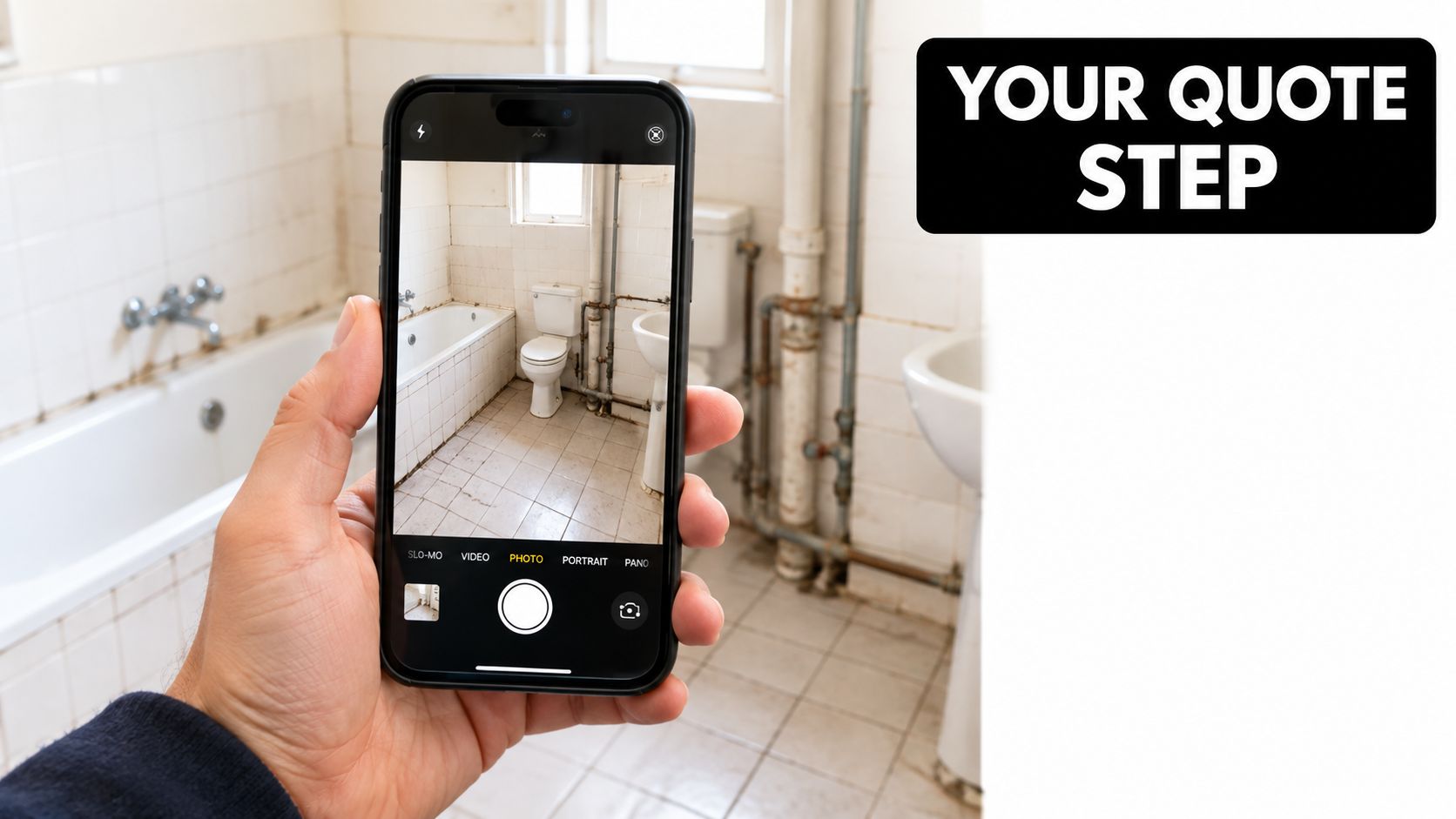
Ask the renovation team to document the slab, existing falls, floor waste, visible penetrations and services before demolition. Keep available owners-corporation correspondence, the proposed scope, relevant plans, permits and any building records. If a change is requested, record who approved it and whether it affects the original compliance pathway.
This is also the point to talk through building access, protection of shared areas, noise, waste removal and water isolation with the building manager. These aren't minor logistics. Poor coordination can delay trades or leave a common corridor damaged while materials are moved.
Follow the site sequence and hold the line before tiling
A practical sequence is:
- Obtain approvals and permits that apply to the scope.
- Document existing conditions, then complete demolition.
- Install plumbing and electrical rough-ins and confirm fixture locations.
- Prepare the substrate and resolve the waste position and floor falls.
- Apply the waterproofing system, following its installation and curing requirements.
- Inspect and test the membrane before tiling, then retain evidence of acceptance.
- Install tiles and fixtures, followed by handover documentation.
Photograph substrate preparation, membrane coverage, corners and penetrations before they're concealed. Keep the plumber's compliance certificate, waterproofing records, product details and any inspection or test evidence for the owners corporation, insurer and a future purchaser.
The pre-tile inspection is the key hold point. Don't let the tiler cover a membrane that hasn't passed the applicable inspection or acceptance test. If the bathroom is “just being retiled”, check whether the existing waterproofing is being retained and, if so, what evidence supports that decision. Review the permit and approval considerations for bathroom work before committing to a demolition date.
Waterproofing Rules Every Apartment Bathroom Must Meet
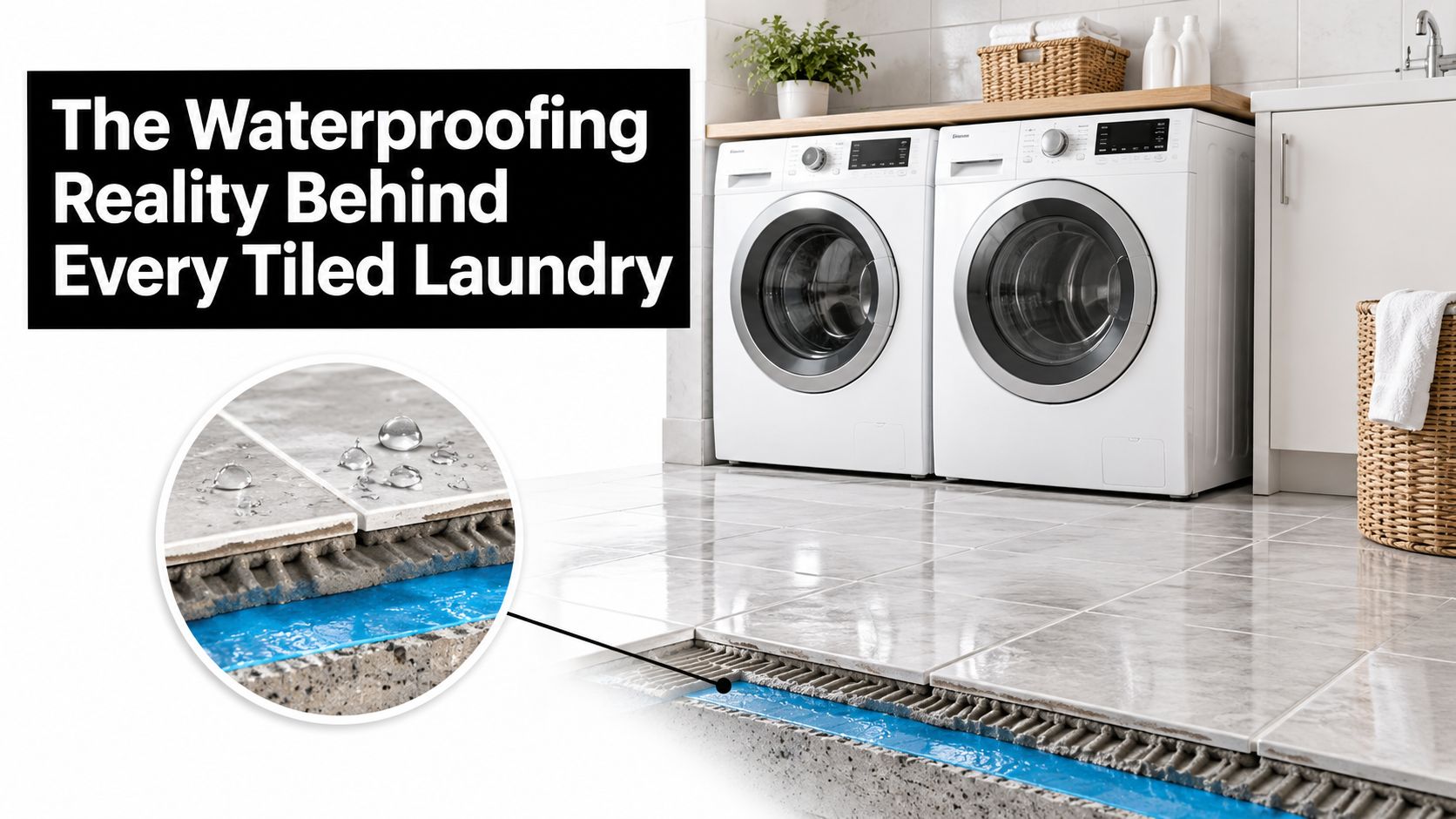
Waterproofing is where attractive plans meet the building's physical limits. The applicable pathway depends on the building and work, but NCC 2022 Part 10.2 of the Housing Provisions provides wet-area construction details, while AS 3740 remains an available compliance pathway. For Class 2 apartment buildings, wet-area construction must comply with NCC Volume One Specification 26 and AS 3740. Confirm the pathway for the project with the relevant building professional rather than assuming a detail from a house renovation applies unchanged.
The dimensions matter. Shower walls generally require waterproofing to at least 1,800 mm above the floor substrate. Where a floor waste is installed, the floor must fall toward it; guidance associated with current provisions identifies a continuous fall between 1:80 and 1:50. The NCC wet-area waterproofing provisions set out the technical requirements and compliance details.
In a compact apartment bathroom, a small change can have knock-on effects. The slab constrains how much the floor can be built up, a threshold has to meet the adjoining floor, and the door still needs to operate. If the waste location and falls aren't settled before waterproofing, the tiler may be left trying to make the finished floor work without enough room to correct the underlying geometry.
Ask what system is being installed
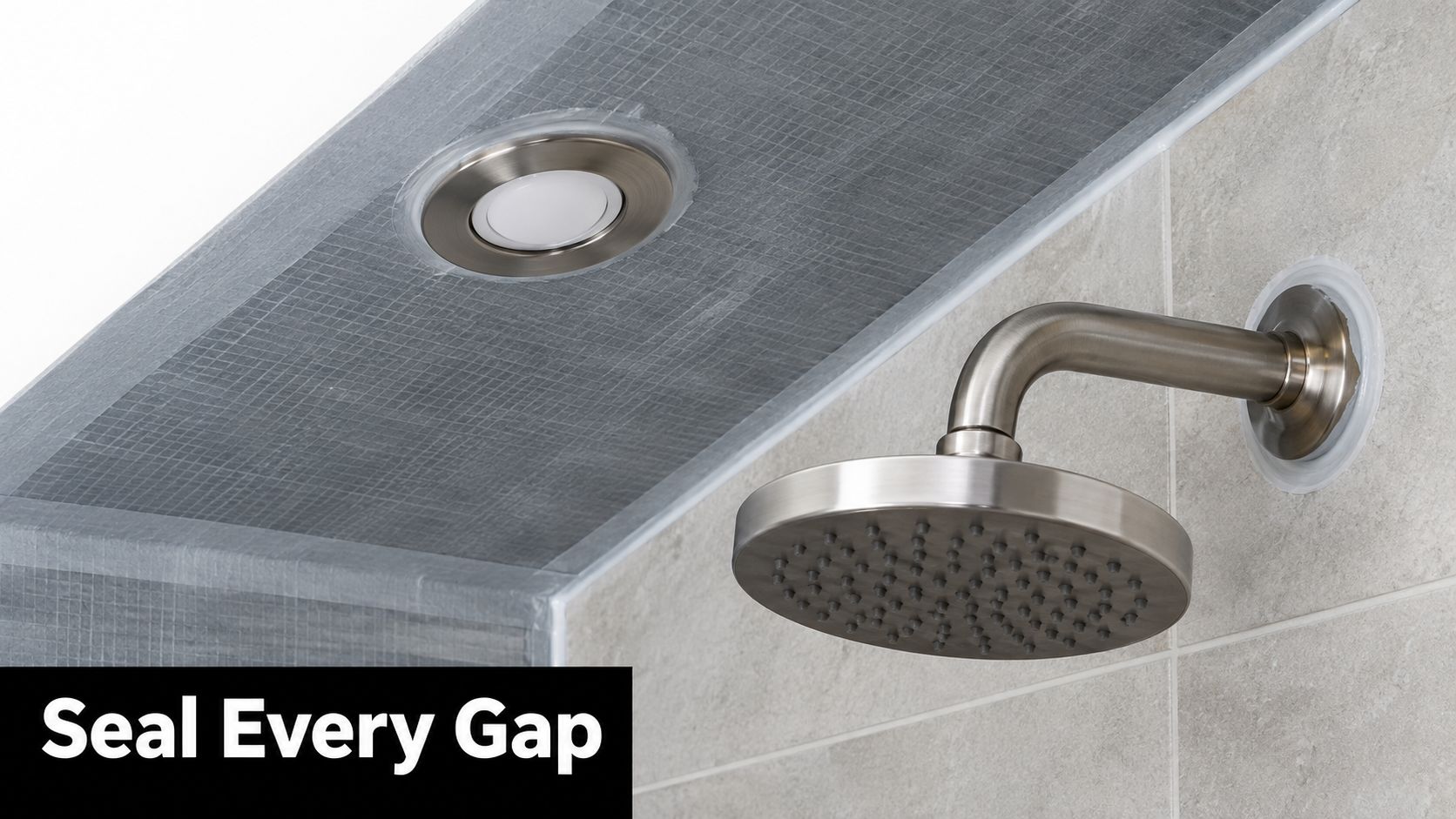
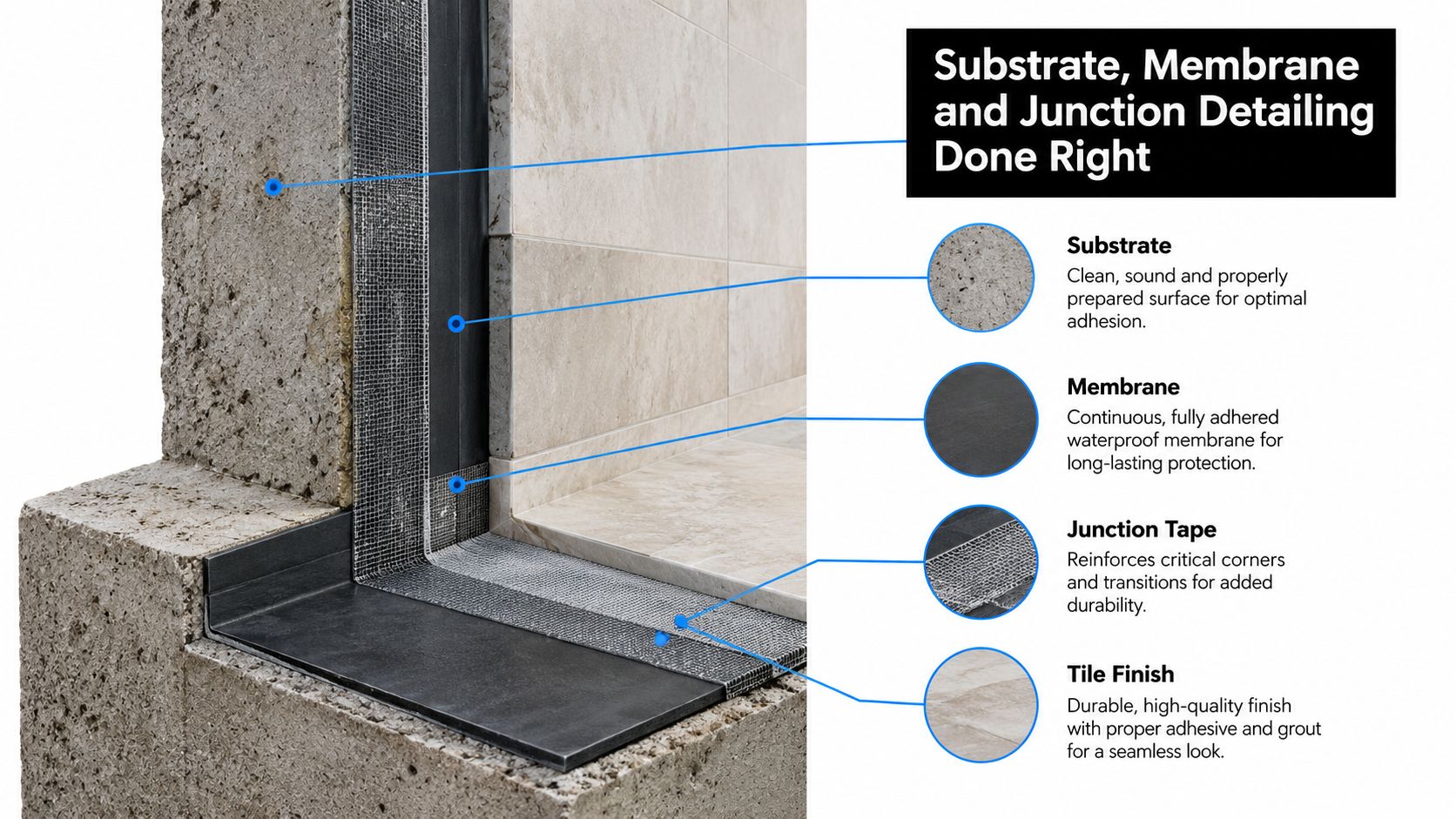
Don't settle for “it's all waterproofed.” Ask the contractor to identify the membrane system, how the substrate will be prepared, how corners will be reinforced, how pipe penetrations will be sealed, and how curing and inspection will be managed. The membrane manufacturer's system documentation should guide compatible components and installation requirements.
Keep the shower layout uncomplicated where possible. Fewer penetrations and fewer awkward junctions mean fewer places where detailing can fail. Check the shower perimeter, door tracks and bath edges as carefully as the main floor and walls; water can escape at the interfaces if they aren't treated as part of one coordinated system.
Treat the membrane as a concealed building system, not a finish. You want photos and inspection evidence before tiles make the work inaccessible.
There's a strong reason to give waterproofing serious attention in the budget and programme. Independent Australian defect research identifies waterproofing as the leading serious-defect category in Class 2 apartment buildings, accounting for about 42% of serious defects in the cited NSW survey data. That figure is from NSW, not Victoria, but it's a relevant apartment-building warning for Victorian projects. The apartment waterproofing and strata guidance discusses that risk and common failure points.
Typical problems include relying on grout as waterproofing, inadequate falls, unsealed penetrations, damage to the membrane during tiling, and poor coordination at a door track or bath edge. A documented pre-tile check is a practical way to catch defects while the membrane is still visible. More detail on Australian bathroom waterproofing standards can help you prepare specific questions for your renovation team.
Small Bathroom Layouts and Modern Bathroom Ideas That Actually Work
Good modern bathrooms don't come from squeezing in every fashionable fitting. They come from a layout that gives you useful circulation, manageable storage and a shower that contains water within the design constraints of the apartment.
Start by fixing the shower footprint. For an unenclosed shower, the waterstop must sit at least 1,500 mm horizontally from the shower rose, and the shower walls need waterproofing to at least 1,800 mm above the floor substrate. Those requirements shape where a screen can go and how much of the floor needs to be managed as part of the shower zone. A level threshold doesn't remove the need to control water migration. The NCC's guidance on waterstops and shower waterproofing explains the geometry involved.
Plan the wet area before picking finishes
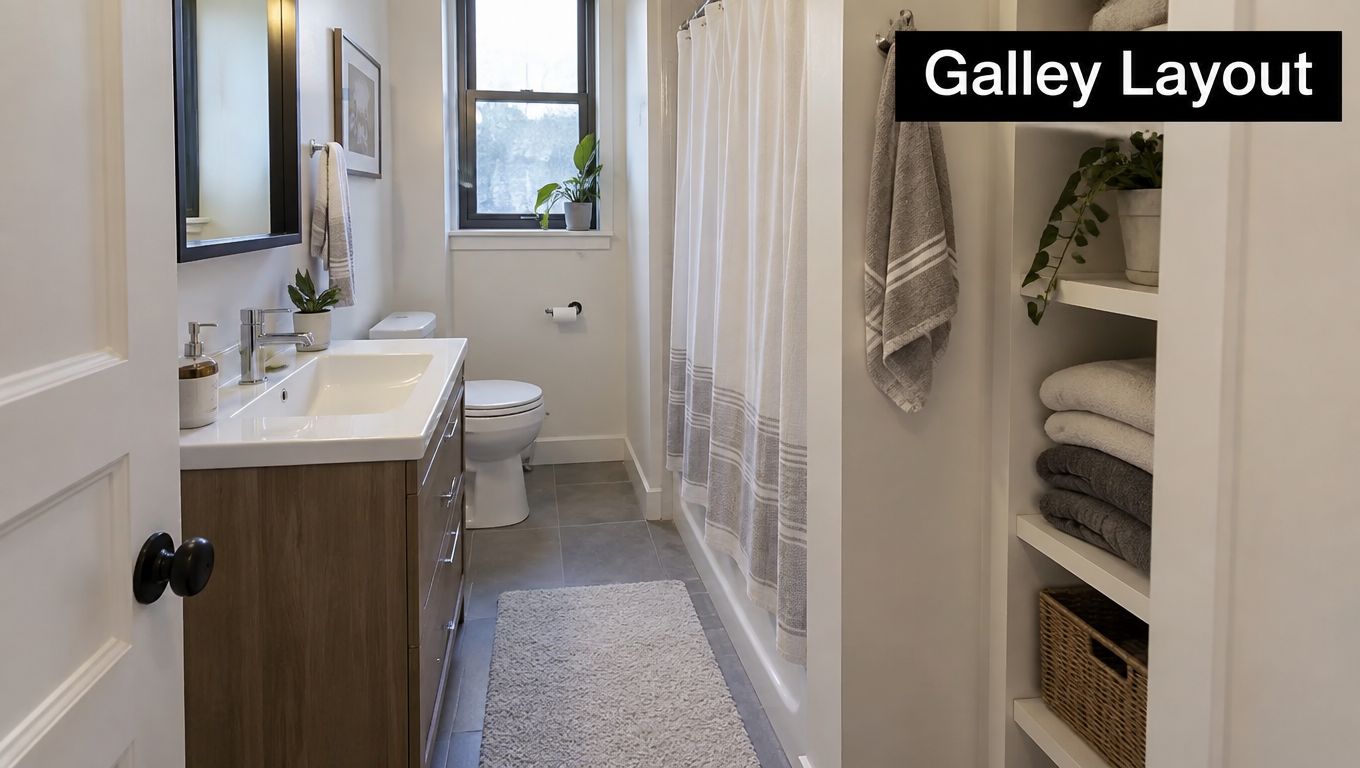
Have the proposed shower, screen, vanity and door shown together in a measured plan or 3D model. Check where the screen ends relative to the rose, where the waste sits, and whether the planned floor falls can be formed without creating a trip-prone threshold. Confirm the vanity depth and door swing too; a cabinet that looks slim in a showroom can make an already tight path awkward.
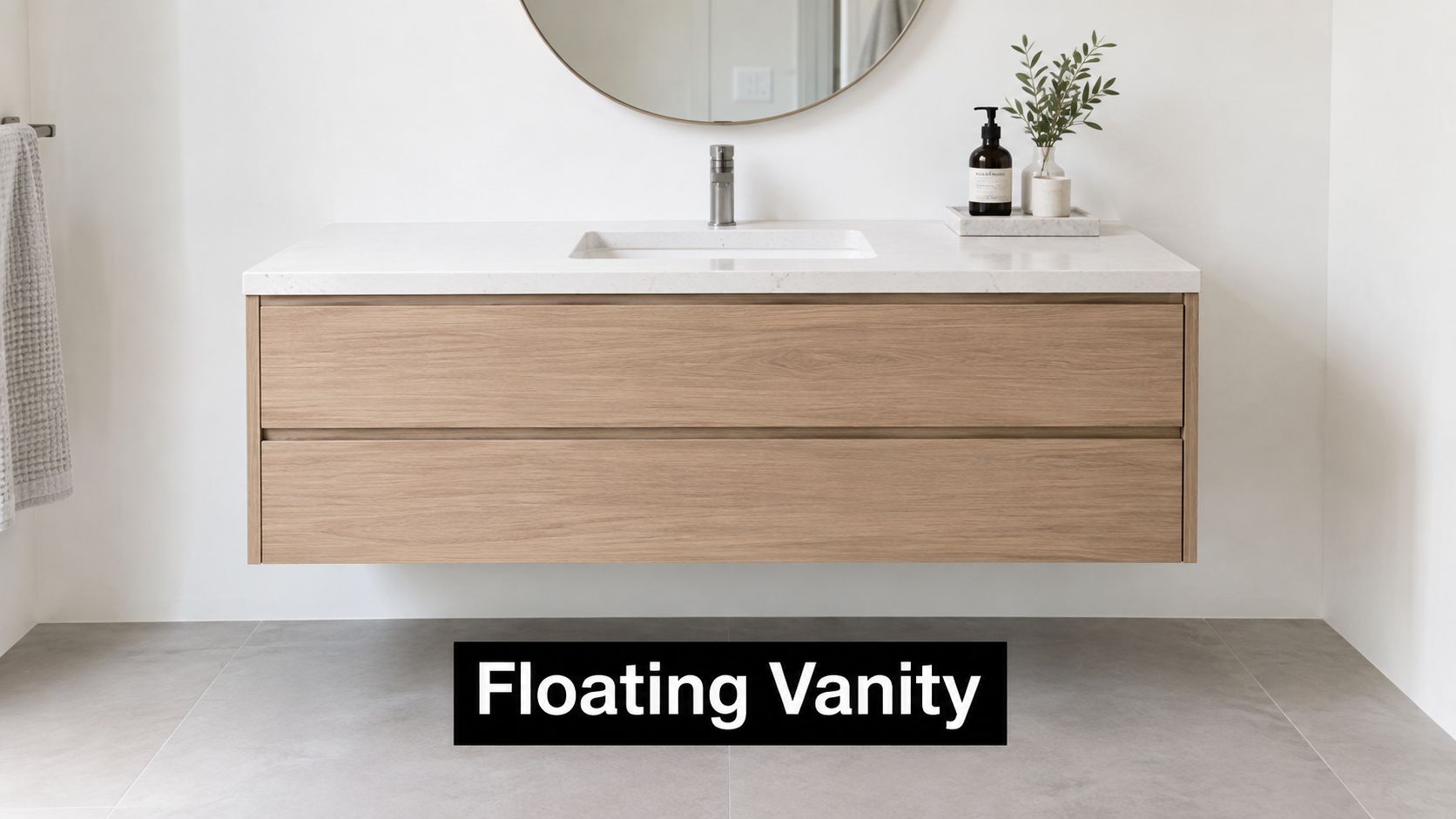
For storage, a mirrored cabinet can use wall space that would otherwise be decorative only. A wall-hung vanity can help the floor feel more open, provided the wall and services support the installation. Light-toned finishes can make a small room feel brighter, but they won't compensate for a cramped layout or badly placed storage.
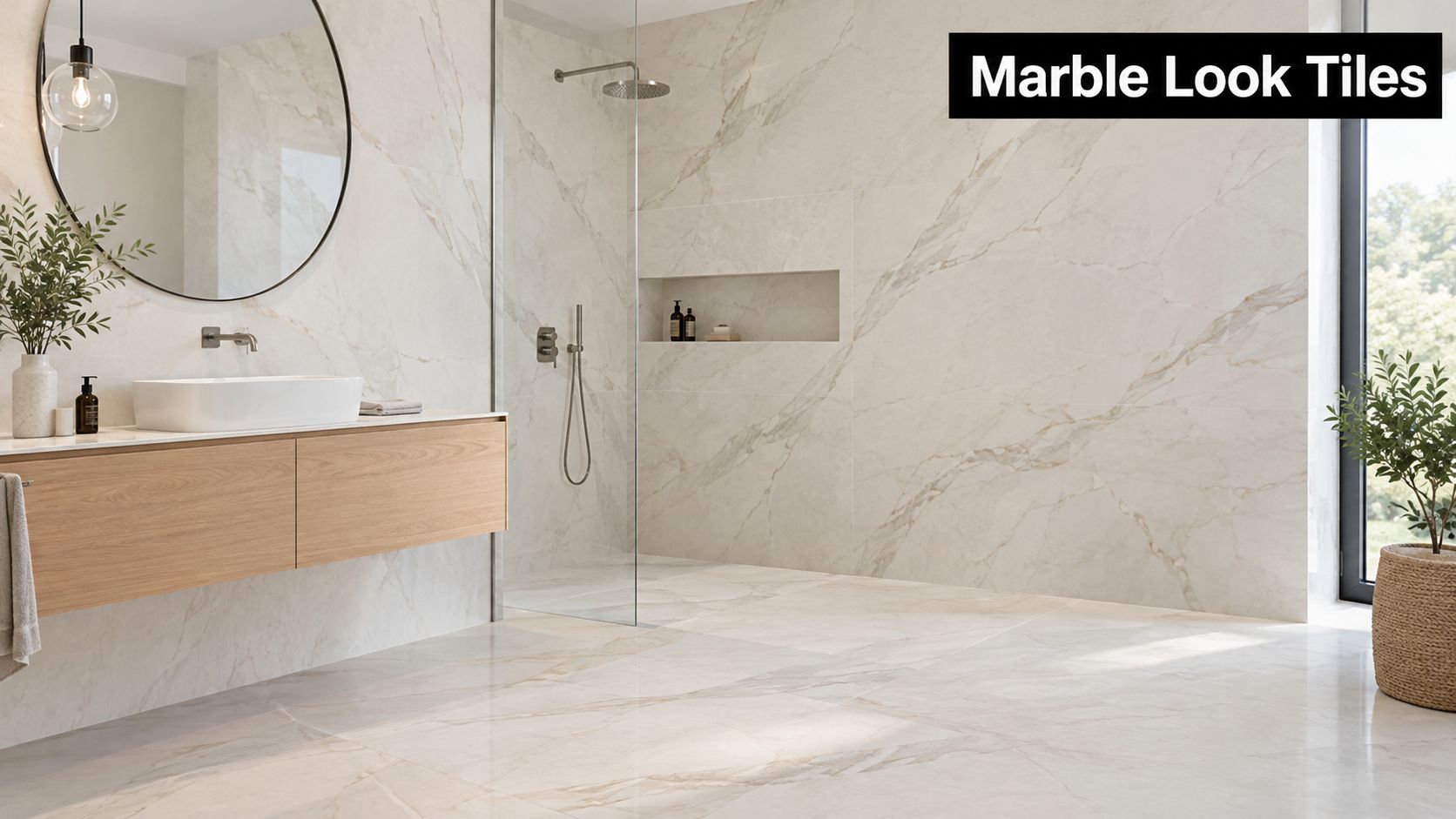
New bathroom ideas are most useful when they solve a real problem. A recessed shelf can reduce clutter on the shower floor, while a simple screen can preserve sightlines. A feature wall may suit a designer bathroom, but concentrate the visual detail in one area rather than adding busy patterns to every surface.
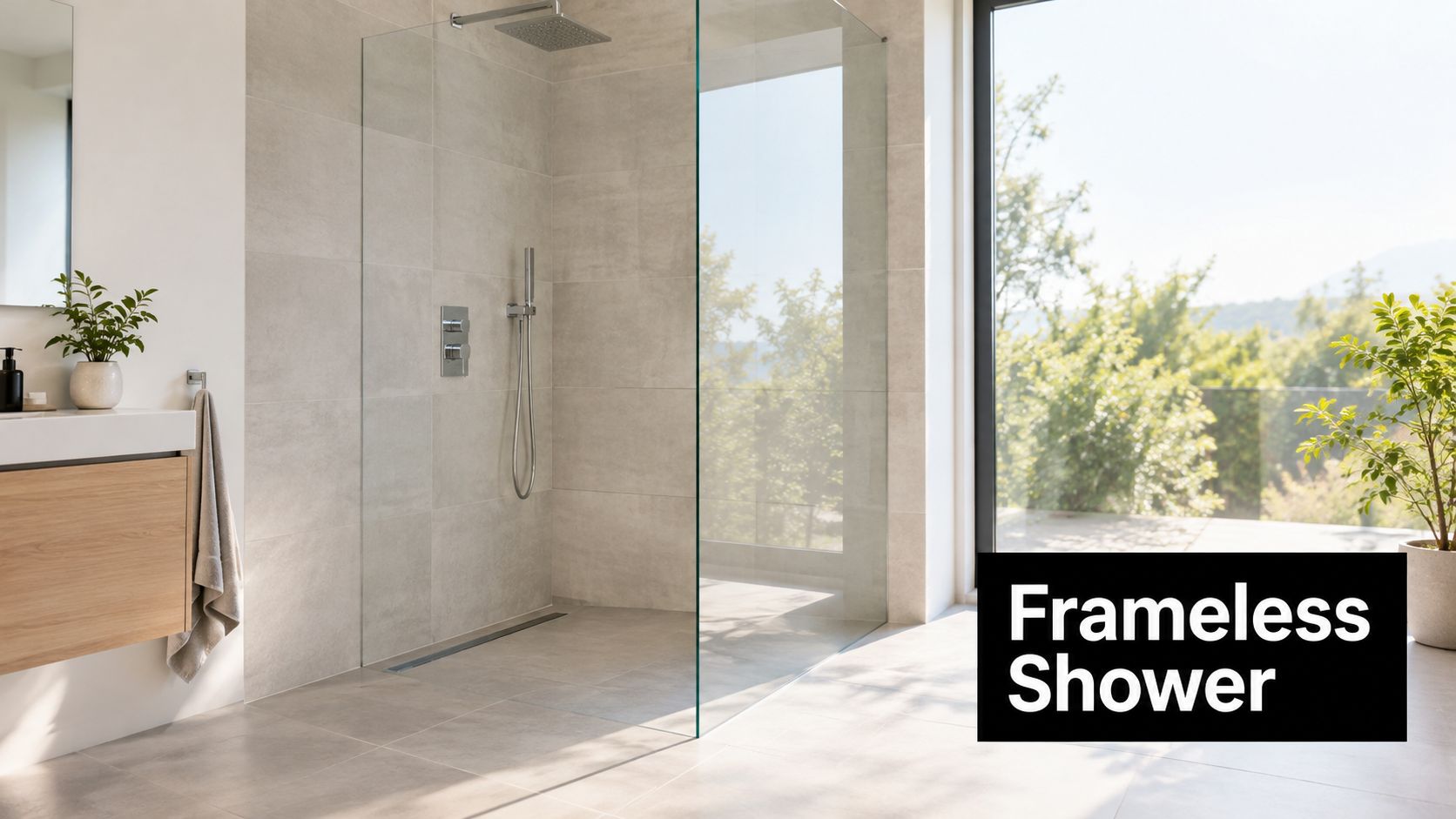
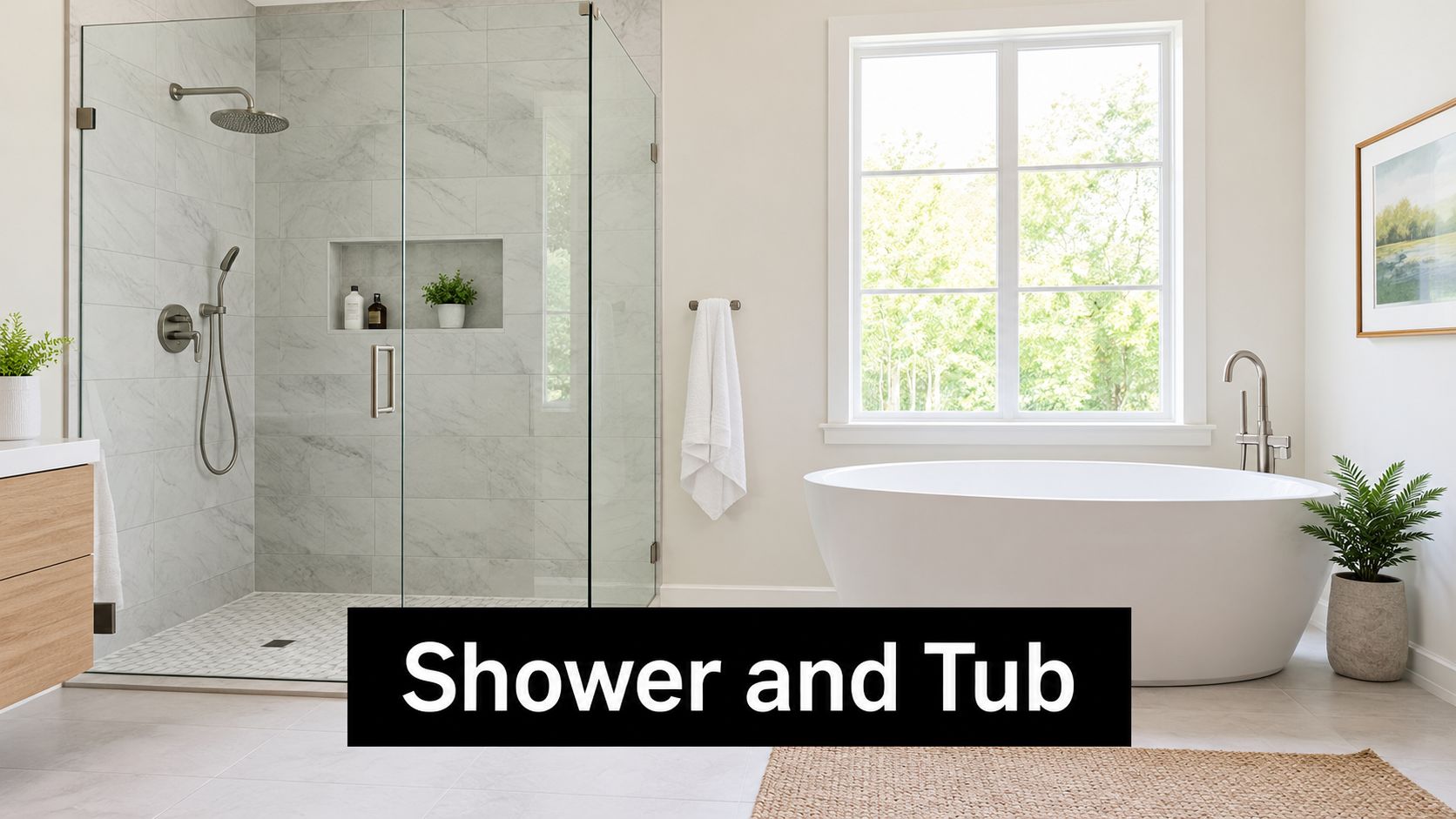
Walk-in showers, frameless screens and level-entry designs can all work in apartments. They require the shower footprint, falls and waterstop position to be resolved during design, not improvised when the tiler arrives. For further layout options, explore these small bathroom layout ideas.
Timelines, Costs and Fixture Choices for Apartment Bathrooms
Apartment renovation budgets are shaped by more than the visible finishes. Access restrictions, owners-corporation conditions, the existing slab and services, and the waterproofing scope can all affect how the work is planned. There isn't a responsible single price or duration for every apartment bathroom without knowing its condition and proposed changes, so ask for a written scope that separates known work from risks that may only become clear after demolition.
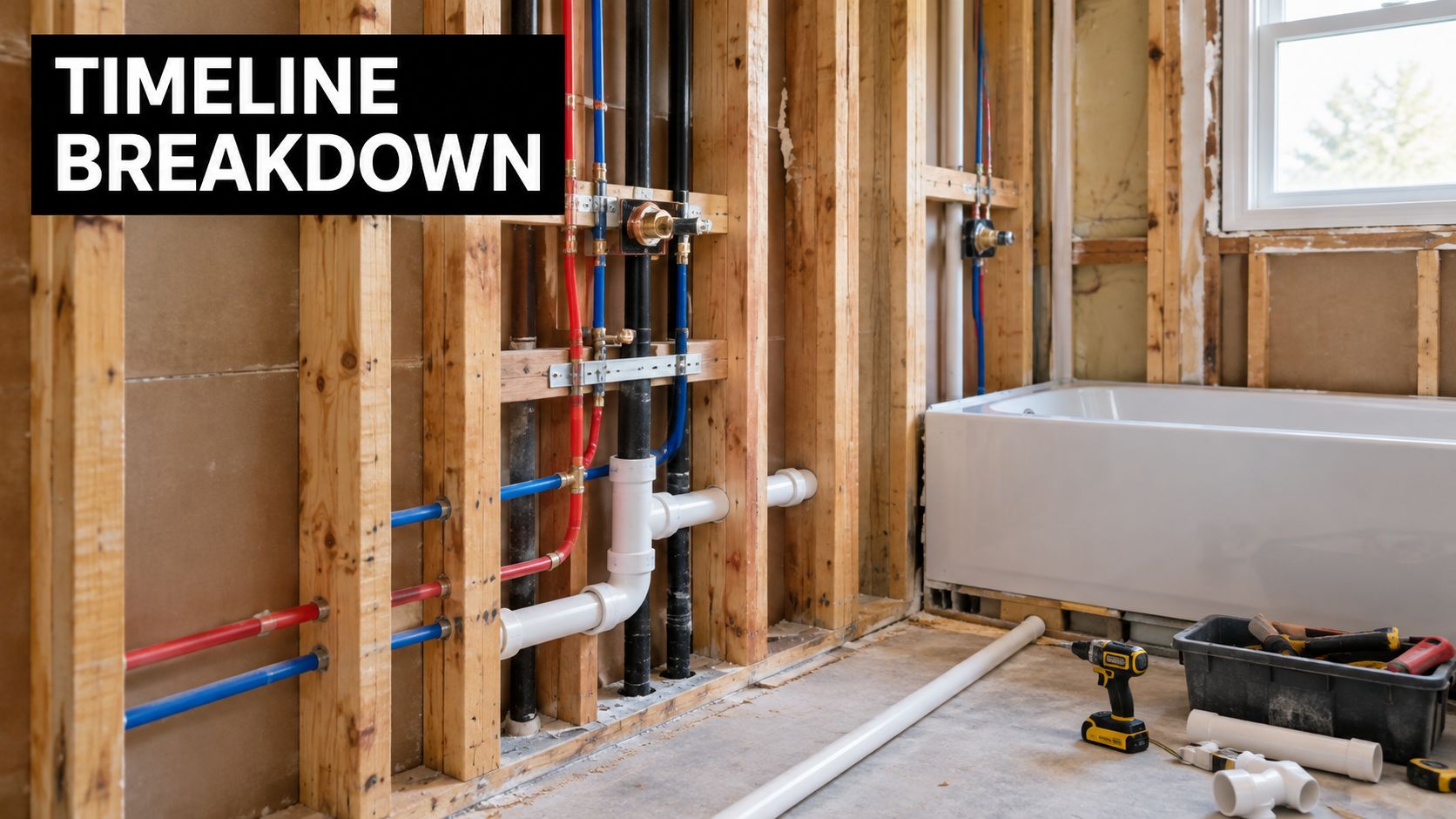
Plan the programme in phases: approvals and design, ordering and access coordination, demolition and rough-ins, substrate and waterproofing, inspection, tiling and fit-off, then handover. The order matters because a delay in approvals or a late fixture selection can hold up work that depends on exact dimensions. Confirm lead times for selected fixtures before demolition, and ask how the team will handle discoveries behind the tiles or wall linings.
Compare the decisions, not just the finish labels
A compact package can keep the layout and fittings straightforward. A mid-range approach may put more into storage, tile selection or fixture quality. A designer package can add custom joinery, refined detailing and distinctive finishes, but it still needs to meet the same practical demands around water management and access.
| Element | Compact Package | Mid-Range Package | Designer Package |
|---|---|---|---|
| Shower | Standard screen and uncomplicated footprint | Frameless screen with considered detailing | Custom screen or level-entry design, subject to compliant water control |
| Vanity | Ready-made unit with practical storage | Wider storage or upgraded finish | Custom joinery sized to the room |
| Toilet | Standard suite in a compatible position | Concealed or more integrated appearance where feasible | Selected to suit the design and service constraints |
| Flooring | Durable, simple tile selection | Coordinated floor and wall finishes | Carefully matched formats or feature detailing |
| Joinery | Minimal storage, straightforward construction | Mirrored storage and coordinated cabinetry | Bespoke cabinetry designed around the room |
The table describes finish choices, not fixed cost tiers. The largest financial risk may sit beneath the finishes: concealed damage, unsuitable existing waterproofing, or a drainage layout that needs correction. Keep a risk allowance for those unknowns rather than spending the entire budget on tiles and tapware.
Some choices are easier to change than others. Tapware and colour can often be adjusted before ordering without changing the wet-area layout. Moving a shower, waste or plumbing route can affect approvals, permits, falls and waterproofing details. Ask the contractor to price variations in writing and state what is excluded, especially repairs to concealed conditions.
Compare waterproofing proposals by their documented system, preparation, detailing, inspection and evidence, not by a label alone. Whether a project uses a sheet membrane or a liquid-applied system, the critical question is whether the selected system is suitable for the substrate and installed and checked as specified.
Working with a Renovation Company and Using 3D Design
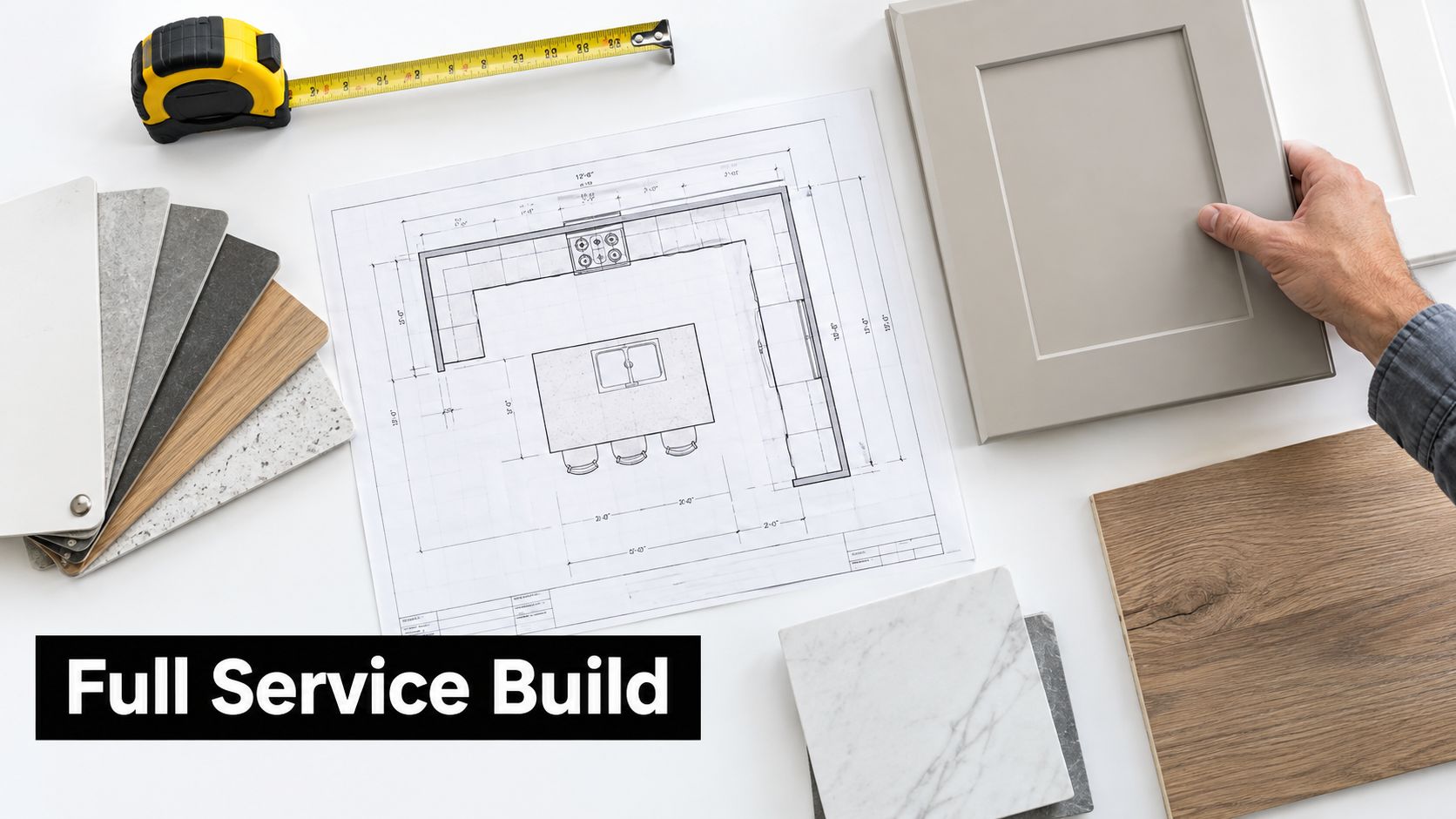
An end-to-end renovation service should connect the design to the construction sequence. That means developing the concept, documenting fixture positions and finishes, coordinating trades and access, completing the work, and assembling handover records. In a strata building, those tasks need to fit around building rules and inspections, not just the owner's preferred start date.
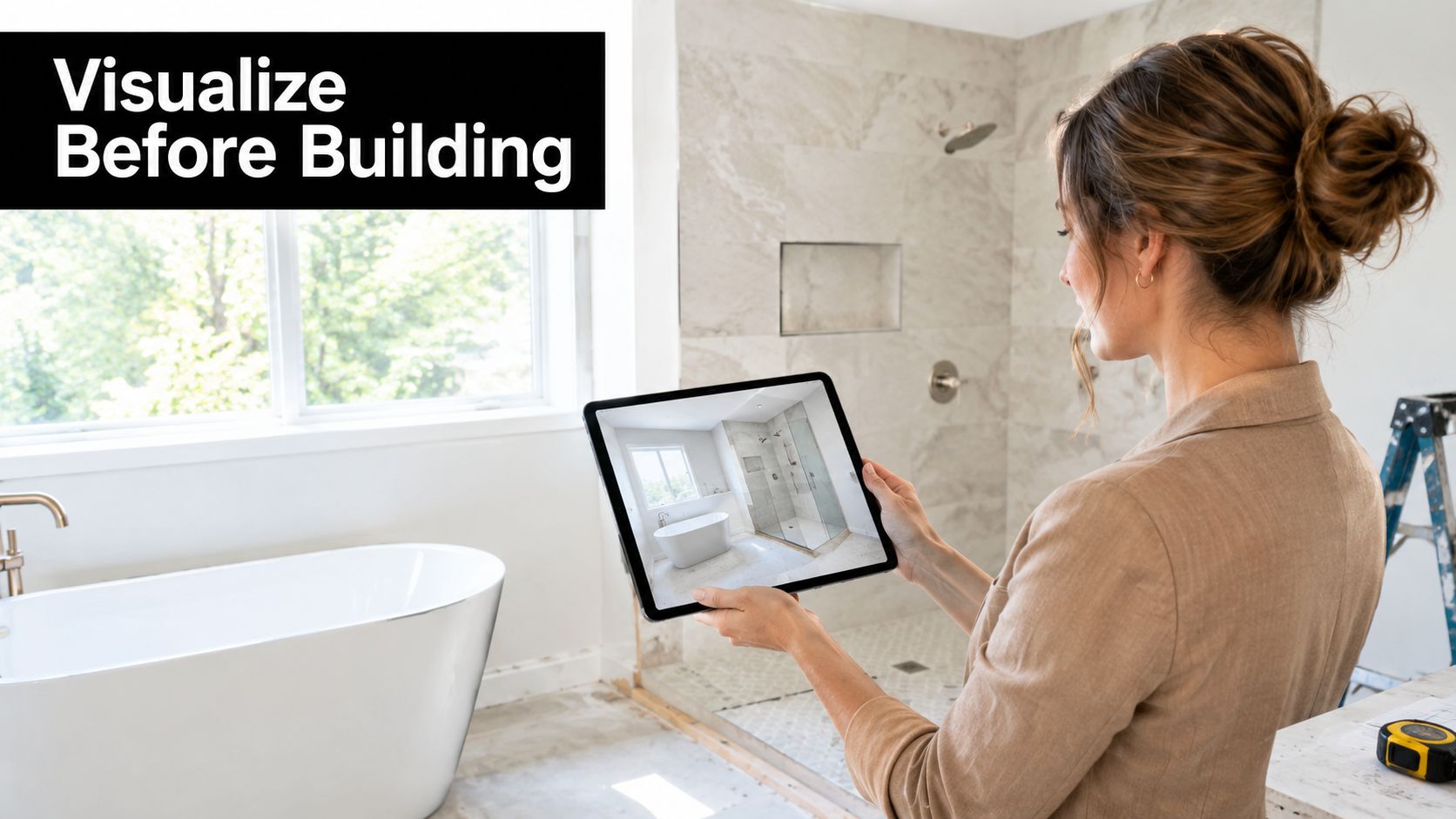
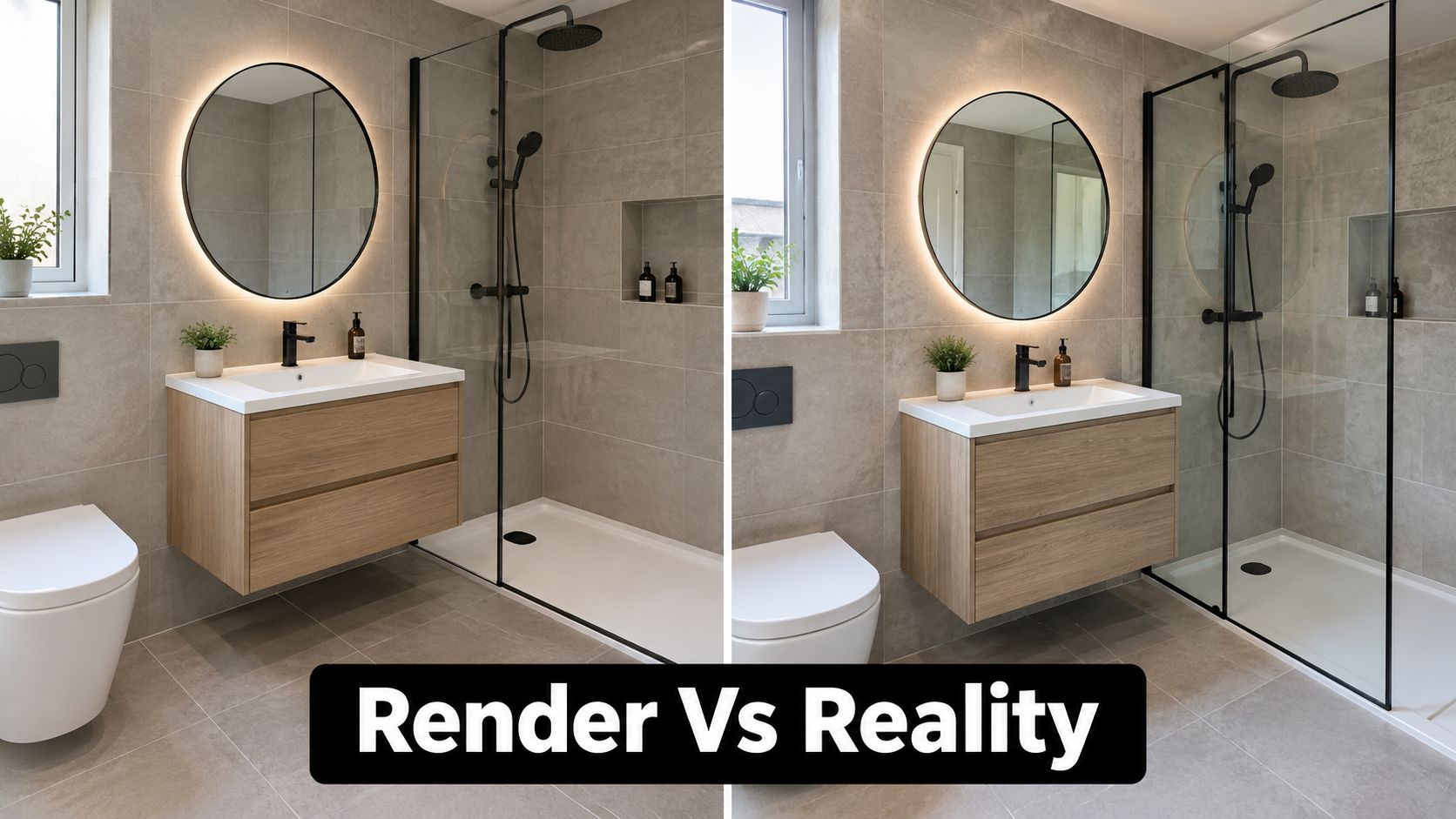
A 3D design is useful when it helps you test decisions before materials are ordered. Check sightlines, storage, vanity depth, shower-screen position and how the door opens. Use the model to confirm what's included, then make sure the approved drawings and written scope match the version you've chosen. A visual model doesn't replace permits, technical details or site verification.
Ask about responsibility, not just presentation. Find out who contacts the owners corporation, who arranges permits and inspections, and who records the membrane before tiling.
Before signing with a renovation company, ask:
- Approval liaison: Who prepares information for the owners corporation, and who tracks written approval?
- Waterproofing evidence: Who photographs membrane coverage, corners and penetrations, and where are the records kept?
- Design handover: What does the 3D model include, and which drawings guide construction?
- Variations: How are concealed conditions and owner-requested changes described and priced?
- Builder responsibilities: Who holds the relevant registration or permits, and who coordinates licensed plumbing and electrical work?
An owner-builder arrangement and engaging a registered builder place different responsibilities on the client. Don't assume the label alone tells you who will manage approvals, trades or documentation. Clarify those duties in the contract. If you're considering registered builders unlimited, define the scope and accountability you expect rather than treating registration as a substitute for a clear written agreement.
For example, SitePro Bathrooms describes an end-to-end service covering concept development, detailed 3D design, construction and finishing. Whatever team you select, make sure its proposal addresses the practical requirements of your building as clearly as it presents the finished look.
Handover, Maintenance and Apartment Renovation FAQ
Before signing off, collect the plumber's compliance certificate, waterproofing records, inspection or test evidence, product information, fixture warranties and final documents requested by the owners corporation. Keep digital copies with the renovation scope and approval correspondence so the next owner or building manager can understand what was done.
For routine care, keep drains clear, use suitable cleaning products, and check sealant and visible junctions for deterioration. If you notice water escaping the shower or staining outside the bathroom, report it promptly rather than waiting for the next scheduled maintenance visit.
Who is responsible for a leak or membrane?
Responsibility depends on the strata plan, the location of the affected element and the circumstances. Notify the owners corporation and building manager, document the issue, and arrange an appropriate inspection before opening up or repairing shared building elements.
How long will the bathroom be unusable?
The duration depends on the scope, approvals, material availability and what demolition reveals. Ask for a project programme that identifies the phases and any points where work could pause, then plan an alternative washing arrangement with the contractor.
What should I do if water reaches a neighbour?
Contact building management and the owners corporation promptly, and arrange to stop or isolate the water source if it's safe to do so. Record the visible damage and coordinate investigation and repairs through the appropriate parties; don't cover the suspected leak before its cause is understood.
Use the first week after handover to file the documents, check that the agreed defects have been addressed and confirm who to contact if a problem appears. A tidy record is part of a durable renovation, not an administrative extra.
Before you choose tiles or book demolition, get your apartment's existing conditions, approval requirements and waterproofing scope reviewed together. Contact SitePro Bathrooms to discuss a bathroom renovation plan that fits your layout, building requirements and finish priorities.