
Kitchen Renovation Cost Australia in 2026
A mid-range kitchen renovation that retains the existing layout is estimated at AUD 15,600–26,000 (national kitchen renovation cost estimate). A Victorian comparison places a mid-range project at about AUD 19,900, with a national-style estimate near AUD 20,000 including GST (Victorian kitchen renovation cost comparison).
Use these figures to set an initial allowance, then obtain a site-specific quote. In Highett and greater Melbourne, the total depends on the work specified: cabinetry, appliances, benchtops, access, demolition and labour, as well as any plumbing, electrical or structural changes. Keeping the existing footprint generally involves a different scope from reconfiguring the room, even when the kitchens are similar in size.
A combined kitchen and bathroom renovation also needs a scope-based budget. Finishes are only one part of the cost; service changes, permits, waterproofing, disruption and contract arrangements can affect the final figure. Ask the quote to itemise these work areas before signing, so the allowance reflects the actual project rather than a broad benchmark.
Kitchen Renovation Cost Australia at a Glance
Published Victorian estimates place basic kitchen work near AUD 12,500, mid-range work at AUD 19,900 and premium finishes at AUD 29,900. These figures give Highett homeowners a state-level reference, while the actual budget depends on the work included and the conditions at the property.

State estimates cluster within a relatively narrow band: New South Wales AUD 20,100, Queensland AUD 19,900, South Australia AUD 19,300, Western Australia AUD 20,400, Tasmania AUD 18,900, the Northern Territory AUD 20,200 and the Australian Capital Territory AUD 20,900. The spread between the lowest and highest listed amounts is about AUD 2,000. Such proximity suggests that state averages alone reveal little about the cost of a particular Highett project. The Victorian figures provide a local reference point, not a measure of site-specific work.
Read the benchmark as a starting point
A benchmark cannot show whether a contractor's price includes demolition, waste removal, appliance supply, design, service relocations or final making-good. Those inclusions need to be listed before quotes can be compared fairly.
For a basic refresh, cabinetry can remain in place, with plumbing and electrical routes unchanged. Replacing cabinetry and appliances adds scope; changing walls, openings or service locations adds further work and coordination. A quote should identify what stays, what moves, what the contractor supplies and which tasks are excluded.
Budgeting rule: Write down what stays, what moves and what each contractor supplies before comparing quotes.
For a kitchen combined with other renovation work, a guide to renovation costs per square metre in Australia can help frame the broader budget. Square-metre figures are a starting reference; the kitchen quote still needs itemised inclusions and exclusions. Permits, disruption and any accompanying bathroom work also belong in the project budget, rather than being treated as incidental costs.
Why Scope Beats Postcode on Price
Published guides place flat-pack kitchens at $10,000–$15,000, mid-range custom work at $25,000–$35,000, and high-end projects above $50,000. A broader published range is $15,000–$40,000 (Australian kitchen renovation cost ranges). These figures describe different scopes, so they offer limited guidance for a Highett home unless the inclusions are clear. Age of the house, site access and layout changes can all affect the work a quote needs to cover.
Scope-Based Kitchen Price Matrix
| Scenario | Published range | What usually drives it |
|---|---|---|
| Refresh | Refer to the national benchmark above; it is not a local Highett quote | Cabinetry specification, benchtop and appliance choices, and whether existing services can remain |
| Partial reconfiguration | No directly comparable local figure is available | Moving plumbing or electrical routes, additional making-good, coordination and access |
| Full redesign | High-end projects can exceed $50,000 in published guidance | Changed footprint, structural work, bespoke cabinetry, premium finishes and service relocations |
The matrix separates work by the extent of change, while the published figures remain broad guidance rather than local pricing. No directly comparable Highett figure is available for partial reconfiguration. That gap matters: a quote for moving services or altering the footprint should spell out those tasks rather than rely on a generic category.
Identify the work behind the price
A refresh suits a kitchen whose layout already works, with finishes or components updated while services stay put. A partial reconfiguration changes plumbing, power or appliance positions, adding coordination and making-good. A full redesign may alter walls or the room footprint, raising design and compliance questions as well as construction costs.
National demand figures provide market context, not a price for a particular home. Estimates put Australia's need at about 163,000 kitchen renovations across 2024–2025, while renovation spending reached $54 billion in the year to August 2025, around $5 billion above pre-pandemic levels. The figures indicate a busy renovation market, but do not establish what a Highett kitchen should cost.
Before accepting a quote, ask for a written scope that identifies cabinetry, benchtops, appliances, labour, demolition, waste and site access. It should also state whether plumbing, electrical work and structural changes are included, and what allowances apply. Similar-sized kitchens can require very different budgets when one retains its services and another relocates them. Compare the itemised work, not postcode or floor area alone.
Breaking Down Labour Materials and Services
Published benchmarks show why a national average can obscure the scope of a Victorian kitchen renovation. A renovation-cost summary reports a median Australian renovation spend of AUD 29,155 in 2021 and an average kitchen installed in a new Australian home of AUD 27,944 that year (historical Australian renovation and kitchen benchmarks). These figures describe different types of work, and neither is a current quote for a Highett project. A kitchen in an established home may also require demolition, disposal, temporary cooking arrangements, service relocation, compliance work or repairs that a new-home installation does not.
A useful quote separates costs and states what each allowance covers. Ask for a fixed scope covering cabinetry, benchtop, appliances, demolition, waste, plumbing, electrical work, permits, design and contingency. That detail shows whether a lower price reflects a genuine scope choice or leaves work unpriced.
What the quote should separate
- Cabinetry and benchtop: Specify materials and finishes, and confirm whether supply, installation and adjustments are included.
- Appliances: List the included items and price installation or connection separately where required.
- Demolition and waste: Define what will be removed and disposed of, and explain how concealed damage will be handled.
- Plumbing and electrical: Itemise the work, distinguishing reconnection from relocating services.
- Permits and design: Identify who prepares drawings, checks requirements and pays for professional or approval work.
- Contingency and exclusions: State the allowance and name the conditions or requested changes that could trigger a variation.
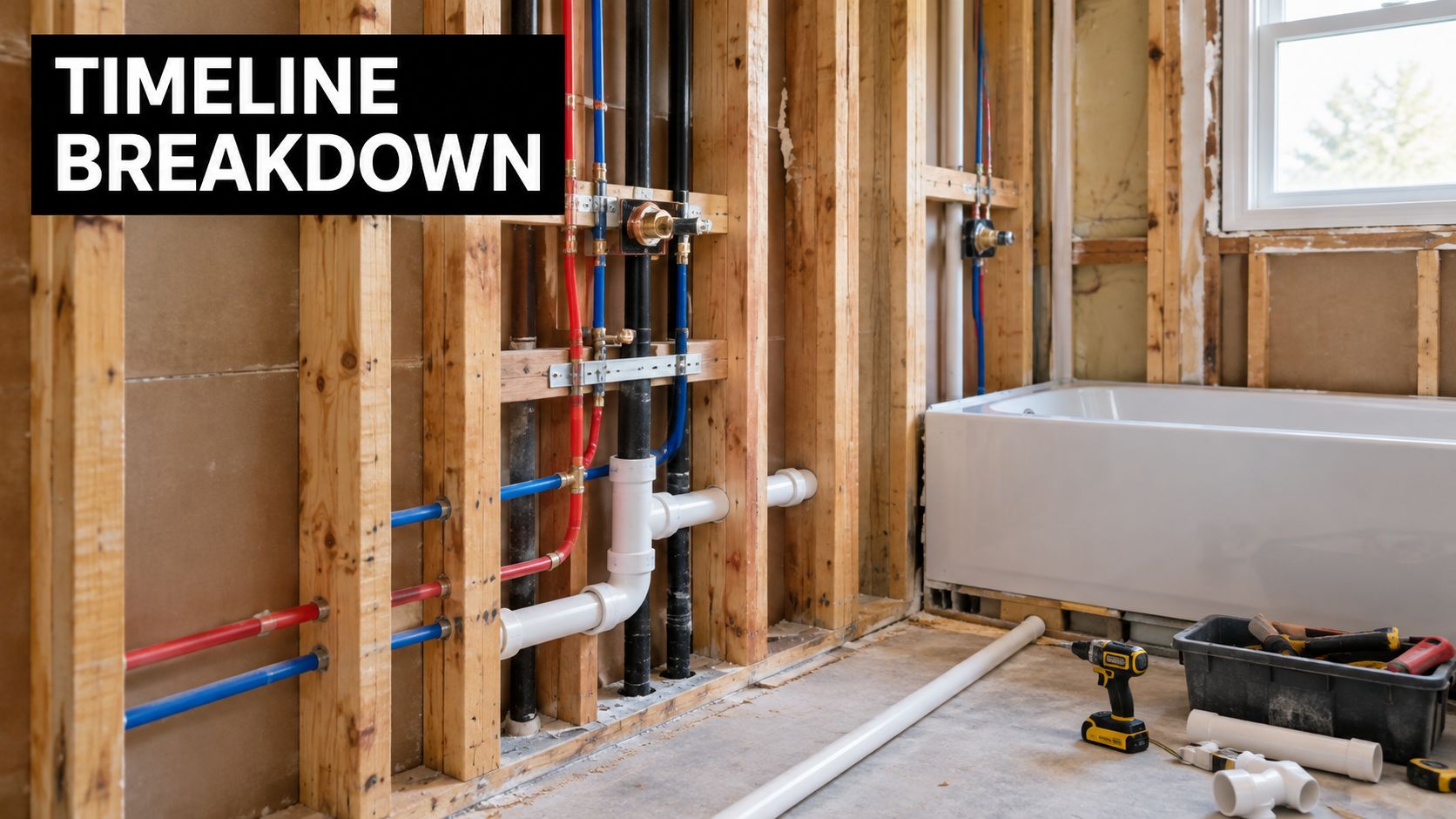
Trade order affects both timing and accountability. Plumbing rough-in comes before cabinet installation, while tiling follows benchtop templating. Cabinetmakers, plumbers, electricians, tilers and appliance installers therefore need clear handovers. The quote should name who coordinates them and who resolves clashes or unexpected site conditions.
Price the renovation, not just the new kitchen
Access affects work in established homes. Carrying materials in, removing old fittings and protecting adjoining spaces can add labour and making-good work. Ask the contractor to state access assumptions in writing, rather than relying on a low total that leaves them open.
Check the cabinet allowance closely. Does it cover units alone, or also supply, delivery, fitting and finishing? A guide to kitchen cabinet costs can help clarify the component, but the quote must still specify the cabinetry and how it connects to the rest of the work.
For a landlord, household or body corporate, an itemised quote makes offers easier to compare and responsibilities clearer before work begins. It also provides a reference if an undocumented condition or requested change affects the price.
Permits and Registered Builders in Victoria
A change to a wall, opening, plumbing route or electrical system shouldn't be priced as cabinetry alone. In Victoria, those changes may require a coordinated design-and-compliance package, including professional input and approval checks. The cost question is not whether the new kitchen looks different. It's whether the work affects structure, services or regulated building requirements.
Consumer Affairs Victoria says renovation plans need to address Victorian Building Regulations, foundation data, local council laws and mandatory energy-rating requirements. Where planning approval is required, it must be obtained before a building permit. Homeowners remain responsible for ensuring required permits are in place and obtaining final inspection or occupancy documentation (Victorian plans and permits guidance).

“Registered builders unlimited” isn't an exemption
The phrase registered builders unlimited shouldn't be read as permission to bypass Victorian requirements. Registration with the Building and Plumbing Commission is required for a builder or tradesperson undertaking work worth more than $10,000, and a major domestic building contract must be in writing above that threshold. Registration is also required for structural building work regardless of project value (Victorian builder, tradesperson and contract requirements).
Splitting one project into smaller contracts doesn't avoid the rule. Consumer Affairs Victoria's example combines a $4,000 pre-construction contract with a $7,000 main contract; together, they exceed the threshold. Structural work generally also requires a building permit, and the homeowner remains responsible for checking whether planning or building approvals apply.
Resolve compliance before signing
Before accepting a quote, get clear answers on whether the layout changes affect load-bearing walls, whether wet services are moving, which registered trades will do the work and whether a building surveyor needs to review the design. If the project changes the footprint or structure, ask who will prepare the drawings and coordinate the builder, plumber, electrician and cabinetmaker.
This is especially important when a kitchen makeover and bathroom renovation sit in one contract. Assess the total project scope and contractual obligations, not just each trade's invoice in isolation. Ask for the written scope, stated exclusions, permit responsibilities and final documentation requirements before you commit.
Package Kitchens Versus Bespoke Redesigns
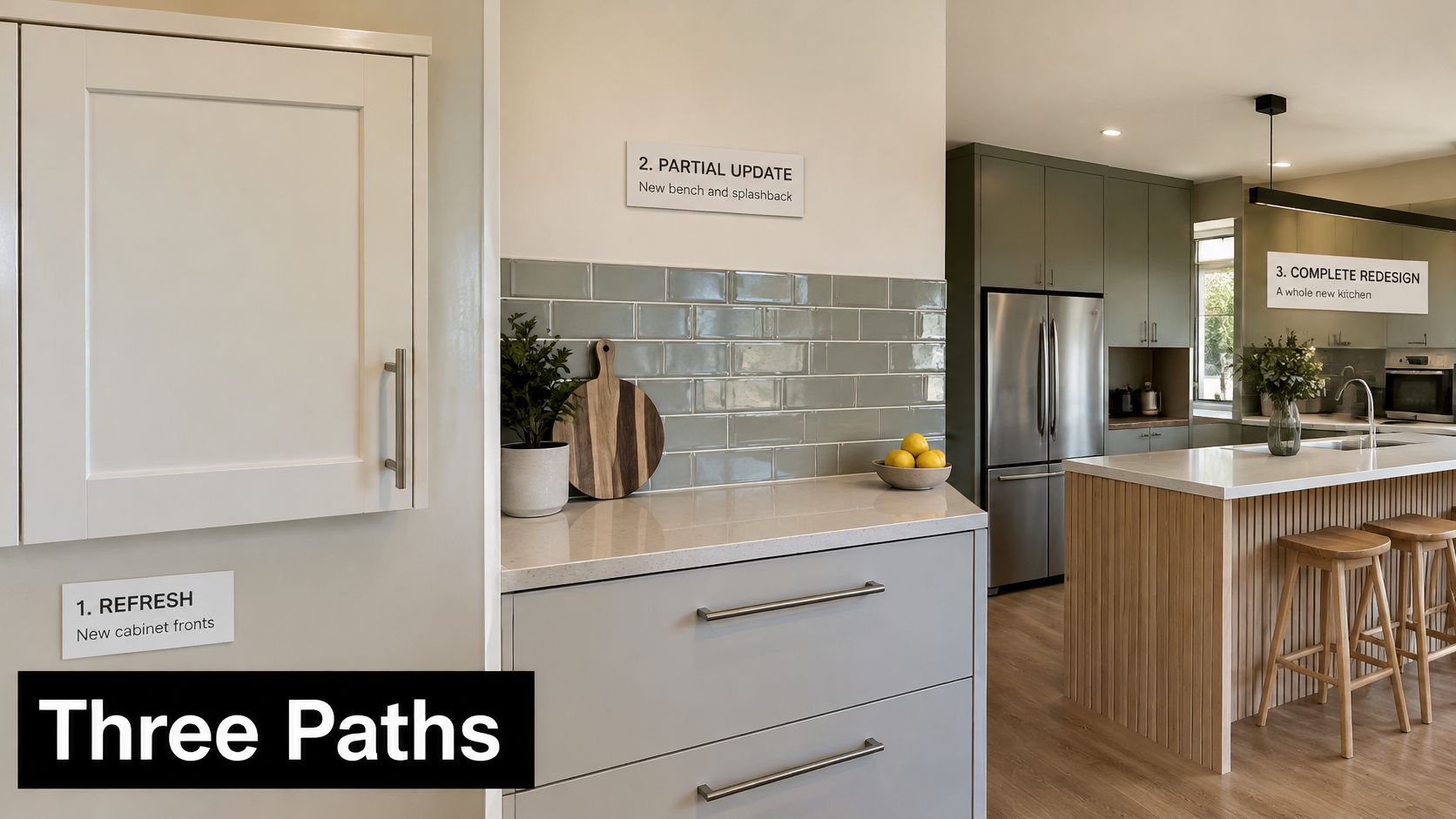
A kitchen renovation can mean a targeted refresh, a partial update or a full redesign, with different costs and disruption at each level. For Highett homeowners, the useful comparison is the work included, not a single average: keeping services in place usually limits the scope, while changing the layout can require more design and trade coordination.
A refresh that preserves the plan
If plumbing and electrical points already suit the household, a package refresh can replace cabinetry or finishes while retaining the existing layout. Keeping services where they are can limit the chance of extra work, but the quote should still specify what is included, what remains untouched and how surrounding areas will be protected.
Allow for disruption as well as construction. The household may need to plan meals, manage dust and store kitchen items safely while normal use is restricted. Ask the contractor how these needs fit the proposed work sequence.
A partial update with fewer repeated jobs
Replacing a benchtop, refacing cabinets or changing appliances can address specific problems without reworking the whole room. These changes are most effective when the selected items suit one another and the existing layout still works. Staging separate jobs without an overall design can lead to repeated design, delivery, removal and installation costs.
The schedule also affects the actual budget. Before signing, ask how appliance lead times, storage, dust control and temporary meal arrangements are handled. Treat any stated duration as site-specific, and check that the quote identifies the work sequence and assumptions behind it.
A bespoke redesign with a wider scope
A bespoke design may be appropriate when the current layout does not meet the household's needs. Moving services or altering walls can add design work and require more trades to coordinate. Money magazine reports that structural or premium kitchen projects can reach $75,000–$120,000; this is a reference range for complex projects, not a price for a particular Highett home (kitchen renovation costs and trade coordination).
The same publication reports that Australian renovation spending has stabilised at roughly 40% above pre-pandemic levels. That broader context supports allowing for unexpected work, rather than assuming the initial scope will cover every site condition. A redesign's value depends on whether the revised layout solves a real functional problem.
A low initial price can leave design, delivery, demolition or installation costs to be repeated later.
Before choosing between a package and bespoke approach, require an itemised quote that separates design, materials, labour, service changes, removal and installation. SitePro Bathrooms offers concept development, 3D design, construction and finishing as part of its renovation service. For any provider, the practical test is whether the proposed scope and choices are clear before construction begins.
Modern Bathrooms That Change the Budget
Adding a bathroom to a kitchen contract changes more than the list of finishes. It adds another work area, its own service and compliance questions, and a different set of disruption concerns. Pairing the projects can be practical when the household wants coordinated planning, but the combined scope needs to be explicit so that the bathroom doesn't introduce unpriced changes.
New bathroom ideas can improve function without making the room larger. Australian Government YourHome guidance recommends choosing toilets, showers, taps and appliances with the highest available WELS star rating, and installing flow restrictors where taps deliver excessive water. It also recommends external exhaust ventilation to remove moisture and pollutants; a backdraft damper in the duct run or vent grille can reduce unwanted hot or cold air leakage (YourHome guidance on minor home upgrades).
Make layout and ventilation do useful work
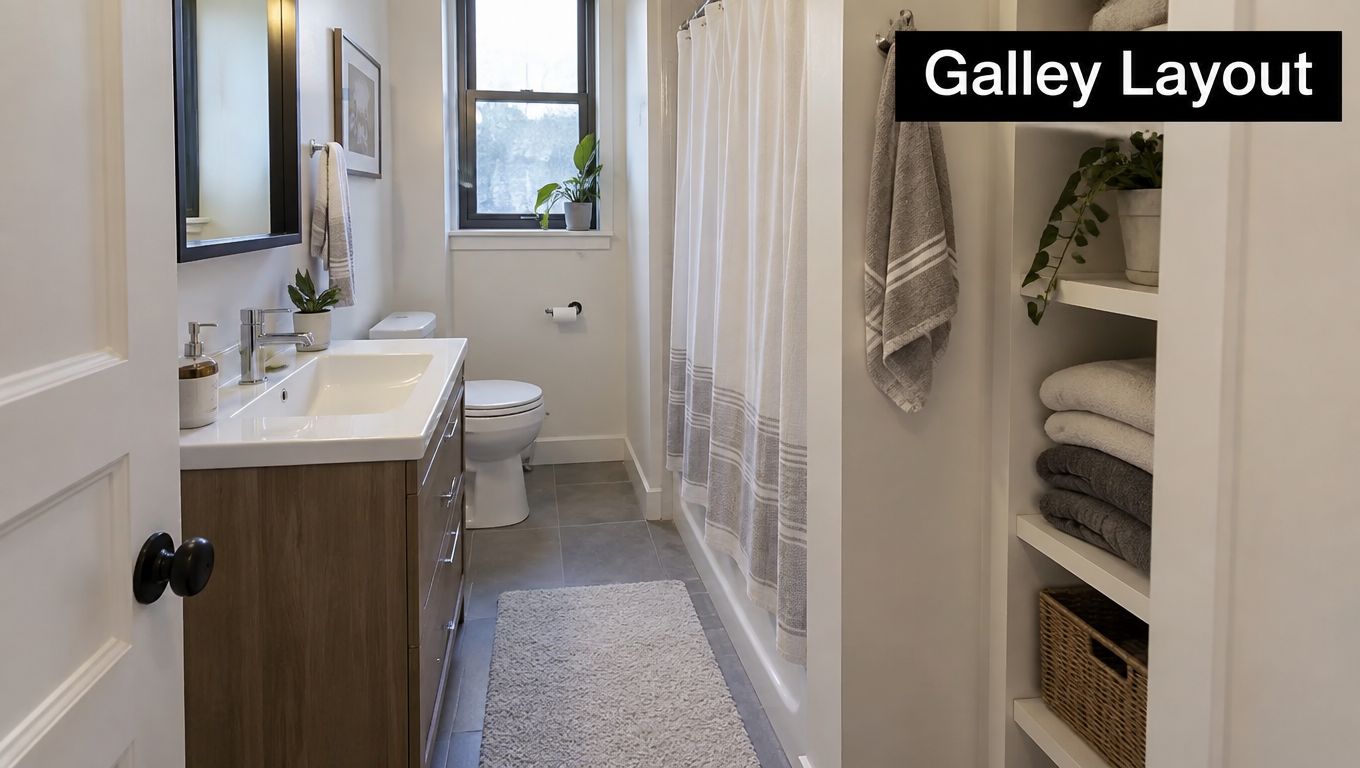
A two- or three-way bathroom design can allow different users to access the toilet, basin or shower without adding another bathroom. That makes zoning a functional design decision, not just a style choice. Before choosing finishes, consider how the room needs to work for the people who use it and how ventilation will manage moisture.
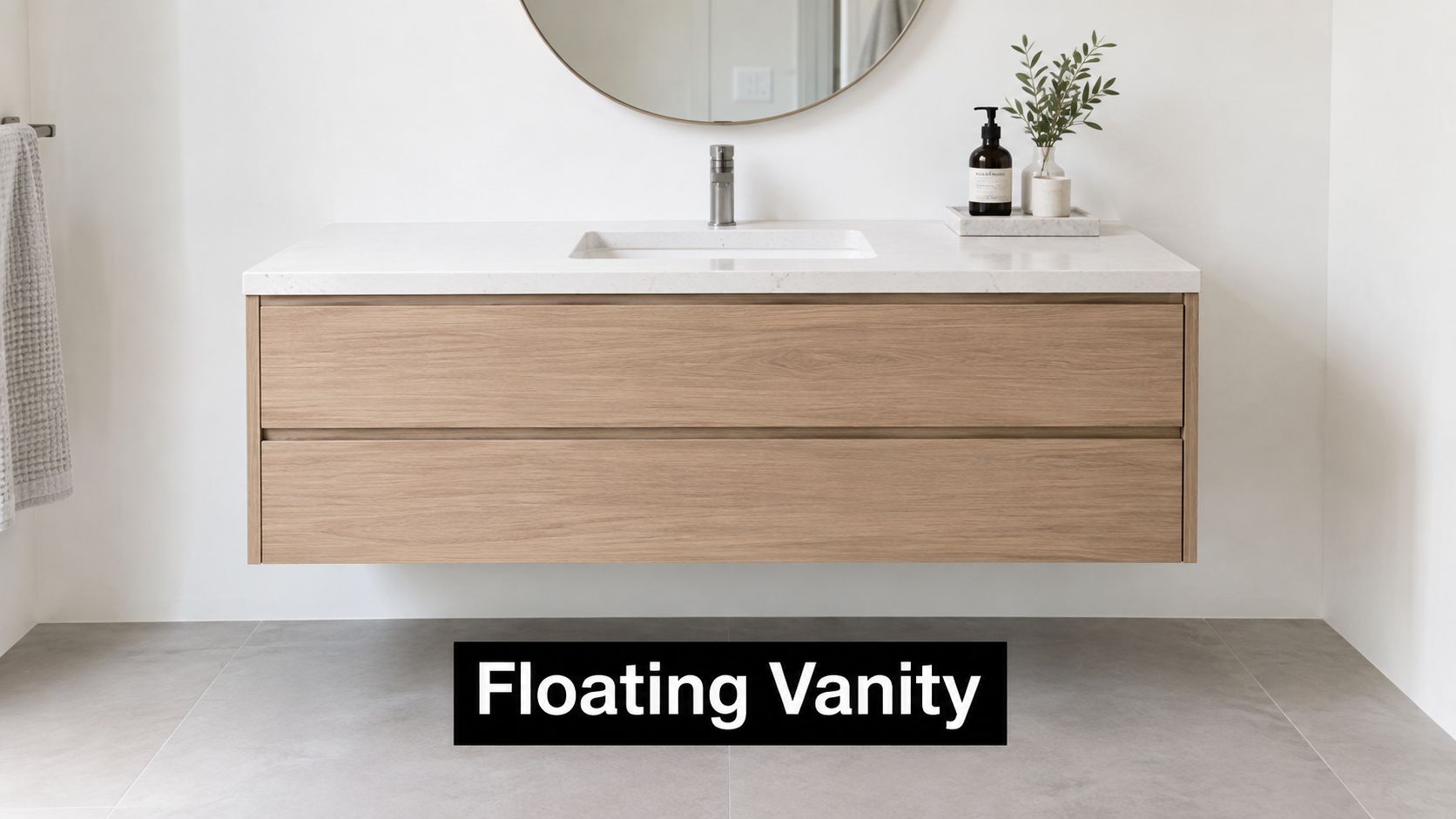
Modern bathrooms tend to prioritise practical zoning, efficient fixtures and ventilation. Designer bathrooms may include bespoke detailing and higher-specification finishes, but those should be priced as deliberate upgrades. A style label alone doesn't tell the homeowner what is included in the quote.
Treat waterproofing as a system
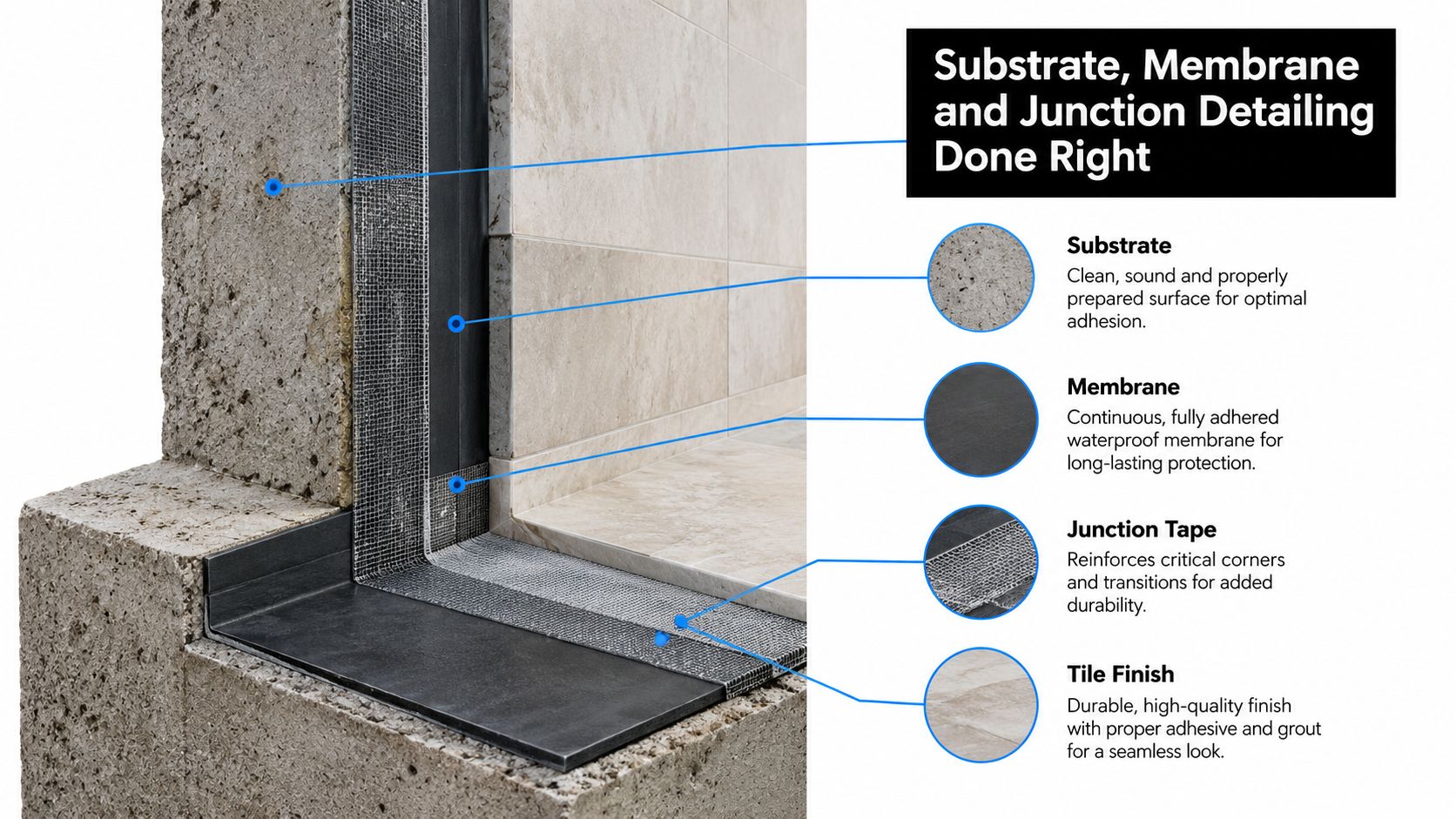
Waterproofing covers the substrate and junctions as well as the visible tile surface. The National Construction Code requires shower floors, including any hob or step-down, to be waterproof, and shower walls to be waterproof to at least 1,800 mm above the floor substrate. Shower-area wall junctions, wall-to-floor junctions and penetrations must also be waterproof; for an unenclosed shower, a waterstop must be at least 1,500 mm horizontally from the shower rose (NCC wet-area waterproofing requirements).
Ask the contractor to identify the waterproofing scope, substrates, junctions and penetrations in writing. For existing buildings, Victorian requirements may also depend on applicable state legislation, so confirm the design with the relevant building surveyor before construction.
Combining the rooms is more compelling when the household wants one coordinated plan and can clearly define both scopes. If the bathroom introduces unresolved waterproofing, permit or service questions, deal with those before committing to a combined price. A single contract is only useful if its inclusions, responsibilities and variation process are clear.
How to Choose a Renovation Partner
The right renovation partner can make the budget more predictable before work begins. For homeowners in Highett and greater Victoria, a headline price says little unless the proposal defines the work, allocates responsibilities and identifies decisions that could change the cost. A lower quote may leave more unanswered.
Use these checks to assess the proposal:
- Scope changes: Refer back to the earlier list of quote items when checking what is included. Ask for the waterproofing and tiling scope in writing, including who is responsible for coordinating that work.
- Services and structure: Confirm whether plumbing, electrical routes, walls or openings will change, and who coordinates the relevant trades.
- Victorian obligations: Verify the registration and written-contract requirements that apply to the project. Establish who will check permits and provide final documentation.
- Disruption and variations: Ask how the household will use the kitchen during construction, what access and storage arrangements are expected, and how changes will be priced and approved.
These questions reveal how the proposal handles risk, not just which finishes it offers. If the layout is still undecided or site conditions need checking, ask which decisions must be resolved before the price is fixed and which could lead to a variation.
A coordinated provider may reduce the number of suppliers the household has to manage, but that does not remove the need to define responsibilities. SitePro Bathrooms is one option to consider; assess any provider by the written scope and process rather than by a general service description.
For additional checks on proposals and contractor selection, consult this guide to hiring a kitchen-remodelling contractor. Before signing, compare the proposed work and variation terms, not only the total price.
Start by listing the layout changes, appliance requirements and whether a bathroom may be part of the same contract. Then review relevant past projects and testimonials, and request a quote for the specific job by phone or email through SitePro Bathrooms. Ask for the final scope in writing and confirm that responsibilities, exclusions and change approvals are clear.