
A lot of Highett homeowners start in the same place. They know the bathroom has to change, but they don't yet know whether they're looking at a sensible update, a full strip-out, or a project that will grow the moment tiles come off the wall.
That uncertainty is what stops most projects before they start. You might have saved inspiration for modern bathrooms, compared tapware, and talked about better storage or a larger shower, but none of that feels real until you can attach a workable budget to it.
A bathroom renovation cost calculator helps with that first step. Used properly, it turns a vague wish list into a planning range you can work with. It won't replace a site inspection or a professional quote, but it does help you test ideas early, spot budget pressure points, and avoid going into meetings blind.
For Victorian homes, and especially bayside suburbs like Highett, local detail matters. Soil movement, waterproofing rules, digital estimating expectations, labour rates, and the age of the housing stock all affect the actual cost. Generic online figures often miss those issues completely.
Your First Step to a New Bathroom Starts Here
The biggest mistake people make is treating the budget as something to sort out later. In bathroom renovations, that usually creates more stress, not less. The smarter approach is to price the project before you commit to layouts, finishes, or demolition.
A bathroom renovation cost calculator gives you a controlled starting point. You enter the details you already know, such as room size, whether the layout stays the same, the type of fixtures you want, and the general finish level. From there, you get a ballpark figure that helps answer the practical questions first.
Start with the decisions that change cost fastest
Before you get carried away with new bathroom ideas, answer these four basics:
- Room type: Is it a compact ensuite, a main family bathroom, or a larger master bathroom?
- Layout changes: Are the shower, toilet, and vanity staying put, or moving?
- Finish level: Are you aiming for a straightforward update, quality mid-range finish, or one of the more polished designer bathrooms you see in magazines?
- Condition of the existing room: Is this likely to be a clean rebuild, or could there be hidden issues once demolition starts?
Those answers shape the budget more than colour palettes do.
Practical rule: If you don't know whether you're changing layout, you don't yet know your likely renovation bracket.
For homeowners in Victoria, budgeting also needs to line up with compliance. Waterproofing, ventilation, licensed trades, and proper project coordination aren't optional extras. They're part of the job. That's also why it matters to understand why using a registered builder matters for your bathroom renovation, especially when you're comparing online estimates with real-world project delivery.
Use the calculator as a planning tool, not a promise
The right mindset is simple. A calculator is there to help you:
- Set a realistic range
- Test different options before committing
- Prepare for the quote stage with better questions
That's where confidence starts. Not with a random average, but with a clearer idea of what your own bathroom might cost in your own suburb.
What Is a Bathroom Renovation Cost Calculator
A bathroom renovation cost calculator gives you an early budgeting range based on the scope you select. It helps you test whether your plan looks like a basic update, a full renovation, or something in between before you start requesting quotes.
For Highett homeowners, that can be useful early on. A calculator can show the likely cost difference between keeping plumbing where it is and moving it, or between choosing builder-grade fixtures and higher-spec fittings. That sort of comparison saves time because it tells you quickly which ideas fit your budget and which ones need reworking.
The catch is simple. Generic calculators often miss the things that change real project costs in Victoria.
They usually do a reasonable job on visible selections like tiles, tapware, vanities, and baths. They are much weaker on site conditions, access, compliance, and the small construction details that push a bathroom from straightforward to expensive. In this part of Melbourne, I would treat any online figure as a planning number only until someone has looked at the room properly.
What the calculator is actually measuring
A good calculator should convert your choices into a rough cost range across three areas:
- the amount of demolition and rebuilding involved
- the level of finishes and fixtures you want
- the likely labour and compliance load tied to that scope
That last point matters more in Victoria than many online tools allow for. Bathroom work here needs to line up with current building standards, waterproofing requirements, ventilation expectations, and the use of appropriately licensed trades where required. If a calculator ignores those items, the estimate can look tidy on screen and still be short once the job is priced properly.
Why local context matters in Highett
Two bathrooms of the same size can land in very different budget ranges in Highett because the room itself is only part of the story. Older homes can hide uneven subfloors, dated pipework, wall damage, or previous renovation work that needs correcting. Ground conditions and slab details also matter if the job involves drainage changes or toilet relocations. A generic calculator rarely asks those questions.
I see the same problem with compliance allowances. Many calculators assume a clean, standard installation. Real projects in Victoria often need extra work to meet waterproofing standards, improve ventilation, correct falls, or deal with defects exposed during demolition. None of that means the calculator is useless. It means the calculator is only as reliable as the assumptions behind it.
A useful calculator gives you a budget starting point. A site inspection turns that starting point into a quote you can rely on.
What a good calculator should help you decide
| Question | Why it matters |
|---|---|
| How big is the job really? | Replacing finishes is a different cost category from rebuilding the room and relocating services. |
| Which choices are adding cost fastest? | Layout changes, custom joinery, premium fixtures, and rectification work can shift the budget quickly. |
| Am I ready to ask for quotes? | Clear inputs lead to better conversations with builders and fewer surprises later. |
Used properly, a calculator is a filter. It helps rule out unrealistic ideas, set a workable range, and prepare you for the quote stage. What it cannot do is inspect your bathroom, confirm hidden conditions, or price the Victorian-specific compliance work that may sit behind the finishes.
Decoding the Key Inputs for an Accurate Estimate
A calculator gets more useful when the inputs match the job you are planning in Highett. A clean looking online estimate can drift a long way from the final cost if you leave out layout changes, compliance work, or the condition of the existing room.
Size and layout
Floor area matters, but the plan matters more.
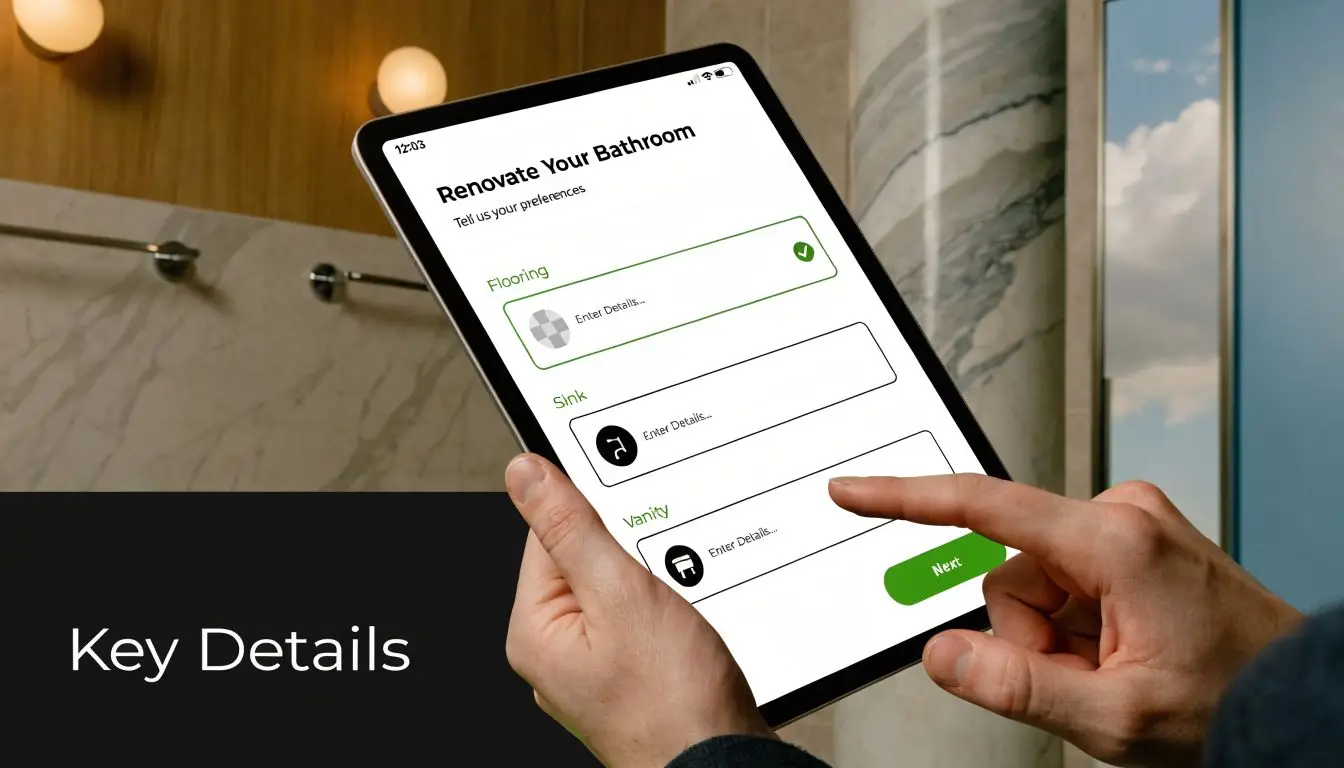
Two bathrooms with the same square metre rate can end up in different price bands once the toilet moves, the shower is enlarged, or the vanity wall changes. A useful calculator should ask whether plumbing points stay where they are, whether walls are changing, and whether the room is being opened up for better movement. If it only asks for size, it is giving you a rough range, not a reliable budget.
That is especially true in older Highett homes where the existing setout often reflects how bathrooms were built decades ago, not how people want to use them now.
Scope of works
The biggest budgeting mistake I see is calling a full rebuild a simple update.
If you are replacing tiles, waterproofing, fixtures, lighting, ventilation, and damaged wall linings, that is a renovation. If you are altering drainage, rebuilding shower bases, or correcting poor falls, the scope has moved well beyond a cosmetic refresh. A calculator needs to separate those levels clearly so the estimate reflects the amount of demolition, preparation, and licensed trade work involved.
A practical way to enter scope is to choose the closest fit:
- Cosmetic update: keep the layout, replace selected finishes and fixtures
- Full renovation: strip out the room and rebuild it to current standard
- Reconfiguration: relocate plumbing, adjust walls, or change the room plan
- Custom fitout: add detailed joinery, premium surfaces, feature lighting, or niche detailing
For compact rooms, it also helps to compare your ideas against realistic cost ranges for a small bathroom remodel, because small spaces often cost more per square metre once custom planning and tight trade access are involved.
Fixtures and finishes
This input changes budgets fast.
A standard acrylic bath, builder-range toilet suite, and semi-frameless screen sit in a very different cost bracket from a freestanding bath, wall-hung pan, stone-top vanity, full-height tiling, and frameless glass. The calculator should let you choose finish levels in a way that reflects how bathrooms are priced. Entry level, mid-range, and premium is usually enough for planning.
Selections also affect labour. Larger format tiles, recessed shaving cabinets, wall-hung vanities, and tiled niches can all add time on site. The product cost is only part of the story.
Structural and local conditions
This is the area generic calculators handle poorly.
Bathrooms in Victoria can carry extra cost before the new fittings even arrive. Subfloor movement, older framing, out-of-level surfaces, and hidden water damage all affect what has to be repaired before waterproofing and tiling start. In bayside areas such as Highett, site conditions and past settlement can also influence floor preparation if the job involves drainage changes or correcting movement-related cracking.
Compliance matters too. Victorian bathroom work has to align with current requirements for waterproofing, ventilation, plumbing, and electrical safety. If demolition exposes defects, the room still has to be rebuilt properly. A calculator cannot inspect any of that. It can only assume average conditions.
Labour and licensed trades
Bathrooms are trade-dense projects. Plumbers, electricians, waterproofers, tilers, carpenters, and installers all need to work in the right order, and delays in one trade can push costs elsewhere.
That is why labour should never sit in the calculator as a generic allowance. In Victoria, a key issue is whether the work is being carried out and coordinated by properly registered and licensed professionals, with the right checks and documentation where required under VBA rules. Cheap allowances usually mean something has been left out.
The better your inputs, the better your estimate. But even a well-set-up calculator cannot see under tiles, test falls, confirm substrate condition, or price rectification after demolition. It gets you to a sensible budget range. A site inspection gets you to numbers you can build around.
Typical Bathroom Renovation Costs in Highett Victoria
A Highett bathroom can look like a straightforward update on paper and still price like a full rebuild once actual work starts. I see that often in older bayside homes. Owners budget for tiles, tapware, and a new vanity, then demolition exposes floor correction, wall straightening, drainage adjustments, or ventilation upgrades that a generic calculator never allowed for.
That is why local budget ranges matter more than broad national averages. In Highett, labour rates, access, product choices, and Victorian compliance requirements usually push bathroom costs above the numbers you see in generic online tools.
What these ranges look like in practice
Use these figures as early planning ranges for a complete renovation in Highett. They help set a sensible budget before you commit to selections or request a fixed quote.
| Bathroom Type | Typical Size | Budget Range (Basic Finish) | Mid-Range (Quality Finish) | High-End / Luxury (Designer Finish) |
|---|---|---|---|---|
| Small ensuite | Under 4 sqm | $15,000 to $25,000 | $15,000 to $25,000 | $25,000+ |
| Standard family bathroom | 6 to 10 sqm | $30,000 to $50,000 | $30,000 to $50,000 | $50,000 to $60,000+ |
| Larger primary bathroom | 6 to 10 sqm and above with premium inclusions | $30,000+ | $30,000 to $50,000 | $60,000+ |
Those overlaps are not a mistake.
In Victoria, the fixed cost of doing the room properly is a large part of the budget. Demolition, waste removal, plumbing and electrical rough-in, waterproofing, screeding or floor prep, tiling, fit-off, and final installation all stack up before you get to premium upgrades. A basic finish can still cost more than expected if the room needs rectification work or the existing layout is inefficient.
Why one Highett bathroom costs more than another
The biggest cost swings usually come from a few practical decisions and local site conditions:
- Keeping the layout or changing it: Leaving the shower, vanity, and toilet in place usually protects the budget. Moving wastes or water points often adds plumbing time, floor work, and patching.
- Condition of the existing room: Older homes around Highett can hide moisture damage, uneven substrates, outdated services, or previous renovation shortcuts.
- Floor and drainage work: If falls are poor or drainage needs correction, the cost rises quickly. In some homes, soil movement and past settlement also show up in cracked tiles or out-of-level floors, which means more preparation before waterproofing starts.
- Product selection: Large-format tiles, custom joinery, recessed shaving cabinets, frameless glass, underfloor heating, and premium fixtures all lift the price.
- Victorian compliance requirements: Work has to be carried out to current standards. That can affect waterproofing details, ventilation, plumbing, electrical work, and documentation under VBA-related requirements.
Small bathrooms catch people out for the same reason. The footprint is smaller, but the job still needs most of the same trades and the same sequence.
A compact ensuite is rarely cheap per square metre.
That is why a tiny room with full-height tiling, a custom vanity, and difficult access can end up costing more than expected, even when the layout stays put. If you are planning a tighter space, this guide to small bathroom remodel cost factors will help you budget more realistically.
How to use these numbers well
Use the table to set a range, then test your brief against the room you have. If your Highett bathroom is in an older home, has signs of movement, or needs drainage changes, budget toward the middle or upper end rather than the entry number.
The lower end only makes sense when the layout stays the same, the room is in sound condition, and the finishes are controlled. Once you add structural repairs, higher-spec materials, or custom detailing, the calculator range becomes a starting point rather than a likely final cost.
Sample Calculations Putting It All Together
A Highett homeowner can enter the same room size into a calculator as someone in another suburb and still end up thousands apart once the job reaches site. That usually comes down to scope, access, existing building condition, and local compliance details the calculator cannot see.
Scenario one, compact ensuite with a restrained brief
Start with a small ensuite in a solid, straightforward home. The owners want a cleaner finish, better storage, and fixtures that feel current, but they are not chasing a full redesign.
The shower stays put. The vanity stays put. The toilet stays put.
That single decision usually keeps the estimate closer to reality because the plumber, waterproofer, tiler, and electrician can work within an existing layout instead of rebuilding the room around new service points. In practical terms, the calculator should be set up around a like-for-like renovation with upgraded finishes, not a reconfiguration.
A sensible allowance in this type of project usually includes:
- demolition and strip-out
- waterproofing and tiling
- replacement vanity, tapware, toilet, and shower screen
- lighting, mirrors, paint, and basic accessories
- labour for standard installation without major service relocation
This is also the kind of job where timing is easier to predict. If you are budgeting around access to the bathroom during works, this guide on how long a bathroom remodel should take helps put the estimate in context.
Scenario two, family bathroom with layout changes
Now take a family bathroom in an older Highett home where the owners want the room to function better day to day. They want a larger shower, a better vanity position, and more open floor space, so fixtures need to move.
That changes the budget fast.
Moving plumbing points often means opening more of the floor and walls, adjusting waste locations, coordinating new set-outs, and checking falls still work properly. In Victoria, that can become more involved if the existing slab, subfloor, or drainage layout gives you little room to work with. On some sites, even a modest layout change leads to extra labour before new finishes have even been ordered.
I see this regularly in older properties. What looks like a simple shift on a plan can turn into drainage changes, floor correction, or additional making-good work once demolition starts.
What the calculator is helping you compare
The useful part of the calculator is not the headline number. It is the gap between one scope and another.
| Decision | Budget effect |
|---|---|
| Keep fixture locations | Lower installation complexity and a more stable early estimate |
| Move one key fixture | Higher plumbing labour and more coordination on site |
| Move multiple fixtures | Larger jump in cost risk, especially in older bathrooms |
| Add custom or premium finishes | Higher material spend and more installation time |
Use it to price two versions of the same room. One version keeps the layout and tightens the finish schedule. The other includes the changes you would like if budget was less constrained.
That comparison usually gives homeowners a clearer answer than a single average ever will. It shows whether the extra spend is going into function, appearance, resale value, or hidden site work that a generic online tool cannot price properly in advance. In Highett and across Victoria, that last category matters more than many people expect.
From Estimate to Quote Where Calculators End
A Highett homeowner can enter room size, tile allowance, tapware level, and labour assumptions into a calculator and get a useful budget range in minutes. Then demolition starts, the floor falls away to one corner, the waterproofing underneath has failed, and the existing plumbing does not suit the new layout. That is the point where an estimate stops being enough.
Online calculators are good for early planning. They help you test scope before you commit to design meetings, product selections, and site visits. They do not inspect the room, and they do not price the hidden work that often drives the difference between a rough estimate and a contract figure.
In Victoria, that gap matters.
A proper quote takes account of site conditions, current product pricing, and compliance requirements that a generic calculator cannot verify from a screen. In older Highett homes, I would also expect the builder to check how the existing floor, wall framing, drainage falls, and ventilation setup will affect the build. If the property has movement, moisture damage, or previous work that would not pass current standards, the budget can change for good reason.
What a quote adds that a calculator cannot
A site-based quote should do three practical jobs.
Measure and inspect the actual room
This includes checking levels, wall condition, access, service locations, and the likely amount of rectification work before new finishes go in.Test the design against Victorian requirements
Waterproofing, ventilation, drainage, electrical work, and plumbing all need to suit current expectations. If permits, licensed trades, or VBA-related compliance steps apply, they need to be allowed for before the job starts, not discovered halfway through.Set out inclusions, exclusions, and variation risk clearly
A good quote shows exactly what is priced and where hidden conditions may still affect cost. That is how homeowners avoid false confidence from a low starting number.
Material pricing can shift between the day you use a calculator and the day you approve fixtures and tiles. Lead times can shift too. A live quote reflects what suppliers are charging at the time of pricing, which is far more useful than an average pulled from a broad national range.
Why local quoting matters in Highett
Local housing stock creates its own cost pattern. Some bathrooms are straightforward cosmetic upgrades. Others involve concrete slab work, reactive clay movement, dated pipework, or awkward drainage positions that limit what can be moved without extra labour.
Those are not edge cases in Victoria. They are common budgeting issues.
A local specialist should price with those risks in mind and explain the trade-off clearly. Keeping the existing layout may protect budget. Moving the shower and toilet might improve function, but it can trigger extra plumbing, floor preparation, and compliance checks. That is the kind of decision a calculator helps compare, but only a quote can price with enough confidence to sign off on.
Timing matters as well. Product selection, trade sequencing, and inspection requirements all affect total cost, which is why it helps to review how long a bathroom remodel should take before you lock in your budget and start date.
Use the calculator to narrow the brief and set a realistic range. Then get an on-site quote from a bathroom specialist who understands Highett homes, Victorian compliance, and the hidden work that online tools cannot see.