

If you're planning a kitchen renovation in Victoria right now, the benchtop decision probably feels bigger than it used to. It isn't just about colour, edge profile, or whether you prefer a stone look over timber. You also need to think about safety, compliance, how the material will be fabricated, and whether it still makes sense for the way your household lives.
That shift has caught plenty of homeowners off guard. A material that was once the default upgrade path is no longer an option in the same way, so people are reassessing what they want from their kitchen benchtop materials. In practice, that's not a bad thing. It forces better questions. Will this surface cope with family cooking? Will it stain? Will it scorch? Will it suit the rest of the house if you later tackle bathroom renovations or start collecting new bathroom ideas for the next project?
The right benchtop isn't the one that looks best in a showroom sample. It's the one that still works after school lunches, hot pans, red sauce, clutter, cleaning, and years of use.
Choosing Your Perfect Kitchen Benchtop in 2026
Most kitchen renovations start the same way. You save a few inspiration photos, narrow down your cabinet colour, then realise the benchtop will drive half the final look and a lot of the budget. That's why this choice needs more than a style-first approach.
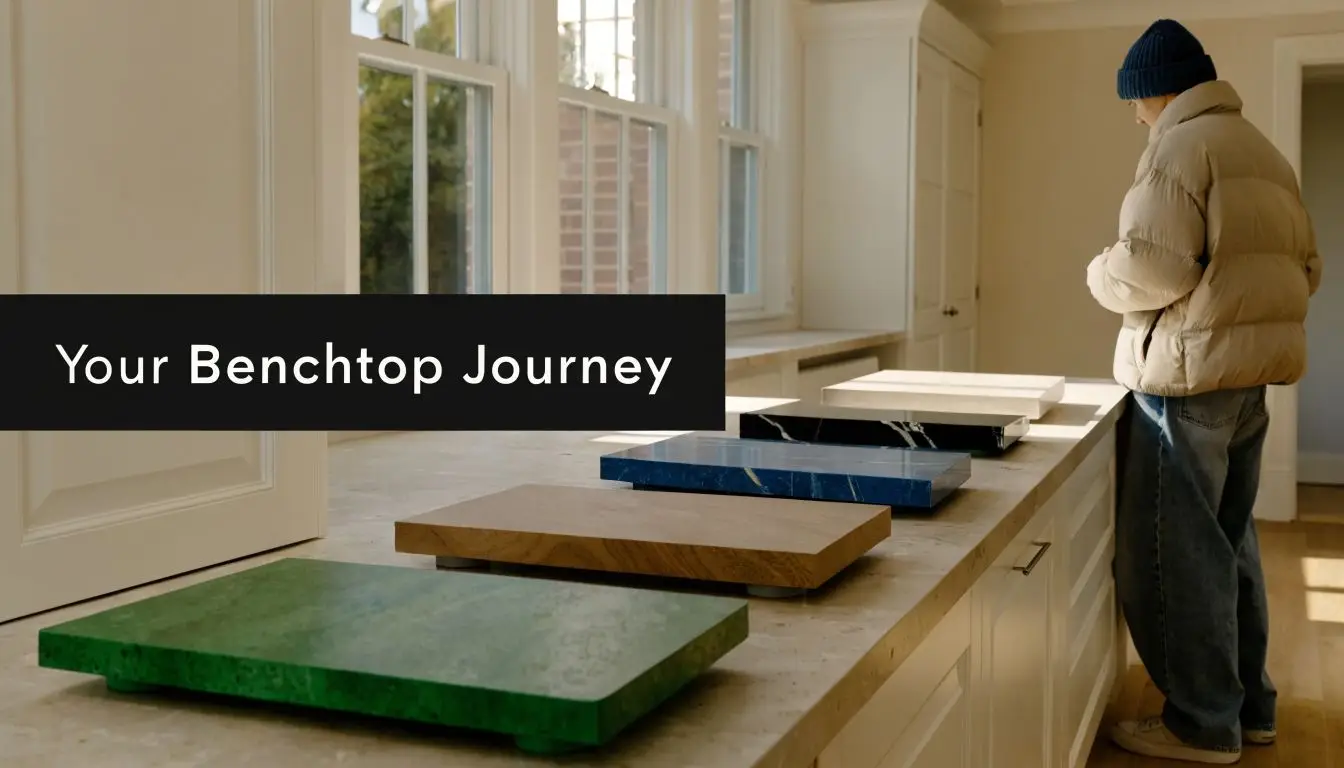
For Australian homeowners, the biggest change has already happened. A nationwide ban on the manufacture, supply, processing, and installation of engineered stone products took effect in Australia in 2024, following concerns about respirable crystalline silica exposure for workers, and that changed the benchtop market immediately for renovation clients who now need alternatives (Australian engineered stone ban overview).
What that means in a real renovation
In Victoria, that change affects more than product selection. It affects quoting, lead times, fabrication methods, and how your builder plans the job. A benchtop now has to be assessed through four lenses at once:
- Daily performance. Can it handle spills, prep work, and regular cleaning without becoming high-maintenance?
- Heat and impact tolerance. Some surfaces cope well with rough treatment, others need more discipline.
- Visual fit. Your benchtop has to work with cabinetry, flooring, splashbacks, and the overall tone of the home.
- Compliance and installation risk. A good-looking material isn't a good choice if it creates avoidable safety issues during fabrication.
The practical upside is that homeowners are looking harder at materials they might once have dismissed. Porcelain, laminate, stainless steel, natural stone, solid surface, and timber all have a place. The best option depends less on trends and more on how you cook, who uses the kitchen, and how much maintenance you're prepared to accept.
Practical rule: Start with function, then narrow by appearance. Renovations run more smoothly when the material suits the household before it tries to impress guests.
Get the basics right before choosing the surface
Benchtop material and benchtop layout should be decided together. Height, overhang, sink type, appliance positions, and junctions with tall cabinetry all affect what's practical. If you're still sorting proportions, it helps to understand standard benchtop height before locking in a material that may need a particular thickness or edge detail.
A smart benchtop choice in 2026 isn't just stylish. It's compliant, durable, and realistic for the way Victorian homes are renovated now.
A Practical Comparison of Modern Benchtop Materials
The fastest way to narrow kitchen benchtop materials is to stop asking which one is “best” and start asking what each one does well. Every material asks for a trade-off. Some give you low maintenance. Some give you warmth. Some handle heat better. Some look expensive without being expensive.
Before the 2024 ban, engineered stone was a dominant choice in Australia because of its consistency and low maintenance, and its removal has accelerated the adoption of alternatives with similar or stronger performance profiles (Australian benchtop market context). That's why Victorian homeowners are now seeing a much wider field of viable options.
Benchtop materials at a glance
| Material | Cost Guide | Durability | Maintenance | Best For |
|---|---|---|---|---|
| Porcelain | $$$ | High, especially against stains and scratches | Low | Busy family kitchens, modern homes, indoor-outdoor links |
| Laminate | $ | Good for general use, less forgiving with heat and impact | Low | Budget-conscious renovations, rentals, fast updates |
| Natural stone | $$$ | Strong, but depends on stone type and finish | Medium to high | Premium kitchens, feature islands, timeless designs |
| Timber | $$ | Moderate, can mark and move with use | High | Warm, character-led kitchens |
| Solid surface | $$ to $$$ | Good, but can mark and react to heat | Low to medium | Seamless contemporary designs |
| Stainless steel | $$$ | Very high in working kitchens | Low | Serious cooks, utility-focused kitchens, minimalist spaces |
Where each material fits
Porcelain has become one of the strongest post-ban choices because it suits modern design and doesn't ask for much day to day. It works especially well in homes where the island is a visual focal point and the kitchen opens into living space.
Laminate remains one of the most practical materials on the market. It won't give you the same slab feel as porcelain or natural stone, but good design can make it look far better than people expect. It's often the right answer for investment properties or staged renovations.
Natural stone still has a place when the brief is texture, variation, and a more premium feel. The catch is that natural stone asks for acceptance of movement, marking, or maintenance depending on the exact stone and finish.
Timber brings warmth that hard surfaces can't replicate. It softens white joinery, works beautifully in coastal and character homes, and feels welcoming. It also shows life quickly, which some people love and others regret.
Solid surface sits in a useful middle ground. It suits curved details, integrated looks, and cleaner contemporary lines. It's often chosen by homeowners who want a sleek finish without the visual weight of stone.
Stainless steel is about function first. In the right kitchen, it looks sharp and intentional. In the wrong one, it can feel cold. This is a material for people who value hygiene, heat tolerance, and utility over softness.
The strongest benchtop choice is usually the one that solves your daily frustrations, not the one that wins the showroom lighting test.
A quick filter for decision-making
If you're comparing options, use this shortlist approach:
- Choose porcelain if you want a refined look with low daily fuss.
- Choose laminate if budget discipline matters and you still want style flexibility.
- Choose natural stone if unique pattern and premium character matter more than perfect uniformity.
- Choose timber if warmth is essential and you don't mind upkeep.
- Choose stainless steel if performance and hygiene come first.
- Choose solid surface if you like a smooth, contemporary finish.
That usually narrows the field from six options to two.
Deep Dive Into Leading Benchtop Choices
Once a shortlist is in place, the actual decision-making starts. At this stage, broad preferences need to meet daily reality. A benchtop can look ideal on a sample board and still be wrong for the household using it.
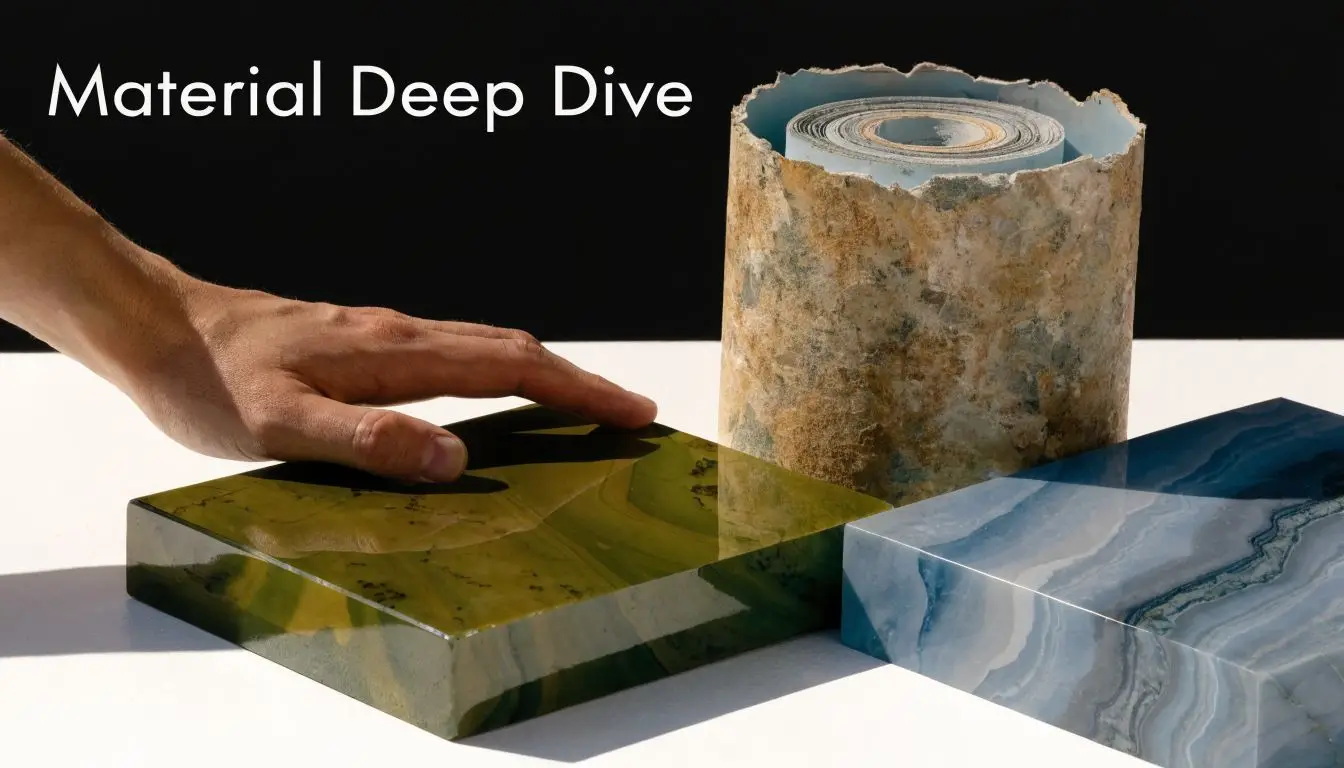
The most important technical trade-offs are porosity and heat tolerance. Non-porous materials such as porcelain and stainless steel resist stains and bacteria, while stainless steel has the highest heat tolerance. Laminate and solid surface need more care around hot cookware.
Porcelain for low fuss and clean lines
Porcelain is one of the easiest materials to recommend when a homeowner wants a crisp, modern kitchen that's simple to live with. Because it's low-porosity, it handles everyday spills well and suits households where the kitchen gets used properly, not just admired.
It also works nicely in Victorian homes with indoor-outdoor flow. If the benchtop extends visually toward an alfresco zone or large rear opening, porcelain usually holds that clean visual line better than softer, more reactive surfaces.
What doesn't work so well is careless impact on exposed edges. Thin-profile designs look sharp, but they need sensible detailing and careful installation. On family jobs, I often steer clients toward edge treatments that look refined without creating a fragile corner at every busy point of the kitchen.
Porcelain suits you if:
- You want low maintenance and don't want to think much about sealing or special cleaning.
- Your kitchen gets heavy use from kids, cooking, and regular traffic.
- You like a contemporary finish with minimal visual noise.
- You want continuity between benchtop, splashback, and sometimes island cladding.
Laminate for smart value
Laminate is often underestimated because people remember older products that looked flat or dated. Current laminate options can work very well when the joinery design is strong and the kitchen layout is well resolved.
Its biggest advantage is value. If you want to direct more of the renovation budget into cabinetry, appliances, layout changes, or another stage of work later, laminate keeps pressure off the benchtop allowance. That can matter a lot in a whole-home plan where the kitchen is only one part of the spending.
The limits are straightforward. Laminate is less forgiving with heat, and once it's badly damaged, repairs are rarely invisible. It's a material that performs best when the household uses trivets, chopping boards, and a bit of common sense.
If your renovation budget has to stretch across several priorities, laminate can be the material that makes the rest of the project possible.
Natural stone for character and visual depth
Natural stone appeals to homeowners who don't want a perfectly uniform surface. Every slab has movement, variation, and a more organic look. In a kitchen with simple cabinetry, that can be exactly what gives the room personality.
This is also where expectations need to be mature. Natural stone isn't for people who want a surface to look untouched forever. Depending on the stone you choose and the finish you prefer, there may be more maintenance, more visible change over time, or a greater need for prompt cleaning after spills.
That doesn't make it impractical. It just means it suits a homeowner who values natural variation enough to accept that the benchtop may develop some history.
Stainless steel for serious function
Stainless steel is still unmatched if your first question is, “Can I put hot cookware down without worrying?” It's highly practical, hygienic, and honest. There's no pretending it's precious.
The design challenge is balance. Full stainless can feel hard in some homes, especially if the rest of the kitchen is stark. It usually works best when paired with warmer joinery, softer flooring, or a more restrained palette elsewhere.
Best uses for stainless steel include:
- Cooking-focused kitchens where heat and cleanup matter more than softness
- Butler's pantries and secondary prep zones
- Minimalist renovations where a professional look suits the architecture
A well-chosen benchtop should feel right on Monday morning, not just on handover day.
Budgeting Your Kitchen Benchtop in Victoria
Most homeowners ask about cost early, but the better question is where the benchtop sits in the whole renovation budget. A cheap surface that doesn't last is poor value. An expensive surface that forces compromises everywhere else can also be the wrong move.
In Victorian projects, benchtop pricing usually rises or falls based on more than the material itself. Fabrication complexity, cut-outs, edge details, slab handling, access to the property, splashback returns, and installation conditions all affect the final figure. That's why two kitchens with the same footprint can still price very differently.
Think in total project terms
When reviewing quotes, look beyond the slab or sheet cost. The useful figure is the all-in installed cost. That typically includes site check, measure, template, fabrication, delivery, installation, cut-outs, and finishing around sinks, cooktops, and joins.
A practical budgeting approach is to split benchtop thinking into three bands:
- Value-first choices such as laminate, where the material helps control overall spend.
- Balanced mid-range choices such as some solid surface or timber applications, where appearance and function sit in the middle.
- Premium choices such as porcelain, natural stone, or stainless steel in custom applications, where fabrication and handling often add complexity.
Where to spend and where to hold back
If the kitchen layout already works well, a benchtop upgrade can deliver a major visual change without rewriting the whole room. But if you're changing cabinetry, plumbing points, appliances, and flooring, the benchtop has to compete with bigger structural priorities.
That's where discipline matters. A cleaner, cost-effective benchtop choice can free up budget for items that affect daily use more than people expect, such as better drawer hardware, improved storage, lighting, or a stronger ventilation setup. It can also leave room for later works elsewhere in the home, including modern bathrooms or future designer bathrooms that carry the same finish language.
A renovation budget works best when every surface earns its place. Benchtops shouldn't consume money that the layout or storage needs more.
Use the kitchen budget as part of a broader plan
Many clients don't renovate one room in isolation. They stage work over time. If that sounds familiar, it helps to understand the wider cost of a new kitchen before deciding whether the benchtop should be the hero item or just one solid, sensible part of the package.
The best budgeting decisions usually come from clearly ranking priorities. If you cook constantly, spend more on performance. If you're preparing a rental or resale update, durability and visual neatness may matter more than premium material prestige.
Matching Your Benchtop to Your Lifestyle and Design
The right benchtop should match the way the kitchen is used, not the way it looks in a photo. Households live very differently. Some kitchens cop school bags, meal prep, and constant wiping. Others are calmer, more design-led spaces used mainly for entertaining. The material has to suit that rhythm.
Best matches by household type
A busy family kitchen usually benefits from low-maintenance, lower-porosity materials and edge details that don't chip easily. Consequently, porcelain often earns its place, while some natural stones can become frustrating if the household expects a no-fuss surface.
A keen entertainer's kitchen can justify a more expressive material if the owner values visual impact and is willing to maintain it properly. Feature islands, bolder veining, and waterfall ends make sense when the kitchen is part workspace, part social centre.
A rental property or investment update usually needs a different mindset. Here, visual neatness, replacement simplicity, and manageable cost often matter more than statement finishes. Laminate frequently performs well in this category because it keeps the renovation practical.
A design-led home renovation might use the benchtop as one element in a much bigger palette. In those homes, the material has to relate to joinery colour, floor tone, handles, lighting, and adjacent rooms.
Design decisions that matter more than people think
Material is only half the story. The way it's detailed changes the result.
- Waterfall ends make a kitchen feel more architectural, but they increase the importance of good edge selection and visual alignment.
- Splashback continuity can create a calm, premium feel when the benchtop material carries upward in a controlled way.
- Thickness and profile influence whether the kitchen feels refined, chunky, minimal, or heavy.
- Colour temperature matters. Warm benchtops can soften white joinery, while cooler surfaces can sharpen a more contemporary palette.
If you're still selecting joinery finishes, it helps to look at kitchen cabinets materials alongside the benchtop so the whole composition works together.
A well-designed kitchen rarely relies on one expensive surface. It succeeds because all the materials agree with each other.
Think beyond the kitchen
A kitchen renovation often sets the tone for the next part of the house. If bathroom renovations are on your longer-term list, keep that in mind now. You don't need to match rooms exactly, but there should be some relationship in tone, texture, or finish quality.
That's how homes feel consistent. A porcelain-look kitchen with sharp black details may lead naturally into modern bathrooms. A warmer timber-and-stone kitchen may point you towards softer, more layered designer bathrooms later on. Good design continuity doesn't happen by accident. It starts with material choices that have range.
Installation Renovation and Compliance Considerations
The benchtop selection isn't finished when you choose the material. The installation pathway matters just as much. A good result depends on measure, fabrication, transport, fitting, and the way trades manage risk inside an occupied home.
In Australian kitchens, fabrication can raise serious safety issues because some materials generate hazardous dust such as respirable crystalline silica during cutting. Professional installers use controlled methods including wet-cutting and on-tool extraction, which is why choosing a qualified, compliant builder is critical for health and safety during a renovation.
What the process usually looks like
For most renovations, the sequence is fairly consistent:
- Final cabinet installation happens first, because benchtops are measured to the finished base units.
- Check measure or templating confirms exact dimensions, cut-outs, wall irregularities, and overhangs.
- Fabrication takes place off site where material handling and cutting can be controlled properly.
- Delivery and installation follow once the benchtop is ready and the room is prepared.
- Final fitting includes sinks, taps, sealing at junctions, and clean-up.
The key point is that benchtops are not a loose item that can be guessed early and dropped in later. They depend on precision.
Why builder choice matters
This part of the job is where professionalism shows. A compliant renovation team plans access, protects finishes, coordinates trades, and understands the fabrication limits of each material. That's especially important in occupied Victorian homes where dust control and staging affect the whole household.
If you're comparing renovation providers, ask practical questions:
- How do they handle templating and site tolerances
- What fabrication controls apply to the chosen material
- Who manages the sequencing between cabinets, plumbing, and benchtop install
- Are they operating to an appropriate professional standard, such as registered builders unlimited where the project scope requires it
For homeowners who want a single company to manage design, documentation, and renovation coordination, SitePro Bathrooms provides end-to-end kitchen and bathroom renovation services, including 3D design and construction management, which can simplify benchtop planning within a larger project.
A benchtop install should feel organised from the client side. If the process feels vague before work starts, it usually gets harder once the room is out of action.
Your Benchtop Questions Answered
Can I replace just the benchtop and keep the existing cabinets
Sometimes, yes. It depends on cabinet condition, level, layout, and whether the new material requires different support or creates issues around sinks, cooktops, or wall lines. Older cabinets can make a benchtop-only upgrade less straightforward than it sounds.
If the joinery is structurally sound and the kitchen layout still works, replacing only the benchtop can be a sensible refresh. If the cabinets are tired, out of square, or poorly configured, it often makes more sense to treat the benchtop as part of a broader kitchen renovation.
Which benchtop is best for a family that cooks every day
In most cases, low-maintenance and low-porosity materials are the safest starting point. They tend to be easier to clean and less stressful to live with. For a busy family, the wrong benchtop is usually one that demands too much care or punishes minor mistakes.
The better question is what kind of household discipline you have. If no one reliably uses trivets or cutting boards, don't pick a material that depends on perfect behaviour.
Is timber a good idea in a kitchen
It can be, but only for the right owner. Timber looks warm and inviting, and it works beautifully in certain homes, especially where the kitchen needs softness. It also needs ongoing care and is less forgiving around water and wear.
Many homeowners like timber in smaller applications, such as an island accent or a seating section, rather than across every work surface.
How do I make the kitchen feel consistent with future bathroom renovations
Focus on finish language, not direct matching. Repeat the same overall temperature and mood. If the kitchen is clean-lined and restrained, your future bathroom renovations will usually feel more coherent if they follow that same approach. That's where new bathroom ideas often become clearer. You're not starting from scratch. You're extending an existing design direction.
Are designer bathrooms and kitchens supposed to match exactly
No. Exact matching can feel forced. Good homes share a common thread instead. That might be a preference for soft neutrals, warm timber notes, brushed metal finishes, or a sharper modern look. Designer bathrooms often feel connected to the kitchen because the material choices belong to the same house, not because they copy each other.
What's the safest way to future-proof my benchtop choice
Keep the design simple enough to age well and practical enough to suit changing needs. Highly specific trends date faster than balanced material selections. Future-proofing usually comes from three things:
- Choose a material you can live with, not one you'll baby.
- Keep edge details and colours disciplined, so the kitchen doesn't age too quickly.
- Think whole-home, especially if modern bathrooms or other updates are likely later.
Start Your Transformation with a 3D Design
A good benchtop choice balances performance, maintenance, visual fit, budget, and compliance. In Victoria, that decision now needs even more care because material selection and safe installation are closely linked.
The smartest renovations don't rely on guesswork. They test proportions, finishes, layout, and practical use before construction starts. That's why a 3D design stage is so useful. It lets you see how the benchtop works with cabinetry, splashbacks, flooring, and the rest of the room before anything is ordered.
If you're weighing kitchen benchtop materials and want clarity before committing, the next step is a personalized renovation quote and a detailed 3D concept. That gives you a realistic view of what will work in your home, what should be avoided, and how to build a kitchen that still feels right years from now.