
• siteprobathrooms

Mid Century Modern Bathtub: Your Guide to a Timeless Look

You're probably in the same spot as many Victorian homeowners. You've saved a folder full of bathroom inspiration, you know you want something cleaner and calmer than a standard white box renovation, and one feature keeps showing up: a sculptural tub with simple lines, warm finishes around it, and a room that feels both retro and current.

That pull makes sense. A mid century modern bathtub sits in a sweet spot between statement piece and practical fixture. It can soften a hard-edged room, anchor the layout, and give older homes a design language that feels more intentional than trend-driven. The challenge is that online inspiration rarely shows what happens behind the walls, under the floor, or at the bathroom door where a large tub still has to get inside the house.

In Victorian homes, that gap matters. Period homes and post-war homes often ask for different solutions, but both can benefit from the same discipline: choose a style with staying power, then adapt it to modern building standards, modern waterproofing, and how people live. That's why the mid-century look keeps resurfacing in bathroom renovations. It isn't fussy, it isn't overloaded, and it works well when you want a room to feel organised rather than decorated.

A good result starts by separating the look from the fantasy. The best mid-century bathrooms aren't just beautiful. They're easy to clean, easy to move through, and shaped around what the room can realistically support. If you're still deciding on colours, finishes, or overall direction, looking through bathroom decor ideas for Australian homes can help clarify what feels timeless versus what only looks good in a photo.

Introduction Embracing Timeless Bathroom Design

A homeowner might begin with one simple goal: replace an outdated bath and freshen the room. Then the scope expands. The vanity feels too bulky. The tiles feel cold. The layout wastes space. Before long, the project isn't about swapping fixtures. It's about creating a bathroom that feels composed.

That's where mid-century modern design earns its place. It gives you a framework, not just a mood board. Clean lines, uncluttered surfaces, practical storage, and a tub that looks deliberate rather than ornamental. For homeowners searching for new bathroom ideas, that combination is powerful because it avoids both extremes. It doesn't feel old-fashioned, and it doesn't feel sterile.

Why the style still works

The appeal isn't nostalgia alone. Mid-century bathrooms suit the way people want to use a bathroom now. They favour openness, visual calm, and materials that read as durable rather than delicate. In a family home, that usually translates into better daily use. In a smaller room, it can make the space feel lighter without stripping away warmth.

A well-chosen tub doesn't carry the whole room by itself. It works because the vanity, tapware, tile scale, and circulation all support the same idea.

The bathtub becomes the centrepiece because it expresses the style so clearly. A freestanding oval, a low-profile built-in, or a softened rectangular form can all work. The common thread is restraint. If the tub shape is strong, the rest of the room should settle around it.

What homeowners often get wrong

Most mistakes happen when the tub is chosen first and the room is forced to suit it later. That's when circulation tightens, storage disappears, and the bathroom starts looking like a showroom photo copied into the wrong footprint.

The better approach is to ask a few grounded questions early:

  • How do you bathe now. Quick practical baths for children, long soaking baths, or mostly showers with a bath as a secondary feature.
  • How much floor area can the room spare. A freestanding bath needs breathing room around it to look right.
  • What should the room feel like. Warm timber-led, crisp architectural, or softly retro.
  • What standard must it meet. Daily family use, guest bathroom expectations, or a future-proofed design with easier access.

That's the core promise of this style. It gives you a timeless visual language, but it only succeeds when beauty and function stay linked.

The Hallmarks of Mid-Century Modern Bathroom Style

Mid-century modern isn't a catch-all term for any bathroom with a timber vanity and a curved bath. It has a specific design logic. In Australia, it's best understood as a post-World War II design response from the 1945 to late 1970s period, with an emphasis on clean lines and materials such as metal, glass, and plastic. The look was shaped by practicality, not ornament, and that's part of why it still feels current. The background on that era and material shift is outlined in this history of Danish and mid-century design influences.

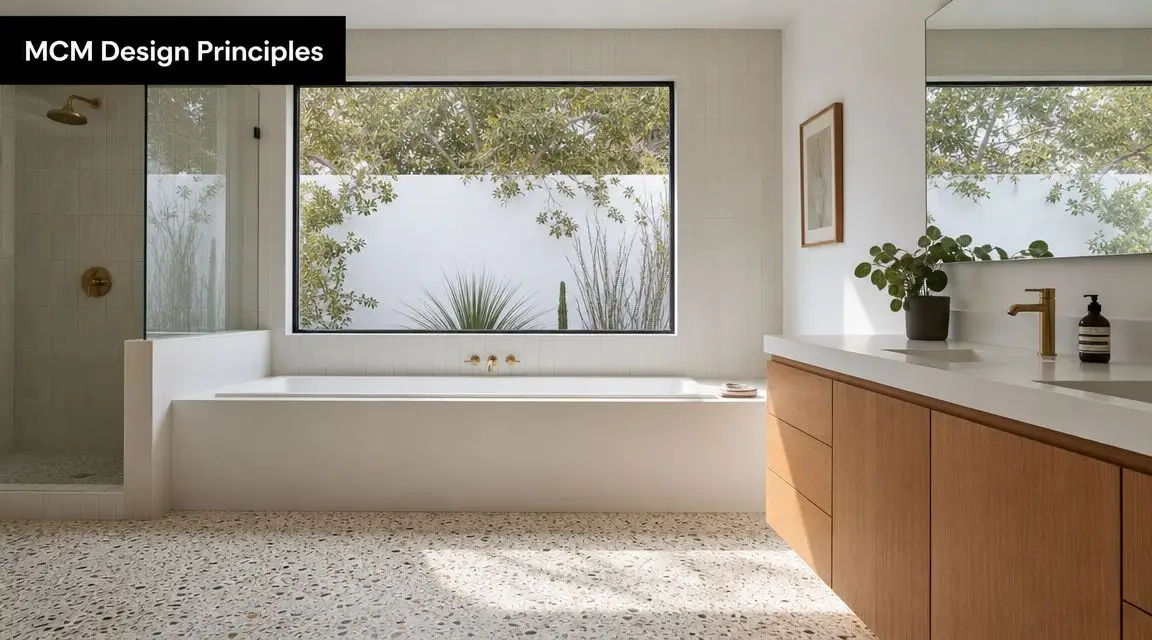
A modern bathroom with a white bathtub, light wood vanity, and terrazzo flooring under a large window.

That same historical thread matters for bathtubs. The aesthetic developed around the modern enamel-coated cast iron tub, first standardised in 1883, which made durable and easier-to-clean bath fixtures practical for later homes. In other words, the style was never about lavish detailing. It was about modern living becoming more achievable.

What defines the look

A proper mid-century bathroom usually includes a few recognisable traits:

  • Clean geometry. Not severe, but disciplined. Lines are simple, and the room avoids visual clutter.
  • Organic contrast. Straight edges are often balanced with curved mirrors, rounded tubs, or softer lighting forms.
  • Warmth through material. Timber tones, tactile surfaces, and muted earthy colours keep the room from feeling clinical.
  • Minimal ornament. The design relies on proportion and finish, not decorative extras.

Many so-called modern bathrooms tend to drift away from the style. They might be sleek, but they miss the warmth. Mid-century rooms need some softness and some human scale. A cold monochrome palette with oversized glossy surfaces can feel contemporary, but it won't necessarily feel mid-century.

The role of functionality

The style came out of a period that valued practical living. That means function shouldn't be hidden as an afterthought. Floating vanities, open visual lines, and simple storage solutions fit the aesthetic because they make a bathroom easier to use.

A few elements usually work well:

  • Wall-hung or visually light vanities that keep more floor visible
  • Frameless glass where a shower screen is needed
  • Simple tapware silhouettes rather than ornate traditional fittings
  • Limited material changes so the room feels calm instead of busy

Practical rule: If every item in the room is trying to be the statement piece, the bathroom loses the mid-century character immediately.

What feels authentic in a Victorian renovation

Victorian homeowners often worry that a mid-century look will clash with the house. In practice, it can work extremely well if you avoid turning the bathroom into a movie set. The goal isn't strict historical recreation. It's a designer bathroom that borrows the era's discipline and ease.

That usually means choosing a restrained bath shape, a vanity with warm natural character, and finishes that don't fight each other. Authenticity comes less from copying a decade and more from respecting the principles that made the style durable in the first place.

Choosing Your Perfect Mid-Century Modern Bathtub

The tub is the anchor, but not every tub that looks right on a screen works in a real renovation. The best choice depends on how much space you have, how you use the bathroom, and how much visual weight the room can carry.

A mid century modern bathtub generally falls into two broad categories. There's the freestanding sculptural bath that acts as the hero, and there's the integrated bath that keeps the room tighter and more architectural. Both can suit the style. They solve different problems.

Freestanding or built-in

A freestanding tub usually gives the strongest mid-century expression. It reads as furniture-like, especially when paired with a floating vanity and pared-back wall finishes. In a larger room, that's often the right move.

In a tighter footprint, it can backfire. You lose practical floor area around the bath, cleaning gets harder if clearances are too tight, and the tub can dominate a room that really needs storage or circulation more than sculpture.

A built-in or alcove tub can be the smarter choice when:

  • The bathroom is compact and every centimetre needs to work
  • You need a shower over bath arrangement or a more family-focused layout
  • The room already has strong architectural features and doesn't need another focal point
  • You want the bath to support the room rather than lead it

Material matters more than many buyers expect

Material changes how the bath feels, how it performs, and what the installation asks of the house. For Australian renovations, a sound specification is often a freestanding acrylic or cast-stone tub with enough internal volume for a proper soak without becoming excessive. Common modern bathtubs hold around 80 gallons (302 L), while a typical bath uses 35 to 50 gallons (132 to 189 L), according to bathtub dimensions and capacity guidance. That affects hot water demand and filling behaviour, so the material choice shouldn't be made on appearance alone.

Mid-Century Modern Bathtub Material Comparison

Material Heat Retention Weight Maintenance Typical Cost
Acrylic Good for everyday use. Often improved further by quality construction Lighter and easier to handle on site Easy to clean, generally straightforward to maintain Usually more budget-friendly
Cast stone Typically feels more substantial and holds warmth well Heavier than acrylic Smooth finish, but correct cleaning products matter Usually positioned in a higher price range
Enamelled cast iron Traditionally solid and durable Very heavy, often the hardest to bring into older homes Hard-wearing surface, but chips need attention Often premium once product and installation demands are considered

How I'd narrow it down

If the priority is a strong visual statement with easier installation, acrylic is often the practical winner. If the priority is tactile quality and a more substantial feel, cast stone often justifies the extra planning. Cast iron suits some projects, but it asks a lot from access, structure, and labour.

Ask yourself three things before deciding:

  1. Will this bath still make sense after the novelty wears off
  2. Can the room support the shape without becoming awkward
  3. Does the rest of the renovation budget still work once the tub is selected

The best tub usually isn't the most dramatic one. It's the one that makes the whole room feel resolved.

Practical Planning for Your Bathtub Installation

A bath can look perfectly proportioned in a showroom and still be wrong for your home. Installation planning is where many bathroom renovations either stay on track or start generating expensive corrections.

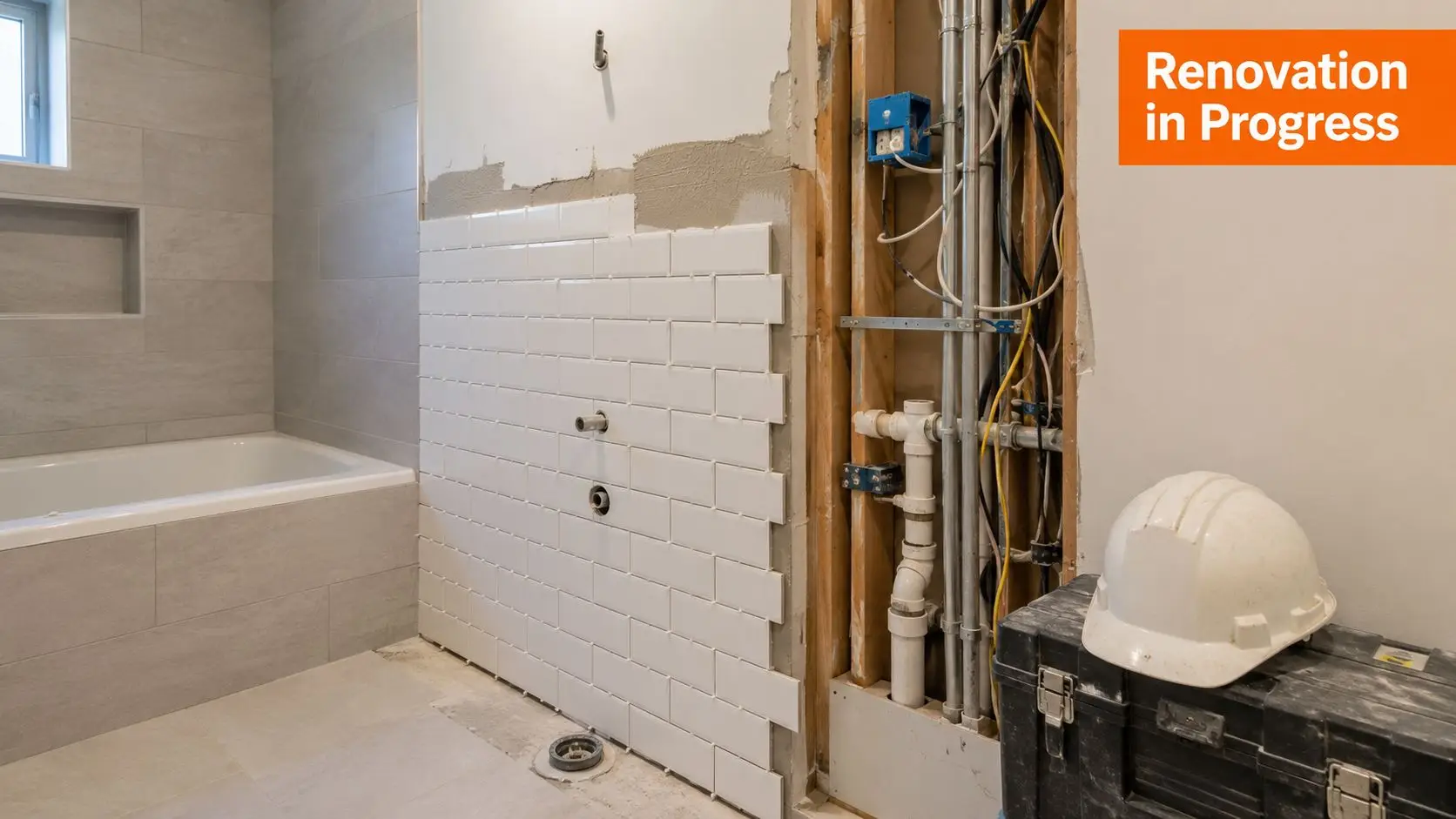
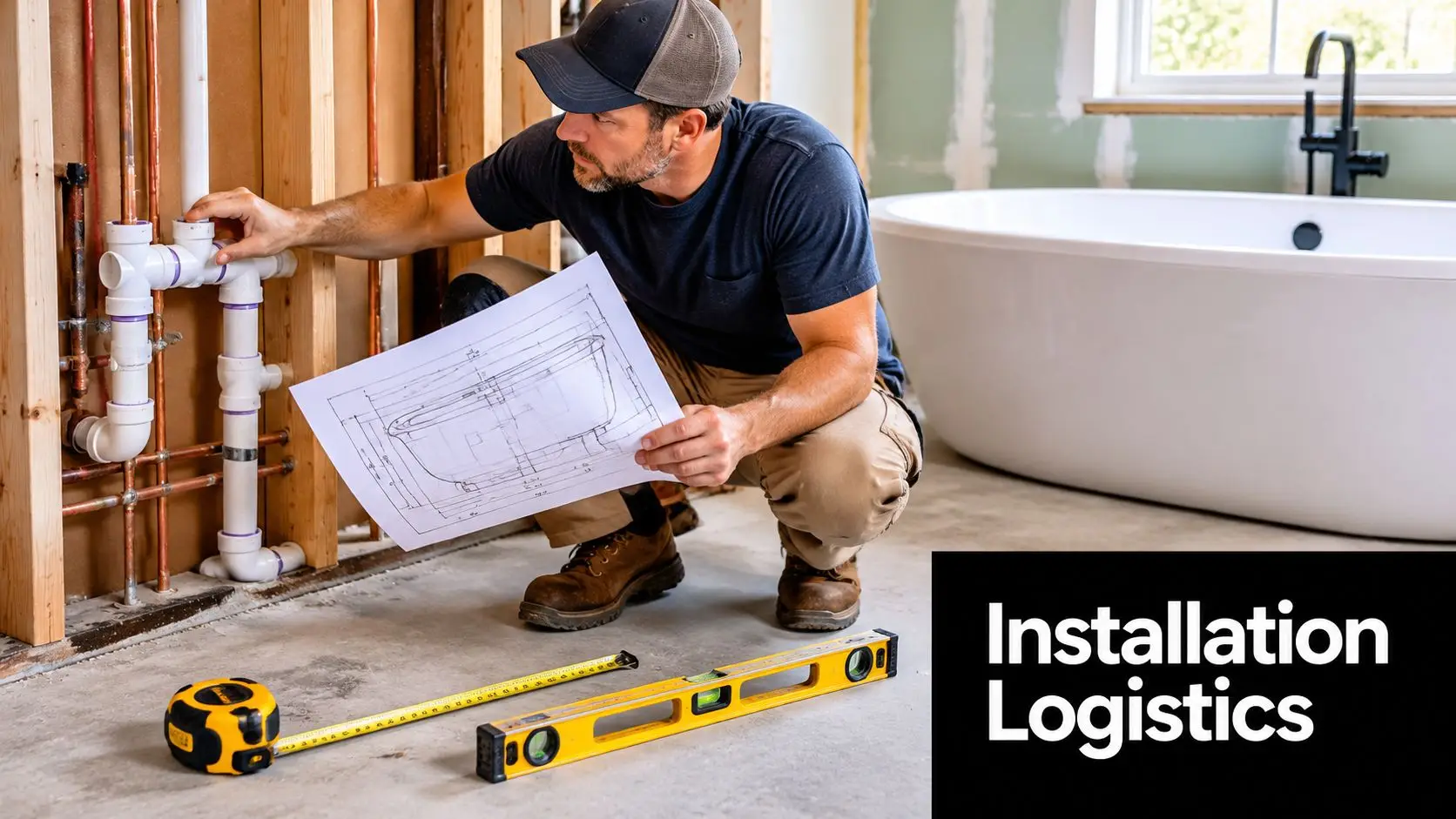
A professional plumber checks pipes while referencing a bathroom blueprint in a house under construction.

The first check is basic but often skipped. Measure not only the bathroom, but also the path into it. Door openings, hallway turns, stair access, and wall projections can all become the actual limiting factor. A tub that fits the room on paper may still be impossible to deliver without damage or major inconvenience.

Clearance is part of the design

Mid-century bathrooms work best when they feel open. That effect comes from disciplined spacing, not from empty styling. Design guidance recommends at least 15 inches (381 mm) from either side of the toilet to the centreline, with 36 inches total toilet niche width preferred for comfort, as outlined in this mid-century bathroom design guide. The same guidance stresses strong ventilation to manage humidity and protect finishes.

Those numbers matter because a beautiful bathroom still has to function when someone is stepping out of the bath, opening a vanity drawer, or helping a child at the basin. Tight clearances quickly make a space feel cheap, no matter how refined the fixtures are.

Check these before you approve the layout

  • Bath access zone. Make sure entry and exit feel stable, not squeezed beside a vanity corner or toilet pan.
  • Toilet spacing. Respect the recommended clearances so the room doesn't become uncomfortable in daily use.
  • Screen and door swing. A bath edge, shower screen, and room door can clash if they're all competing in the same space.
  • Ventilation path. Moisture control protects timber looks, painted finishes, and general longevity.

Good bathroom planning isn't about fitting everything in. It's about making every movement in the room feel natural.

Water volume and hot water reality

A larger soaking tub changes the demands on the plumbing system. As noted earlier, common modern bathtubs can hold 302 L, and a typical bath uses 132 to 189 L when filled for use. That has a direct effect on fill time, hot water availability, and whether the water temperature stays comfortable through the fill.

If the selected tub is generous in capacity, you may need to review hot water access and the strategy for delivering stable mixed water. In such cases, homeowners benefit from experienced trades and, in many projects, from understanding why using a registered builder matters for your bathroom renovation. The visual choice and the technical system have to be solved together.

Structure and moisture control

Heavy tubs, water load, and occupant load all sit on one floor system. In older homes, especially where bathrooms have been altered before, that deserves proper assessment. The same goes for ventilation. A mid-century palette often includes warm timber tones and refined finishes, and they won't look good for long if steam lingers and moisture sits where it shouldn't.

The smartest bathtub choice is the one the room can support physically, hydraulically, and spatially.

Integrating Your Tub into a Bathroom Renovation

A bathtub replacement is rarely just a bathtub replacement. Once the old fixture comes out, the room often reveals why the bath looked awkward in the first place. Plumbing may sit in the wrong position, the floor may need correction, waterproofing may be due for a full rebuild, and the layout may need to shift to make the new bath work properly.

That's especially true when you're fitting a mid-century shape into an Australian renovation. A frequently missed issue is practicality. Inspiration images tend to show large rooms with generous empty floor space, but many Victorian homes need careful redesign so a sculptural tub doesn't compromise circulation or accessibility. That fit-out reality is highlighted in this overview of mid-century bathtub practicality.

The real project sequence

In a properly managed renovation, the bath decision affects several stages:

  1. Demolition and strip-out
    The old room is removed so the actual substrate, plumbing positions, and any hidden issues can be assessed.

  2. Layout confirmation
    At this stage, a bath stays, shifts, or gets replaced with a different type because the room's best use becomes clearer.

  3. Plumbing rough-in
    Freestanding baths often need different waste and tap arrangements from built-in units. That can mean more floor planning than homeowners expect.

  4. Waterproofing and levelling
    A freestanding bath especially needs a properly prepared base. If the floor falls away or the waterproofing detail is rushed, the final finish suffers.

  5. Tiling, fit-off, and final placement
    The visible stage looks simple, but it only works well when the hidden work has been coordinated carefully.

Where projects commonly go wrong

The most common problem isn't bad taste. It's underestimating what the chosen bath asks of the room. A freestanding filler might end up in an awkward position. A bath may look balanced in elevation drawings but crowd the circulation path in real life. Or the room may lose practical storage because too much area has been handed over to the feature piece.

For homeowners looking at registered builders unlimited and qualified trades, the value is straightforward. Compliance, sequencing, and accountability matter more when plumbing, structure, waterproofing, and finish quality all intersect in one compact space.

The best renovation results don't happen because the bath looked good in a brochure. They happen because every trade solved the same layout problem in the same way.

A mid-century bathroom should feel effortless. Getting there usually isn't effortless at all. It takes coordination.

Styling and Pairing for a Cohesive Look

Once the tub is in place, the room still needs visual discipline. Mid-century style falls apart when the supporting finishes pull in unrelated directions. A sculptural bath with ultra-ornate tapware, oversized stone veining, and high-gloss cabinetry won't read as coherent. It will read as several trends sharing one room.

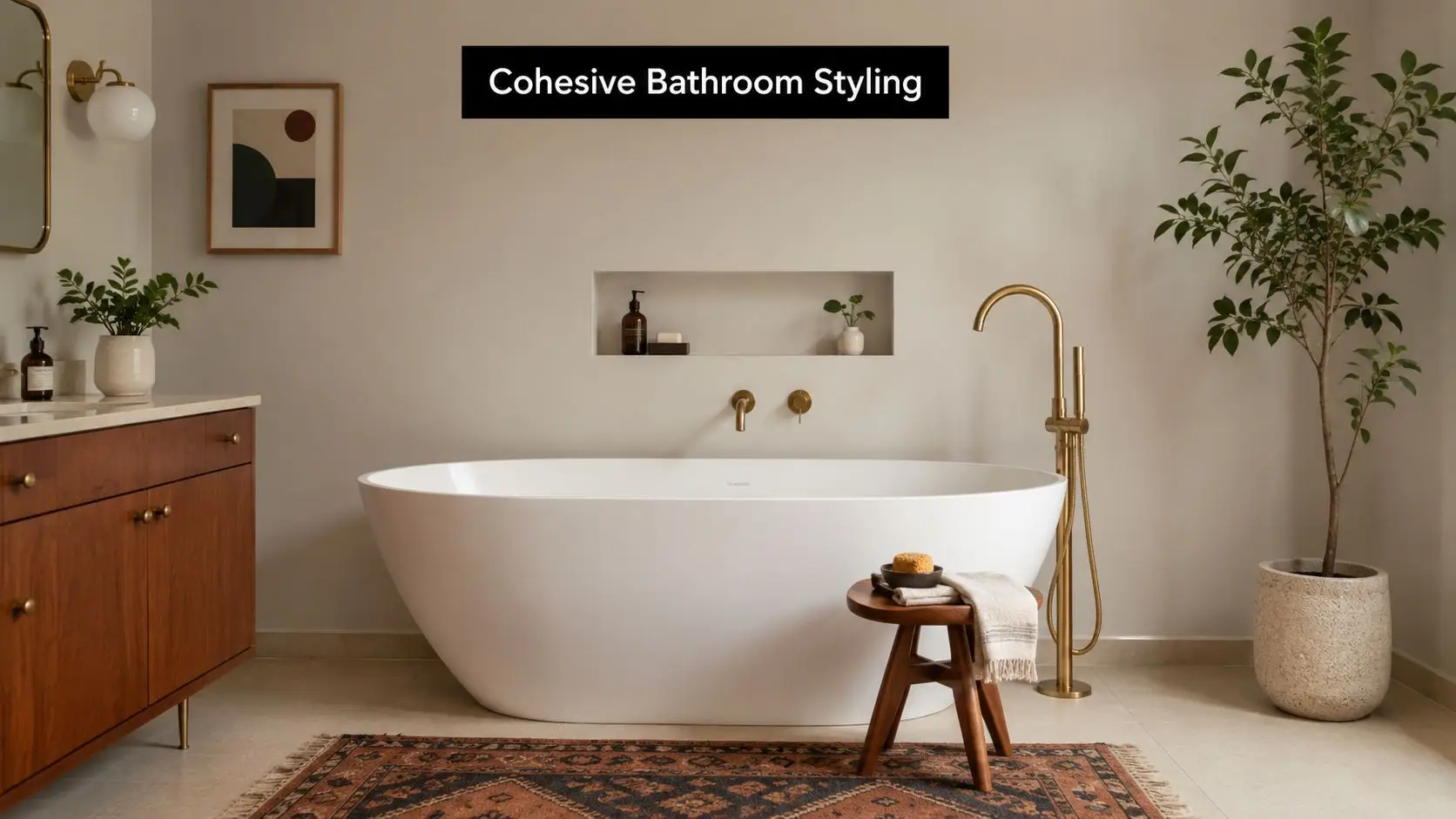
A modern bathroom with a freestanding white bathtub, wooden stool, rug, and brass fixtures on beige walls.

The strongest pairings usually rely on contrast with restraint. A white bath against warm timber-look porcelain. A soft terrazzo floor under a simple floating vanity. Brass or chrome tapware that adds definition without dragging the room into either industrial or traditional territory.

Tiles that support the bath

Tile choice should frame the tub, not compete with it. For many designer bathrooms, that means one quiet field tile and one material with character.

Good options include:

  • Simple ceramic wall tiles for a crisp backdrop
  • Terrazzo-style flooring for period flavour without fussiness
  • Timber-look porcelain where you want warmth without real timber maintenance concerns
  • Geometric feature use in moderation, such as a niche, splashback, or small floor zone

If you're refining combinations, guidance on choosing bathroom tiles can help narrow down what works visually and practically in wet areas.

Tapware, colour, and furniture tone

The vanity often determines whether the room feels authentically mid-century or just broadly contemporary. Warm timber tones usually help, especially if the grain is visible and the form is simple. Floating vanities work particularly well because they keep sightlines clear.

Tapware and accessories should follow the same discipline:

  • Brushed brass adds warmth and suits earthy palettes
  • Polished chrome keeps the room crisp and timeless
  • Matte black can work, but it's easiest to overdo in a mid-century scheme

For colour, think muted and grounded. Off-white, clay, olive, ochre, soft teal, warm beige, and walnut-adjacent tones all sit comfortably in this style. One accent usually reads better than three.

Small details that lift the room

The finishing layer matters more than people expect. A mirror with a gentle curve, a wall light with a simple globe form, or a timber stool beside the bath can reinforce the style without cluttering the room.

A few details worth considering:

  • Keep accessories sparse so the architecture and materials stay visible
  • Choose soft textiles in earthy or neutral tones rather than bright pattern overload
  • Use greenery carefully if the room has natural light and enough ventilation
  • Repeat one finish across hardware so the room feels organised

A cohesive bathroom doesn't need more features. It needs fewer competing decisions.

That's what makes the mid-century look so effective. It feels designed, but it doesn't feel overworked.

Your Highett Bathroom Renovation Partner

A mid-century bathroom looks simple when it's done well. Behind that calm finish sits a lot of decision-making. The tub has to suit the room. The layout has to support movement. The plumbing, waterproofing, and construction all have to line up with the design intent.

That's where a local renovation specialist makes the process easier. For homeowners in Highett and across Victoria, SitePro Bathrooms delivers end-to-end bathroom renovations with a focus on planning, build quality, and practical outcomes. That matters when you're trying to turn inspiration into a room that is practical in an existing home.

Screenshot from https://siteprobathrooms.com.au

The advantage of a coordinated team is consistency. Design choices, fixture selection, layout planning, and on-site execution are handled as one connected job rather than a string of disconnected decisions. That's particularly valuable when a mid century modern bathtub is central to the renovation, because style, structure, and services all need to support the same final result.

If you're exploring new bathroom ideas, updating one tired room, or planning a full renovation with the guidance of experienced designers and builders, SitePro Bathrooms offers that local expertise. You can browse completed projects, review the renovation approach, and take the next step through SitePro Bathrooms.


A well-designed mid-century bathroom doesn't chase attention. It earns it through proportion, clarity, and smart planning. If that's the kind of room you want, start with the bathtub, but don't stop there. The best results come when every surrounding decision is just as deliberate.

  • siteprobathrooms

Bathroom and Laundry Renovation

If you're in Highett looking at a tired bathroom on one side and a cramped laundry on the other, you're probably already feeling the same frustration most homeowners describe. The bathroom doesn't function well, the laundry steals circulation space, storage is poor, and every quick fix seems to make the whole area feel more awkward.

A combined renovation can solve that, but only when it's approached as a practical building project, not just a style exercise. The best outcomes come from getting the layout right, locking in selections early, and planning the build so your home stays as workable as possible while trades are on site.

Envisioning Your New Combined Bathroom and Laundry

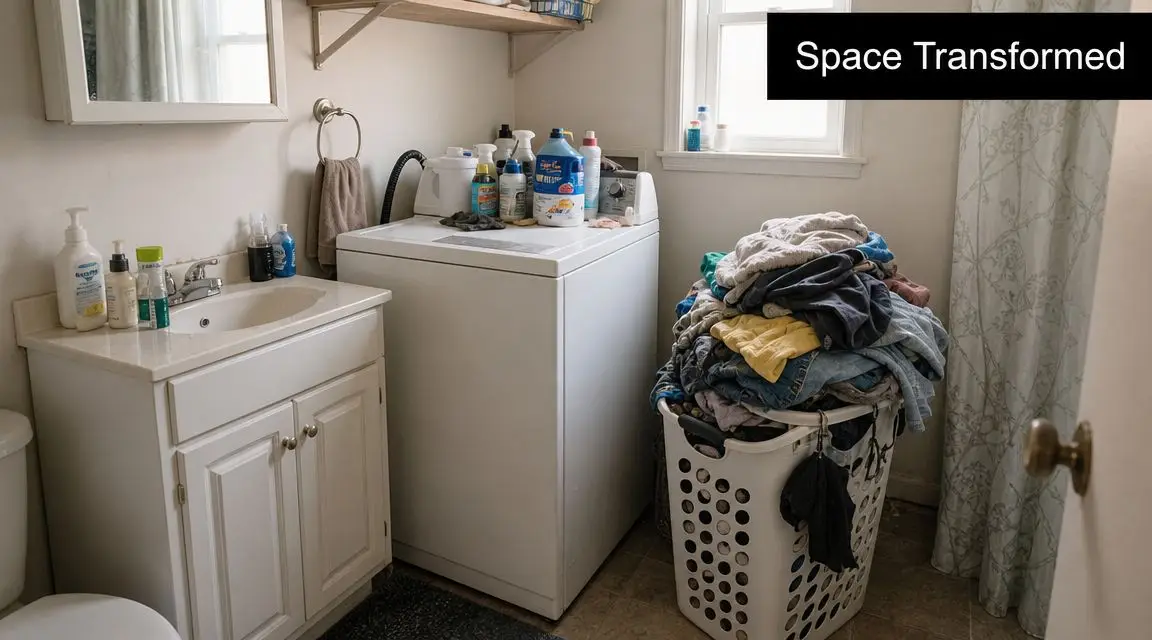
A Highett homeowner usually gets to this point after years of working around the room. The washing machine blocks access. The bathroom feels tired. Damp towels, detergents, baskets, and daily traffic all compete for the same few square metres. In many older Victorian homes and weatherboard renovations, the problem is not total floor area. The problem is how that area was divided in the first place.

A combined bathroom and laundry renovation gives you a chance to reset the room around how your household lives. That matters in local homes where wet areas were often added to over time, with little thought given to storage, ventilation, circulation, or appliance depth. I see this often in Highett projects. The original layout may have worked for an earlier version of the house, but it falls short once you add modern appliances, family routines, and the expectation that the room should be easy to clean and pleasant to use.

Envisioning Your New Combined Bathroom and Laundry

Done well, a combined space can feel calmer and more useful than two separate rooms.

The key is to treat it as a practical redesign, not a simple update of tiles and tapware. One room needs to handle moisture, noise, storage, washing, drying, movement, and cleaning without becoming cramped. That means making early decisions about where the appliances sit, how the door swings, where the tall storage goes, and whether the room needs to serve family bathing, guest use, or both. Those choices affect everything that follows, including plumbing changes, waterproofing detail, joinery design, and the way you live through the build.

Homeowners usually want a few outcomes from this type of project:

  • Better use of limited space, with enough room to move around appliances and bathroom fixtures
  • Storage that keeps detergents, linen, hampers, and cleaning products out of sight
  • Strong ventilation and durable finishes that suit heavy moisture and daily wear
  • A room that feels visually ordered, even when the laundry is in use
  • A layout that suits the house, rather than forcing a generic showroom design into an older floorplan

There is also a Victorian trade-off that many guides skip over. Combining the spaces can free up area elsewhere in the home, but only if the new room is properly planned for noise, moisture control, and day-to-day access. If you have one main bathroom and no second toilet, the renovation sequence and temporary living arrangements matter. If the house has a narrow side passage, a rear extension, or an older timber floor, those site conditions can influence what layout changes are sensible and what should stay close to existing services.

That is why the best early vision is usually a practical one. Start by picturing a room that works on a rushed weekday morning, on a winter night with washing indoors, and on a weekend when guests are over. If the new space can handle those moments well, the style choices will sit on a much stronger foundation.

Defining Your Scope and Renovation Priorities

Once you decide to combine the bathroom and laundry, the next job is drawing a hard line between what the room needs to do and what you would like it to look like. That sounds simple, but many Highett renovations start drifting at this point. Homeowners choose tiles, tapware, and vanity styles early, then discover the washing machine door clashes with the vanity drawer, or there is nowhere practical to store linen, baskets, and cleaning products.

A clear scope prevents that. It also protects your budget when older Victorian homes throw up the usual surprises, such as uneven floors, dated plumbing locations, or walls that are not as straight as they looked before demolition.

Start with the essentials

Ask these questions before you request drawings or pricing:

  1. Who needs to use the room, and at what times
    A couple with staggered work hours will use the space differently from a family getting children ready for school. If grandparents visit often, or if this is the only bathroom in the house, access and ease of use matter even more.

  2. What is failing in the current setup
    Be specific. Poor exhaust, nowhere to fold clothes, tight clearance at the toilet, weak storage, an awkward shower entry, or a laundry zone that always looks messy are all different problems with different design responses.

  3. What items are required in the finished room
    This could be a walk-in shower, full-height storage, concealed appliances, a broom cupboard, a second basin, or room for a heat pump dryer. If it must be there for the room to work, put it in this category.

  4. What would improve the result if the budget allows
    Feature tiling, upgraded tapware finishes, custom shaving cabinets, underfloor heating, or higher-spec lighting usually sit here.

Clients who skip this exercise often spend too much on visible finishes and too little on the parts they use every day.

Build your brief before selections begin

The easiest way to define scope is to split your brief into two lists before you lock in products.

Required for the room to work Worth adding if budget allows
Waterproofing and detailing suited to a wet, high-use room Statement tiles
Storage for laundry items, linen, and cleaning products Feature lighting
Appliance access, ventilation, and serviceable joinery Premium mirrors or styling upgrades
Durable surfaces that clean up easily More custom decorative finishes
A layout that suits your daily routine Higher-end tapware or accessories

This sounds basic. It saves money.

It also gives your builder and designer something practical to price against. In a combined renovation, vague requests create the biggest variation risk. "Make it feel premium" is not a scope item. "Include a benchtop over the front-loader, a tall cupboard for the vacuum, and enough clearance to open the shower without blocking the machine" is.

For homeowners weighing up whether the combination will work in their floorplan, our guide to laundries in bathrooms and what makes them practical helps clarify what should be settled before design starts.

Match priorities to the house and the way you live

This matters more in Melbourne's older housing stock than many guides admit. A period home or mid-century home in Highett often has service locations, wall positions, and access constraints that make some ideas expensive for very little gain. Shifting every plumbing point can be done, but it only makes sense when the new layout fixes a real daily problem.

If you are living in the house during works, priorities need another filter. A room that looks polished in photos may still be wrong for your household if it leaves no place to sort washing, no backup storage, or no realistic plan for how everyone manages while the room is offline. For a one-bathroom home, I usually advise clients to protect function first, then spend on finish where it has lasting value.

Different households usually land in different places:

  • Families often need hard-wearing finishes, concealed storage, and enough bench or hamper space to stop the room looking cluttered by midday
  • Downsizers often care more about easy access, lower maintenance, and strong lighting
  • Owners preparing for sale usually benefit from broad appeal, simple styling, and a laundry zone that disappears neatly behind joinery

Lock the scope before demolition

One of the fastest ways to lose time and money is changing the plan after the room is stripped out. Once walls are open, every adjustment can affect plumbing, electrical rough-in, waterproofing setout, cabinetry sizes, and tile quantities.

The practical rule is straightforward. Finalise the layout, storage plan, fixture positions, and key selections before demolition begins. That does not mean every accessory has to be chosen on day one. It means the decisions that affect build sequence and service locations need to be settled early.

That discipline gives the project a far better chance of staying on budget and running to schedule. It also makes the build less stressful when you are trying to live around it.

Designing Smart Layouts for Combined Spaces

You notice layout mistakes fast in a combined bathroom and laundry. The washing machine door clips the vanity. Damp towels end up near clean clothes. One person steps out of the shower into the only spot where someone else can sort a load. On paper, the room looked efficient. In daily use, it becomes frustrating.

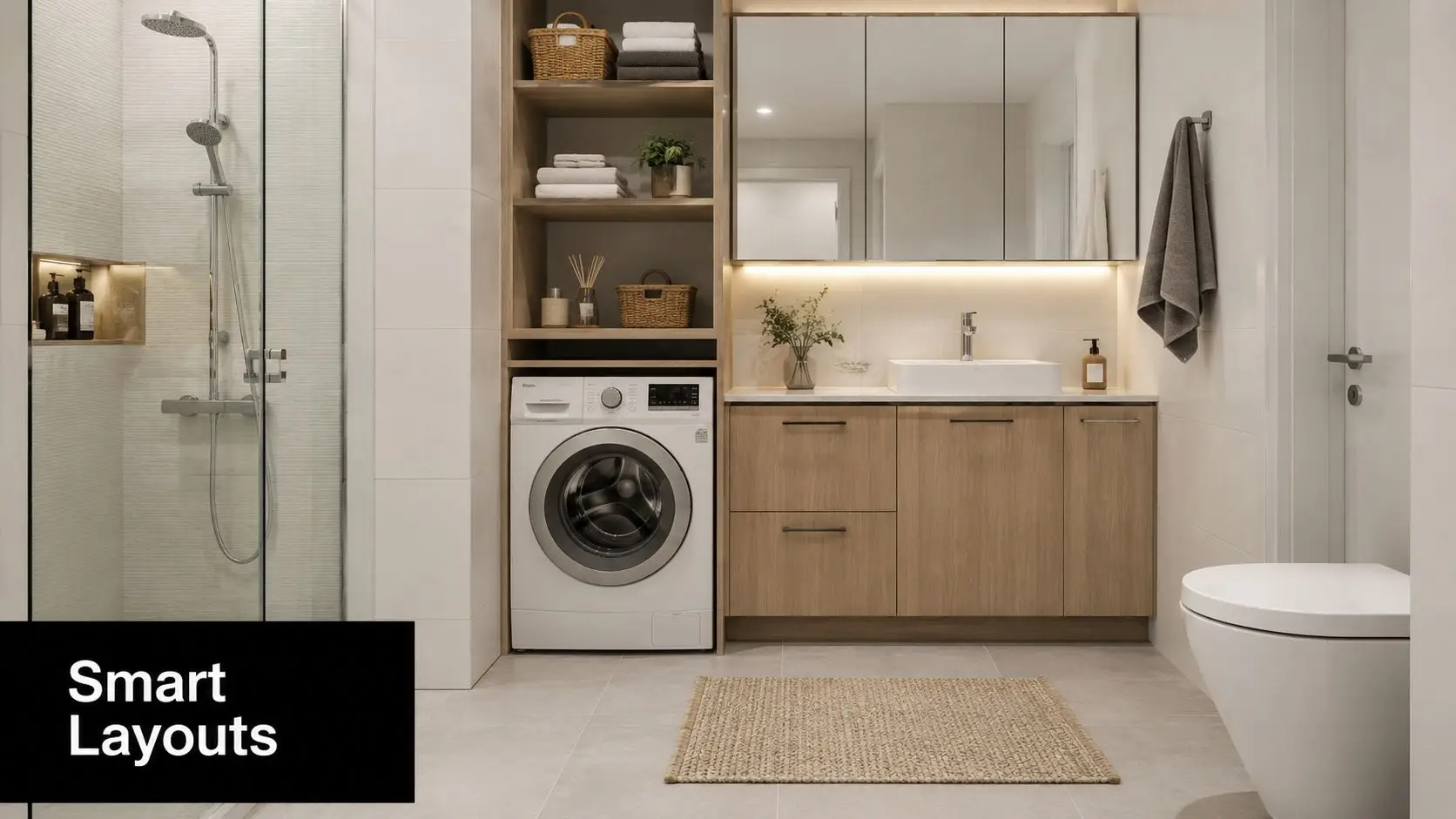
Designing Smart Layouts for Combined Spaces

A good combined layout fixes circulation, storage, and service placement at the same time. In many Highett homes, especially older brick veneers and weatherboards, the footprint is tight and the original wet areas were never designed for modern storage or larger appliances. Combining the spaces can work well, but only if the room is planned around how the household moves through it.

The first rule is simple. Protect clear floor area.

Every fitting competes for the same footprint. Appliance doors, shower screens, vanity drawers, towel reach, hamper access, and the path to the toilet all need room to operate without conflict. If two actions cannot happen comfortably at once, the layout still needs work.

When combining the rooms makes sense

A combined bathroom and laundry usually suits homes where the existing wet areas are undersized, awkwardly shaped, or wasting wall length on poor storage. It can also be a smart move in Victorian renovation work where keeping plumbing closer to its original location helps control complexity and preserves more of the surrounding structure.

It tends to work best when:

  • The room can be zoned clearly, with bathing on one side and laundry tasks on the other
  • Appliances can be screened by joinery, so the room still feels calm and intentional
  • There is enough bench or landing space for sorting, folding, or putting down a basket
  • The household routine is predictable, so bathroom use and laundry use do not clash morning and night

It works less well in homes with heavy overlap in daily routines, especially one-bathroom houses where multiple people need access at the same time. In those cases, a compact separate laundry often serves the household better than forcing two high-demand functions into one room.

The layout choices that matter most

Some decisions have an outsized effect on how the room feels.

  • Stacked appliances
    Stacking often gives back valuable width. That extra width can improve circulation, allow a better vanity, or create space for a tall linen cabinet.

  • Concealed appliance joinery
    Cabinetry around the washer and dryer keeps the room visually ordered and protects storage from looking like an afterthought. It also helps separate clean bathroom lines from the utility side of the room.

  • A proper bench
    Even a narrow surface changes how the room works. Without one, baskets end up on the floor, the vanity becomes a sorting table, and the room feels messy by default.

  • Wet and dry separation
    Keep laundry handling out of the shower exit path and away from the main splash zone. This matters for comfort, cleaning, and the life of your joinery.

  • Door and drawer clearances
    I check these carefully in every final setout. A layout can look fine in plan and still fail once the washer door, vanity drawer, and entry door are all opened in real life.

For practical examples of laundries in bathrooms, the useful question is not whether the room looks tidy in a photo. It is whether each task has a clear place to happen.

If the shower exit, appliance access, and vanity use overlap, the room will feel cramped no matter how good the finishes are.

Smart planning for Victorian homes

Victorian homes around Melbourne often come with quirks that affect layout decisions. Narrow rooms, off-square walls, raised floors, old window placements, and limited natural ventilation all change what will fit comfortably. In these houses, the best layout is usually the one that makes fewer ambitious moves and solves more daily problems.

That might mean keeping the toilet where it is and using the savings to build better joinery. It might mean recessing a shaving cabinet, switching to a cavity slider, or choosing a shower screen that keeps the walkway clearer. It might also mean accepting that side-by-side appliances are the wrong call if they steal too much circulation space.

A quick filter before you commit

Question Good sign Warning sign
Does the room feel easier to move through? Clear path between entry, vanity, toilet, and shower Appliances or doors interrupt the main path
Can storage be concealed and useful? Linen, detergents, hampers, and cleaning items all have a home Open shelves and bench tops carry the overflow
Can two tasks happen without conflict? Someone can shower while another person accesses storage or the toilet Daily routines regularly collide
Are the appliances visually controlled? Joinery or placement keeps the room balanced The machines dominate the view
Will the room be manageable during winter and heavy use? Ventilation, drying, and access have been planned properly Moisture and laundry handling are competing in the same corner

The strongest layouts usually look restrained because each decision is doing real work. Good proportions, disciplined storage, sensible fixture positions, and enough breathing room matter more than trying to fit every idea into one small footprint.

Budgeting Realistically for Your Renovation

Budgeting gets easier once you understand what you're paying for. In a combined renovation, cost isn't driven by one single item. It comes from a collection of decisions about scope, access, services, joinery, finishes, and how much reconfiguration the room needs.

The first budgeting mistake is thinking visually. Homeowners often focus on tiles, tapware, and vanity style because those items are easy to picture. The larger financial impact often sits behind the walls, especially when plumbing changes, waterproofing requirements, electrical work, and custom cabinetry are part of the job.

The main cost drivers

Some projects stay relatively controlled because the layout remains close to the original. Others rise quickly because the room is being significantly reworked.

The usual pressure points are:

  • Service relocation
    Moving plumbing or electrical positions can add complexity, especially in a tight footprint.

  • Joinery level
    Off-the-shelf solutions and fully custom cabinetry don't land in the same budget range.

  • Tile scope and installation complexity
    Large-format tiles, full-height wall tiling, niches, and detailed set-outs take more labour planning.

  • Room condition
    Older rooms sometimes reveal substrate or framing issues once demolition begins.

  • Fixture and finish selection
    The look of designer bathrooms often comes from layered choices, not one feature item.

Where it's smart to spend

Not every line item deserves equal priority. Some elements should never be value-engineered too aggressively.

Spend to protect the structure first. Waterproofing, proper preparation, and compliant trade work matter more than prestige finishes.

A practical priority order looks like this:

  1. Waterproofing and substrate preparation
  2. Plumbing and electrical done properly
  3. Layout and joinery that improve function
  4. Durable fixtures used every day
  5. Decorative upgrades after the core build is resolved

Sample Budget Allocation for a Mid-Range Bathroom & Laundry Renovation

Because every home differs, percentages are more useful than pretending one fixed figure suits all projects.

Expense Category Estimated Percentage of Total Budget
Demolition and site preparation 5 to 10
Plumbing and electrical works 15 to 25
Waterproofing and preparation 10 to 15
Tiling and installation labour 20 to 30
Fixtures, fittings, and appliances 15 to 25
Joinery, storage, and finishing items 10 to 20

These ranges aren't a quote. They're a planning tool that helps homeowners see where the budget typically gets distributed in a combined wet-area project.

How to compare quotes properly

A cheaper quote isn't always better value. The important question is whether you're comparing the same scope.

Check for:

  • Demolition clarity so existing removal is properly defined
  • Service work detail including plumbing and electrical allowances
  • Waterproofing inclusion rather than vague wording
  • Tile labour assumptions especially if patterns, niches, or full-height walls are involved
  • Joinery detail so storage scope isn't left open-ended
  • Fit-off and final finishing including who installs what

If you're trying to sense-check your likely spend before getting formal pricing, a bathroom renovation cost calculator can help you frame the conversation with more confidence.

What causes financial surprises

Most budget blowouts come from one of three things. The scope wasn't properly defined. Selections were made too late. Existing conditions were assumed rather than checked.

That's why experienced project planning matters so much. A room that combines bathroom and laundry functions has more moving parts than a cosmetic update. If the decisions are made early and documented clearly, the budget becomes far more manageable.

Navigating the Build from Demolition to Handover

For many Highett homeowners, the hard part starts once the drawings are approved and the room is out of action. A combined bathroom and laundry renovation affects daily routines fast. Showers, washing, storage, and access all tighten up at once, especially in older Victorian homes where space is already working hard.

That is why the build phase needs clear sequencing, realistic timing, and close supervision on site. In this kind of renovation, small mistakes early can create expensive rework later. A waste in the wrong spot, a wall out of square, or late tile changes can hold up several trades and make living through the job far harder than it needs to be.

Navigating the Build from Demolition to Handover

The correct build sequence

A well-run project follows a set order because each stage relies on the last one being finished properly.

  1. Final selections and confirmed scope
    Layout, fixtures, tiles, cabinetry, appliances, and measurements need to be signed off before site work begins. This matters even more in combined rooms, where a 20mm change can affect appliance clearance, vanity depth, or circulation space.

  2. Demolition
    Existing fixtures, wall linings, floor finishes, and redundant services are removed. In many Melbourne homes, this is also the point where hidden issues show up, such as water damage, uneven framing, or outdated plumbing that was never visible during planning.

  3. Rough-in plumbing and electrical
    Services are relocated and set to the approved plan. If the design includes moving the laundry zone, changing drainage falls, or adding extra power for appliances and heated rails, during this stage, those decisions either prove viable on site or necessitate adjustment.

  4. Waterproofing
    Wet areas are prepared and waterproofed to the required standard. For a bathroom-laundry combination, this stage needs careful attention because water exposure is coming from more than one source.

  5. Tiling and surface installation
    Set-out is checked before tiles go down. Good set-out avoids awkward cuts, keeps floor wastes where they should be, and makes the room look balanced rather than patched together.

  6. Fit-off
    Cabinetry, benchtops, screens, tapware, sanitary fixtures, mirrors, accessories, and appliances are installed. This is where early planning pays off. If measurements were checked properly, everything fits. If they were guessed, problems usually appear here.

  7. Final quality checks and handover
    The room is cleaned, tested, inspected, and prepared for use. We look at function as well as finish. Doors need to clear properly, drawers need to open past appliances, falls need to drain, and every fixture needs to do its job without compromise.

What often slows a combined renovation

Bathroom-only advice often misses this point. A combined renovation has more interfaces between trades, and that means more chances for delays if the job is not tightly managed.

The usual causes are practical. Appliances arrive late. Joinery is fabricated before final site measure. A tile selection changes after waterproofing details are set. In older brick veneer and weatherboard homes around Highett, we also regularly see walls and floors that are not straight enough for off-the-shelf assumptions. That does not stop the job, but it does mean the builder needs to pick up issues early and adjust before they affect the next trade.

Living through the renovation is part of the planning too. Some households can stay in the home if there is another toilet or shower available. Others are better off arranging temporary alternatives for part of the build. Speed and convenience do not always align. A faster program can mean fuller site access and less flexibility day to day. A staged approach can make family life easier, but it usually stretches the timeline.

If you want a clearer sense of what the construction program typically looks like, this guide on how long a bathroom remodel should take gives a practical breakdown.

Why oversight matters in Victoria

In Victoria, a combined wet-area renovation is more than a cosmetic update. It can involve waterproofing compliance, plumbing changes, electrical work, ventilation, and sometimes structural alteration if the layout is being improved.

Good oversight keeps those moving parts coordinated. It also protects the finish. I have seen projects where the design was fine, but the execution slipped because one trade worked from an old plan, selections were still changing mid-build, or defects were left for the next person to solve. That is how budgets drift and deadlines move.

The calmer projects are the ones where decisions are locked in early, site conditions are checked properly, and someone is responsible for the whole sequence from demolition to handover.

Your Renovation Questions Answered

A combined bathroom and laundry renovation in Highett usually raises the same practical questions once the dust starts. The better time to answer them is before the room is stripped out, while the layout, schedule, and day-to-day living plan can still be adjusted without cost blowouts.

Can we stay in the house during the renovation

Often, yes, if the house can still function.

A primary concern is access to basics. If this room includes your main shower, toilet, or laundry setup, you need a plan for every day of the build, not just the demolition week. In many Victorian homes, especially older brick veneer and weatherboard layouts, there is limited spare wet-area capacity. That makes staging attractive, but staging also extends the program and can increase labour time.

Before work starts, sort out:

  • Whether another toilet and shower are available
  • Whether a temporary laundry setup can work elsewhere
  • How children, shift workers, or older family members will manage access
  • Whether a shorter, more intensive build suits you better than a longer staged one

I usually tell clients to decide this early. Families cope better when they choose their trade-off upfront, rather than trying to change the construction sequence mid-build.

Why does 3D design matter so much

Because combined rooms punish guesswork.

A plan that looks fine on paper can still fail in use. Washing machine door swings, vanity depth, circulation space, towel access, and where you stand to sort clothes all matter more in a dual-purpose room. In many Victorian homes, the room is narrow, the walls are not perfectly square, and existing services limit where fixtures can move. That is why detailed design work before demolition saves money later.

Good 3D design helps test the room properly. You can see whether the layout feels cramped, whether storage is in the right spot, and whether the bathroom still reads as a bathroom rather than a laundry with a shower pushed into it.

How is dust and disruption managed

Occupied-home renovations are disruptive. Good site management keeps that disruption controlled.

The basics matter most:

  • Floor and access protection to adjacent rooms
  • Dust control during demolition and cutting
  • A clear plan for rubbish removal
  • Notice before water or power shut-downs
  • Trade timing that avoids long idle gaps

Homeowners do not need perfection. They need order, clear communication, and a site that is being managed properly from day to day.

Why work with a Registered Builder Unlimited

For a more involved wet-area renovation, proper oversight matters because several parts of the job are tied together. Plumbing rough-in affects cabinetry. Electrical locations affect mirror and storage choices. Waterproofing has to suit the final set-out, not a rough sketch that changed on site.

In Victoria, that coordination also matters for compliance and accountability. If the room is being reworked, as distinct from a tiling update within the existing footprint, you want one party responsible for the sequence, the trades, and the final result.

What should you do next

Start with the problems the room needs to solve. That usually means storage, circulation, drying space, appliance placement, and whether the room can support family life during the week without feeling cramped.

Then test the layout before anyone starts demolition. That is where smart decisions get made in a combined renovation.

If you want practical guidance specific to your Highett home, SitePro Bathrooms can help you shape the brief, refine the layout, and map out a buildable plan before construction begins.

  • siteprobathrooms

How to Plan a Bathroom Renovation: Highett Guide

You're probably doing what most homeowners do at the start of a bathroom renovation. Saving photos, comparing tiles, and trying to work out whether the room needs a simple refresh or a full rebuild.

That's normal. It's also where many projects go wrong.

In Highett and across Melbourne, the bathrooms that run smoothly usually aren't the ones with the flashiest mood board first. They're the ones where the owner gets clear on scope, compliance, drainage, waterproofing, and trade sequencing before locking in finishes. If you want to know how to plan a bathroom renovation properly, start there. The design still matters, but it has to sit on top of a buildable, compliant plan.

Laying the Groundwork Your Goals Budget and Victorian Realities

The first decision isn't tile colour. It's what problem the renovation needs to solve.

Some bathrooms need better storage and lighting. Some need a larger shower for daily use. Others are tired, leaking, badly ventilated, or laid out poorly. If you don't define the job clearly at the start, the budget drifts and every quote looks different because each builder is pricing a different version of the project.

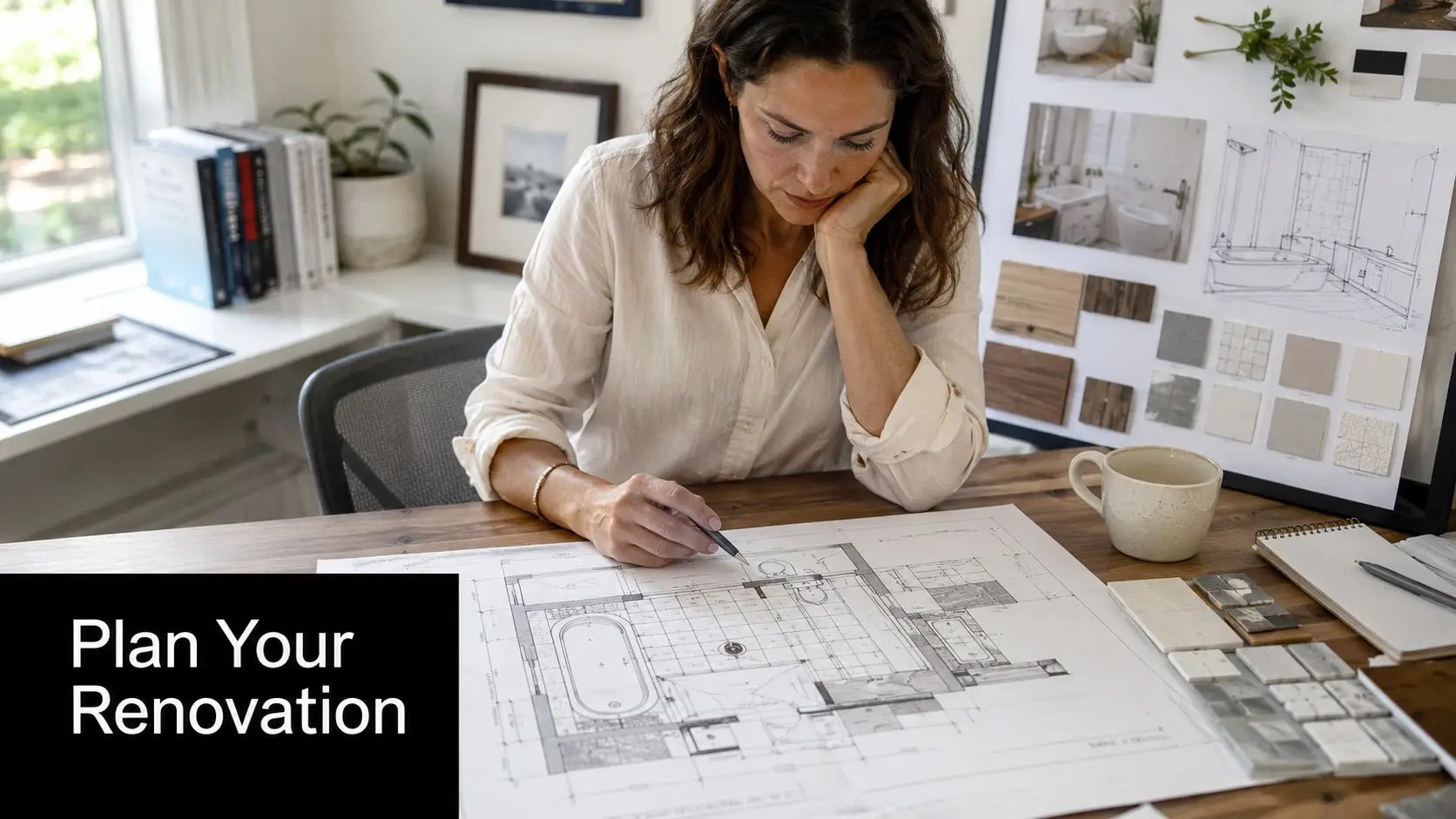
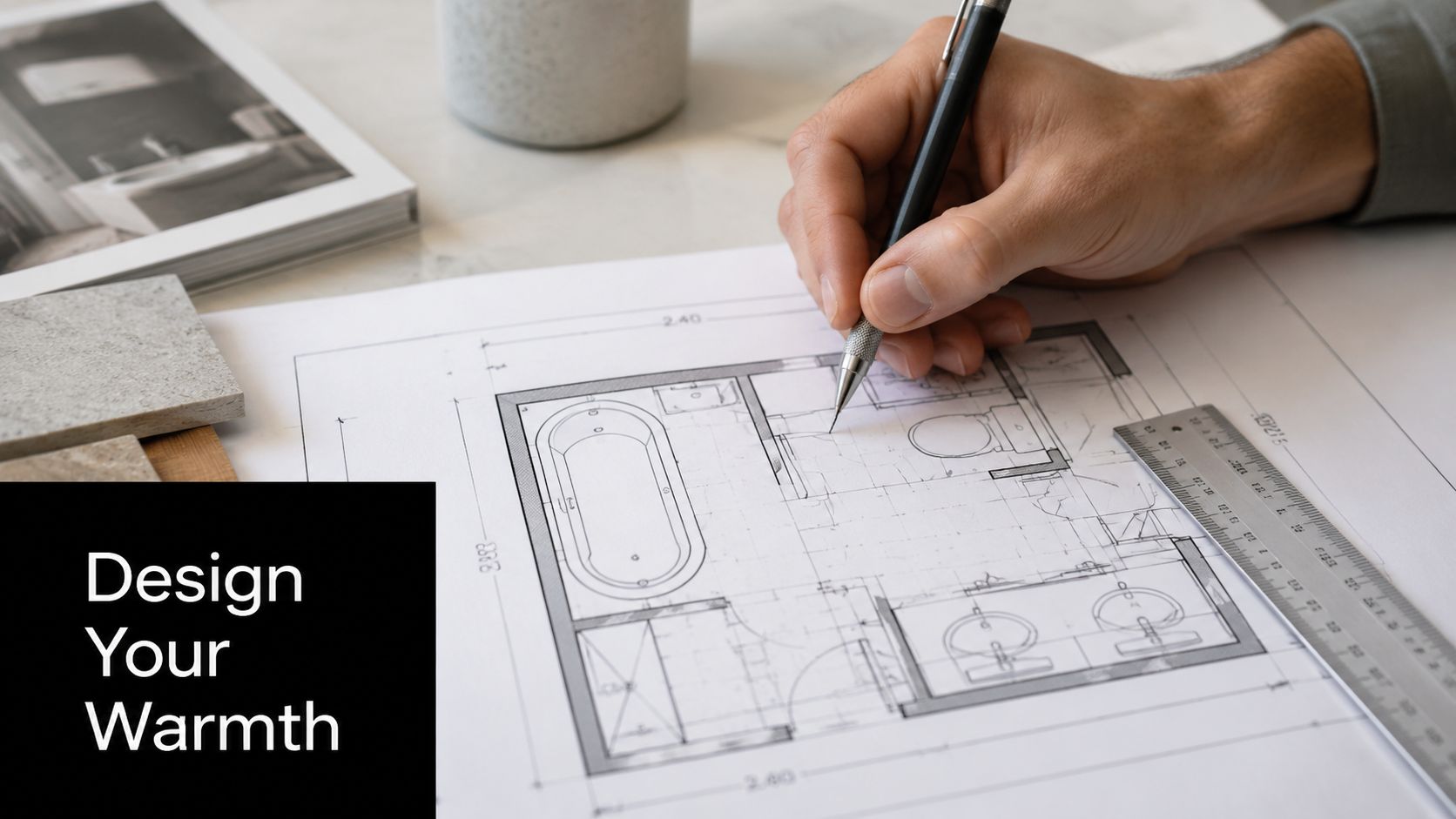
A woman sketching architectural plans for a bathroom renovation while sitting at a desk by a window.

Australian cost guides put a minor bathroom refresh at about AUD 3,000 to 10,000, a partial remodel at AUD 10,000 to 25,000, and a full renovation at AUD 25,000 to 80,000 according to Angi's bathroom remodel cost guide. That's why the planning stage has to separate a cosmetic update from a full reconfiguration before anything else.

Start with the real purpose

Write down the main objective in one sentence. Keep it blunt.

  • Family function: More storage, easier cleaning, stronger lighting, better use of a shared room.
  • Comfort: A calmer ensuite, larger shower, warmer finishes, less visual clutter.
  • Property value: A durable, broadly appealing fit-out that won't date quickly.
  • Future use: Better circulation, step-free shower access, reinforcement for later upgrades.

If your answer is “all of the above”, narrow it further. Renovations get better when one priority leads and the others support it.

Match the goal to the scope

Many homeowners overreach. They start looking at designer bathrooms online, but the budget only allows for like-for-like replacement. Or they plan a simple refresh, then add new drainage positions, custom joinery, and premium fixtures. That's how a straightforward job turns into a complicated one.

A practical way to frame it is this:

Project type What it usually means Budget impact
Cosmetic refresh Keep layout, replace selected finishes or fixtures Lower cost bracket
Partial remodel Some upgrades to function, storage or fixtures without fully rebuilding everything Mid-range bracket
Full renovation Strip-out, waterproofing, major layout or service changes Highest cost bracket

Practical rule: If you're moving plumbing, changing drainage positions, rebuilding walls, or reworking waterproofing extensively, treat it like a full renovation from day one.

Build a budget that reflects risk

The smartest budgets aren't just about products. They also leave room for what's hidden behind the walls and under the floor.

Older bathrooms in Victoria often reveal issues once demolition starts. Substrates may be damaged, previous waterproofing may have failed, and older plumbing or wiring may need correction before the new work can proceed. That's why an early allowance for contingency isn't pessimistic. It's realistic.

If you want a rough starting point before you request quotes, use a bathroom renovation cost calculator. It helps turn broad ideas into a more grounded discussion.

Decide what you won't compromise on

This matters just as much as the wish list. Pick two or three things that stay protected if the numbers tighten.

For one client, that might be full-height tiling and a larger vanity. For another, it's a hobless shower and easy-clean fittings. For landlords, it may be durability over trend-led finishes. For homeowners chasing new bathroom ideas, it's often tempting to spread the budget thinly across everything. That rarely works well.

The best plans are selective. They put the money where daily use is highest and simplify the rest.

Designing Your Dream and Visualising the Reality

Once the budget and scope are clear, the design process gets easier because the room starts to answer practical questions instead of abstract ones.

A common example is the bath versus shower decision. Many people begin by saying they want both. Then the plan is drawn properly, storage is added, clearances are tested, and the room starts to feel cramped. That's when priorities become real.

A person designing a modern bathroom renovation on a computer while surrounded by stone and tile samples.

A Houzz bathroom study found that 42% of renovating homeowners splurge on the shower, and among those updating showers, 81% increase the shower's size. The same study also noted that 27% remove the master bathtub to make room for a larger shower, with 91% of those doing so motivated by shower space. That lines up with what works well in many modern bathrooms here. People tend to value a generous, comfortable shower they use every day more than a bath that rarely gets used.

Good design starts with movement, not finishes

Before choosing tapware or tiles, work through the room like you're using it.

Ask questions such as:

  • Where do you stand to dry off?
  • Can vanity drawers open without blocking movement?
  • Does the shower entry feel cramped?
  • Is there enough practical storage for daily items?
  • Will the room still work when more than one person uses it?

Many designer bathrooms achieve distinction from pretty but awkward rooms through specific design choices. The successful ones are easy to move through, easy to clean, and balanced in proportion.

Use inspiration carefully

Inspiration is useful, but only if you filter it.

Collect ideas in groups rather than mixing everything together. One group for layout. One for material palette. One for vanity and storage details. One for lighting. If you combine coastal, ultra-minimal, hotel-style luxury, and family practicality into one brief, the project loses direction.

A tighter shortlist helps with decisions such as:

  • Vanity type: Wall-hung for visual lightness or full-depth joinery for storage.
  • Shower format: Framed, semi-frameless, or open feel depending on cleaning and containment priorities.
  • Tile strategy: Feature-driven or restrained. Large format can simplify the look, but detailing still needs to work with falls and set-outs.
  • Lighting: Mirror lighting, general lighting, and practical task lighting need to work together.

The strongest bathroom design isn't the one with the most features. It's the one where every element supports how the room is actually used.

Visualise before you commit

Planning saves money.

A drawing on paper can tell you dimensions, but it doesn't always show how the room will feel. A proper visual layout lets you test whether the vanity is too bulky, whether the nib wall is worth it, or whether the tile scale suits the room. It's one of the easiest ways to stop late changes on site.

If you're weighing modern bathrooms against softer, more classic schemes, visualisation helps cut through guesswork. It also helps when households disagree. One person may focus on looks, the other on storage or cleaning. A clear visual plan gives both sides something concrete to assess.

For clients who want design tied closely to buildability, SitePro Bathrooms offers bathroom design and planning with 3D layout visualisation as part of its renovation process. That kind of step is useful because it forces early decisions while the project is still easy to adjust.

Think beyond trends

Trends can be helpful prompts, not instructions.

A larger shower, better circulation, simpler detailing, and adaptable storage often age better than highly specific style choices. That's especially true in smaller homes, investment properties, and family bathrooms. If you're spending once, design for use first. The room will usually look better for longer.

Navigating Permits Plans and Professional Trades

This is the point where many bathroom renovations either become controlled or become messy.

The design may look resolved, but if the fixture positions, plumbing, drainage, waterproofing extent, and inspection needs haven't been pinned down, the room still isn't ready for construction. In Victoria, that's not admin for the sake of it. It's the framework that protects the build.

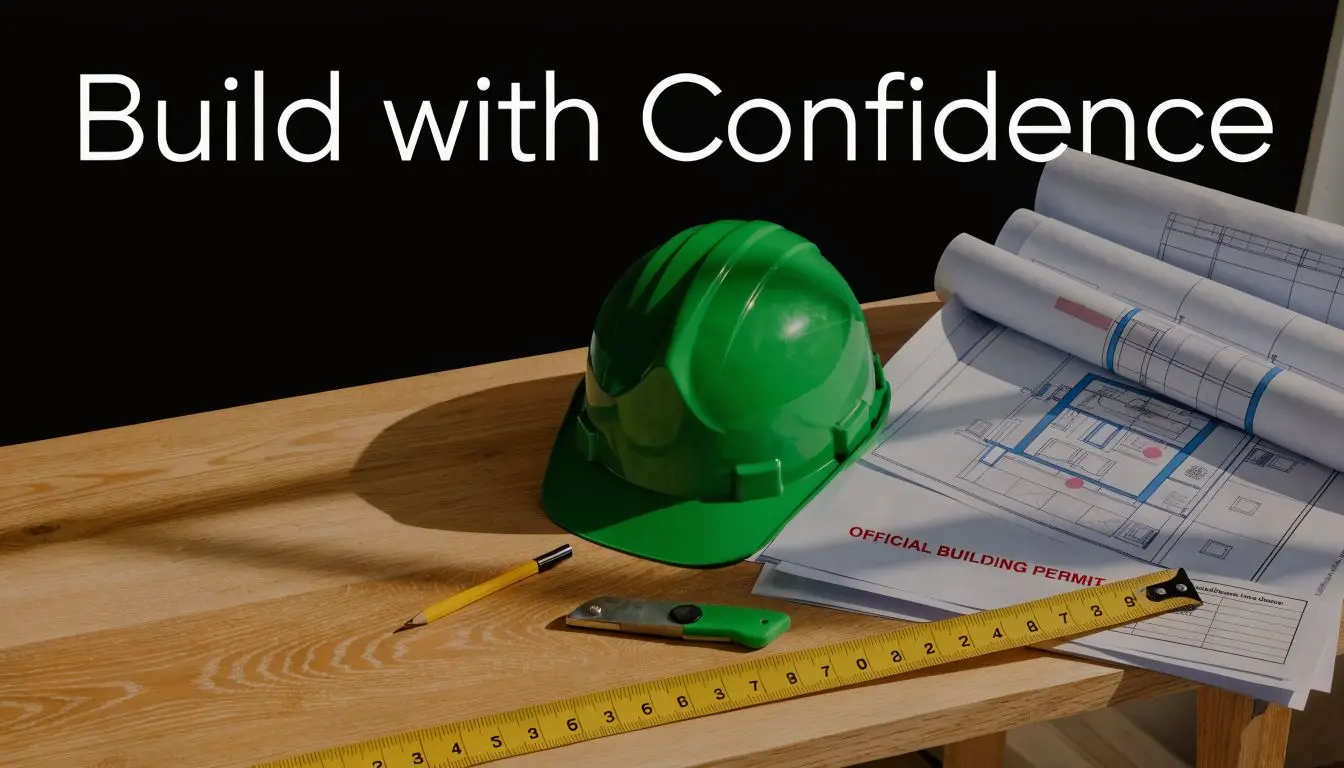
A green hard hat, a measuring tape, and blueprints labeled official building permit on a wooden desk.

According to this bathroom remodel checklist, plumbing work in Victoria must be completed by a licensed plumber and may require a Certificate of Compliance, while waterproofing needs to align with the National Construction Code and AS 3740. It also notes that planning fixture locations and drain positions before demolition is essential to avoid compliance-related delays.

Why compliance comes before finishes

A lot of renovation stress starts with the wrong sequence. Homeowners choose tiles, tapware, and vanity styles first, then find out the layout doesn't suit the drainage, the wall construction, or the waterproofing detail required.

That creates one of two outcomes. Either the design is changed late, or the builder is forced to improvise around fixed selections. Neither is ideal.

The better approach is to lock in:

  1. Fixture positions
  2. Drain locations and floor falls
  3. Wall set-outs
  4. Waterproofing zones
  5. Electrical rough-in requirements
  6. Ventilation strategy

Once those are settled, the finishes can support the technical plan instead of fighting it.

On site, the expensive mistakes usually don't come from the tile you picked. They come from discovering too late that the room wasn't properly coordinated behind the walls.

What to look for in the right building team

Price matters, but bathroom work is too service-heavy to judge on price alone. You need people who can coordinate trades, sequence the work properly, and identify issues before they become variations.

Look for:

  • Clear scope documentation: The quote should show what's included, what's excluded, and where assumptions sit.
  • Licensed plumbing arrangements: This isn't optional in Victoria.
  • Waterproofing awareness: The team should be able to explain how wet areas will be prepared and detailed.
  • Programming discipline: Good projects are booked and staged. They aren't run day-by-day with no plan.
  • Communication standards: You want answers in plain language, not vague assurances.

For homeowners weighing who should manage the build, this guide on why using a registered builder matters for your bathroom renovation is worth reading. It explains why oversight, accountability, and coordination matter when several trades need to work in sequence.

Why cheap quotes often cost more

The low quote can look attractive until you inspect what's missing.

Sometimes it excludes removal complexity, substrate repair, disposal, waterproofing detail, or realistic allowances for installation time. Sometimes the scope is so loose that the final cost can't stay close to the original number. A bathroom has too many interdependent trades for vague pricing to end well.

That doesn't mean the highest quote is automatically right. It means the quote that clearly reflects the actual work is usually the safer one.

Ask direct questions before signing

A short list of practical questions can reveal a lot:

Question Why it matters
Who is coordinating trades and sequencing? Prevents gaps and finger-pointing
When are key decisions frozen? Reduces late changes and delays
What happens if hidden damage is found? Shows whether there is a sensible process
How are compliance items handled? Confirms the team isn't treating them as an afterthought
What needs to be ordered before demolition? Protects the schedule

If a team can't answer those clearly, the planning probably isn't mature enough.

Mapping the Construction Timeline From Demolition to Handover

Once the scope is locked and materials are selected, the project becomes a sequence problem. Bathroom renovations run well when each stage is prepared before the previous one starts.

General renovation guidance suggests cosmetic bathroom updates can take about 3 to 7 days, mid-range remodels about 2 to 4 weeks, and full gut renovations about 4 to 7+ weeks according to Homeia's bathroom remodelling timeline guide. That same guidance stresses the need for a contingency in both time and budget because hidden issues such as water damage or non-compliant wiring are often discovered after demolition.

Typical Bathroom Renovation Timelines in Victoria

Renovation Scope Typical Duration Key Activities
Cosmetic update 3–7 days Replace selected fixtures, finishes, painting, limited installation work
Mid-range remodel 2–4 weeks Demolition, partial service updates, waterproofing, tiling, fixture installation
Full gut renovation 4–7+ weeks Full strip-out, rough-ins, waterproofing, tiling, fit-off, defect checks, handover

The sequence that usually works

A bathroom build tends to follow this order:

  1. Site preparation and protection
    Access paths, dust control, and material staging are sorted first.

  2. Demolition
    The room is stripped back so the actual condition of the floor, walls, plumbing, and framing can be assessed.

  3. Rough-ins
    Plumbing and electrical work are completed to suit the approved layout.

  4. Waterproofing
    This must happen on a properly prepared substrate and in the correct sequence.

  5. Tiling and surface installation
    Set-outs matter here. Good tiling starts before the first tile is laid.

  6. Fit-off
    Vanity, tapware, screens, toilet, accessories, and lighting go in.

  7. Final checks and handover
    The room is tested, defects are addressed, and documentation is finalised.

What stalls jobs

The biggest delays usually come from poor lead-time planning, not from the actual installation work.

Common examples include:

  • Vanities arriving late
  • Tapware still on backorder after demolition
  • Tiles not checked before install day
  • No temporary bathroom plan in a one-bathroom home
  • Inspection or trade handover points not booked properly

Critical path matters more than enthusiasm. If key materials and trades aren't lined up before demolition, the room can sit idle while the house stays disrupted.

If you want a clearer sense of project duration by scope, this guide on how long a bathroom remodel should take helps frame realistic expectations.

Avoiding Common Renovation Pitfalls and Ensuring Quality

Most bathroom failures are predictable. They're usually not random bad luck. They come from a preventable mismatch between design decisions, hidden site conditions, and build sequencing.

One of the most common mistakes in Australian renovations is choosing finishes first and only discovering compliance limits or hidden damage after demolition. A practical design article on treating the first step as a compliance-and-risk review highlights this exact pitfall. That approach is more useful than starting with tile samples because it reduces variations and cost blowouts.

Pitfall one follows the wrong starting point

When a bathroom project begins with aesthetics alone, the room gets designed in a vacuum. The homeowner falls in love with a floating vanity, a recessed niche, or a certain shower layout without confirming whether the substrate, wall depth, or drainage arrangement suits it.

The result is late redesign. Late redesign costs more because trades have already priced, ordered, or scheduled around a previous plan.

A better process starts with a risk review of the room itself:

  • Check likely moisture exposure
  • Assess whether services are staying put or moving
  • Confirm ventilation strategy early
  • Identify any older building issues that may affect the build
  • Review how much of the room needs to be rebuilt, not just resurfaced

Pitfall two is underestimating hidden conditions

Hidden conditions don't show up in showroom decisions. They show up when the room is opened.

Subfloor problems, old membrane failure, uneven walls, water damage, and service conflicts can all change the work required. If the budget and timeline assume the bathroom is perfect behind the tiles, the project is fragile from day one.

The practical response isn't panic. It's planning.

Risk area What happens if ignored Better approach
Waterproofing condition Rework, leaks, defect risk Assume the wet area needs proper review before finishes are finalised
Old plumbing or wiring Delay during rough-in stage Investigate likely upgrades early
Poor ventilation Moisture problems after completion Design extraction and air movement into the brief
Overpacked layout Awkward daily use, harder cleaning Prioritise circulation and clearances over squeezing in extra features

Pitfall three is chasing style over function

This is common with new bathroom ideas pulled from social media or display homes. The room looks sharp, but the everyday use hasn't been thought through.

Examples include vanities with poor storage, open showers that splash too broadly, dark finishes that show every mark, or feature lighting that looks good in photos but doesn't help at the mirror. In compact rooms, these choices become obvious quickly.

Quality shows up in the details you don't photograph. Doors clear properly. Water stays where it should. Drawers open fully. The room dries out well after use.

Pitfall four is weak quality control during the build

Even a solid plan needs checking as the work proceeds. Bathroom construction has multiple handover points where one trade's work affects the next. If nobody is reviewing preparation, set-outs, penetrations, and finish coordination, defects can get buried.

Owners don't need to supervise every hour, but they should expect structured checks around:

  • Demolition findings
  • Rough-in confirmation against plan
  • Waterproofing readiness
  • Tile set-out review
  • Fit-off accuracy
  • Final defect list before handover

The bathrooms that last well are usually the ones where the team respected the hidden work just as much as the visible finish.

Your Next Step Towards a Flawless Bathroom Renovation

A bathroom renovation feels overwhelming when everything is treated as one big decision. It becomes manageable when you break it into the right order.

Start with purpose and scope. Then set a budget that reflects the level of work, not just the look you want. After that, shape the layout around how the room is used, and only then move into finishes and visual detail. In Victoria, that whole process needs to sit inside a compliance-aware plan. That's the part many articles skip, and it's the part that protects your budget most effectively.

The strongest projects in Highett usually share the same pattern. The owner gets clear early. The plans are coordinated before demolition. Materials are selected with lead times in mind. Trades know the sequence. Hidden risks are allowed for instead of ignored.

That's what turns bathroom renovations from stressful to organised.

If you're planning modern bathrooms, refining ideas for designer bathrooms, or trying to make an older room work better for daily life, keep the decision-making grounded in buildability. The room has to do more than look good at handover. It has to work every morning after that.

A good plan doesn't remove every surprise. It does reduce the expensive ones.


If you're in Highett or the wider Melbourne area, the next practical step is to turn your rough ideas into a measured scope, a buildable layout, and a clear quote. That gives you something far more useful than inspiration alone. It gives you a project you can deliver.

  • siteprobathrooms

Bathroom Renovation Cost Calculator: A 2026 Highett Guide

A lot of Highett homeowners start in the same place. They know the bathroom has to change, but they don't yet know whether they're looking at a sensible update, a full strip-out, or a project that will grow the moment tiles come off the wall.

That uncertainty is what stops most projects before they start. You might have saved inspiration for modern bathrooms, compared tapware, and talked about better storage or a larger shower, but none of that feels real until you can attach a workable budget to it.

A bathroom renovation cost calculator helps with that first step. Used properly, it turns a vague wish list into a planning range you can work with. It won't replace a site inspection or a professional quote, but it does help you test ideas early, spot budget pressure points, and avoid going into meetings blind.

For Victorian homes, and especially bayside suburbs like Highett, local detail matters. Soil movement, waterproofing rules, digital estimating expectations, labour rates, and the age of the housing stock all affect the actual cost. Generic online figures often miss those issues completely.

Your First Step to a New Bathroom Starts Here

The biggest mistake people make is treating the budget as something to sort out later. In bathroom renovations, that usually creates more stress, not less. The smarter approach is to price the project before you commit to layouts, finishes, or demolition.

A bathroom renovation cost calculator gives you a controlled starting point. You enter the details you already know, such as room size, whether the layout stays the same, the type of fixtures you want, and the general finish level. From there, you get a ballpark figure that helps answer the practical questions first.

Start with the decisions that change cost fastest

Before you get carried away with new bathroom ideas, answer these four basics:

  • Room type: Is it a compact ensuite, a main family bathroom, or a larger master bathroom?
  • Layout changes: Are the shower, toilet, and vanity staying put, or moving?
  • Finish level: Are you aiming for a straightforward update, quality mid-range finish, or one of the more polished designer bathrooms you see in magazines?
  • Condition of the existing room: Is this likely to be a clean rebuild, or could there be hidden issues once demolition starts?

Those answers shape the budget more than colour palettes do.

Practical rule: If you don't know whether you're changing layout, you don't yet know your likely renovation bracket.

For homeowners in Victoria, budgeting also needs to line up with compliance. Waterproofing, ventilation, licensed trades, and proper project coordination aren't optional extras. They're part of the job. That's also why it matters to understand why using a registered builder matters for your bathroom renovation, especially when you're comparing online estimates with real-world project delivery.

Use the calculator as a planning tool, not a promise

The right mindset is simple. A calculator is there to help you:

  1. Set a realistic range
  2. Test different options before committing
  3. Prepare for the quote stage with better questions

That's where confidence starts. Not with a random average, but with a clearer idea of what your own bathroom might cost in your own suburb.

What Is a Bathroom Renovation Cost Calculator

A bathroom renovation cost calculator gives you an early budgeting range based on the scope you select. It helps you test whether your plan looks like a basic update, a full renovation, or something in between before you start requesting quotes.

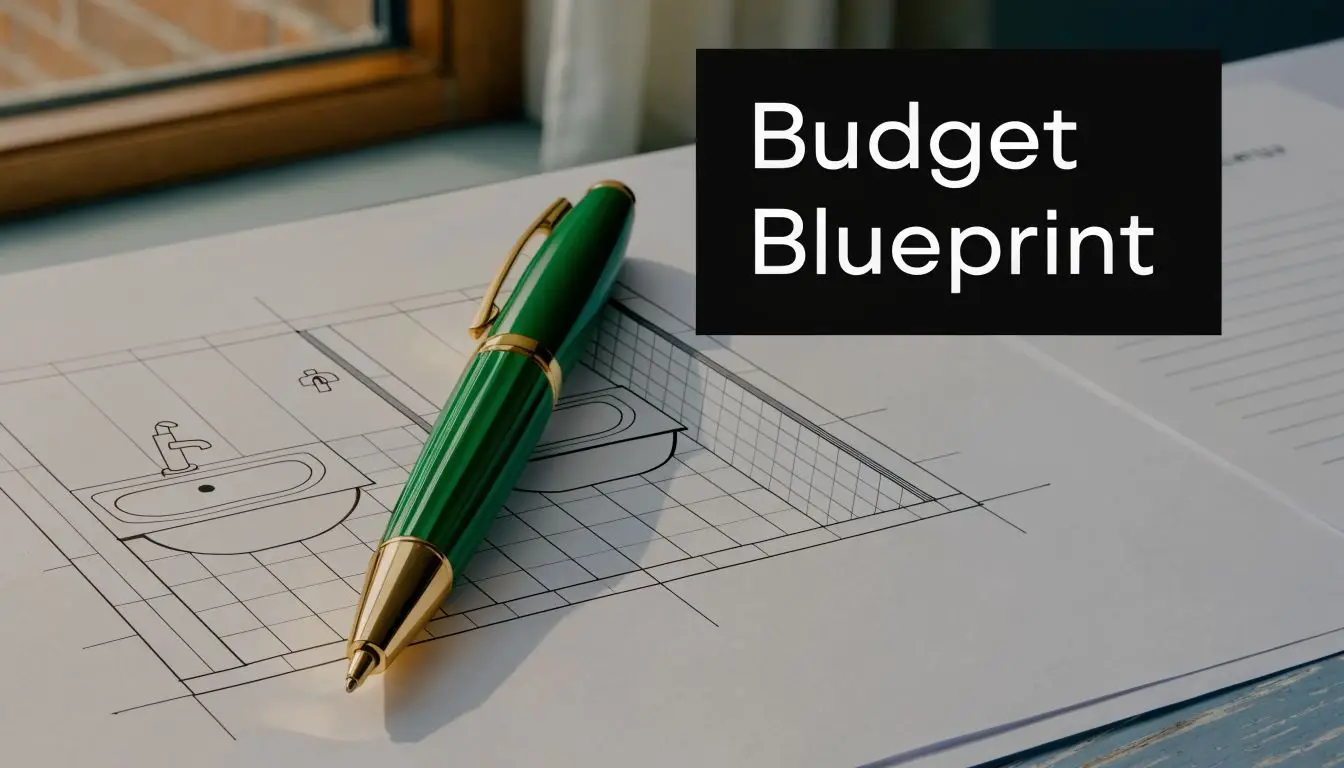
A green pen resting on a technical drawing of a bathroom layout next to a plan.

For Highett homeowners, that can be useful early on. A calculator can show the likely cost difference between keeping plumbing where it is and moving it, or between choosing builder-grade fixtures and higher-spec fittings. That sort of comparison saves time because it tells you quickly which ideas fit your budget and which ones need reworking.

The catch is simple. Generic calculators often miss the things that change real project costs in Victoria.

They usually do a reasonable job on visible selections like tiles, tapware, vanities, and baths. They are much weaker on site conditions, access, compliance, and the small construction details that push a bathroom from straightforward to expensive. In this part of Melbourne, I would treat any online figure as a planning number only until someone has looked at the room properly.

What the calculator is actually measuring

A good calculator should convert your choices into a rough cost range across three areas:

  • the amount of demolition and rebuilding involved
  • the level of finishes and fixtures you want
  • the likely labour and compliance load tied to that scope

That last point matters more in Victoria than many online tools allow for. Bathroom work here needs to line up with current building standards, waterproofing requirements, ventilation expectations, and the use of appropriately licensed trades where required. If a calculator ignores those items, the estimate can look tidy on screen and still be short once the job is priced properly.

Why local context matters in Highett

Two bathrooms of the same size can land in very different budget ranges in Highett because the room itself is only part of the story. Older homes can hide uneven subfloors, dated pipework, wall damage, or previous renovation work that needs correcting. Ground conditions and slab details also matter if the job involves drainage changes or toilet relocations. A generic calculator rarely asks those questions.

I see the same problem with compliance allowances. Many calculators assume a clean, standard installation. Real projects in Victoria often need extra work to meet waterproofing standards, improve ventilation, correct falls, or deal with defects exposed during demolition. None of that means the calculator is useless. It means the calculator is only as reliable as the assumptions behind it.

A useful calculator gives you a budget starting point. A site inspection turns that starting point into a quote you can rely on.

What a good calculator should help you decide

Question Why it matters
How big is the job really? Replacing finishes is a different cost category from rebuilding the room and relocating services.
Which choices are adding cost fastest? Layout changes, custom joinery, premium fixtures, and rectification work can shift the budget quickly.
Am I ready to ask for quotes? Clear inputs lead to better conversations with builders and fewer surprises later.

Used properly, a calculator is a filter. It helps rule out unrealistic ideas, set a workable range, and prepare you for the quote stage. What it cannot do is inspect your bathroom, confirm hidden conditions, or price the Victorian-specific compliance work that may sit behind the finishes.

Decoding the Key Inputs for an Accurate Estimate

A calculator gets more useful when the inputs match the job you are planning in Highett. A clean looking online estimate can drift a long way from the final cost if you leave out layout changes, compliance work, or the condition of the existing room.

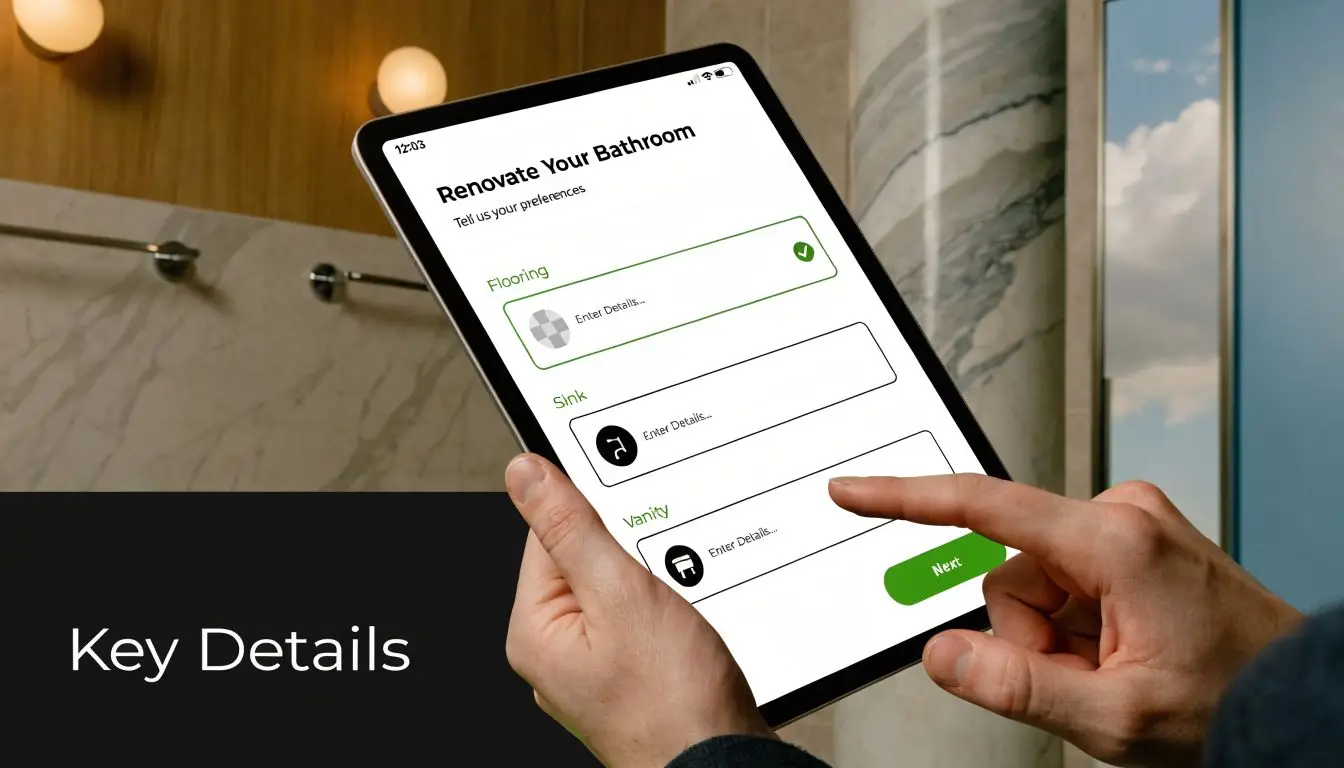
A person uses a tablet to input renovation preferences into a digital bathroom design calculator app.

Size and layout

Floor area matters, but the plan matters more.

Two bathrooms with the same square metre rate can end up in different price bands once the toilet moves, the shower is enlarged, or the vanity wall changes. A useful calculator should ask whether plumbing points stay where they are, whether walls are changing, and whether the room is being opened up for better movement. If it only asks for size, it is giving you a rough range, not a reliable budget.

That is especially true in older Highett homes where the existing setout often reflects how bathrooms were built decades ago, not how people want to use them now.

Scope of works

The biggest budgeting mistake I see is calling a full rebuild a simple update.

If you are replacing tiles, waterproofing, fixtures, lighting, ventilation, and damaged wall linings, that is a renovation. If you are altering drainage, rebuilding shower bases, or correcting poor falls, the scope has moved well beyond a cosmetic refresh. A calculator needs to separate those levels clearly so the estimate reflects the amount of demolition, preparation, and licensed trade work involved.

A practical way to enter scope is to choose the closest fit:

  • Cosmetic update: keep the layout, replace selected finishes and fixtures
  • Full renovation: strip out the room and rebuild it to current standard
  • Reconfiguration: relocate plumbing, adjust walls, or change the room plan
  • Custom fitout: add detailed joinery, premium surfaces, feature lighting, or niche detailing

For compact rooms, it also helps to compare your ideas against realistic cost ranges for a small bathroom remodel, because small spaces often cost more per square metre once custom planning and tight trade access are involved.

Fixtures and finishes

This input changes budgets fast.

A standard acrylic bath, builder-range toilet suite, and semi-frameless screen sit in a very different cost bracket from a freestanding bath, wall-hung pan, stone-top vanity, full-height tiling, and frameless glass. The calculator should let you choose finish levels in a way that reflects how bathrooms are priced. Entry level, mid-range, and premium is usually enough for planning.

Selections also affect labour. Larger format tiles, recessed shaving cabinets, wall-hung vanities, and tiled niches can all add time on site. The product cost is only part of the story.

Structural and local conditions

This is the area generic calculators handle poorly.

Bathrooms in Victoria can carry extra cost before the new fittings even arrive. Subfloor movement, older framing, out-of-level surfaces, and hidden water damage all affect what has to be repaired before waterproofing and tiling start. In bayside areas such as Highett, site conditions and past settlement can also influence floor preparation if the job involves drainage changes or correcting movement-related cracking.

Compliance matters too. Victorian bathroom work has to align with current requirements for waterproofing, ventilation, plumbing, and electrical safety. If demolition exposes defects, the room still has to be rebuilt properly. A calculator cannot inspect any of that. It can only assume average conditions.

Labour and licensed trades

Bathrooms are trade-dense projects. Plumbers, electricians, waterproofers, tilers, carpenters, and installers all need to work in the right order, and delays in one trade can push costs elsewhere.

That is why labour should never sit in the calculator as a generic allowance. In Victoria, a key issue is whether the work is being carried out and coordinated by properly registered and licensed professionals, with the right checks and documentation where required under VBA rules. Cheap allowances usually mean something has been left out.

The better your inputs, the better your estimate. But even a well-set-up calculator cannot see under tiles, test falls, confirm substrate condition, or price rectification after demolition. It gets you to a sensible budget range. A site inspection gets you to numbers you can build around.

Typical Bathroom Renovation Costs in Highett Victoria

A Highett bathroom can look like a straightforward update on paper and still price like a full rebuild once actual work starts. I see that often in older bayside homes. Owners budget for tiles, tapware, and a new vanity, then demolition exposes floor correction, wall straightening, drainage adjustments, or ventilation upgrades that a generic calculator never allowed for.

That is why local budget ranges matter more than broad national averages. In Highett, labour rates, access, product choices, and Victorian compliance requirements usually push bathroom costs above the numbers you see in generic online tools.

What these ranges look like in practice

Use these figures as early planning ranges for a complete renovation in Highett. They help set a sensible budget before you commit to selections or request a fixed quote.

Bathroom Type Typical Size Budget Range (Basic Finish) Mid-Range (Quality Finish) High-End / Luxury (Designer Finish)
Small ensuite Under 4 sqm $15,000 to $25,000 $15,000 to $25,000 $25,000+
Standard family bathroom 6 to 10 sqm $30,000 to $50,000 $30,000 to $50,000 $50,000 to $60,000+
Larger primary bathroom 6 to 10 sqm and above with premium inclusions $30,000+ $30,000 to $50,000 $60,000+

Those overlaps are not a mistake.

In Victoria, the fixed cost of doing the room properly is a large part of the budget. Demolition, waste removal, plumbing and electrical rough-in, waterproofing, screeding or floor prep, tiling, fit-off, and final installation all stack up before you get to premium upgrades. A basic finish can still cost more than expected if the room needs rectification work or the existing layout is inefficient.

Why one Highett bathroom costs more than another

The biggest cost swings usually come from a few practical decisions and local site conditions:

  • Keeping the layout or changing it: Leaving the shower, vanity, and toilet in place usually protects the budget. Moving wastes or water points often adds plumbing time, floor work, and patching.
  • Condition of the existing room: Older homes around Highett can hide moisture damage, uneven substrates, outdated services, or previous renovation shortcuts.
  • Floor and drainage work: If falls are poor or drainage needs correction, the cost rises quickly. In some homes, soil movement and past settlement also show up in cracked tiles or out-of-level floors, which means more preparation before waterproofing starts.
  • Product selection: Large-format tiles, custom joinery, recessed shaving cabinets, frameless glass, underfloor heating, and premium fixtures all lift the price.
  • Victorian compliance requirements: Work has to be carried out to current standards. That can affect waterproofing details, ventilation, plumbing, electrical work, and documentation under VBA-related requirements.

Small bathrooms catch people out for the same reason. The footprint is smaller, but the job still needs most of the same trades and the same sequence.

A compact ensuite is rarely cheap per square metre.

That is why a tiny room with full-height tiling, a custom vanity, and difficult access can end up costing more than expected, even when the layout stays put. If you are planning a tighter space, this guide to small bathroom remodel cost factors will help you budget more realistically.

How to use these numbers well

Use the table to set a range, then test your brief against the room you have. If your Highett bathroom is in an older home, has signs of movement, or needs drainage changes, budget toward the middle or upper end rather than the entry number.

The lower end only makes sense when the layout stays the same, the room is in sound condition, and the finishes are controlled. Once you add structural repairs, higher-spec materials, or custom detailing, the calculator range becomes a starting point rather than a likely final cost.

Sample Calculations Putting It All Together

A Highett homeowner can enter the same room size into a calculator as someone in another suburb and still end up thousands apart once the job reaches site. That usually comes down to scope, access, existing building condition, and local compliance details the calculator cannot see.

A table detailing the estimated and actual costs for a bathroom renovation project including materials, labour, and subcontractors.

Scenario one, compact ensuite with a restrained brief

Start with a small ensuite in a solid, straightforward home. The owners want a cleaner finish, better storage, and fixtures that feel current, but they are not chasing a full redesign.

The shower stays put. The vanity stays put. The toilet stays put.

That single decision usually keeps the estimate closer to reality because the plumber, waterproofer, tiler, and electrician can work within an existing layout instead of rebuilding the room around new service points. In practical terms, the calculator should be set up around a like-for-like renovation with upgraded finishes, not a reconfiguration.

A sensible allowance in this type of project usually includes:

  • demolition and strip-out
  • waterproofing and tiling
  • replacement vanity, tapware, toilet, and shower screen
  • lighting, mirrors, paint, and basic accessories
  • labour for standard installation without major service relocation

This is also the kind of job where timing is easier to predict. If you are budgeting around access to the bathroom during works, this guide on how long a bathroom remodel should take helps put the estimate in context.

Scenario two, family bathroom with layout changes

Now take a family bathroom in an older Highett home where the owners want the room to function better day to day. They want a larger shower, a better vanity position, and more open floor space, so fixtures need to move.

That changes the budget fast.

Moving plumbing points often means opening more of the floor and walls, adjusting waste locations, coordinating new set-outs, and checking falls still work properly. In Victoria, that can become more involved if the existing slab, subfloor, or drainage layout gives you little room to work with. On some sites, even a modest layout change leads to extra labour before new finishes have even been ordered.

I see this regularly in older properties. What looks like a simple shift on a plan can turn into drainage changes, floor correction, or additional making-good work once demolition starts.

What the calculator is helping you compare

The useful part of the calculator is not the headline number. It is the gap between one scope and another.

Decision Budget effect
Keep fixture locations Lower installation complexity and a more stable early estimate
Move one key fixture Higher plumbing labour and more coordination on site
Move multiple fixtures Larger jump in cost risk, especially in older bathrooms
Add custom or premium finishes Higher material spend and more installation time

Use it to price two versions of the same room. One version keeps the layout and tightens the finish schedule. The other includes the changes you would like if budget was less constrained.

That comparison usually gives homeowners a clearer answer than a single average ever will. It shows whether the extra spend is going into function, appearance, resale value, or hidden site work that a generic online tool cannot price properly in advance. In Highett and across Victoria, that last category matters more than many people expect.

From Estimate to Quote Where Calculators End

A Highett homeowner can enter room size, tile allowance, tapware level, and labour assumptions into a calculator and get a useful budget range in minutes. Then demolition starts, the floor falls away to one corner, the waterproofing underneath has failed, and the existing plumbing does not suit the new layout. That is the point where an estimate stops being enough.

Online calculators are good for early planning. They help you test scope before you commit to design meetings, product selections, and site visits. They do not inspect the room, and they do not price the hidden work that often drives the difference between a rough estimate and a contract figure.

In Victoria, that gap matters.

A proper quote takes account of site conditions, current product pricing, and compliance requirements that a generic calculator cannot verify from a screen. In older Highett homes, I would also expect the builder to check how the existing floor, wall framing, drainage falls, and ventilation setup will affect the build. If the property has movement, moisture damage, or previous work that would not pass current standards, the budget can change for good reason.

What a quote adds that a calculator cannot

A site-based quote should do three practical jobs.

  1. Measure and inspect the actual room
    This includes checking levels, wall condition, access, service locations, and the likely amount of rectification work before new finishes go in.

  2. Test the design against Victorian requirements
    Waterproofing, ventilation, drainage, electrical work, and plumbing all need to suit current expectations. If permits, licensed trades, or VBA-related compliance steps apply, they need to be allowed for before the job starts, not discovered halfway through.

  3. Set out inclusions, exclusions, and variation risk clearly
    A good quote shows exactly what is priced and where hidden conditions may still affect cost. That is how homeowners avoid false confidence from a low starting number.

Material pricing can shift between the day you use a calculator and the day you approve fixtures and tiles. Lead times can shift too. A live quote reflects what suppliers are charging at the time of pricing, which is far more useful than an average pulled from a broad national range.

Why local quoting matters in Highett

Local housing stock creates its own cost pattern. Some bathrooms are straightforward cosmetic upgrades. Others involve concrete slab work, reactive clay movement, dated pipework, or awkward drainage positions that limit what can be moved without extra labour.

Those are not edge cases in Victoria. They are common budgeting issues.

A local specialist should price with those risks in mind and explain the trade-off clearly. Keeping the existing layout may protect budget. Moving the shower and toilet might improve function, but it can trigger extra plumbing, floor preparation, and compliance checks. That is the kind of decision a calculator helps compare, but only a quote can price with enough confidence to sign off on.

Timing matters as well. Product selection, trade sequencing, and inspection requirements all affect total cost, which is why it helps to review how long a bathroom remodel should take before you lock in your budget and start date.

Use the calculator to narrow the brief and set a realistic range. Then get an on-site quote from a bathroom specialist who understands Highett homes, Victorian compliance, and the hidden work that online tools cannot see.