
You’re probably doing what most Melbourne homeowners do at the start of a bathroom renovation. Saving polished photos, comparing tile samples, wondering whether the brushed nickel tapware costs too much, and trying to work out if the room you have can ever look like the designer bathrooms you keep seeing online.
That mix of excitement and hesitation is normal. Bathrooms ask for more decisions per square metre than almost any other room in the house. Layout, waterproofing, lighting, ventilation, storage, cleaning, finish durability, and budget all collide in one compact space. If you get the decor right but the planning wrong, the room won’t feel good to use. If you make it technically sound but visually flat, you’ll feel that disappointment every morning.
Good bathroom decor australia choices sit in the middle of those extremes. They look refined, but they also suit the way Australian homes are lived in. They handle steam, hard water, family traffic, damp towels, cleaning products, and shifting design tastes. They also need to respect compliance, especially in Victoria, where wet area requirements are not something you can treat as a background detail.
Your Guide to Bathroom Decor in Australia
Bathroom decor in Australia has moved well beyond choosing a nice vanity and matching mirror. Clients now expect more from the room. They want comfort, practical storage, easy maintenance, and a finish that feels current without becoming dated too quickly. They also want the renovation to add value, not just visual appeal.
That shift isn’t just anecdotal. The Australia bathroom accessories market was valued at USD 540.02 million in 2025 and is projected to expand to USD 1,373.00 million by 2034, growing at a CAGR of 10.92%, according to Australia bathroom accessories market projections. The same source notes that growth is being driven by demand for eco-friendly materials and smart home integrations as Australians prioritise sustainability and convenience.
That tells you something useful as a renovator. People aren’t spending more attention on bathrooms by accident. They’re treating them as serious living spaces.
What homeowners usually get stuck on
The overwhelm usually comes from four pressure points:
- Style confusion because modern bathrooms can mean warm minimalism, hotel-style luxury, coastal calm, textured natural finishes, or darker moodier palettes.
- Budget tension because some upgrades matter more than others, and expensive choices aren’t always the smartest ones.
- Layout limitations because many Victorian homes have compact footprints, awkward windows, or plumbing positions that make dream layouts unrealistic.
- Compliance blind spots because decor decisions often get made before waterproofing, ventilation, and access requirements are properly resolved.
Practical rule: A bathroom should be designed from the floor plan out, not from the tapware in.
What works in real homes
The strongest renovations don’t chase every trend. They translate the best new bathroom ideas into choices that suit the home, the household, and the room size. In a compact ensuite, that might mean a floating vanity, recessed storage, and one standout surface rather than five competing finishes. In a family bathroom, it might mean prioritising tougher materials, better drawer storage, and lighting that works at 6 am as well as 9 pm.
A well-planned bathroom renovation also separates designer bathrooms from merely expensive bathrooms. A designer result feels balanced. The proportions are right. The lighting is flattering. The joinery solves storage properly. The tile selections support the room instead of fighting for attention.
That’s the standard worth aiming for. Not showroom fantasy. A bathroom that looks sharp, functions cleanly, and still makes sense years after handover.
Embracing 2026 Modern Bathroom Trends
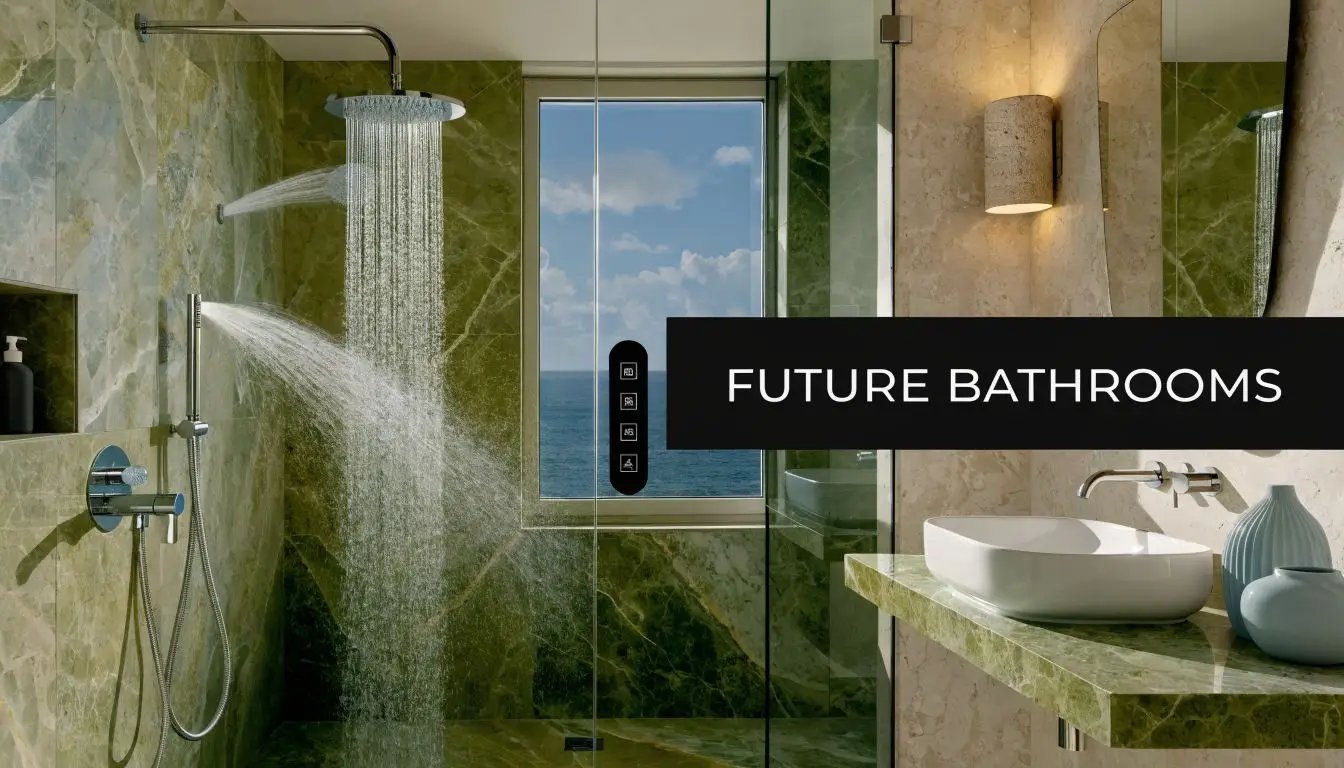
The most useful 2026 trends aren’t the loudest ones. They’re the ones that improve how the room feels day to day. In practice, the best modern bathrooms are moving toward calmer finishes, more tactile materials, better hidden storage, and technology that solves an actual problem rather than adding gimmicks.
The micro-spa look needs restraint
A lot of homeowners ask for a spa feel. That’s understandable, but it often gets interpreted too narrowly. A spa-style bathroom isn’t created by adding every luxury feature possible. It comes from controlling visual noise.
The better version usually includes:
- A simplified palette with two main materials and one accent finish
- A generous shower experience with enough elbow room and good water containment
- Soft lighting that doesn’t flatten faces or create harsh glare on mirrors
- Storage that disappears so benches stay clear
What doesn’t work is layering texture over texture in a small room. Ribbed joinery, busy stone, statement floor tile, fluted glass, oversized pendants, and dark grout can quickly make an ensuite feel crowded instead of restful.
Nature-led finishes suit Australian light
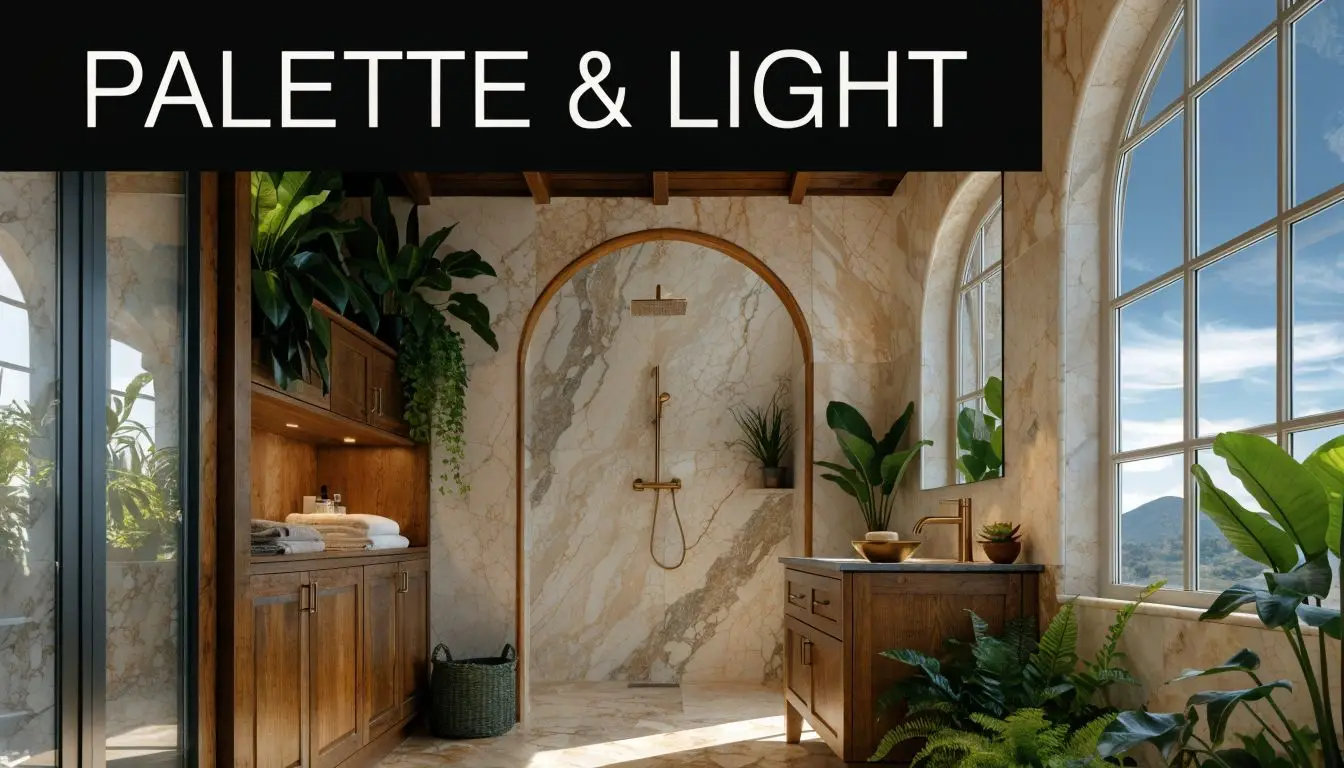
Australian homes often get strong natural light, and bathroom decor should respond to that. Warm whites, soft stone tones, muted greens, clay shades, and natural timber notes generally read better in daylight than icy grey schemes. They also age more gracefully.
This doesn’t mean every bathroom should be beige. It means the palette should work with the light quality in the room. A south-facing bathroom can carry more warmth. A bright west-facing room may need softer contrast so it doesn’t feel harsh in the afternoon.
Natural materials look best when you balance them with clean lines. If every surface tries to feel organic, the room can start to look unresolved.
Smart features should solve friction
Technology has a place in modern bathrooms, but only when it reduces daily annoyance. Useful additions include demisting mirrors, well-integrated lighting controls, and ventilation that responds to moisture levels. Those upgrades make the room easier to use and easier to maintain.
Less useful are tech inclusions that complicate servicing, date quickly, or add visual clutter. If a feature needs constant explaining, it’s probably not improving the room.
Texture is back, but scale matters
One of the strongest shifts in new bathroom ideas is the move away from completely flat, sterile surfaces. Textured tiles, curved mirrors, softened vanity profiles, and more tactile finishes are all coming through. They can make a bathroom feel considered and less clinical.
The key is scale. In smaller bathrooms, use texture in one zone only. A ribbed vanity front or textured feature tile can work beautifully, but pairing both with patterned flooring and veined wall tile usually tips the room into visual chaos.
For many bathroom renovations, the most successful trend move is selective adoption. Borrow the warmth, the calm, and the functionality from current design. Leave the excess behind.
Choosing Climate-Smart and Durable Materials
Material selection decides whether a bathroom still looks good after real use. Steam, temperature changes, cleaning chemicals, wet feet, water splash, and poor ventilation will expose weak choices very quickly. The best-looking room on handover can become the most disappointing room in the house if the finishes weren’t chosen for Australian conditions.
The first foundational element is the wet area build-up behind the visible surfaces. Under the NCC 2022 standards, mandatory in Victoria, bathroom wet area walls must be waterproofed to a minimum height of 1,800mm, which matters for preventing moisture damage and mould growth in Australian homes, as outlined in Victorian bathroom standards and waterproofing requirements. Decor sits on top of that foundation. It doesn’t replace it.
Start with the surfaces that take the hit
Tiles, benchtops, vanity finishes, and shower wall materials all need to cope with moisture and cleaning. Homeowners often focus on appearance first, but the better sequence is this: performance, maintenance, then appearance.
If you’re comparing tile options in detail, a practical breakdown in this guide on how to choose bathroom tiles is a useful place to narrow the field.
Comparison of Bathroom Surface Materials for Australian Climates
| Material | Pros | Cons | Best For |
|---|---|---|---|
| Porcelain tile | Dense, low maintenance, handles moisture well, available in many finishes | Can feel hard and cold underfoot, cheaper prints can look artificial | Floors, shower walls, family bathrooms |
| Ceramic tile | Cost-effective, broad style range, easier to cut for wall applications | Usually less robust than porcelain in heavy-use areas | Bathroom walls, lower-impact areas |
| Engineered stone look surfaces | Consistent appearance, cleaner visual lines, suits modern bathrooms | Some finishes show water marks more easily, edge profiles matter | Vanity tops, splashbacks, streamlined schemes |
| Natural stone | Rich character, high-end appearance, unique variation | Requires more maintenance, can etch or stain depending on type | Feature walls, premium designer bathrooms |
| Timber veneer or timber-look joinery | Adds warmth, softens hard finishes, works across many styles | Real timber needs careful detailing in wet zones | Vanities, shaving cabinets, storage |
| Acrylic or solid surface style wall panels | Fewer grout lines, easier cleaning, sleek contemporary finish | Not every home suits the look, detailing must be neat | Low-maintenance shower zones |
Where people often choose badly
The most common mistake isn’t picking an ugly material. It’s picking the right material in the wrong location.
- Glossy floor tiles look crisp in a showroom, but they can become slippery and unforgiving in everyday use.
- Highly porous natural finishes can create a maintenance burden that doesn’t suit busy households.
- Delicate cabinetry finishes near wet zones can swell, peel, or wear prematurely if the detailing is poor.
- Too many grout joints create more cleaning work and can make a small room feel busy.
The practical trade-off
Luxury and durability aren’t opposites, but they do require balance. A premium stone-look porcelain often gives you the visual calm of a slab material with easier day-to-day maintenance. Real timber can be beautiful, but many homes are better served by timber-look joinery in the highest splash areas. Large-format tiles reduce grout lines, but they need skilled set-out so cuts don’t look awkward around niches, drains, and corners.
The best material schedule usually mixes priorities. Spend visual impact where the eye lands first. Spend durability where the room works hardest. That’s how modern bathrooms keep their finish without becoming high-maintenance.
Mastering Colour Palettes and Lighting
Most bathroom decor mistakes aren’t about boldness. They’re about mismatch. The colour palette says calm, but the lighting is clinical. The tile is soft and warm, but the mirror light throws grey shadows onto skin. The vanity is elegant, but the room feels flat because every finish sits at the same visual volume.
A bathroom needs colour and light to work as one system.
Build the palette from the largest surface
Start with the largest surface area. Typically, this is the wall tile or floor tile. Once this is established, choose the vanity finish, then tapware, then mirrors and accessories. Doing it in the opposite order often leads to scattered decisions.
A simple framework works well:
Choose the base tone
Warm neutral, cool neutral, earthy mid-tone, or darker dramatic palette.Add one grounding element
Timber-look joinery, deeper floor tile, or a stronger stone pattern.Use metal finishes as punctuation
Not as the main story.
The rooms that feel expensive often have less contrast than people expect. They use tonal variation rather than constant opposition.
What colours tend to last
In Australian homes, timeless doesn’t have to mean plain. These palette directions generally hold up well:
- Warm stone and off-white for calm, adaptable spaces
- Soft green-grey and timber for homes that need warmth without heaviness
- Charcoal accents with lighter walls for a sharper contemporary look
- Muted clay and sand tones where you want softness and depth
Very trendy colours can work, but they should usually be easy to replace. Paint, accessories, and decorative lighting are safer places for experimentation than full-height feature tile in a strong niche tone.
Layered lighting changes everything
Most bathrooms need three lighting layers. If they only have one, the room rarely performs well.
- Ambient lighting gives the room overall brightness. Ceiling lighting usually handles this.
- Task lighting supports shaving, skincare, makeup, and grooming. Mirror-side lighting or well-placed integrated mirror lighting does the heavy lifting.
- Accent lighting creates mood and depth. Under-vanity lighting, niche lighting, or a decorative wall light can do this subtly.
If you’re planning ceiling placement, this guide on downlight placement in a bathroom helps avoid the common issue of putting light exactly where it casts shadows onto the face.
Good bathroom lighting should make the room feel brighter, but your reflection softer.
What usually goes wrong
One central downlight over the vanity is a classic mistake. It throws shadows under the eyes and chin and makes daily use less comfortable. Another problem is over-lighting glossy finishes, which can create glare and make the room feel colder than intended.
A strong bathroom lighting plan respects function first, but it doesn’t stop there. It also shapes mood. That’s what turns a practical room into one that feels finished.
Smart Space Planning for Every Bathroom Size
A bathroom can be beautiful and still feel awkward. That usually comes down to planning, not styling. If circulation is tight, doors clash, drawers can’t open fully, or the shower feels boxed in, no amount of expensive decor will rescue the experience.
Function-first planning matters even more in Victorian homes, where existing footprints often aren’t generous. Many ensuites and secondary bathrooms need very careful set-out to avoid wasted space.
Ergonomics are part of good design
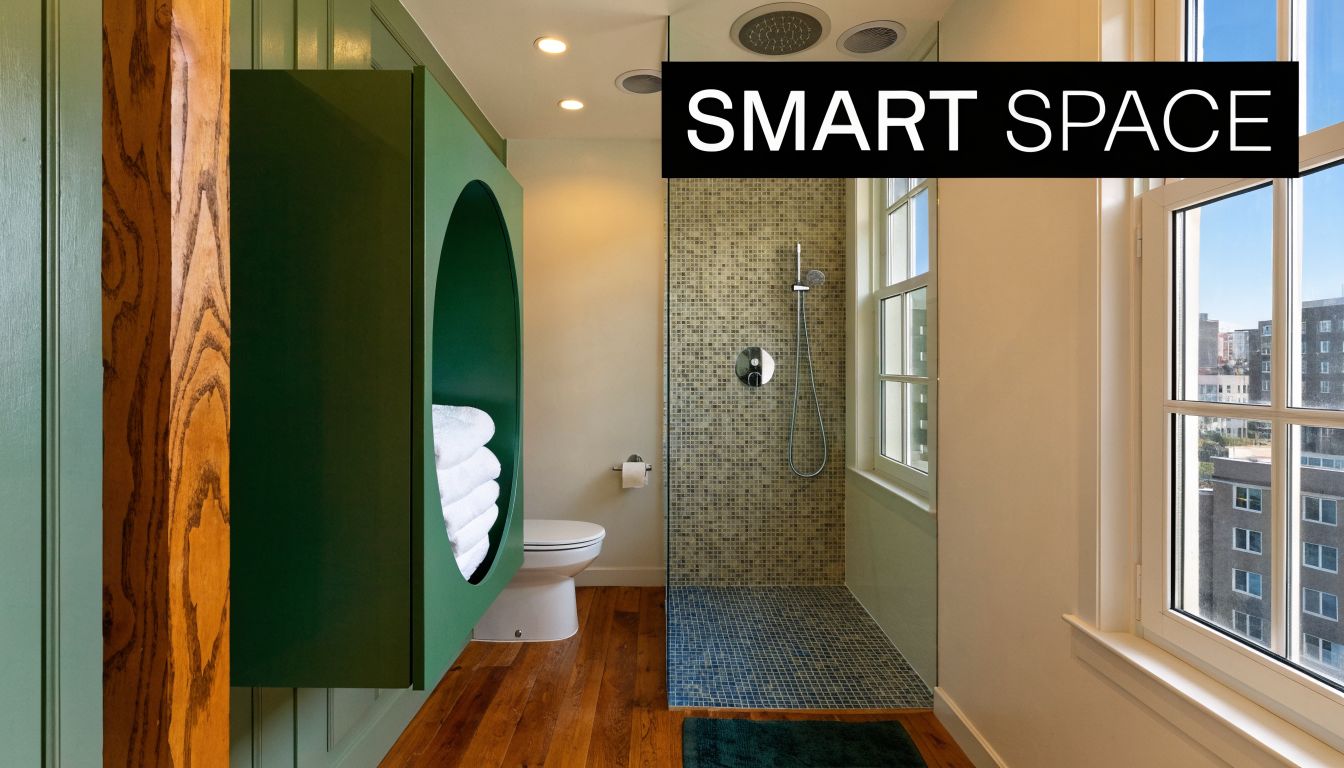
Australian standards recommend basin tops sit between 860–880mm from the floor and shower heads at 1,900–2,100mm, which supports a more functional and comfortable room, according to Australian bathroom dimension guidelines. Those details sound technical, but they directly affect whether a bathroom feels natural to use.
The same applies to door clearance, shower proportions, and tap placement. A room can be legally built and still feel wrong if the ergonomics haven’t been thought through carefully.
Compact bathrooms need visual discipline
In a small ensuite, the layout has to do more than fit. It has to feel composed.
A few moves tend to work well:
- Floating vanities keep more floor visible
- Wall-hung storage reduces visual bulk
- Large mirrors stretch sightlines
- Clear shower screens maintain openness
- Recessed niches reduce the need for add-on storage
For more layout-specific inspiration, these small bathroom ideas for Australian homes show the kinds of adjustments that can make tight rooms perform better.
Larger bathrooms still need structure
A bigger room isn’t automatically easier. In fact, large bathrooms can feel disjointed when fixtures are spread too far apart or when every wall gets a different treatment. Family bathrooms need zones. Wet zone, vanity zone, storage zone, circulation path.
That zoning creates order. It also helps with lighting, material transitions, and cleaning.
If you have extra space, use it to improve comfort, not to increase walking distance between fixtures.
Why 3D planning saves money
Many layout problems don’t show up clearly on a flat plan. You only notice them once you picture a person opening a vanity drawer, stepping out of the shower, or trying to hang a towel beside a swinging door. That’s why 3D visualisation is so useful before construction starts.
It helps test:
- Sightlines from the doorway
- Balance between vanity, mirror, and lighting
- Storage usability
- Shower screen size and swing
- How finishes read together in the actual room shape
Modern bathrooms achieve practicality rather than remaining merely aspirational. The room gets resolved before trades start cutting, setting, and installing. That protects both budget and outcome.
Budgeting Your Renovation and Sourcing Smartly
A bathroom budget usually comes undone after the selections start. The vanity gets upgraded, the tile area expands, the tapware finish changes, and suddenly the money that should have gone into prep and installation has been spent on visible items. I see this often in Melbourne renovations, especially when homeowners are trying to recreate a high-end look in a standard suburban bathroom or compact apartment ensuite.
The fix is straightforward. Rank every cost by how hard it is to change later, how much daily use it gets, and whether it affects compliance.
Spend where failure costs the most
Put the budget into the parts behind the finished surface first. If waterproofing, falls to waste, substrate preparation, or ventilation are handled poorly, the room may look good at handover and still become expensive to fix. In Victoria, bathrooms also need trades and installation methods that meet the relevant Australian requirements, so budget pressure should never push those items down the list.
The categories that usually deserve protection are:
- Waterproofing and substrate preparation
- Qualified labour from registered or licensed builders and trades
- Tapware and fittings used every day
- Vanity storage that improves function
- Ventilation and lighting that support comfort and maintenance
Good budgeting protects performance before appearance. That is how a bathroom keeps working long after the styling trend has passed.
Cut costs where replacement is easy
Savings are still possible, but they need to be deliberate.
Good places to save often include:
- Using a feature tile in one area instead of tiling every wall
- Choosing porcelain that gives the look of stone or terrazzo with less upkeep
- Keeping plumbing close to existing locations where practical
- Reducing customisation on decorative details while keeping storage well resolved
This is the practical middle ground between Pinterest ambition and a real renovation budget. The room can still feel refined, but the money goes into items that improve use in an Australian home, not just the photo.
Storage usually earns its keep
Analysts tracking the Australian bathroom furniture market found strong demand for bathroom cabinets and growing interest in vanities. That lines up with what happens on site. Storage has a direct effect on whether the room feels organised, easy to clean, and calm to use during a busy morning.
A well-planned vanity earns its floor space. It gives everyday items a home, reduces bench clutter, and helps the whole room read as considered rather than crowded.
Cheap joinery often shows its age early. Drawers start to rack, finishes wear at the edges, and the inside never quite works for real household storage.
Source with lead times, warranties, and replacements in mind
Sourcing smartly is not only about ticket price. Check lead times before you commit to imported tiles, custom glass, specialty basins, or uncommon tapware finishes. One delayed item can hold up multiple trades and push labour costs up.
Local supply can make life easier, especially if an item arrives damaged or a replacement part is needed months later. It also helps when you are matching accessories and finishes across separate orders.
The best budget is rarely the cheapest one. It is the one that puts money into the parts that protect the build, trims costs where the compromise is low, and leaves you with a bathroom that suits the way Australians live.
Bringing Your Designer Bathroom Vision to Life
A strong bathroom renovation doesn’t come from a moodboard alone. It comes from a sequence of good decisions. Trend choices that suit the home. Materials that handle moisture and wear. Lighting that flatters and functions. Layouts that feel right in use, not just on paper. Budget choices that protect the important parts first.
That’s how bathroom decor australia moves from inspiration to a finished room that works.
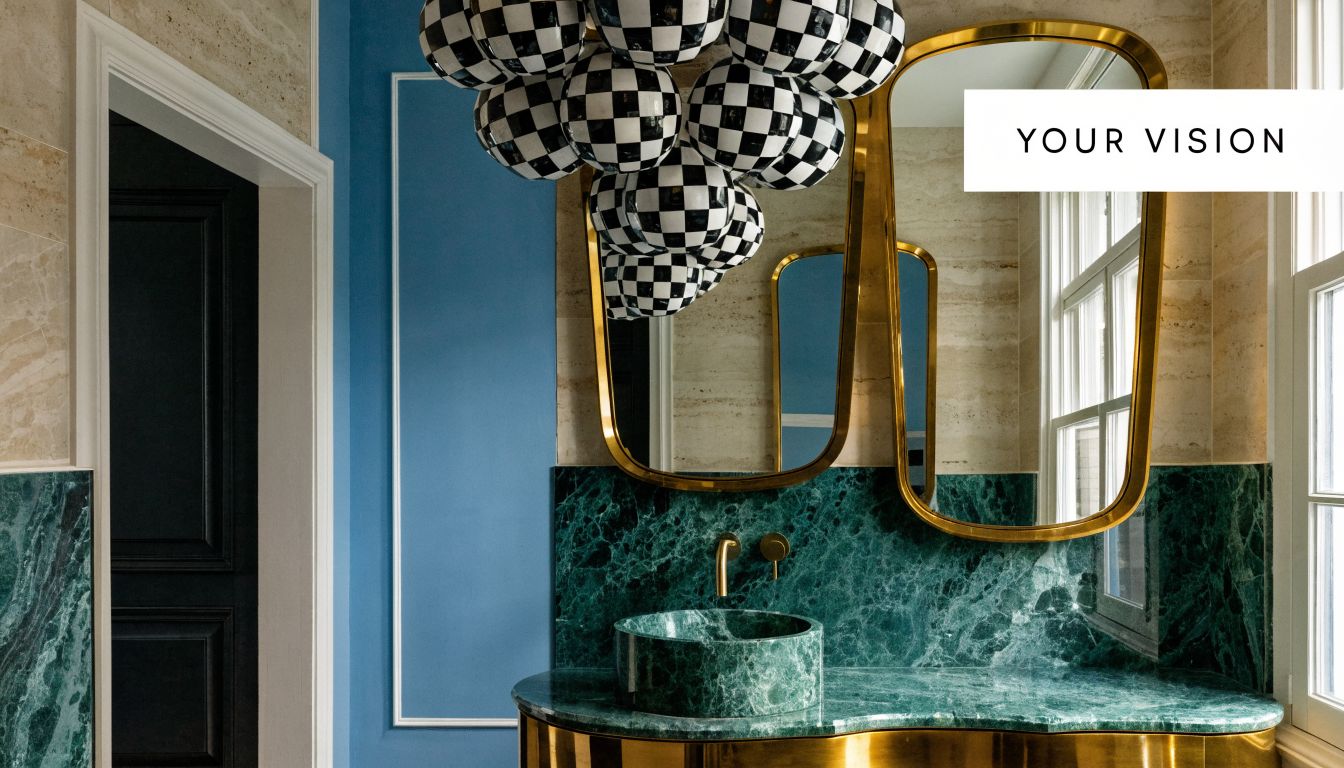
Some homeowners enjoy being fully involved in every selection. Others want a clear expert process that removes the guesswork. Both approaches benefit from the same essentials: careful planning, realistic detailing, strong communication, and trades who understand that a bathroom is one of the most unforgiving rooms in the house for poor workmanship.
The best results usually share a few traits:
- The layout was solved early, before finishes distracted from functional issues.
- The visual language stayed consistent, instead of chasing too many new bathroom ideas at once.
- The build team respected compliance and sequencing, rather than treating them as admin.
- The final room reflected the household, not just a passing online trend.
A bathroom should feel better six months after completion than it did on handover day. That’s the test.
If you want a smoother path from concept to completion, SitePro Bathrooms offers end-to-end bathroom renovations in Highett and across greater Victoria, including 3D design, coordinated construction, and finishes that balance practicality with a designer outcome. You can explore the project gallery and renovation guidance on the SitePro Bathrooms website or get in touch for a personalised consultation on your next bathroom upgrade.
If you’re ready to create a bathroom that feels refined, functional, and properly built for Victorian conditions, talk to the team at SitePro Bathrooms.