

Complete Bathroom Renovation: Your Highett Guide 2026
You've probably already saved a folder full of new bathroom ideas. A brushed nickel mixer here, a floating vanity there, maybe a walk-in shower from a photo that looked perfect on your phone. Then reality starts to creep in. Will it fit? What will it cost? What happens if the room is older than it looks?
That's the point where a complete bathroom renovation stops being a style exercise and becomes a building project. In Highett and across Victoria, that distinction matters. Many homes weren't built to current expectations for ventilation, water efficiency, accessibility, or wet-area performance, so a proper renovation often means rebuilding the room from the inside out, not just changing the visible finishes.
The good news is that bathroom renovations become much easier when you approach them in the right order. Start with how the room needs to work. Build a budget that expects a few surprises. Lock the design before demolition. Put the right builder in charge. Then let the sequence unfold properly.
From New Bathroom Ideas to a Concrete Plan
Most homeowners begin with a look. They want one of those clean, calm modern bathrooms with a wall-hung vanity, better lighting, and storage that works. That's a good starting point, but it's not a brief.
A brief answers practical questions. Who uses the bathroom first in the morning? Is this the main family bathroom or an ensuite? Do you need a bath, or are you only keeping one because the current room has one already? Are you planning to stay in the home long term, or do you want a finish level that supports resale?
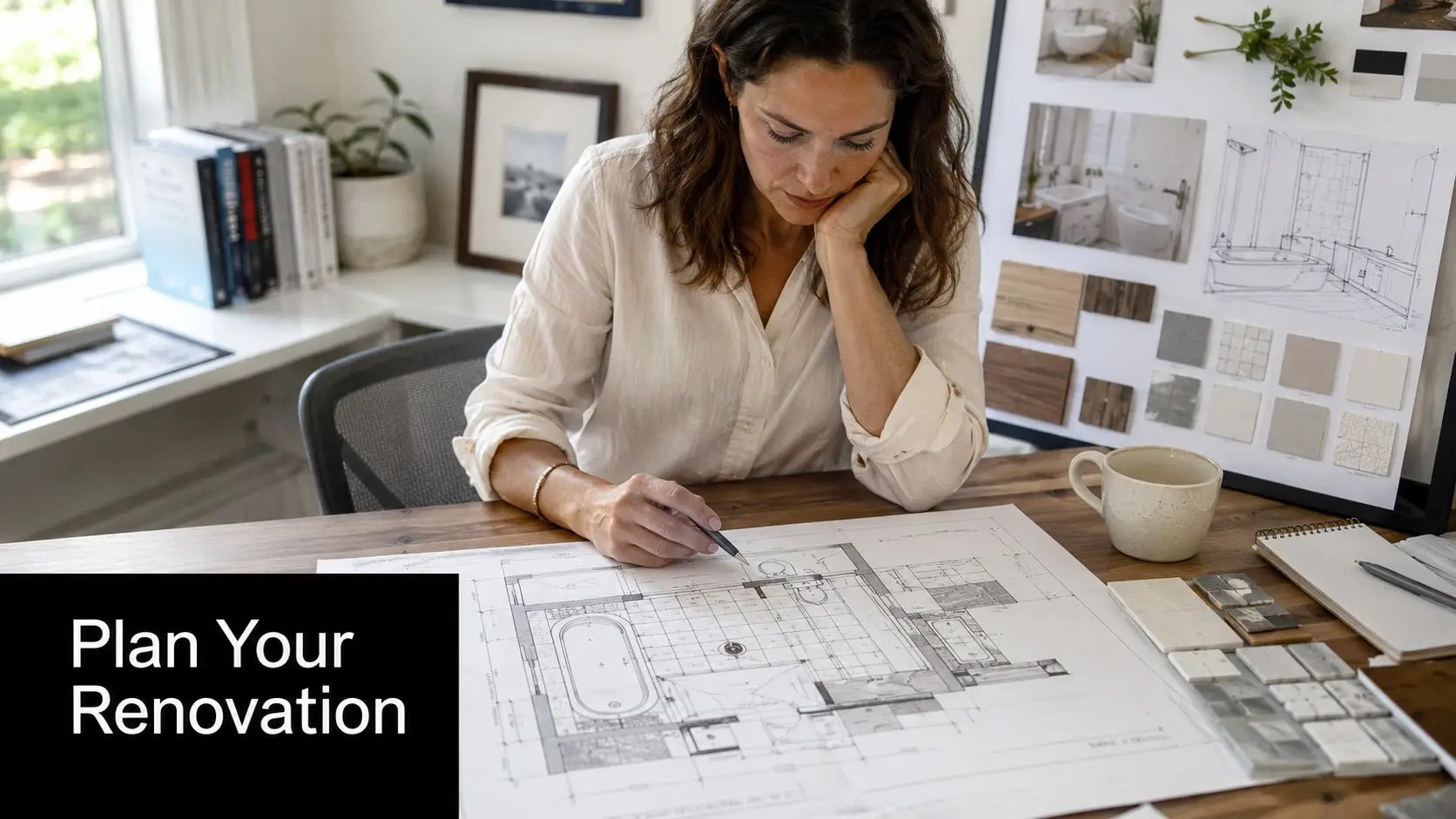
Start with use, not style
A complete bathroom renovation works best when the layout suits your daily routine before any tile or tapware is selected. I've seen plenty of beautiful rooms that looked expensive and felt awkward. A vanity drawer couldn't open fully because the toilet sat too close. A shower screen made the room feel tighter. A freestanding bath looked impressive but made cleaning harder and storage worse.
The better approach is to write down your must-haves first:
- Morning traffic: If two people use the room at once, prioritise bench space, mirror width, and circulation.
- Storage needs: Razors, towels, hair tools, cleaning products, kids' bath items. If they need to live in the room, design storage for them.
- Cleaning tolerance: Open shelves and frameless glass can look sharp, but they also show water spots and clutter fast.
- Long-term comfort: A step-free shower, wider access, and practical grab-point planning can make the room easier to use later without making it look clinical.
Why Highett homes need a different lens
In Australia, a large share of homes were built before modern water-efficiency and accessibility standards became common. In suburbs like Highett, that means a complete bathroom renovation is often driven by essential infrastructure replacement, like updating waterproofing, pipework, and ventilation, as much as by design preference, as noted in this bathroom remodel planning reference.
That's why the phrase “full renovation” shouldn't be used loosely. In many Victorian homes, a true full renovation means more than taking out tiles and fitting new tapware. It can involve correcting old work, upgrading concealed services, and making sure the rebuilt bathroom suits the home's construction type.
Practical rule: If your idea only covers what you can see, your plan isn't finished yet.
Separate wants from needs
This step saves more stress than people expect. Put your ideas into three columns:
| Priority | What belongs here |
|---|---|
| Must have | Better ventilation, safer shower access, more storage, improved waterproofing confidence |
| Nice to have | Feature niche, double vanity, under-cabinet lighting, custom mirror |
| Can live without | Oversized bath in a tight room, unnecessary plumbing relocation, hard-to-clean statement finishes |
This simple filter stops the budget getting eaten by features that don't improve the room's day-to-day use.
Build a brief you can hand to a builder
A workable brief for bathroom renovations should include:
- Who uses the room
- How you want it to feel
- What must stay or move
- What problems the current bathroom has
- What level of finish you expect
That last point matters. There's a big difference between “fresh and durable” and “high-end designer bathrooms with custom joinery and feature lighting”. Neither is wrong. Problems start when expectations sit in one category and the budget sits in another.
Budgeting Your Renovation Without Surprises
A bathroom budget has to do two jobs at once. It has to pay for the room you want, and it has to survive the room you uncover once demolition starts.
That's why broad online estimates often mislead people. A bathroom looks small, so many assume it should be a modest project. In practice, it's one of the most trade-heavy rooms in the house. Plumbing, electrical, waterproofing, tiling, carpentry, glazing, painting, and fit-off all have to line up. If the layout changes, the complexity rises quickly.
What a full renovation usually costs
Industry sources in Australia typically place a full bathroom remodel in the $25,000 to $80,000 range, with pricing often falling around $70 to $250 per square foot, according to this bathroom remodel ROI and cost overview. The same source cites a national average ROI of 80%, while the National Association of REALTORS figure referenced there is 74%. For Victorian homeowners, those figures are best treated as a benchmark rather than a local promise, but they still support the idea that bathroom upgrades are usually long-term asset improvements, not minor cosmetic jobs.
A compact room can still land at the higher end if you move plumbing, choose premium finishes, or need rectification work before the room can be rebuilt.
Sample bathroom renovation budget breakdown
Below is a planning table I'd use to frame expectations. The percentages are indicative only, but they reflect how a complete project is usually distributed.
Sample Bathroom Renovation Budget Breakdown (Victoria)
| Expense Category | Estimated Cost | Percentage of Budget |
|---|---|---|
| Demolition and waste removal | Qualitative allowance | Varies |
| Plumbing and drainage works | Qualitative allowance | Varies |
| Electrical and lighting | Qualitative allowance | Varies |
| Waterproofing and wet-area preparation | Qualitative allowance | Varies |
| Wall and floor tiling | Qualitative allowance | Varies |
| Fixtures and fittings | Qualitative allowance | Varies |
| Vanity and joinery | Qualitative allowance | Varies |
| Shower screen and glazing | Qualitative allowance | Varies |
| Painting and finishing | Qualitative allowance | Varies |
| Contingency | 10–20% | 10–20% |
For a rough planning starting point, a bathroom renovation cost calculator can help you sense-check your expectations before you start requesting quotes.
Where budgets blow out
Three decisions tend to move the number fastest:
- Plumbing relocation: Moving wastes, shower positions, or vanity locations usually adds labour and risk.
- Finish level: Large-format tiles, niche detailing, custom joinery, and premium fittings push the project up.
- Existing condition: Older bathrooms often hide the biggest cost drivers behind the walls and under the floor.
A budget only works if it includes the cost of making the room sound before making it attractive.
Why contingency is not optional
A complete bathroom renovation should budget for a 10–20% contingency above planned spend because hidden defects are common once demolition exposes failed waterproofing, subfloor rot, corroded plumbing, or electrical non-compliance, based on this step-by-step bathroom renovation guide.
That contingency isn't for upgrades you suddenly feel like adding. It's there to protect the job when the room reveals something you couldn't reasonably confirm beforehand.
A realistic budget feels less exciting on day one, but it produces a calmer project.
Designing Your Dream Bathroom With 3D Visualisation
A good bathroom design should answer build questions before trades arrive on site. That's where 3D visualisation earns its keep.
Sketches are useful early. Moodboards help refine the feel. But a complete bathroom renovation needs a design process that tests the room in proportion, not just in concept. Homeowners often approve selections individually, then realise too late that the vanity feels bulky, the niche sits awkwardly, or the tile pattern fights the room.
What 3D design solves
The biggest value of 3D planning is clarity. It lets you test choices before they become expensive.
A proper design review can reveal issues such as:
- A vanity that dominates the room when the walkway is modelled accurately
- Tile scale that feels wrong once the full wall is visible instead of a sample piece
- Mirror and lighting conflicts that weren't obvious on a flat plan
- Storage gaps when drawers, doors, and circulation are shown together
That's especially important when homeowners want designer bathrooms but still need the room to function like a hard-working family space.
How to use 3D visualisation properly
The process works best when you make decisions in layers.
Lock the layout first
Confirm the positions of the shower, vanity, toilet, and bath before discussing finishes in detail.Set the main surfaces
Choose floor tile, wall tile direction, and vanity style. These dominate the room visually.Add lighting and mirrors
Lighting changes how every finish reads. It shouldn't be an afterthought.Refine details last
Tapware finish, niche trims, handles, shaving cabinets, and accessories should support the main decisions, not compete with them.
A practical way to test options early is to use a 3D bathroom planner to compare layouts and sightlines before construction documents are finalised.
If you can spot a design mistake on a screen, you've saved yourself from fixing it with labour, materials, and time.
Modern bathrooms look simple because the planning isn't
The cleanest bathrooms are usually the most resolved. The grout lines line up. The vanity fits the wall. The lighting feels deliberate. The room has breathing space.
That doesn't happen by luck. It happens when the design is coordinated early enough for every trade to work from the same intent. In practice, that means fewer rushed site decisions, fewer late product swaps, and a much better chance that the finished room looks like the one you approved.
Choosing Your Partner The Role of a Registered Builder
A complete bathroom renovation is not a single trade job. It's a tightly sequenced wet-area build with little room for guesswork. That's why the builder matters so much.
Many homeowners consider managing the project themselves. On paper, it can look straightforward. Hire a plumber, then an electrician, then a waterproofer, then a tiler. The problem is that bathrooms don't fail in neat trade categories. They fail at the joins, in the timing, and where one decision affects three other trades.
Why wet areas need central control
For a full bathroom renovation, the highest-cost and highest-risk technical sequence is the wet-area build-up, which includes subfloor repair, waterproofing, tiling, then fixture fit-off. Standard renovation guidance stresses that waterproofing and moisture-resistant lining must be correctly sequenced before tiling to reduce damage, mould risk, and rework, as outlined in this wet-area renovation sequence guide.
That sequence sounds simple until something changes on site. A floor isn't level. A wall is out. A plumbing penetration lands poorly. The screen measurement has to shift. Someone has to decide what changes, who comes back, and who carries responsibility for the result.
That's the fundamental value of a builder. Coordination, accountability, and control.
What a Registered Builder Unlimited brings
In Victoria, many homeowners specifically look for registered builders unlimited because they want one party responsible for managing the full build pathway, not just isolated trade packages.
A strong renovation partner should be able to:
- Coordinate all trades: Plumbing, electrical, carpentry, waterproofing, tiling, glazing, painting, and final fit-off.
- Manage compliance: Wet areas aren't forgiving. Details matter, and so do inspections and documentation.
- Control sequencing: Trades need to arrive in the right order, with the right information, and with selections already resolved.
- Carry responsibility: If something isn't right, you shouldn't be left sorting out which subcontractor blames which other subcontractor.
Homeowners wanting to understand that role in more detail can review why using a registered builder matters for your bathroom renovation.
Questions worth asking before you sign
Use the meeting with a builder to test process, not just personality.
- How do you handle variations? You want a clear method, not vague reassurance.
- Who manages the schedule day to day? One contact point avoids confusion.
- How do you deal with hidden defects once demolition starts? The answer should sound organised, not improvised.
- What's included in the scope? Assumptions create disputes.
The best builder isn't the one who says yes fastest. It's the one who can explain the build clearly, flag risk early, and keep the project moving when the unexpected appears.
The Renovation Sequence Demolition to Finishing
Once the design is locked and selections are organised, the renovation moves into site work. This is the stage most homeowners feel anxious about because the room gets worse before it gets better. That's normal.
A well-run bathroom project follows a disciplined sequence. If trades are rushed or the order gets muddled, the mistakes usually show up later as delays, callbacks, or visible defects.
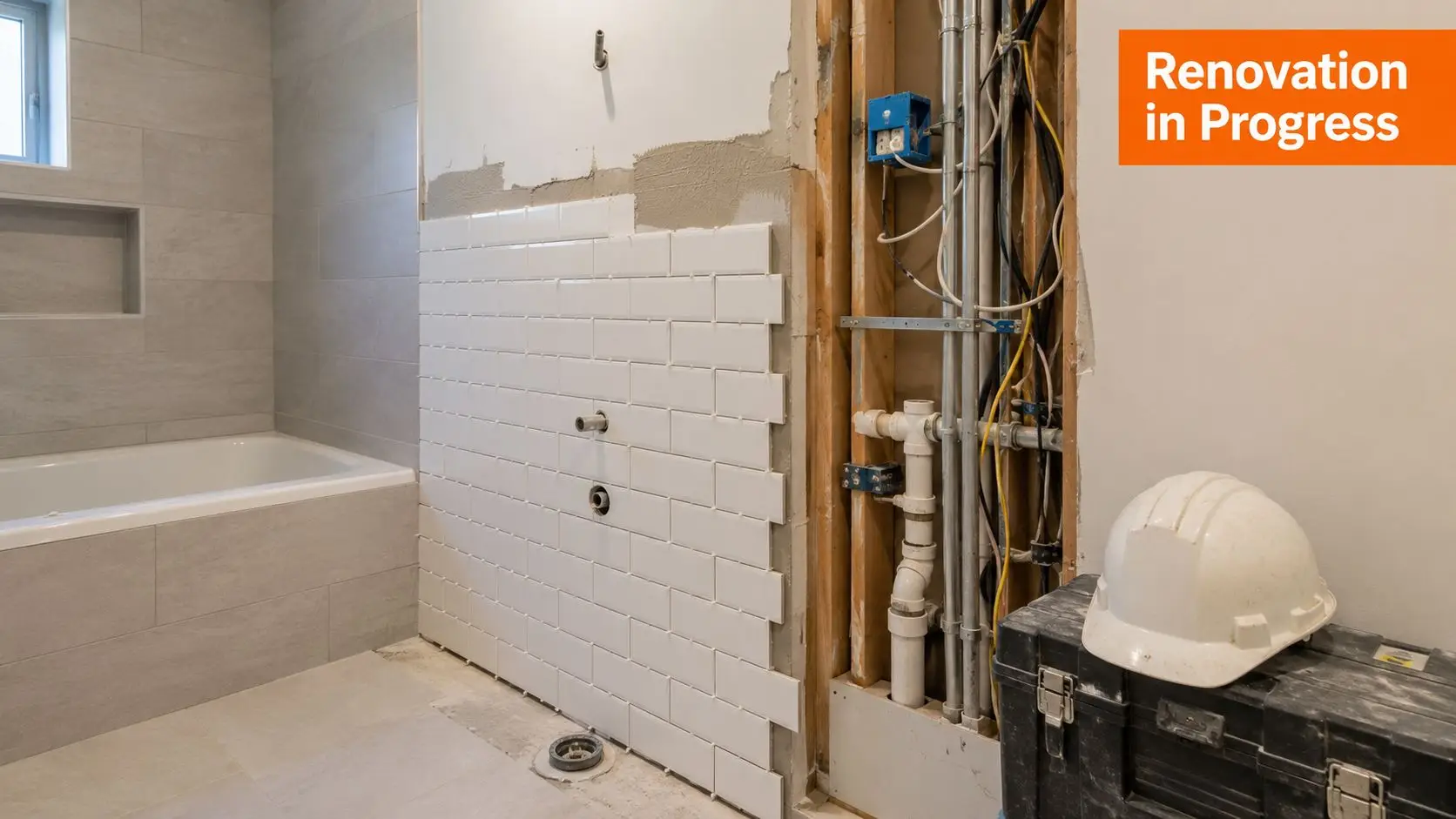
Site protection and demolition
Before the old bathroom comes out, the access path should be protected. Floors, corners, and nearby rooms need attention, especially in occupied homes. Good preparation reduces dust spread and prevents damage outside the work zone.
Demolition is controlled, not reckless. The aim is to strip the room back far enough to inspect the actual condition of the substrate, framing, plumbing, and electrical rough-ins.
Common discoveries at this stage include:
- Water damage around showers and baths
- Out-of-square walls that affect tiling set-out
- Old service locations that don't suit the new layout
- Previous poor workmanship hidden behind finished surfaces
Rough-in and structural preparation
Once the room is open, the builder can complete any necessary framing adjustments and rough-in works. Here, the new layout starts becoming real.
Plumbing and electrical changes happen before the room is closed again. If the design includes niche lighting, mirrored cabinets, a moved vanity, or a relocated shower mixer, this is when those service points are set.
A mistake here tends to echo all the way to fit-off. A mixer set too high, a waste positioned poorly, or a niche framed without regard to tile lines can compromise the final result.
Wall linings and waterproofing
After the rough-in, the room is lined and prepared as a wet area. This part needs patience. It's not visually exciting, but it determines how the bathroom performs over time.
The builder should verify that the substrate is suitable before waterproofing proceeds. Flatness, junction treatment, penetrations, and transitions all matter. Waterproofing should be applied only when the room is ready for it, not because the schedule is tight.
Good bathrooms aren't built by hiding problems neatly. They're built by correcting the base before the finish goes on.
Tiling and set-out
Tiling is where planning either pays off or gets exposed. The tile set-out should feel intentional. Cuts should be balanced. Niches should align with grout lines where possible. Feature walls shouldn't look accidental.
This is also where some “new bathroom ideas” fall apart. A tile that looked excellent on a sample board may overwhelm a compact room. A pattern can become busy once repeated across full walls. The strongest outcomes usually come from restraint, not from loading every surface with a statement.
Painting, glazing, and fit-off
Once tiling is complete and cured, the room moves toward the visible finish line. Painting, glazing, vanity installation, screen fitting, mirror placement, tapware, toilet, lighting, and accessories all happen in the closing phase.
This stage feels quick compared with the earlier work, but it still needs discipline. Final fit-off should not be treated as a race. Fixtures need correct alignment, screens need accurate measurement, and sealant work needs to be neat and deliberate.
A complete bathroom renovation feels smooth to the homeowner when this entire chain has been organised well from the start. The clean handover at the end is the last visible sign of good planning.
Common Renovation Pitfalls and How to Avoid Them
A bathroom renovation usually goes off track before the first tile is laid. The trouble starts in the decisions made at quoting, selections, and site investigation. In older Victorian homes, especially in established suburbs with ageing housing stock such as Highett, hidden defects and compliance gaps are common enough that a loose plan can become an expensive one very quickly.
The pattern is familiar. A homeowner accepts a sharp quote, assumes the room is straightforward, then discovers the floor is out, the wiring is dated, or previous waterproofing has failed. By that point, choices are narrower and costs are harder to control. A Registered Builder Unlimited helps reduce that risk because the job is assessed as a building project, not just a cosmetic update.

Pitfall one: comparing quotes that don't match
The cheapest quote is often the least detailed quote. One builder may have allowed for floor correction, compliant waterproofing, disposal, protection of adjoining areas, and proper supervision. Another may have priced only the visible items, then relies on variations once the room is open.
That is where budget blowouts begin.
Ask for a scope that is specific enough to compare properly:
- A detailed inclusions list that spells out labour, materials, fixtures, and site works
- Clear exclusions so you can see what has not been allowed for
- A written variation process before the contract is signed
If two quotes are far apart, the answer is rarely “one builder is just cheaper”. Usually, the scope is different.
Pitfall two: changing selections after work starts
Late changes ripple through the whole room. A different vanity can alter plumbing positions. A different tile size can affect set-out and waste. A different screen configuration can change measurements and lead times.
Clients sometimes treat selections as flexible until mid-build. On site, that flexibility costs time and money. The safer approach is to finalise fittings, finishes, and dimensions before demolition starts. If a key item is still undecided, delay the start date rather than forcing the site team to guess and adjust later.
Pitfall three: underestimating the existing room
Older bathrooms hide problems well. In Victorian homes, we regularly find water damage around showers, subfloors that need repair, inadequate ventilation, and electrical work that no longer meets current expectations. None of that appears on a mood board, but it affects cost, sequence, and the final standard of the room.
This is one reason older-home bathroom work should be led by the right class of builder. A Registered Builder Unlimited is better placed to manage structural rectification and coordinate licensed trades if the room turns out to need more than a surface replacement.
Pitfall four: treating compliance as an afterthought
Homeowners usually focus on tiles, tapware, and layout. The costly mistakes are more often in the parts you do not see once the room is finished. Waterproofing, ventilation, falls, substrate preparation, and trade sequencing all need to be right the first time.
Fixing non-compliant work after completion is far more expensive than doing it correctly from day one.
The practical way to avoid most renovation problems is simple. Start with a realistic scope, lock your selections early, allow for the age of the house, and use a builder who can manage both the visible finish and the hidden building work underneath it.
FAQ for Victorian Bathroom Renovations
Do I need a contingency for a complete bathroom renovation?
Yes. Include a contingency for concealed building issues, especially in older Victorian homes around suburbs like Highett where bathrooms often sit over tired subfloors, patched plumbing, or outdated wiring. Once demolition begins, the actual condition of the room becomes clear, and that can change the scope fast.
Is it worth moving the plumbing?
Sometimes. The question is whether the improved layout justifies the added plumbing work, floor alterations, and approval requirements that can come with it. In many projects, keeping fixtures close to existing waste and water points gives a better balance of cost, buildability, and long-term reliability.
Can small bathrooms still feel high-end?
Yes, if the layout is disciplined. A compact bathroom usually benefits more from clear circulation space, good lighting, recessed storage, and consistent finishes than from squeezing in extra features. I have seen small rooms outperform larger ones because every decision served the way the space would be used.
What makes a bathroom feel dated fastest?
Short-lived trends usually date a bathroom before the room has even had time to wear in. Feature tiles used too heavily, fashionable colours that dominate the space, and busy material changes tend to age poorly. In Victorian renovations, a simpler palette often works better because it sits more comfortably with the character of the house.
Should I choose a bath or a larger shower?
Choose based on the household first. A main family bathroom often benefits from a bath, while an ensuite or smaller room usually gets more daily value from a generous shower and better storage. If resale matters, consider the broader house as well. One bath somewhere in the home is often enough.
What's the smartest first step?
Start with a brief that covers function, constraints, and the age of the property. In Victoria, that means looking beyond finishes and asking what the existing structure, services, and ventilation will allow. If the home is older, a Registered Builder Unlimited can assess whether the project is a straight replacement or whether hidden building work is likely to sit behind the cosmetic upgrade.
If you're planning a complete bathroom renovation in Highett or anywhere across Victoria and want a coordinated path from design through construction, SitePro Bathrooms can help you plan your renovation.