

On a winter morning in Highett, the bathroom floor can be the coldest surface in the house. You leave a warm bed, step onto tile, and the room feels far less inviting than the renovation photos suggested it would. That's usually the moment homeowners start asking whether bathroom floor heating is worth adding while the room is already being stripped back.
In the right bathroom, it is. Not because it turns a bathroom into a miracle energy saver, and not because every home needs it. It works because it fixes a very specific daily problem well. Cold tile becomes comfortable underfoot, the room feels more finished, and the whole space leans closer to the standard people expect from modern bathrooms and well-planned bathroom renovations.
That Icy Shock The Case for Warm Bathroom Floors
Step onto cold tile at 6:30 on a July morning in Highett and you feel the problem straight away. In a lot of older Victorian homes, the bathroom is one of the chilliest rooms in the house. Solid surfaces, little passive warmth, and older layouts all work against comfort.
That is why underfloor heating keeps coming up early in renovation planning. It solves a daily irritation in a part of the house you use first thing and last thing. In the right bathroom, it is not a flashy extra. It is a comfort upgrade with a clear job.
In Melbourne and across the bayside suburbs, this lands differently in older housing stock than it does in a brand-new build. Many Victorian-era and mid-century homes have bathrooms added or updated in stages, often with limited insulation below the floor and little thought given to winter comfort. Heated flooring helps correct that, but it needs to be planned properly around floor build-up, waterproofing, and the electrical or plumbing work already going into the room.
Why homeowners ask for it
Homeowners usually raise heated floors for practical reasons, not novelty.
- Cold tile every winter: The bathroom looks good after a renovation but still feels harsh underfoot.
- A more complete result: The fixtures and finishes are new, and they want the comfort level to match the visual standard.
- Better use of a small room: In a bathroom, a modest upgrade can change the way the whole space feels.
- Long-term value: If you are already stripping the room back, this is the stage where adding heating is far easier than trying to retrofit it later.
Warm floors do not scream for attention. They make the whole bathroom feel better built.
Why it suits bathrooms so well
Bathrooms are one of the few places where underfloor heating punches above its size. The rooms are compact, tiled surfaces are common, and you notice temperature at floor level more than you do in a hallway or living area. A small heated area can make the room feel far more comfortable without changing how the bathroom looks.
There is also a practical renovation advantage. In Victoria, bathroom work needs to line up with code requirements around waterproofing, clearances, electrical safety, and, where applicable, plumbing changes. Heated floors can fit well within that process, but only if the builder, waterproofer, tiler, and electrician are working from the same plan. That coordination matters even more in older homes where subfloors are rarely perfectly level and existing construction can throw up surprises once demolition starts.
An experienced registered builder such as SitePro adds value. The question is not just whether heated floors can be installed. It is whether they can be installed cleanly, safely, and in a way that suits the home, the budget, and the rest of the renovation.
Done well, bathroom floor heating improves comfort every winter morning. Done badly, it adds cost, floor height problems, or avoidable rework. That is why it pays to treat it as part of the bathroom build, not as an afterthought.
Electric vs Hydronic Systems Which Is Right for You
Step onto a tiled bathroom floor in a Highett winter and the question gets simple very quickly. You want warm tiles underfoot, but you also want a system that suits the way Victorian homes are renovated.
For bathroom-only projects, the choice is usually straightforward. Electric underfloor heating fits most renovations better. Hydronic underfloor heating can work well, but it is generally better suited to new builds, major extensions, or homes already being designed around a larger water-based heating setup.
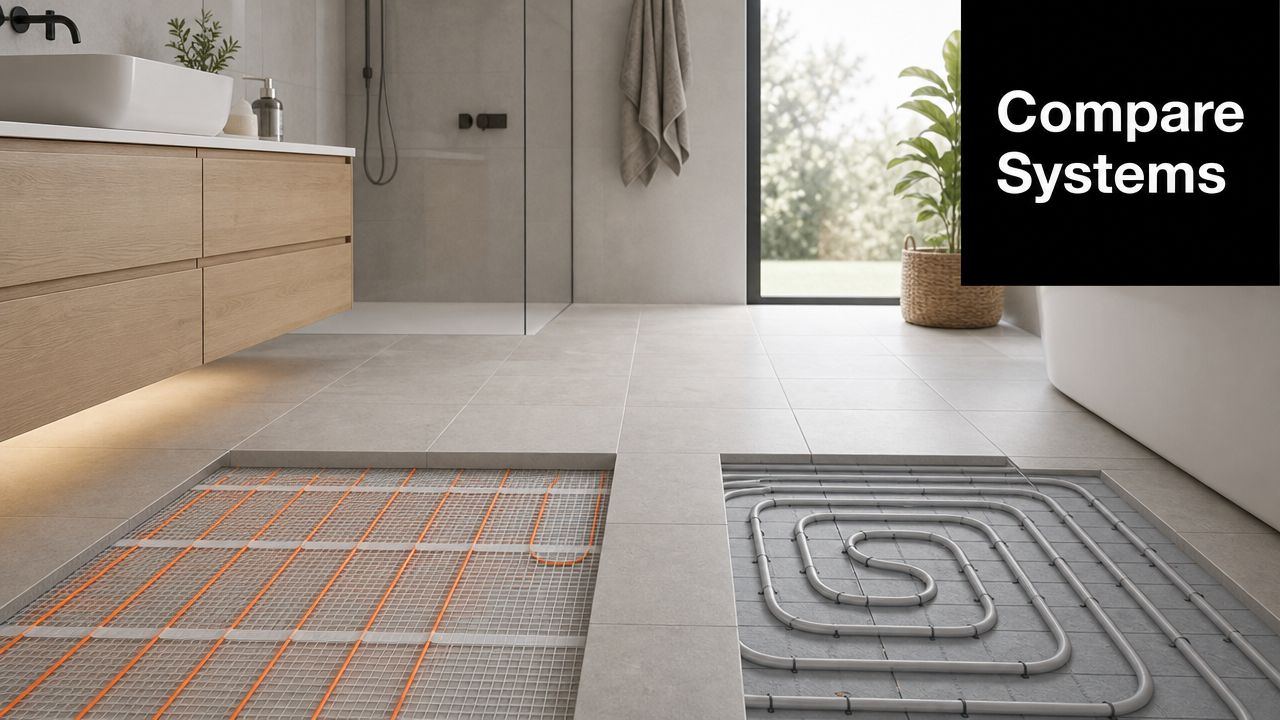
Electric systems use mats or loose cables laid beneath the tile finish. Hydronic systems circulate heated water through pipework in the floor. Both can produce a comfortable result. The difference is how much work is involved to get there, how the floor build-up affects the room, and whether the rest of the house is being heated the same way.
That matters in older Victorian homes. Many have uneven subfloors, limited floor height, and renovation constraints that do not leave much room for bulky build-ups or extra plant. Once you add waterproofing, falls to wastes, tile thickness and door clearances, a system that looks fine on paper can become awkward on site.
The practical difference in a bathroom renovation
Electric systems heat up faster and are easier to control around daily routines. If the bathroom is busiest from 6:30 to 8:00 in the morning and again at night, electric usually suits that pattern well.
Hydronic systems are slower to respond and make more sense where they stay on for longer periods or serve several spaces together. In one bathroom, that can be more system than the job really needs.
| Feature | Electric System (Mats/Cables) | Hydronic System (Pipes) |
|---|---|---|
| Best fit | Bathroom renovations, ensuites, powder rooms | New builds, large homes, multi-room heating plans |
| Heat-up behaviour | Faster response for intermittent use | Slower, steadier response |
| Installation complexity | Simpler in a single-room renovation | More involved, especially in an existing home |
| Floor build-up pressure | Usually easier to manage in tight retrofits | Can be harder where floor height is limited |
| Coordination needs | Mainly builder, tiler, waterproofer, electrician | Broader system coordination and plant planning |
| Practical value in a bathroom-only job | Strong | Often hard to justify unless part of a larger system |
Where electric usually wins
In my experience, electric is the better fit for a standard bathroom renovation in Highett for three practical reasons.
- It is easier to integrate into a renovation. The system can usually be planned within the normal tile and floor preparation sequence without turning the project into a larger mechanical design exercise.
- It suits smaller rooms. Bathrooms, ensuites and powder rooms do not need the same heating strategy as open-plan living areas.
- It gives better value for a single room. Homeowners are usually after comfort, reliable controls and a clean finished floor, not a full-house heating overhaul.
It also tends to be easier to price clearly. If you are already weighing tile choices and finish costs, it helps to understand how heating works alongside the overall bathroom tiling cost rather than treating it as a separate add-on with no relation to the rest of the floor assembly.
Where hydronic makes sense
Hydronic earns its place in the right project. If the home is a new build, if there is a slab designed for it, or if several rooms will run off the same heating system, hydronic can be a sound long-term choice. It can also appeal in high-end builds where the entire heating approach is being planned from day one.
That is a narrower use case in bathroom renovations across Victoria.
The other point homeowners often miss is approvals and trade coordination. In Victoria, bathroom work has to line up with the National Construction Code, waterproofing requirements, electrical safety rules, and any plumbing changes tied to the renovation. A registered builder like SitePro can coordinate those moving parts early, which matters more with hydronic because there are more components, more set-out decisions and less room for late changes.
For a single existing bathroom, electric usually delivers the comfort people want with less disruption, less floor-height pressure and fewer complications on site. Hydronic is still a good system. It just tends to make the most sense when the bathroom is one part of a bigger heating plan.
Understanding the Costs of Bathroom Floor Heating in Victoria
Bathroom floor heating is one of those upgrades that sounds simple until the quote lands. In Victorian homes, the price can shift quickly based on the age of the property, the type of subfloor, and how much work is already happening in the renovation.
The first thing I tell homeowners in Highett is to look at cost in two parts. Installation is only half the decision. Ongoing use matters too, especially if the system will run daily through winter rather than only on cold mornings.
What you are actually paying for
A proper quote should separate the heating system from the building work around it. That matters because the heater itself is only one part of the floor assembly.
Typical cost items include:
- Heating supply: Electric mat or loose cable, thermostat, sensor, and control components.
- Subfloor preparation: Levelling, patching, or build-up work so the finished floor sits correctly.
- Floor assembly: Bedding the heating element properly so heat transfers well and the tile finish stays sound.
- Electrical work: Final connection and testing by a licensed electrician.
- Tiling and finishing: The heating layer has to work with the full floor build-up, which is why it helps to understand what affects bathroom tiling cost in a renovation.
That last part gets missed a lot. Heated floors do not sit outside the renovation. They affect heights, tile adhesive depth, transitions at the doorway, and sometimes the waste set-out.
Why costs vary so much in Victorian homes
Victorian housing stock is mixed, and that is where pricing starts to move. A 1970s brick veneer home on slab is a different job from a period weatherboard bathroom on timber joists. Apartments add another layer again, especially where floor height, strata requirements, and access are tight.
Older bathrooms also tend to hide surprises. Uneven substrates, outdated wiring, previous patch repairs, and floors that are out of level can all add labour before the heating goes down. In many cases, that preparation work has more impact on the final figure than the heating product itself.
Building compliance matters too. In Victoria, heated bathroom floors need to fit within the wider renovation scope, including waterproofing, electrical safety, and National Construction Code requirements. If the job includes structural changes or major bathroom works, coordination through a registered builder like SitePro helps avoid expensive rework later.
Good value usually comes from smarter coverage
Heating every bit of floor area is rarely the best use of the budget.
The better approach is to heat the zones you stand on. In front of the vanity, beside the shower, and through the main walking path usually delivers the comfort people notice most. There is no point paying to heat under a fixed vanity, toilet pan, or full-height joinery where the warmth will not be felt.
That approach keeps supply and running costs under better control, and it often makes the layout easier for the installer and tiler as well.
Running costs depend on how the room is used
Ongoing cost is less about the system in isolation and more about habits. A bathroom that gets used at the same time every morning is cheaper to run sensibly because the heating can be programmed around that routine. A floor left on longer than needed costs more, and poor insulation below the heating makes that worse.
For most households, underfloor heating works best as a comfort upgrade. It is there to take the chill off the tiles and make winter mornings easier. That is usually where the value sits in a Victorian bathroom renovation. Not in cheap whole-room heating, but in a warmer floor that feels good every day and fits the way the home is used.
Designing Your Heated Floor for Perfect Warmth
Step onto a cold bathroom floor in a Melbourne winter and you feel every shortcut made in the design. Good heating does not start with the cable or the mat. It starts with the layout, the floor finish, and a clear plan for how the room will be used in a Victorian home.
Start with the floor finish
Tile is usually the right choice for a heated bathroom floor. Ceramic and porcelain both transfer warmth well, hold heat nicely underfoot, and already make sense in wet areas where durability and cleaning matter. In older Victorian homes around Highett and across Melbourne's bayside suburbs, that practical fit matters because bathroom renovations often need to work around uneven subfloors, tighter floor heights, and existing wet-area conditions.
The finish also affects how the whole system feels day to day. Large-format porcelain can look great, but it needs a flatter substrate and careful set-out. Smaller tiles can be more forgiving in older rooms that are a little out of square. If you are still weighing up finishes, this guide on how to choose bathroom tiles is worth reading before the heating plan is finalised.
Design the heated area around real use
A warm bathroom floor feels best when the heating is placed where bare feet land.
That means the design should follow the usable floor area, not the room outline on a plan. In practice, fixed vanities, toilet pans, bath hob bases, shaving cabinets that run to the floor, and full-height joinery all reduce the area worth heating. I regularly see homeowners assume a bigger heated area means a better result. Usually it just means spending more on sections of floor you never stand on.
The better layouts focus on three zones:
- In front of the vanity, where people stand the longest
- At the shower entry or beside the bath, where the floor feels coldest
- Along the main walking line, especially in narrow bathrooms
That approach suits many Victorian renovations because these homes often have compact bathrooms and awkward footprints. A smartly placed heated zone gives a better comfort result than trying to cover every corner.
Plan around fixtures early
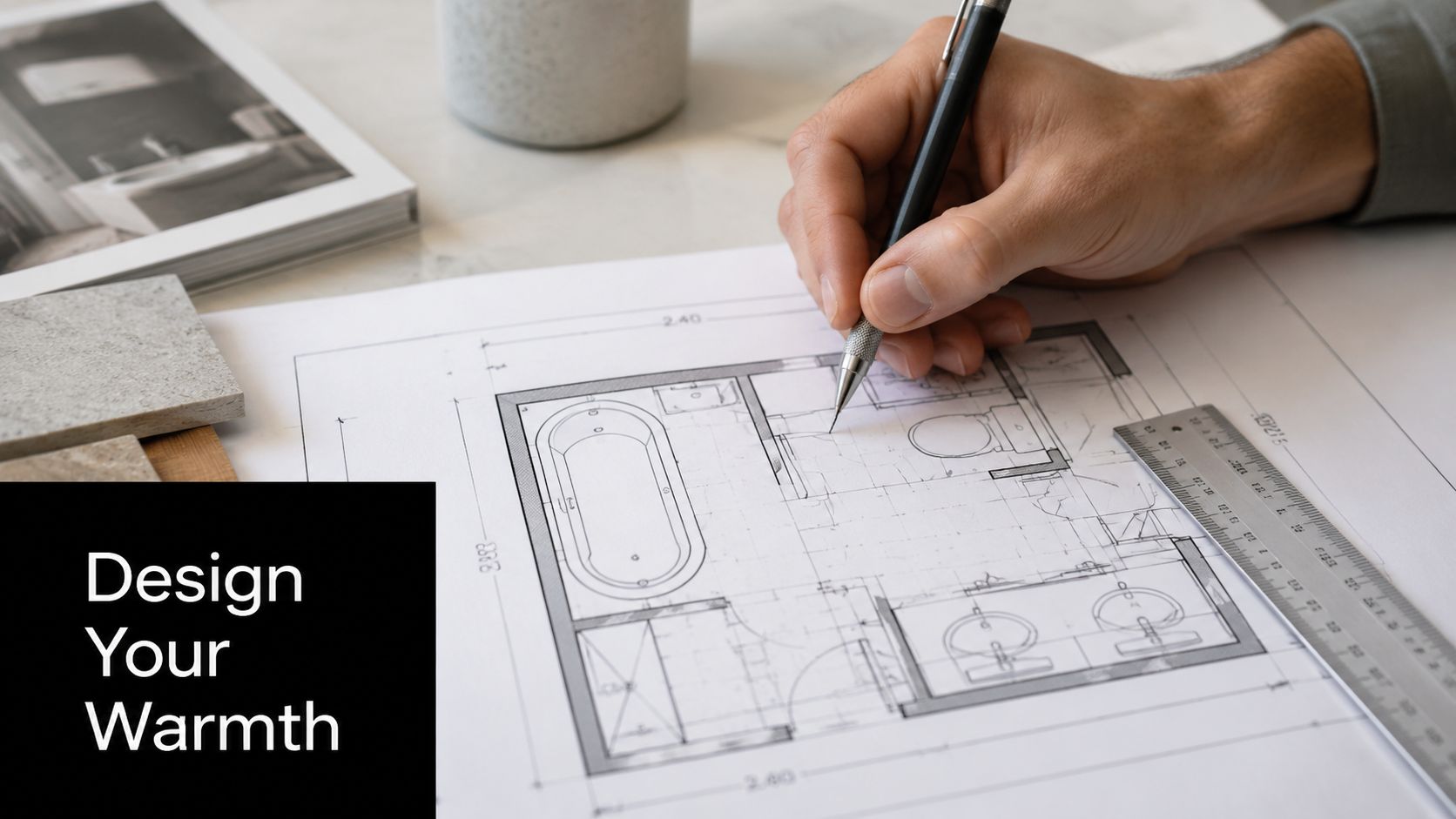
Heated floor design and bathroom design need to be coordinated from the start. If the vanity moves by even a small amount after the heating layout is drawn, the cable or mat position may need to change as well. The same goes for floor wastes, wall-hung toilets, nib walls, and shower screens.
This is one reason planning matters more in older Victorian homes. Existing framing, plumbing positions, and floor levels can limit what is easy to shift. If the renovation involves structural changes or a new layout, coordination through a registered builder such as SitePro helps keep the heating design aligned with the rest of the job and with Victorian building requirements.
Sensor location affects comfort
The floor sensor is a small detail that has a big effect on performance. Put it in the wrong spot and the floor can feel patchy or cycle poorly. It should sit where it can read a representative floor temperature, not tucked against a hot cable run or buried where future access becomes difficult.
Homeowners rarely see this part once the tiles are down, but it matters. A good design is not only about getting heat into the floor. It is about making sure the system responds properly on cold mornings and stays reliable over time.
Good design respects floor build-up
Underfloor heating adds layers. In a new build that is usually easy to accommodate. In a bathroom renovation, especially in an older Victorian house, added height can affect door clearances, shower set-downs, transitions to adjoining rooms, and the finished height at the hallway.
That trade-off needs to be sorted before materials are ordered. A heating system that looks fine on paper can create a poor threshold detail or extra work at the shower if nobody has allowed for the full floor build-up. The warmest floor is not the best result if the renovation ends up with awkward levels or drainage problems.
Installation Planning for Your Bathroom Renovation
Bathroom floor heating in Australia is not a casual add-on. In a wet area, every layer matters. If the planning is sloppy, you don't just get weak performance. You risk damage to waterproofing, poor sensor placement, difficult repairs and compliance problems that should never have been created in the first place.
Why this isn't a DIY wet-area job
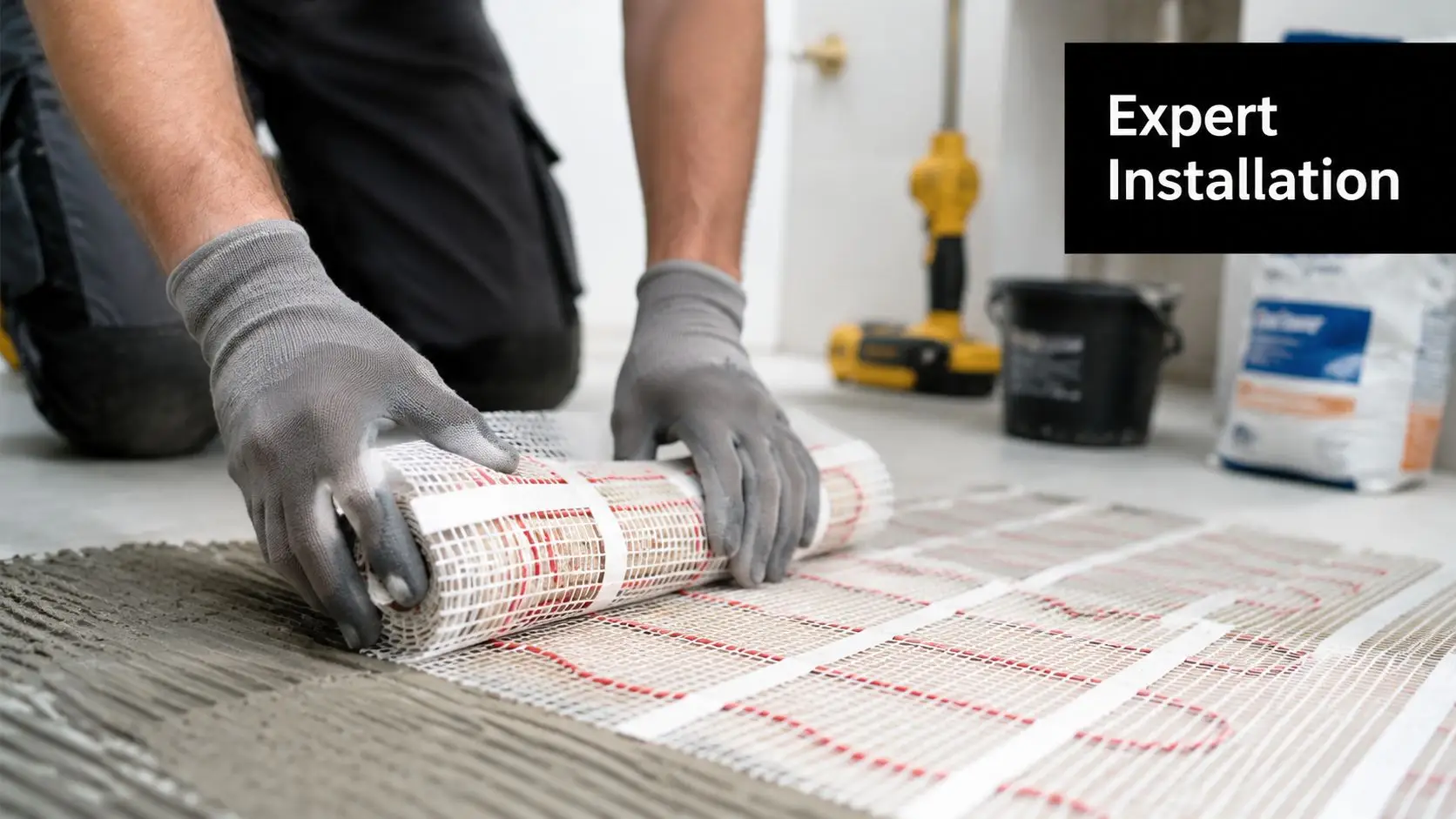
A bathroom renovation already requires careful sequencing between demolition, substrate preparation, waterproofing, tiling and electrical work. Add floor heating and the margin for error gets tighter. Once the system is embedded below tile, mistakes become expensive and disruptive to fix.
One practical Australian concern that's often underexplained is wet-area compliance. A trade-focused discussion of bathroom floor heating highlights that the system must be correctly embedded, the temperature probe carefully positioned, and the electrical connection managed by a licensed professional to protect waterproofing integrity and meet safety requirements.
The details that separate a good job from a problem job
The system itself isn't the hard part. The hard part is coordination.
- Sensor placement: The thermostat sensor should sit between heating wires, not touching them. A backup sensor in the wall cavity is a sensible safeguard if the primary one fails.
- Correct embedding: The heating element needs proper coverage within the floor assembly for protection and even heat transfer.
- Electrical sign-off: Final connection belongs to a licensed electrician, not a general trade improvising at the last minute.
- Waterproofing continuity: Every penetration and layer has to be considered with the wet area as a whole.
A homeowner usually won't see those details once the room is finished. That doesn't make them optional.
Why insulation and subfloor prep matter
A useful benchmark from an installation specification is 10 W/sq ft for many electric mat systems, which helps explain why these products are typically used as comfort heating rather than primary whole-house heating. The same guide notes that insulation under the system is often recommended on concrete slabs and that the element should be embedded in thinset or self-levelling cement to improve thermal contact and protect the cable. It also explains the basic cause and effect clearly. Better insulation and tighter embedding improve heat transfer to the tile surface and help shorten warm-up time. That specification detail is outlined in this underfloor heating installation procedure.
In older Victorian homes, this matters a lot. Some bathrooms sit over cold slabs. Others have timber floors that need careful build-up management. If the base isn't prepared properly, the system can still work, but it won't work as well as it should.
Practical rule: Treat the heated floor as one part of the whole bathroom build-up, not as a separate accessory.
Who should coordinate it
A registered builder unlimited earns their place. Not because they personally install every component, but because they manage the sequencing, documentation, trade handover and accountability. That's especially valuable in a full bathroom renovation where the floor heating has to integrate with tile set-out, waterproofing details and overall floor height planning.
If you're mapping out the whole scope, this is the right stage to work through a proper renovation sequence such as this guide on how to plan a bathroom renovation.
Is It Worth It The ROI of Comfort in a Victorian Climate
For most Victorian households, bathroom floor heating is worth considering for comfort first. That's the honest answer. If someone is expecting it to behave like a financial windfall, they'll probably be disappointed. If they want a bathroom that feels better every day, the value case gets much stronger.
A practical discussion around Australian bathrooms in temperate climates puts it well. The main question is whether the upfront cost is justified by intermittent use, and the value is often found in comfort, moisture management and a more premium bathroom feel rather than pure energy savings. That's exactly how most successful bathroom heating decisions are made.
Where the value really sits
The return comes from a few places working together:
- Daily comfort: The coldest surface in the room stops being the thing you dread in winter.
- Moisture handling: A warmer floor can help the room feel drier and more settled after showers.
- Perceived quality: Heated floors push a renovation into the category of modern bathrooms that feel thoughtfully upgraded, not just cosmetically updated.
For landlords and resale-minded owners, it can also help a bathroom stand apart. Not because every buyer will ask for it by name, but because better comfort tends to lift the overall impression of the room.
When it may not be worth it
There are bathrooms where it doesn't stack up well. A rarely used guest bathroom. A budget-driven rental refresh where the brief is durable and simple. A project where floor height constraints, electrical limits or waterproofing complexity make the trade-off poor.
The best decisions usually come from being specific about use. If the bathroom is used every day, mainly in colder months, and the renovation already includes quality tile work and updated controls, heated flooring often feels justified. If the room sees very light use, you may be better off putting the money elsewhere.
In Victoria, bathroom floor heating usually pays back in lived experience, not in bragging rights on a spreadsheet.
Start Your Bathroom Renovation with a Specialist in Highett
Once you know bathroom floor heating is something you want to explore, the next step is simple. Gather the right information before asking for a quote. That makes the conversation more useful and helps the builder tell you quickly whether the idea suits your bathroom, your layout and your budget.
What to have ready
Bring practical details, not just inspiration images.
- Room dimensions: Even rough measurements help start the discussion.
- Floor finish preference: Tile choice affects both performance and build-up.
- Subfloor type: Concrete slab, timber floor, apartment substrate or unknown.
- Fixture plan: Bath, vanity, toilet, shower location and whether any joinery will be fixed to the floor.
- Your priorities: Comfort, premium finish, fast heat-up, design look, or overall budget discipline.
If you've saved examples of new bathroom ideas, bring those too. They can reveal more than style preference. They often show whether you're leaning towards cleaner layouts, larger format tile, floating fixtures or a more detailed designer bathrooms brief.
Questions worth asking at the first meeting
A productive consultation usually covers things like:
- Is my bathroom a good candidate for floor heating?
- Should we heat the full open area or only a partial zone?
- Will floor height become an issue in this renovation?
- How will the heating layout affect waterproofing and tile set-out?
- Who coordinates the trades and electrical sign-off?
Those questions matter because underfloor heating performs best when it's designed as part of the whole renovation, not added late as an afterthought.
Why specialist coordination matters
In Highett and across greater Victoria, the easiest bathroom projects are the ones with one clear point of responsibility. A specialist renovation company can assess the room, prepare the layout, manage the sequencing and make sure the finished bathroom works as a whole.
SitePro Bathrooms is a local Highett renovation specialist and a registered builder unlimited, handling bathroom renovations from concept through construction and finish. If you want specific advice on heated floors, layout planning, modern bathrooms, or a full renovation scope, the best next step is to contact SitePro Bathrooms for a personalised renovation quote.