
You're probably in the same spot as a lot of Melbourne homeowners. You've saved a folder of modern bathrooms, you've compared vanity styles, and you keep coming back to the same clean, cohesive look. No raised basin. No visible join. Just one crisp surface that makes the whole room feel calmer and more expensive.
That look usually comes from an integrated bathroom sink.
It's easy to see why people like them. In designer bathrooms, an integrated sink often becomes the visual anchor of the vanity wall. It reads as tidy, contemporary, and well resolved. But after years of working around bathroom renovations, I can tell you this is one of those choices that shouldn't be made on looks alone. The ultimate decision involves the day-to-day use of the bathroom, how careful the household is, how likely staining is, and what happens if the basin gets damaged.
That matters whether you're planning a family bathroom, an ensuite refresh, or a full renovation with a professional team. The best sink isn't always the one that photographs best. It's the one that still works for your home years after handover.
The Centrepiece of Modern Bathroom Renovations
A typical renovation starts with photos. Then the practical questions show up. How hard is this to keep clean, what happens if it chips, and will I be replacing the whole top in eight years because one basin cracked?
That is why integrated sinks get so much attention. They give a bathroom a cleaner, more resolved vanity wall, and they often become the feature people notice first. In a modern renovation, the vanity usually sits in direct view from the doorway, so the sink has a bigger visual job than many homeowners expect.
The appeal is real, but so are the trade-offs. An integrated sink can make a modest bathroom look more considered without adding extra fittings or visual bulk. It can also lock you into a more expensive repair path later, because the basin is part of the top rather than a separate piece you can swap out.
Why people keep choosing it
In real projects, homeowners usually choose an integrated sink for a few practical reasons:
- Cleaner presentation: The vanity reads as one finished surface, which suits contemporary bathrooms.
- Less fuss around the basin edge: There is no raised rim where grime often builds up.
- A more bespoke result: Even a standard-size vanity can look like it was custom made for the room.
Those are good reasons. They just should not be the only reasons.
I usually tell clients the same thing. People rarely regret a sink that is easy to wipe down. They do regret choosing one that is expensive to repair without knowing it upfront.
That long-term ownership side gets missed in a lot of design-led advice. For a main family bathroom, an integrated sink can work well if the material is forgiving and the household will treat it reasonably carefully. For rentals, kids' bathrooms, or homes where easy replacement matters, a separate basin often gives you a simpler and cheaper path if something goes wrong later.
Understanding the Integrated Sink Concept
An integrated sink is exactly what it sounds like. The basin and benchtop are made as one continuous unit, rather than a separate bowl being dropped into or mounted under a vanity top.
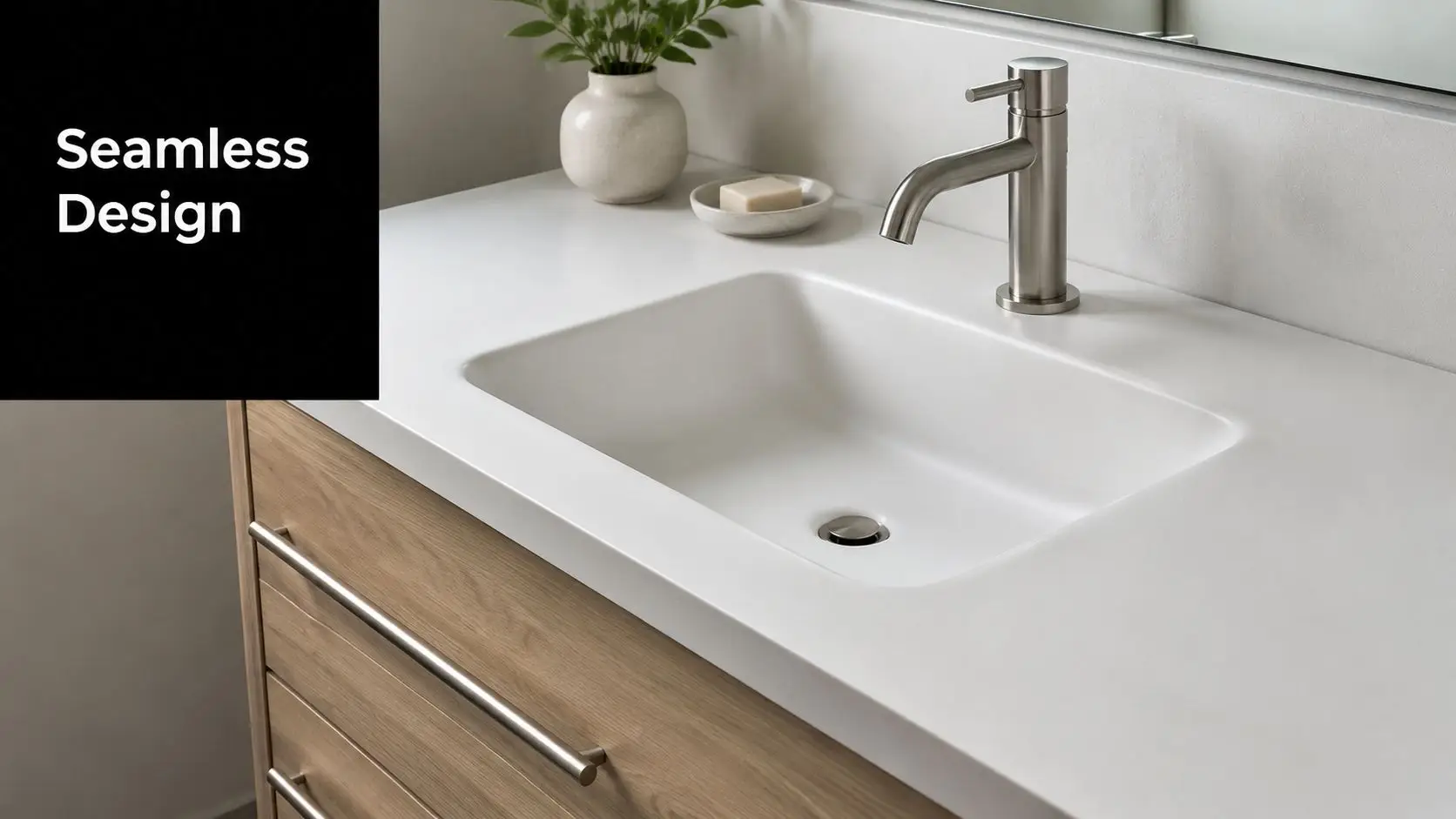
An integrated sink employs a unibody design. Instead of separate parts meeting at an edge, the sink and top are formed together. That's why the surface looks so clean. It also explains why these sinks are often chosen for bathrooms where low visual noise is part of the design brief.
According to this integrated sink overview, integrated bathroom sinks are specified as a single continuous assembly where the basin is fabricated from the same material as the countertop, eliminating the joint line where water, soap residue, and biofilm typically accumulate.
What that means in everyday use
In practical terms, the missing joint line is the whole story.
With many standard sink setups, the trouble spot is the perimeter where one element meets another. That edge can trap residue, hold moisture, and become the bit that always looks tired first. An integrated sink removes that weak visual and cleaning point.
That usually gives you:
- Less edge grime: No lip for soap scum to sit against.
- Simpler wiping down: You can clean the top and basin as one surface.
- A neater finish: The vanity reads as one object, not several parts fitted together.
For busy homes, that's a genuine benefit. If the bathroom gets used hard before school, before work, and before sport on weekends, fewer joins usually means less fuss.
Where people get caught out
The same feature that makes an integrated sink neat also makes it less flexible.
Because the bowl is part of the top, you can't treat it like a separate item later. The shape, slope, and proportions are set by the fabrication. If you decide you don't like the basin profile, or if the top suffers localised damage, your options are narrower than they would be with a stand-alone basin.
Practical rule: If you want the least maintenance in daily cleaning, integrated usually performs well. If you want the easiest future replacement, it usually doesn't.
That's why this choice needs to be matched to the household, not just the style board.
Exploring Materials and Design Styles
Once you've decided you like the integrated look, the next question is material. The selected material can make the bathroom feel refined or overly delicate. Material choice changes the appearance, the feel under hand, and how forgiving the sink will be in daily use.
The most common options homeowners look at are solid surface, stone-based tops, porcelain-style finishes, and concrete-look forms. Each one suits a different brief.
How each material tends to behave
| Material | Best for | What usually works well | What often needs caution |
|---|---|---|---|
| Solid surface | Contemporary family bathrooms | Soft seamless shapes, matte finish, easy visual integration | Can show wear depending on use and cleaning habits |
| Stone-based finishes | Premium vanity designs | Crisp edges, refined appearance, suits high-end schemes | Fabrication accuracy matters, repairs can be less simple |
| Porcelain-style integrated tops | Clean, bright bathrooms | Smooth finish, sharp modern look | Hard impacts can be a concern |
| Concrete-look or cast finishes | Architectural or earthy bathrooms | Strong design presence, texture, warmth | Needs a client who accepts patina and variation |
Solid surface often appeals to people who want that sculpted one-piece feel. It suits minimalist vanities, curved corners, and softer matte palettes. In many new bathroom ideas, it's the material that gives an integrated sink its “hotel” look without making the room feel cold.
Stone-based integrated tops tend to suit more custom projects. They can look excellent in modern bathrooms where the vanity is designed as a central feature rather than a basic cabinet with a basin on top.
Design style matters as much as material
A mistake I see is choosing the sink style before the vanity style is settled. An integrated sink should work with the room's whole language.
For example:
- Warm timber vanity plus white integrated top: Good for a softer contemporary look.
- Flat two-pack cabinetry plus integrated basin: Strong choice for sharper designer bathrooms.
- Floating vanity with fine edges: Helps smaller rooms feel less heavy.
- Wall-to-wall vanity top: Useful when storage and bench space matter as much as looks.
If you're still comparing finishes, it's worth looking at how benchtop materials affect the broader renovation feel. This guide to kitchen benchtop materials is kitchen-focused, but the material logic carries over well to bathroom vanity planning.
Match the material to the household
The right material isn't the one with the best showroom impression. It's the one that fits the way your bathroom gets used.
A tidy ensuite used by two adults can support a more design-led choice. A family bathroom with kids, skincare products, colour treatments, and fast morning routines needs a more forgiving specification. Those are very different jobs for one vanity.
Weighing the Pros and Cons for Your Home
Integrated sinks do a lot right. They also ask for a bit more honesty during planning. If you're deciding between a standard basin setup and an integrated one, this is the point where aesthetics have to compete with ownership reality.
What works well
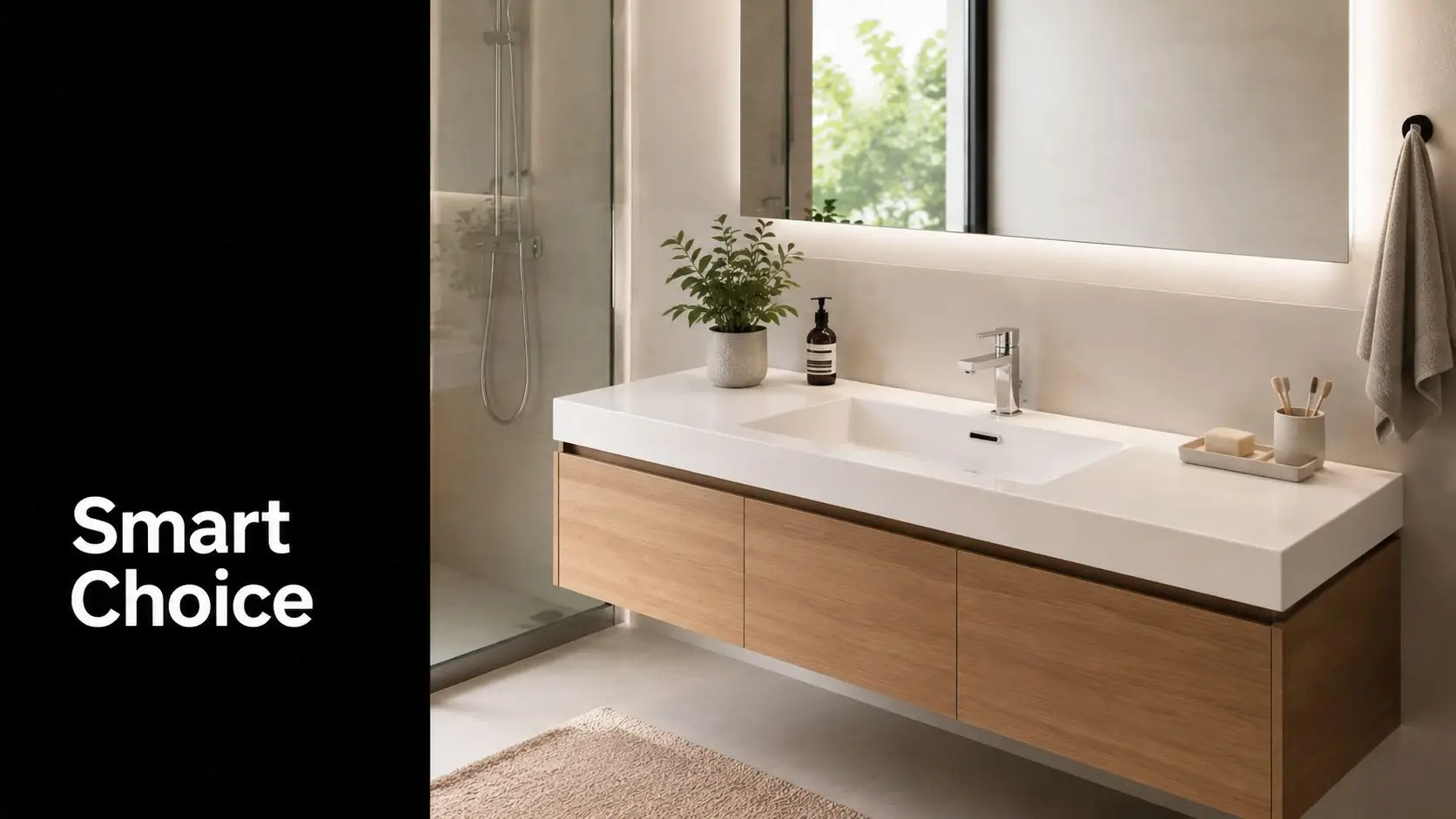
The best argument for an integrated sink is simple. It makes the vanity easier to keep presentable.
There's no separate basin rim to clean around, and the top-to-bowl transition is visually quieter. In homes where people want less visual clutter, that alone can justify the choice. It also helps in bathrooms where every line counts, especially if the room is compact and you don't want a sink shape dominating the vanity.
The other strong advantage is the custom feel. Even straightforward bathroom renovations can look more resolved when the sink is integrated into the vanity top rather than selected as an afterthought.
Where the trade-offs become real
The downside isn't that integrated sinks are bad. It's that they can be unforgiving when something goes wrong.
According to this maintenance-focused guide, a key gap in most advice is how integrated sinks handle hard water buildup, staining from products like hair dye, or localised damage, as the one-piece design complicates repairs compared to a simple basin swap-out.
That issue matters far more in lived-in bathrooms than in showroom displays.
Here's the practical split:
- If the household is careful, an integrated sink can stay looking excellent for a long time.
- If the bathroom sees hard use, staining and surface wear need to be considered early.
- If damage occurs, the repair path can be more involved than replacing a separate bowl.
The sleekest vanity in the room can become the most annoying one to own if the basin is damaged and the top can't be dealt with simply.
A quick decision view
| Pro | Why it matters |
|---|---|
| Seamless cleaning | Fewer edges where residue collects |
| Refined appearance | Strong fit for modern bathrooms and minimalist layouts |
| Custom visual result | Makes the vanity feel purpose-designed |
| Con | Why it matters |
|---|---|
| Repair complexity | Damage can affect the whole vanity top, not just the bowl |
| Staining concerns | Product use and water quality can influence long-term appearance |
| Less future flexibility | You can't easily change just the basin style later |
For owner-occupiers who want a polished primary bathroom, the pros often outweigh the cons. For rentals, teenagers' bathrooms, or heavily used family spaces, I'd slow down and assess whether the visual gain is worth the added replacement risk.
Design and Layout for Any Bathroom Size
An integrated sink isn't only for large statement bathrooms. In smaller rooms, it can solve problems, provided the vanity is sized properly and the basin shape suits the way the room is used.
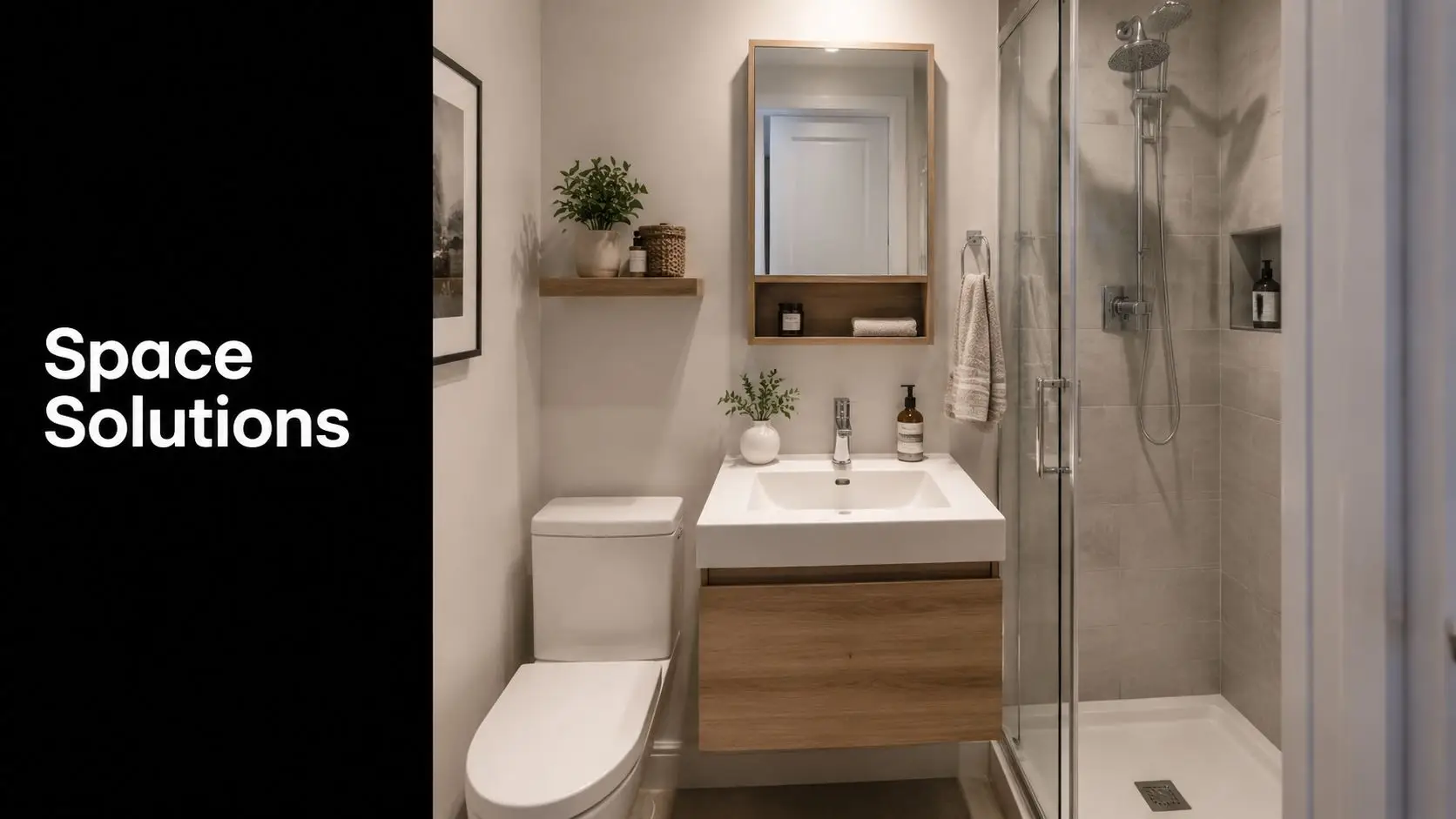
Integrated sinks commonly measure 24 to 36 inches wide and 16 to 24 inches front-to-back, according to this sizing guide on integrated versus undermount sinks. Those proportions are useful in Australian renovations because vanity depth often becomes the limiting factor, especially in ensuites, apartments, and older homes.
How to size one properly
Start with movement, not the vanity catalogue. You need enough clearance to stand comfortably, open drawers, and move past the vanity without the room feeling pinched.
Then look at three things:
- Depth first: In many Victorian bathrooms, depth creates the biggest problem. A vanity that projects too far can tighten the walkway quickly.
- Bench landing space: Even a small integrated top should leave some usable area for soap, toothbrushes, or handwash.
- Basin position: A centred basin looks neat, but an offset bowl can improve function if storage or shared use matters more.
Small bathrooms often benefit most
Because integrated sinks remove visual interruption, they can help a compact room feel calmer. That doesn't mean the unit should be oversized. It means the vanity should be proportioned so the room still breathes.
A floating vanity helps. So does limiting heavy side panels and choosing a basin shape that contains splashing rather than spreading water across the top.
For smaller layouts, this collection of small bathroom ideas in Australia is useful for thinking through spacing, storage, and visual weight.
Don't ignore tapware and drainage
The sink isn't just a shape on a vanity drawing. The faucet reach, spout height, and basin slope all affect whether the vanity feels effortless or annoying.
A beautiful sink that splashes every morning isn't well designed. It's just well photographed.
If accessibility is part of the brief, integrated systems can also be a sensible option because the top and bowl can be planned as one coordinated surface. That makes it easier to think through user reach, vanity depth, and how much room the person needs at the basin.
Your Decision Checklist Before You Commit
The best way to choose an integrated sink is to stop asking, “Do I like the look?” and start asking, “Will I still like owning it in a few years?”
That shifts the decision from style alone to lifecycle value.
Ask these questions honestly
Who uses this bathroom every day?
A calm ensuite used by adults is very different from a busy family bathroom or a guest bathroom that doubles as the kids' zone.How careful are the users really?
If the room gets rushed use, dropped items, product spills, and rough cleaning, the sink needs to cope with that reality.Would replacement be simple if something went wrong?
For renovators, landlords, and body corporates, the key issue is lifecycle cost. If a basin is damaged, an integrated unit often means replacing the entire countertop, as noted in this discussion of practical replacement cost.Am I choosing this for resale, personal enjoyment, or tenancy durability?
Those goals can point to different sink types.
When an integrated sink makes sense
An integrated sink is usually a strong choice when you want:
- A clean vanity line with minimal visual clutter.
- Easier wiping and fewer grime-catching edges.
- A bathroom that feels more custom than standard.
It can be a weaker choice when the room is exposed to hard wear, frequent product staining, or users who won't treat the surface gently.
Why professional planning matters
Bathroom renovations in Victoria sit inside a compliance-heavy process. The vanity choice doesn't exist in isolation. It interacts with waterproofing, plumbing set-out, wall finishes, storage needs, and who is responsible for the build outcome.
That's why it helps to work with a team that can resolve the whole room before construction starts. If you're weighing layout, durability, and compliance obligations, it's worth understanding why using a registered builder matters for your bathroom renovation. For more complex projects, a registered builders unlimited approach can provide the confidence that design intent and build responsibility stay aligned.
A good 3D design process also helps here. It lets you see whether the integrated sink improves the room, or whether a different basin format would give you a better result in use.
Frequently Asked Questions About Integrated Sinks
Can a chipped or cracked integrated sink be repaired
Sometimes.
The repair outcome depends on the material, how deep the damage runs, and whether it sits on a flat surface or inside the bowl where water and cleaning products hit it every day. Small chips in some solid-surface products can often be filled and refined to a reasonable standard. Hairline cracks, impact damage near the waste, and larger fractures are a different story. Those jobs are harder to hide and harder to trust long term.
The practical issue is replacement. With a separate basin, you can often swap the bowl and keep the vanity top. With an integrated unit, damage can turn into a full top replacement.
Are integrated sinks a good choice for rental properties
They suit some rentals, not all.
For a higher-end property where presentation matters and the vanity is unlikely to cop rough treatment, an integrated sink can work well. In a hard-use rental, student property, or home with frequent tenant turnover, I usually tell owners to look closely at repair risk first. One bad chip, a hair dye stain, or a burn mark can cost more to sort out than people expect.
If the main goal is low replacement cost over ten or fifteen years, a standard vanity with a separate basin is often the safer ownership decision.
What's the difference between an integrated sink and an undermount sink
An integrated sink is made as one continuous piece with the vanity top. An undermount sink is a separate basin fixed below the benchtop.
From normal standing height, both can give a clean result. The difference shows up later. Integrated sinks remove the join, so there is less edge detail to clean. Undermount sinks usually give you more flexibility if the basin gets damaged or if you want to change the look without replacing the whole top.
Are integrated sinks becoming more popular
Yes, especially in bathrooms where owners want a cleaner vanity line and a more custom look.
That said, popularity should not decide the purchase. In Australian homes, the better question is whether the sink suits the way the bathroom will be used, cleaned, and maintained over time. A product can be fashionable and still be the wrong choice for a busy family bathroom or a rental.
Are they only for large or luxury bathrooms
No.
They can work very well in smaller bathrooms because the continuous top can make the vanity look less cluttered. The catch is scale. If the bowl shape eats too far into the bench area, you lose the little bit of landing space that small bathrooms need for soap, toothbrushes, and day-to-day use.
Are integrated sinks hard to keep clean
Daily cleaning is usually easier because there are fewer joins, rims, and silicone lines catching grime.
Long-term maintenance depends more on the material than the format. Matte white finishes can mark up faster in some homes. Gloss surfaces show water spots less in others. In parts of Melbourne with harder water, mineral build-up around the waste and tap zone becomes a bigger issue than the integrated design itself. Use mild cleaners, avoid abrasive pads, and check what the manufacturer allows before assuming every stain can be scrubbed out.
Do integrated sinks cost more in the long run
They can.
Up front, they often sit above basic vanity-and-basin combinations. The bigger cost question is what happens if something goes wrong in year five or year eight. If the top and bowl are one piece, a repair may be limited and a replacement can involve the whole vanity top, plus plumbing labour to disconnect and refit. That is where lifecycle cost starts to matter more than showroom price.
For homeowners planning to stay put, the cleaner look may be worth it. For owners who want the simplest future repairs, a separate basin usually gives more flexibility.