

Cost to Renovate Bathroom Sydney: Bathroom Renovation Cost
In Sydney, bathroom renovation costs usually fall into three tiers: about $5,000 to $15,000 for a budget project, $15,000 to $35,000 for a standard full renovation, and $35,000 to $95,000 for a premium bathroom. In practice, many mid-market projects are planned around $15,000 to $18,000, but that number only holds if the scope stays controlled and the hidden work is manageable.
That's the part most homeowners are trying to work out when they search for the cost to renovate bathroom Sydney. You might be looking at sleek modern bathrooms, saving photos of new bathroom ideas, and wondering whether your taste matches your budget or whether the quote is going to jump the moment demolition starts.
That uncertainty is normal. Bathrooms look simple from the outside, but they're one of the most trade-heavy rooms in the house. Tiles, tapware and vanities get all the attention, yet budget pressure often comes from waterproofing, plumbing access, compliance, and whether you're replacing like for like or trying to reshape the room.
Embarking on Your Sydney Bathroom Renovation Journey
A Sydney homeowner often starts in the same place. Good-looking inspiration photos, a rough budget in mind, and the assumption that a bathroom is a small room so the numbers should stay manageable. Then the first site visit happens, the old tiles come off, and the actual cost starts to make sense.
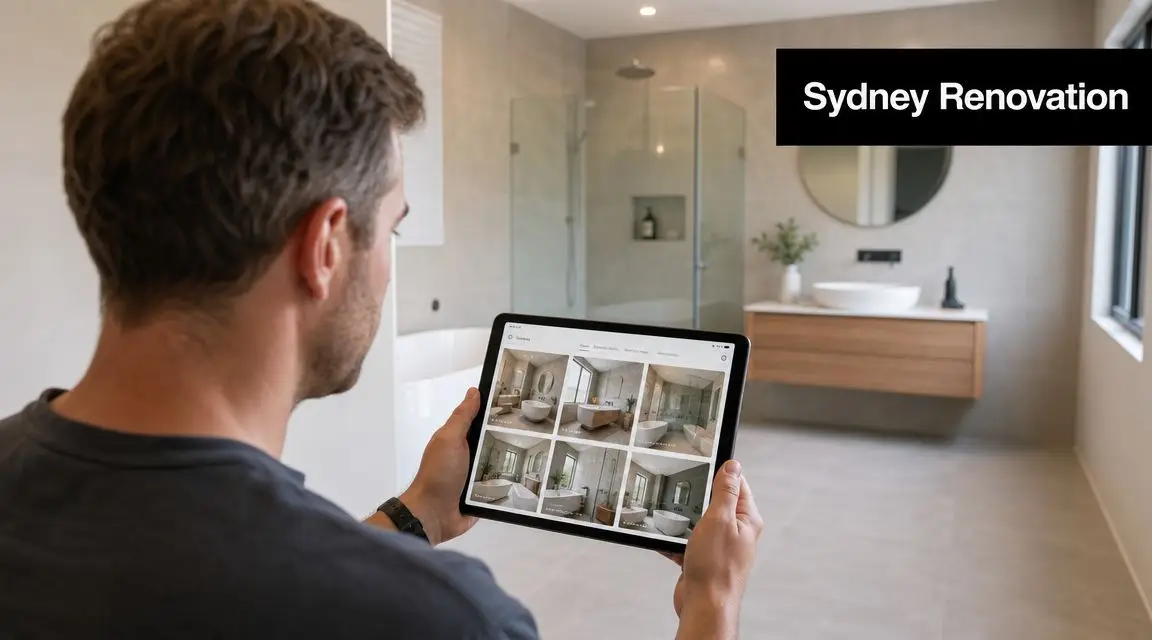
That gap between expectation and quote usually comes down to one thing. Homeowners price the bathroom they want. Builders price the bathroom that exists behind the walls, under the floor, and inside the current plumbing setup.
A new vanity, frameless shower screen and feature tiles are easy to picture. Compliance, waterproofing, floor preparation, waste connections, ventilation and access are not. Yet those are the items that often decide whether a project stays controlled or runs over budget.
This is why an "average cost" can be misleading at the start.
Two bathrooms of the same size can finish with a similar look and land at very different prices. One may be a straightforward like-for-like replacement with decent wall frames, accessible pipework and no sign of water damage. The other may need substrate repairs, updated drainage falls, electrical corrections, or extra work to bring waterproofing and installation up to current standard. On paper they look close. On site they are not.
The biggest cost difference often has nothing to do with the tile you pick. It comes from scope.
A realistic bathroom budget starts with the existing room, the layout you plan to keep or change, and the work needed to rebuild it properly.
Builder choice affects this early. A detailed quote should set out what is included, what is excluded, who is handling waterproofing and certification, and whether any allowance has been made for hidden rectification once demolition starts. Homeowners comparing prices should also understand why using a registered builder matters for your bathroom renovation, because the cheaper quote is not always pricing the same job.
The goal at this stage is not to chase the lowest number. It is to get clear on the actual work involved before selections, layout changes and provisional allowances start stretching the budget.
Understanding Sydney Bathroom Renovation Price Tiers
A homeowner in Sydney gets three quotes for what looks like the same bathroom. One builder prices a quick refresh. Another prices a full strip-out with proper rectification. The third has allowed for layout changes, certification, and higher-end finishes. The room has not changed. The scope has.
That is the right way to read price tiers. They are not just price bands. They reflect how much of the room is being rebuilt, how much risk sits behind the walls, and how far the design moves away from the existing layout.
Budget projects
The lower tier is usually a cosmetic update with strict limits on scope. It suits bathrooms where the layout stays put, the structure is sound, and the goal is to improve presentation rather than rebuild the room from scratch.
In practical terms, this level of project usually means:
- keeping the toilet, shower and vanity in their current positions
- choosing standard-size products instead of custom joinery or made-to-order screens
- using straightforward tile formats that install faster and create less waste
- limiting demolition so there is less chance of exposing hidden repair work
This tier can work well in an investment property, a secondary bathroom, or a room that is tired but still serviceable. It stops working once owners expect full waterproofing rectification, high-end finishes, custom storage, or a designer layout on a tight figure.
Standard full renovations
The middle tier is where a bathroom starts to be rebuilt properly rather than patched over. This is the bracket many Sydney homeowners are aiming for, even if they do not describe it that way at the start.
A standard full renovation commonly includes demolition, new waterproofing, new tiling, replacement fixtures, electrical and plumbing updates, and a cleaner overall finish. It may also allow for better storage, improved lighting, and a more usable shower arrangement if changes are modest.
This is also the range where professional discipline matters most. A quote can look competitive until you check whether it includes rubbish removal, substrate preparation, waterproofing certification, exhaust upgrades, tile trims, and fit-off of owner-supplied items. Those details are where jobs drift off budget.
Premium renovations
At the top end, cost rises because the work is harder to build, not just because the room looks better in photos.
Premium bathrooms often involve one or more of the following:
- layout reconfiguration that moves plumbing and drainage points
- large-format or natural stone tiles that need more careful preparation and installation
- custom vanities, recessed niches, frameless glass, and detailed lighting plans
- underfloor heating, upgraded ventilation, or higher-spec brassware and fixtures
- rectification to older walls or floors so premium finishes can be installed properly
The labour component climbs fast at this level. Tighter tolerances, more product coordination, longer lead times, and a greater chance of custom fabrication all add cost before the room is even finished.
Where many homeowners sit
A lot of Sydney renovations sit between a light refresh and a fully customised bathroom. Owners usually want a room that feels new, functions better, and holds up over time. They do not always want a luxury fit-out, but they do want the job done properly.
That middle ground is where budgets often move. The layout stays mostly the same, then a wall-hung vanity is added. Tile selections step up. The old floor turns out to be out of level. Ventilation needs upgrading to meet current expectations. Each decision is reasonable on its own. Together, they change the tier of the project.
The useful question is not “What is the average bathroom renovation cost in Sydney?” It is “What standard of rebuild am I paying for, and what has the builder allowed for behind the finishes?” That is how you get a quote that reflects the actual job rather than a low number that grows after demolition.
Itemised Cost Breakdown Where Your Money Goes
A Sydney bathroom quote can look straightforward until demolition starts and the hidden work shows up. The visible selections matter, but the actual cost usually sits in labour, compliance, preparation, and the trade coordination needed to rebuild a wet area properly.
That is why two bathrooms with similar tiles and tapware can finish at very different prices.
The costs that are easy to underestimate
The line items that catch homeowners out are usually behind the finished surface. Waterproofing is one of them. It has to be applied to the correct areas, allowed to cure properly, and certified where required. If the substrate is poor or the falls are wrong, the waterproofing cost is not just the membrane. It includes the prep work needed before anyone can apply it.
Plumbing is another area that gets misunderstood. The visible fixture is the cheap part compared with the labour needed to isolate services, alter pipework, set wastes at the right height, and coordinate rough-in and fit-off with the rest of the build. Electrical work follows the same pattern. The final light or fan might look simple, but safe installation, testing, and compliance take time.
Beyond the main contract, there are extra costs homeowners should plan for. Waterproofing can run about $500 to $750, plumbing call-outs are commonly $60 to $100 plus hourly rates, and council permit fees can range from $500 to $1,000 for a basic renovation, as outlined in this Australian bathroom renovation cost breakdown.
In Sydney, approval costs vary by building type and scope. Many bathroom renovations do not need council approval, but strata approvals, waterproofing documentation, engineering advice, or compliance sign-off can still add professional fees that are easy to miss in an early budget.
What a proper quote should make clear
A useful quote should separate product allowances from labour and identify what is fixed, what is provisional, and what is excluded. If demolition, rubbish removal, substrate repairs, waterproofing, tiling, plumbing, electrical, glazing, painting, and certification are bundled into vague headings, the price is harder to trust.
Bathrooms fail at the joins between trades. One contractor finishes late, another returns to redo work, and the cost lands back on the client if the scope was not clear from the start.
If waterproofing, plumbing scope or permits are poorly described, you are not comparing quotes. You are comparing assumptions.
Typical Bathroom Renovation Cost Allocation
The exact split changes from project to project, especially in older Sydney homes where floors are out of level, walls are not square, or previous renovations have left non-compliant work behind. Still, this is a practical way to read where the budget usually goes.
| Cost Component | Percentage of Total Budget |
|---|---|
| Labour and trade coordination | Largest share |
| Fixtures and fittings | Moderate to high share |
| Tiles and surface materials | Moderate share |
| Waterproofing and wet area preparation | Compliance and substrate-related share |
| Plumbing and electrical work | Technical and service-related share |
| Demolition, waste removal and site prep | Early-stage project share |
| Permits and approvals where required | Variable allowance |
| Contingency for hidden issues | Protected reserve |
Labour usually takes the biggest portion because bathrooms are trade-heavy rooms. A small footprint does not make them simple. The work is compressed into one area, and every stage depends on the one before it being done properly.
Where to spend and where to be careful
Spend money where failure is expensive to fix later. That means waterproofing, proper preparation, ventilation, and licensed trade work in NSW. A cheaper tile or standard vanity can still produce a good result. Failed membrane work or poorly set drainage usually means reopening the room.
Be careful with allowances for fixtures and finishes. Prime cost items often look reasonable on paper, then jump once real selections are made. The same applies to provisional sums for rectification work. If an older bathroom has damaged sheeting, rotted timbers, or unstable flooring, that work will not stay theoretical for long.
The value in a licensed builder is not the label itself. It is clear scope control, compliant work, realistic allowances, and enough experience to price the hidden parts of a wet area renovation before they become budget surprises.
How Scope and Layout Changes Affect Your Budget
A Sydney homeowner approves a bathroom quote based on a simple refresh. Then the old room is stripped out, the shower waste is in the wrong spot for the new layout, the toilet needs to shift, and the budget changes fast. That is how many bathroom overruns start.
Scope drives price more than square metres once a layout changes. A bathroom that keeps the same plumbing positions is usually far more predictable to price and build. Once you move services, you add demolition, new pipe runs, more trade hours, fresh set-out, and often extra compliance work before the room can be waterproofed and closed up again.
Broad per-square-metre guides can help with early planning, but they miss the part that catches people out. Industry pricing summaries such as this bathroom renovation cost guide only become useful when you separate a cosmetic update from a true reconfiguration.
Why layout changes cost more than they look
On plan, moving a vanity half a metre can look minor. On site, that can mean opening floors or walls, altering water and waste points, adjusting electrical rough-in, and resetting tile falls so the finished room still drains properly.
The expensive part is rarely the fixture itself.
It is the chain reaction behind it. A relocated shower can affect screed levels, floor waste position, waterproofing details, tile cuts, and shower screen sizing. Moving a toilet can be even more restrictive, especially in apartments or on concrete slabs where waste locations are harder to change without major work.
Changes that usually stay within a controlled budget
These choices tend to keep risk lower if the existing room is sound:
- Replacing fixtures in the same position
- Changing the vanity without shifting waste points
- Upgrading tapware, tiles, mirrors, and screens
- Improving storage and finishes without altering the room layout
This type of renovation still needs proper trade work, but it avoids the biggest pricing variable. Hidden service relocation.
Changes that often push the job into a higher price tier
These decisions usually increase cost, time, and uncertainty:
- Moving the toilet, shower, or floor waste
- Shifting plumbing into a new wall
- Changing door locations or room boundaries
- Converting a laundry, powder room, or spare room into a bathroom
- Choosing fittings first and checking service access later
I tell clients to treat layout changes as construction decisions, not styling decisions. The drawing may look cleaner. The build becomes more complex.
The overlooked costs behind a new layout
A common issue arises when quotes no longer align with expectations. Homeowners often allow for new fixtures and tiles, but the extra spend usually sits in the background work:
- Plumbing rework and drainage changes
- Electrical relocation for lighting, power, and exhausts
- New wall framing or patching after demolition
- Waterproofing to suit the revised set-out
- Floor levelling or screed correction to maintain falls
- Certification, strata approvals, or other professional input where required
Those items are why two bathrooms with the same tapware and tile selection can land at very different totals.
If you are still testing ideas, a bathroom renovation cost calculator for Sydney projects can help you compare a keep-the-layout brief against a redesign brief before you ask for formal quotes.
How to quote a layout change properly
The best way to control cost is to lock the brief before pricing. If the layout is undecided, the quote can only be provisional in the areas most likely to move. That is where surprises start.
A realistic quote for a reconfigured bathroom should show what is included for demolition, service relocation, substrate repairs, waterproofing, and any approvals or consultant input that may be needed. If those items are vague, the total is not fixed in any practical sense.
The layout on the plan is cheap. Making it work on site is where the actual budget gets decided.
Example Sydney Bathroom Renovation Budgets for 2026
Budgets make more sense when tied to real decision-making. These examples show how different homeowners approach the same question and why the final number changes with scope.
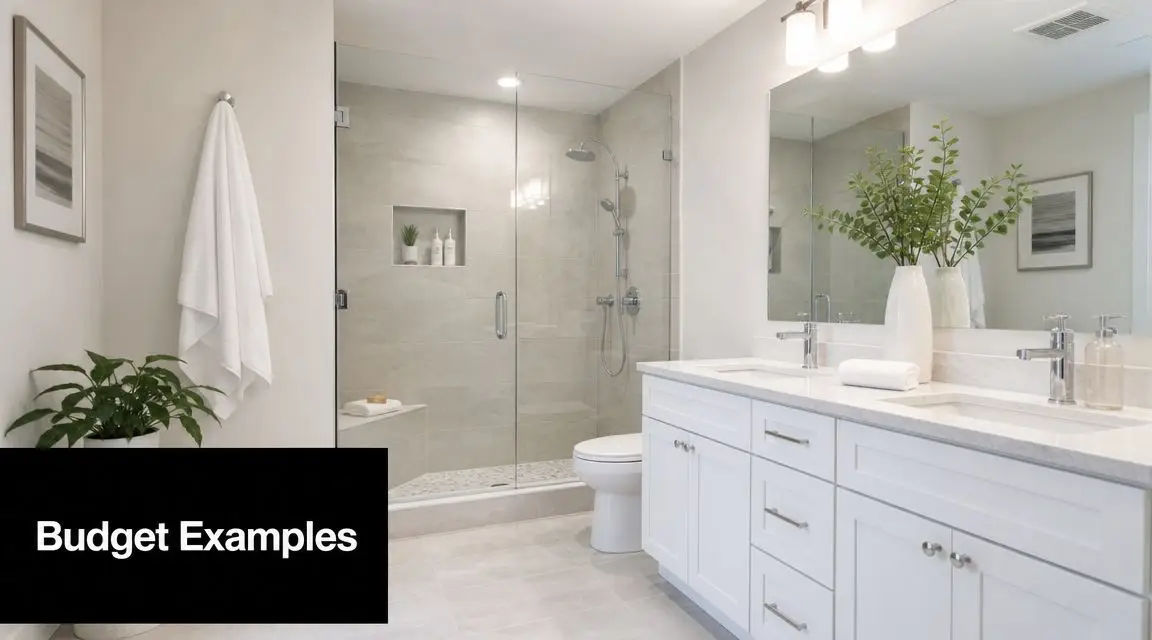
If you want to test your own project against a broad planning range, a bathroom renovation cost calculator can help you frame the conversation before getting quotes.
Ensuite update with a controlled brief
A couple wants their tired ensuite to feel cleaner and more current. They don't need a dramatic redesign. They want sharper storage, better finishes, and a room that's easier to keep clean.
They keep the existing plumbing positions, choose standard-size fixtures, and avoid custom joinery. The result sits in the budget to lower mid-range tier, because the room gets a meaningful visual lift without the extra cost of layout rework.
This is the kind of job where discipline matters more than chasing trends. The room can look fresh and resolved if the selections are coherent.
Family bathroom overhaul with practical priorities
A family in an older house wants a full rebuild of the main bathroom. Their priorities are durability, storage, easy cleaning and a layout that works for daily use. They aren't trying to create a luxury showpiece, but they do want a proper renovation.
This type of project usually lands in the standard renovation range, especially when the room is stripped out fully and rebuilt with new finishes, updated plumbing connections, compliant waterproofing and a more practical fixture set. The value comes from balancing good daily function with finish choices that won't date too quickly.
Premium retreat with designer intent
Another homeowner is creating a high-end ensuite with a more refined, hotel-style feel. They want a stronger visual statement, custom detailing, and a reworked layout that feels more generous.
That brief pushes the project into the premium tier. Not because every product is extravagant, but because the room asks for more: layout adjustments, more exacting installation, and tighter coordination between trades to achieve the finish cleanly.
Premium bathrooms are built twice on paper. First in the design decisions, then on site in the technical details.
Often, designer bathrooms separate from standard projects in their specific demands. The room may still include the same core elements, but the labour, detailing and sequencing are less forgiving.
Managing Your Timeline and Renovation Budget
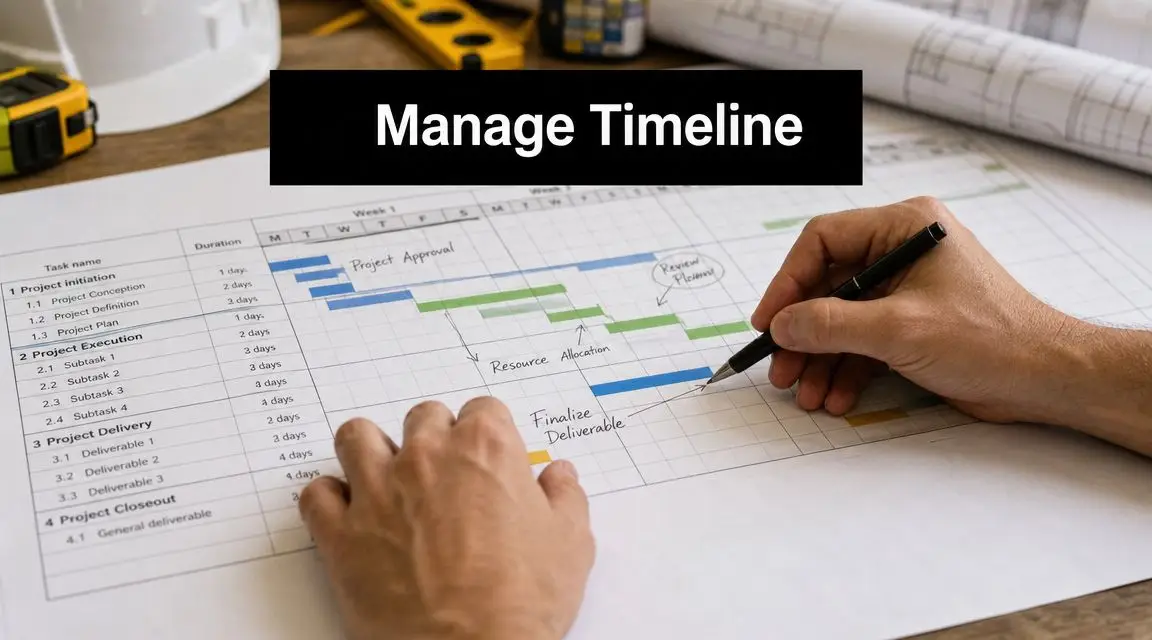
A bathroom budget doesn't fall apart in one dramatic moment. It usually drifts through rushed decisions, unclear inclusions, delayed selections, and hidden conditions discovered too late.
For a complete bathroom overhaul in Sydney, a practical budget often sits around AUD $17,000 to $30,000, and experienced industry guidance recommends a 10 to 20 per cent contingency buffer because demolition regularly exposes waterproofing failure, ageing pipework and other issues that must be fixed before the room can be rebuilt to standard, as noted in this Sydney bathroom renovation budgeting guide.
What helps a project stay on track
The best projects are organised before demolition starts. That means selections are mostly settled, the scope is documented properly, and the builder isn't waiting on basic product decisions while trades are booked.
A realistic process usually includes:
- Clear early selections: Choose tiles, tapware, vanity style and fittings before work begins where possible.
- Defined scope: Confirm what stays, what goes, and whether any layout movement is worth the added cost.
- Allowance for unknowns: Older bathrooms often hide issues that no one can fully confirm until strip-out.
- Trade sequencing: Waterproofing, plumbing, electrical and tiling each rely on the previous step being done correctly.
Where homeowners can save without cutting quality
Saving money doesn't mean stripping the project back to the point of regret. It means protecting the parts that matter and simplifying the parts that don't.
Useful ways to reduce pressure on the budget:
- Keep the layout where possible: This is still the cleanest way to avoid major cost escalation.
- Use standard-size products: Custom work adds labour and often waiting time.
- Prioritise function over novelty: The rooms that age best usually have practical storage, good lighting and durable finishes.
- Spend on the things you touch daily: Good tapware, well-designed storage and proper shower function matter more than one-off statement pieces.
For homeowners trying to control spend from the beginning, this guide on how to renovate a bathroom on a budget gives useful planning direction.
The budget line that should never disappear
Contingency often gets treated like optional padding. It isn't. In older properties, it's the part of the budget that keeps the project from stalling once concealed problems appear.
If the room opens up cleanly, great. If it doesn't, that reserve allows the work to be corrected properly instead of patched around.
Frequently Asked Questions about Bathroom Renovations
Do I need council approval for a bathroom renovation in Sydney
Sometimes, but not always. Simple like-for-like work is usually more straightforward than projects involving major changes. Approval needs depend on the scope, the property type, and whether the renovation affects building elements beyond the bathroom fit-out. If you're in an apartment, there may also be strata requirements to deal with before work starts.
Why is waterproofing such a big deal
Because bathrooms fail from behind the tiles, not from what you can see on handover day. Proper waterproofing protects the structure, supports compliance, and reduces the chance of expensive remedial work later. It's one of the areas where trying to save money usually costs more in the long run.
Should I manage individual trades myself
Some homeowners try it, but bathrooms are tightly sequenced jobs. The challenge isn't just booking trades. It's coordinating demolition, plumbing, electrical, waterproofing, tiling and fit-off in the right order while keeping responsibility clear if something goes wrong.
What makes quotes hard to compare
Inclusions. One quote may include demolition, waterproofing, allowances for compliance items and clear trade scope. Another may look cheaper because those items are left vague or excluded. The only useful comparison is line by line.
A successful bathroom renovation starts with realistic expectations, not optimistic pricing. If you want a quote that reflects the actual work, not just the pretty finishes, talk to SitePro Bathrooms for a personalized consultation and a clearer path from idea to build.