

A bathroom renovation typically begins with a consistent approach. This involves saving a few photos, picking a preferred tile, and assuming the most challenging work starts with demolition.
In Victoria, that's backwards.
The hard part is getting the decisions right before anyone lifts a tool. Bathrooms pack plumbing, electrical, waterproofing, drainage, ventilation, and finish work into one small room. That density is exactly why a bathroom that looks simple on paper can become expensive, slow, and stressful if the layout, fixtures, approvals, and trade order aren't locked in early.
If you're figuring out how to renovate a bathroom, think like a project manager first and a stylist second. Good results come from clear scope, disciplined sequencing, and realistic choices about where to spend and where to hold back. That's how you get bathroom renovations that look sharp, perform properly, and don't come back to haunt you with defects or rework.
The Pre-Renovation Playbook Planning Your Vision and Budget
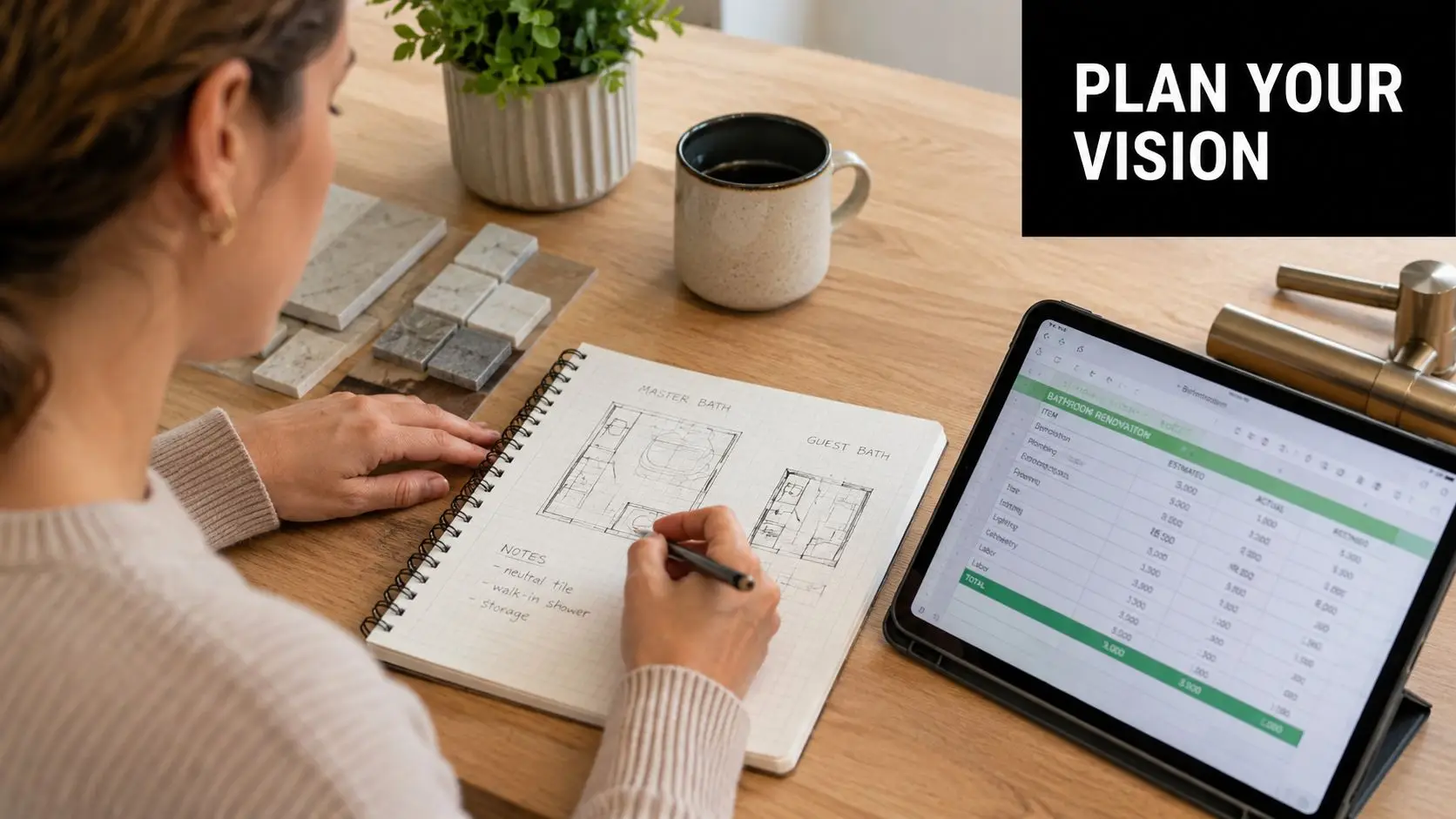
A bathroom project usually goes off course before demolition starts.
I see it when a client says they want a simple refresh, then the first site check shows a tired subfloor, poor ventilation, old plumbing positions, and a layout that never worked properly in the first place. In Victoria, those early findings matter because they affect waterproofing, trade scope, timing, and sometimes whether extra approvals are needed. Good planning protects the budget long before tiles or tapware are chosen.
Start with the reason for renovating
Every strong brief starts with the problem, not the products.
A bathroom for a growing family needs durability, storage, and easy cleaning. An ensuite may prioritise comfort and better use of space. An older home may need the hidden work fixed first, especially if there are signs of movement, damp, or previous poor-quality renovations. Those are very different jobs, and they should not share the same budget logic.
Set the brief around decisions that affect the build:
- Primary goal: better day-to-day function, updated appearance, accessibility, rental durability, or sale preparation
- Must-haves: a bath, walk-in shower, more storage, better lighting, easier cleaning, or a double vanity
- What stays and what changes: layout, plumbing locations, windows, doorway position, and wall locations
- Property type: house, apartment, investment property, or period home with a higher chance of hidden issues
That last point matters in Victoria. Apartments can bring body corporate constraints. Older homes often uncover substrate damage, out-of-square walls, or outdated services once the room is stripped. If the brief ignores that risk, the budget usually wears the hit later.
Budget for the room you are actually building
Bathroom budgets are driven more by construction detail than by visible finishes.
Clients often focus on tile selection and tapware, but significant cost pressure usually comes from rectification, service changes, and labour-heavy work. Moving a toilet, changing shower falls, replacing damaged sheeting, correcting framing, or bringing old work up to current standards can shift a project from straightforward to complex very quickly.
A realistic budget should allow for:
- Demolition and disposal: strip-out, protection of adjacent areas, and waste removal
- Plumbing and electrical work: rough-in changes, new points, drainage adjustments, and fit-off
- Substrate preparation and waterproofing: getting the room ready for finishes and wet-area compliance
- Tiling and installation labour: often one of the biggest cost components in the room
- Fixtures, joinery, and glazing: vanity, toilet, shower screen, tapware, mirrors, and accessories
- A contingency: especially in older properties where defects are often hidden until demolition
One practical rule holds up on almost every job. If you keep the layout, you usually keep the budget under better control. Once plumbing points move, the labour, coordination, and risk all increase.
If you need to reduce costs without stripping the project back too far, our guide on how to renovate a bathroom on a budget sets out where to save and where it is smarter to hold the line.
Turn ideas into a buildable scope
Vague language costs money.
“Modern,” “luxury,” and “hotel feel” might help with inspiration, but trades cannot price or build from broad styling terms. They need clear selections and fixed decisions. Vanity width. Tile size. Tile height. Niche position. Shower screen type. Lighting layout. Door swing. Heated towel rail or not. These details affect material quantities, set-out, labour time, and the order each trade works in.
A buildable scope should record the room in plain terms:
- the final layout
- the fixtures being installed
- the extent of tiling
- storage requirements
- lighting and power needs
- items being retained
- known issues that may need rectification once the room is opened up
That level of planning is what keeps a bathroom renovation under control. It gives the builder something clear to price, gives the trades something clear to execute, and gives the client a far better chance of avoiding budget creep halfway through the job.
Designing Your Dream Bathroom and Visualising the Result
A good bathroom design isn't a collection of nice products. It's a room where layout, light, storage, and finish selection all support each other.
That's the difference between bathrooms that photograph well and bathrooms that work well. The first impresses for a minute. The second still feels right years later.
Layout does more work than style
Most new bathroom ideas live or die on layout. You can spend heavily on finishes, but if the vanity crowds the entry, the shower feels cramped, or storage is missing, the room won't feel resolved.
In compact bathrooms, every line matters. Door swing, vanity depth, shower screen placement, and the visual weight of tile all affect how open the room feels. In larger rooms, the risk is different. Too much empty space can make the bathroom feel cold unless the design creates zones and balance.
A few layout choices consistently hold up:
- Keep movement clear: You should be able to enter and use the room without weaving around fixtures.
- Place storage where it's needed: Vanity drawers, recessed niches, and mirrored cabinets reduce clutter.
- Give the eye a focal point: Often that's the vanity wall, a feature tile, or a freestanding bath.
- Design for maintenance: Tight gaps, awkward corners, and overly fussy detailing don't age well.
Materials must suit the way the room is used
Bathrooms are wet rooms, not showrooms. That changes how materials should be chosen.
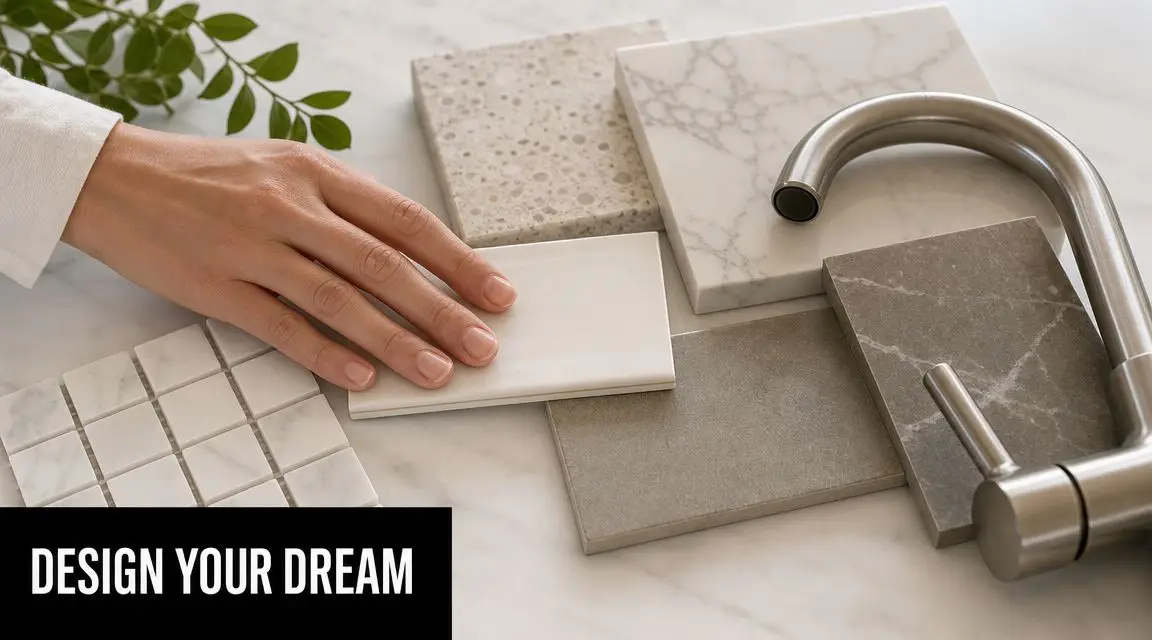
A polished stone look might suit the brief, but the room still needs practical slip resistance, easy cleaning, moisture tolerance, and a tile format that works with the scale of the room. Large tiles can make a small room feel calmer. Smaller mosaics can help on floors where falls matter. Matte finishes often hide water marks better than glossy surfaces.
If you're choosing finishes, this practical guide on how to choose bathroom tiles helps narrow the options sensibly.
The best designer bathrooms don't look overloaded. They look edited. Every finish has a job, and nothing fights for attention.
Why 3D design saves real money
Clients often think visualisation is a luxury. It isn't. It's one of the cheapest forms of risk control in a bathroom renovation.
A 3D design exposes problems before demolition. You can test vanity width, mirror proportions, lighting placement, tile transitions, recesses, and fixture alignment while changes are still easy. That matters because on-site changes are rarely isolated. Move one item late and you may also affect rough-in positions, tiling, waterproofing details, and timing.
Here, modern bathrooms become buildable instead of aspirational. You stop guessing and start approving exact decisions. That's especially useful when more than one person is signing off on the room.
Navigating Permits and Hiring Your Renovation Team in Victoria
A bathroom can look like a straightforward room upgrade on paper. In Victoria, it often stops being simple the moment work affects plumbing, drainage, waterproofing, electrical services, ventilation, or any part of the structure. That is usually where budget risk starts, because approval requirements, trade licensing, and documentation are easy to underestimate until the job is already underway.
I tell clients the same thing early. Tile choices are the easy part. The harder part is making sure the work is lawful, properly sequenced, and signed off by the right people.
Know where approval risk actually sits
The approval path depends on the property type and the scope of work.
In a detached home, the process is often more direct, but structural changes, altered windows, moved drainage points, or major service changes can still trigger extra checks. In apartments, units, and other shared-title properties, you also need to deal with ownership boundaries, access rules, noise restrictions, waste removal, and body corporate or owners corporation approval where required.
That paperwork matters for a practical reason. If waterproofing fails in a house, the damage may stay within your lot. If it fails in an apartment, it can affect the ceiling below, common property, neighbouring walls, and an insurance claim that quickly turns into an argument about who approved what.
Victorian guidance for strata and shared-property renovations generally points to the same lesson. Get written approval before works start, and make sure the scope matches what was approved.
Hire for control, not just a lower quote
A bathroom renovation runs better when one party is clearly responsible for buildability, compliance, trade coordination, and defect prevention. Price still matters, but the cheapest quote can become the expensive one if key items are missing, trades are left to sort out conflicts on site, or no one owns the full outcome.
That is why builder selection deserves more than a quick check of gallery photos. Ask who is supervising the job. Ask who books and manages the licensed trades. Ask how variations are handled if demolition exposes rotten framing, damaged sheeting, old pipework, or non-compliant past work. Those are common findings in Victorian bathrooms, especially in older homes.
A good screening checklist is simple:
- Registration and insurance: Confirm the builder and each trade are properly licensed or registered for the work they carry out.
- Wet-area knowledge: Ask how the team handles substrate preparation, waterproofing, and required certifications.
- Clear scope: The quote should state inclusions, exclusions, allowances, and what can trigger a variation.
- Documentation: Fixtures, finishes, plans, and service locations should be recorded before site work begins.
- Single-point responsibility: You want one accountable lead when questions arise and decisions need to be made quickly.
If you want a clearer explanation of that accountability model, read why using a registered builder matters for your bathroom renovation.
Watch the apartment and rental traps
Investors and landlords often focus on hard-wearing finishes, easy-clean surfaces, and a layout that tenants will not damage easily. That is sensible, but it is only half the job.
Rental properties and apartments need a clean paper trail. Keep records of approvals, waterproofing documentation, product selections, invoices, compliance certificates, and a clear note of what was changed. If the property is sold, re-let, refinanced, or subject to an insurance query, those records matter far more than people expect.
A bathroom that looks finished can still be poorly documented.
That distinction causes problems later, especially when maintenance issues appear months after handover. Good project management protects the room itself and the decisions behind it.
The Main Event Demolition and Trades Sequencing
A bathroom can look straightforward on the plan, then become complicated the moment demolition starts. In Victoria, that usually happens when old pipework sits where the new shower needs to go, the walls are out of square, or the floor is not suitable for the waterproofing system specified for the job. The room only comes together if the work is staged in the right order and each trade arrives to a site that is ready for them.
That sequence matters more in bathrooms than almost anywhere else in the house. Wet areas leave very little room for guesswork. If one stage is rushed or installed out of order, the trades behind it either stop or inherit a problem that costs more to fix later.
What actually happens once site work begins
Demolition should be controlled, documented, and selective. The job is to remove the old bathroom without damaging structural elements, adjoining finishes, or services that need to remain live elsewhere in the home.
Once the room is stripped back, the actual condition of the space becomes clear.
This is often where we find the issues that were hidden by tiles and plaster. Loose sheeting, previous water damage, patched-over plumbing work, termite damage in older homes, or floors that fall the wrong way all show up at this point. In many Victorian properties, especially older brick homes and apartments, those discoveries affect method, timing, and sometimes scope.
The required order of trades
Bathrooms are built in a strict sequence because every stage relies on the one before it being correct.
Final set-out confirmation
Fixture positions need to be locked in on site, not just on a concept drawing. Vanity width, toilet clearance, shower screen size, niche height, mixer positions, and tile set-out all need to work together before rough-in starts.Demolition and make-safe works
Existing fixtures, linings, floor finishes, and redundant services are removed. The site is then cleaned up so the next trade can work accurately and safely.Plumbing and electrical rough-in
New water, waste, power, lighting, and exhaust locations are installed while walls and floors are open. If the layout has changed, this is often where cost moves, because relocating services is labour-heavy and sometimes constrained by structure.Carpentry and substrate preparation
Walls are straightened, noggings are added for grab rails or joinery where needed, floors are corrected, and sheet substrates are installed to suit the waterproofing and tile system.Waterproofing
This is regulated work, not a finishing step. The substrate, bond breakers, junctions, penetrations, and drying times all matter. In Victoria, paperwork and compliance matter as much as appearance, especially if there is ever an insurance claim or a defect dispute.Tiling and floor grading
Good tiling starts with set-out and falls, not tile colour. Shower floors need to drain properly, cuts need to be planned around focal points, and junctions need enough movement allowance to avoid later cracking.Fit-off and final installation
Vanity, toilet, tapware, shower screen, mirrors, lighting, accessories, and fans are installed after the wet trades and finishes are complete.
A late change during rough-in rarely stays small. Move one mixer position and you may also be moving framing, waterproofing terminations, tile joints, and the shower screen measurement.
Where Victorian projects often get delayed
The delays are rarely caused by one dramatic problem. They usually come from several smaller issues stacking up. An apartment may need booked access and waste removal windows. A period home may have uneven framing that adds rectification work. A product may arrive late, which holds up measurement for joinery or screens. Waterproofing and curing times can also dictate the pace, regardless of how eager everyone is to push through.
Trade coordination is what keeps the program realistic. Sending the tiler in before the substrate is ready does not save time. It creates rework, arguments about responsibility, and a finish that never looks right.
Timing and cost, in practical terms
Programs vary with scope, access, and what the existing room reveals after strip-out. The table below works as a planning guide.
| Phase | Typical Duration | Approx. Cost % |
|---|---|---|
| Planning, selections, approvals | Varies by scope and product lead times | Moderate early design and admin allocation |
| Demolition and site preparation | Usually short but condition-dependent | Smaller share than services and finishes |
| Plumbing and electrical rough-in | Depends on layout complexity | Significant technical allocation |
| Waterproofing and substrate preparation | Depends on drying and inspection requirements | Compliance-driven allocation |
| Tiling | Labour-intensive and finish-critical | One of the larger visible cost areas |
| Fixture fit-off and final detailing | Usually staged near completion | Moderate to high depending on fixture specification |
Why bathrooms fail when the sequence is wrong
Bathrooms do not fail because one tile line is slightly off. They fail because moisture gets where it should not, drainage was not set correctly, fixtures were forced into a layout that was never resolved properly, or one trade had to guess what another trade intended.
That is why a well-run renovation feels calm on site, even when the room is fully stripped. The builder is not just booking trades. They are checking dependencies, handling site conditions, and making sure each stage is ready before the next one starts. In a Victorian bathroom renovation, that discipline is what turns a messy room into a compliant, durable finish.
The Finishing Touches That Define Your Space
You reach the last stretch of the renovation and the room finally looks close to done. This is also the stage where small specification mistakes become expensive, visible, and hard to ignore.
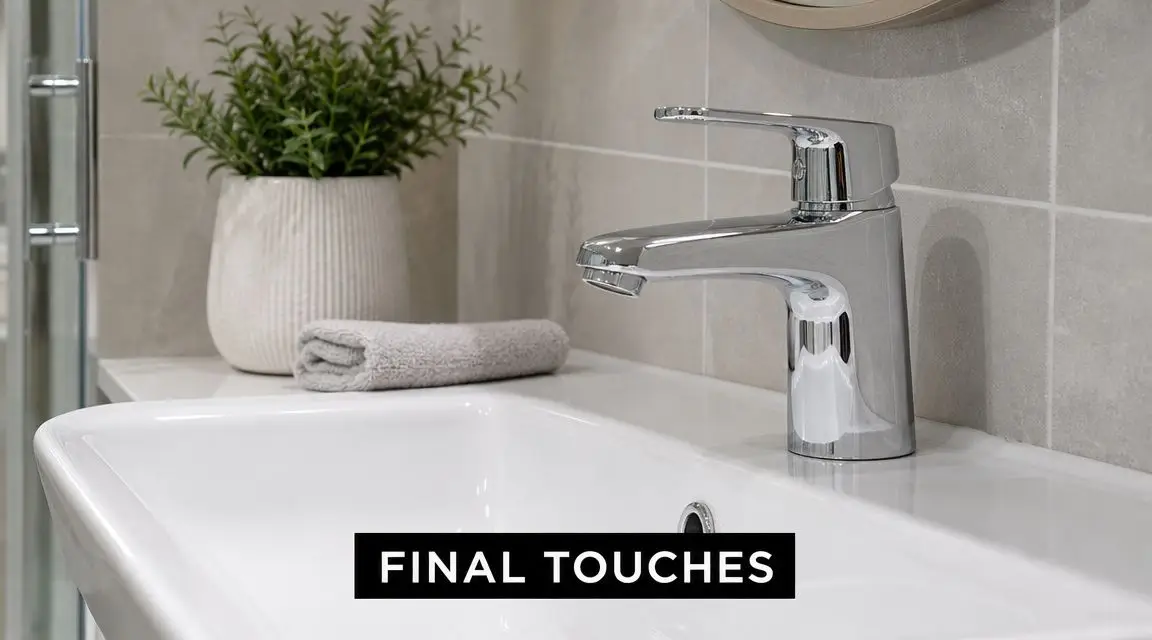
After waterproofing, tiling, and set-out are complete, fit-off gives the bathroom its finished character. Tapware, joinery, mirrors, shower screens, lighting, and accessories all start working together. If the early selections were disciplined, the room feels resolved. If they were made in isolation, the bathroom can still look disjointed even with quality products.
Where the room gets its character
A good bathroom rarely relies on one standout item. The result comes from proportion, restraint, and consistency.
The vanity usually sets the tone first because it carries both storage and visual weight. From there, mirrors, tapware, towel rails, lighting, and shower framing need to suit the scale of the room. A narrow ensuite can be overwhelmed by chunky fittings. A family bathroom with generous wall space can look underdone if every item is too slight.
A few details have an outsized effect:
- Tiles and grout: These set the visual pace of the room. Busy tile patterns or high-contrast grout can date faster than people expect.
- Vanity and storage: Joinery needs to suit how the bathroom is used. Deep drawers often work better than cupboards for daily access.
- Tapware and hardware: Finishes should relate to each other. Mixing too many metals usually reads as indecision, not design.
- Lighting and mirrors: Face lighting matters more than decorative fittings. A bathroom that looks good in a showroom can still be poor to use at 6am.
- Ventilation: In Victoria, this is not a cosmetic extra. Poor extraction shortens the life of paint, sealants, joinery, and even grout lines.
Spend money where changes are hardest later
The smartest budget decisions at this stage are usually practical ones.
If the layout is working, keeping plumbing positions largely in place often protects the budget and reduces risk. Money is often better spent on quality waterproof-compatible substrates, a well-built vanity, decent drawer hardware, effective exhaust ventilation, and fixtures that will still be serviceable years from now. Those items affect daily use and long-term maintenance more than a fashionable feature tile does.
I often warn clients about false economy here. Saving a small amount on the vanity internals, mirror size, screen hardware, or exhaust fan can leave a new bathroom feeling average within months. By contrast, a restrained material palette with better lighting, storage, and ventilation usually performs better and ages better.
Good value comes from protecting the expensive-to-replace elements and improving the parts you touch, clean, and use every day.
What dates a bathroom fastest
Bathrooms usually age poorly for predictable reasons. Oversized niches, overly busy feature walls, blue-white lighting, weak storage, and fixtures that are out of proportion with the room all tend to fall out of favour quickly.
Bathrooms that last well are generally quieter in their base finishes. They use durable surfaces, have enough storage to keep benches clear, and include lighting that is practical rather than purely decorative. The goal is not to make the room plain. The goal is to make sure it still feels balanced after the novelty of the new renovation has worn off.
In Victorian homes, there is another layer to this. Older properties often have walls that are not perfectly straight, tighter footprints, and existing windows or structure that limit ideal fixture placement. Good finishing choices account for those realities instead of fighting them. That is the difference between a bathroom that photographs well on handover day and one that still works properly, and still looks right, years later.
How SitePro Bathrooms Delivers a Smooth Renovation
A bathroom job usually goes off course long before demolition starts.
I see the same pattern across Victoria. Selections are half-made, drainage assumptions are wrong, body corporate approval is treated as an afterthought, and clients are told the room can be worked out on site. In a bathroom, that approach is expensive. The room is small, but every trade is working to tight tolerances, and one missed decision can affect waterproofing, joinery, glazing, tiling, and fit-off.
At SitePro Bathrooms, we run the project as a builder-led process from the beginning. That means the layout, product selections, site constraints, compliance issues, and trade handovers are checked before the room is opened up. It reduces avoidable variation costs and stops the common chain reaction where one late change pushes three other trades off program.
Why builder-led coordination matters
In Victoria, a bathroom renovation can involve more than replacing fixtures and tiles. Apartment work may need owners corporation approval. Older homes can reveal out-of-square walls, damaged subfloors, or legacy plumbing that does not suit the new design. If structural changes, major waterproofing scope, or service relocation are involved, the paperwork and sequencing need to be handled properly.
That is why one controlled workflow matters. The plumber needs confirmed set-out points before rough-in. The waterproofer needs stable substrates and compliant falls. The tiler needs final fixture positions, not guesses. If those decisions are made in the wrong order, the site becomes a problem-solving exercise instead of a planned renovation.
What clients can expect from our process
Our process is built to keep decisions clear and responsibility obvious:
- Clear scope before work starts: We confirm what is being replaced, what is being retained, and where the risk sits if hidden conditions appear.
- Selections locked in early: Tapware, vanity dimensions, tile sizes, drainage components, and shower screen details are resolved before rough-in where possible.
- Permit and approval handling: We identify early if council, building, or owners corporation requirements may affect timing.
- Trade sequencing with proper handovers: Demolition, plumbing, electrical, carpentry, waterproofing, tiling, painting, glazing, and fit-off are booked in the right order.
- Single point of accountability: Clients are not left chasing separate trades for answers, delays, or defects.
That last point matters more than many clients realise. Bathrooms fail at the joins between trades. A nice design does not save a project if no one is checking substrate prep, waterproofing extents, tile set-out, or whether the vanity allowance matches the plumbing position.
We also plan for the Victorian realities that DIY articles rarely cover. Access restrictions in inner suburbs, limited parking for trades, apartment working hours, and longer lead times on selected fixtures can all affect the build. A well-run job allows for those constraints early, instead of pretending every bathroom follows the same timeline.
The result is a renovation that feels organised, well supervised, and easier to live through. Clients know what happens next, who is responsible, and where money is being spent. That is usually the difference between a bathroom project that stays under control and one that starts well but unravels once site work begins.
Bathroom Renovation FAQs
How long does a bathroom renovation usually take in Australia
A client will often ask this after seeing a fast before-and-after video online. The answer is that there are two timelines: the work on site, and the full project from first consultation to final handover.
On-site construction for a standard bathroom can be relatively quick if selections are finalised early, trades are booked properly, and there are no hidden surprises once demolition starts. The full process usually takes much longer. In Victoria, time is often lost before site works begin because fixtures are on backorder, apartment access rules limit working hours, owners corporation approvals are still pending, or the design has not been resolved well enough for trades to price and build with confidence.
The practical approach is to plan around the full project, not the shortest possible build window.
Is it cheaper to keep the same layout
Usually, yes.
Keeping the toilet, shower, and vanity in roughly the same positions can reduce plumbing changes, limit drainage work, and avoid unnecessary structural opening-up. That money can then go into better waterproofing details, stronger storage, improved lighting, or higher-quality fixtures.
There are exceptions. If the current layout wastes space, creates a cramped shower, or leaves no room for proper vanity storage, changing it can be money well spent. The question is whether the improvement in function justifies the extra work behind the walls and under the floor.
What's the biggest mistake homeowners make
Late selections cause more trouble than clients expect.
If tapware, vanity specifications, tile sizes, niche positions, shower screen details, or mirror cabinet dimensions are still undecided after demolition, trades start making assumptions. That is where costs creep up. A plumbing rough-in set for one vanity can miss the drawer configuration of the one eventually ordered. A tile set-out can look ordinary if the selected format changes after waterproofing is complete.
The fix is simple. Finalise the major selections before site work starts, and make sure they are documented clearly enough for each trade to work from the same plan.
Do I need approval for a bathroom renovation in Victoria
Sometimes, and in such instances, a simple bathroom upgrade can become more involved than people expect.
In Victoria, the approval path depends on the type of property and the scope of work. Plumbing and electrical work must be carried out by licensed trades. If structural work is involved, building permit requirements may need to be checked before anything is demolished. In apartments, units, and townhouses, owners corporation rules can affect waterproofing responsibilities, working hours, waste removal, and even where materials can be stored during the job.
That is why bathroom renovations should be reviewed at the start, not halfway through. Sorting out compliance early is far cheaper than stopping a job to fix paperwork, access issues, or trade sign-off problems later.
What should I check at handover
Treat handover like an inspection, not a formality.
Run every tap. Fill and drain the basin. Test the shower mixer, exhaust fan, power points, lighting, heated rails, and toilet flush. Look closely at grout lines, silicone joints, paint edges, tile cuts, and the falls to the waste. Open every drawer and door. Ask for the relevant certificates, warranty information, and care guidance for the finishes that have been installed.
A bathroom can look finished in photos and still have details that need attention in person.
Are modern bathrooms always the best choice for resale
No. Better resale usually comes from practical decisions, not trend chasing.
Buyers respond well to bathrooms that feel clean, bright, durable, and easy to maintain. Good storage, sensible lighting, straightforward cleaning lines, and quality wet-area detailing tend to age better than heavily styled rooms built around a short-lived look. In many Victorian homes, the best result is a bathroom that feels updated but still suits the age, scale, and character of the property.
A well-built bathroom outlasts a fashionable one.
If you want a bathroom renovation managed from concept through to handover, with 3D design, coordinated trades, and a registered builder overseeing the process, talk to SitePro Bathrooms.