
Designer Bathrooms Melbourne: 2026 Trends and Cost Guide
You've probably already saved a folder full of inspiration shots. Floating vanities. Oversized tiles. Brushed tapware. Maybe a wet-room layout that makes a small space look like a boutique hotel. Then reality hits. Your current bathroom has awkward plumbing, limited storage, an old window in the wrong spot, and no room for error once demolition starts.
That's where most Melbourne bathroom projects either sharpen up or drift off course.
A good designer bathroom isn't just a pretty room. It has to work every morning, survive steam and moisture, meet local requirements, and still feel current years after the renovation is finished. That's why the strongest bathroom renovations don't begin with a tile sample. They begin with layout, compliance, sequencing, and a clear idea of where the money should go.
Across Australia, homeowners are clearly putting money into fitted bathroom upgrades, not just surface changes. The Australia bathroom furniture market generated USD 1,141.5 million in 2024 and is projected to reach USD 1,749.4 million by 2030, with a 7.8% CAGR from 2025 to 2030. In that same market, bathroom cabinets were the largest category in 2024, and vanities were identified as the fastest-growing segment. That lines up with what adds value on site. Better storage, better joinery, and better planning usually outperform decorative upgrades on their own.
Embarking on Your Melbourne Bathroom Renovation
Starting with style is common. This involves thinking about modern bathrooms in terms of colour, texture, and fittings. That's natural, but it's only part of the job.
In Melbourne, the better starting point is function. How many people use the room? Does the bathroom need to handle a school-morning rush, a compact apartment footprint, or an ageing-in-place brief for the future? The answers shape everything that follows, from vanity width to tile selection to where the shower screen should stop.
What designer really means on a renovation site
A lot of homeowners hear “designer bathroom” and picture something high-end but fragile. In practice, the best designer bathrooms melbourne projects are usually the opposite. They're organised, durable, and specific to the way the home is used.
That usually means:
- Storage that disappears into the design: drawers where dead space used to be, mirrored cabinets that don't dominate the room, and joinery that fits the wall properly.
- Materials that suit the household: easy-clean surfaces for family bathrooms, more expressive finishes in powder rooms, and less maintenance around splash zones.
- A layout that solves a problem: better circulation, a larger shower, or a vanity that finally gives two people enough working room.
A bathroom can look luxurious in photos and still be frustrating to live with. Layout is what separates a showroom idea from a successful renovation.
Why Melbourne homeowners are upgrading differently
The strongest projects now aren't driven by fashion alone. They're driven by a mix of comfort, resale, maintenance, and smarter use of space. That's why bathroom renovations in older Melbourne homes often involve more than replacing fixtures like-for-like. They usually need rethinking.
In period homes, the room may be undersized or arranged around old plumbing locations. In apartments, access, drainage, ventilation, and strata conditions can all limit what's achievable. In family homes, the issue is often storage and durability rather than floor area.
That's why the practical side matters early. Before you commit to new bathroom ideas, make sure the room can support them. If it can, the result is far more convincing than a trend-led update that ignores how the room will perform.
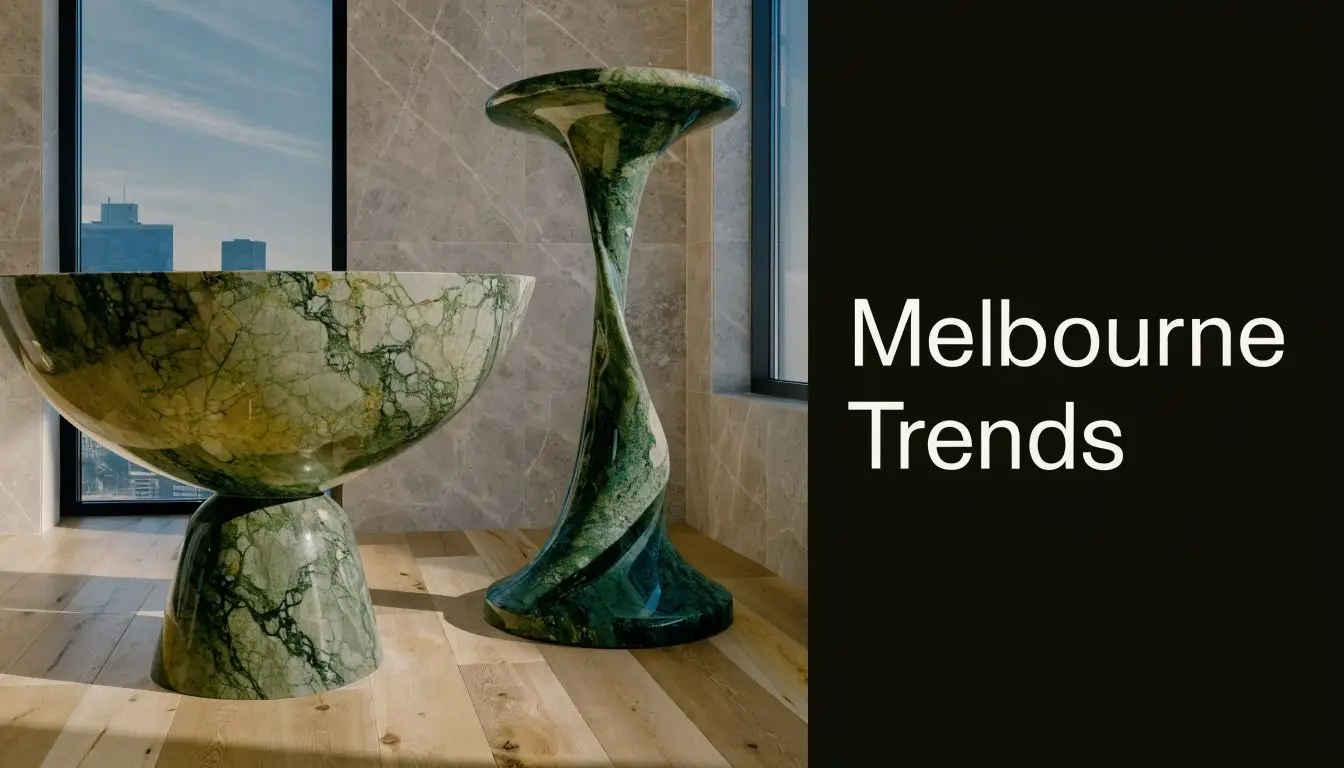
New Bathroom Ideas Shaping Melbourne Homes in 2026
Once you approve a beautiful bathroom scheme and construction begins, the actual questions arrive. Will the floor fall work with a curbless shower. Can the vanity drawers open fully past the door swing. Is that feature tile still practical once lighting, grout lines, and cleaning are factored in. In Melbourne projects, the strongest ideas are the ones that survive those questions.
Design in 2026 is becoming more individual, but the better projects are also more disciplined. Homeowners are asking for richer colour, textured finishes, warmer timber tones, and less predictable material pairings. The difference now is that these choices are being judged against compliance, maintenance, and day-to-day use, not just a mood board.
Wet rooms that feel bigger
Wet-room layouts are still one of the smartest options for compact bathrooms, especially in older Melbourne homes where every visual break makes the room feel smaller. Keeping the floor finish continuous and reducing heavy partitions can make the space read more clearly and improve movement through the room.
The catch is technical. Wet rooms rely on correct falls, careful drainage placement, and waterproofing detail that suits the room, not just the look. A local planning guide connects successful wet-room design with AS 3740-2021 waterproofing compliance, particularly around falls, drainage, and junctions (wet-room planning and waterproofing guidance).
What tends to work well:
- A clear drainage plan: water has to move quickly to the waste without ponding near the entry or vanity.
- Controlled glazing: enough glass to manage splash, without carving the room into smaller pieces.
- Consistent surface selection: fewer changes in tile and trim help the room feel larger.
Common mistakes:
- Treating a wet room as a styling move first: it is a construction and waterproofing decision.
- Ignoring cleaning and servicing: wastes, channels, and junctions need to stay accessible.
- Using the layout in the wrong room: some bathrooms are better served by a defined shower zone.
Vanities are getting more considered
Vanity design is doing more work than it used to. It sets the storage capacity, affects circulation, and often determines whether the bathroom feels resolved or cramped.
Industry guidance on standard bathroom dimensions and vanity clearances shows why this matters. In a typical main bathroom footprint, clear space in front of the vanity and sensible side clearances around the basin have a direct effect on comfort. On site, I look at drawer projection, mirror cabinet depth, towel placement, and how two people will move through the room during a rushed weekday morning. Plans can hide a lot.
Practical rule: if you have to turn sideways to use the vanity comfortably, the layout isn't finished.
Wall-hung vanities remain popular because they open up floor area visually and make cleaning easier. They are not always the right answer. In a family bathroom, a floor-mounted unit can offer more storage and a sturdier feel. The right choice depends on who uses the room and how much joinery the layout can carry without becoming bulky.
Style ideas worth borrowing carefully
The ideas with the best staying power usually solve a practical problem at the same time. Recessed niches reduce clutter around the shower. Mirror lighting improves grooming more than a decorative pendant ever will. A restrained material palette with one stronger element often ages better than trying to make every surface a statement.
For inspiration that still fits Australian homes, this guide to bathroom décor in Australia is a useful starting point.
In Melbourne, the best designer bathrooms in 2026 are less about chasing a trend and more about making deliberate choices that hold up under real use, local building requirements, and the budget needed to build them properly.
How to Budget for a Designer Bathroom in Melbourne
Budgeting for a designer bathroom isn't about chasing a single figure. Price moves with scope. A room that keeps the plumbing where it is will budget very differently from one that shifts walls, relocates waste points, or adds custom joinery.
That's why homeowners get into trouble when they compare their project to a generic online estimate. Two bathrooms can look similar in photos and be completely different jobs behind the walls.
What drives the price up
The biggest cost drivers are usually layout changes, labour complexity, waterproofing detail, tile format, and joinery. Large-format tiles can reduce grout lines and look excellent, but they often demand flatter substrates, cleaner set-out, and more careful cutting. Concealed plumbing can sharpen the visual result, but it can also make future access harder if it isn't planned sensibly.
Custom joinery is another major lever. It's often worth it because vanities and mirrored cabinets do so much of the visual and functional work in designer bathrooms. But once you move from off-the-shelf pieces to made-to-measure cabinetry, you're paying for design resolution as well as the product itself.
Here's a practical way to think about budget tiers.
Melbourne Designer Bathroom Budget Ranges 2026 Estimates
| Budget Tier | Estimated Cost Range | Typical Inclusions |
|---|---|---|
| Cosmetic refresh | Lower end of the market | Retaining much of the existing layout, replacing selected fixtures and finishes, limited joinery changes |
| Mid-range full renovation | Mid-market investment | Full strip-out, new tiling, upgraded fixtures, improved storage, revised lighting, better layout within the existing footprint |
| Premium designer renovation | Upper end of the market | Structural or layout reconfiguration, custom vanity and cabinetry, higher-end finishes, detailed lighting, more complex waterproofing and plumbing coordination |
This table is intentionally qualitative. Real pricing depends on access, apartment conditions, structural constraints, and the finish schedule you choose.
Where smart savings actually sit
Trying to save money by stripping quality out of waterproofing, prep, or labour usually backfires. Better savings tend to come from controlled selections and disciplined scope.
Good examples include:
- Keep plumbing points where practical: moving every fixture can turn a tidy renovation into a complex rebuild.
- Use feature finishes selectively: one hero wall or statement vanity often lands better than expensive material on every surface.
- Spend on joinery before novelty items: storage usually improves daily use more than decorative extras.
- Choose fixtures with operating costs in mind: efficiency matters after handover.
Long-term cost matters more than many cost guides admit. Products covered by Australia's Water Efficiency Labelling and Standards scheme let homeowners compare the efficiency of common bathroom fixtures, and that can influence ongoing household water and energy use. A Melbourne bathroom trends article notes that specifying fixtures with stronger WELS ratings can improve long-term operating efficiency over the life of the bathroom (WELS-focused bathroom planning insight).
Cheap to install and expensive to live with is still expensive.
If you want to sense-check project scope before requesting quotes, a bathroom renovation cost calculator can help frame the conversation. It won't replace a site inspection, but it can help you separate a cosmetic update from a full renovation budget.
Your Bathroom Renovation Process From Start to Finish
You approve a layout, order the tiles, and expect demolition to start the following week. Then the site inspection picks up a fall issue in the floor, the vanity lead time blows out, and access rules in your apartment building limit when materials can come in. That is a normal bathroom renovation in Melbourne. The projects that run well are not the ones without constraints. They are the ones where those constraints are found early and managed in the right order.
A bathroom is a small room with very little margin for error. Every trade works on top of someone else's work, and hidden mistakes become expensive once surfaces are closed up. Good process protects budget, programme, and finish quality at the same time.
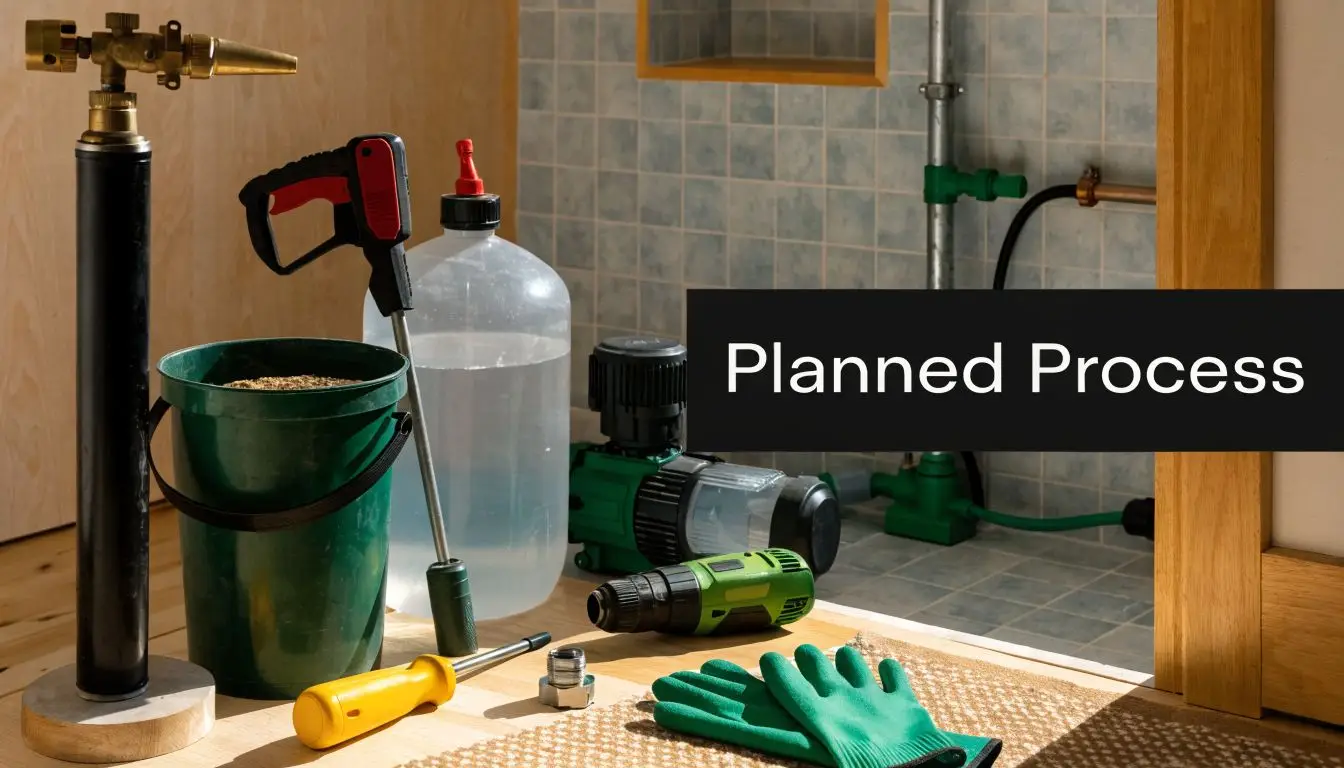
The planning phase
The quiet part of the renovation does the heavy lifting. Before any strip-out starts, the room needs to be measured properly, the layout tested, fixtures selected, and trade sequencing sorted out. If those decisions are left loose, the site pays for it later.
In Melbourne homes, early planning often exposes conditions that design inspiration boards never show. Older houses can have uneven walls, dated plumbing positions, or timber floors that need correction before tiling. Apartments add another layer. Lift bookings, waste removal, delivery windows, parking, and strata rules can all affect how the job is staged.
A sound planning sequence usually includes:
Initial brief and site inspection
The project manager reviews how you use the bathroom now, what needs to change, and what the room will realistically allow.Existing-condition checks
Levels, wall condition, service locations, ventilation, and access are reviewed before final decisions are made.Layout development
Shower size, vanity depth, door swing, storage, and circulation are resolved before finishes distract from the fundamentals.Selections and procurement
Tiles, tapware, lighting, joinery, and glazing are chosen with lead times in mind, not just appearance.Documentation and trade booking
Clear set-outs and confirmed selections let trades price accurately and arrive prepared.
One decision at this stage affects the whole job. Builder selection. Working with a team that understands sequencing, trade coordination, and compliance reduces avoidable delays and rework. It also helps to understand why using a registered builder matters for your bathroom renovation before contracts are signed.
Construction in the right order
Once demolition starts, the best projects have already made the hard decisions. Changes can still happen, but they usually trigger extra labour, material waste, and delays because completed work has to be reopened.
The site sequence is usually straightforward, even if the coordination behind it is not:
- Demolition and strip-out: remove fixtures, wall linings, floor finishes, and any damaged substrate.
- Rough-in work: set plumbing and electrical points to suit the approved layout.
- Carpentry and substrate preparation: straighten walls, correct floors, and build any framing needed for niches, in-wall cisterns, or joinery support.
- Waterproofing: apply the system to the prepared surfaces before any finish goes over the top.
- Tiling: install floor and wall tiles to the agreed set-out.
- Fit-off: complete cabinetry, plumbing fixtures, electrical fittings, mirrors, shower screens, and accessories.
- Final checks and handover: test fixtures, review defects, and close out the last details before sign-off.
The visible finish gets the attention. The hidden layer decides whether the bathroom lasts.
Where projects slow down
Homeowners often judge bathroom timelines by room size. That is misleading. Bathrooms concentrate more trades, services, and wet-area risk into one footprint than almost any other room in the house.
Delays usually come from a short list of causes. Late selections. Products that arrive damaged or out of stock. Site conditions that only become clear after demolition. Custom items that were approved without checking lead times. In apartments, access restrictions can stretch what would be a simple delivery in a house into a booked and managed exercise.
The trade-off is simple. Customisation gives you a more bespoke result, but it also reduces flexibility if anything shifts. Off-the-shelf items are often easier to replace quickly, though they may limit layout or storage options. Good project management is largely the work of balancing those trade-offs before they become site problems.
A well-run bathroom renovation rarely looks dramatic day to day. It looks organised. Materials arrive when they should, trades know what they are walking into, and decisions are made early enough to keep the programme intact. That is how a designer bathroom gets built properly in Melbourne.
Navigating Melbourne's Building Codes and Regulations
A bathroom renovation only counts as successful if it's compliant. That isn't paperwork for its own sake. It's what protects the room from leaks, trapped moisture, poor ventilation, and expensive failures that show up after the project is paid for.
This matters even more in established Melbourne homes and apartments, where old conditions don't automatically line up with current standards.
Why compliance belongs at the centre of design
The Victorian Building Authority enforces mandatory requirements around building work, and bathroom waterproofing is one of the areas where standards are especially important. A Melbourne bathroom article highlights that, for older homes and apartments, compliance is critical and points directly to the VBA's role and the importance of AS 3740 waterproofing standards in avoiding defects and supporting durability (registered builder and waterproofing compliance context).
That changes the conversation. The key question isn't just whether a detail looks clean. It's whether the room can be built cleanly, ventilated properly, drained correctly, and serviced later if anything goes wrong.
The common trouble spots are predictable:
- Waterproofing failures: often hidden until damage appears outside the bathroom.
- Poor ventilation planning: moisture lingers, finishes deteriorate, and mould risk rises.
- Overly concealed services: sleek on day one, frustrating when maintenance is needed.
- Apartment-specific constraints: access, penetrations, and approvals can all affect what's feasible.
What registered builders unlimited means in practice
Homeowners often hear the phrase registered builders unlimited without a clear explanation of why it matters. In practical terms, registration is about accountability, licensing, and working within the proper framework for the project. “Unlimited” relates to the class and scope of building work a builder is permitted to undertake.
For a homeowner, the key point is simpler. You want a builder whose registration suits the scale and nature of the work, and who understands how bathroom renovations intersect with waterproofing, drainage, ventilation, and coordination across trades.
If you want a more detailed explanation of the renovation implications, this article on why using a registered builder matters for your bathroom renovation is a helpful starting point.
A non-compliant bathroom can still look polished on completion day. The problem is that defects don't care how good the photos look.
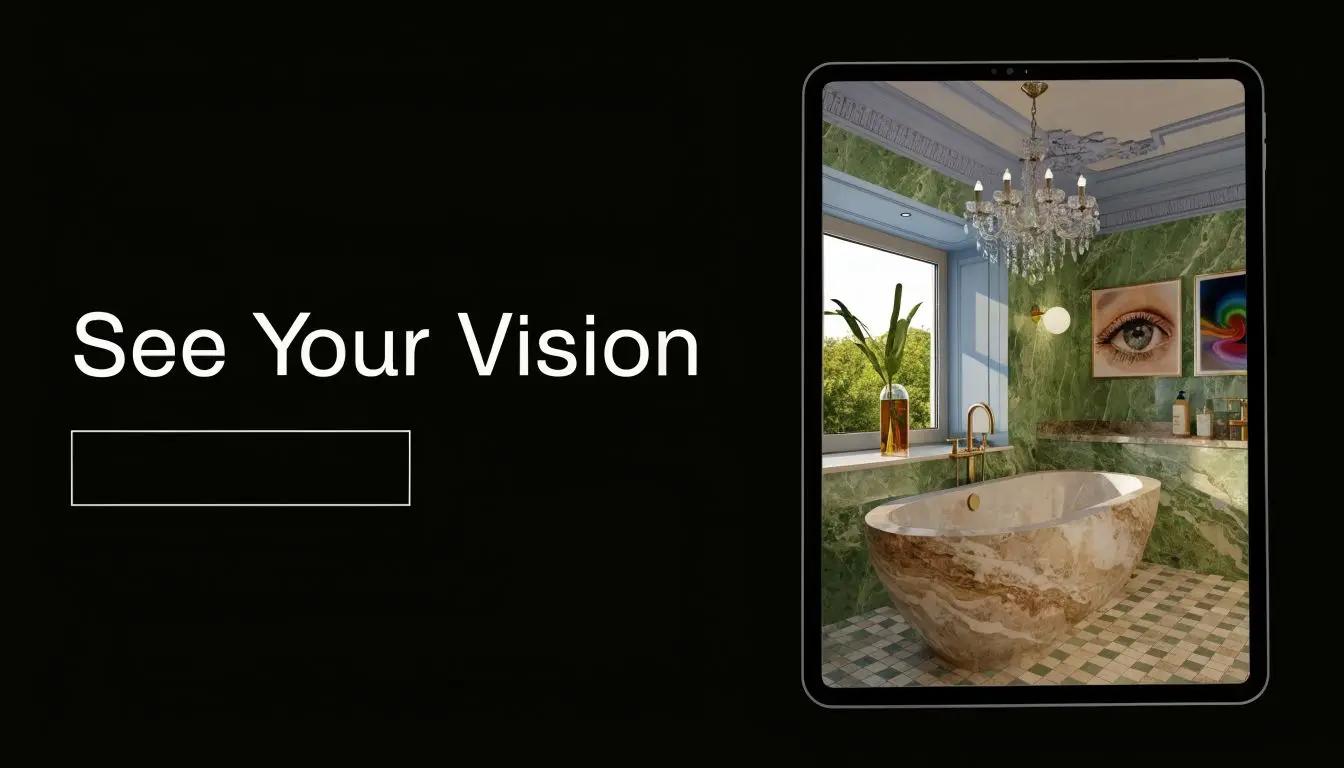
Visualise Your New Bathroom with 3D Design
A lot of bathroom mistakes happen before construction starts. The homeowner thinks the vanity will look lighter. The niche seemed bigger on paper. The tile felt subtle in the showroom, then overwhelms the room once it covers every wall.
That's where 3D design earns its place. It doesn't just help you imagine the bathroom. It helps you test the decisions before they become expensive.
What a good 3D render actually solves
A flat plan can show measurements, but it won't tell most homeowners how the room will feel. A 3D view can.
It helps answer practical questions like:
- Does the vanity dominate the entry view
- Will the mirror cabinet feel bulky
- Are the tile proportions right for the wall height
- Does the lighting land where people need it
Those are not cosmetic questions. They affect cost, comfort, and whether mid-project changes are likely.
Why it reduces risk
The best reason to use 3D design isn't presentation. It's change control. When homeowners can see the room more clearly, they make better decisions before materials are ordered and trades are booked.
That matters especially in designer bathrooms melbourne projects, where multiple finishes interact in a compact space. If a room includes custom joinery, feature lighting, large-format tiles, and a wet-zone detail, even a small change can ripple through several trades.
One practical example is vanity sizing. On plan, a longer vanity often seems like an obvious upgrade. In 3D, you may realise it tightens the entry too much, crowds the toilet zone, or throws the wall lighting off balance. That's the kind of adjustment you want to make before rough-in, not after tiles arrive.
SitePro Bathrooms offers bathroom renovation planning that includes detailed 3D design as part of an end-to-end process. That kind of visual planning is useful when the goal is to lock in layout and material decisions before construction begins.
Your Bathroom Renovation Questions Answered
A few questions come up on almost every first bathroom project. The answers usually determine whether you're planning a quick upgrade or a full renovation with proper design and compliance built in.

Is a cosmetic update enough
Sometimes, yes. If the layout works, the substrate is sound, and the room mainly needs visual improvement, a cosmetic update can make sense.
It's not enough when the bathroom has poor storage, dated plumbing positions, waterproofing concerns, weak ventilation, or a layout that frustrates daily use. In those cases, resurfacing the room usually postpones a proper renovation rather than replacing it.
How do I choose between modern bathrooms styles
Start with the house and the household. A sleek apartment ensuite can carry stronger finishes than a hard-working family bathroom. A period home often benefits from contrast, but not if the bathroom starts fighting the rest of the house.
Use this filter:
- Choose one main statement such as the vanity, tile, or lighting.
- Keep the background finishes quieter so the room doesn't feel crowded.
- Prioritise cleaning and maintenance in splash zones and corners.
- Think long-term rather than choosing a finish just because it's prominent right now.
Are bold new bathroom ideas risky
They can be, but usually only when they ignore the room's structure or daily use. A bold tile colour isn't the risky part. A hard-to-maintain surface, a poor layout, or inaccessible plumbing is.
That's why the strongest designer bathrooms combine expression with restraint. They're memorable because the room is resolved, not because every surface is competing for attention.
What should I ask a builder before signing
Ask direct questions.
- Who manages the project day to day
- How are waterproofing and trade sequencing handled
- What selections need to be locked in before work starts
- How are variations dealt with if site conditions change
- What level of registration suits this scope of work
What's the next practical step
Shortlist your must-haves, your nice-to-haves, and the features you're willing to drop if the room or budget pushes back. Then get the space measured properly and have the layout tested before you become attached to specific finishes.
That approach gives you a far better outcome than selecting products first and hoping they fit later.
If you're planning designer bathrooms melbourne homeowners can live with comfortably, start with the room's constraints, not just the mood board. A clear brief, realistic budget, sound compliance, and resolved design will do more for the final result than any trend on its own. For customized advice on bathroom renovations, project scope, and 3D planning, contact SitePro Bathrooms for a personalised quote.