
Bathroom Tiling Melbourne: 2026 Guide
Professional bathroom tiling in Melbourne usually lands between $2,000 and $8,000+, depending on bathroom size, tile choice, preparation work, and how complex the renovation is. For most homeowners, that means a small bathroom sits around $2,000 to $3,500, a medium one around $3,500 to $5,000, and a large bathroom can run $5,000 to $8,000+.
If you're staring at a tired bathroom in Highett or anywhere across greater Melbourne, you're probably stuck between excitement and dread. You've got new bathroom ideas saved on your phone, you've seen plenty of modern bathrooms online, and maybe a few designer bathrooms that look brilliant, but you still don't know where to start, what matters most, or which corners you absolutely cannot cut.
My advice is simple. Treat bathroom tiling as a building job first and a styling job second. The look matters, but the substrate, the falls, the waterproofing and the adhesive choice are what decide whether your bathroom still performs properly years from now. That's where a lot of bathroom renovations go wrong in Melbourne.
Planning Your Melbourne Bathroom Tiling Project
Most first-time renovators start in the same place. They walk into the bathroom every morning, notice the stained grout, the dated tile colour, the awkward layout, and think, “This whole room needs to change.” Then the questions start piling up. Keep the layout or move it? Retile only, or do a full rebuild? Hire a tiler, or bring in registered builders unlimited for the whole job?
The right answer depends on what's wrong with the room.
If the bathroom functions well and the issue is mainly cosmetic, a focused tiling upgrade can make sense. If the shower leaks, the floor holds water, the room feels cramped, or the walls are out of true, you're no longer choosing tiles. You're planning one of those bathroom renovations that needs proper coordination across demolition, waterproofing, tiling and finishing.
Start with three decisions
Before you choose a tile, lock in these points:
- Scope first: Decide whether you're doing a re-tile, a floor-and-wall refresh, or a full bathroom rebuild.
- Style second: Sort your visual direction early. Clean-lined modern bathrooms need different tile sizes and trims from more layered designer bathrooms.
- Team third: Match the contractor to the job. A simple re-tile and a full structural renovation are not the same service.
Practical rule: If you're changing layout, plumbing positions, or multiple trades are involved, stop thinking like a shopper and start thinking like a project manager.
A common mistake is collecting finishes before confirming what the room can physically handle. I've seen homeowners fall in love with oversized porcelain, only to find the floor needs serious correction, the shower base doesn't have compliant falls, and the walls need more prep than expected.
Know what you want the room to feel like
You don't need a perfect Pinterest board. You do need a clear brief.
Ask yourself:
- Do you want the room to feel larger?
- Do you want easier cleaning?
- Is resale value the main goal?
- Are you aiming for warmth, minimalism, or a sharper architectural look?
If those are answered truthfully, the design choices get easier. Large-format tiles, fewer grout lines, neutral colours and simple joinery usually suit busy family homes. More expressive layouts, stone-look surfaces and feature walls can suit higher-end finishes, but only if the execution is tight.
Bathroom tiling Melbourne projects succeed when the planning is boring in the best possible way. Good measurements, honest budgeting, and a realistic scope beat impulse decisions every time.
Understanding Bathroom Tiling Costs in Melbourne for 2026
A bathroom tiling quote in Melbourne can look reasonable at first glance, then blow out fast once the actual work is priced properly. The difference usually sits behind the tile. Demolition, substrate repairs, waterproofing, waste removal, trims, silicone, and layout complexity all affect the final figure.
For 2026, use square metre rates as your starting point, then check the scope line by line. Homeowners who budget by tile price alone usually miss the expensive parts of the job, especially in older Melbourne homes where walls are rarely straight and floors often need correction before tiling can start.
Estimated 2026 Melbourne Bathroom Tiling Costs
| Bathroom Size | Typical Area (sqm) | Estimated Cost Range |
|---|---|---|
| Small | 5 to 8 | $2,000 to $3,500 |
| Medium | Not specified | $3,500 to $5,000 |
| Large | Not specified | $5,000 to $8,000+ |
Treat that table as a baseline, not a promise.
A basic re-tile in a compact bathroom sits at the lower end if the room is square, access is easy, and the substrate is sound. Costs climb quickly once you add floor levelling, wall straightening, niches, feature strips, mitred corners, large-format porcelain, or detailed set-outs around fittings. If the quote also includes compliant waterproofing and proper prep, expect a higher number and take that seriously. Cheap waterproofing is one of the worst places to save money in Victoria.
What you are actually paying for
Labour is only one part of the bill. Adhesives, grout, trims, primers, waterproofing products, removal and disposal all add up, and they should be specified clearly in writing.
The tile itself can also distort your budget if you choose purely on looks. Non-porous porcelain is popular for good reason, but it often needs better substrate prep and the correct adhesive system to bond properly, particularly in wet areas that see regular temperature changes. That detail matters in Melbourne. A stylish tile installed with the wrong adhesive can fail long before it should.
If you want a more detailed pricing breakdown, this guide to bathroom tiling cost in Melbourne gives a useful project-level view.
The costs that get missed first
These are the items homeowners regularly overlook:
- Tile removal and disposal: Old bathrooms create heavy waste, and dumping fees are real.
- Substrate repair: Loose sheeting, water damage, cracked screeds, and uneven walls must be fixed before tiling.
- Waterproofing: A compliant wet-area system is a separate trade step, not a free extra.
- Edge trims and finishing: External corners, niche trims, movement joints, and silicone detailing affect both price and finish quality.
- Difficult tile formats: Mosaics, stacked patterns, herringbone layouts, and large-format tiles take longer to set accurately.
One expensive surprise is rectification work after demolition. Once old tiles come off, the room tells the truth.
Tiling quote versus renovation quote
Homeowners often compare two numbers that are pricing completely different jobs. A tiling quote may cover demolition, surface prep, waterproofing, tile installation, grouting and sealing. A renovation quote can also include plumbing changes, electrical work, carpentry, shower screen installation, painting, and project management.
Ask one direct question before comparing prices. Is this quote for tiling only, or for a bathroom renovation with tiling included?
That distinction matters because bathroom work in Melbourne often triggers compliance requirements and extra trade coordination. If the room needs new sheeting, a revised shower base, or waterproofing work signed off by the right practitioner, the quote should reflect that. If it does not, the number is incomplete.
Budget for what sits under the finish, not just the finish you can see.
A good quote is detailed, boring, and easy to audit. That is what you want. If a cheap quote skips prep, waterproofing, adhesive specification, or waste removal, it is not efficient. It is missing costs you will likely pay later.
The End-to-End Tiling Process Explained
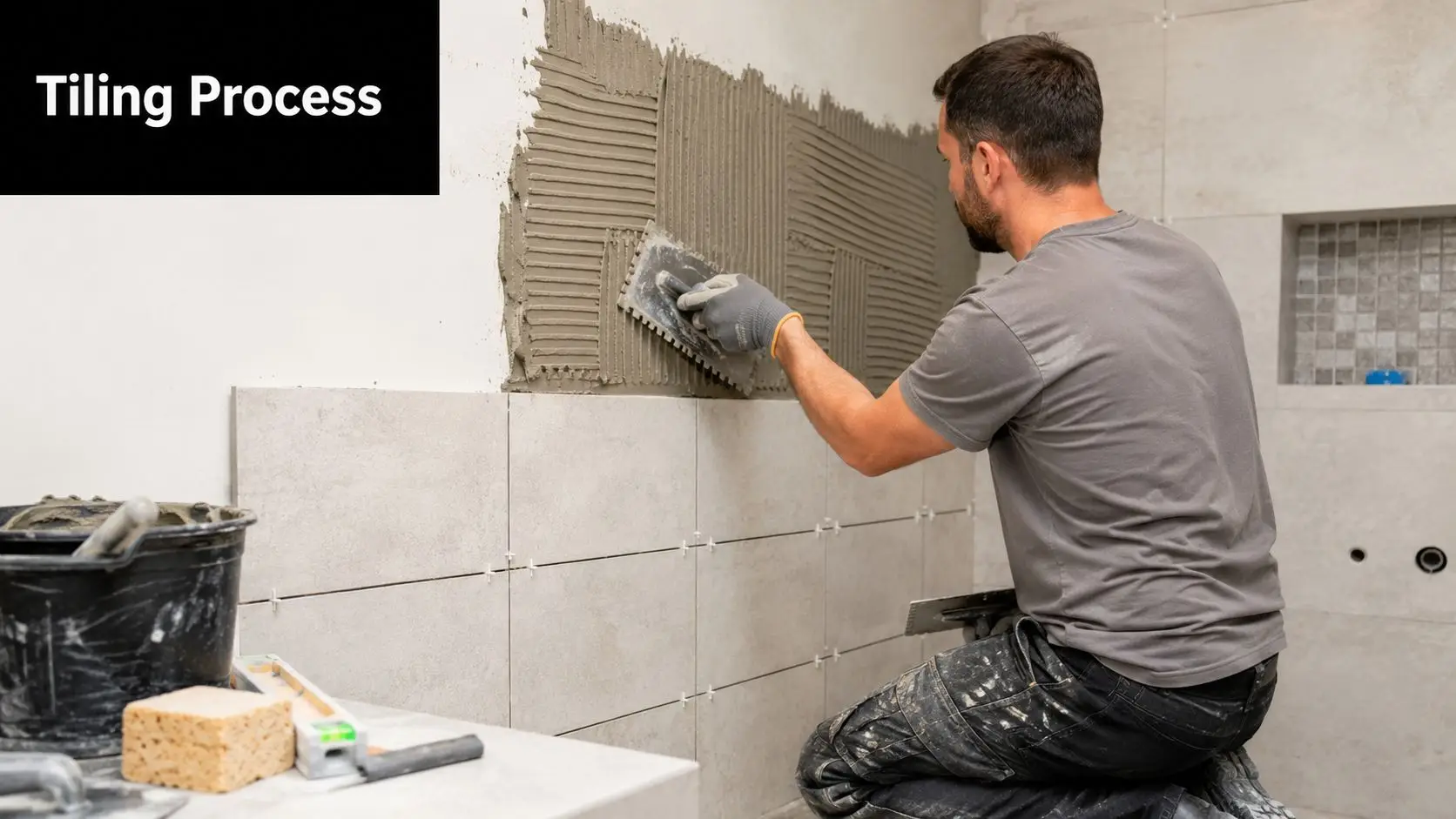
A Melbourne bathroom tiling job usually fails long before the grout goes in. The problem starts in the set-out, the substrate, or the adhesive choice. By the time you can see a cracked joint or a drummy tile, the mistake is already buried underneath.
What happens before the first tile goes down
Start with the room, not the tile sample. A good tiler measures the space, checks the substrate, confirms waste positions, and looks for movement, swelling, moisture damage, poor falls, and walls that are out of plumb. In older Melbourne homes, those issues are common. If they are missed at the start, the finished bathroom will show every one of them.
Preparation decides the result. Demolition exposes the truth. Cement sheet may need replacing, floor levels may need correcting, and shower falls may need to be re-formed before any membrane or adhesive is applied.
AS 3958.1 sets the baseline for tile installation quality, and it matters in bathrooms. Surfaces need to be true enough for the tile format being used, falls need to direct water to the waste, and movement joints need to be allowed for instead of being grouted solid. Large-format porcelain is especially unforgiving. If the substrate is uneven or the adhesive is wrong, tiles will lip, sound hollow, or let go.
The installation sequence that gives you a bathroom that lasts
A proper process usually runs like this:
Site inspection and set-out
The tiler works out centre lines, cut positions, niche alignment, edge trims, and where small cuts can be avoided. This stage affects the whole visual finish.Demolition and strip-out
Old tiles, failed bedding, and any damaged wall or floor linings are removed. Waste is cleared so defects are visible.Substrate correction
Walls are straightened, floors are brought to the right levels, and shower falls are formed properly. Such meticulous corrections are the mark of a skilled tiler.Waterproofing preparation
Junctions, penetrations, and sheet transitions are prepared so the membrane can bond properly once the waterproofing contractor starts.Tile installation
Control lines are marked, the correct adhesive is selected for the tile type and substrate, and tiles are laid in a consistent sequence. For dense porcelain and other non-porous tiles, the adhesive choice matters. In Victoria's temperature swings, using the wrong adhesive can lead to bond failure.Grouting, silicone, and detailing
Grout goes into the tile joints after curing. Silicone is used at changes of plane and movement points. Trims, corners, and drain finishes are checked at the end, not guessed at halfway through.
Why good tilers refuse to rush it
Bathrooms need curing time between stages. Adhesive needs time. Grout needs time. If someone is trying to compress the job into an unrealistic schedule, they are usually skipping preparation or tiling over work that has not stabilised.
Watch for one common mistake. Some installers treat bathroom tiling like a simple wall-and-floor finish. It is not. It is a layered system, and each layer depends on the one below being flat, dry, compatible, and properly cured.
Site advice: If a contractor cannot explain their set-out, substrate prep, or adhesive selection for your tile type, stop there and get another quote.
A quality tiling job looks clean on day one and still performs years later. That means straight lines, correct falls, sound bonding, movement where the room needs it, and no shortcuts hidden under the surface.
Navigating Melbourne's Building Codes and Waterproofing Rules
You do not notice bad waterproofing until the shower starts leaking into the room next door, the skirting swells, or the downstairs ceiling stains. By then, the tiles usually need to come off and the job gets expensive fast.
What Victorian law requires
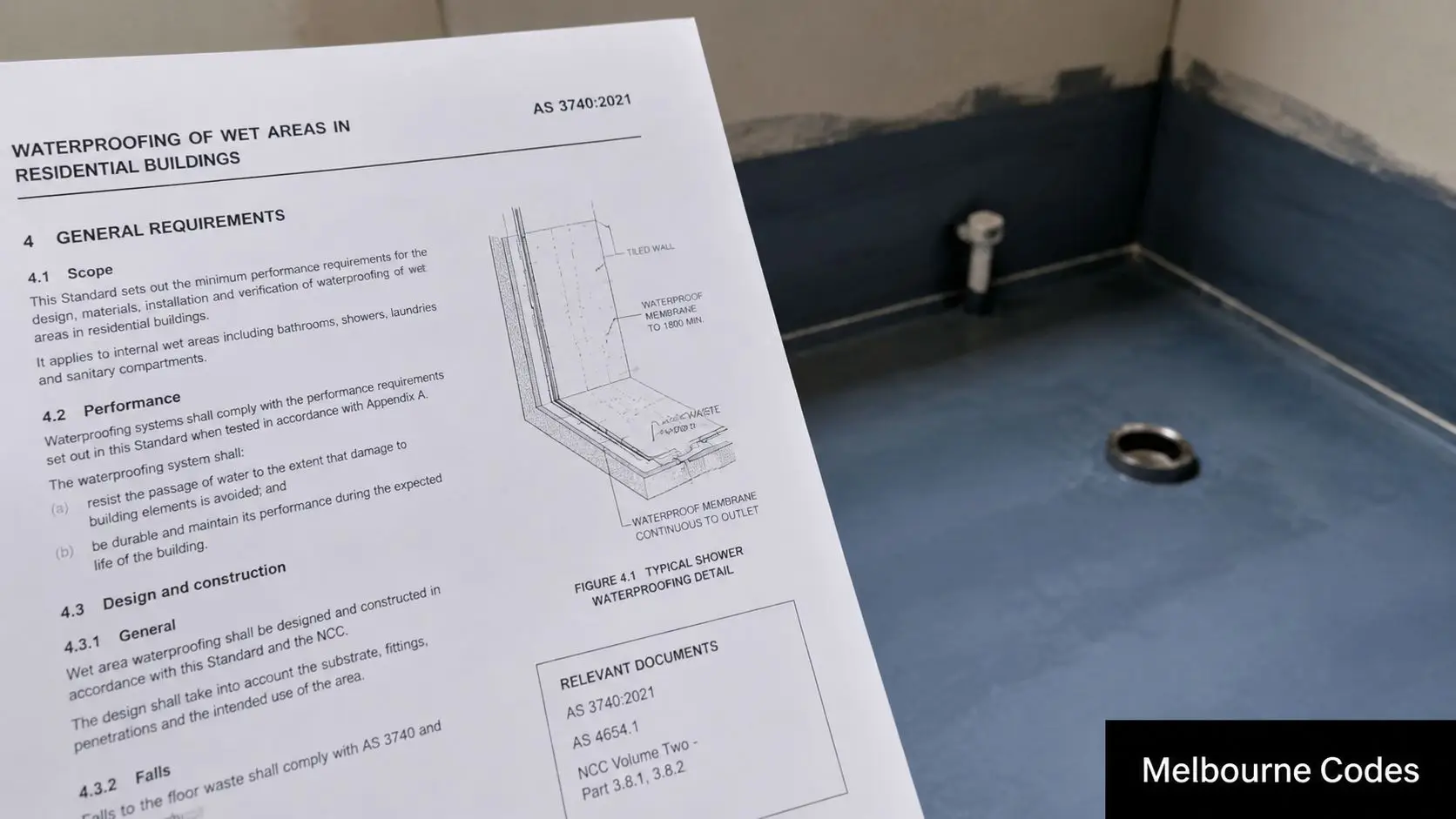
In Victoria, bathroom waterproofing has to comply with Australian Standard AS 3740. The Victorian Building Authority also expects regulated building work to be carried out by the right class of registered practitioner where registration is required, with compliance documentation issued when the job falls within those requirements.
For homeowners, the practical message is simple. Do not treat waterproofing as a side task for whoever happens to be on site that day. Get clear on who is doing it, what standard they are working to, and what paperwork you will receive at handover.
Falls matter too. Shower areas must drain properly to waste, and that starts well before tiles are laid. If the screed, tray, or substrate is wrong, no tile pattern will hide it and no grout will fix it.
The mistakes Melbourne homeowners miss
Melbourne bathrooms deal with steady moisture, cool winters, and temperature changes that expose weak workmanship. Failures often start in the hidden details. Incompatible primers, poor bond breakers at wall and floor junctions, rushed curing, and the wrong adhesive under dense porcelain are common causes.
This is the part many generic tiling guides skip. Large-format and non-porous tiles need the correct adhesive system for the substrate and wet area conditions. Use the wrong product and you can end up with drummy tiles, poor bond strength, or movement that cracks grout and breaks the waterproofing system underneath.
If you are still deciding on finishes, this guide on how to choose bathroom tiles for performance as well as style will help you avoid picking a tile that creates installation problems later.
What changes the method and the price
Compliant wet-area work costs more because there are more steps, more checks, and less room for shortcuts. A proper bathroom tiling job may include substrate correction, screeding for falls, primer compatibility checks, membrane detailing at penetrations and corners, curing time between stages, and adhesive selection matched to the tile and surface.
That is why a cheap quote is usually cheap for a reason.
If one contractor allows for waterproofing to AS 3740 and another barely mentions it, those are not equal quotes. One has priced the hidden work. The other has priced hope.
What to ask before you sign
Use this checklist and get the answers in writing:
- Who is responsible for waterproofing? Ask for the practitioner's registration details if the work requires it.
- What standard will the work follow? The answer should be AS 3740, not “our usual method”.
- What areas are being waterproofed? Make them define the shower, floor, wall heights, niches, hob or hobless entry, and penetrations.
- How will falls be formed and checked? Ask this before tiling starts, not after puddles appear.
- Which adhesive will be used for your tile type? Dense porcelain and large-format tiles need the right adhesive and coverage method.
- What compliance paperwork will you receive? If a certificate is required, make sure it is included in the scope.
Compliance is proof that the hidden parts of the bathroom were built properly, not just made to look good on completion day.
If you are hiring a registered builder for the full renovation, insist on clear trade coordination. Waterproofing, substrate preparation, and tiling have to work as one system. If responsibility is vague, defects usually follow.
Selecting the Right Tiles for Your Melbourne Bathroom
You pick a tile in the showroom under perfect lighting, then see it installed in a Melbourne bathroom with steam, hard water, winter cold, and a tight floor plan. It can look completely different. Choose tiles for the room you have, not the display wall.
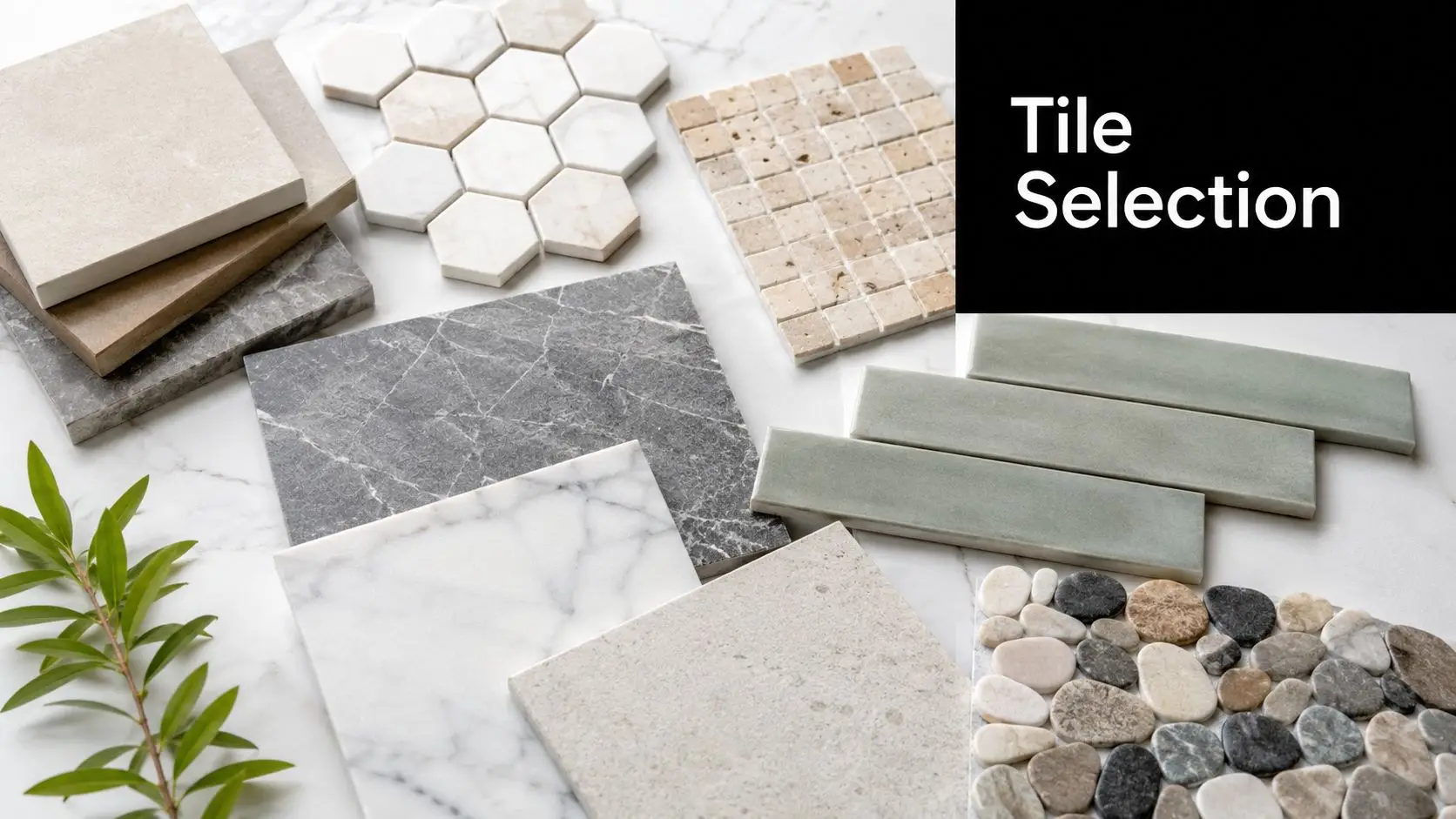
A good bathroom tile does three jobs at once. It has to suit the size and light of the room, hold up in a wet area, and work with the adhesive and substrate behind it. That last part gets missed all the time in Melbourne renovations, especially with dense porcelain and large-format tiles.
Ceramic, porcelain and stone-look options
Start with function, then choose the finish.
Ceramic tiles
Best used on walls when budget is tight and you want a simple, clean result. They are easier to cut and usually cheaper than porcelain, but they are not my first choice for bathroom floors that take daily wear.Porcelain tiles
This is the safest all-round pick for most Melbourne bathrooms. Porcelain is dense, hard-wearing, and well suited to floors, shower areas, and large-format designs. It also gives you more control over the final look, from matte stone styles to sharper contemporary finishes.Stone-look and natural-style finishes
These work well if you want warmth without the upkeep of some natural materials. Keep the palette restrained. One consistent stone-look tile across floor and walls usually looks better than mixing several bold surfaces in a small bathroom.
Melbourne bathrooms generally suit quieter schemes. Soft greys, warm neutrals, off-whites, and natural stone or timber-look finishes age better than high-contrast trends that date fast.
The tile choice that affects installation quality
Large-format porcelain looks great, but it demands better installation practice. The tile is less forgiving, the substrate needs to be flatter, and the adhesive has to match a low-porosity material properly.
Back-buttering is standard good practice for many porcelain and large-format installations because it helps achieve proper adhesive coverage and a stronger bond. Skip that step, or use the wrong adhesive, and you increase the risk of drummy tiles, poor adhesion, and failures over time. In Victoria, where homes see cold spells, warm interiors, and regular moisture cycling, that is not a detail to wave away.
If you're narrowing down finishes and formats, this guide on how to choose bathroom tiles will help you compare options in a more practical way.
If your installer cannot clearly explain the adhesive system for porcelain, the coverage method, and whether back-buttering is required, keep asking questions.
What looks good and still works
My recommendation is simple.
Choose large-format porcelain if you want a cleaner look with fewer grout lines, but only if your installer is confident with layout, levelling, and coverage. Choose lighter or mid-tone colours if the bathroom is small or gets limited natural light. Use feature tiles in one area only, such as a niche or vanity wall. That gives the room character without turning it busy.
Also check the slip rating for floor tiles, especially in family bathrooms and hobless showers. A tile that looks sharp on a sample board can feel unsafe under wet feet.
Good bathroom tile selection is disciplined. Pick materials that suit Melbourne conditions, meet the demands of a wet area, and can be installed properly the first time.
Vetting and Choosing Your Bathroom Renovation Specialist
A bathroom renovation usually goes wrong at handover, not in the showroom. The tiles look good on a sample board, then the finished room ends up with poor falls, hollow spots, swollen skirtings, or waterproofing paperwork nobody can produce. In Melbourne, that is the difference between hiring a tiler for a tidy re-tile and hiring the right renovation specialist for a wet-area project that has to meet code.
Start by matching the contractor to the scope.
If you are replacing tiles on a sound, unchanged layout, a skilled tiler may be enough. If the job includes demolition, substrate repairs, waterproofing, plumbing coordination, electrical work, shower screen set-out, or any layout change, use a renovation contractor or registered builder who can manage the whole sequence properly. Bathrooms fail when trades are booked in isolation and no one owns the wet-area compliance from start to finish.
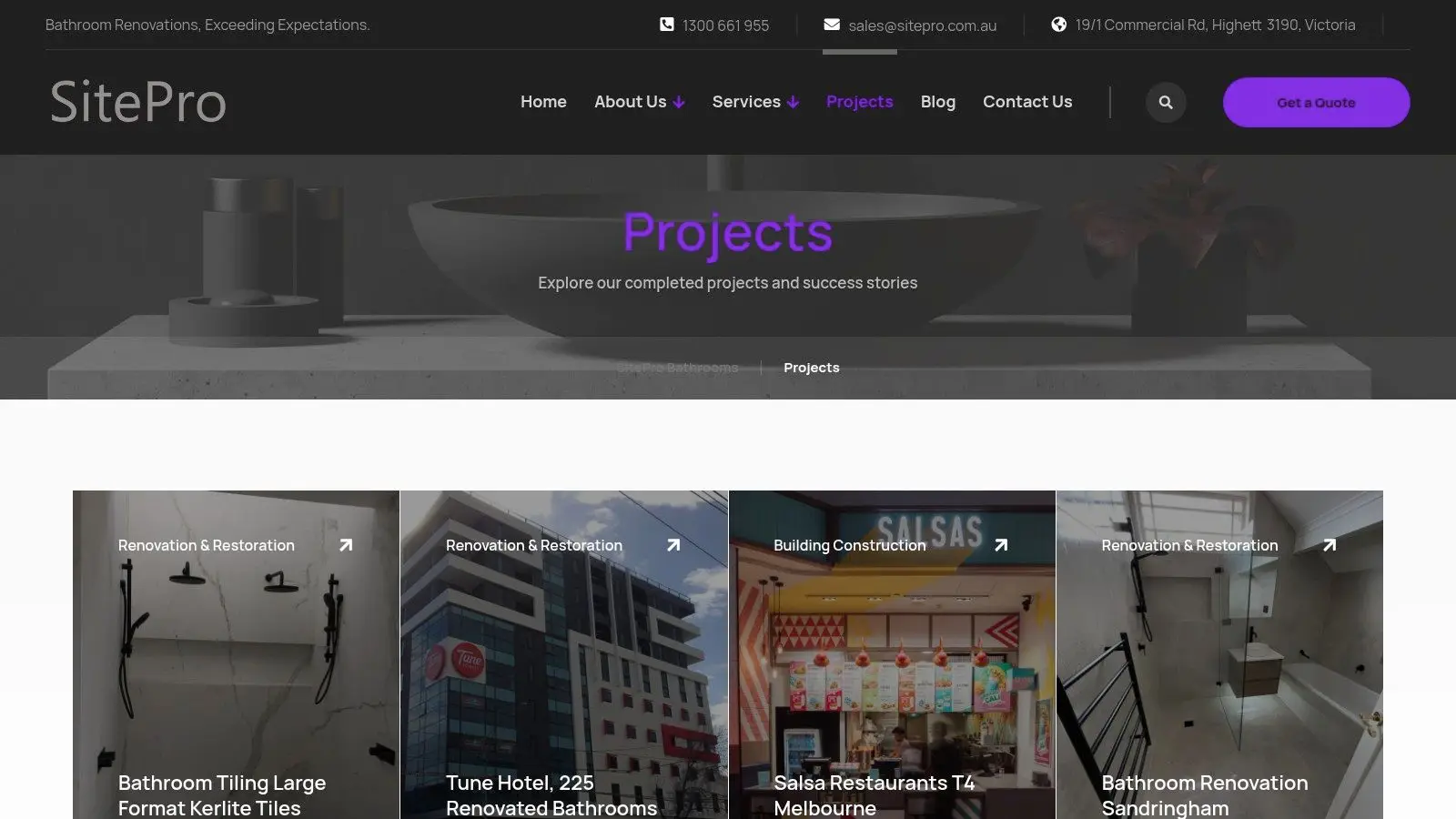
If you want to see what that looks like in practice, review a bathroom remodel contractor with completed renovation projects and pay attention to process, not just finished photos.
What I would check before accepting any quote
Bring these questions to every site meeting and ask for clear answers in writing:
- Who is responsible for waterproofing compliance? In Victoria, wet-area waterproofing must be done properly and in line with AS 3740. If they are vague here, stop the conversation.
- Who is the VBA-registered practitioner for the regulated work? If building work requires registration, you need to know exactly who is carrying that responsibility.
- What is included in substrate preparation? Tiling only lasts if the surface underneath is flat, stable, and suitable for the tile type.
- What adhesive system are you using for porcelain or large-format tiles? Non-porous tiles need the right adhesive and coverage method, especially in bathrooms that cycle between damp, cool, and heated conditions.
- What is excluded from the quote? Ask about demolition, waste removal, screeding, waterproofing, trims, silicone, tile edge finishes, and rectification of hidden damage.
- What does the work sequence look like? A serious contractor can explain the order of demolition, prep, waterproofing, curing, tiling, grouting, and fit-off.
- What happens if they uncover rotten framing, movement, or water damage? Variations are normal. Vague pricing is not.
Portfolio matters too, but use it properly. Do not judge a contractor by close-up photos of one niche and a tap set. Ask to see full bathrooms similar to yours in size, age, and finish level. Older Melbourne homes often have uneven walls, out-of-square corners, and subfloor movement. A specialist who can handle those conditions is more useful than one with polished marketing images.
One practical option in Melbourne is SitePro Bathrooms, which handles bathroom renovations from design development through to construction. That suits homeowners who want one team coordinating the wet-area work, trade sequence, and finish selections instead of chasing separate contractors.
Red flags that should end the discussion
Some comments are enough to walk away on the spot:
- “We can tile over that.” Maybe. But if they have not checked movement, moisture, drainage, and build-up height, they are guessing.
- “Waterproofing is standard, so we don't need to explain it.” You do need it explained, including who does it and how it will be documented.
- “We'll sort the details after we start.” Scope disputes start exactly there.
- “Large-format porcelain goes down like any other tile.” It does not. The adhesive, coverage, levelling, and substrate flatness matter more.
- “Certificates or compliance records aren't a big issue.” In a Melbourne bathroom, they are.
Choose the contractor who inspects carefully, asks awkward questions early, and speaks clearly about waterproofing, substrate prep, adhesive choice, and responsibility for regulated work. That is the person protecting your bathroom, not just installing tiles.
Your Melbourne Bathroom Tiling Questions Answered
How long does a bathroom tiling project usually take?
A Melbourne bathroom takes as long as the substrate, waterproofing, and curing require. A straightforward re-tile is usually much quicker than a full renovation with demolition, plumbing changes, screeding, waterproofing, and fit-off.
Be wary of any timeline that sounds fast but skips drying time. In Victoria, wet-area work fails when trades rush the base, not when the tiler spends too long setting tiles. Older houses in Melbourne add another layer of delay because walls are often out of square, floors can need correction, and hidden water damage is common once demolition starts.
What's the best way to keep new grout clean?
Keep the room dry and the cleaning simple. Run the exhaust fan properly, wipe down standing water, and clean with a pH-neutral product instead of aggressive chemicals.
Grout usually stains because moisture sits on it every day. Silicone joints often show trouble first, especially in showers and around the bath. If you want the finish to last, ventilation matters almost as much as the tile installation itself.
Can you tile over existing bathroom tiles?
Only if the existing tiled surface is sound, well-bonded, correctly prepared, and the extra height will not create problems at drains, door thresholds, or fixtures.
In many Melbourne bathrooms, removal is the better call. Tiling over old tiles can trap defects you cannot see, including failed waterproofing, movement in the substrate, and poor falls to the waste. If the room has cracking, drummy tiles, moisture staining, or drainage issues, strip it back and fix the cause properly.
Are underfloor heating and sealing worth considering?
Underfloor heating is worth it in colder Melbourne homes, especially on slab floors or south-facing bathrooms that stay chilly through winter. Plan it before tiling starts so the floor build-up, thermostat position, and compatible adhesive system are sorted early.
Sealing depends on the tile and grout you choose. Dense porcelain often needs little or no sealing, while natural stone and some grout types benefit from it. Ask for product-specific advice, not a blanket upsell. The right system depends on tile porosity, cleaning habits, and how much water the room sees.
When should you stop researching and get a quote?
Get a quote once you can make three decisions. Your budget range, whether you are re-tiling or renovating the whole bathroom, and the tile style you want.
That is enough for a useful site inspection. A good specialist can then tell you if your preferred tiles need a flatter substrate, whether large-format porcelain calls for a different adhesive, whether the floor waste and falls need correction, and what regulated waterproofing work must be documented under AS 3740 and Victorian requirements.
Research helps at the start. Clear decisions save money once the work begins.