
You're probably looking at a bathroom that still works, but doesn't feel good to use. The tiles look tired, the vanity has seen better days, and every online gallery seems to jump straight from “cheap refresh” to full luxury rebuild with very little practical advice in between.
That middle ground is where most homeowners in Victoria start. They want a simple bathroom renovation that lifts the room, controls costs, and avoids the kind of hidden mistakes that turn a modest project into a frustrating one. The trick is knowing where a refresh is enough, where it isn't, and which parts of the job need licensed trades and proper sequencing.
A simple renovation isn't about doing the bare minimum. It's about making smart decisions on layout, waterproofing, finishes, and scope so the bathroom looks better, works better, and holds up in a wet environment.
Is a Simple Refresh Enough for Your Bathroom
A lot of bathrooms don't need a full strip-out. Some need better lighting, a new mirror, updated tapware, or a cleaner vanity line. But the common mistake is assuming cosmetic change fixes a wet-area problem.
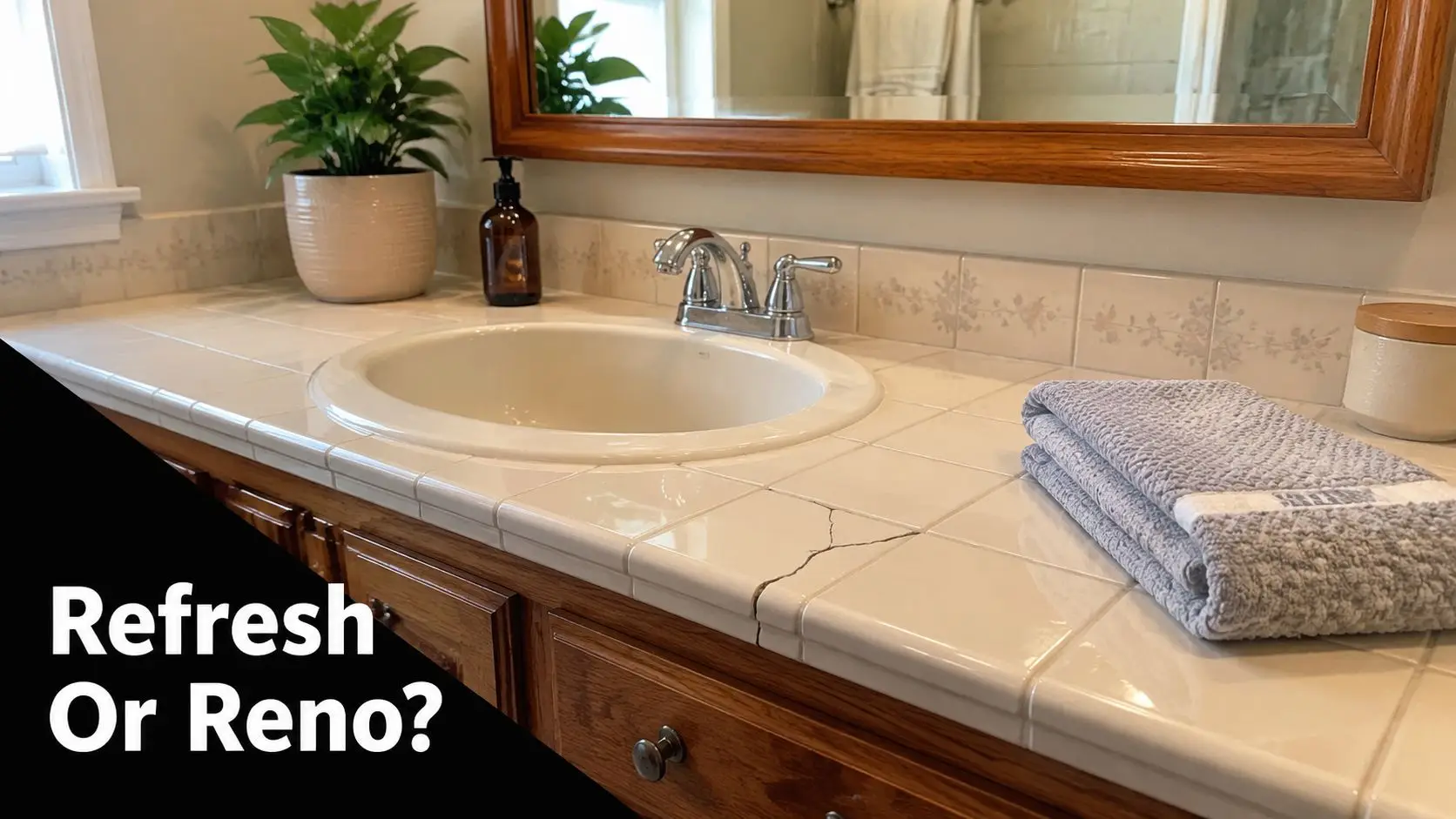
In Australian bathrooms, especially in a humid setting, the bigger issue is often behind the surface. Advice that focuses only on paint, hardware, mirrors, and lighting often skips moisture control, ventilation, and substrate condition. That matters because wet-area construction and waterproofing have to manage moisture intrusion, and a cosmetic-only makeover won't solve failed grout lines, deteriorated backing, or hidden waterproofing defects, as noted in this Australian bathroom refresh discussion.
When a refresh can work
A lighter-touch update can make sense if the room is dry, the layout functions well, and there's no sign of movement or water damage. In those cases, you might keep the footprint and focus on visible elements that improve daily use.
A refresh is usually worth considering when:
- The layout already works: The shower, vanity and toilet are in sensible positions and there's no need to improve circulation.
- Surfaces are tired, not failing: The room looks dated, but tiles are sound and there's no evidence of moisture getting behind them.
- Storage is the main issue: Replacing a bulky vanity or mirror cabinet may solve the frustration without major building work.
When a simple renovation is the safer choice
If the bathroom smells damp, grout keeps cracking, silicone has failed repeatedly, or the room never seems to dry out properly, painting over the problem is false economy. A cheap update can become the expensive option when it ignores the wet-area basics.
Practical rule: If water management is in doubt, treat the job as a building issue first and a styling issue second.
That's where a proper renovation scope matters more than a cosmetic shopping list. If you're deciding between a touch-up and a more complete rebuild, this guide to a complete bathroom renovation process helps frame what's involved when the room needs more than surface changes.
Defining Your Scope and Setting a Realistic Budget
Most budget blowouts start before demolition. They start when the scope is fuzzy. Homeowners mix must-haves with nice-to-haves, assume every fitting can stay, or decide halfway through that the shower should move to the opposite wall.
For a simple bathroom renovation, scope discipline matters more than almost anything else.
Start with needs before wants
The cleanest way to plan is to separate function from finish. Ask a few direct questions before you choose colours or browse new bathroom ideas:
- What isn't working now: Is it storage, shower access, cleaning, lighting, ventilation, or all of the above?
- What can stay in place: If the layout is serviceable, keeping plumbing where it is usually protects your budget.
- What level of finish suits the home: A family bathroom, investment property, and forever home don't need the same selections.
That last point gets missed often. Designer bathrooms look great in photos, but a practical renovation brief has to match the property and the way you use the room.
What a simple renovation usually costs
The numbers help anchor expectations. In Australia, a simple bathroom renovation typically costs $15,000 to $25,000, according to the 2024 AHURI report, and basic remodels in Victoria average about $18,500. The same data set notes that 68% of homeowners keep existing plumbing locations to reduce costs by up to $4,000, which is one of the most effective cost-control decisions available in a straightforward project. You can use a bathroom renovation cost calculator to test different scope choices against that range.
Another useful reality check comes from pricing trends. The Housing Industry Association 2026 Price Index reports that bathroom renovation costs in Australia have risen 34% since 2018, and simple renovations in Victoria now average $19,200 compared with $14,300 in 2018. The same report attributes much of that movement to labour and materials, while CSCA 2025 data shows skilled labour accounts for 55% of total cost in simple projects, with tile setters and plumbers in Melbourne charging $85 to $110 per hour.
Where the money usually goes
A simple renovation still has technical steps that can't be skipped. Even when the design is restrained, these areas drive cost:
| Project element | What affects budget most |
|---|---|
| Labour | Licensed plumbing, electrical, tiling, waterproofing, and fit-off |
| Layout | Whether plumbing stays where it is or needs to move |
| Finishes | Tile size, fixture quality, shower screen type, vanity construction |
| Preparation | Demolition complexity, wall condition, subfloor issues, compliance work |
Keeping the plumbing layout is often the difference between a controlled renovation and an avoidable one.
A simple way to set your budget ceiling
Set your budget in three layers rather than one figure.
- Core spend: Demolition, plumbing, electrical, waterproofing, tiling, fixtures.
- Finish allowance: Vanity, tapware, mirror, lighting, screen, accessories.
- Decision buffer: A reserve for issues uncovered after strip-out.
That approach keeps the conversation practical. You're not just asking what you want the room to look like. You're asking what the room needs to function properly, and which design choices improve the outcome without dragging the job into a more expensive category.
Simplified Design and New Bathroom Ideas
The best simple bathroom renovation plans don't start with a product list. They start with how the room should feel when you walk in and how easy it should be to use every day.
One common brief sounds like this: “We don't want anything flashy. We just want it to feel cleaner, more modern, and easier to live with.” That's usually the right starting point. Good design for simple bathrooms is less about adding features and more about removing friction.
A practical design story
Take a typical older bathroom in suburban Melbourne. The room is compact. The vanity is too deep, the shower screen chops up the sightline, and the tile pattern makes the space feel busier than it needs to be.
The homeowner starts collecting inspiration for modern bathrooms and designer bathrooms, but most of what they save online isn't directly usable. The room doesn't have the ceiling height for dramatic pendant lighting, and it doesn't need a freestanding bath. What it needs is better proportion.
So the design conversation shifts. Instead of chasing features, we focus on a few moves that carry the room:
- a floating vanity to open the floor visually
- larger wall tiles to reduce grout lines
- a cleaner shower screen profile
- a restrained material palette that won't date quickly
That's how a simple project starts looking well resolved rather than budget-driven.
New bathroom ideas that usually work well
Some ideas photograph well but create maintenance headaches. Others steadily improve the room every day. These are the choices that tend to hold up:
- Floating vanities: They make floor cleaning easier and create a lighter look in small rooms.
- Frameless or minimal-frame shower screens: They reduce visual clutter and help the room feel wider.
- Large-format tiles: Fewer grout joints usually means a calmer finish and less visual noise.
- Wall-hung storage or recessed niches: Good storage matters more than extra decoration.
- Simple colour palettes: Soft neutrals, warm whites, muted stone tones, and timber accents tend to age better than highly specific trends.
Why visualisation matters before demolition
A lot of expensive design regret comes from trying to picture everything in your head. Tile samples on a board rarely tell you how the room will read once the vanity, screen, lighting and sightlines are all in place.
That's where 3D planning earns its keep. It lets you test scale, spacing, storage and finish combinations before anything gets ripped out. SitePro Bathrooms offers design-led planning with 3D visualisation as part of the renovation process, and homeowners can also explore bathroom renovation ideas in Australia to refine their brief before locking in selections.
The smartest design change is often the one that removes a future regret before the job starts.
Keep the room cohesive
A simple bathroom renovation looks expensive when the details agree with each other. It looks patchy when every item tries to be the hero.
A good rule is to choose one feature to carry the room. It might be the vanity finish, the tile, or the shape of the mirror. Then keep the rest supportive. That balance is what gives even modest bathroom renovations a settled, intentional look.
Navigating Permits and Assembling Your Team
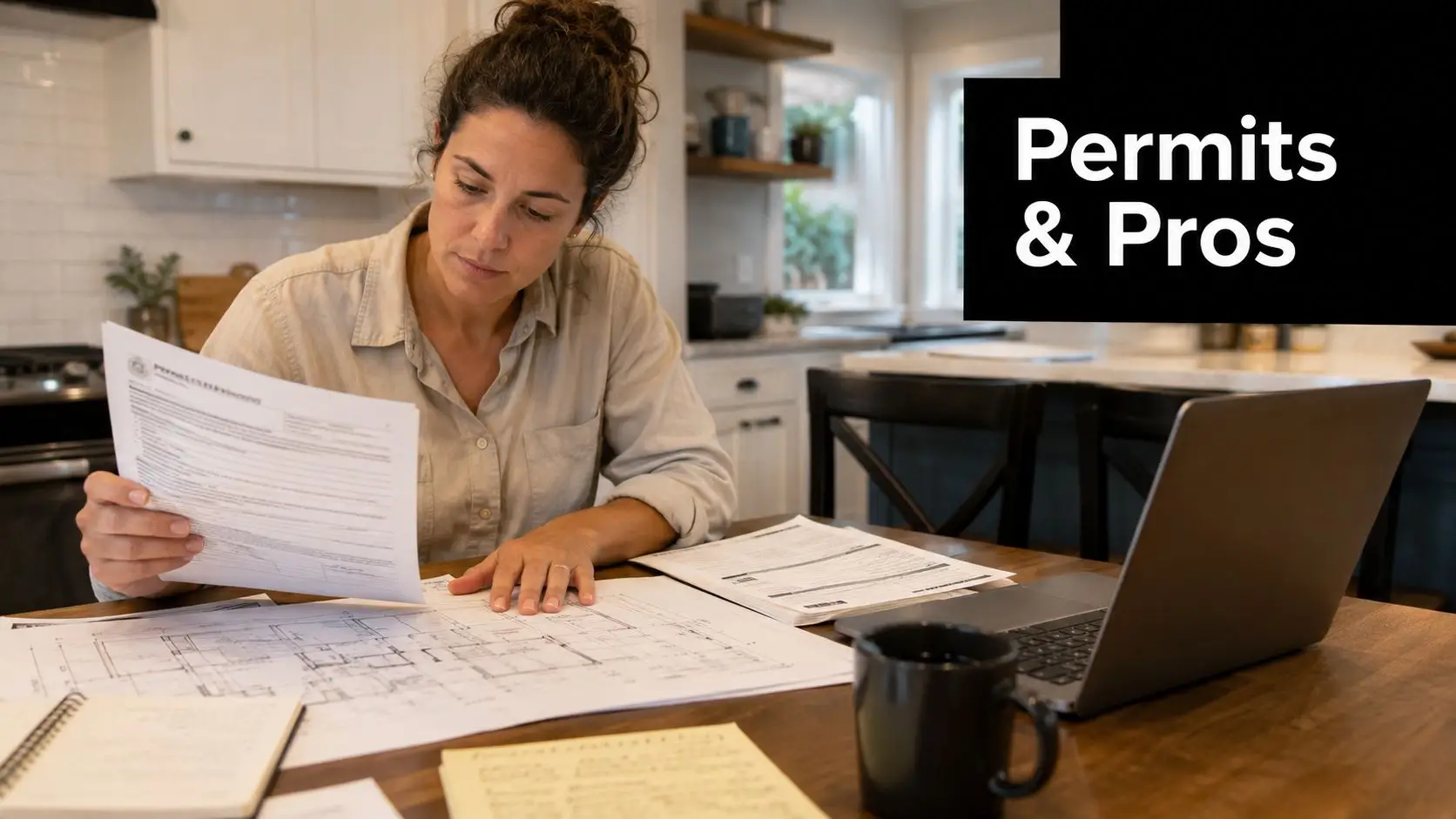
Many first-time renovators get uneasy concerning permits, inspections, and trade sequencing. They can picture the tiles and vanity, but these aspects feel harder to judge.
Even though a bathroom may look like a compact room, it combines plumbing, electrical work, wet-area construction, finishes, and compliance in one small footprint. That's why team quality matters so much.
Where simple jobs become expensive
One of the most common technical mistakes is getting rough-in locations wrong early. In Victoria, misalignment of plumbing rough-in points with the standard shower width can trigger a 29% cost overrun because trades end up rerouting after tiling has effectively boxed them in, according to the 2024 Renovation Cost Report by the Australian Institute of Architects, Victoria branch.
That's not a styling problem. It's a sequencing problem.
The safer method is to lock the layout, confirm plumbing positions before demolition gets too far, complete first-fix work properly, and inspect before closing walls. It sounds procedural because it is procedural. Good bathrooms are built through order, not improvisation.
Who should be on the job
For a straightforward renovation, you need people who can handle licensed work and coordinate handovers cleanly between stages. Depending on the project, homeowners may work with separate trades or engage a specialist renovation company or registered builders unlimited class builder to manage the job end to end.
What matters is not the label alone. It's whether the people on site can do these things properly:
- Confirm rough-in points before walling starts
- Carry out licensed plumbing and electrical work
- Arrange required inspections
- Install wet-area substrates correctly
- Sequence waterproofing, tiling, and fit-off without shortcuts
Inspections are not admin for admin's sake
The Victorian Building Authority requires permits and inspections for plumbing and electrical work in the relevant circumstances, and the data makes the point clearly. Renovations that include a permit and inspection phase for those works have 91% higher success rates than projects that skip that step. The same guidance also requires the first-fix electrical stage to be completed and inspected before walls are closed, with outlets set at least 150mm from the shower edge, a code requirement linked to preventing 80% of future electrical safety violations.
Skipping inspection doesn't remove risk. It transfers risk to the homeowner.
Ask these questions before you hire
You don't need to interrogate trades like a building surveyor. But you do need clear answers.
- Who is responsible for coordination: If one trade finishes late, who resets the sequence?
- How are inspections handled: Don't assume someone else is lodging or arranging them.
- What substrate is going into wet zones: Water-resistant backing matters as much as the tile finish.
- When is first-fix signed off: This should be clear before any board or tile goes on.
A bathroom is one room, but it behaves like a chain. If the first links are weak, every finish that follows is sitting on compromised work.
The Renovation Timeline What to Expect
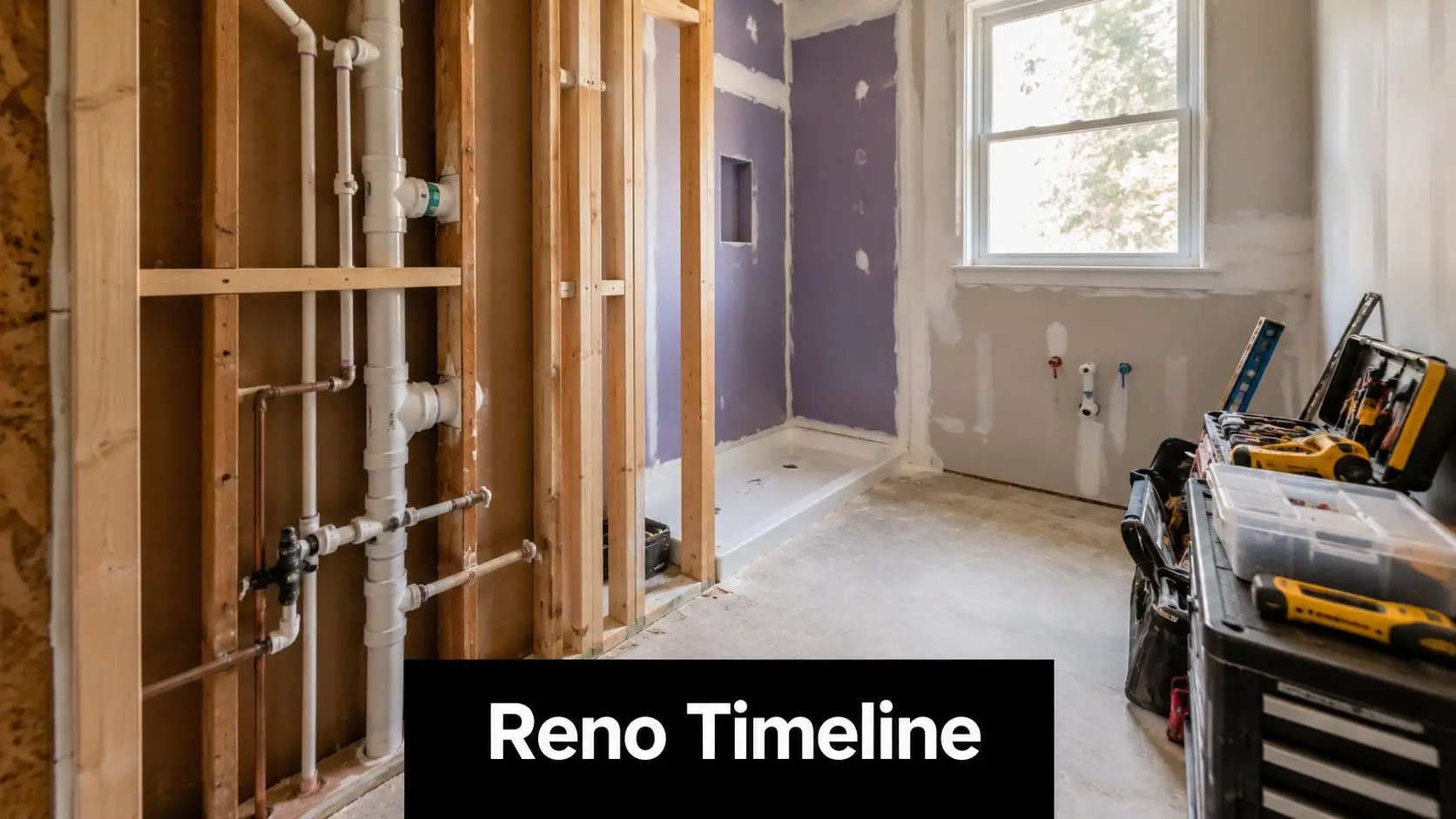
A bathroom renovation feels messy in the middle because it is. The room gets stripped back, the services are exposed, and for a while it looks worse than it ever did before. That part is normal.
What matters is whether the job moves in the right order, with each stage setting up the next one.
Demolition and strip-out
The first phase is controlled removal. Old fixtures come out, wall and floor finishes are taken back, and the team gets a clear look at the substrate, framing and service locations.
This stage often answers the questions no quote can settle perfectly in advance. You find out whether the walls are sound, whether previous work was done properly, and whether the floor has any surprises that need correction before the rebuild.
First-fix services
Once the room is open, plumbing and electrical first-fix work happens before the bathroom gets closed up again, establishing positions for wastes, supply lines, outlets, switches, lighting and ventilation.
The reason this stage matters so much is simple. If service locations are off, every finish that follows gets harder. Tile set-out suffers, vanity placement becomes awkward, and late changes become expensive.
Walling and waterproofing
After first-fix inspection and substrate preparation, wet-area surfaces are built for tile. Then comes the stage that separates durable bathrooms from short-lived ones.
A critical technical requirement is the 24-hour flood test of the shower pan liner before tiling. According to the Master Builders Association of Victoria, failure rates in non-compliant projects reach 38%, while the Australian Building Codes Board reports that 65% of wet-area failures in Victoria stem from inadequate waterproofing installation. Projects that adhere to the flood-test protocol properly achieve success rates above 94%.
If a shower base isn't tested before tile goes down, the homeowner is being asked to trust work that hasn't been proven.
A properly built shower area also needs the right sequencing. The membrane must be suitable, the falls have to work toward the drain, and the assembly has to be allowed to cure as required before the next layer goes on.
Tiling and fit-off
Once waterproofing is confirmed, the room starts to turn the corner visually. Tiling goes in, grout lines define the surfaces, and the design decisions become real rather than theoretical.
After tiling cures, the fit-off stage brings the bathroom together:
- Vanity and basin installation: The room starts functioning again.
- Tapware and shower fittings: Final service points are connected.
- Screen, mirror and accessories: The visual detail gets completed.
- Testing and handover: Fixtures are checked and the room is cleaned for use.
What quality looks like on site
The best renovation timelines aren't the fastest looking ones. They're the ones where no one is rushing a wet-area stage just to make the calendar look good.
A good project manager keeps trades moving, but also protects the pauses that matter. Waterproofing has to cure. Inspections have to happen. Tile setting has to respect layout and level. Those are the moments that decide whether your bathroom still performs well years later.
Your Beautiful New Bathroom Awaits
A successful simple bathroom renovation comes down to judgement. Keep the parts that still work. Upgrade the parts that improve function. Don't spend designer-bathroom money on features you won't use, and don't cut corners on the hidden construction that protects the room.
That balance is what gives bathroom renovations long-term value. The budget needs to be realistic, the design needs to suit the home, and the build has to follow the right order with licensed trades handling the technical work. When those pieces line up, even a modest renovation can feel polished, calm and built to last.
For homeowners in Highett and across greater Victoria, the main challenge usually isn't finding inspiration. It's turning ideas into a project that stays controlled from first concept to final handover.
If your current bathroom is tired, cramped, hard to clean, or showing signs that a simple refresh won't solve, it's time to plan properly.
If you're ready to move from ideas to a workable renovation brief, contact SitePro Bathrooms to discuss your space, your layout, and the level of finish that makes sense for your home.