
Your Ultimate Bathroom Renovation Checklist
Dreaming of a new bathroom usually starts the same way. You've saved a folder of new bathroom ideas, shortlisted tiles, and pictured a calmer morning routine. Then the practical questions show up. What comes first, who needs to be booked, what can go wrong behind the walls, and how do you get that polished designer bathroom look without running into costly surprises halfway through?
That's where a proper bathroom renovation checklist earns its keep. The best renovations aren't driven by finishes alone. They're driven by sequence, documentation, and quality control at each stage. In Australia, that matters because bathroom work sits inside a regulated building framework. The strongest starting point is compliance with the National Construction Code and wet-area waterproofing requirements under AS 3740, with approvals, licensed trades, and final compliance paperwork treated as mandatory parts of the job, especially in Victoria where structural or plumbing changes can trigger permits, as noted in this Australian bathroom remodel checklist guide.
A well-built bathroom renovation checklist does more than keep a project organised. It protects the home from hidden moisture issues, poor drainage, bad ventilation, and rushed trade sequencing. It also gives you a clearer path from concept to handover, whether you're planning modern bathrooms, family bathrooms, or a more customized designer finish.
Use the list below like a registered builder would use a project plan. It's not just about what to choose. It's about when to decide, what to verify, and where not to cut corners.
1. Planning and Design Consultation
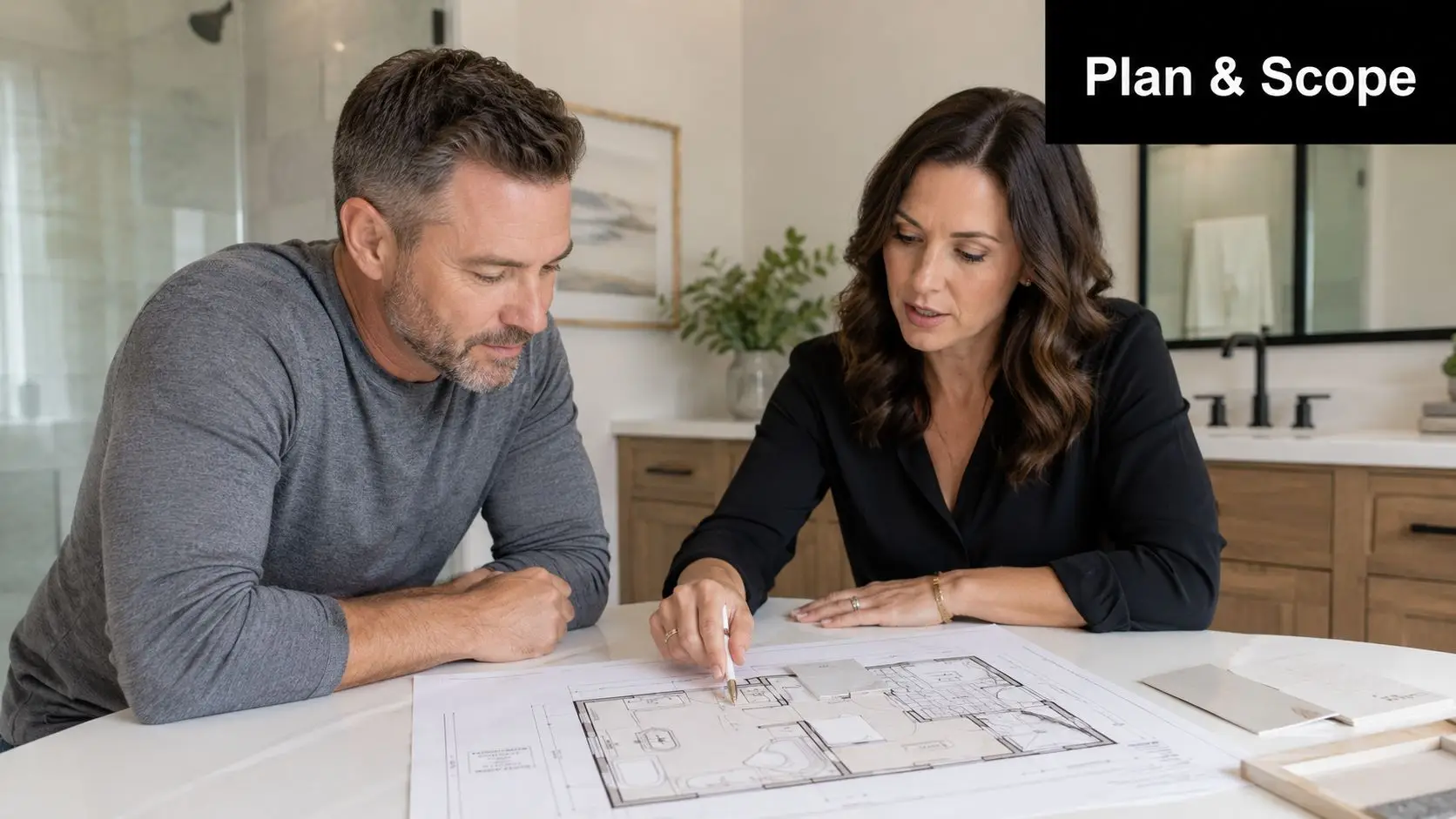
Start before you choose tapware, tiles, or colours. The first conversation should focus on how the bathroom needs to function. A family bathroom used by school-aged kids has different priorities from an ensuite designed for easy cleaning, quiet lighting, and more storage around the vanity.
Bring visual references, but don't stop there. Share your daily routine, the storage you're missing, who uses the room, and what frustrates you about the current layout. Good design consultation is partly about style and mostly about identifying constraints early. If the toilet location is awkward, the shower feels cramped, or the vanity blocks circulation, those issues need to be solved on paper first.
What to bring into the first meeting
- Style references: Save photos of bathrooms you like, but explain what you like about them. It might be the wall-hung vanity, not the colour scheme.
- Non-negotiables: List what must stay or be added, such as a bathtub, extra power points, or shaving storage.
- Household reality: Mention if it's the only bathroom, if kids use it, or if an older family member needs easy access.
One of the most useful things you can do before that meeting is read a practical guide on how to plan a bathroom renovation. It helps you arrive with better questions and fewer assumptions.
Practical rule: If you can't describe how the room should function on a rushed weekday morning, the design brief still isn't finished.
Ask about warranty coverage, after-sales support, previous projects similar to yours, and how design decisions get recorded. Verbal agreements are where many renovation misunderstandings start.
2. 3D Design Visualisation and Technical Drawings
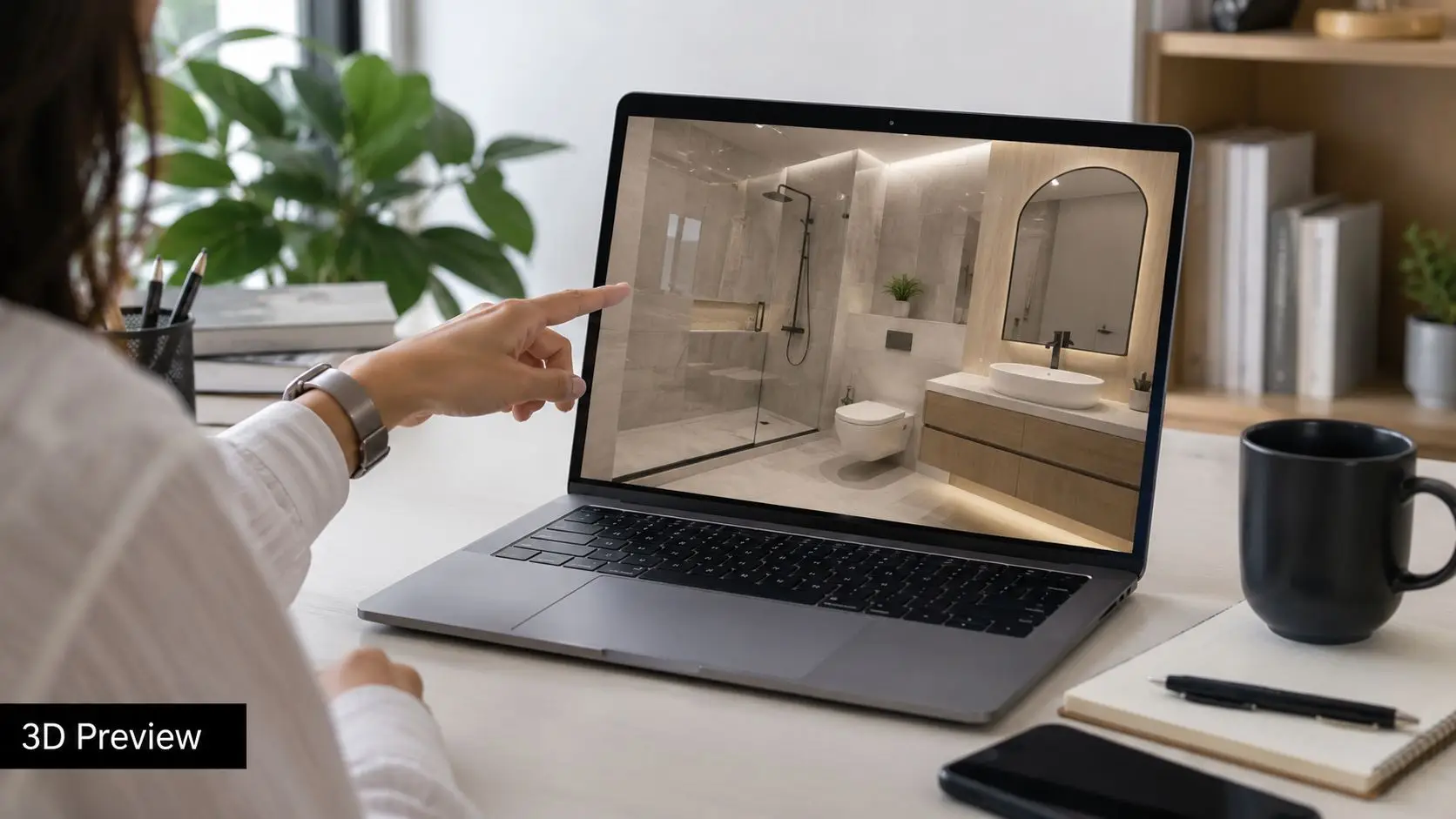
A lot of expensive mistakes look obvious in a 3D model and invisible in your head. That's why proper visualisation matters. It's the difference between liking the idea of a floating vanity and seeing that it leaves the room feeling too stark once the wall tiles, mirror, and lighting are all in place.
3D design is useful for more than aesthetics. It helps test sightlines, door swings, clearances, and fixture proportions. In small bathrooms, this is especially important. A freestanding bath may look perfect in a photo, but in a tight room it can make cleaning harder and crowd access to the shower zone.
What the drawings must show
Technical drawings shouldn't be decorative. They should clearly mark plumbing points, floor wastes, power points, lighting, switch positions, niche heights, vanity depth, and tile set-out intentions. If those details aren't documented, trades will end up making judgement calls on site.
Use a proper 3D bathroom planner to test alternatives before demolition starts. Ask to see the room from the doorway, from vanity height, and from inside the shower looking out. Those views often reveal issues the hero render hides.
A practical example. In one compact ensuite layout, shifting the shower screen by a small amount on the drawing can be the difference between a towel rail fitting properly or colliding with the door arc. That's the sort of problem you want solved before materials are ordered.
A strong render sells the vision. A strong technical drawing protects the build.
If you're aiming for modern bathrooms or high-end designer bathrooms, insist on both. The visual should guide the finish. The documentation should guide the trades.
3. Budget Development and Cost Planning
Discipline matters. A bathroom renovation checklist that skips budget structure usually leads to rushed compromises later. The budget should reflect the build sequence, not just a shopping list of fixtures.
Break costs into categories that make sense on site. Demolition, disposal, carpentry, plumbing, electrical, waterproofing, tiling, glazing, cabinetry, stone, painting, fit-off, and final clean should all be visible. When a quote is too broad, it's harder to see what's included, what's been assumed, and where variations are likely to appear.
For procurement, one of the smartest moves is to plan around lead-time risk, not just taste. Industry forecasts indicate sustained demand pressure in bathroom remodelling, with one projection putting the global market at USD 315.9 billion by 2035 and another at USD 615.61 billion by 2036, as discussed in this bathroom remodelling market analysis. For homeowners, the practical takeaway is simple. Order long-lead items early.
Where to spend and where to stay practical
- Spend on hidden performance: Waterproofing products, plumbing quality, drainage details, and ventilation hardware matter more than a fashionable basin shape.
- Be selective on statement pieces: A feature mirror or premium mixer can lift the room without forcing every finish into the top tier.
- Keep a buffer: Older bathrooms can reveal damaged framing, uneven floors, or outdated services once demolition begins.
The most common budget mistake isn't choosing expensive tiles. It's approving a design before checking whether the chosen layout requires major plumbing relocation, custom joinery, or extra electrical work.
If you want a stress-free build, tie payment stages to completed milestones, not vague calendar dates. A well-planned budget should support good sequencing, not pressure trades to rush.
4. Permits and Building Code Compliance
Plenty of homeowners think compliance is paperwork at the end. It isn't. It starts before the first wall sheet comes off. In Victoria, bathroom renovations can involve permit-triggering structural or plumbing changes, so approvals, licensed trades, and final compliance documentation should sit inside the project plan from day one.
Australian bathroom guidance consistently treats bathroom work as a regulated building process, not a styling exercise. That's because moisture control, drainage, and safe plumbing integration aren't optional finish details. They're core performance requirements. If the job changes wall structure, alters plumbing, or affects waterproofed areas, the compliance path needs to be confirmed early.
Compliance documents worth asking for
- Trade licences and insurance: Check them before work begins, not after a problem appears.
- Certificates for plumbing and electrical work: Keep copies with your home records.
- Waterproofing records and sign-off: These matter because waterproofing is a controlled construction stage, not a casual add-on.
A simple example. If you add underfloor heating, extra power points near wet areas, or a heated towel rail, electrical safety expectations become part of the planning conversation. If you relocate a shower recess or move a floor waste, wet-area compliance moves with it.
What works is early confirmation with the right professionals. What doesn't work is assuming approval can be sorted out once the room is half-built.
5. Structural Assessment and Preparation
The nicest tile in the showroom won't save a bad substrate. Before any new bathroom ideas get locked in, the room needs to be assessed for the conditions that can undermine the whole renovation. That means checking framing, floors, wall straightness, previous leak damage, ventilation performance, and the condition of the existing plumbing penetrations.
In practice, this stage often separates cosmetic jobs from proper bathroom renovations. A room may look tired but sound. Another may look fine until demolition reveals swollen sheet linings, loose subfloor sections, or mould around the old shower area. If you build over those problems, they don't disappear. They stay hidden until they become expensive.
What to inspect before rebuilding
Look closely at wet-area transitions, floor levels, and where water has likely travelled before. Around old shower screens, behind vanities, and near poorly sealed bath edges are common trouble spots. Uneven floors also matter because they affect drainage falls and tile finish.
A typical real-world scenario is an older bathroom where the floor appears level to the eye but drops away in the wrong direction. The tiles might still sit nicely, yet the shower won't drain properly and water lingers outside the wet zone. That issue needs correction before waterproofing starts.
If the room isn't straight, dry, and solid before the membrane goes on, the finish quality won't last.
Preparation also includes practical site setup. Protect nearby flooring, define rubbish removal access, and isolate dust paths. A tidy prep stage saves a lot of frustration later, especially in occupied homes.
6. Fixture and Material Selection
Homeowners often get pulled too far toward looks alone. Style matters, but a successful bathroom renovation checklist treats fixture and material selection as a balance between appearance, durability, maintenance, and lead time.
Porcelain tiles, for example, are a practical choice in busy bathrooms because they're hard-wearing and easy to maintain. Natural stone can look excellent, but it usually asks more from the owner in sealing and cleaning. Matte black tapware can suit modern bathrooms, yet it tends to show water spotting differently from brushed metal finishes. None of these choices are wrong. They just need to fit the way the bathroom will be used.
Choose materials with the room in mind
- Tiles: Think about slip resistance, grout maintenance, tile size, and how they'll sit with floor falls.
- Vanities: Prioritise storage depth, drawer function, moisture-resistant construction, and cleaning access underneath or around the base.
- Screens and fittings: Frameless glass looks sharp, but make sure it suits the room size and cleaning expectations.
For tile selection, it helps to review practical advice on how to choose bathroom tiles. Samples should always be checked in the bathroom's likely lighting conditions, not only under showroom lighting.
A good example is a homeowner choosing a pale stone-look tile for a designer bathroom, then discovering the room doesn't get enough natural light to show its texture properly. In that case, a slightly warmer tile or different finish can deliver a better result without changing the overall style.
Keep fixture finishes consistent. Mixing brushed brass, chrome, and matte black in one compact space usually looks less intentional than people expect.
7. Plumbing and Electrical Planning
Most layout changes are really plumbing and electrical decisions in disguise. Moving a vanity sounds simple until it affects mirror lighting, power point placement, and where the waste line can realistically run. The same goes for replacing a standard shower with a larger recess, adding a niche, or shifting the toilet for a cleaner plan.
Licensed trades should map this properly before rough-in starts. The room needs suitable water supply, drainage falls, safe electrical placement, switching logic, and service access for future maintenance. Planning for heated towel rails, underfloor heating, illuminated mirrors, or extra charging points is worth doing now because retrofitting later is messy and expensive.
Details that deserve more attention
Think beyond where fixtures go. Ask where isolation valves will sit, how the exhaust fan will be ducted, whether the lighting will flatter the mirror zone, and whether cleaning access has been considered around wall-hung fixtures.
Australian renovation guidance continues to stress the importance of ventilation, waterproofing, and electrical safety decisions in bathrooms, especially when adding powered features near water, as discussed in this bathroom remodel checklist commentary on Australian standards and moisture control. In plain terms, a beautiful room can still be a poor renovation if the fan, wiring, and wet-area detailing are under-specified.
One practical scenario. A homeowner selects a mirrored shaving cabinet late in the job and only then realises there's no planned recessed cavity, no dedicated light feed, and no convenient GPO location. That's not a design problem. It's a planning problem.
8. Waterproofing and Moisture Management
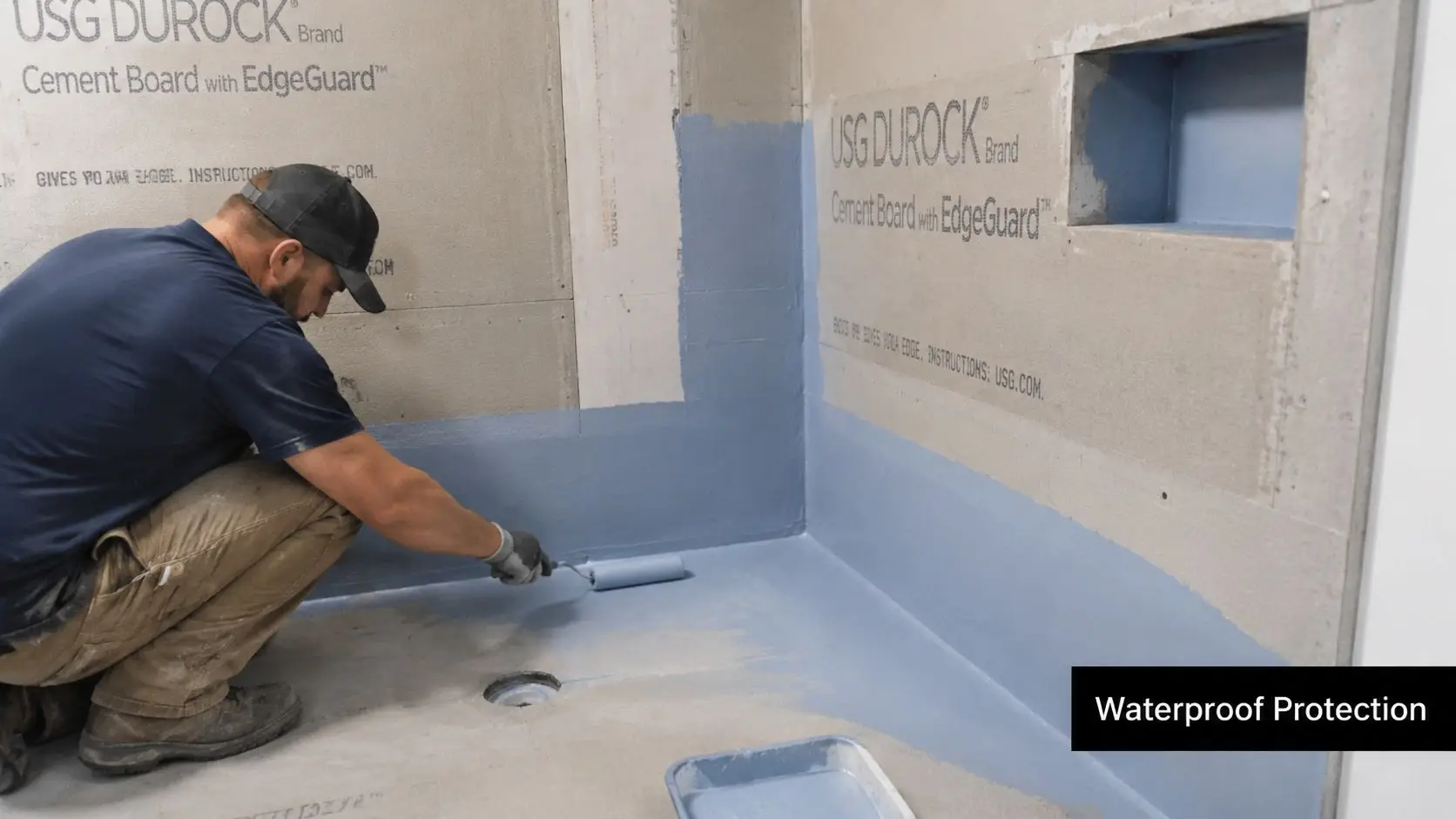
If there's one stage that should never be treated as routine, it's this one. In Australia, wet-area waterproofing is a compliance-critical part of the build. The National Construction Code requires wet-area waterproofing to resist moisture penetration, and AS 3740 is the referenced standard for domestic wet areas, as outlined in this discussion of waterproofing and wet-area standards.
That has practical consequences for your bathroom renovation checklist. The membrane system, substrate preparation, junctions, penetrations, floor falls, and inspection points should all be confirmed before tiling begins. Once tiles are laid, many failures become hidden.
The checks that matter before tiles go down
- Substrate condition: Surfaces must be clean, stable, and suitable for the chosen membrane system.
- Wet-area definition: Shower recesses, transitions, niches, and penetrations all need clear treatment.
- Drainage logic: Falls should move water to the waste, not into corners or outside the shower line.
Australian guidance also consistently puts ventilation, leak prevention, shower recess waterproofing, substrate checks, and plumbing pressure or leak testing near the front of the process, with inspection points staged between rough-in, waterproofing, tiling, and fit-off, according to this Australian planning guide for bathroom remodel sequencing. That sequencing is what keeps hidden moisture damage from becoming a post-handover surprise.
Waterproofing isn't the part you notice on reveal day. It's the part you'll appreciate years later if it was done properly.
Don't sign off this stage on trust alone. Ask what system is being used, how the substrate was prepared, and when inspection occurred.
9. Installation and Construction Execution
This is the stage everyone pictures, but the visible progress only works when sequencing is tight. Good construction execution is mostly coordination. Demolition has to leave the right surfaces exposed. Rough-in has to happen before wall closure. Waterproofing must be completed before tiling. Fit-off needs finished surfaces ready, not nearly ready.
The practical challenge isn't just the build. It's living through it. That's especially true in smaller homes and apartments where there may be only one bathroom. Independent renovation guidance increasingly points out that temporary bathroom continuity, dust control, and circulation planning are often missing from mainstream checklists, even though they're central to how households cope during works, as explained in this guide on living through a bathroom renovation.
How to keep the build manageable
- Set access rules early: Confirm start times, parking, site entry, and who locks up.
- Protect the rest of the home: Use floor coverings, dust barriers, and a clear path for waste removal.
- Plan household routines: If the only shower is offline, decide in advance how bathing, toileting, laundry, and storage will work.
A real-world trade-off appears here. The fastest build sequence isn't always the best one for an occupied home. Sometimes a slightly different order of works causes less disruption, keeps circulation safer, and reduces stress for the household.
If you have a project manager, use them. Ask for progress photos, milestone updates, and immediate communication when something unexpected appears behind walls or under floors.
10. Final Inspections, Adjustments, and Handover
Handover isn't a quick look at the tiles and a final invoice. It's a detailed quality-control stage. Every fixture should be tested. Every drain should be run. Every switch, fan, hinge, drawer, seal, and silicone joint should be checked with the same care that went into selecting the finishes.
Walk through the bathroom slowly. Look at grout consistency, tile cuts around fittings, alignment of accessories, door clearances, vanity drawer operation, and whether water drains where it should. Turn the shower on and watch where splash goes. Run the basin and inspect underneath. Use the exhaust fan and make sure it operates as intended.
Your handover list
- Create a snag list: Note any cosmetic or functional issues while the trades are still engaged.
- Collect documents: Keep warranties, care instructions, and compliance certificates together.
- Ask for maintenance advice: Different surfaces need different cleaning methods, especially stone, glass coatings, and specialty finishes.
One common example is a bathroom that looks finished but still needs adjustment to a shower screen seal, vanity door alignment, or mixer temperature setting. Those aren't major faults, but they should be resolved before the project is closed out.
“Don't judge the room only when it's dry and spotless. Test it as a working bathroom.”
Photograph the completed space for your records. Keep all documentation in one folder. If you ever sell, lease, or need warranty support, organised records make life much easier.
Bathroom Renovation: 10-Point Comparison
| Item | Implementation Complexity | Resource Requirements | Expected Outcomes | Ideal Use Cases | Key Advantages |
|---|---|---|---|---|---|
| Planning and Design Consultation | Low–Medium – meetings and revisions | Designer/consultant time, homeowner input, site measurements | Clear scope, timeline, budget and initial layout | Project start, scope definition, feasibility checks | Prevents scope creep; identifies issues early; aligns expectations |
| 3D Design Visualisation and Technical Drawings | Medium–High – technical modelling and drafting | 3D designer/software, technical drafts, client review sessions | Photoreal renders, technical plans and material palettes | Complex layouts, visual decision-making, client approvals | Reduces design regret; improves trade communication; tests options |
| Budget Development and Cost Planning | Medium – detailed costing and contingency planning | Estimator, supplier quotes, financial schedules, contingency funds | Itemised budget, payment schedule and cost control measures | Cost-sensitive projects, financing, prioritisation of features | Prevents overruns; prioritises spending; enables financing arrangements |
| Permits and Building Code Compliance | Medium–High – regulatory submissions and inspections | Permit applications, licensed trades, council liaison | Approved permits, compliance certificates and legal protection | Projects requiring council approval or safety-critical changes | Ensures safety and legality; protects insurance and resale value |
| Structural Assessment and Preparation | High – expert inspection and remedial work | Structural inspector, testing equipment, remedial trades | Structural report, required repairs and accurate cost estimates | Older homes, suspected damage, major layout or load changes | Identifies hidden issues; prevents future failures; enables accurate quoting |
| Fixture and Material Selection | Medium – specification and sourcing decisions | Suppliers, samples, showrooms, lead-time planning | Finalised fixtures/materials with warranties and delivery timelines | Finish specification, longevity-focused upgrades, style choices | Improves durability and value; personalises design; offers efficiency gains |
| Plumbing and Electrical Planning | High – technical system design and compliance | Licensed plumbers/electricians, schematics, compliance checks | Code-compliant water and electrical systems sized for design | Layout changes, new fixtures, heated elements and safety upgrades | Ensures reliable function and safety; avoids costly future rework |
| Waterproofing and Moisture Management | High – specialist application and ventilation design | Waterproof membranes, qualified applicators, ventilation systems | Protected wet zones, reduced mould risk and longer asset life | Showers, wet rooms, humid climates or wet-area renovations | Protects structure; prevents mould; extends bathroom longevity |
| Installation and Construction Execution | High – multi-trade coordination and site management | Project manager, coordinated trades, materials and logistics | Completed bathroom built to spec with quality oversight | Full renovations, complex installations, multi-trade projects | Professional coordination; quality workmanship; warranty coverage |
| Final Inspections, Adjustments, and Handover | Medium – testing, snagging and documentation | Inspectors/project manager, testing tools, handover documents | Certified completion, resolved snags and maintenance/warranty info | Project closeout, warranty activation, documentation for resale | Confirms compliance and function; provides documentation; protects owner |
Your Renovation Success Starts with the Right Partner
A strong bathroom renovation checklist does more than keep you organised. It helps you make better decisions in the right order. That's what separates a renovation that merely looks good on completion from one that performs properly for years. If you want modern bathrooms, refined designer bathrooms, or practical family spaces, the path is the same. Plan thoroughly, document everything, use licensed trades, and treat waterproofing, ventilation, drainage, and compliance as core build issues.
The biggest mistakes usually happen when homeowners rush from inspiration into selection. They choose tiles before confirming substrate condition. They commit to a layout before checking plumbing implications. They fall in love with a showroom display before asking how the room will function on a busy weekday morning. Good bathroom renovations don't work that way. They move from consultation to design, from design to technical planning, from planning to procurement, and from there into controlled construction and careful handover.
That's also why the right renovation partner matters so much. You want a team that can connect the creative side of the job with the technical side. A polished finish means very little if the exhaust fan is underdone, the drainage is poor, or the waterproofing stage was rushed. The best results come from builders and renovation specialists who understand sequence, communicate clearly, and manage the project like a professional build rather than a collection of disconnected trade visits.
For homeowners in Highett and across greater Victoria, that matters even more when the home is occupied, the bathroom is the only one in the house, or the project includes structural, plumbing, or electrical changes. Those jobs need coordination, not guesswork.
If you're ready to turn new bathroom ideas into a finished space that looks sharp and holds up, work with a team that approaches the project like registered builders unlimited in their commitment to detail, compliance, and workmanship. SitePro Bathrooms offers the kind of end-to-end process that helps turn plans into completed bathrooms with less stress and fewer surprises. From design consultation and 3D visualisation through to construction and final handover, the right partner can turn a bathroom renovation checklist into a bathroom you're glad to live with every day.