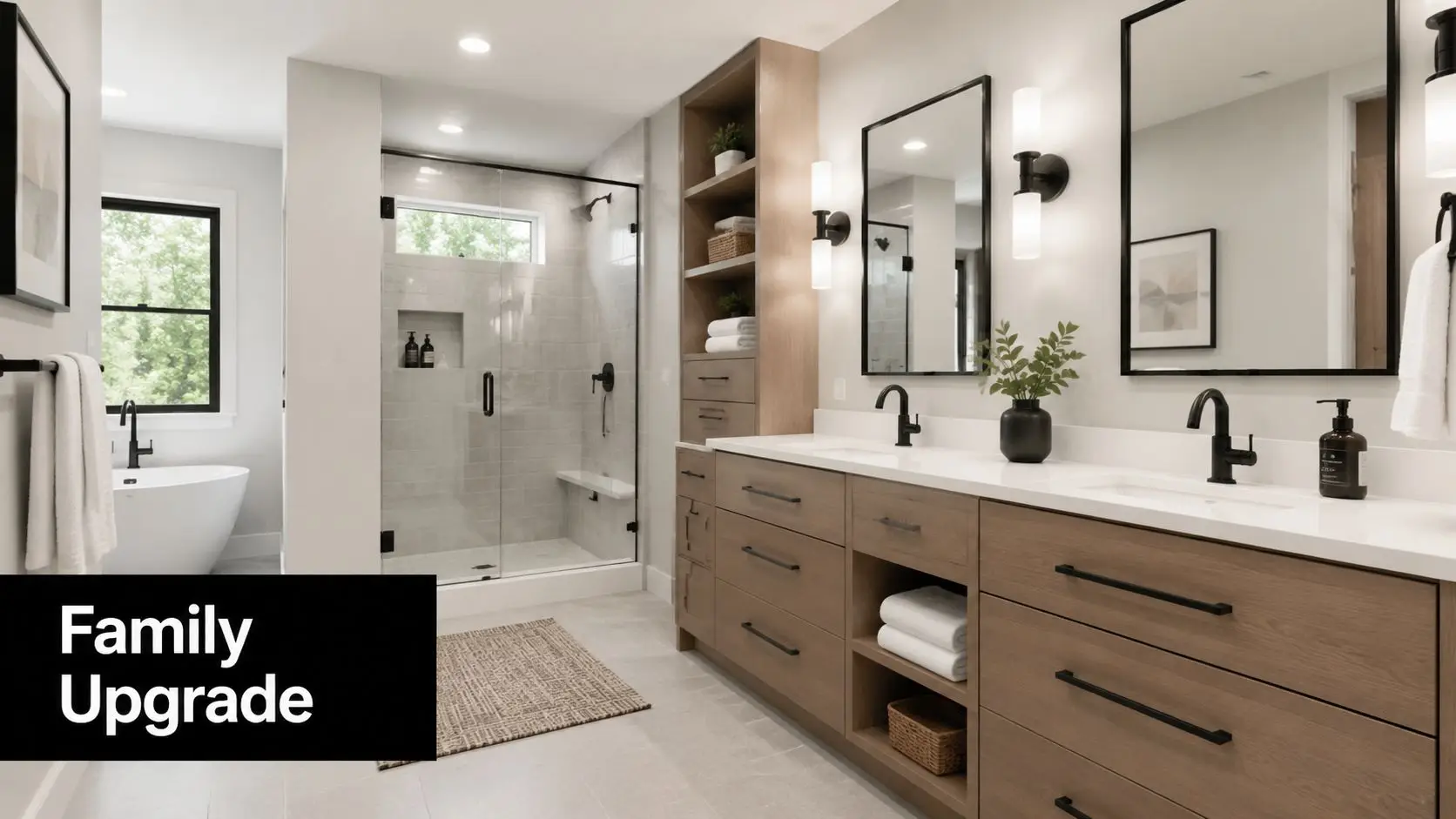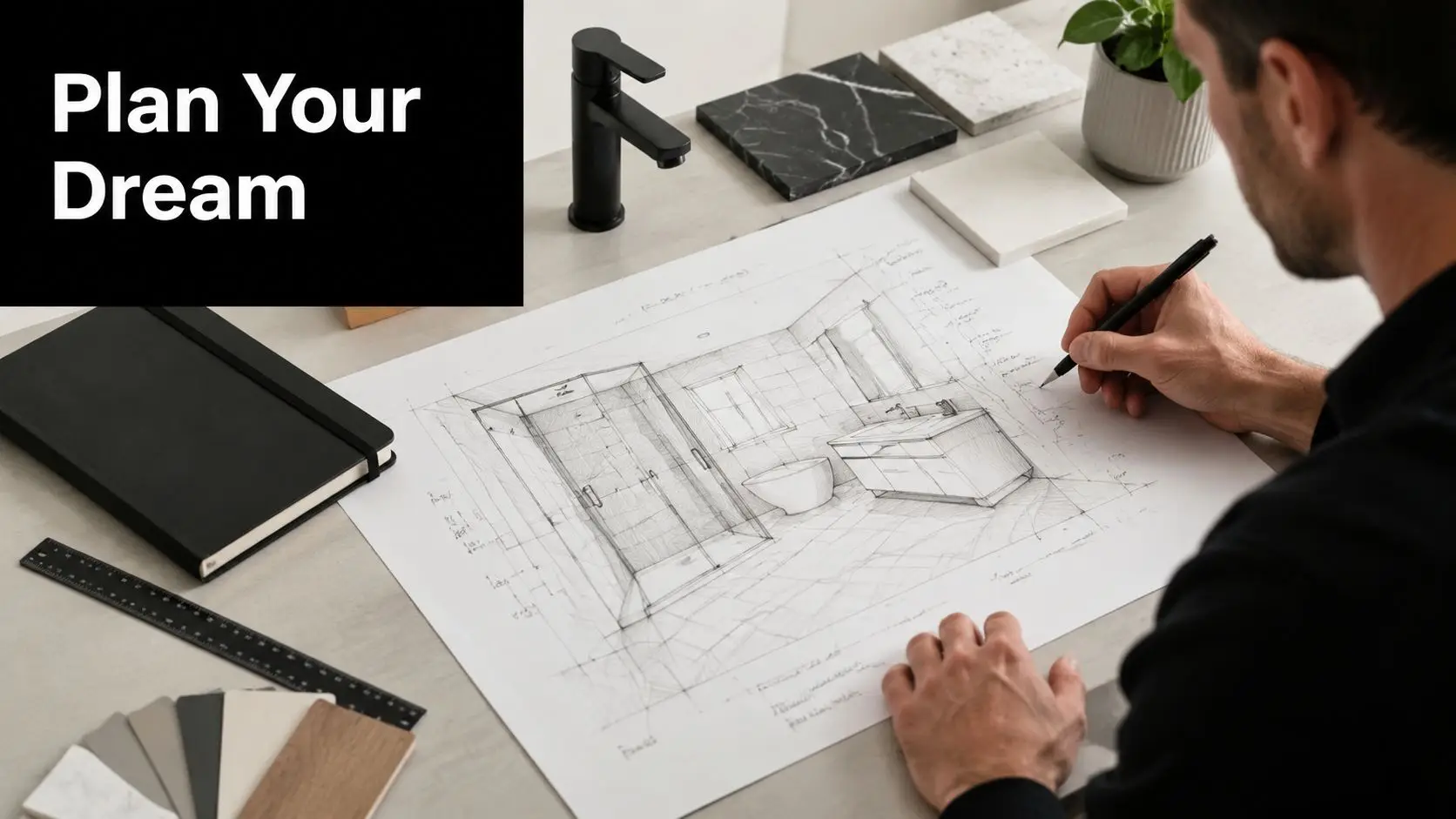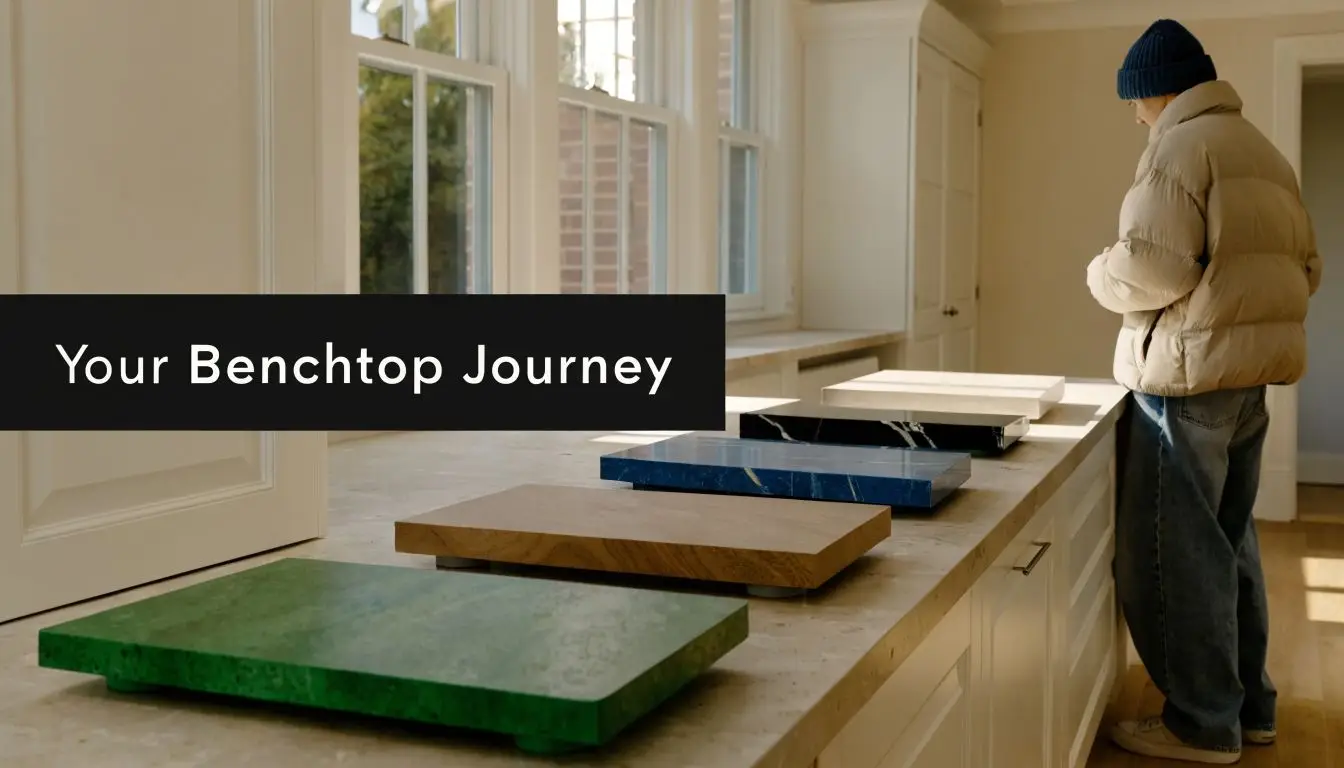
You’ve probably got a dozen tile tabs open right now. One looks perfect in the showroom, another seems cheaper online, and a third keeps showing up in modern bathrooms on social media. The problem is that bathroom tile isn’t just a style choice. In a Victorian home, it’s also a building decision.
A good tile choice has to do three jobs at once. It has to suit the way the room is used, handle moisture properly, and still look right once it’s installed under your actual lighting, next to your vanity, tapware, and shower screen. That’s where many bathroom renovations go off track. People choose a tile they like before they’ve worked out what the room needs.
If you want to know how to choose bathroom tiles properly, start with function and finish with style. That order matters.
Planning Your Foundation Before You Browse
Most homeowners start with colour. Builders start with use.
A family bathroom in Highett has different demands from a guest powder room or a quiet ensuite. The first gets daily traffic, wet feet, dropped products, stronger cleaning chemicals, and more wear around the shower and vanity. The second may barely see use. If you treat those rooms the same, you often end up overspending in one or under-specifying the other.
Start with how the bathroom is actually used
Before you visit a showroom, answer four practical questions:
Who uses the room every day Kids, older adults, tenants, guests, or just two adults all create different wear patterns and safety needs.
Where are the wet zones The shower floor, shower walls, bath surround, and floor outside the shower don’t all need the same tile.
How much natural light is there A soft grey tile in a bright north-facing bathroom can look very different in a darker south-facing room.
What are you renovating around Existing windows, nib walls, floor falls, recessed niches, and door clearances all affect tile size and layout.
That last point gets missed a lot. A tile may look balanced on a sample board and awkward in a compact bathroom once cuts start appearing around the vanity, waste, and corners.
Practical rule: choose the room type first, then the floor tile, then the wall tile, then any feature tile. That sequence keeps the project grounded.
Break the bathroom into zones
A bathroom isn’t one tiled box. It’s a set of zones with different demands.
Shower floor This is the highest-risk area for slipping and one of the most demanding for drainage. Grip matters more than visual simplicity.
Main floor This needs durability, cleaning practicality, and a finish that still looks good when wet.
Walls in splash areas These need a surface that handles regular moisture and is easy to wipe down.
Vanity or feature wall Here, you can take more design freedom because the performance demands are lower.
If you’re working with a builder, this early planning stage is also when compliance and scope should be locked in. That’s one reason using a registered builder for your bathroom renovation matters. Bathrooms don’t forgive loose planning.
Test the tile in your real light
Showroom lighting flatters almost everything. Your bathroom won’t.
Take samples home and check them at three times of day. Morning light, late afternoon light, and artificial lighting can all change how a tile reads. Warm whites can turn creamy. Cool greys can become blue. Gloss tiles can bounce light well on one wall and show every splash mark on another.
A simple pre-selection checklist helps:
Check scale Hold the sample against the room dimensions, not just in your hand.
Check reflection Look at the tile under downlights and window light.
Check maintenance Rub water on the surface and see what marks show.
Check neighbouring finishes Put the sample next to cabinetry, benchtops, and paint.
That groundwork makes the rest of the decision much easier.
Material Matters for Victorian Homes
A bathroom in Melbourne can look dry at 10 am and still carry moisture in the air well into the afternoon. In older Victorian homes, that gets amplified by cooler rooms, limited ventilation, and wall and floor substrates that are rarely as flat or stable as they first appear. Tile choice has to suit those conditions, not just the showroom sample.
Porcelain, ceramic and stone compared
The material sets the baseline for how the bathroom will wear, how much maintenance it will need, and how forgiving it will be in a wet Victorian climate.
Material
Where it works well
Where it can fall short
Porcelain
Floors, showers, family bathrooms, high-use ensuites
Usually costs more than basic ceramic and can be harder to cut and drill
Ceramic
Walls, lower-wear areas, some lighter-use bathrooms
Less durable on hard-working floors and in consistently wet areas
Needs sealing, more maintenance, and tighter installation control
For most Victorian homes, porcelain is the safest all-round choice. It is denser, absorbs less water, and stands up better to regular wetting, cleaning, and temperature swings between colder mornings and heated interiors. That matters in suburbs closer to the bay, but I also see it matter in inland Melbourne bathrooms where condensation lingers because the room never really dries out.
Ceramic still has a place. It is often good value on walls, easier on the budget, and available in a huge range of finishes. The limitation is wear. On floors that cop daily traffic, dropped products, and repeated cleaning, ceramic can show its age sooner than a good porcelain tile.
Natural stone gives a bathroom a different character, but it asks more from the owner and the installer. Stone needs the right sealer, the right adhesive system, and realistic expectations about upkeep. If a client wants stone in a period renovation or a higher-end ensuite, I make sure they understand the maintenance before we order. That is the same approach I recommend when designing an ensuite for a tighter footprint, because premium finishes have to perform, not just photograph well.
PEI and slip resistance are practical selection checks
A good-looking tile can still be the wrong tile.
PEI rating helps you judge how the surface will handle wear. For bathroom walls, the demand is low. For an ensuite floor, the load is still fairly modest, but it is constant. For a family bathroom, traffic, grit on feet, and stronger cleaning products all add up. If the tile is too lightly rated for the job, the finish dulls or scratches long before the waterproofing system is due for inspection.
Slip resistance matters even more in real use. In Australia, bathroom floor tiles should be checked against AS 4586, not chosen on appearance alone. A polished tile can look sharp on a display board and become a liability once soap film, overspray, and steam hit the surface. For shower floors in particular, a suitable slip rating and a surface that still feels secure when wet are worth paying for.
What works in Victorian bathrooms
These are the combinations I recommend most often across Melbourne renovations:
For shower floors Use smaller format tiles or a textured surface so the floor follows the fall properly and gives better grip underfoot.
For main bathroom floors Choose porcelain with confirmed slip performance and a wear rating that suits family use, not just guest use.
For walls Ceramic often works well because the wear is lower and the cleaning is straightforward, provided the tile is installed over the right substrate in wet areas.
For feature areas Stone or specialty finishes can work, but only if sealing, cleaning, and long-term upkeep are acceptable to the owner.
For any tile you are seriously considering Ask for the technical data sheet. Check water absorption, slip classification, and whether the tile is rated for the location you plan to use it in.
The tile itself is only part of the decision. In Victoria, the material has to work with the waterproofing system, the substrate, the room ventilation, and how the household uses the bathroom. That is why a tile that suits a powder room wall may be a poor choice for a shower floor in a busy family home.
Sizing Up Your Style With Finishes and Shapes
Once the technical side is sorted, the design decisions become much clearer. New bathroom ideas begin to take shape. The tile still has to perform, but now it can also set the mood of the room.
Large format versus small format
Large-format tiles often suit modern bathrooms because they create a calmer visual field. Fewer grout lines usually means the room feels less busy, and in a smaller bathroom that can make the space read larger.
Small tiles do a different job. They add texture, movement, and often better practicality underfoot in the shower. Mosaics are especially useful where the floor needs to follow fall lines cleanly toward the waste.
A simple comparison helps:
Large-format tiles Best for a sleek appearance, easier visual continuity, and cleaner wall expanses.
Medium-format tiles Good when you want balance and easier handling around standard bathroom dimensions.
Mosaics and smaller tiles Strong for shower floors, niches, curved details, and feature moments.
Gloss, matte and textured finishes
Finish changes how a tile looks and how it behaves.
Gloss tiles reflect more light, so they can brighten an ensuite or make a narrow bathroom feel more open. They’re often useful on walls, especially where you want a crisp, polished feel. The downside is that they tend to show splash marks, smudges, and uneven wall light more readily.
Matte and textured finishes feel quieter and more architectural. They usually suit floors better because they look more grounded and are less visually slippery. In designer bathrooms, a matte tile can also make stone-look finishes read more naturally.
Builder’s note: if you love a glossy tile, keep it on the wall. Let the floor do the hard work.
Shape changes the personality of the room
The same colour palette can feel classic, sharp, soft, or bold depending on shape and layout.
Shape
Effect in the room
Best use
Subway
Familiar and adaptable
Walls, niches, splashback-style areas
Square
Calm and balanced
Floors or walls in minimalist bathrooms
Hexagon
More graphic and contemporary
Feature areas, powder rooms, small impact zones
Kitkat or finger mosaics
Vertical texture and movement
Curved walls, niches, vanity features
If you’re aiming for designer bathrooms rather than trend-driven bathrooms, restraint usually wins. One hero tile, one supporting field tile, and a consistent colour story tend to age better than mixing too many shapes and finishes in one room.
Beyond the Tile Grout Layout and Substrate
A bathroom can have beautiful tile and still fail if the supporting work is poor. The finished look depends on what’s underneath, what sits between the tiles, and how the whole layout is set out before the first piece is fixed.
Grout affects both look and maintenance
People often treat grout as an afterthought. It isn’t.
A grout colour that matches the tile creates a more unified finish. A contrasting grout makes the pattern stand out and can sharpen the geometry of subway, stack bond, or herringbone layouts. Neither is right or wrong. It depends on whether you want the tile shape to disappear or become part of the design.
Grout width also matters. Narrow joints can look refined on rectified porcelain, while slightly wider joints may better suit handmade-look finishes that have natural variation.
Matching grout Better when you want a calm, continuous surface.
Contrasting grout Better when shape and pattern are part of the design intent.
High-moisture areas Need a grout selection that stands up to regular cleaning and damp conditions.
Layout decides whether the room feels polished
Layout is where trade skill becomes visible.
A centred layout around the vanity or rear wall often feels deliberate and balanced. Poor planning leaves you with awkward slivers at edges, messy cuts at the doorway, or feature walls that aren’t visually centred to the fittings. This is one of the reasons tile should never be selected in isolation from the room measurements.
If you’re considering bigger tile formats, installing large-format porcelain tiles requires tighter planning around substrate flatness, lipping control, and set-out. The larger the tile, the less forgiving the room becomes.
Set-out should respond to the room, not force the room to obey the tile packet.
The substrate and waterproofing do the hidden heavy lifting
No tile system is better than the surface beneath it.
The substrate has to be sound, level, and suitable for a wet area build-up. Floor falls need to be correct before tiling begins. Waterproofing needs to be completed properly, with junctions, penetrations, and transitions treated as critical details rather than quick prep.
Experienced bathroom renovations separate from cosmetic updates. A bathroom might look excellent on completion and still hide movement, moisture problems, or weak prep that leads to failure later. In practice, the best-looking result usually starts with the least glamorous work.
Designer Bathroom Inspiration in Action
Good tile selection becomes easier when you can see how the decisions work together. The room type drives the palette, the finish, and the layout. That’s true whether you’re aiming for practical family use or a more refined designer bathroom feel.
A family bathroom that can take daily use
A busy shared bathroom usually works best with a restrained base. Think matte porcelain on the floor in a mid tone that hides marks well, then simpler wall tiles that keep the room bright without asking for too much maintenance.
The feature can sit behind the vanity rather than in the shower. That keeps the high-design moment in the driest visual zone and leaves the most demanding areas easy to clean and easy to live with.
A compact ensuite that feels bigger than it is
An ensuite often benefits from lighter wall tiles and a simpler tile count. Gloss on the walls can help bounce light around, while a smaller, more tactile tile underfoot in the shower gives grip and solves the drainage geometry neatly.
In tight rooms, keeping the floor tile consistent through the open floor and into the shower usually helps the space feel less chopped up.
A seamless main bathroom with a luxury finish
For higher-end modern bathrooms, one stone-look porcelain used across floor and selected walls can create a quiet, spa-style result. The success here usually comes from discipline. Minimal transitions, carefully selected grout, and clean set-outs do more than adding extra colours or feature strips.
Luxury in a bathroom rarely comes from using more materials. It usually comes from using fewer materials more carefully.
Your Final Checklist for a Perfect Choice
A tile sample can look right in the showroom and still be wrong for a Victorian bathroom once steam, winter temperatures, cleaning, and daily foot traffic come into play. The final check is where costly mistakes get caught before the order is placed.
Price per square metre rarely tells the full story. The actual cost sits in the whole assembly: surface preparation, waterproofing, falls, trims, waste from cuts, grout selection, and the extra labour some tiles demand. I have seen inexpensive tiles turn into expensive jobs because they arrived with edge variation, chipped during cutting, or forced awkward set-outs around wastes and niches.
Before you order, run through these points:
Use check Match the tile to the room’s actual job. A hard-wearing family bathroom needs a different floor tile from a low-use powder room or ensuite.
Wet-zone check Confirm the shower floor, main floor, and walls are suited to their location. In Melbourne homes, that usually means paying close attention to grip underfoot and ease of cleaning on larger wall areas.
Performance check Read the technical data sheet. Check water absorption, slip rating where relevant, tile variation, and whether the product suits internal wet areas under Australian requirements.
Lighting check View the sample in your own bathroom, in daylight and at night. South-facing rooms, poor natural light, and warm artificial lighting can all change how colour and texture read.
Layout check Make sure the tile size works with the room dimensions, floor wastes, niches, windows, and tap set-outs. Good tile choices still fail visually if the layout creates thin cuts in obvious places.
Installation check Confirm the substrate is suitable, the waterproofing system is specified correctly, and the installer has allowed for movement joints, falls, and the right adhesive for the tile type.
Professional specification usually pays for itself because it removes guesswork from the parts homeowners do not always see. The tile has to work with the substrate, the waterproofing, the room dimensions, and the way the bathroom will be used through Melbourne’s colder months and humid summer periods. That is what gives you a bathroom that still looks right and performs properly years after handover.
If you’re ready to turn your shortlist into a finished bathroom, SitePro Bathrooms can help with practical selection, 3D planning, and build execution that balances new bathroom ideas with real-world performance in Victorian homes.
If you want expert help choosing tiles for modern bathrooms, family bathrooms, ensuites, or more refined designer bathrooms, contact SitePro Bathrooms to discuss your renovation.
You probably know the feeling already. One person is at the cooktop, someone else opens the fridge behind them, a third drops school bags on the only clear bench, and the sink somehow ends up being both the prep zone and the clean-up zone. The kitchen isn’t small enough to excuse the chaos, but it still doesn’t work.
That’s usually the moment homeowners start looking at the l-shaped kitchen layout properly. Not because it’s fashionable, but because it solves a practical problem. It opens the room up, creates clearer movement paths, and gives you two connected runs of bench space without boxing the kitchen in.
In Victorian homes, that matters. Many layouts need to support family life, entertaining, working from home, and long-term liveability all at once. The best renovation outcomes come from treating the kitchen the same way we approach bathroom renovations. Start with movement, storage, lighting, safety, and how the room gets used every day. The finish selections come after that.
Why Your Current Kitchen Isn't Working
A lot of kitchens fail in predictable ways.
The fridge sits in the wrong place, so anyone grabbing milk cuts straight through the cooking zone. The sink and cooktop are too close, so prep becomes cramped. The corner cupboards turn into dead storage. You end up with plenty of cabinetry on paper and nowhere useful to put the things you reach for every day.
The daily friction points
Most homeowners don’t complain about the room in technical terms. They say things like:
There’s nowhere to land groceries
Two people can’t cook at once
The benches are always cluttered
The kitchen feels shut off from the rest of the house
The space looks dated even after minor updates
Those complaints usually point to layout problems first, not just finish problems.
A kitchen can have nice joinery and still be frustrating to use. We see the same thing in bathrooms. A room can look modern, but if the vanity blocks movement or the shower entry is awkward, the renovation hasn’t done its job. Good planning fixes the room at the circulation level, not just the styling level.
A kitchen that slows down the household will still feel wrong, even with expensive finishes.
Why the L shape solves so many of these issues
The strength of an l-shape is simple. It uses two adjoining walls to create connected work zones while keeping the centre of the room open. That open zone can stay clear, take a small dining setting, or support an island or peninsula if the room allows it.
For Highett homeowners, this is often the most balanced answer. It suits older homes being reworked for open-plan living, compact townhouses where every square metre matters, and family homes that need better day-to-day flow without pushing into overbuilt territory.
It’s also one of the easiest layouts to coordinate with a full home update. If you’re planning a kitchen and bathroom project together, consistency in joinery lines, material tones, lighting, and accessibility decisions can make the whole renovation feel intentional instead of pieced together.
The L-Shaped Kitchen Explained
An l-shaped kitchen layout places cabinets, benchtops, and appliances along two adjoining walls, forming a right angle. That sounds basic, but it creates a layout that’s efficient without feeling crowded.
Why it has lasted
This layout isn’t a trend. It has been part of Australian residential design for decades. The Commonwealth Housing Commission’s 1944 report recommended the l-shaped kitchen for efficiency, and by 1950 over 60% of new suburban homes in Victoria used it as standard, reflecting a shift away from older galley styles for growing families, as noted in this post-war design history of l-shaped kitchens.
That long history matters because it shows the layout solves a real planning problem. It’s adaptable. It works in modest footprints. It supports family use better than many tighter, single-run arrangements.
How it works in real homes
Think of the layout as a working corner with breathing room. One leg usually handles a heavier utility role, such as fridge and pantry storage. The other leg usually carries a mix of prep and cooking functions. The open side keeps the room visually lighter and easier to move through.
In practical terms, an l-shape tends to work well when you want to:
Open the kitchen to living areas without fully losing definition
Keep traffic out of the cooking zone as much as possible
Preserve bench space on two sides
Create flexibility for future changes such as a peninsula, island, or improved accessibility
Where it works best
This layout is especially strong in homes that need to do several things at once. Family kitchens, investor updates, and homes being renovated for ageing in place all benefit from a plan that is easy to read and easy to move through.
It also gives you cleaner zoning than many people expect. The kitchen still feels connected to the living room or dining area, but the right-angle shape naturally creates a working corner. That’s useful in the same way a good bathroom layout separates wet and dry areas without making the room feel chopped up.
The best l-shaped kitchens don’t just look open. They direct movement so the room feels calmer during busy parts of the day.
Planning Your Dimensions and Work Triangle
An l-shape only performs well when the distances are right. If the room is too tight, it becomes awkward. If the main appliances are too far apart, the kitchen feels tiring to use.
The work triangle that actually works
For family kitchens, the work triangle perimeter should sit between 4 and 8 metres, and ergonomic standards show that this can reduce cooking time by up to 20% in multi-user scenarios, with aisle clearances of at least 1.07 metres helping prevent bottlenecks, according to these l-shape kitchen dimensions and workflow guidelines.
That triangle links the three key points:
Fridge
Sink
Cooktop or stove
The point isn’t to force a perfect triangle drawing on a floor plan. The point is to stop the room from making basic tasks harder than they need to be.
Practical spacing rules
In a workable l-shaped kitchen layout, these principles matter most:
Keep the triangle compact, not cramped. Too short and users collide. Too long and every meal involves extra walking.
Protect the aisle width. That 1.07 metre minimum is a real usability line, not a nice-to-have.
Give each appliance breathing room. Fridges need door swing space. Sinks need landing space. Cooktops need safe separation from adjacent zones.
Homeowners often focus on cabinet sizes before they understand the body movement in the room. That’s backwards. In both kitchens and bathrooms, circulation comes first. Joinery is fitted around that, not the other way around.
For bench ergonomics, it also helps to understand how height affects comfort during prep and clean-up. A practical starting point is this guide to standard benchtop height for Australian renovations, especially if more than one household member uses the kitchen heavily.
Common planning mistakes
A room can meet the minimums and still feel wrong. These are the issues that cause most problems:
The fridge is buried in the corner so the door blocks movement.
The sink and cooktop are pushed together to save space, which makes prep and cleaning overlap.
The aisle is technically passable but not comfortable, especially once handles, stools, or appliance doors are in use.
The layout ignores through-traffic, so family members cut across the work zone on the way to another room.
Practical rule: If someone can unload shopping, rinse vegetables, and reach the cooktop without crossing another person’s path, the plan is usually on the right track.
Measuring the room properly
When reviewing your own space, don’t just measure wall lengths. Check:
Window positions, because they affect sink placement and upper cabinetry
Door swings and openings, especially in compact homes
Bulkheads and service points, which can limit relocation options
Natural walking paths, not just the paths shown on paper
A good plan looks efficient on the drawing and feels easy once people start using it. That’s the standard to aim for.
Optimising Cabinetry and Appliance Placement
The l-shape gives you a strong framework, but the success of the room comes from what happens inside that framework. Appliance placement, corner hardware, drawer selection, and cabinet sequencing all affect whether the kitchen feels effortless or annoying.
Put appliances where people use them
A practical arrangement usually works like this:
Fridge near the end of the longer run so someone can access it without stepping through the main cooking zone
Sink on a useful prep stretch, often where lighting is strongest
Cooktop on the shorter leg or a dedicated run so heat stays away from the highest traffic point
That sequence separates food retrieval, preparation, and cooking in a way that reduces interference. It also makes the kitchen easier for more than one person to use at once.
The same thinking applies in bathroom renovations. Towel storage belongs near the shower. Vanity drawers should suit the morning routine. Good layouts place functions where they naturally belong.
The corner is where good plans separate from average ones
The main weakness of an l-shaped kitchen layout is the inside corner. If you leave it as a basic cupboard with a fixed shelf, it becomes wasted volume very quickly.
Australian standards require a minimum 60cm separation between sink and hob, and in the corner junction, magic corner or LeMans units can extend usable storage by 40% over fixed shelves, according to this guide to l-shaped kitchen corner optimisation.
That’s why corner planning shouldn’t be left to the cabinet order stage. It needs to be part of the layout decision from the start.
Kitchen Corner Storage Solutions
Solution
Accessibility
Storage Capacity
Typical Cost
Fixed shelf corner cabinet
Low. Items at the back are hard to reach
Moderate, but inefficient in daily use
Lower
Lazy-style rotating system
Better than fixed shelving for general items
Moderate
Moderate
Magic corner pull-out
High. Good for heavier or awkward items
High
Higher
LeMans pull-out
High. Smooth access and strong usability
High
Higher
Corner drawers
Very good when the joinery allows for them
High
Higher
The cheapest corner option often becomes the most frustrating one. That doesn’t mean every project needs premium hardware everywhere. It does mean the corner deserves budget priority if the kitchen is compact or heavily used.
Appliance locations that don’t force people to cross paths
What doesn’t work:
Deep cupboards for frequently used items
A corner with no retrieval system
The cooktop jammed too close to the sink
Tall units placed where they visually close the room off
If the layout is right but the cabinetry is wrong, the kitchen still underperforms. Joinery isn’t just storage. It’s how the layout becomes usable.
Adding an Island or Peninsula
Most homeowners like the idea of adding a central feature to an l-shaped kitchen layout. The question isn’t whether an island or peninsula looks good. The question is whether the room can carry it without losing the openness that made the l-shape appealing in the first place.
When an island makes sense
In Melbourne suburb renovations, l-shaped kitchens make up 62% of kitchen layouts, and data shows they can boost resale values by up to 15% compared to galley layouts, but an island is only feasible in kitchens over 12sqm if proper clearances are to be maintained, according to this review of l-shaped kitchen pros, cons, and resale impact.
That last point matters most. An island shouldn’t be forced in because the room seems almost large enough. “Almost” is where projects go wrong.
Island versus peninsula
Here’s the practical difference.
Option
Best for
Main advantage
Main drawback
Island
Larger open-plan kitchens
Better circulation around all sides
Needs more floor area
Peninsula
Smaller or medium spaces
Adds bench space and casual seating with less floor demand
Can make the kitchen feel more enclosed
A peninsula often suits Victorian homes better than people expect. It can define the kitchen from the living area, add storage, and create a breakfast bar without requiring the same open clearance as an island.
The decision test
Choose an island if:
The kitchen is over 12sqm
You want walk-around access
You need extra prep space without attaching another run to the wall line
Choose a peninsula if:
The room is tighter
You want to zone the open-plan area
You need seating or extra bench space but can’t sacrifice circulation
A central feature should improve movement, not interrupt it.
A lot of homeowners also overestimate how much seating they need. In practice, a short breakfast ledge or compact peninsula often gets used more consistently than a large island with too many stools. The right choice depends less on trends and more on how your household uses the room.
Designing for Family Life and Accessibility
A kitchen layout can be technically correct and still fail the household. Family use, ageing in place, storage reach, lighting, and finish choices all affect whether the room stays useful over time.
Family use changes the brief
In a busy home, the kitchen usually serves several roles at once. It’s a cooking space, a drop zone, a homework spot, and a social room. That means the layout needs more than a neat appliance triangle. It needs durable surfaces, sensible lighting, and storage that doesn’t make daily tasks harder.
A few practical choices improve family use straight away:
Task lighting over benches so prep work is clear and safe
Drawers instead of low shelves for easier access
A dedicated landing zone for bags, lunchboxes, or groceries
Finishes that clean easily and don’t show every mark immediately
These are the same decisions that separate ordinary bathroom updates from successful modern bathrooms. A designer bathroom isn’t just attractive. It works cleanly for the people using it morning and night. Kitchens need the same mindset.
Accessibility needs to be planned early
One of the biggest gaps in generic kitchen advice is accessibility. In Victoria, that matters more every year. A strong l-shaped kitchen layout can still create tight turning points or awkward reaches if it isn’t planned carefully.
A key gap in current advice is adapting l-shaped kitchens for accessibility. With Victoria’s ageing population, demand is rising, yet few guides cover National Construction Code requirements such as 1200mm circulation spaces or AS 1428.1 reach ranges, which are essential for a safe, liveable home, as outlined in this accessibility-focused discussion of l-shaped kitchen planning.
That means homeowners should consider:
Wider circulation paths
Easier-to-grip handles
Drawers and pull-outs instead of deep cupboards
Appliance heights that reduce bending
Bench segments that allow seated use where needed
Why qualified builders matter
Accessibility and compliance aren’t styling extras. They affect approvals, safety, and long-term usability. That’s why it’s worth engaging registered builders unlimited where the project scope requires it, especially when structural changes, service relocations, or broader kitchen and bathroom renovations are involved.
Good renovation planning also keeps your design language consistent across spaces. If you’re exploring new bathroom ideas, designer bathrooms, and a kitchen at the same time, materials, joinery profiles, lighting temperatures, hardware, and circulation principles should all speak the same language.
The most future-proof kitchens aren’t over-designed. They’re easier to move through, easier to reach into, and easier to live with.
Examples Costs and Getting Started with Your Renovation
Costs depend on scope, finishes, structural changes, service relocations, and appliance choices. It’s better to think in project types than generic one-price-fits-all figures.
Example renovation scenarios
Compact Highett unit An older unit often suits a clean l-shape with improved corner storage, better lighting, integrated laundry coordination, and a simple material palette. The focus is usually on gaining bench space and making the room feel larger without changing the footprint.
Family home with open-plan living This type of project often involves removing visual barriers, improving the appliance sequence, and adding a peninsula or island if the room supports it. Storage becomes more detailed because the kitchen has to handle school routines, entertaining, and bulk grocery use.
Accessibility-focused update In this version, the l-shape remains, but the detailing changes. Drawer systems replace hard-to-reach cupboards, circulation is opened up, and appliance and bench heights are reviewed carefully. Often, these projects are paired with modern bathrooms designed for long-term liveability.
What affects cost and timing
The biggest cost drivers usually include:
Structural work such as wall changes or bulkhead alterations
Plumbing and electrical relocation
Cabinetry complexity, especially corner hardware and custom storage
Stone selection and edge detailing
Appliance upgrades
Whether the kitchen is part of a larger renovation, such as bathrooms, laundry, or full interior updates
Timelines also shift depending on whether materials are standard or custom, whether approvals are needed, and whether the home is occupied during the works. The most accurate starting point is a measured design and scope, not a rough verbal allowance.
If you’re trying to set expectations before starting, this breakdown of the cost of a new kitchen in Australia is a practical place to begin.
How to start well
The best first step isn’t choosing colours. It’s defining the problems the new kitchen must solve.
Write down:
What frustrates you most in the current room
How many people use the kitchen at once
What must be stored near the main work area
Whether long-term accessibility matters
Whether the kitchen needs to align with bathroom renovations or a broader home update
That list gives the project direction.
If you’re planning a kitchen update in Highett or greater Victoria, SitePro Bathrooms can help with the full process, from concept planning and 3D design through to construction and finishing. That includes kitchens, bathroom renovations, modern bathrooms, and complete renovation packages designed to work as one coordinated project. If you want a practical l-shaped kitchen layout that looks sharp, functions properly, and fits the way your household lives, book a consultation and start with a measured plan.
You’re probably standing in your kitchen right now noticing the same things most homeowners notice before a renovation starts. The storage doesn’t work. The doors feel tired. The layout might still be serviceable, but the finishes date the whole room. Then the material choices begin, and that’s where a lot of projects go off track.
Cabinet colour is easy to picture. Cabinet material is harder. Yet it’s the material decision that usually determines how well the kitchen holds up, how much maintenance it needs, and whether the renovation still feels like money well spent years later. The same logic applies when people start thinking about bathroom renovations, new bathroom ideas, modern bathrooms, or designer bathrooms. Surface style matters, but substrate and construction matter more.
Starting Your Kitchen Renovation Journey
The initial consideration often focuses on aesthetics. Images are saved of shaker doors, warm timber finishes, flat-panel white kitchens, or darker joinery with stone tops. Then, upon getting quotes, it becomes clear that two cabinets looking similar on day one can behave very differently after a few winters, a few summers, and a few years of steam, spills, and daily use.
That’s why kitchen cabinets materials should be one of the first decisions, not one of the last. In Australia, wood materials hold approximately 60% market share in 2025, reflecting strong buyer preference for durability and appearance in variable climates like Victoria’s, according to Australian kitchen cabinet market data.
What homeowners usually get wrong
The common mistake is treating cabinetry as one material choice. It isn’t. The cabinet box, the doors, the drawer fronts, the shelves, and the frame can all be made from different materials. A smart renovation often mixes them on purpose.
For example, a homeowner might want the warmth of timber but not the movement and upkeep that comes with full solid timber construction. In that case, a practical build could use a stable cabinet box and reserve the premium finish for the visible door fronts. That approach protects budget without cheapening the job.
Practical rule: Pick materials based on where they sit and what they have to survive, not on what sounds premium in a showroom.
A good early step is to look at complete kitchen renovation services in Highett and assess your project as a full system. The cabinet material has to suit the room, the layout, and the way your household lives. A young family, a downsizer, and an investor won’t all make the same choice, and they shouldn’t.
Understanding the Anatomy of a Cabinet
A cabinet only looks simple from the outside. In practice, it’s a group of parts doing different jobs. If you understand those parts, the material decisions become much clearer.
The cabinet box
The cabinet box, also called the carcass, is the structural shell. It carries the load, supports the shelves, anchors the hinges and runners, and takes the pressure of everyday use. You don’t usually notice it once the kitchen is installed, but it does most of the work.
Structural performance matters more than showroom appeal. If the box swells, racks, or loses screw-holding strength, the whole kitchen starts to feel tired long before the doors look old.
Doors and drawer fronts
These are the visible faces of the kitchen. They determine most of the visual style and much of the cleaning routine. A painted profile door, a timber veneer panel, and a laminate flat panel can all suit the same layout, but they won’t behave the same way over time.
This is also where people often overspend on appearance while underspending on the box behind it. That usually works in reverse of what’s best for long-term value.
Frames, shelves, and hardware fixing points
Some cabinetry includes a front frame. In framed construction, that frame adds rigidity and helps with alignment and hardware retention. The standard of that joinery matters. High-quality cabinetry standards specify 3/4" solid hardwood front frames using mortise and tenon joinery, a method that spreads stress and helps prevent fastener pull-out, according to cabinet construction standards guidance.
A simple way to think about cabinet anatomy is this:
Box: Carries weight and handles moisture exposure.
Door fronts: Deliver the look and take the hand contact.
Shelves: Need stiffness so they don’t sag under plates, appliances, or pantry items.
Frame and fixing zones: Need to hold screws, hinges, and runners reliably.
If the box is weak, expensive doors won’t save the kitchen.
Why this matters for budgeting
Smart budgeting means putting money where failure would be expensive. A door can often be replaced later. A failing cabinet box usually means deeper rectification work.
That’s why many well-planned renovations prioritise structural materials in the unseen areas first, then match the external finish to the design brief. The same thinking applies in bathrooms. In modern bathrooms and designer bathrooms, what sits behind the finish often determines whether the room still performs properly years later.
A Detailed Comparison of Common Cabinet Materials
Not all kitchen cabinets materials suit the same job. Some are best for structure. Some are chosen for paint finish. Some are strictly budget options. If you compare them side by side, the trade-offs become easier to judge.
Plywood
Plywood has become the default recommendation for many cabinet boxes for a reason. In Australia, plywood is the preferred material for cabinet boxes in 65% of custom kitchen projects by 2025, valued for stability and moisture resistance in climates like Victoria’s, according to Australian custom cabinetry statistics.
Its strength comes from layered construction with alternating grain direction. That makes it more resistant to warping and movement than many single-material sheet products. In practical terms, it’s a strong choice for cabinet boxes, pantry internals, and shelving where moisture and load both matter.
It isn’t the cheapest option, but it tends to be one of the most balanced.
Solid wood
Solid wood still has a place, especially for doors, feature panels, and homes where natural grain is part of the design language. It looks better with age than many synthetics if it’s well chosen and properly finished.
The downside is movement. Timber reacts to the environment. In a stable internal space that’s manageable. In rooms with fluctuating moisture, it needs more care in species selection, detailing, sealing, and placement. Used well, it’s beautiful. Used carelessly, it can become a maintenance issue.
MDF
MDF is popular because it gives a smooth, consistent surface for painted finishes. If you want crisp modern profiles, detailed routed doors, or a very even painted look, MDF can do that well.
Its weakness is water. Once moisture gets through a damaged edge, failed paint line, or compromised joint, the board can swell and degrade. That doesn’t mean MDF is always a bad choice. It means it needs the right application, proper sealing, and realistic expectations.
Particleboard
Particleboard usually sits at the lower end of the market. It can be acceptable in dry, low-demand settings when budgets are tight, but it has less tolerance for moisture and repeated wear. Once it takes on water, it tends to deteriorate quickly.
For an investment property with a very tight budget, it may still appear in the discussion. For a long-term family kitchen, it’s rarely the first recommendation where durability is the goal.
Laminates and thermoformed finishes
Laminate-style finishes work because they’re practical. They offer a broad design range, wipe clean easily, and can suit very contemporary spaces. For flat-panel kitchens, they often give a clean and controlled result without the upkeep of painted timber.
The trade-off is repairability. Once a synthetic face is significantly chipped, lifted, or heat-damaged, repair options are usually more limited than with natural materials.
Veneers, acrylics, metal, and glass accents
These are usually finish decisions rather than full-construction decisions. Veneers can bring timber character with more control than solid wood. Acrylic-style faces can suit sharp, modern schemes. Glass and metal are often best used selectively, not across every elevation.
The key is restraint. Accent materials can lift a kitchen, but too many different finishes can make it feel busy and date it faster.
Kitchen Cabinet Material Comparison
Material
Cost Range (per linear metre)
Durability
Pros
Cons
Plywood
AUD 150-500
High
Strong, stable, better moisture resistance, good for cabinet boxes
Dearer than entry-level board options
Solid wood
AUD 200-700
High when detailed well
Natural character, can be refinished, premium appearance
Higher cost, can move with humidity
MDF
Qualitative only
Moderate
Smooth for painted finishes, clean modern look
Vulnerable if water penetrates
Particleboard
Qualitative only
Lower
Budget-friendly, widely available
Poor moisture tolerance, shorter service life
Laminate-faced board
Qualitative only
Moderate
Easy cleaning, broad finish range, practical for modern kitchens
Harder to repair once damaged
HDP composites
Qualitative only
High in humid conditions
Low maintenance, strong moisture performance in coastal settings
Not always the first material homeowners consider
Don’t choose a single “best” material for the whole kitchen. Choose the best material for each cabinet part.
Engineered vs Natural Materials What You Need to Know
The material debate usually comes down to this. Do you want the character and repairability of natural products, or the consistency and lower-maintenance performance of engineered ones?
Where natural materials win
Natural materials, especially timber-based options, have a tactile quality that engineered boards often imitate but rarely match. Grain variation, depth, and the way the surface matures can give a kitchen warmth that feels less manufactured.
They also tend to be more forgiving when damaged. A scuffed solid timber door may be repaired or refinished. A veneered or painted natural product can often be refreshed if the underlying construction is sound. That matters if you plan to stay in the home for a long time and want the kitchen to age well rather than just survive.
Natural products also make sense in homes where the cabinetry is part of a broader architectural story. In period homes or warmer contemporary interiors, they can anchor the room.
Where engineered materials win
Engineered materials are usually about control. They offer more consistency from panel to panel, a broader range of repeatable finishes, and fewer visual surprises. That’s useful if you want a sharp painted scheme, a uniform texture, or a very clean contemporary line.
Plywood sits in an interesting middle ground. It’s engineered, but timber-based, and structurally very capable. Its cross-laminated construction resists warping and bending under load and is well suited to cabinet boxes in high-moisture zones, as outlined in guidance on long-lasting kitchen cabinet materials.
MDF and similar products also have a place, especially for painted doors where movement in solid timber can telegraph through the finish. But when those surfaces are severely damaged, repair often becomes replacement rather than restoration.
The practical trade-off
For most Victorian homes, the most balanced result isn’t fully natural or fully engineered. It’s mixed.
Use structural materials where water and load matter most. Cabinet boxes, sink units, and wide shelves need stability first.
Use decorative materials where appearance drives the brief. Doors and feature panels can carry the visual style.
Match the maintenance level to the household. A busy family kitchen and a lightly used entertainer’s kitchen won’t wear the same way.
The best joinery isn’t the most expensive on paper. It’s the one that still opens, closes, and looks right after years of normal use.
Choosing the Right Material for Your Highett Home
Highett homes have a specific challenge that generic renovation advice often ignores. Moisture matters here more than many homeowners expect.
In coastal parts of Victoria such as Highett, average relative humidity sits around 65-75% year-round, and that can accelerate warping in solid timber cabinets by up to 30%. The same data notes that high-density polymer composites outperform traditional laminates in these conditions, making them a strong low-maintenance option in salt-laden coastal humidity, according to Victorian humidity and cabinet material guidance.
What tends to work better locally
In this part of Victoria, material selection should start with moisture exposure, not colour. That doesn’t mean every kitchen needs synthetic finishes, but it does mean you should be cautious about using movement-prone materials in the wrong places.
A practical Highett specification often leans toward:
Plywood cabinet boxes for structural stability in working zones
Carefully sealed painted fronts where the design calls for a refined finish
HDP composites in areas where low maintenance and moisture resistance are high priorities
Timber used selectively on feature elements rather than across every component
The bathroom connection matters too
This climate logic doesn’t stop at the kitchen. It carries directly into bathroom renovations, especially if you’re planning modern bathrooms or exploring new bathroom ideas that include timber-look joinery. Bathrooms punish poor material choices faster than kitchens do.
If a material struggles in a humid kitchen, it usually struggles more in a bathroom vanity, linen unit, or shaving cabinet. That’s why local renovation planning should treat kitchens and bathrooms as part of the same performance conversation, not separate style exercises.
Think beyond resale buzzwords
Homeowners often ask which material “adds value”. The better question is which material avoids looking tired too soon. In most cases, buyers and tenants respond to cabinetry that feels solid, stays aligned, and doesn’t show early moisture damage. Durability reads as quality, even when the buyer doesn’t know the substrate.
How 3D Design Helps You Visualise Your Materials
Material decisions are hard to judge from a small sample. A door swatch might look perfect in your hand and wrong across an entire wall. Grain, sheen, colour temperature, and shadow lines all change once the kitchen is built around them.
That’s why 3D visualisation is more than a presentation tool. It’s a risk-reduction tool. It lets you test whether a timber tone makes the room feel warm or heavy, whether a matte finish softens the space, or whether a darker cabinet face closes the room in too much.
What 3D design solves
A useful rendering helps with decisions that are difficult to make from drawings alone:
Material balance: Whether the joinery, benchtop, splashback, and flooring sit well together
Scale: Whether a feature finish should cover one run of cabinets or the whole kitchen
Light response: How darker or reflective surfaces may read in your actual room
Consistency across rooms: Whether kitchen and bathroom joinery feel connected without looking copied
This matters just as much for designer bathrooms as it does for kitchens. A vanity finish that feels elegant in isolation can clash badly with tile tone, lighting, or wall colour once the room is complete.
A strong interior design and 3D visualisation process gives homeowners a chance to make material decisions before ordering, not after installation starts. That’s one of the simplest ways to avoid expensive regret.
Good design drawings don’t just show where cabinets go. They show whether the material choice still makes sense at full scale.
Finalising Your Choice Budget Longevity and Style
By this point, the right decision usually isn’t about finding the fanciest finish. It’s about matching the material to the life the kitchen will have.
Start with your absolute requirements.
A simple decision filter
How hard will the kitchen be used? A busy family kitchen needs forgiving materials and strong cabinet boxes. A low-use apartment kitchen may allow more emphasis on appearance.
How long do you plan to keep the kitchen? If this is your long-term home, repairability and structural quality deserve more weight. If it’s a shorter-hold improvement, balance durability with budget.
How much maintenance will you realistically do? Don’t choose a material that requires care you know won’t happen.
Does the material suit the location? In Victoria, climate and moisture exposure are not side issues. They’re core performance issues.
Don’t skip fire safety
Material choice also affects compliance and risk. In Victoria, 28% of kitchen fires originate near cabinets, so the material near appliance zones matters, according to Victorian kitchen fire safety guidance. Standard melamine-faced MDF may not suit bushfire-prone requirements in some settings, while intumescent-coated acrylics offer stronger protection.
That won’t drive every kitchen brief, but it should be part of the discussion, especially in homes where bushfire compliance or multi-unit fire spread is a concern.
The last check before you commit
Use this final shortlist:
Best structure first: prioritise cabinet box quality
Finish second: pick the visible material that suits your style and maintenance tolerance
Climate check: confirm it suits Highett and wider Victorian conditions
Installation standard: good materials fail when poor installation lets moisture in or hardware loosen
Registered builders unlimited in scope and experience matter here because installation quality determines whether the material performs as intended. The best board, timber, or finish won’t rescue poor detailing around sinks, appliances, corners, and service penetrations.
If you’re weighing kitchen cabinets materials for a Highett project and want clarity before you build, SitePro Bathrooms can help with practical planning, 3D design, kitchen upgrades, and bathroom renovations that suit Victorian conditions. For personalized advice on kitchens, modern bathrooms, designer bathrooms, and material selections that balance durability with style, get in touch through SitePro Bathrooms.
A small bathroom usually shows its problems in the first ten seconds. The door clips the vanity, the toilet feels too close to the shower screen, and there is nowhere practical to put towels, chargers, or spare toiletries. I see this often in older homes, compact apartment ensuites, and family bathrooms where the room was built around old plumbing positions rather than how people use it.
Small spaces punish guesswork.
Good results come from disciplined planning, not decorating tricks. The best small bathroom ideas for Australian homes are the ones that improve circulation, storage, cleaning access, moisture control, and day-to-day comfort without creating compliance problems during the build.
From a registered builder’s perspective, the job starts with constraints:
where the wastes and water lines can realistically move
how waterproofing will be detailed
whether ventilation is adequate for the room size and climate
what door swing and fixture clearances will allow comfortable use
how tile set-out, falls, and sheet sizes affect the final layout
That is why we use 3D bathroom design before demolition on tight projects at SitePro Bathrooms. It helps homeowners see whether a wall-hung vanity will free up movement, whether a nib wall will make the shower feel boxed in, and whether a larger mirror cabinet gives better value than widening the vanity by another 100 millimetres. On site, those decisions affect cost, compliance, and how the room performs over time.
Materials matter too. In Australian conditions, a small bathroom has to handle heat, steam, cleaning chemicals, and daily wear in a confined area. A finish that looks good in a showroom can be the wrong choice if it marks easily, holds moisture, or needs more maintenance than the household will realistically keep up with.
The 10 ideas that follow come from that practical lens. They focus on layout, storage, light, ventilation, and fixture selection that work in compact bathrooms, with the trade-offs explained clearly so you can make decisions that suit the space, the budget, and the way your household uses the room.
1. Vertical Storage Solutions and Wall-Mounted Fixtures
A small bathroom usually feels tight for one simple reason. Too much of the usable room is taken up at floor level.
In practice, the quickest way to improve movement is to shift storage and fixtures onto the walls. Floating vanities, wall-hung toilets, recessed mirror cabinets, and tall joinery all help the floor read as more open. The room is easier to clean, sightlines improve, and the layout feels less congested from the doorway.
At SitePro Bathrooms, this is one of the first things we test in 3D design on compact projects. A wall-hung vanity can give better toe room and make a narrow bathroom easier to use, but only if the depth, mirror placement, and door clearances are resolved properly before the build starts.
What usually works best
For most small ensuites and family bathrooms, one organised storage wall performs better than several small additions spread around the room.
A practical layout often includes:
A floating vanity to free up visible floor area and simplify cleaning
A recessed mirror cabinet for daily-use items without adding bulk
A full-height linen or utility cabinet for towels, toilet paper, and cleaning products
Wall-hung toilet pans where the wall construction and budget allow for an in-wall cistern
Shallow shelving above the toilet or beside the vanity where circulation space remains clear
The goal is not to cram more into the room. The goal is to store what the household needs without creating pinch points.
The builder's trade-offs
Wall-mounted fixtures look simple once they are tiled and finished. The hard part sits behind the walls.
Before specifying them, I check four things:
Structural support: Wall-hung vanities and toilet frames need proper fixing points in the framing or masonry.
Service locations: Water lines, wastes, and cistern positions have to work within the wall depth and floor build-up.
Access for maintenance: Concealed cisterns and mirrored cabinets still need sensible access for future repairs.
Material durability: Joinery boards, edge finishes, and internal carcasses need to suit humid conditions, especially in poorly ventilated bathrooms.
There is also a budget trade-off. Wall-hung toilets and custom recessed storage usually cost more than standard floor-mounted fixtures and off-the-shelf cabinetry. In a tight renovation budget, I would usually prioritise a floating vanity and a good mirror cabinet first, because they deliver a clear space benefit without pushing framing and plumbing costs too far.
Older homes add another layer. In many Melbourne renovations, the wall depth, existing plumbing set-out, and condition of the framing limit how much can be recessed or concealed. That does not rule out wall-mounted solutions, but it does mean the design has to be resolved early so waterproofing, tile set-out, and fixture heights all align on site.
Done properly, vertical storage and wall-mounted fixtures make a small bathroom feel calmer, cleaner, and easier to use every day.
2. Light Colours and Reflective Materials for Spatial Perception
A small bathroom can have adequate floor area and still feel cramped. Dark tiles, heavy contrast, and broken sightlines do that quickly. In practice, the visual result often comes down to how the surfaces handle light.
Light finishes usually perform better in compact Australian bathrooms because they reflect both natural and artificial light instead of soaking it up. White, warm off-white, pale greige, soft stone, and muted green generally hold up well. They make wall planes read more continuously, which helps the room feel less boxed in.
At SitePro Bathrooms, I do not treat this as a styling decision alone. It affects tile selection, lighting layout, mirror size, and how the whole room reads once waterproofing, grout colour, and joinery are in place.
What works on site
Large-format tiles can be a smart choice in a small bathroom because fewer grout joints mean less visual interruption. A full-height mirror, a clear shower screen, and a restrained finish palette usually do more for perceived space than adding extra features.
A practical specification often looks like this:
Keep the main tile light: Mid-tone and dark tiles can work, but they usually need better lighting and more careful contrast control.
Match grout closely to the tile: High-contrast grout chops up the walls and floor.
Use reflective surfaces selectively: Mirrors, glazed wall tiles, and glass screens help. Too many glossy finishes can feel cold and show water spotting faster.
Limit the finish changes: Two or three dominant finishes are usually enough in a compact room.
Choose warmer whites where possible: Cooler whites can read harsh under some LED lighting.
Coordinate fixture heights early: Mirror scale, wall lights, and vanity proportions need to align. It helps to resolve these against standard vanity dimensions before construction starts, especially if you are reviewing standard benchtop height and bathroom vanity proportions.
There is a trade-off here. An all-white bathroom can feel larger, but if every surface is glossy and flat, the room can also feel clinical. I usually balance light tiles with timber-look joinery, brushed metal tapware, or a stone-look tile that has some softness in it. That keeps the space bright without making it feel sterile.
Climate matters too. In humid parts of Australia, highly polished surfaces show condensation, soap residue, and hard water marks more readily. Matte floor tiles are often the better call for slip resistance and day-to-day maintenance, while reflective finishes are better reserved for walls, mirrors, and shower glass.
The best small bathrooms are simple for a reason. They use light well, keep the palette controlled, and avoid surface choices that make the room feel busier than it is.
3. Compact Corner Basins and Space-Saving Vanities
Corners are often wasted in small bathrooms. That’s a mistake, especially in narrow layouts where the vanity projects into the main path of travel. A compact corner basin or reduced-depth vanity can free up movement without making the bathroom feel stripped back.
In very tight rooms, a slim-depth vanity in the 450 to 500 mm range is often a workable choice, and single vanities commonly sit within a 600 to 900 mm width range in Australian planning guidance outlined by ABI Interiors’ bathroom sizing article. The exact vanity height still needs to suit the users and basin type, which is why proportion matters as much as footprint.
Where corner fixtures make sense
If the bathroom door opens toward the vanity, or the walkway between vanity and shower is pinched, shifting the basin into a corner can solve a circulation problem immediately. This is common in older terraces, compact apartment ensuites, and secondary bathrooms where the room width just isn’t generous.
A good corner setup usually includes:
A wall-mounted tap set: This keeps the basin deck cleaner and frees up usable surface area.
Built-in mirror storage: You’ll lose some vanity volume, so storage has to move upward.
Softened edges: Curved vanity corners are kinder in tight walkways than square cabinet fronts.
Clear standing room: A small vanity still needs to be comfortable to stand at.
Don’t pick a tiny vanity just because it fits on paper. If users have to stand sideways to brush their teeth, the layout still isn’t right.
What doesn’t work
A corner basin won’t fix a bad room if everything else stays oversized. Pairing a small basin with an overbuilt toilet pan, bulky shower frame, or oversized towel rail usually cancels out the gain.
The better result comes from treating the room as one coordinated plan. That’s where proper bathroom renovations differ from piecemeal swaps. Every item needs to support the same goal.
4. Walk-In Showers with Glass Enclosures Instead of Bathtubs
A common small-bathroom problem is simple. The bath takes up half the room, the shower feels cramped, and the floor area never works properly. In many Australian renovations, replacing that bath with a walk-in shower is the change that gives the layout back.
It does not suit every home. If it is the only bathroom in a family house, removing the bath can reduce practicality and resale appeal. In an ensuite, guest bathroom, or apartment with a tight footprint, a shower-only layout often makes better use of the room.
Glass enclosures help because they keep sightlines open. You see more floor, more wall tile, and fewer visual breaks. That makes the room read as one space instead of several small zones.
What matters in a real renovation
The success of a bath-to-shower conversion is not about the glass alone. The build detail decides whether the room feels larger and performs properly over time.
A registered builder will usually assess these points first:
Shower footprint: A compact shower can work well, but it still needs enough standing room to wash comfortably without hitting the screen or tapware.
Waterproofing and falls: A walk-in entry needs correct floor grading so water stays in the shower area and drains as intended.
Screen placement: Fixed glass is often cleaner and easier to maintain than bulky framed doors, but it must be sized to control overspray.
Tile selection: Slip resistance matters more once the shower becomes the main wet zone.
Storage: Recessed niches or in-wall shelves keep bottles off the floor and stop the shower from feeling cluttered.
At SitePro Bathrooms, we usually test this change in 3D before demolition starts. That lets clients see whether the shower opening, glass length, vanity clearance, and toilet position will improve circulation, not just look better on a plan.
Trade-offs homeowners should weigh up
A walk-in shower gives back usable space, but there are compromises.
Pros
Opens the room visually
Improves movement in narrow bathrooms
Makes cleaning easier when detailing is simple
Suits ageing-in-place better than climbing into a bath
Cons
Removes bathing option for young children
Needs accurate drainage to avoid water escaping
Frameless glass shows poor installation quickly
Full open-entry designs can feel cold in winter
In older homes, I often find the best result is not the biggest shower possible. It is the shower that leaves the right clearance around everything else. A smaller, well-positioned walk-in shower usually performs better than an oversized one that crowds the vanity or toilet.
For Australian conditions, material choice also matters. Use glass hardware, sealants, and tile systems that handle heat, moisture, and daily cleaning without failing early. Small bathrooms work harder than large ones, so the detailing has to be tighter.
5. Pocket Doors and Sliding Barn Doors for Space Efficiency
A standard hinged door occupies more room than generally appreciated. In a small bathroom, the door swing can block the vanity, clip the toilet pan, or force the whole layout into a worse arrangement. Changing the door type can open up options that weren’t possible before.
Pocket doors are the cleaner solution when the wall can accommodate them. They disappear into the cavity and free up usable floor area near the entry. In some renovations, a surface-mounted sliding door is the simpler option if the wall construction or service locations make a pocket system impractical.
Where this idea earns its keep
This is especially useful in narrow ensuites, powder rooms, and terrace-style homes where there’s no spare circulation space. Instead of designing around the door arc, you can place fittings where they work best.
A few points matter before committing:
Check the wall cavity: Pocket doors and plumbing don’t mix well in the same section of wall.
Coordinate early: Electrical runs, switches, and noggings need to be planned before framing closes up.
Use quality hardware: Cheap tracks and rollers make small bathrooms feel worse, not better.
Think about privacy: Barn-style doors can look good, but they don’t seal acoustically the way a standard hinged door does.
A sliding door is a space-saving move, not an automatic upgrade. If the wall is full of services, forcing it can create more building problems than it solves.
For modern bathrooms, a concealed pocket door usually gives the cleaner finish. For character homes, a carefully chosen sliding door can work visually, but it still needs to function well first.
6. Multi-Functional Vanity Units with Integrated Storage and Seating
The vanity does more work than any other fitting in a small bathroom. It handles handwashing, daily storage, mirror position, bench space, and often the room’s visual centre. If the vanity is poorly chosen, the whole bathroom feels compromised.
That’s why multi-functional vanities are worth serious attention in compact bathroom renovations. The best ones combine basin, drawers, mirror storage, and enough usable bench edge for daily routines without making the room feel overloaded.
The smarter way to use one unit
Deep drawers usually outperform cupboard doors in tight spaces because you can access everything from above. Pair that with a mirrored shaving cabinet and the room becomes easier to keep tidy. In some layouts, a small pull-out stool or integrated perch can be useful, but only if it tucks away fully and doesn’t clutter the floor.
Where a bathroom also has to absorb laundry functions, combined planning matters even more. Thoughtful laundries in bathrooms design planning can stop the vanity wall from becoming a crowded run of unrelated fixtures.
What to prioritise
A vanity should match how the bathroom is used, not just the look you want.
Choose drawers over dead space: They make small storage more usable.
Keep the depth honest: Full-depth cabinetry can choke a narrow bathroom.
Use the mirror cabinet properly: It’s one of the easiest ways to add storage without adding bulk.
Think about resale: Highly customised joinery can be brilliant, but it still needs broad everyday appeal.
A lot of designer bathrooms succeed because they hide the practical work well. In a small room, that’s often the mark of good design rather than expensive design.
7. Strategic Lighting Design and Layered Illumination
A small bathroom can be well laid out and still feel cramped if the lighting is wrong. I see this often in older Australian homes where a single centre batten or downlight leaves the mirror in shadow, flattens tile colour, and makes the room feel narrower than it is.
Good lighting needs to be planned with the renovation, not selected after the tiles and cabinetry are locked in. At SitePro Bathrooms, we test lighting positions during the 3D design stage so clients can see how mirror lights, ceiling fittings, and low-level lighting will read in a tight room.
What a practical lighting plan includes
Layered lighting works because each fitting has a job.
Task lighting at the mirror: Side-mounted or well-positioned mirror lighting reduces facial shadows and makes daily use easier.
Ambient ceiling lighting: General light should cover the full room evenly, not just the centre.
Low-level feature lighting: Under-vanity or niche lighting can add depth and help a floating fixture read lighter.
Correct IP-rated fittings: Wet areas and steam-prone bathrooms need fittings suited to the zone and conditions.
Downlights still have a place, but placement matters more than quantity. A row of poorly placed fittings can create glare on tiles and leave the vanity area underlit. If you’re planning recessed fittings, bathroom downlight placement and selection should be worked through alongside the mirror size, shower location, and ceiling set-out.
Trade-offs that matter in real renovations
More fittings are not always better. They add cost, can overcomplicate the ceiling, and in a very small bathroom they sometimes make the space feel harsher rather than brighter.
A better result usually comes from balancing a few elements well:
keep mirror lighting at a usable height
avoid relying on one central fitting
use warm or neutral light that suits the tile colour and skin tones
add under-bench LED lighting only where it supports the design and can be detailed neatly
Under-bench lighting is one of those details that looks simple but needs proper planning. The cable path, transformer location, vanity construction, and cleaning access all need to be resolved early. Done well, it gives a floating vanity more visual separation from the floor and helps the room feel less heavy.
Lighting will not fix a poor layout. It will, however, make a well-designed small bathroom feel clearer, calmer, and easier to use every day.
8. Niche Shelving and Recessed Storage in Shower and Walls
A small shower with three bottles on the floor, a wire rack on the screen, and nowhere to put soap always feels tighter than it is. Recessed storage fixes that at the source. It puts storage inside the wall cavity, keeps circulation space clear, and reduces the visual clutter that makes compact bathrooms feel busy.
From a builder’s perspective, niches work well only when they are resolved early. On SitePro Bathrooms projects, we set them out during design, often in 3D, so the niche size, tile lines, framing, and waterproofing all work together before demolition is complete. That avoids the common result in small bathrooms: a niche that looks like an afterthought and creates more detailing problems than storage value.
What makes a niche work properly
A neat niche is a construction detail, not just a cut-out in the wall.
The practical checks are straightforward:
Stud location: The wall frame limits width unless the framing is altered properly.
Wall depth: Some walls do not have enough cavity depth for useful storage.
Waterproofing detail: Internal corners, fall, and sealing all need to be handled correctly in wet areas.
Tile set-out: A niche that lands awkwardly across grout lines usually looks wrong, even in a simple bathroom.
Item height: Shampoo bottles, pump packs, and razors all need realistic clearance.
Cleaning access: Deep or overly segmented niches collect residue and are harder to maintain.
One mistake I see often is oversizing the niche. In a small bathroom, a long horizontal recess can look smart on a plan but dominate the shower wall once tiled. A more restrained niche, sized around the products used in the home, usually looks better and performs better.
Build the niche into the design before waterproofing starts. Retrofitted niches are where neat ideas often turn into messy repairs.
Where recessed storage earns its keep
The best locations are the ones that solve a real storage problem without adding bulk.
In the shower wall: Keeps daily toiletries off the floor and away from hanging caddies.
Beside the vanity: Useful for hand towels or small items where joinery depth is limited.
Above a bath hob or ledge: Works if the wall construction allows it and the waterproofing detail is resolved properly.
Inside a partition wall: Can suit toilet paper or spare products in tight layouts, provided the wall is not carrying services that conflict with the recess.
There is also a compliance and services trade-off here. Not every wall is suitable. Plumbing pipes, cisterns, electrical runs, and structural framing can rule a niche out quickly. In older Australian homes, that constraint shows up often, especially in brick veneer renovations and apartments where wall depth is limited. In those cases, I would rather specify a shallower recessed option or redesign adjacent joinery than force a niche into the wrong wall.
Done properly, recessed storage makes a small bathroom easier to use and easier to clean. It gives back usable room without adding another fixture into an already tight space.
9. Minimalist Design and Decluttering for Perceived Space
A small bathroom can be fully compliant, well finished, and still feel cramped if every surface is busy. I see this often in renovations where the layout is sound, but the room is carrying too many visual decisions at once. Extra colours, open shelving packed with products, oversized tapware, and decorative accessories all compete for attention in a space that has very little to spare.
Minimalist design solves that problem by reducing visual noise.
From a builder’s perspective, the goal is not to make the room feel bare. The goal is to make it read clearly, clean easily, and stay practical for daily use. At SitePro Bathrooms, that usually starts in the design phase with 3D planning. Homeowners can see early whether a room feels calm and ordered, or whether too many fixture shapes, finish changes, and exposed items are making it feel tighter than it is.
Why a simpler room usually feels larger
Perceived space is heavily affected by how many lines, objects, and material changes the eye has to process. In a compact bathroom, a quieter design often works harder than an expensive one.
A restrained scheme usually includes:
One dominant tile selection: This keeps surfaces visually connected instead of chopped up.
Simple vanity fronts: Flat or lightly profiled cabinetry tends to look cleaner than ornate detailing.
Controlled tapware and accessories: Slim, practical fittings reduce bulk without sacrificing function.
Closed storage where possible: Everyday products stay accessible without living on display.
A limited material palette: Fewer finish changes usually make the room feel more settled and more spacious.
There is a trade-off. Ultra-minimal bathrooms can become frustrating if storage has not been planned properly. If there is nowhere for spare toilet rolls, cleaning products, hair tools, or daily toiletries to go, clutter comes back within a week. Good minimalist design depends on enough usable storage behind the scenes.
What works in real Australian renovations
In older homes and apartments, compact bathrooms often need to handle hard water marks, humidity, and frequent cleaning in a small footprint. That is why I favour minimalist choices that are easy to maintain, not just visually restrained on handover.
The details that generally hold up best are:
Cabinet finishes that wipe down easily: Matte surfaces can look good, but some show residue and fingerprints more readily than homeowners expect.
Wall-hung fixtures with clean lines: These help the floor read more openly and make cleaning easier around the base.
Mirrors and screens with minimal framing: Heavy visual borders can make a tight room feel boxed in.
Integrated storage inside the vanity or shaving cabinet: This keeps daily items close without filling every ledge and corner.
A realistic edit of accessories: Towel rails, hooks, shelves, and holders should match how the bathroom is used, not how a display suite is styled.
That last point matters. A family bathroom, an ensuite, and an apartment bathroom do not need the same level of display or the same number of accessories.
A practical minimalist checklist
Homeowners usually get a better result by editing with function in mind.
Keep the benchtop for daily essentials only
Choose two or three finishes and repeat them consistently
Avoid decorative items that collect dust or reduce usable space
Store backup products out of sight
Select fixture sizes that suit the room, not the showroom
Done well, minimalist design makes a small bathroom feel calmer, easier to use, and easier to keep clean. It also helps the quality of the renovation show through, because the eye is not distracted by clutter or too many competing elements.
10. Intelligent Ventilation Systems and Moisture Management
The failure I see most often in small bathrooms is not tile choice or layout. It is trapped moisture.
A bathroom can look sharp at handover and still develop peeling paint, swollen cabinetry, mould around silicone, and a musty smell within a short period if extraction and airflow were never resolved properly. In a compact room, steam builds fast and lingers longer, especially where showers sit close to the vanity, toilet, and door.
From a builder’s perspective, ventilation needs to be designed at the same time as the layout, waterproofing, and material schedule. At SitePro Bathrooms, we usually test this in the 3D design stage because fan location, duct runs, door clearances, window positions, and shower configuration all affect how the room dries out after use. That is particularly important in Australian homes, where climate, roof space access, and older construction methods can change what is practical.
What good moisture control looks like in a small bathroom
A good system clears steam quickly and gets moist air out of the building. It also suits how the bathroom is used in reality.
In practice, that usually means:
An exhaust fan sized for the room and use pattern: A tiny fan in a high-use family bathroom rarely performs well.
Ducting that runs to the outside: Moist air discharged into the roof space can create bigger problems above the ceiling.
Short, efficient duct runs where possible: Long or poorly installed ducting reduces performance.
Humidity sensing or run-on timers: These help in households where the fan is switched off too early.
Materials that cope with regular condensation: Cabinet boards, paint systems, trims, and sealants all need to suit a wet environment.
Wet room style bathrooms and full-height tiled surfaces can be easier to clean, but they also make extraction more important because more of the room is exposed to steam and splash. Cleanability improves when the detailing is simple. Drying performance still depends on ventilation.
The trade-offs homeowners should know
Better ventilation usually costs more upfront. It can also require more coordination.
Common constraints include:
Limited ceiling space: Apartments and some slab homes do not leave much room for ducting.
No external wall nearby: That can make the duct route longer and less efficient.
Noise expectations: Quieter fans are available, but they need to be selected and installed properly.
Energy use versus runtime: A fan that runs longer manages moisture better, but homeowners need to be comfortable with how it operates.
Window reliance: A window helps, but it is not a substitute for mechanical extraction, especially in winter or in bathrooms with poor cross-flow.
These are practical decisions, not showroom decisions.
Moisture management is more than the fan
The fan matters, but it is only one part of the system. Small bathrooms hold up better when the rest of the detailing is done properly too.
Seal penetrations carefully: Pipe penetrations, fittings, and junctions need neat, durable sealing.
Use moisture-resistant substrates in the right locations: This matters behind tiles, around vanities, and near shower zones.
Protect joinery from constant wetting: Cabinet design should account for splash zones and cleaning habits.
Allow the room to dry between uses: Door undercuts, window placement, and fan controls all play a part.
A registered builder treats ventilation and moisture control as a performance issue from day one. That approach usually gives homeowners a bathroom that stays cleaner, smells better, and lasts longer under real Australian conditions.
10-Point Comparison: Small Bathroom Ideas (Australia)
Solution
Implementation complexity
Resource requirements
Expected outcomes
Ideal use cases
Key advantages
Vertical Storage & Wall-Mounted Fixtures
Moderate–high (wall reinforcement, plumbing)
Medium–high cost; professional install; moisture‑resistant materials
Perception of larger, calmer space; low maintenance
Busy professionals, rentals, contemporary homes
Cost‑effective; timeless; easy upkeep
Intelligent Ventilation & Moisture Management
Moderate–high (ducting, HVAC expertise)
Medium–high cost; proper ductwork and maintenance
Prevents mold, improves air quality, protects structure
Humid climates, bathrooms with condensation issues
Protects materials, improves health, extends component life
Bringing Your Small Bathroom Vision to Life
A small bathroom usually looks simple on paper. Then demolition starts, the walls open up, and the room shows its limits. Door swings clash with vanity depth. Existing plumbing fixes the layout more than expected. Storage disappears fast unless it is designed into the walls and joinery from day one.
That is why small bathroom ideas australia homeowners get the best results from are usually the ones that solve real site constraints first. In a compact room, good design is not about adding features. It is about choosing the right ones, sizing them properly, and making sure the build will comply with Australian requirements for waterproofing, drainage, electrical work, ventilation, and fixture placement.
From a builder’s perspective, the strongest small-bathroom renovations usually come down to a few practical decisions:
keep floor area clear with wall-hung fixtures where the wall construction allows it
reduce visual clutter with simpler finishes and storage that is built in, not added later
avoid oversized vanities and shower screens that restrict movement
choose materials that handle moisture, temperature shifts, and daily cleaning in Australian conditions
resolve the layout in drawings and 3D before construction starts, especially where plumbing moves are being considered
Cost control starts well before the first trade arrives. In small bathrooms, wasted money usually comes from late changes, unsuitable fixture sizes, and discovering too late that a wall cannot take the item selected or that services need to be rerouted. Earlier in the article, renovation cost pressure and tighter household budgets were already noted. That pressure makes planning more important, not less.
A registered builder helps by dealing with the parts homeowners do not always see at the concept stage:
checking whether proposed layouts can be built within the room’s actual dimensions
coordinating plumbing, electrical, waterproofing, tiling, and ventilation before work begins
allowing for access, maintenance, and service clearances
selecting products and finishes that will hold up in wet areas over time
identifying trade-offs early, such as whether extra storage is worth giving up circulation space
3D design is especially useful in small bathrooms because small measurement errors have big consequences. A vanity that looks compact in a showroom can feel oversized once the toilet pan, shower entry, and towel rail are all in place. Seeing the room properly before demolition helps prevent expensive revisions and gives homeowners a clearer basis for decisions.
For homeowners in Highett and across greater Victoria, SitePro Bathrooms is one local option for design development, 3D visualisation, construction, and finishing. That kind of coordinated delivery suits compact bathrooms because there is less tolerance for guesswork, rushed selections, or poor sequencing between trades.
The goal is straightforward. Build a bathroom that fits the room, meets code, manages moisture properly, and feels calm to use every day. In a small space, that standard comes from disciplined planning and careful execution, not from trying to force in features the room cannot comfortably hold.
You’re usually at the same point when renovating a toilet first becomes urgent. The old suite still works, technically, but the room feels tired, harder to clean, and increasingly out of step with the rest of the house. In older Highett homes, that often comes with deeper worries too. What’s behind the wall, what’s happening under the floor, and whether a “simple swap” is really simple once the work starts.
That’s why a toilet renovation should never be treated as a one-item upgrade. The toilet sits inside a wet area, connects to plumbing and drainage, and affects layout, waterproofing, ventilation, accessibility, and resale value. If you’re planning your first major bathroom project in Victoria, the right approach is to think like a renovator from day one. Start with planning, confirm the rules, open the room carefully, then build it back properly.
The Foundation Planning, Budgeting, and Design Inspiration
Most homeowners start with appearance. They want a cleaner look, a better layout, or one of those new bathroom ideas that makes a small room feel sharper and calmer. That’s a good instinct, but design only works when it begins with the actual room you have.
A toilet renovation in Victoria should start with three questions. What’s staying, what’s moving, and what’s essential? If the waste position stays where it is, the job is usually more straightforward. If the toilet needs to shift, the layout, plumbing route, and floor build-up all need a closer look.
In resale terms, bathrooms remain one of the stronger places to spend money. In Australia, mid-range bathroom renovations, including toilet upgrades, recoup approximately 65-73% of costs at resale, according to 2026 Cost vs. Value reporting adapted for the local market. That’s one reason many Highett owners renovate the bathroom before touching more ambitious projects elsewhere in the home.
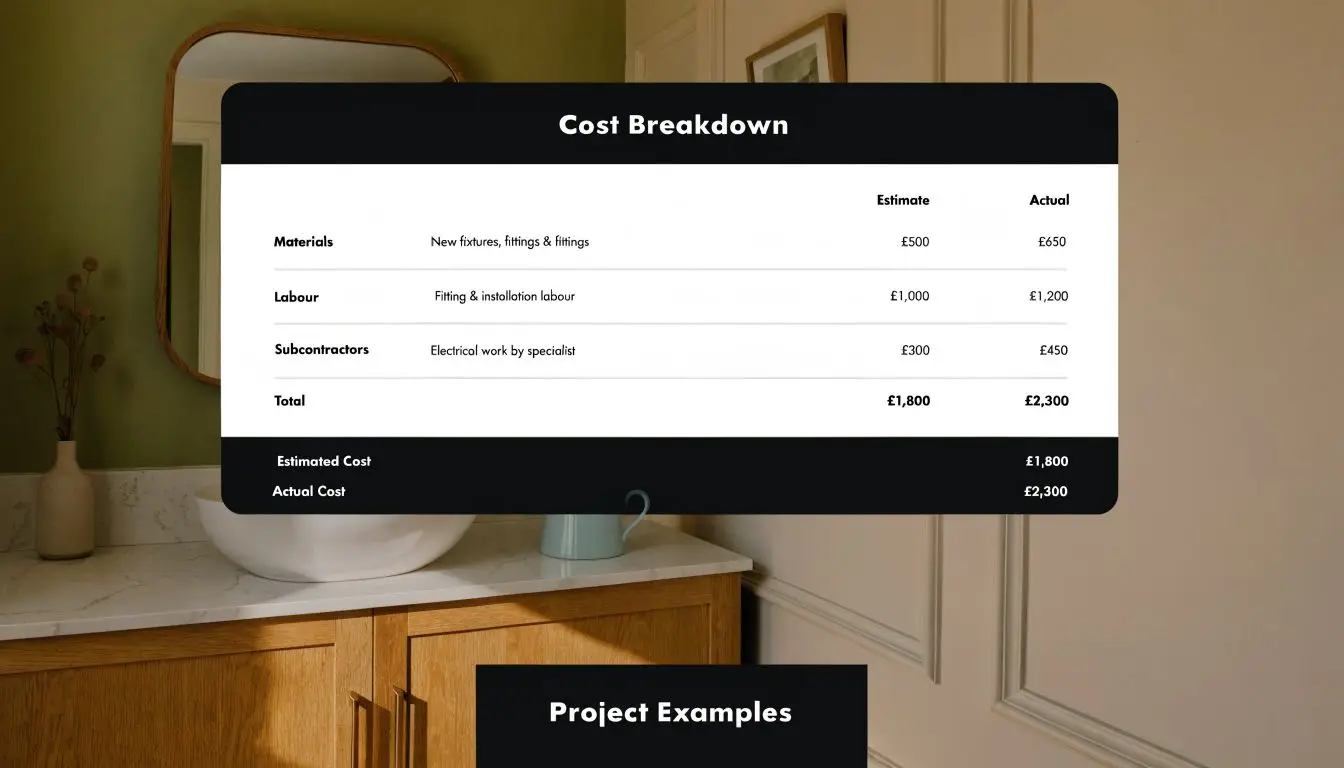
Start with the room, not the showroom
A good site assessment is more valuable than a long wishlist. Measure the room. Check the wall positions. Look at the door swing. Confirm where the sewer outlet sits. If the house is older, assume there may be hidden repairs needed until proven otherwise.
I tell clients to separate ideas into two groups:
Functional upgrades: better toilet position, easier cleaning, stronger ventilation, more practical storage, wider circulation space
That split helps you protect the essentials when choices get tighter.
Practical rule: If you spend your budget on finishes before solving layout and moisture issues, the room may look expensive and still perform badly.
Modern bathrooms and designer bathrooms mean different things
People often use those terms as if they’re interchangeable. They’re not.
A modern bathroom usually prioritises clean lines, simple detailing, practical fixtures, and easy maintenance. That might mean a back-to-wall toilet, large-format tiles, a floating vanity, and restrained colour choices.
A designer bathroom is more composition-driven. It leans harder into material contrast, lighting, feature stone, custom joinery, and carefully resolved sightlines. Done well, it feels cohesive. Done badly, it can become difficult to maintain and too specific for the rest of the house.
A first renovation usually lands best in the middle. Borrow the clarity of modern bathrooms, then add a few designer bathrooms ideas where they’ll matter most. A shaped mirror, warmer lighting, or a stronger tile selection will do more than overloading the room with statement pieces.
Build a planning framework before demolition
The planning stage should answer more than colour and tile questions. It should also define how the room will be used.
Use this checklist before you approve a design:
Who uses the bathroom most often A family bathroom needs different clearances and storage than a compact powder room or ensuite.
Whether the toilet location stays or moves This affects plumbing complexity, floor prep, and sequencing.
What level of finish suits the home A modest home can still have a beautifully detailed bathroom, but the room should feel consistent with the property.
How much visual maintenance you can live with Matte tiles, textured grout lines, and dark fittings can look excellent, but they don’t all wear the same way.
How the renovation timeline affects the household If this is your only toilet, staging and access matter. A clear programme matters even more. This guide on how long a bathroom remodel should take helps frame the practical side of scheduling before work begins.
Why 3D planning saves expensive mistakes
Most toilet renovation errors happen before demolition. The toilet ends up too close to the vanity, the in-wall cistern conflicts with framing, or the tile set-out leaves awkward cuts at eye level.
That’s where detailed drawings and 3D visualisation earn their place. You don’t need them for decoration. You need them to test the room before trades arrive. They show whether a toilet pan projects too far, whether the vanity edge crowds the entry, and whether the wall finish and floor finish work together in the light your room gets.
SitePro Bathrooms offers end-to-end renovation services that include concept development and detailed 3D design, which is useful when you want the layout, finishes, and construction details resolved before demolition starts.
Navigating Victorian Regulations and Finding a Registered Builder
A toilet renovation feels small until it intersects with Victorian compliance. Then it stops being a decorating project and becomes building work with legal and practical consequences.
That’s especially true when the renovation changes plumbing, alters waterproofed areas, affects accessibility, or sits inside a strata property. This is the part many generic online guides skip. In Victoria, the rules around wet areas, approvals, and trade responsibility aren’t optional.
Why approvals matter more than homeowners expect
If you own an apartment, townhouse, or unit under an owners corporation, approval can be part of the job before any trade starts. In Victoria, 28% of households are in strata schemes, and toilet renovations in those properties require body corporate approval. Non-compliance can lead to fines up to $10,000 per breach, and 65% of strata renovations without pre-approval exceed timelines by 40%, according to the Victorian strata renovation data referenced here.
That matters because toilet works can affect shared services, acoustic separation, waterproofing responsibility, and access for inspections. Even when the room is wholly inside your lot, the works may still trigger approval requirements.
A simple way to think about it:
Situation
What usually matters
Freestanding home
Scope of plumbing, building compliance, wet area standards
Apartment or strata unit
Owners corporation approval, building rules, shared infrastructure
Older home in Highett
Existing condition, hidden repairs, compliance upgrades once room is opened
What a registered builder unlimited means in practice
Homeowners often ask for a “registered builder unlimited” because they’ve heard the phrase, but they’re not always sure what they’re asking for. In practice, you’re looking for a properly registered professional who can take responsibility for the work, coordinate licensed trades, and manage compliance in a wet area.
That matters for three reasons:
Accountability: one party coordinates sequencing instead of leaving you to manage separate trades
Compliance: plumbing, waterproofing, and structural changes are handled within the right regulatory framework
Protection: documentation, trade oversight, and defect responsibility are clearer
If a renovator shrugs off permits, approvals, or certification, that’s not efficiency. It’s risk shifted onto you.
The fastest renovation on paper is often the slowest one in real life once approvals, rework, or disputes catch up.
Highett projects also bring local practical issues that aren’t glamorous but matter a lot on site. Waste removal, parking, noise management, apartment access times, and material delivery can all affect how smoothly the renovation runs. A builder who works locally will usually raise those points early.
For homeowners, the practical test is simple. Ask who is handling approvals, who is booking inspections where required, and who is responsible if existing conditions trigger changes once demolition starts. If the answer is vague, the project isn’t ready.
The Transformation Begins Demolition and Plumbing Rough-In
Demolition is where optimism meets reality. Until the old toilet, tiles, and sheeting come out, you’re still working from assumptions. Once the room is open, you finally see the substrate, the waste line position, the state of the framing, and whether previous work was done properly.
This stage is noisy, dusty, and disruptive, but it’s also where a renovation is either set up for success or compromised early.
What proper demolition looks like
In a toilet renovation, demolition should be controlled, not fast for the sake of speed. The sequence matters. Water is shut off. The toilet is flushed and drained properly. The cistern and pan are removed without leaving water trapped inside. Fixtures are disconnected carefully. Then the floor and wall linings come out in a way that protects surrounding rooms and makes it easier to inspect what’s underneath.
The drainage stage is where many DIY attempts go wrong. The demolition and drainage process is where 28% of DIY renovation failures occur, according to this bathroom renovation checklist reference. That aligns with what trades see on site. Spills, cracked fittings, damaged flooring, and rushed removal create mess and extra repair work before the new room has even started.
What professionals look for after the room is stripped
Once the floor is visible, the next job isn’t installing anything. It’s assessing the base.
In older Highett homes, the subfloor deserves close attention. Professionals find and rectify subfloor rot in an estimated 35% of pre-1970 Highett homes, which is exactly why this stage can’t be rushed. A new toilet installed over a compromised floor may look fine at handover and still fail later through movement, moisture, or poor fixing.
Key checks after demolition usually include:
Subfloor integrity: soft spots, prior water damage, delamination, or uneven sections
Wall framing condition: swelling, mould history, poor previous repairs, or framing conflicts with a new cistern setup
Waste and water service positions: whether the intended fixture layout matches the existing pipework
Level and squareness: tile set-out and toilet alignment depend on this more than is often appreciated
Open walls and floors are an opportunity. If you ignore what they reveal, the finished bathroom only hides the problem.
Rough-in is where the layout becomes real
Rough-in is the point where the plan turns into fixed positions. The toilet waste location, water feed, any electrical changes, ventilation route, and vanity services are all set before the room is closed up again.
This is also where practical trade-offs show up. Keeping the toilet in the existing position usually saves complexity. Moving it may improve circulation or sightlines, but only if the plumbing route and floor depth can support it properly. The right choice isn’t always the boldest one. It’s the one that works structurally and spatially.
For first-time renovators, the main lesson is simple. Don’t judge progress by how quickly fixtures return to the room. Judge it by whether the hidden stages were checked, documented, and corrected while access was still easy.
Waterproofing and Tiling Building a Resilient Wet Area
If there’s one stage that decides whether a toilet renovation lasts, it’s waterproofing. Homeowners rarely see most of it once the room is finished, yet it protects the very parts of the renovation that cost the most to repair later.
That’s why waterproofing shouldn’t be discussed as a product choice alone. It’s a system. Surface prep, falls, membrane application, curing, junction treatment, and tile installation all have to work together.
What compliance actually means in a Victorian bathroom
In Victoria, waterproofing in wet areas must comply with AS 3740-2010. That standard affects how the substrate is prepared, how transitions are treated, and how water is directed to waste.
The issue that trips up many projects isn’t just membrane coverage. It’s the fall. Water has to move where it’s meant to move. When the floor is too flat, or falls are inconsistent, water sits, tracks, and eventually finds weak points.
According to this waterproofing reference, professional success rates are near 96%, while DIY success drops to 65%, and inadequate fall is the cause of 40% of waterproofing failures in Victoria. That tells you where to focus. Not on marketing language, but on floor preparation and workmanship.
The shortcuts that fail
Bad waterproofing usually comes from one of a few familiar mistakes:
Uneven screed: the floor looks level to the eye but doesn’t drain correctly
Poor junction treatment: wall-to-floor transitions and penetrations aren’t resolved properly
Tiling over rushed prep: adhesives and membranes are asked to compensate for substrate problems
Wrong sealing assumptions: silicone is treated as the waterproofing instead of a finishing component
A tiled floor can still leak if what’s underneath is wrong. Homeowners often judge tile by colour, size, and pattern. Trades judge it by fall, bond, edge control, and movement management. The second view is the one that protects the room.
Choosing tiles that work in real life
Porcelain is often the practical choice for a toilet or bathroom floor because it handles moisture well and wears hard. Ceramic can still work in the right application, but the decision should be based on performance as much as appearance.
When selecting tiles, think beyond the showroom sample:
Consideration
What it affects
Tile size
Set-out, drainage, and how easily falls can be formed
Surface finish
Slip resistance, cleaning effort, visual softness or sharpness
Grout choice
Staining resistance, maintenance, and edge definition
Edge details
How cleanly the room finishes around doorways and fixtures
Waterproofing doesn’t fail because the tile looked wrong. It fails because the layers under that tile weren’t built with enough discipline.
The rooms that age best aren’t always the most elaborate. They’re the ones where the floor drains properly, the membrane system is respected, and the tiling is set out to suit the room rather than forcing the room to suit the tile.
The Final Fit-Out Installing Fixtures and Finishing Touches
The fit-out is where the room starts to feel worth the disruption. The walls are finished, the floor is tiled, and the bathroom finally shifts from construction zone to usable space. But this stage still needs precision. A crooked pan, poorly sealed basin, or badly placed accessory can spoil work that was excellent up to that point.
Homeowners are also more fixture-conscious than they used to be. The global market for bathroom fixtures like toilets was valued at USD 51.3 billion in 2025 and is projected to grow at a 5.1% CAGR, according to this bathroom fixtures market report. In practical terms, that reflects a broader move toward better-looking, more water-efficient, better-performing fixtures.
Installing the toilet properly
A toilet installation isn’t just a matter of setting the pan in place and tightening it down. The floor level must be right. The set-out must be right. The seal must be right. And the finished position has to feel intentional within the room.
A well-installed toilet should:
Sit level on the finished floor without rocking or being forced into place
Align cleanly with wall lines, joinery, and tile set-out
Seal properly at the connection point and around the pan where required
Allow practical cleaning access instead of cramming the fixture into a visually neat but awkward gap
Style and practicality finally meet. Back-to-wall suites usually make cleaning easier. Wall-faced toilets can sharpen the look of modern bathrooms. A more sculptural pan may suit designer bathrooms, but only if the room is large enough to carry the form.
Vanities, lighting, and the details that finish the room
The toilet may be the focus of the renovation, but the room succeeds or fails as a whole. Vanity height, mirror size, lighting temperature, and ventilation all affect how the bathroom feels every day.
A few finishing choices make a bigger difference than people expect:
Lighting at face level: better for grooming and less harsh than relying on one ceiling point
Storage that hides clutter: especially important in compact bathrooms where every object becomes visible
Paint suited to humidity: standard interior paint in a wet room is a false economy
Ventilation sized to the room: the right fan protects grout, paint, and cabinetry over time
If you’re choosing lighting, this guide to bathroom downlight planning is a useful reference before final electrical positions are locked in.
What works and what doesn’t
Here’s the trade view.
Works well
Usually disappoints
Simple fixture forms with good cleaning access
Overly bulky fixtures in tight rooms
Consistent finishes across tapware and accessories
Too many finish changes in one compact space
Vanity and toilet scaled to the room
Showroom-sized pieces forced into modest bathrooms
Lighting layered for task and ambience
A single bright fitting that flattens the room
The best fit-outs don’t try to impress in every corner. They make the room easy to use, easy to clean, and visually calm. That’s the point where new bathroom ideas become a finished space that improves daily life.
Your Renovation Checklist and Frequently Asked Questions
A good toilet renovation doesn’t come down to luck. It comes down to selecting the right team, asking better questions early, and understanding where corners should never be cut. If you’re hiring for bathroom renovations in Victoria, this is the checklist I’d use before signing anything.
The hiring checklist for a Victorian toilet renovation
Ask these questions in plain language and expect clear answers.
Registration and trade responsibility Are you properly registered for this type of renovation, and who is responsible for coordinating the licensed trades?
Scope clarity Does the quote cover demolition, plumbing, waterproofing, tiling, fixture installation, waste removal, and final finishing, or are some of those left out?
Compliance pathway How will you handle approvals, certifications, and inspection requirements if they apply to my property?
Strata and owners corporation experience If the property is under an owners corporation, who prepares the information needed for approval and who manages access requirements?
Waterproofing method How is the waterproofing system documented, and how do you confirm the room has the right falls before tiling starts?
Existing condition risks What happens if demolition reveals damaged framing, subfloor problems, or previous non-compliant work?
Design sign-off Can the layout and finishes be resolved before construction starts so there’s less guesswork on site?
Programme and communication Who updates me during the project, and how are variations handled if the scope changes?
A professional answer is usually specific, even when the answer is “we need to inspect first”. A vague answer during quoting often becomes a vague answer during construction.
A quick homeowner pre-start list
Before renovating a toilet, get these items straight in your own mind:
Your must-haves Better cleaning access, more storage, improved appearance, accessibility, or resale value
What you’ll compromise on Feature tile, custom joinery, premium fittings, or layout changes
Whether the home has another usable toilet This affects staging and daily disruption
Whether the property is strata-titled If it is, approval steps should be confirmed early
How the new bathroom should feel Quiet and minimal, warm and layered, or more architectural and bold
Frequently asked questions
How long will I be without a toilet
That depends on scope, whether the toilet is being moved, and whether this is a standalone toilet room or part of full bathroom renovations. If it’s your only toilet, raise that at the first meeting. Sequencing matters, and temporary arrangements may need to be planned before demolition starts.
Do I need approval for renovating a toilet in an apartment
Often, yes. In Victoria, strata properties commonly require owners corporation approval for wet area works, plumbing changes, or works that affect common property responsibilities. This should be confirmed before materials are ordered.
Is renovating a toilet worth it if I’m selling soon
Often, yes, if the existing room is visibly dated, difficult to clean, or functionally poor. Buyers respond well to bathrooms that feel maintained, practical, and current. The strongest value usually comes from balanced upgrades rather than overcapitalising.
What’s the difference between a P-trap and an S-trap toilet
The difference is where the waste exits. One discharges through the wall and the other through the floor. Which one suits your renovation depends on the existing plumbing layout and whether that layout is being altered.
Can I keep the same layout and still get a much better result
Yes. In many projects, keeping the waste position and improving the room through better fixture selection, tiling, lighting, and joinery is the smartest move. A layout change can help, but it isn’t always necessary to make the bathroom feel new.
Are modern bathrooms always the best option for resale
Not automatically. Buyers usually respond to bathrooms that are coherent, durable, and easy to maintain. A modern bathroom often fits that brief, but the finish level should still suit the age and style of the home.
Do I need a builder for a small toilet renovation
If the work touches plumbing, waterproofing, layout, or multiple trades, professional coordination matters. Small rooms are less forgiving than large ones. There’s less room to hide bad set-outs, poor sequencing, or weak detailing.
If you’re planning on renovating a toilet in Highett or elsewhere in Victoria, treat it as a building project first and a styling project second. That approach protects your budget, your timeline, and the finished result. The room will look better because it was built better.
A lot of bathroom renovations start the same way. Homeowners spend weeks choosing tiles, tapware and a vanity profile, then lighting gets left until the electrical rough-in is already booked. That’s usually the moment the questions start. How many fittings do you need, what IP rating is required, and will a downlight in bathroom spaces make the room feel sharp and modern or harsh and clinical?
In Highett, I see this often in both compact ensuites and larger family bathrooms. The room looks straightforward on plan, but bathrooms are one of the trickiest spaces in the house to light properly. Water, steam, mirrors, ceiling heights and daily grooming all change the way light behaves. A fitting that works perfectly in a hallway can be the wrong choice above a shower or vanity.
Good lighting does two jobs at once. It keeps the room safe and compliant, and it makes the space easier to use every day. In designer bathrooms, it also helps the finishes look expensive, balanced and calm. That’s why the lighting layout needs the same attention as waterproofing, joinery and tile set-out.


Setting the Scene for Your Bathroom Lighting
You’re probably at the stage where the new bathroom ideas are starting to feel real. Tile samples are on the bench, the vanity size is locked in, and you’re trying to picture how the room will feel at 6:30 in the morning and again at night when you want the space to be softer. That’s exactly where lighting decisions matter most.
One common pattern in bathroom renovations is that clients know the look they want, but not how to achieve it with lighting. They’ll say they want modern bathrooms with a clean ceiling line, or designer bathrooms that feel hotel-like without being gloomy. Recessed downlights are usually part of that answer, but only when they’re selected and positioned properly.
A bathroom isn’t lit like a living room. You need useful light at the mirror, safe fittings in wet areas, and enough control so the room doesn’t feel overlit at night. If the renovation timeline is already on your mind, it helps to understand how long a bathroom remodel should take before electrical choices start affecting the build sequence.
Practical rule: If lighting is being discussed after tiles are ordered and ceilings are framed, you’re already giving away design control.
The best results come when lighting is planned early. That’s when the builder, electrician and designer can coordinate mirror position, fan placement, ceiling battens, insulation clearance and switch locations before anyone starts cutting holes.
Understanding Bathroom Downlights
A downlight is a recessed ceiling fitting that directs light downward. In bathrooms, that usually means a cleaner ceiling, less visual clutter and a more architectural finish than a central oyster light or bulky decorative fitting. That’s why downlights are so popular in modern bathrooms.
Why homeowners choose them
Downlights work well when you want the ceiling to disappear visually. In smaller rooms, that matters. A compact ensuite can feel less crowded when the fittings sit flush and the eye isn’t pulled up to hanging fixtures.
They also suit a wide range of layouts. A single room can use downlights for general ambient light, tighter task lighting near a vanity, and feature lighting over a shower niche or textured wall if the overall plan is handled properly.
Where they work well and where they don’t
The biggest strength of a downlight in bathroom design is simplicity. The biggest weakness is that simplicity can fool people into thinking placement doesn’t matter. It does.
Here’s the trade-off in practical terms:
Clean look: Recessed fittings support minimalist, high-end bathrooms and keep sightlines tidy.
Flexible planning: They can be used in ensuites, family bathrooms and powder rooms with different beam spreads and trim sizes.
Low visual bulk: They’re useful where ceiling height is modest and you don’t want fittings hanging into the room.
But there are drawbacks:
Poor placement causes shadows: A fitting directly over the user at the vanity can make grooming harder, not easier.
Too many create glare: A ceiling dotted with fittings often looks busy and feels uncomfortable.
Wrong product choice shortens life: Bathrooms expose fittings to steam and moisture, so general-purpose products often disappoint.
A sleek ceiling isn’t the same thing as a good lighting plan.
The balanced view
If you want a simple answer, downlights are usually the right starting point for bathroom renovations, but not always the full solution. They give you the base layer. They don’t automatically solve vanity lighting, mirror glare or mood. That’s where beam angle, CRI, zoning and layout start to matter.
Critical Safety Regulations for Bathroom Lighting
This is the part that should never be guessed. In Victoria, bathroom electrical compliance is governed by AS/NZS 3000 wiring rules. Bathroom zones then determine what level of moisture protection a light fitting needs under AS/NZS 60598.
The simplest way to think about it is this. The closer the fitting is to direct water exposure, the higher the protection level needs to be. That protection level is shown as the IP rating. If the wrong fitting goes in the wrong zone, the issue isn’t only cosmetic or administrative. It creates a real safety and durability problem.
A cited industry summary notes that in Victoria, Zone 1 above a shower requires a minimum IP44 rating, but many professionals recommend IP65 to limit steam ingress, which can reduce a downlight’s lifespan by up to 50%. The same source notes that 28% of Victorian bathroom electrical faults stem from incorrectly IP-rated fittings, which is why licensed installation matters (bathroom IP rating and fault summary).
How the bathroom zones work
Bathrooms are divided into zones based on water exposure. In practice, the most critical areas are inside the bath or shower, directly above those fixtures, and the surrounding splash zone.
Zone
Location Description
Minimum IP Rating
SitePro Recommended Rating
Zone 0
Inside bath or shower basin
IPX7 / IP67
IP67
Zone 1
Above bath or shower to 2.25m height
IP44 to IPX4-IPX5 minimum
IP65
Zone 2
Around fixtures, generally 0.6m from water source to 2.25m
IP44 / IPX2-IPX4 minimum
IP65 where practical
Outside zones
Areas outside defined splash zones
IPX0
IP44 or higher for added durability
That table is the conversation I want clients to have with their builder and electrician before final selections are made.
What this means on a real project
On site, the mistakes are usually predictable. Someone chooses fittings by appearance alone. Or they assume the centre of the ceiling is automatically outside the risk area. In a steamy room, that assumption can be expensive.
These are the checks that matter most:
Check the actual zone: Don’t estimate from memory. Measure from the bath and shower footprint and confirm the ceiling height.
Read the fitting specification: The trim style tells you nothing about compliance. The IP rating does.
Match the fitting to the ceiling build-up: Insulation, cut-out size and fire separation all affect what can be installed safely.
Use licensed trades: Wet-area electrical work isn’t a DIY area.
For broader site safety thinking during a renovation, it also helps to understand worker safety on construction sites, because bathroom lighting decisions sit inside a much bigger compliance process.
On site advice: If a fitting is only “probably fine” for a wet area, it isn’t the right fitting.
Why the recommended rating is often higher than the minimum
Minimum compliance and best practice aren’t always the same thing. A bathroom in regular use creates steam, condensation and repeated moisture cycling. That’s why many builders and electricians prefer a higher rating than the bare minimum, especially over showers and in homes where the bathroom sees heavy daily use.
For homeowners, that usually means fewer callbacks, fewer failed fittings and a better result long after handover.
Choosing the Best Downlight Types for Your Space
Once safety and zoning are sorted, product choice becomes a design decision. It determines whether many bathrooms either become calm and usable, or end up looking bright on paper and uncomfortable in real life.
Fixed, fire-rated and adjustable options
A standard fixed LED downlight is usually the workhorse. It handles general illumination well and suits most ceilings where you want a neat, consistent finish.
A fire-rated downlight matters where the ceiling system needs to maintain fire performance. In upper-level rooms or where there’s habitable space above, this isn’t a decorative upgrade. It’s part of a compliant ceiling strategy.
An adjustable or gimbal-style fitting has a narrower use, but it can solve specific problems. It’s useful when you need to direct light away from a mirror, bring light onto a feature wall, or avoid a harsh drop straight onto a user’s face.
CRI matters more than most people realise
If you only remember one lighting term for the vanity area, make it CRI, or Colour Rendering Index. This tells you how accurately a light source shows colours and skin tones.
A verified industry summary notes that for vanity lighting, downlights placed directly overhead can cast shadows that accentuate wrinkles. The same summary says a Dulux AU lighting study found LEDs with a CRI above 95 can reduce makeup application errors by 40%, while only 22% of Melbourne renovations use them (beam angle and CRI summary).
That lines up with what works in practice. Cheap, low-quality light makes faces look dull, tired or patchy. High-CRI light gives a more natural reading of skin, hair and finishes.
Beam angle changes the feel of the room
Beam angle controls how wide the light spreads. That affects both comfort and function.
A tighter beam is more focused. It can help with targeted light over a shower or niche, but if it’s used carelessly over a vanity, it creates hotspots. A wider beam can soften general lighting, but too much width in a small room can flatten the space and increase glare.
I usually explain it this way:
Narrower beam: Better for control, accenting and avoiding spill into every corner.
Wider beam: Better for broad ambient coverage, but easier to overdo in compact rooms.
Balanced scheme: Best result for most bathrooms, with one beam approach for general light and another for key task areas.
Good bathroom lighting doesn’t blast every surface equally. It puts light where people actually need it.
What works best in modern bathrooms
For most modern bathrooms, the strongest combination is simple. Use quality LED fittings, choose fire-rated products where the ceiling build-up requires them, and prioritise high CRI around the vanity. If a fitting can tilt, use that feature deliberately rather than as a gimmick.
For designer bathrooms, restraint usually wins. Fewer, better-chosen fittings create a cleaner result than overcomplicating the ceiling with too many fixture types.
Perfect Placement and Spacing for Downlights
The layout is where the whole scheme either starts to make sense or falls apart. You can buy a compliant, high-quality fitting and still get a poor result if the spacing is wrong.
For compact Victorian ensuites sized 3 to 5m², guidance supports 2 to 4 inch fittings, with one downlight per 1.5 to 2m² and enough illumination to achieve 300 to 500 lux for task lighting over sinks. In lower-ceiling homes of 2.4 to 2.7m, this more precise approach can reduce multi-shadowing by up to 40% compared with larger wide-angle lights (compact ensuite placement guidance).
Start with layers, not a grid
The mistake I see most is people trying to centre lights by eye and create a neat row pattern. Bathrooms don’t need a runway grid. They need layered light.
Think in three parts:
Ambient light for the whole room.
Task light where people shave, apply makeup, brush teeth and clean.
Accent light only if there’s a feature worth highlighting.
That approach is more useful than trying to make the ceiling look mathematically symmetrical.
Practical placement for common bathroom areas
A better layout usually follows how the room is used.
At the vanity: Don’t rely on one fitting directly above the user’s head. That tends to put the brow and nose into shadow. Slightly offset placement works better, especially when combined with mirror or side lighting.
In the shower zone: Use the correct wet-area fitting, but avoid making it the brightest point in the room unless the shower is enclosed and dark.
In the centre of the room: One fitting may help with circulation space, but only if it supports the full layout rather than creating glare on glossy tiles.
Near feature finishes: If you have stone texture, a niche, or a detailed wall tile, controlled light can help. Random extra fittings usually won’t.
Compact ensuite example
A small Highett ensuite often needs restraint more than output. With a low ceiling and limited floor area, oversized fittings or broad flood beams can make the room feel flatter and brighter than intended.
A better approach is:
Use smaller-diameter fittings
Space them to suit room function, not just room shape
Keep vanity lighting flattering rather than top-heavy
Include dimming so the room can shift from morning task use to evening comfort
If you’re planning a small room, designing an ensuite properly from the start helps the lighting plan make more sense because vanity depth, mirror width and shower location all affect placement.
The right number of downlights is the number that lights the room properly. Not the number that fills the ceiling.
Why dimming is worth including
Bathrooms do double duty. They’re workspaces in the morning and wind-down spaces at night. Dimming gives you flexibility without changing the fittings themselves.
In practical terms, that means the same layout can support bright, useful task lighting when needed and a softer feel when the room is being used for a bath or late-night routine.
Common Downlight Mistakes to Avoid in Your Renovation
Most bathroom lighting problems aren’t caused by one dramatic error. They come from a series of small decisions that were never coordinated.
The first and most serious mistake is using the wrong IP-rated fitting in the wrong area. That can create safety issues, shorten product life and complicate final compliance. Homeowners sometimes assume all recessed lights sold for bathrooms are suitable everywhere in the room. They aren’t.
The next problem is overlighting. People worry a bathroom will feel dim, so they keep adding fittings. The result is often a ceiling full of evenly spaced circles that produce glare off tiles, mirrors and stone tops. The room feels more like a treatment room than a home.
Mistakes that keep showing up on site
Treating the vanity like general space: The vanity is a task zone. If the downlight sits directly overhead, facial shadows get worse.
Ignoring insulation and ceiling conditions: Not every fitting suits every ceiling build-up. Insulation contact, fire separation and cut-out depth all need checking.
Choosing on trim colour alone: A black, white or brushed finish might suit the palette, but appearance doesn’t tell you whether the fitting is appropriate.
Skipping dimmers: That usually seems like a small omission at quote stage and a daily annoyance after handover.
What doesn’t work in real bathrooms
A common assumption is that more downlights automatically means a better bathroom. It usually means the opposite. Strong bathrooms use fewer fittings with better purpose.
Another weak move is leaving lighting until the electrician is already roughing in. By then, the mirror size, joinery height and shower set-out may already be fixed, and the opportunity for a refined layout is gone.
Bad bathroom lighting is rarely a product problem alone. It’s usually a planning problem.
If you’re chasing designer bathrooms rather than just functional ones, avoid the temptation to solve every issue with another hole in the ceiling.
Working With Your Renovator for Flawless Lighting
Lighting gets better when it’s resolved before construction, not adjusted during it. A good renovator should be able to explain where each fitting goes, why it belongs there, what rating it needs, and how it will interact with the mirror, ceiling, fan and tile layout.
That matters because bathroom renovations involve more than selecting a fitting from a display board. The layout has to work with framing, waterproofing, electrical rough-in, insulation, ceiling cut-outs and final usability. Homeowners don’t need to manage all of that themselves, but they should expect clear answers.
Questions worth asking early
Ask your renovator these things:
How are the wet-area zones being assessed
What CRI is being specified near the vanity
Will the room rely only on ceiling light, or is it layered
Is the lighting shown in the design before installation starts
A professionally modelled design can do more than improve confidence. Verified guidance notes that integrating lighting plans into 3D designs can reduce energy consumption by 20 to 30% when placement is simulated and efficient LED fixtures are selected to meet AS 1680 goals (3D lighting design and energy savings).
That’s one reason experienced, registered builders unlimited in practical knowledge tend to protect the client from expensive guesswork. You see the lighting intent early, not after the plaster is patched.
If you’re planning a bathroom renovation in Highett or elsewhere in Victoria and want a lighting plan that balances compliance, comfort and clean design, SitePro Bathrooms can help. Their end-to-end bathroom renovations process includes 3D design, practical layout planning and a build approach focused on modern bathrooms, designer bathrooms and durable results that work in everyday life.