• siteprobathrooms

Splashback or Backsplash: Expert Guide for 2026

You're probably here because you've started collecting ideas for a kitchen or bathroom renovation and hit an annoying language snag. One supplier says backsplash, your Pinterest saves say backsplash, but every local tradesperson, showroom, and renovation quote in Victoria seems to say splashback. Then questions follow. Which material offers lasting durability? Where should it stop? Will a patterned tile look polished or chaotic once it hits a corner, power point, or vanity mirror?

That confusion is normal. The term is simple. The decision isn't.

In real renovation work, the splashback is one of those details that looks easy from a distance and becomes technical the moment you need it measured, cut, aligned, sealed, and installed neatly around fixtures. In kitchens, it deals with water, grease, heat, and daily cleaning. In bathroom renovations, it can shape the whole look of a vanity wall while also protecting plaster and paint in high-moisture areas. Get it right and the room feels finished. Get it wrong and even expensive materials can look poorly planned.

Splashback vs Backsplash Decoding the Renovation Lingo

The short answer is this. In Australia, splashback is the standard local term. Backsplash is the North American term. The Cambridge Dictionary entry for “backsplash” labels it as US usage, which lines up with how Australians speak and specify the item on renovation projects.

So if you're asking about splashback or backsplash, you're asking about the same thing.

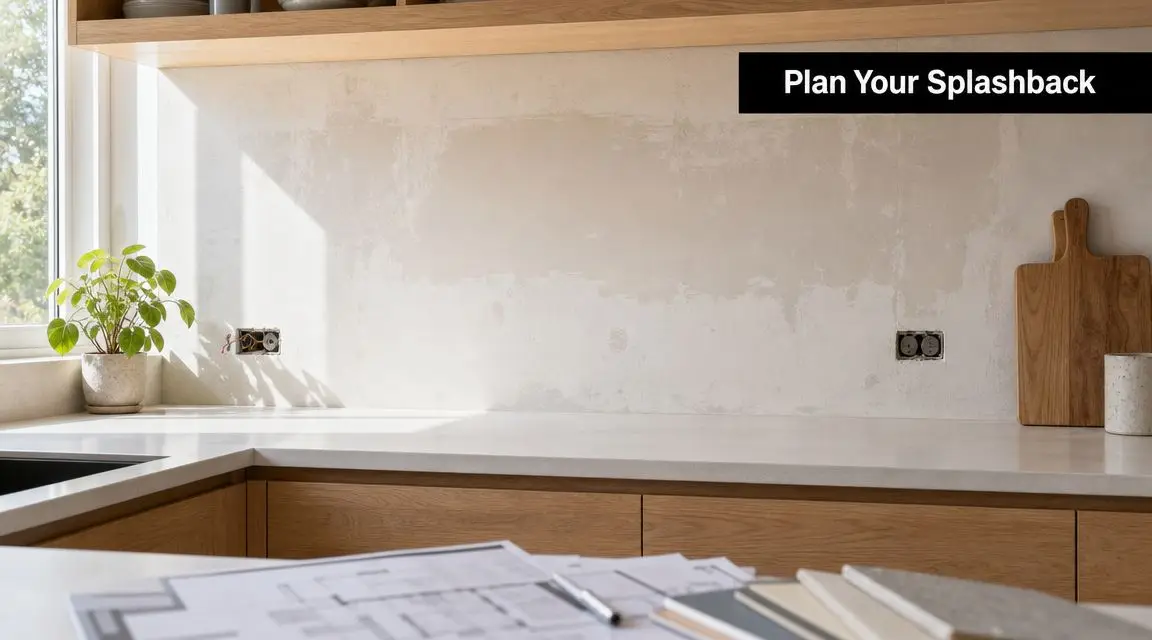
In practical renovation terms, a splashback is the protective wall surface behind work areas. In kitchens, that usually means behind the cooktop, sink, and benchtop run. In bathrooms, it often means the wall finish behind a vanity or basin where regular splashing would otherwise mark or damage the wall.

Term Common region What it means Typical use
Splashback Australia, UK usage Protective wall surface behind wet or messy work areas Kitchens, bathrooms, laundries
Backsplash North America Same function, different regional wording Kitchens, bathrooms

The wording matters less than the function. The surface needs to do three jobs well:

  • Protect the wall: It stops water, grease, and day-to-day mess from reaching painted plaster or other less durable finishes.
  • Support cleaning: A good splashback makes wipe-down easier, especially around sinks, vanities, and cooktops.
  • Finish the design: It can either blend into the room or become the visual feature.

A lot of renovation mistakes start before installation. People choose a look first and only later ask how it ends at a shelf, window, or power point.

That's why this decision sits early in project planning. For modern bathrooms, new bathroom ideas, and kitchen upgrades alike, the splashback isn't a styling afterthought. It affects layout, material ordering, labour, and how tidy the finished room feels.

Key Considerations Before Choosing Your Material

Before comparing tile, glass, or stone, step back and look at the job the splashback needs to do in your home. A material that looks perfect in a showroom can become frustrating in a busy family kitchen or a compact ensuite if it doesn't match how the room is used.

Key Considerations Before Choosing Your Material

Start with the layout, not the finish

Homeowners often begin with colour. Project managers begin with edges, heights, returns, outlets, and joins.

A splashback across a simple straight run is one thing. A splashback that has to turn a corner, finish under open shelving, stop at a window reveal, or wrap around a shaving cabinet in a bathroom needs more planning. The more interruptions in the wall, the more important the installation detail becomes.

One reason this matters is material quantity. A standard kitchen splashback over a 3-metre run at 600 mm high covers about 1.8 m², while a full-height wall over that same width reaches about 7.2 m², which is roughly a 300% increase in coverage according to this measurement guide on splashback area calculation. That change affects how much tile, glass, or stone you need, and how much cutting and labour the installer takes on.

Use three filters before you choose

A quick decision framework helps.

  • Budget: Full-height features look strong, but they use more material and usually create more labour. If budget is tight, choose where to spend for impact.
  • Lifestyle: If you cook often, use oils, or have kids leaving toothpaste and soap marks everywhere, pick a finish that's easy to wipe and forgiving in daily use.
  • Aesthetic: Decide whether the splashback should be quiet or prominent. In designer bathrooms, a splashback can frame the vanity and mirror beautifully. In a minimal kitchen, it may need to recede.

Practical rule: Measure the wall you need to protect before choosing the material you want to admire.

Think like a builder for five minutes

If you want the room to feel organised, ask these questions early:

  1. Where does the splashback start and stop?
  2. Will the edge align with cabinetry, shelving, mirrors, or tall joinery?
  3. Are there outlets, tap penetrations, or trims that will interrupt the pattern?
  4. Is this a wet-prone bathroom zone that needs tougher detailing?

Many strong-looking new bathroom ideas either become refined or begin to fail at this stage. The best result usually comes from planning the shape and boundaries first, then selecting the finish.

A Detailed Comparison of Popular Splashback Materials

Some materials look good in photos but become annoying to live with. Others don't scream for attention, yet perform better year after year. The right choice usually comes down to how much mess the room sees, how much visual detail you want, and how precise the installation needs to be.

Splashback Material Comparison Guide

Material Average Cost Durability Maintenance Best For
Ceramic or porcelain tile $ to $$ Good Moderate, grout needs attention Most kitchens, bathroom renovations, feature patterns
Mosaic tile $$ Good Higher maintenance due to more grout lines Feature areas, designer bathrooms, niche detailing
Toughened glass $$ to $$$ High Easy Busy kitchens, clean modern finishes, areas behind gas hobs
Natural or engineered stone $$$ High Low to moderate depending on finish Premium kitchens, seamless luxury looks, modern bathrooms
Stainless steel $$ to $$$ High Easy Utility-focused kitchens, contemporary or industrial styling

Tiles suit the widest range of projects

Tiles remain the most flexible option because they can be subtle, bold, classic, or strongly contemporary without forcing the whole renovation in one direction. They work in kitchens and in bathroom renovations, especially where you want colour, texture, or pattern.

Ceramic and porcelain tiles are often the easiest entry point because they offer plenty of variation in shape and scale. Subway layouts feel familiar. Large-format tiles reduce grout lines and can look cleaner. Mosaic tiles create texture but also add many more joints, which means more visual busyness and more cleaning effort.

Tiles work well when you want:

  • Design flexibility: Easy to match with timber, stone-look joinery, or painted cabinetry.
  • Controlled spending: You can keep the field simple and spend more on trims or a feature section.
  • Bathroom detail: Vanity splashbacks, recessed shelving, and small wall areas often suit tile very well.

What doesn't work as well is choosing a busy patterned tile and treating installation as an afterthought. Patterns need a layout plan, not just a tile selection.

Toughened glass is hard to beat for easy cleaning

If low maintenance is high on your list, glass has a strong case. In a busy kitchen, toughened glass splashbacks are noted as highly heat-resistant and suitable behind gas hobs, while also being easy to clean because the surface is seamless and non-porous.

That combination matters. No grout lines means wipe-downs are quicker. The finish also reflects light well, which can help a tighter kitchen feel brighter.

Glass usually suits:

  • Minimal kitchens: Clean lines, little visual interruption.
  • Family use: Less scrubbing around joints and corners.
  • Simple colour statements: One consistent tone across the whole wall.

Its trade-off is aesthetic warmth. In some homes, glass can feel a little flat unless the cabinetry, benchtop, and lighting are doing enough around it.

Stone gives a premium, integrated look

Stone, whether natural or engineered, is usually chosen for visual continuity and a more architectural finish. If the benchtop continues up the wall, the room often feels calmer and more expensive-looking because there are fewer competing materials.

This can work beautifully in modern bathrooms too. A stone splashback behind the vanity can tie together basin, cabinetry, and mirror lighting in a very controlled way. That's often why designer bathrooms feel resolved. The material palette is disciplined.

Stone tends to suit homeowners who want:

  • A continuous appearance
  • Fewer joins
  • A premium feel without decorative fuss

The challenge is planning. Slab materials need accurate templates, clean cut-outs, and careful handling around taps, outlets, and edges. They don't forgive casual measurement.

If you're also comparing surfaces more broadly, this guide to kitchen benchtop materials helps frame how the splashback should relate to the rest of the kitchen.

Stainless steel is practical first, decorative second

Stainless steel is chosen for performance. It handles cooking zones well, wipes down easily, and gives a crisp, functional finish. In some homes that's exactly the right look. In others, it can feel too commercial unless balanced with softer elements like timber, warmer stone, or textured joinery.

It works best where function leads the design brief.

If the cooking zone gets heavy daily use, choose the material you'll still like after the fifth wipe-down of the day, not just the one that looked best under showroom lights.

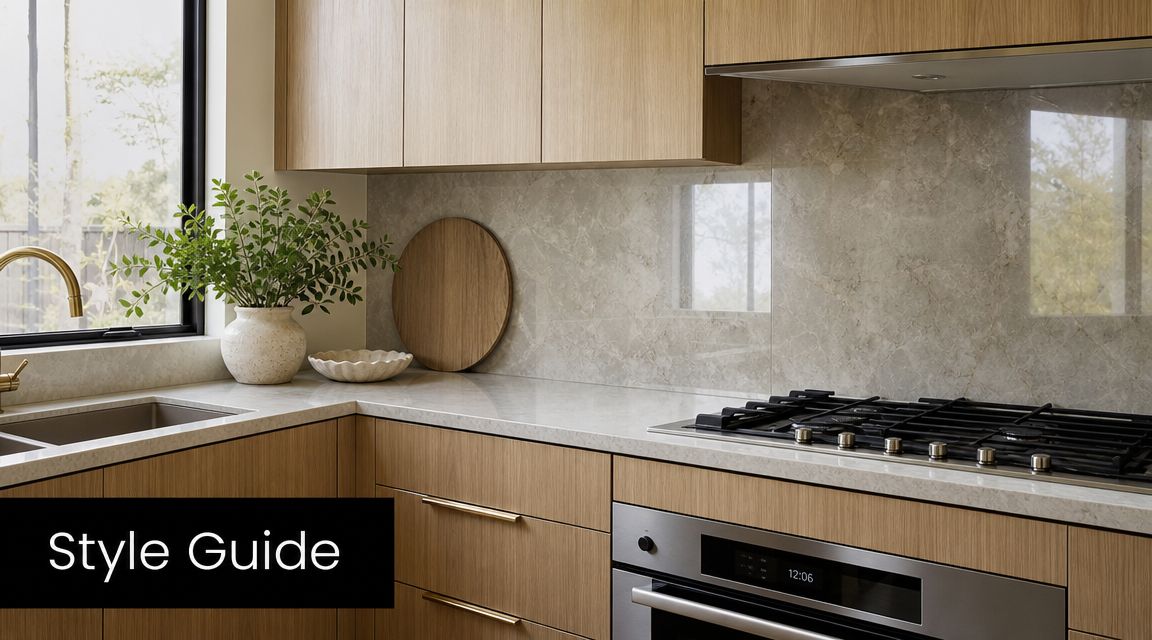
Style Guide Matching Your Splashback to Your Home

A splashback doesn't need to shout to matter. Some of the best-looking rooms use it subtly. Others rely on it to carry the whole design. The difference is whether you want the wall finish to lead the room or support it.

Style Guide Matching Your Splashback to Your Home

When a quiet splashback works best

In a kitchen with strong cabinetry colour, a veined benchtop, or open shelving, the smartest move is often restraint. A plain tile, simple glass panel, or matching stone return can give the room breathing space. That approach works especially well in modern bathrooms too, where the vanity, tapware, and lighting already carry enough detail.

A restrained splashback usually suits:

  • Minimal interiors
  • Small rooms that need visual calm
  • Projects where the benchtop or vanity is already the hero

This is often the better route for homeowners chasing elegant rather than trendy.

When the splashback should become the feature

There are rooms that need a focal point. A bathroom vanity wall with soft joinery and simple fittings can come alive with a textured tile. A compact kitchen with plain cabinetry can get character from shape, tone, and grout contrast.

That's where new bathroom ideas often become more than mood-board styling. The trick isn't choosing a bold tile. It's making sure the boldness survives contact with the wall.

A patterned splashback near corners or returns needs a decision before installation starts. This tile layout guide notes that the pattern should be planned before the first tile is set, with installers choosing whether to wrap the pattern around corners or mirror it for symmetry. That single choice can be the difference between a designer finish and a result that looks accidental.

For broader visual inspiration, this collection of bathroom décor ideas in Australia is useful for seeing how splashback finishes can support the rest of the room.

The details that decide whether it looks premium

A feature splashback fails most often at the cut points.

Think about these trouble spots early:

  • Corners: The pattern needs to continue intentionally, not just stop and restart.
  • Power points: Poor placement can break a nice tile rhythm.
  • Tap fittings and spouts: In bathrooms, penetrations through feature tiles need exact setting out.
  • Edge trims: The wrong trim can cheapen a premium material very quickly.

Good design isn't only the material choice. It's how the lines land at the end of the wall.

If you want a feature look, keep the supporting elements disciplined. Busy tiles, loud stone, strong tapware finishes, and dramatic joinery all competing together rarely improve the room. The most polished designer bathrooms usually have one clear lead element, then everything else steps back.

Installation and Long-Term Practicality

Choosing the material is only half the job. The finish you live with depends just as much on how it's installed, how it ends, and whether the detailing matches the room's moisture and heat demands.

Installation and Long-Term Practicality

Where many installations go wrong

The common failures aren't always dramatic. More often, they're visual and practical problems that become obvious once the room is in use. Uneven tile cuts around outlets. A splashback height that feels arbitrary. Silicone lines that draw attention. Stone or glass panels that don't align neatly with cabinetry.

In kitchens without upper cabinets, this is especially important. Guidance for open kitchen layouts notes that the splashback should be at least 450 mm high from the countertop, and extend higher behind the cooktop for full wall protection. That's a functional rule, but it also affects how balanced the wall looks.

Kitchen and bathroom practicality aren't the same

A kitchen splashback deals with grease, steam, heat, and food prep. A bathroom splashback deals more with regular water contact, cleaning products, and how the finish sits against mirrors, vanities, and basin tapware.

That difference changes what matters on site.

  • In kitchens: Heat exposure, cooktop protection, and cleaning ease become the main issues.
  • In bathrooms: Moisture management, neat penetrations, and clean junctions around vanities matter more.
  • In both spaces: Alignment is everything. If the splashback doesn't line up with joinery or fixtures, it looks unresolved.

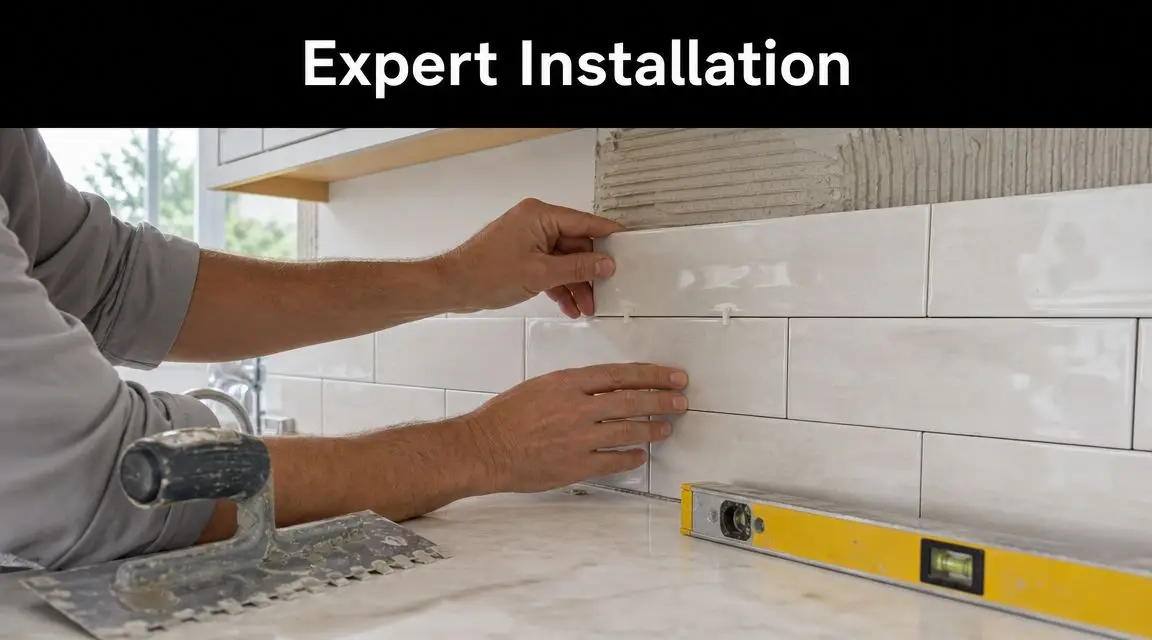
Why professional installation pays off

This is one of those parts of renovation where “close enough” is visible from across the room. Large panels need exact templates. Feature tiles need careful set-out. Bathroom walls need sound substrate preparation. None of that is glamorous, but all of it shows in the final result.

If you're planning a tiled finish, there's a useful breakdown here on installing large-format porcelain tiles, especially for understanding why flat walls, accurate spacing, and sequencing matter so much.

For Victorian homeowners, there's also a compliance mindset worth keeping. Waterproofing, substrate suitability, fixture penetrations, and finish durability shouldn't be guessed; working with experienced trades and registered builders unlimited becomes valuable, particularly on larger kitchen and bathroom renovations where multiple trades need to coordinate cleanly.

The nicest splashback in the showroom still fails on site if no one has properly resolved the edge, the outlet cut, and the transition to the next surface.

Long-term practicality comes from those decisions. Not from the sample board.

Your Perfect Splashback SitePro Bathrooms Can Help

The best splashback choice depends on the room, not the trend.

For a busy family kitchen, a low-maintenance surface with simple cleaning is usually the safest call. Glass often suits that brief well, especially if you want a clean modern look with minimal fuss. For a feature-led kitchen, tile or stone can work beautifully, but only if the wall layout has been planned properly around edges, outlets, and terminations.

For bathroom renovations, the decision is often more about balance than drama. A vanity splashback should protect the wall, suit the joinery, and support the rest of the material palette. In modern bathrooms, a subtle slab or restrained tile can feel more expensive than a louder feature that fights the mirror, lighting, and tapware. In designer bathrooms, the best outcome usually comes from one strong move executed cleanly.

For investment properties or practical updates, keep the finish durable, easy to maintain, and visually simple. That usually ages better and creates fewer maintenance headaches later.

SitePro Bathrooms helps homeowners across Highett and greater Victoria plan these decisions properly, from early layout thinking through to design, construction, and final installation. If you want a renovation team that can weigh design, durability, and budget without overcomplicating the process, contact SitePro Bathrooms to discuss your kitchen or bathroom project.

Frequently Asked Questions About Splashbacks

Is splashback the right term in Australia?

Yes. In Australia, splashback is the standard local term. Backsplash means the same thing, but it's the North American wording.

Does a splashback need to go full height?

Not always. The right height depends on the wall layout, nearby cabinetry, and how much protection the area needs. In some kitchens, full height gives a cleaner result. In others, a shorter run is enough if it ends neatly.

Are splashbacks only for kitchens?

No. They're common in kitchens and bathrooms. In bathrooms, they're especially useful behind vanities and basins where regular water splashing would otherwise mark painted walls.

What's the biggest mistake homeowners make?

Choosing the material before resolving the layout. Corners, outlets, trims, mirrors, and wall endings need to be planned first or the final result can look awkward.

Is professional installation worth it?

Usually, yes. Splashbacks look simple, but neat set-out, accurate cuts, substrate preparation, and clean finishing are what make the job last and look premium.

  • siteprobathrooms

Your Guide to Kitchen Cabinets Materials in 2026

You’re probably standing in your kitchen right now noticing the same things most homeowners notice before a renovation starts. The storage doesn’t work. The doors feel tired. The layout might still be serviceable, but the finishes date the whole room. Then the material choices begin, and that’s where a lot of projects go off track.

Cabinet colour is easy to picture. Cabinet material is harder. Yet it’s the material decision that usually determines how well the kitchen holds up, how much maintenance it needs, and whether the renovation still feels like money well spent years later. The same logic applies when people start thinking about bathroom renovations, new bathroom ideas, modern bathrooms, or designer bathrooms. Surface style matters, but substrate and construction matter more.

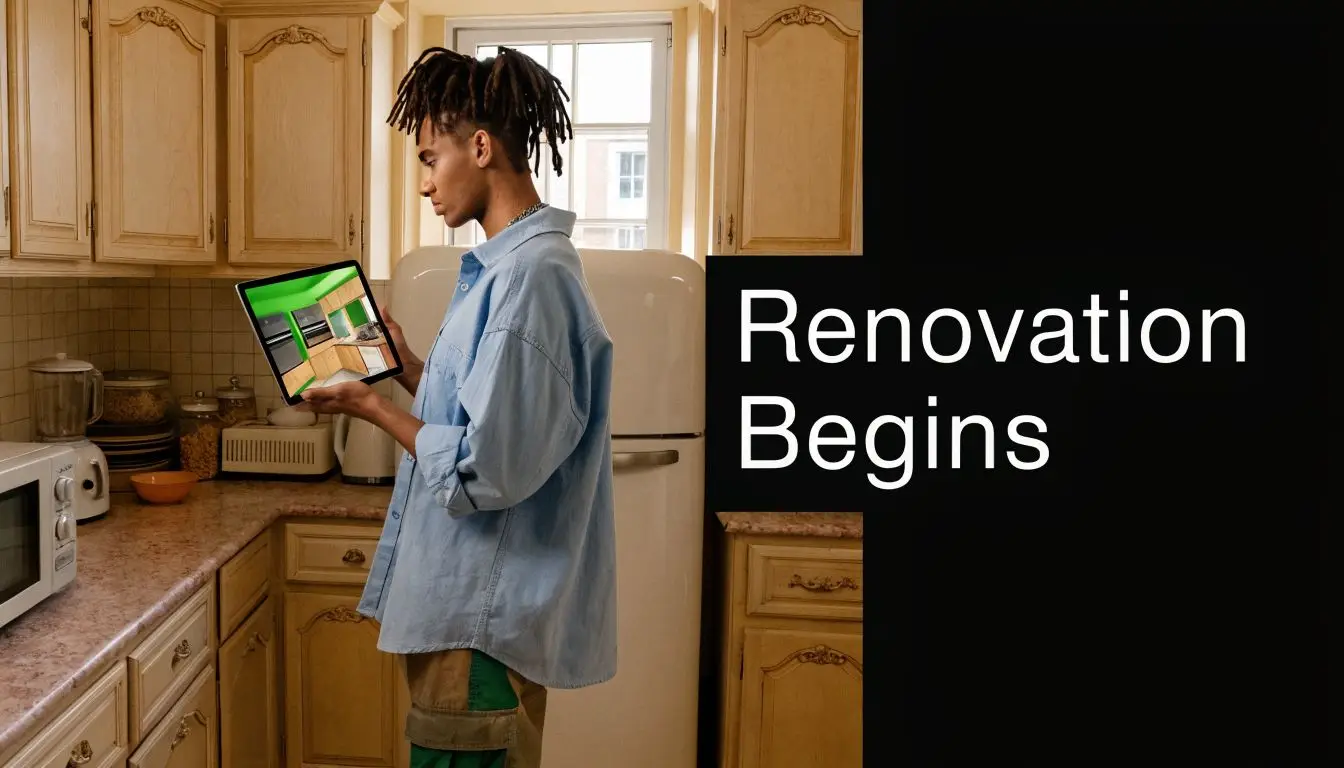
Starting Your Kitchen Renovation Journey

The initial consideration often focuses on aesthetics. Images are saved of shaker doors, warm timber finishes, flat-panel white kitchens, or darker joinery with stone tops. Then, upon getting quotes, it becomes clear that two cabinets looking similar on day one can behave very differently after a few winters, a few summers, and a few years of steam, spills, and daily use.

A young man holding a tablet with a kitchen redesign plan inside an old-fashioned kitchen.

That’s why kitchen cabinets materials should be one of the first decisions, not one of the last. In Australia, wood materials hold approximately 60% market share in 2025, reflecting strong buyer preference for durability and appearance in variable climates like Victoria’s, according to Australian kitchen cabinet market data.

What homeowners usually get wrong

The common mistake is treating cabinetry as one material choice. It isn’t. The cabinet box, the doors, the drawer fronts, the shelves, and the frame can all be made from different materials. A smart renovation often mixes them on purpose.

For example, a homeowner might want the warmth of timber but not the movement and upkeep that comes with full solid timber construction. In that case, a practical build could use a stable cabinet box and reserve the premium finish for the visible door fronts. That approach protects budget without cheapening the job.

Practical rule: Pick materials based on where they sit and what they have to survive, not on what sounds premium in a showroom.

A good early step is to look at complete kitchen renovation services in Highett and assess your project as a full system. The cabinet material has to suit the room, the layout, and the way your household lives. A young family, a downsizer, and an investor won’t all make the same choice, and they shouldn’t.

Understanding the Anatomy of a Cabinet

A cabinet only looks simple from the outside. In practice, it’s a group of parts doing different jobs. If you understand those parts, the material decisions become much clearer.

The cabinet box

The cabinet box, also called the carcass, is the structural shell. It carries the load, supports the shelves, anchors the hinges and runners, and takes the pressure of everyday use. You don’t usually notice it once the kitchen is installed, but it does most of the work.

Structural performance matters more than showroom appeal. If the box swells, racks, or loses screw-holding strength, the whole kitchen starts to feel tired long before the doors look old.

Doors and drawer fronts

These are the visible faces of the kitchen. They determine most of the visual style and much of the cleaning routine. A painted profile door, a timber veneer panel, and a laminate flat panel can all suit the same layout, but they won’t behave the same way over time.

This is also where people often overspend on appearance while underspending on the box behind it. That usually works in reverse of what’s best for long-term value.

Frames, shelves, and hardware fixing points

Some cabinetry includes a front frame. In framed construction, that frame adds rigidity and helps with alignment and hardware retention. The standard of that joinery matters. High-quality cabinetry standards specify 3/4" solid hardwood front frames using mortise and tenon joinery, a method that spreads stress and helps prevent fastener pull-out, according to cabinet construction standards guidance.

A simple way to think about cabinet anatomy is this:

  • Box: Carries weight and handles moisture exposure.
  • Door fronts: Deliver the look and take the hand contact.
  • Shelves: Need stiffness so they don’t sag under plates, appliances, or pantry items.
  • Frame and fixing zones: Need to hold screws, hinges, and runners reliably.

If the box is weak, expensive doors won’t save the kitchen.

Why this matters for budgeting

Smart budgeting means putting money where failure would be expensive. A door can often be replaced later. A failing cabinet box usually means deeper rectification work.

That’s why many well-planned renovations prioritise structural materials in the unseen areas first, then match the external finish to the design brief. The same thinking applies in bathrooms. In modern bathrooms and designer bathrooms, what sits behind the finish often determines whether the room still performs properly years later.

A Detailed Comparison of Common Cabinet Materials

Not all kitchen cabinets materials suit the same job. Some are best for structure. Some are chosen for paint finish. Some are strictly budget options. If you compare them side by side, the trade-offs become easier to judge.

Plywood

Plywood has become the default recommendation for many cabinet boxes for a reason. In Australia, plywood is the preferred material for cabinet boxes in 65% of custom kitchen projects by 2025, valued for stability and moisture resistance in climates like Victoria’s, according to Australian custom cabinetry statistics.

Its strength comes from layered construction with alternating grain direction. That makes it more resistant to warping and movement than many single-material sheet products. In practical terms, it’s a strong choice for cabinet boxes, pantry internals, and shelving where moisture and load both matter.

It isn’t the cheapest option, but it tends to be one of the most balanced.

Solid wood

Solid wood still has a place, especially for doors, feature panels, and homes where natural grain is part of the design language. It looks better with age than many synthetics if it’s well chosen and properly finished.

The downside is movement. Timber reacts to the environment. In a stable internal space that’s manageable. In rooms with fluctuating moisture, it needs more care in species selection, detailing, sealing, and placement. Used well, it’s beautiful. Used carelessly, it can become a maintenance issue.

MDF

MDF is popular because it gives a smooth, consistent surface for painted finishes. If you want crisp modern profiles, detailed routed doors, or a very even painted look, MDF can do that well.

Its weakness is water. Once moisture gets through a damaged edge, failed paint line, or compromised joint, the board can swell and degrade. That doesn’t mean MDF is always a bad choice. It means it needs the right application, proper sealing, and realistic expectations.

Particleboard

Particleboard usually sits at the lower end of the market. It can be acceptable in dry, low-demand settings when budgets are tight, but it has less tolerance for moisture and repeated wear. Once it takes on water, it tends to deteriorate quickly.

For an investment property with a very tight budget, it may still appear in the discussion. For a long-term family kitchen, it’s rarely the first recommendation where durability is the goal.

Laminates and thermoformed finishes

Laminate-style finishes work because they’re practical. They offer a broad design range, wipe clean easily, and can suit very contemporary spaces. For flat-panel kitchens, they often give a clean and controlled result without the upkeep of painted timber.

The trade-off is repairability. Once a synthetic face is significantly chipped, lifted, or heat-damaged, repair options are usually more limited than with natural materials.

Veneers, acrylics, metal, and glass accents

These are usually finish decisions rather than full-construction decisions. Veneers can bring timber character with more control than solid wood. Acrylic-style faces can suit sharp, modern schemes. Glass and metal are often best used selectively, not across every elevation.

The key is restraint. Accent materials can lift a kitchen, but too many different finishes can make it feel busy and date it faster.

Kitchen Cabinet Material Comparison

Material Cost Range (per linear metre) Durability Pros Cons
Plywood AUD 150-500 High Strong, stable, better moisture resistance, good for cabinet boxes Dearer than entry-level board options
Solid wood AUD 200-700 High when detailed well Natural character, can be refinished, premium appearance Higher cost, can move with humidity
MDF Qualitative only Moderate Smooth for painted finishes, clean modern look Vulnerable if water penetrates
Particleboard Qualitative only Lower Budget-friendly, widely available Poor moisture tolerance, shorter service life
Laminate-faced board Qualitative only Moderate Easy cleaning, broad finish range, practical for modern kitchens Harder to repair once damaged
HDP composites Qualitative only High in humid conditions Low maintenance, strong moisture performance in coastal settings Not always the first material homeowners consider

Don’t choose a single “best” material for the whole kitchen. Choose the best material for each cabinet part.

Engineered vs Natural Materials What You Need to Know

The material debate usually comes down to this. Do you want the character and repairability of natural products, or the consistency and lower-maintenance performance of engineered ones?

Where natural materials win

Natural materials, especially timber-based options, have a tactile quality that engineered boards often imitate but rarely match. Grain variation, depth, and the way the surface matures can give a kitchen warmth that feels less manufactured.

They also tend to be more forgiving when damaged. A scuffed solid timber door may be repaired or refinished. A veneered or painted natural product can often be refreshed if the underlying construction is sound. That matters if you plan to stay in the home for a long time and want the kitchen to age well rather than just survive.

Natural products also make sense in homes where the cabinetry is part of a broader architectural story. In period homes or warmer contemporary interiors, they can anchor the room.

Where engineered materials win

Engineered materials are usually about control. They offer more consistency from panel to panel, a broader range of repeatable finishes, and fewer visual surprises. That’s useful if you want a sharp painted scheme, a uniform texture, or a very clean contemporary line.

Plywood sits in an interesting middle ground. It’s engineered, but timber-based, and structurally very capable. Its cross-laminated construction resists warping and bending under load and is well suited to cabinet boxes in high-moisture zones, as outlined in guidance on long-lasting kitchen cabinet materials.

MDF and similar products also have a place, especially for painted doors where movement in solid timber can telegraph through the finish. But when those surfaces are severely damaged, repair often becomes replacement rather than restoration.

The practical trade-off

For most Victorian homes, the most balanced result isn’t fully natural or fully engineered. It’s mixed.

  • Use structural materials where water and load matter most. Cabinet boxes, sink units, and wide shelves need stability first.
  • Use decorative materials where appearance drives the brief. Doors and feature panels can carry the visual style.
  • Match the maintenance level to the household. A busy family kitchen and a lightly used entertainer’s kitchen won’t wear the same way.

The best joinery isn’t the most expensive on paper. It’s the one that still opens, closes, and looks right after years of normal use.

Choosing the Right Material for Your Highett Home

Highett homes have a specific challenge that generic renovation advice often ignores. Moisture matters here more than many homeowners expect.

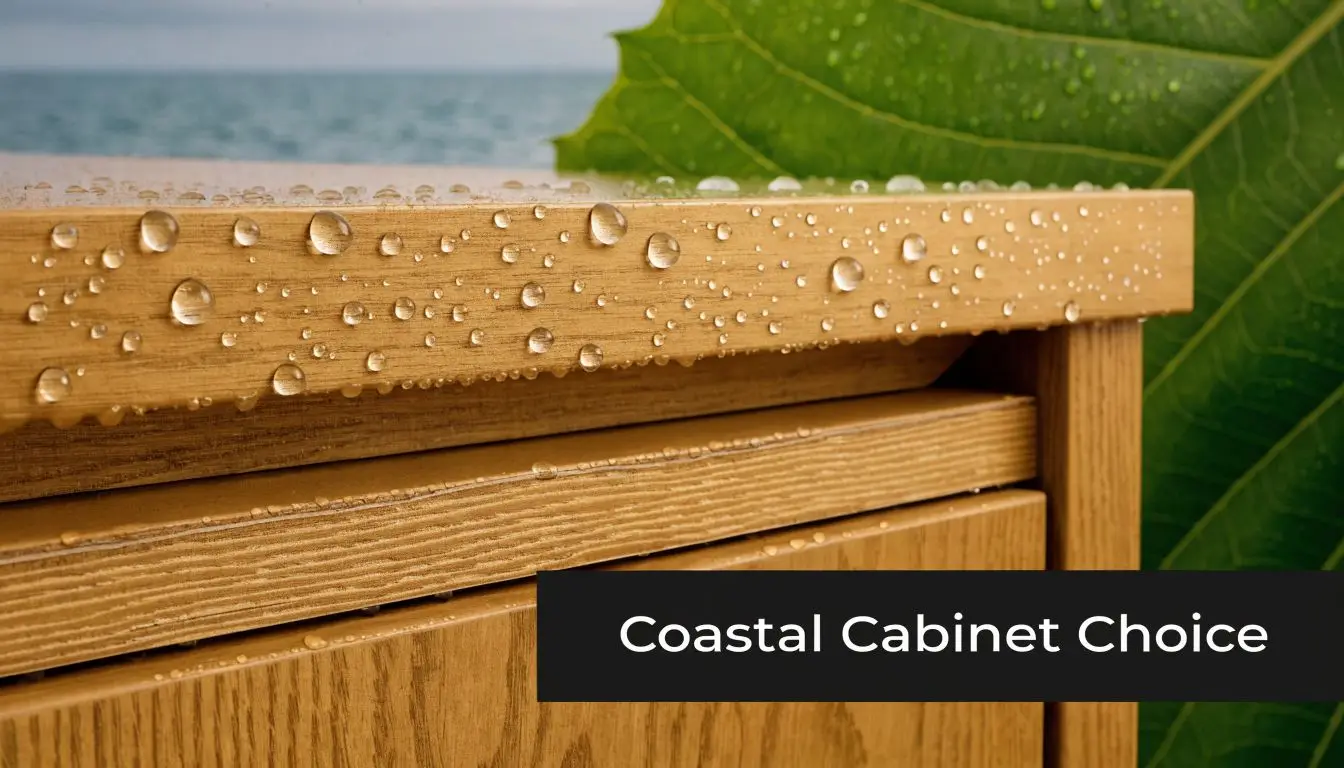
A close-up of wooden cabinet surfaces covered in water droplets with a blurred ocean background.

In coastal parts of Victoria such as Highett, average relative humidity sits around 65-75% year-round, and that can accelerate warping in solid timber cabinets by up to 30%. The same data notes that high-density polymer composites outperform traditional laminates in these conditions, making them a strong low-maintenance option in salt-laden coastal humidity, according to Victorian humidity and cabinet material guidance.

What tends to work better locally

In this part of Victoria, material selection should start with moisture exposure, not colour. That doesn’t mean every kitchen needs synthetic finishes, but it does mean you should be cautious about using movement-prone materials in the wrong places.

A practical Highett specification often leans toward:

  • Plywood cabinet boxes for structural stability in working zones
  • Carefully sealed painted fronts where the design calls for a refined finish
  • HDP composites in areas where low maintenance and moisture resistance are high priorities
  • Timber used selectively on feature elements rather than across every component

The bathroom connection matters too

This climate logic doesn’t stop at the kitchen. It carries directly into bathroom renovations, especially if you’re planning modern bathrooms or exploring new bathroom ideas that include timber-look joinery. Bathrooms punish poor material choices faster than kitchens do.

If a material struggles in a humid kitchen, it usually struggles more in a bathroom vanity, linen unit, or shaving cabinet. That’s why local renovation planning should treat kitchens and bathrooms as part of the same performance conversation, not separate style exercises.

Think beyond resale buzzwords

Homeowners often ask which material “adds value”. The better question is which material avoids looking tired too soon. In most cases, buyers and tenants respond to cabinetry that feels solid, stays aligned, and doesn’t show early moisture damage. Durability reads as quality, even when the buyer doesn’t know the substrate.

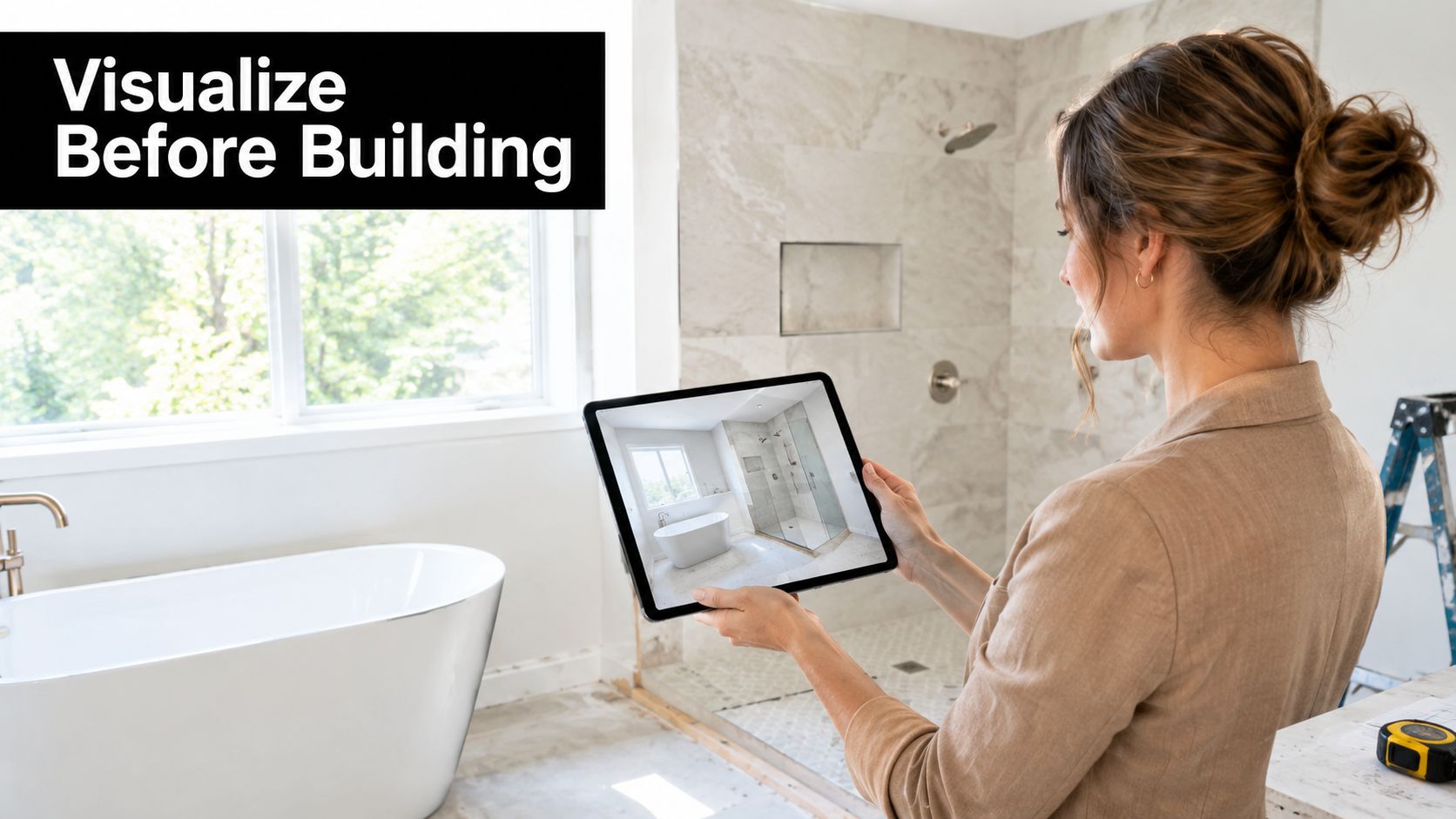
How 3D Design Helps You Visualise Your Materials

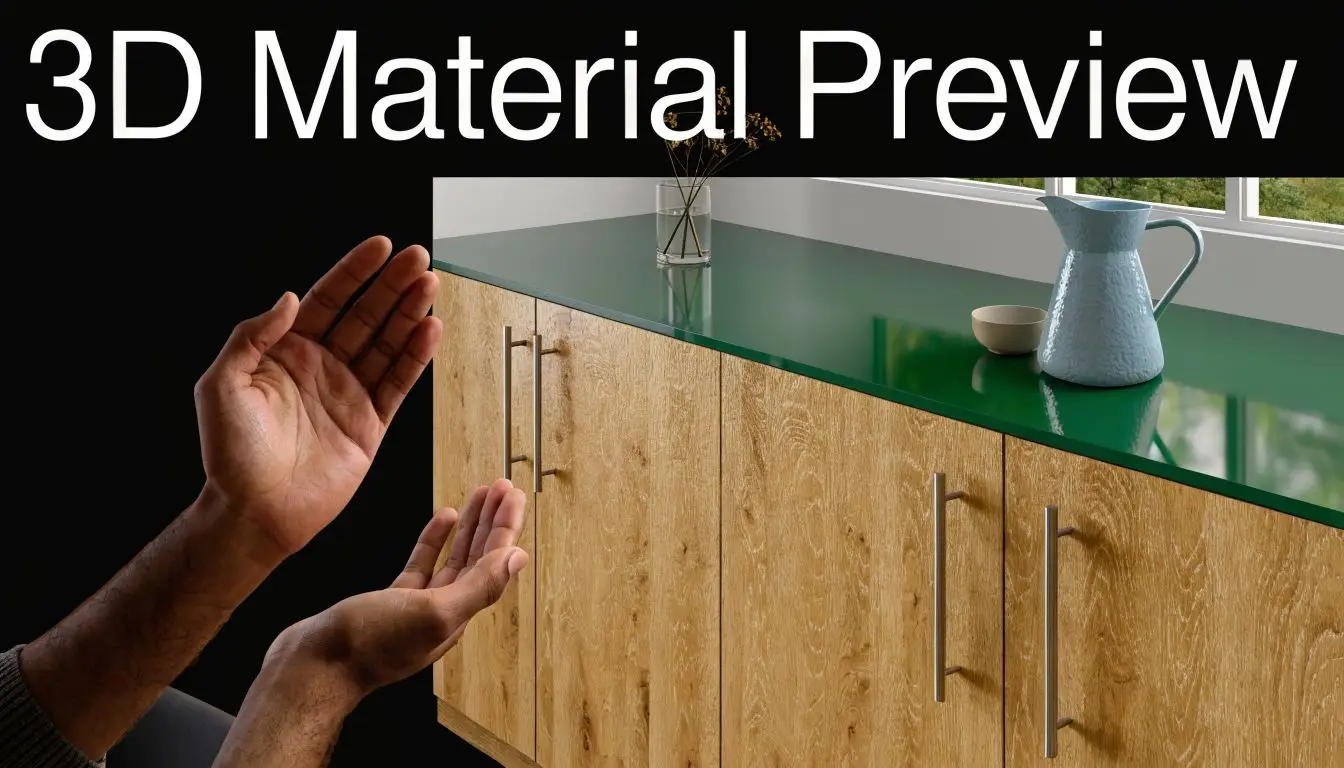
Material decisions are hard to judge from a small sample. A door swatch might look perfect in your hand and wrong across an entire wall. Grain, sheen, colour temperature, and shadow lines all change once the kitchen is built around them.

A 3D rendering showing a wooden kitchen cabinet with a green surface being presented by two hands.

That’s why 3D visualisation is more than a presentation tool. It’s a risk-reduction tool. It lets you test whether a timber tone makes the room feel warm or heavy, whether a matte finish softens the space, or whether a darker cabinet face closes the room in too much.

What 3D design solves

A useful rendering helps with decisions that are difficult to make from drawings alone:

  • Material balance: Whether the joinery, benchtop, splashback, and flooring sit well together
  • Scale: Whether a feature finish should cover one run of cabinets or the whole kitchen
  • Light response: How darker or reflective surfaces may read in your actual room
  • Consistency across rooms: Whether kitchen and bathroom joinery feel connected without looking copied

This matters just as much for designer bathrooms as it does for kitchens. A vanity finish that feels elegant in isolation can clash badly with tile tone, lighting, or wall colour once the room is complete.

A strong interior design and 3D visualisation process gives homeowners a chance to make material decisions before ordering, not after installation starts. That’s one of the simplest ways to avoid expensive regret.

Good design drawings don’t just show where cabinets go. They show whether the material choice still makes sense at full scale.

Finalising Your Choice Budget Longevity and Style

By this point, the right decision usually isn’t about finding the fanciest finish. It’s about matching the material to the life the kitchen will have.

Start with your absolute requirements.

A simple decision filter

  1. How hard will the kitchen be used?
    A busy family kitchen needs forgiving materials and strong cabinet boxes. A low-use apartment kitchen may allow more emphasis on appearance.

  2. How long do you plan to keep the kitchen?
    If this is your long-term home, repairability and structural quality deserve more weight. If it’s a shorter-hold improvement, balance durability with budget.

  3. How much maintenance will you realistically do?
    Don’t choose a material that requires care you know won’t happen.

  4. Does the material suit the location?
    In Victoria, climate and moisture exposure are not side issues. They’re core performance issues.

Don’t skip fire safety

Material choice also affects compliance and risk. In Victoria, 28% of kitchen fires originate near cabinets, so the material near appliance zones matters, according to Victorian kitchen fire safety guidance. Standard melamine-faced MDF may not suit bushfire-prone requirements in some settings, while intumescent-coated acrylics offer stronger protection.

That won’t drive every kitchen brief, but it should be part of the discussion, especially in homes where bushfire compliance or multi-unit fire spread is a concern.

The last check before you commit

Use this final shortlist:

  • Best structure first: prioritise cabinet box quality
  • Finish second: pick the visible material that suits your style and maintenance tolerance
  • Climate check: confirm it suits Highett and wider Victorian conditions
  • Installation standard: good materials fail when poor installation lets moisture in or hardware loosen
  • Whole-project budget: review the cost of a new kitchen in practical terms before locking premium upgrades

Registered builders unlimited in scope and experience matter here because installation quality determines whether the material performs as intended. The best board, timber, or finish won’t rescue poor detailing around sinks, appliances, corners, and service penetrations.


If you’re weighing kitchen cabinets materials for a Highett project and want clarity before you build, SitePro Bathrooms can help with practical planning, 3D design, kitchen upgrades, and bathroom renovations that suit Victorian conditions. For personalized advice on kitchens, modern bathrooms, designer bathrooms, and material selections that balance durability with style, get in touch through SitePro Bathrooms.