
Your Guide to Kitchen Cabinets Materials in 2026
You’re probably standing in your kitchen right now noticing the same things most homeowners notice before a renovation starts. The storage doesn’t work. The doors feel tired. The layout might still be serviceable, but the finishes date the whole room. Then the material choices begin, and that’s where a lot of projects go off track.
Cabinet colour is easy to picture. Cabinet material is harder. Yet it’s the material decision that usually determines how well the kitchen holds up, how much maintenance it needs, and whether the renovation still feels like money well spent years later. The same logic applies when people start thinking about bathroom renovations, new bathroom ideas, modern bathrooms, or designer bathrooms. Surface style matters, but substrate and construction matter more.
Starting Your Kitchen Renovation Journey
The initial consideration often focuses on aesthetics. Images are saved of shaker doors, warm timber finishes, flat-panel white kitchens, or darker joinery with stone tops. Then, upon getting quotes, it becomes clear that two cabinets looking similar on day one can behave very differently after a few winters, a few summers, and a few years of steam, spills, and daily use.
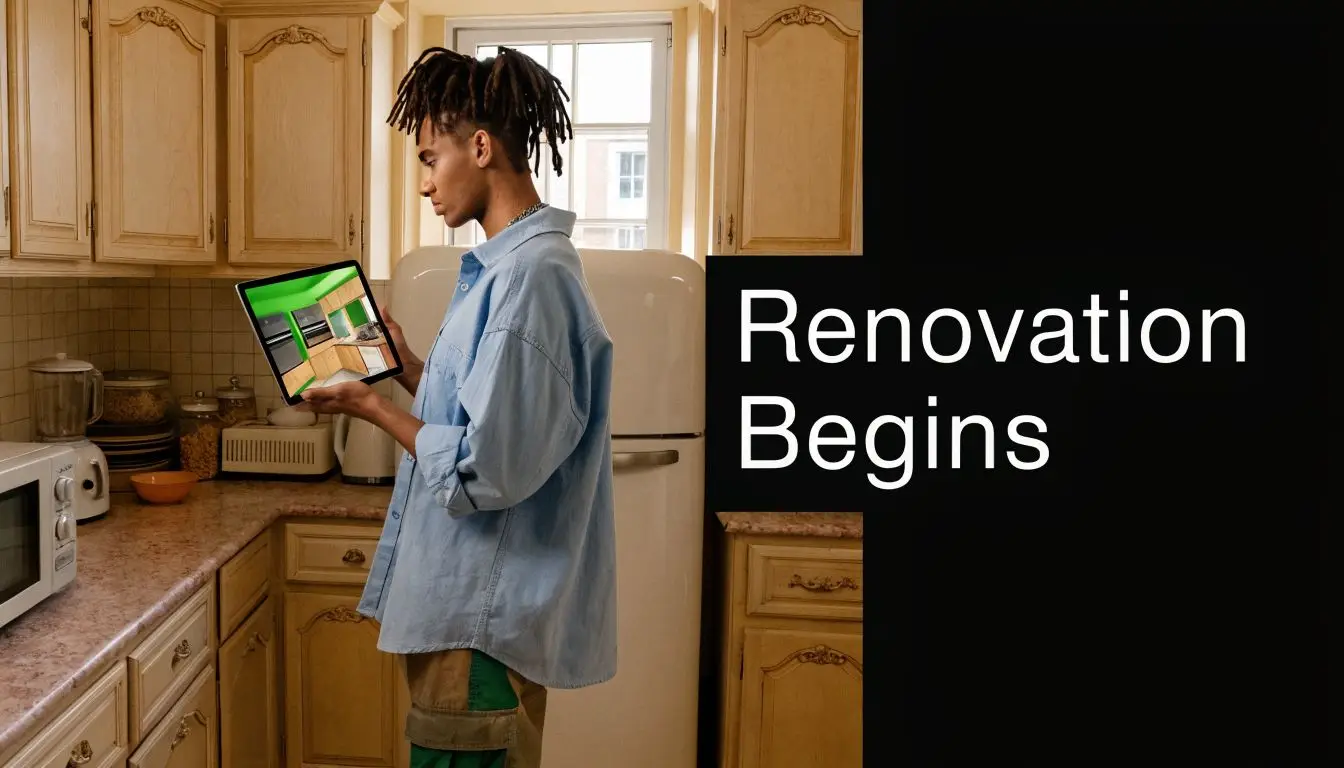
That’s why kitchen cabinets materials should be one of the first decisions, not one of the last. In Australia, wood materials hold approximately 60% market share in 2025, reflecting strong buyer preference for durability and appearance in variable climates like Victoria’s, according to Australian kitchen cabinet market data.
What homeowners usually get wrong
The common mistake is treating cabinetry as one material choice. It isn’t. The cabinet box, the doors, the drawer fronts, the shelves, and the frame can all be made from different materials. A smart renovation often mixes them on purpose.
For example, a homeowner might want the warmth of timber but not the movement and upkeep that comes with full solid timber construction. In that case, a practical build could use a stable cabinet box and reserve the premium finish for the visible door fronts. That approach protects budget without cheapening the job.
Practical rule: Pick materials based on where they sit and what they have to survive, not on what sounds premium in a showroom.
A good early step is to look at complete kitchen renovation services in Highett and assess your project as a full system. The cabinet material has to suit the room, the layout, and the way your household lives. A young family, a downsizer, and an investor won’t all make the same choice, and they shouldn’t.
Understanding the Anatomy of a Cabinet
A cabinet only looks simple from the outside. In practice, it’s a group of parts doing different jobs. If you understand those parts, the material decisions become much clearer.
The cabinet box
The cabinet box, also called the carcass, is the structural shell. It carries the load, supports the shelves, anchors the hinges and runners, and takes the pressure of everyday use. You don’t usually notice it once the kitchen is installed, but it does most of the work.
Structural performance matters more than showroom appeal. If the box swells, racks, or loses screw-holding strength, the whole kitchen starts to feel tired long before the doors look old.
Doors and drawer fronts
These are the visible faces of the kitchen. They determine most of the visual style and much of the cleaning routine. A painted profile door, a timber veneer panel, and a laminate flat panel can all suit the same layout, but they won’t behave the same way over time.
This is also where people often overspend on appearance while underspending on the box behind it. That usually works in reverse of what’s best for long-term value.
Frames, shelves, and hardware fixing points
Some cabinetry includes a front frame. In framed construction, that frame adds rigidity and helps with alignment and hardware retention. The standard of that joinery matters. High-quality cabinetry standards specify 3/4" solid hardwood front frames using mortise and tenon joinery, a method that spreads stress and helps prevent fastener pull-out, according to cabinet construction standards guidance.
A simple way to think about cabinet anatomy is this:
- Box: Carries weight and handles moisture exposure.
- Door fronts: Deliver the look and take the hand contact.
- Shelves: Need stiffness so they don’t sag under plates, appliances, or pantry items.
- Frame and fixing zones: Need to hold screws, hinges, and runners reliably.
If the box is weak, expensive doors won’t save the kitchen.
Why this matters for budgeting
Smart budgeting means putting money where failure would be expensive. A door can often be replaced later. A failing cabinet box usually means deeper rectification work.
That’s why many well-planned renovations prioritise structural materials in the unseen areas first, then match the external finish to the design brief. The same thinking applies in bathrooms. In modern bathrooms and designer bathrooms, what sits behind the finish often determines whether the room still performs properly years later.
A Detailed Comparison of Common Cabinet Materials
Not all kitchen cabinets materials suit the same job. Some are best for structure. Some are chosen for paint finish. Some are strictly budget options. If you compare them side by side, the trade-offs become easier to judge.
Plywood
Plywood has become the default recommendation for many cabinet boxes for a reason. In Australia, plywood is the preferred material for cabinet boxes in 65% of custom kitchen projects by 2025, valued for stability and moisture resistance in climates like Victoria’s, according to Australian custom cabinetry statistics.
Its strength comes from layered construction with alternating grain direction. That makes it more resistant to warping and movement than many single-material sheet products. In practical terms, it’s a strong choice for cabinet boxes, pantry internals, and shelving where moisture and load both matter.
It isn’t the cheapest option, but it tends to be one of the most balanced.
Solid wood
Solid wood still has a place, especially for doors, feature panels, and homes where natural grain is part of the design language. It looks better with age than many synthetics if it’s well chosen and properly finished.
The downside is movement. Timber reacts to the environment. In a stable internal space that’s manageable. In rooms with fluctuating moisture, it needs more care in species selection, detailing, sealing, and placement. Used well, it’s beautiful. Used carelessly, it can become a maintenance issue.
MDF
MDF is popular because it gives a smooth, consistent surface for painted finishes. If you want crisp modern profiles, detailed routed doors, or a very even painted look, MDF can do that well.
Its weakness is water. Once moisture gets through a damaged edge, failed paint line, or compromised joint, the board can swell and degrade. That doesn’t mean MDF is always a bad choice. It means it needs the right application, proper sealing, and realistic expectations.
Particleboard
Particleboard usually sits at the lower end of the market. It can be acceptable in dry, low-demand settings when budgets are tight, but it has less tolerance for moisture and repeated wear. Once it takes on water, it tends to deteriorate quickly.
For an investment property with a very tight budget, it may still appear in the discussion. For a long-term family kitchen, it’s rarely the first recommendation where durability is the goal.
Laminates and thermoformed finishes
Laminate-style finishes work because they’re practical. They offer a broad design range, wipe clean easily, and can suit very contemporary spaces. For flat-panel kitchens, they often give a clean and controlled result without the upkeep of painted timber.
The trade-off is repairability. Once a synthetic face is significantly chipped, lifted, or heat-damaged, repair options are usually more limited than with natural materials.
Veneers, acrylics, metal, and glass accents
These are usually finish decisions rather than full-construction decisions. Veneers can bring timber character with more control than solid wood. Acrylic-style faces can suit sharp, modern schemes. Glass and metal are often best used selectively, not across every elevation.
The key is restraint. Accent materials can lift a kitchen, but too many different finishes can make it feel busy and date it faster.
Kitchen Cabinet Material Comparison
| Material | Cost Range (per linear metre) | Durability | Pros | Cons |
|---|---|---|---|---|
| Plywood | AUD 150-500 | High | Strong, stable, better moisture resistance, good for cabinet boxes | Dearer than entry-level board options |
| Solid wood | AUD 200-700 | High when detailed well | Natural character, can be refinished, premium appearance | Higher cost, can move with humidity |
| MDF | Qualitative only | Moderate | Smooth for painted finishes, clean modern look | Vulnerable if water penetrates |
| Particleboard | Qualitative only | Lower | Budget-friendly, widely available | Poor moisture tolerance, shorter service life |
| Laminate-faced board | Qualitative only | Moderate | Easy cleaning, broad finish range, practical for modern kitchens | Harder to repair once damaged |
| HDP composites | Qualitative only | High in humid conditions | Low maintenance, strong moisture performance in coastal settings | Not always the first material homeowners consider |
Don’t choose a single “best” material for the whole kitchen. Choose the best material for each cabinet part.
Engineered vs Natural Materials What You Need to Know
The material debate usually comes down to this. Do you want the character and repairability of natural products, or the consistency and lower-maintenance performance of engineered ones?
Where natural materials win
Natural materials, especially timber-based options, have a tactile quality that engineered boards often imitate but rarely match. Grain variation, depth, and the way the surface matures can give a kitchen warmth that feels less manufactured.
They also tend to be more forgiving when damaged. A scuffed solid timber door may be repaired or refinished. A veneered or painted natural product can often be refreshed if the underlying construction is sound. That matters if you plan to stay in the home for a long time and want the kitchen to age well rather than just survive.
Natural products also make sense in homes where the cabinetry is part of a broader architectural story. In period homes or warmer contemporary interiors, they can anchor the room.
Where engineered materials win
Engineered materials are usually about control. They offer more consistency from panel to panel, a broader range of repeatable finishes, and fewer visual surprises. That’s useful if you want a sharp painted scheme, a uniform texture, or a very clean contemporary line.
Plywood sits in an interesting middle ground. It’s engineered, but timber-based, and structurally very capable. Its cross-laminated construction resists warping and bending under load and is well suited to cabinet boxes in high-moisture zones, as outlined in guidance on long-lasting kitchen cabinet materials.
MDF and similar products also have a place, especially for painted doors where movement in solid timber can telegraph through the finish. But when those surfaces are severely damaged, repair often becomes replacement rather than restoration.
The practical trade-off
For most Victorian homes, the most balanced result isn’t fully natural or fully engineered. It’s mixed.
- Use structural materials where water and load matter most. Cabinet boxes, sink units, and wide shelves need stability first.
- Use decorative materials where appearance drives the brief. Doors and feature panels can carry the visual style.
- Match the maintenance level to the household. A busy family kitchen and a lightly used entertainer’s kitchen won’t wear the same way.
The best joinery isn’t the most expensive on paper. It’s the one that still opens, closes, and looks right after years of normal use.
Choosing the Right Material for Your Highett Home
Highett homes have a specific challenge that generic renovation advice often ignores. Moisture matters here more than many homeowners expect.
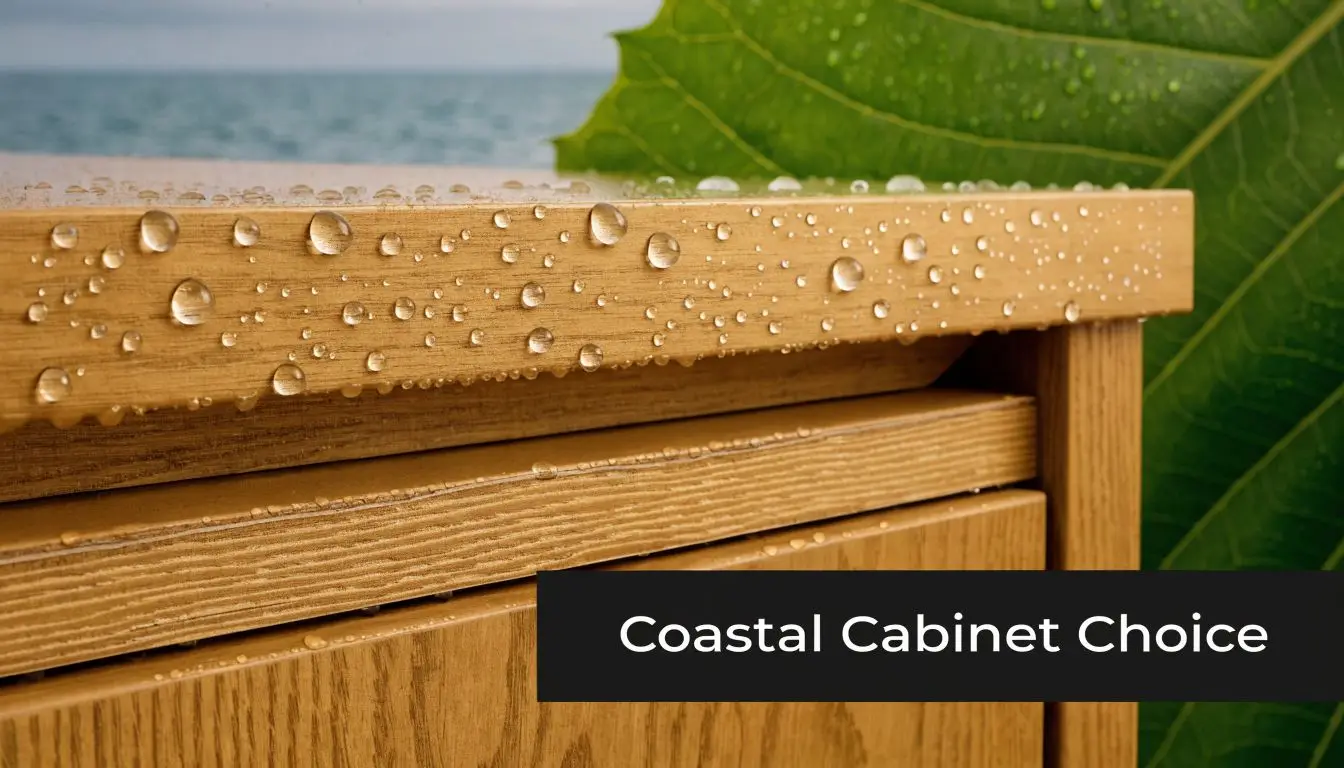
In coastal parts of Victoria such as Highett, average relative humidity sits around 65-75% year-round, and that can accelerate warping in solid timber cabinets by up to 30%. The same data notes that high-density polymer composites outperform traditional laminates in these conditions, making them a strong low-maintenance option in salt-laden coastal humidity, according to Victorian humidity and cabinet material guidance.
What tends to work better locally
In this part of Victoria, material selection should start with moisture exposure, not colour. That doesn’t mean every kitchen needs synthetic finishes, but it does mean you should be cautious about using movement-prone materials in the wrong places.
A practical Highett specification often leans toward:
- Plywood cabinet boxes for structural stability in working zones
- Carefully sealed painted fronts where the design calls for a refined finish
- HDP composites in areas where low maintenance and moisture resistance are high priorities
- Timber used selectively on feature elements rather than across every component
The bathroom connection matters too
This climate logic doesn’t stop at the kitchen. It carries directly into bathroom renovations, especially if you’re planning modern bathrooms or exploring new bathroom ideas that include timber-look joinery. Bathrooms punish poor material choices faster than kitchens do.
If a material struggles in a humid kitchen, it usually struggles more in a bathroom vanity, linen unit, or shaving cabinet. That’s why local renovation planning should treat kitchens and bathrooms as part of the same performance conversation, not separate style exercises.
Think beyond resale buzzwords
Homeowners often ask which material “adds value”. The better question is which material avoids looking tired too soon. In most cases, buyers and tenants respond to cabinetry that feels solid, stays aligned, and doesn’t show early moisture damage. Durability reads as quality, even when the buyer doesn’t know the substrate.
How 3D Design Helps You Visualise Your Materials
Material decisions are hard to judge from a small sample. A door swatch might look perfect in your hand and wrong across an entire wall. Grain, sheen, colour temperature, and shadow lines all change once the kitchen is built around them.
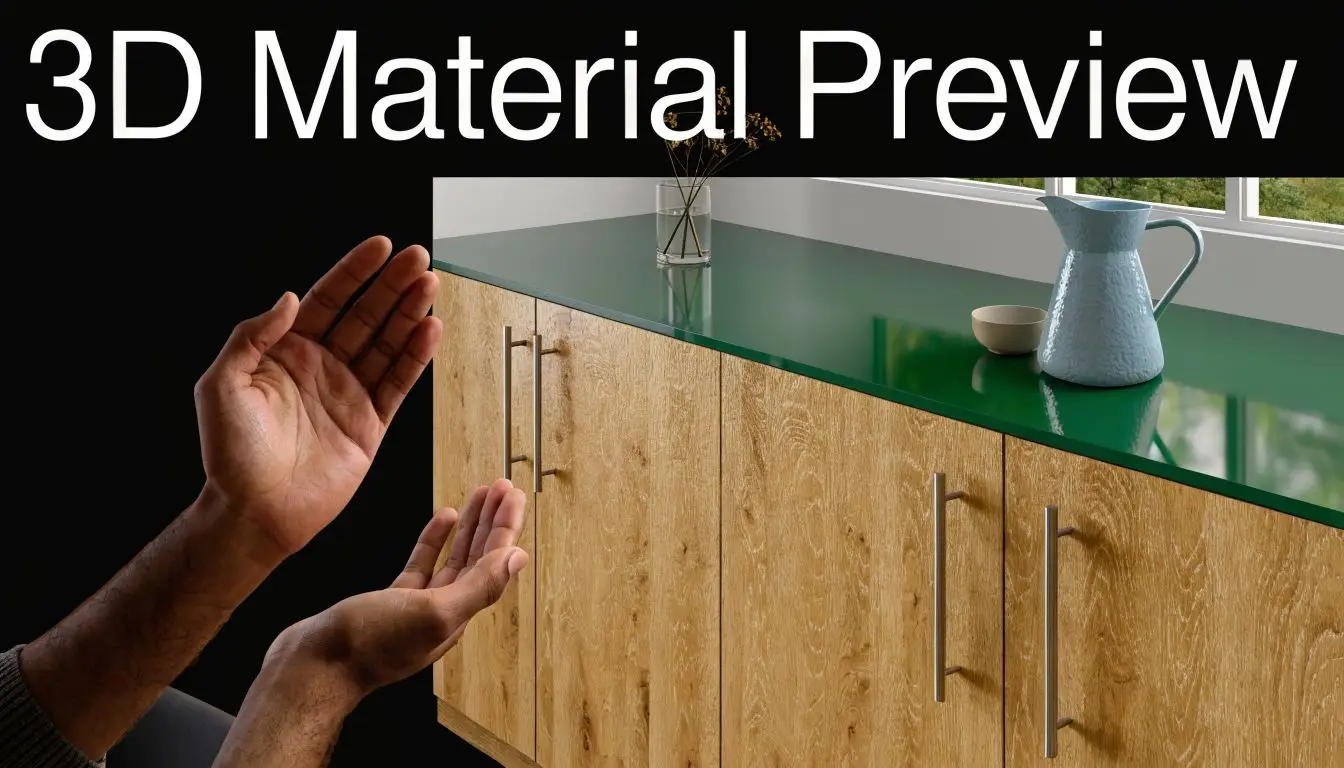
That’s why 3D visualisation is more than a presentation tool. It’s a risk-reduction tool. It lets you test whether a timber tone makes the room feel warm or heavy, whether a matte finish softens the space, or whether a darker cabinet face closes the room in too much.
What 3D design solves
A useful rendering helps with decisions that are difficult to make from drawings alone:
- Material balance: Whether the joinery, benchtop, splashback, and flooring sit well together
- Scale: Whether a feature finish should cover one run of cabinets or the whole kitchen
- Light response: How darker or reflective surfaces may read in your actual room
- Consistency across rooms: Whether kitchen and bathroom joinery feel connected without looking copied
This matters just as much for designer bathrooms as it does for kitchens. A vanity finish that feels elegant in isolation can clash badly with tile tone, lighting, or wall colour once the room is complete.
A strong interior design and 3D visualisation process gives homeowners a chance to make material decisions before ordering, not after installation starts. That’s one of the simplest ways to avoid expensive regret.
Good design drawings don’t just show where cabinets go. They show whether the material choice still makes sense at full scale.
Finalising Your Choice Budget Longevity and Style
By this point, the right decision usually isn’t about finding the fanciest finish. It’s about matching the material to the life the kitchen will have.
Start with your absolute requirements.
A simple decision filter
How hard will the kitchen be used?
A busy family kitchen needs forgiving materials and strong cabinet boxes. A low-use apartment kitchen may allow more emphasis on appearance.How long do you plan to keep the kitchen?
If this is your long-term home, repairability and structural quality deserve more weight. If it’s a shorter-hold improvement, balance durability with budget.How much maintenance will you realistically do?
Don’t choose a material that requires care you know won’t happen.Does the material suit the location?
In Victoria, climate and moisture exposure are not side issues. They’re core performance issues.
Don’t skip fire safety
Material choice also affects compliance and risk. In Victoria, 28% of kitchen fires originate near cabinets, so the material near appliance zones matters, according to Victorian kitchen fire safety guidance. Standard melamine-faced MDF may not suit bushfire-prone requirements in some settings, while intumescent-coated acrylics offer stronger protection.
That won’t drive every kitchen brief, but it should be part of the discussion, especially in homes where bushfire compliance or multi-unit fire spread is a concern.
The last check before you commit
Use this final shortlist:
- Best structure first: prioritise cabinet box quality
- Finish second: pick the visible material that suits your style and maintenance tolerance
- Climate check: confirm it suits Highett and wider Victorian conditions
- Installation standard: good materials fail when poor installation lets moisture in or hardware loosen
- Whole-project budget: review the cost of a new kitchen in practical terms before locking premium upgrades
Registered builders unlimited in scope and experience matter here because installation quality determines whether the material performs as intended. The best board, timber, or finish won’t rescue poor detailing around sinks, appliances, corners, and service penetrations.
If you’re weighing kitchen cabinets materials for a Highett project and want clarity before you build, SitePro Bathrooms can help with practical planning, 3D design, kitchen upgrades, and bathroom renovations that suit Victorian conditions. For personalized advice on kitchens, modern bathrooms, designer bathrooms, and material selections that balance durability with style, get in touch through SitePro Bathrooms.