
Small Bathroom Reno Cost: Your 2026 Guide
A small bathroom renovation in Australia often costs A$8,000–A$15,000 for a cosmetic refresh, but a full remodel can reach A$15,000–A$35,000+, with the national average sitting around A$26,000. In Victoria, a compact bathroom can still land in the low-to-mid A$20,000s once trades, waterproofing, plumbing and compliance are included.
You may have started with a simple plan: replace the vanity, update the tiles, install a cleaner shower screen and make the room feel less dated. Then the first quote arrives, and the number looks closer to a full renovation than a quick update. That reaction is common in Highett, particularly in older homes where access is restricted, existing work needs correction, or the layout no longer suits modern bathrooms.
The floor area only tells part of the story. The overall small bathroom reno cost depends on how much work happens behind the finishes, whether the plumbing stays where it is, and whether the renovation requires new waterproofing, electrical work, approvals or structural changes.
Setting a Realistic Budget for Your Small Bathroom Reno
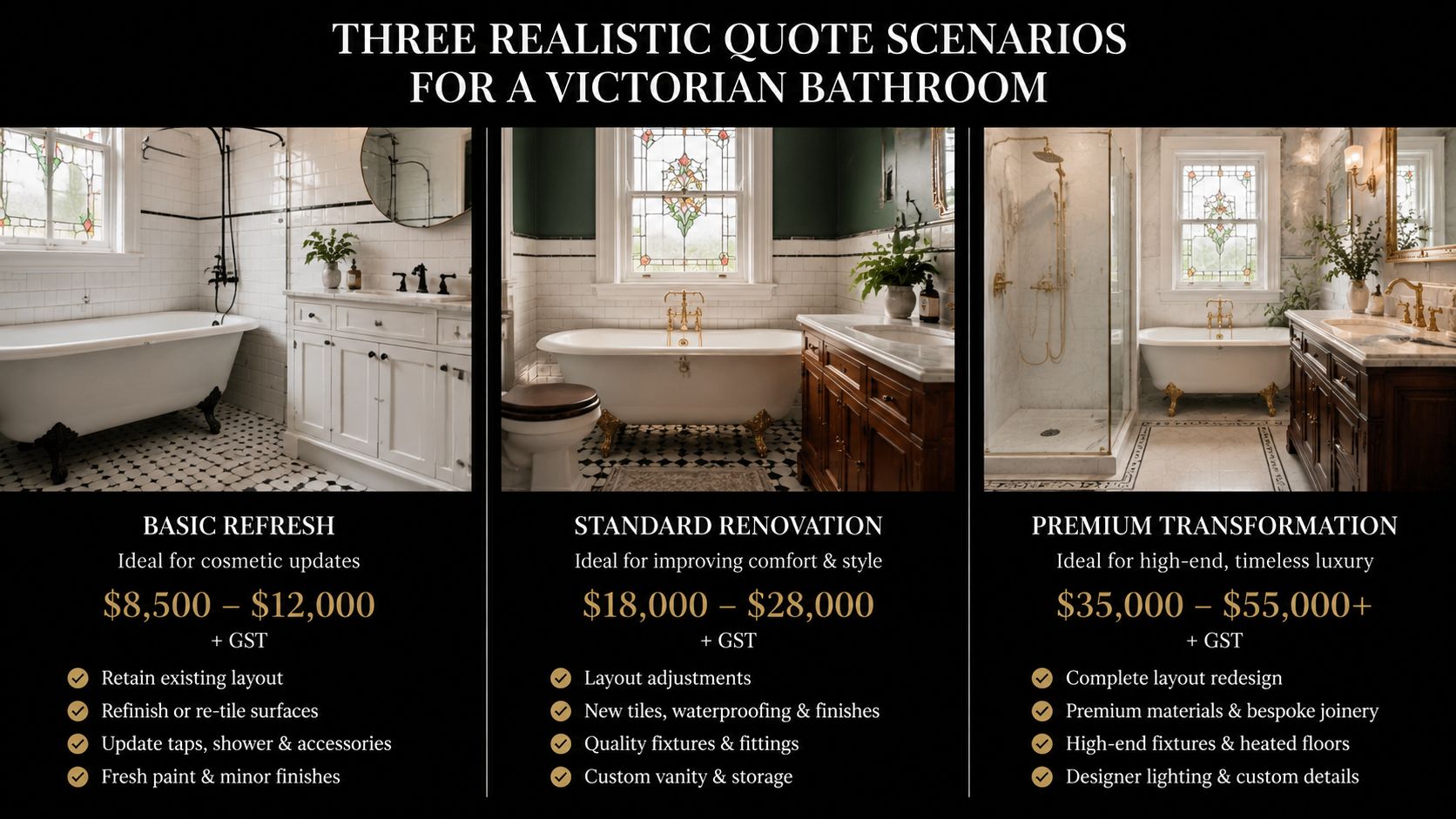
A cosmetic refresh and a full bathroom renovation aren't the same job, even when they occupy the same compact room. A refresh might retain the existing waterproofing, plumbing positions and major fittings while changing visible finishes. A remodel usually involves demolition, new waterproofing, replacement fixtures, tiling and more extensive trade coordination.
Australian renovation guidance commonly places small bathroom refreshes around A$8,000–A$15,000, while full mid-range renovations often sit at A$15,000–A$35,000 or higher. The national benchmark frequently cited for bathroom renovation spending is about A$26,000, reported in 2023 and repeated in later Australian renovation coverage. You can compare those figures with the detailed Australian cost discussion from Home to Love's bathroom renovation guide.
Start with the scope, not the room size
Before judging a quote, write down exactly what you're changing. “New bathroom” can mean anything from a vanity and tap replacement to a complete strip-out and reconfiguration. Those two projects have very different labour requirements.
Use these questions to define the scope:
- Are the walls and floor being opened? If the answer is yes, demolition, disposal and surface preparation enter the budget.
- Is the shower area being rebuilt? New wet-area work generally involves waterproofing and careful inspection.
- Are fixtures moving? A new position for the toilet, shower or vanity can require plumbing changes and additional coordination.
- Are you changing the electrical layout? New lighting, exhaust fans or power points may require compliant electrical work.
- Are you replacing only finishes? Retaining sound underlying work can keep the project closer to a refresh.
A compact room can therefore carry substantial fixed costs. Labour, waterproofing and plumbing don't reduce in direct proportion to floor area, which is why cost per square metre can give a misleading impression for a small bathroom.
Practical rule: Ask the builder to separate the quote into retained work, replacement work and layout changes. That makes the cost drivers visible before you choose finishes.
For a useful planning framework, review this guide to budgeting a bathroom remodel. The key decision is whether you want a surface improvement or a properly rebuilt wet area. Decide that early, because changing direction after demolition usually creates delays and additional trade work.
Why a Small Footprint Does Not Mean a Small Price Tag
A bathroom behaves more like a fixed-cost service job than a simple materials calculation. Servicing a small car may use fewer parts than servicing a large one, but the mechanic still needs to inspect it, set up the workspace, diagnose problems and complete the labour. A small bathroom works similarly. The room may need fewer tiles, but the plumber, waterproofer, electrician and tiler still need to attend, prepare, install and certify their work.

The fixed work behind the finishes
Demolition has a practical baseline. Someone must remove old fittings, protect adjoining areas, handle waste and prepare the room for the next trades. In a tight Highett bathroom, restricted access can make removal and material handling slower rather than easier.
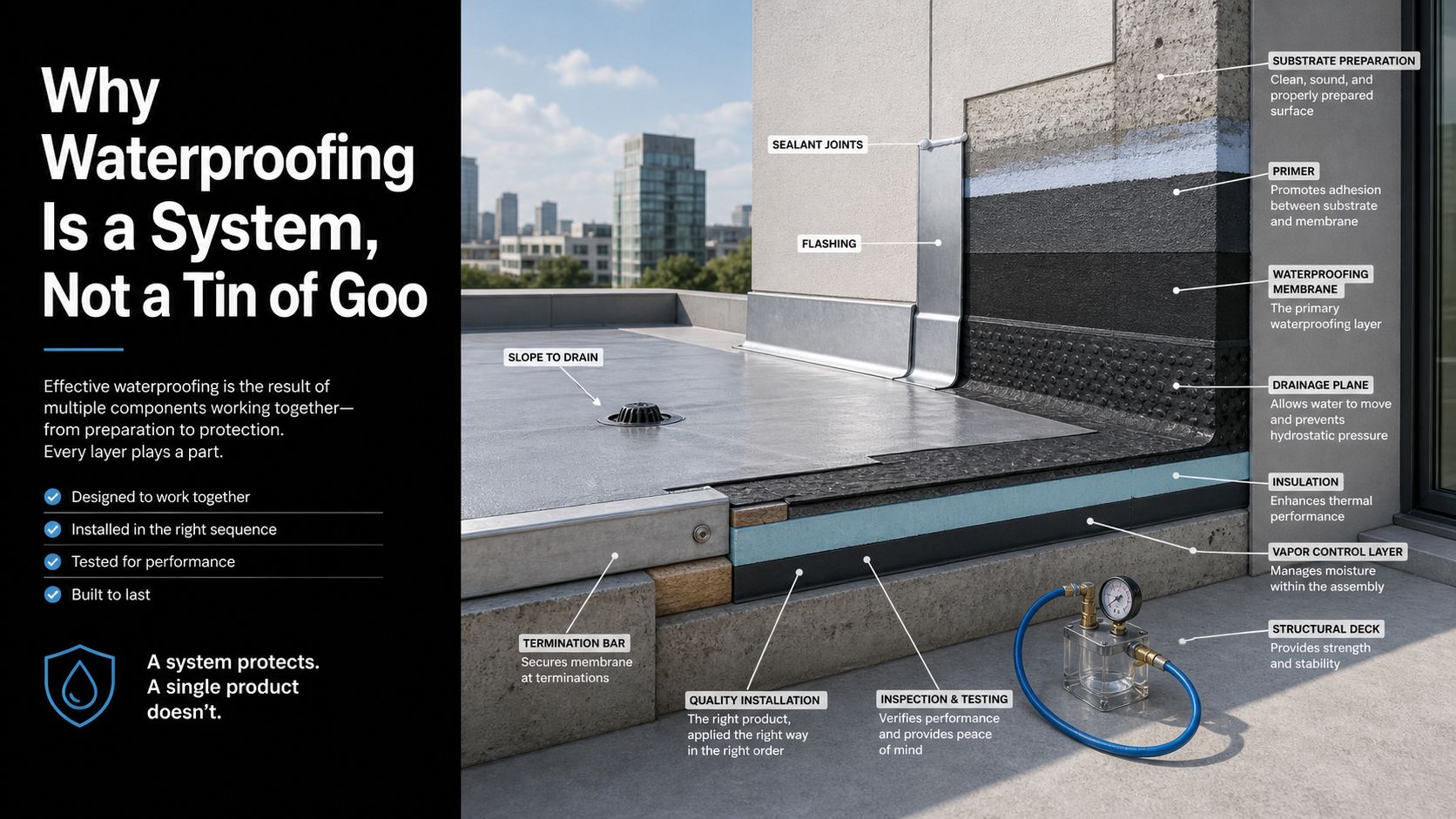
Waterproofing is another cost that doesn't shrink neatly with the room. Wet areas need a correctly prepared substrate, compatible membrane systems and attention to junctions, penetrations and falls. Australian waterproofing requirements are associated with AS 3740, so this isn't an area where cutting corners makes sense. A membrane failure can damage adjoining rooms and the building structure, creating a repair problem far more serious than an initial saving. The relevant guidance on bathroom remodel budgeting and compliance explains why scope matters more than room size.
Plumbing also has a fixed element. The plumber still has to isolate services, connect fixtures, test the installation and work within the existing structure. Moving a toilet can be particularly disruptive because the waste connection, floor penetrations and finished levels all need to align.
Layout changes multiply coordination
Keeping the toilet, shower and vanity in their existing positions is often the strongest cost-control decision. It can reduce the amount of pipework alteration, limit wall and floor disruption, and simplify the sequence between plumbing, waterproofing, tiling and fit-off.
New bathroom ideas can be excellent, but they need to be costed as construction decisions rather than treated as styling choices. Moving the shower may affect falls and drainage. Moving the vanity may alter water and waste connections. Moving electrical points can bring requirements under AS/NZS 3000, while structural changes may introduce approval requirements.
The question to ask isn't, “Can this fit?” Ask instead, “What has to be opened, moved, rebuilt and checked to make it work?” That question gives you a more honest answer than comparing tile quantities or vanity sizes.
An Itemised Breakdown of Renovation Costs
A useful renovation budget separates essential construction work from visible selections. Waterproofing, plumbing, electrical work and substrate preparation protect the room and make it function correctly. Vanity style, tap finish, mirror shape and tile pattern influence the appearance and can be adjusted more easily.
Australian pricing is often grouped into a budget refresh of A$5,000–A$15,000, a standard renovation of A$15,000–A$35,000, and premium or designer bathrooms above A$35,000. The tier reflects scope, fixture quality and labour complexity, as outlined in this Australian bathroom renovation cost guide.
Use the allocation as a conversation tool
The table below is a planning framework, not a fixed quotation. Actual allocations change with access, demolition conditions, selected materials and whether the existing plumbing and waterproofing can remain.
| Expense Item | Cost Percentage of Total Budget | Notes |
|---|---|---|
| Demolition and waste removal | Qualitative allowance | Covers strip-out, protection, disposal and preparation. |
| Plumbing | Qualitative allowance | Existing positions usually simplify the work; moving fixtures increases complexity. |
| Electrical work | Qualitative allowance | Includes lighting, exhaust ventilation and compliant connections where required. |
| Waterproofing | Qualitative allowance | A critical wet-area trade, especially when the shower area is rebuilt. |
| Tiling and substrate preparation | Qualitative allowance | Depends on wall coverage, tile format, preparation and installation detail. |
| Toilet, vanity, shower screen and taps | Qualitative allowance | Product selection can shift the finish from practical to premium. |
| Cabinetry and storage | Qualitative allowance | Standard cabinetry generally involves less custom work than made-to-measure joinery. |
| Mirrors, lighting finishes and accessories | Qualitative allowance | Cosmetic items can be staged or selected around the core construction budget. |
| Approvals and project administration | Qualitative allowance | Requirements depend on the work involved and the property. |
| Contingency reserve | Qualitative allowance | Keep room for concealed damage or defects revealed during demolition. |
The requested cost percentages aren't provided in the verified Australian data, so they shouldn't be invented. Treat this table as a checklist for quote transparency. If a builder gives one unexplained total, ask for the same categories to be identified in the scope.
Choose where to spend
Spend first on waterproofing, drainage, preparation and competent installation. These items are difficult to admire once the room is finished, but they determine whether the bathroom remains sound.
Save more safely on replaceable finishes. A standard vanity, restrained tile layout or off-the-shelf mirror can still produce modern bathrooms when the proportions and installation are right. If tiling is a major part of the design, use this practical guide to bathroom tiling costs to understand which decisions affect labour rather than just material pricing.
How Highett and Victoria Pricing Can Differ
Victoria sits above the national middle in many renovation cost guides. Melbourne and Victoria bathroom projects are commonly placed around A$16,000–A$30,000, with higher-end state estimates reaching A$59,000. A small renovation can still finish in the low-to-mid A$20,000s, as described in this Victoria bathroom renovation cost guide.
That range doesn't mean every Highett bathroom costs the same. It means a local quote needs to reflect the conditions of the property, the availability of suitable trades and the finish level you want.

Local conditions affect the final figure
Highett contains a mixture of established houses, renovated properties, apartments and compact ensuites. Older homes can present uneven floors, outdated pipework, restricted subfloor access or previous waterproofing that wasn't completed to current expectations. Apartments bring different access, delivery, protection and body corporate considerations.
Trade availability also matters. A coordinated bathroom renovation relies on several specialists arriving in the correct sequence. If the project requires a particular tiler, electrician or waterproofer, scheduling can influence the overall programme and the cost of managing separate visits.
Material selection adds another local variable. A straightforward product choice from an accessible supplier is easier to price and replace than a specialised finish with limited availability. Designer bathrooms often involve more detailed installation, stone handling, custom cabinetry or feature tiling. Those choices may suit the home, but they need to be decided before the quote is finalised.
Compare quotes on equal scope
A cheaper quote isn't automatically better value if it excludes demolition, waterproofing certification, waste removal, approvals or final fit-off. Ask every contractor to price the same drawings, fixture schedule and finish list.
For homeowners comparing compact projects, this guide to small bathroom remodel cost can help frame the discussion. A local builder should also inspect the site rather than relying only on room dimensions, because access and existing conditions can change the work required.
Smart Strategies to Manage Your Renovation Budget
The safest savings come from reducing complexity, not from removing the work that keeps water out of the building. Retaining the plumbing footprint, selecting durable standard products and organising decisions early can protect the budget without leaving you with a bathroom that needs another renovation soon.
Keep the expensive services where they are
The toilet, shower and vanity don't need to move just because the room needs a new look. A new vanity, updated tapware, improved lighting and a well-chosen tile scheme can produce a substantial visual change while preserving the existing service positions.
A layout change can still be justified if the current arrangement wastes space or creates a safety problem. It should be treated as a deliberate investment, with the builder explaining the additional plumbing, floor disruption, waterproofing and compliance work before you approve it.
Spend on the parts you can't see
Victoria's building regulator states that bathroom work involving structural changes, plumbing or waterproofing may require building approval. The National Construction Code also requires waterproofing membranes in wet areas, so a qualified person needs to plan and complete this work properly. You can review the relevant renovation and waterproofing guidance before selecting a contractor.

Avoid using an unqualified tradesperson for regulated work because the initial price looks attractive. Defects behind tiles are expensive to locate and repair, and poor documentation can create difficulties when you sell or make an insurance claim.
Make the design decisions before work starts
Late changes create waste. Choose the vanity dimensions, shower screen style, tapware, tile direction, grout colour, mirror and lighting before the trades begin. This is particularly important for new bathroom ideas that depend on exact clearances or custom joinery.
A 3D design can help you test circulation, storage and sightlines before construction. SitePro Bathrooms provides concept development, 3D design and coordinated construction as part of its renovation service, which is one option for homeowners who want design and building decisions managed together.
Budget discipline: A standard product installed correctly is usually a better decision than a premium product that forces rushed changes elsewhere in the project.
Ask whether the builder can schedule the work around quieter periods, but don't choose dates that compromise the availability of the right trades. The most valuable saving is a clear scope that prevents rework.
Your Small Bathroom Renovation Questions Answered
How long does a small bathroom renovation take?
The programme depends on demolition findings, product availability, approvals, trade sequencing and the extent of the rebuild. A cosmetic update can be relatively contained, while a full renovation requires demolition, preparation, plumbing, waterproofing, tiling, curing and final fit-off.
Ask for a written programme with decision deadlines. It should identify when you need to approve fixtures, tiles and cabinetry, and it should show where inspections or waterproofing checks occur. Don't rely on a verbal promise that the work will be “quick”, especially if the project involves layout changes.
Is finance available for bathroom renovations?
Homeowners commonly consider savings, a personal loan or borrowing against the property, but the suitable option depends on the household's circumstances and the lender's terms. A renovation quote can help you understand the required funds, but it isn't financial advice.
Keep the construction scope separate from optional upgrades. If the essential work is fully funded, you can decide whether premium tapware, custom storage or feature finishes fit comfortably within the remaining budget. Avoid selecting finishes first and trying to make the construction work fit afterwards.
Why use registered builders unlimited?
A registered builder can coordinate the trades, manage the construction sequence and help identify approval requirements before work begins. The benefit isn't limited to convenience. It gives the homeowner a clearer point of responsibility when plumbing, waterproofing, electrical work, tiling and cabinetry need to operate as one project.
Ask about registration, insurance, written scope, variation procedures and who will supervise the work. Also confirm how waterproofing documentation and required inspections will be handled.
Can I do part of the renovation myself?
You may be able to handle non-regulated cosmetic tasks, depending on the property and the agreed scope. Plumbing, electrical work, structural changes and waterproofing require proper compliance, and attempting them without the required qualifications can create defects and approval problems.
What should I do before requesting quotes?
Prepare photos, room measurements, a list of problems and a shortlist of must-have outcomes. State whether you want a refresh, a full remodel or a layout change. Then ask for an itemised quote that identifies demolition, services, waterproofing, finishes, approvals, waste and exclusions.
If you're planning a small bathroom renovation in Highett or elsewhere in Victoria, contact SitePro Bathrooms to discuss the existing layout, your preferred finish level and the work required behind the walls. Request a site assessment and a written scope so your small bathroom reno cost reflects the actual project, not a misleading square-metre estimate.