

Natural Stone Bathroom Tiles: A 2026 Highett Guide
You can stand in a tired old bathroom in Highett and still feel the pull of something better. The vanity's chipped, the tiles look flat, and the room doesn't suit the house anymore, yet one sample of stone on the benchtop changes the whole mood. That's the appeal of natural stone bathroom tiles, they bring warmth, depth, and a sense of permanence that manufactured finishes often struggle to match.
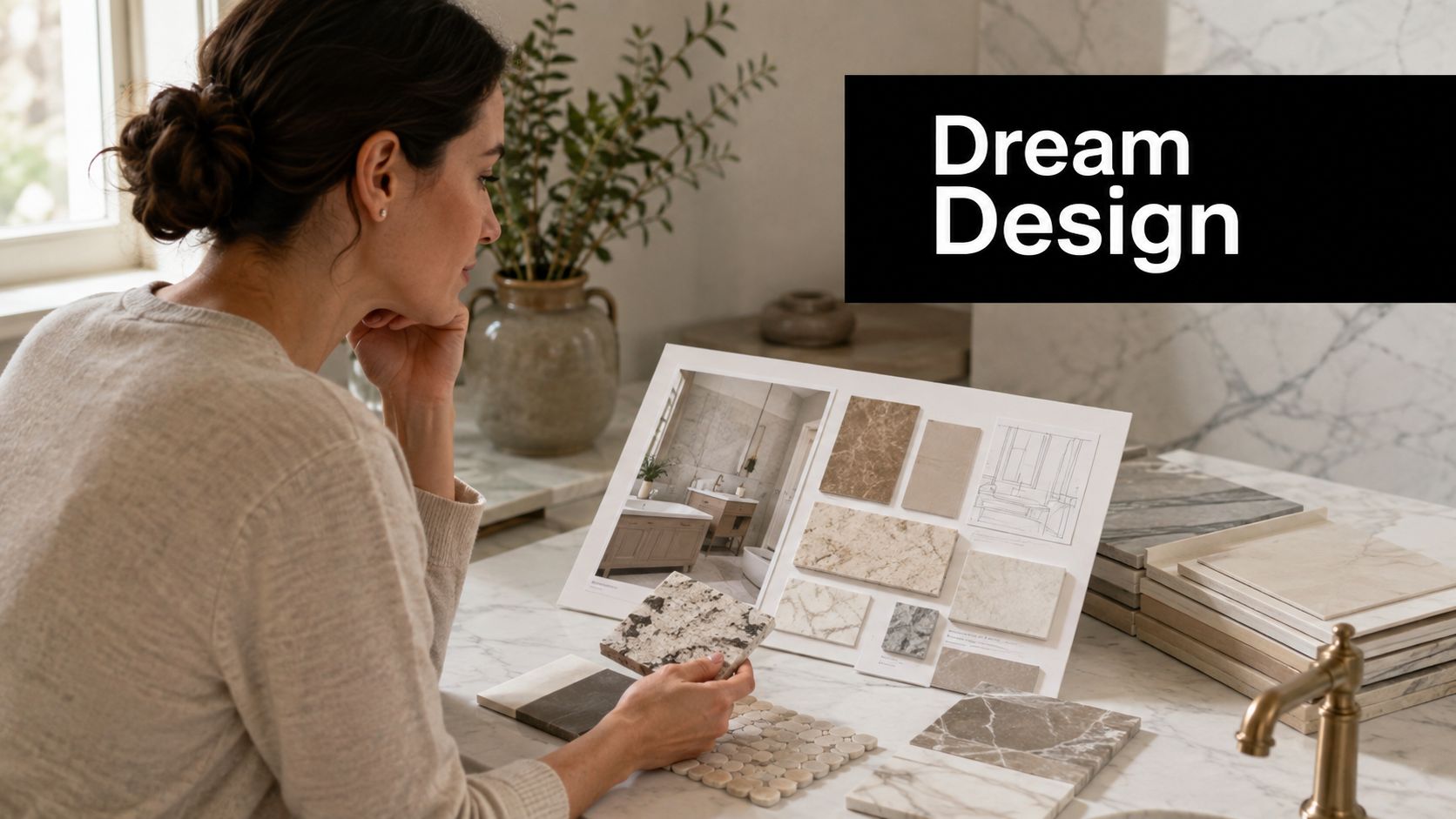
The catch is simple, stone rewards good decisions and punishes lazy ones. In bathroom renovations, the right tile choice has to suit water exposure, cleaning habits, slip risk, and the way the room will be used every day. In Victoria, that practical side matters just as much as the look, because a beautiful bathroom still has to be built, waterproofed, and maintained properly if it's going to add value rather than become a headache.
From Dream to Design A Homeowner's Introduction
A lot of first-time renovators start in exactly the same place. They've outgrown the old bathroom, they want something calmer and more refined, and they're drawn to stone because it doesn't feel generic. That instinct is sound, because natural stone has a premium presence that suits both compact ensuites and larger family bathrooms.
What separates a strong project from an expensive regret is how quickly the conversation moves from “What looks good?” to “What will work here?”. In Victoria, bathrooms often need to earn their keep in busy households, rental properties, or ageing homes that are being brought up to modern standards. That means the tile choice has to suit wet areas, the build has to suit compliance, and the finish has to suit the way the room will be cleaned and used.
Practical rule: pick the stone after you've thought about the room's traffic, moisture, and cleaning routine, not before.
For homeowners comparing new bathroom ideas, natural stone usually makes sense when the goal is a room that feels more permanent and more refined, not just freshly decorated. The material can lift modern bathrooms through large, quiet surfaces, or support designer bathrooms through veining, texture, and contrast. It also fits the Victorian market well, where stone is often treated as a value-adding finish rather than a quick cosmetic update, especially in homes where long-term appeal matters.
If you're weighing up whether stone belongs in your own project, the smartest next step is to look at layout, family habits, and maintenance tolerance together. A powder room can handle a bolder choice than a shower floor. A main bathroom needs a harder-edged decision. The design dream is still the starting point, but the finished room only works when the material suits the way real life happens.
Choosing Your Stone A Practical Comparison
The five stones most homeowners ask about each bring a different personality to a bathroom. Some are strong and forgiving, some are striking but maintenance-hungry, and some sit in the middle with a good balance of looks and upkeep. For wet areas, the details matter more than the label on the sample.
Here's the practical comparison I'd want a neighbour to have before ordering anything.
| Stone Type | Best For | Porosity and Maintenance | Hardness, Mohs | Typical Look |
|---|---|---|---|---|
| Marble | Feature walls, vanities, low-splash zones | Porous, needs careful sealing and gentle cleaning | 3 to 4 | Classic, veined, elegant |
| Travertine | Feature surfaces, warm designer bathrooms | Highly porous, needs more sealing and care | Lower than granite and quartzite in practical bathroom use | Soft, earthy, textured |
| Slate | Shower walls, floors, family bathrooms | Low absorption, still needs sealing and care at joints | Hard-wearing in bathroom use | Dark, layered, textured |
| Granite | Shower floors, vanities, high-use rooms | Low absorption, durable and easier to maintain | 6 to 7 | Speckled, dense, polished or honed |
| Limestone | Calm, natural-looking bathrooms, feature areas | Porous, more maintenance, pH-neutral cleaning | Softer than granite, more vulnerable to acids | Soft, muted, contemporary or classic |
Water absorption is where the distinction becomes clear. Quartzite absorbs only 0.05% to 0.2%, granite under 0.4%, and slate under 0.4%, which is why low-absorption stones suit high-moisture areas better. By contrast, marble typically absorbs 0.5% to 2.0%, and travertine can absorb over 10%, so both need much more disciplined sealing and cleaning, especially in showers and family bathrooms. Those figures come from the stone-water-resistance guidance used by suppliers and renovators working with wet areas, and they're the best clue to how the material will behave in a real bathroom setting. Water-resistance data for natural stone bathroom tiles
Marble is the easy one to fall for. It gives a bathroom that unmistakable refined look, but it belongs in projects where the owner accepts patina and regular care. Travertine has a softer, more relaxed feel, though it asks for even more attention because of its porosity.
Slate and granite are the safer bathroom workhorses. Slate brings texture and grip, which suits wet floors better than glossy finishes, while granite offers strong durability for family use. Limestone sits in the elegant middle. It can look beautiful, but it's still a softer, more reactive stone than granite, so it needs more discipline from the person living with it.
Choose the stone for the room you have, not the bathroom you wish you had.
If you want a deeper planning checklist for tile selection, this guide is useful alongside the decision process, how to choose bathroom tiles. The right answer usually isn't the most dramatic slab, it's the one that fits the bathroom's job.
Beyond Beauty Sealing Maintenance and Longevity
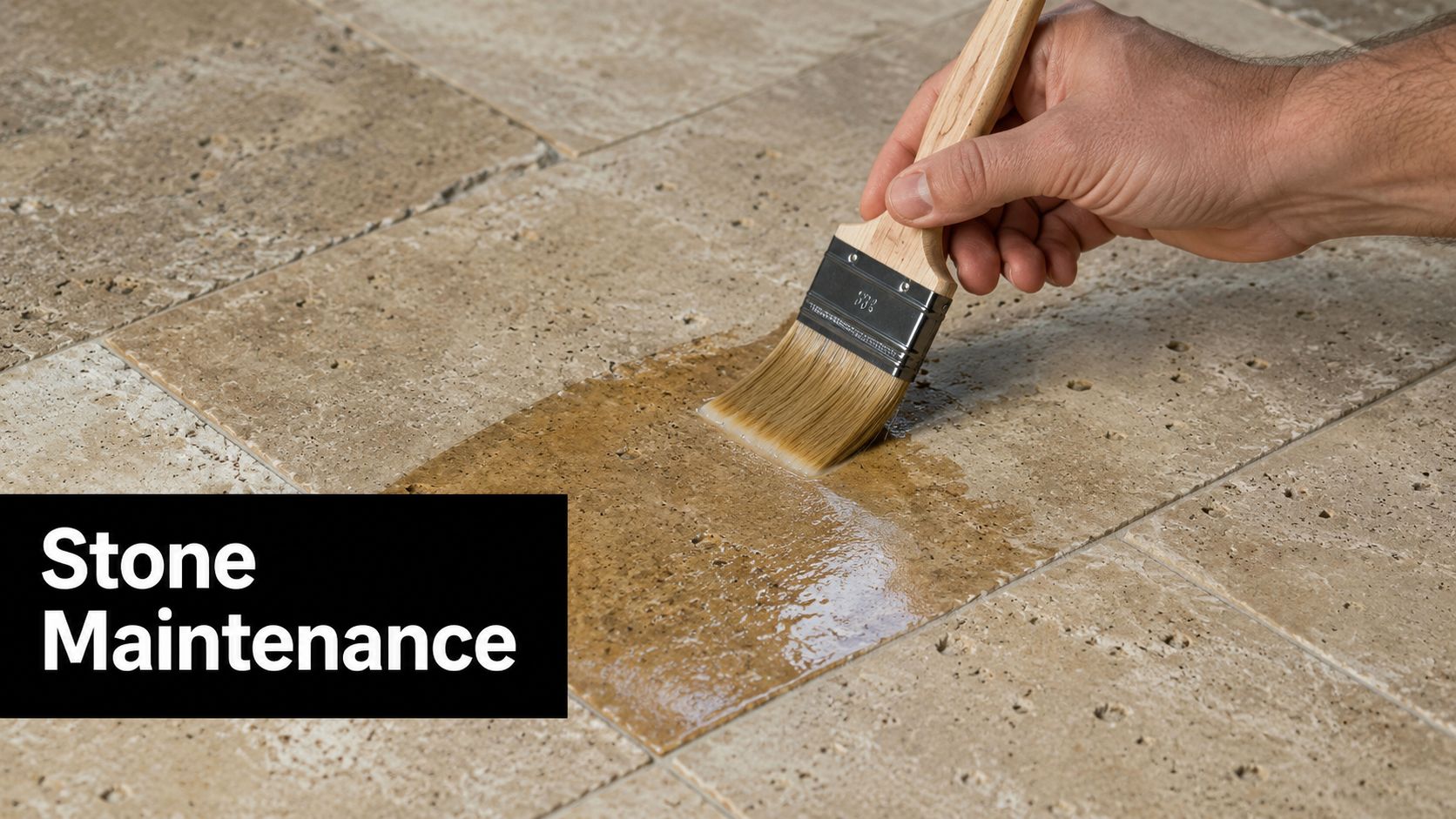
Natural stone is not a fit-and-forget material. It can last beautifully, but only if the surface is protected and the cleaning routine is sensible from day one. That's the part many people underestimate when they fall in love with the sample board.
All natural stone in wet areas should be sealed, and the timing depends on how hard the bathroom works. In high-traffic family bathrooms, resealing is often needed every 1 to 2 years, while lower-traffic spaces may last 3 to 5 years between applications, according to Australian-facing stone-care guidance. That difference matters because a main bathroom with kids, guests, and daily showers behaves very differently from a guest ensuite that's used lightly. Australian sealing guidance for stone bathroom tiles
The cleaner matters just as much as the sealer. Acidic products can etch reactive stones, especially marble and limestone, and that damage doesn't always look dramatic at first. It often shows up as dull patches, roughness, or surfaces that lose their crisp finish too soon.
A simple maintenance routine works better than complicated products:
- Use pH-neutral cleaners: They're kinder to the stone surface and safer for regular use.
- Wipe standing water early: Less puddling means less chance for staining and mineral build-up.
- Check grout and sealant together: If one fails, moisture usually finds a path through the other.
- Keep vinegar and bleach off the stone: They can damage the finish and shorten the life of the surface.
- Treat resealing like a scheduled task: Bathrooms drift quickly from “fine” to “tired” if the protection lapses.
Practical rule: if a cleaner is strong enough to strip soap scum fast, it's usually too harsh for marble or limestone.
For grout upkeep, this practical guide helps with the detail work that gets missed during the honeymoon period of a new bathroom, how to clean floor tile grout. Good maintenance isn't glamorous, but it's the difference between stone that ages well and stone that looks neglected after a few seasons.
Safety and Installation Essentials
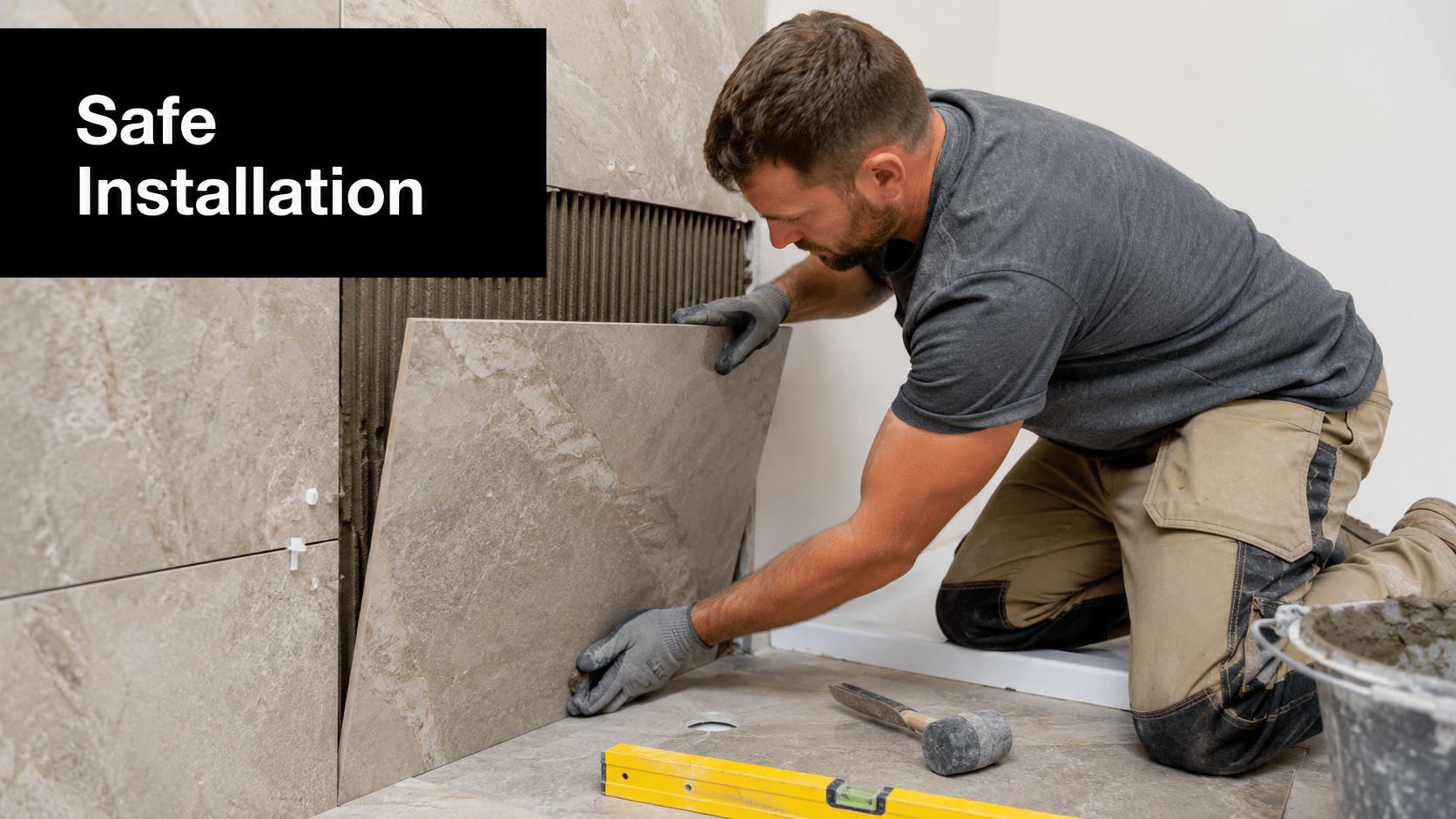
A stone bathroom can look beautiful and still fail in daily use if the surface is too slippery or the installation is careless. I've seen polished stone look right in a showroom, then feel awkward the first time water reaches the floor. The finish has to be judged by how it behaves in a wet room, not just by how it photographs.
Polished stone can suit walls or vanity fronts because it throws back light and gives a crisp result, but it is rarely the first choice for a family bathroom floor. Honed finishes are easier to live with underfoot, and textured surfaces can give more grip where showers and splash zones get heavy use. Australian renovation guidance also notes that polished finishes absorb less water than honed or cleft surfaces, which helps, but lower absorption does not remove slip risk. Texture and drainage still matter. Stone finish and bathroom performance guidance
The floor build matters just as much as the stone itself. Wet-room guidance says the floor should fall continuously to the drain at a minimum gradient of 1:80, and many installers work closer to 1:50 to 1:40 so water clears faster and does not sit in pockets. That fall affects tile selection, grout spacing, and where stone is safest to use. Wet-room slope and waterproofing guidance
Waterproofing sits at the centre of that work. If the membrane, junctions, or penetrations are wrong, the room can look finished while moisture slowly works behind the tiles, so waterproofing in the bathroom has to be planned before the first tile goes down.
Victoria adds another layer. For bathroom renovations in Victoria, any project involving structural changes, waterproofing, or significant plumbing alterations often requires a registered domestic builder. The unlimited registration category allows a builder to manage work of any value, which matters when the renovation is more than cosmetic. Victorian domestic building and builder registration guidance
That is not paperwork for the sake of paperwork. A proper bathroom build depends on substrate preparation, waterproofing, fall to waste, and trade coordination. A tile installer can lay stone neatly, but they cannot correct a base that was not built properly.
A compliant project should be planned with the whole room in mind:
- Substrate first: The surface below the tile has to be level, stable, and ready for wet-area use.
- Waterproofing second: Membranes and junctions need to be right before the tile goes down.
- Drainage third: The room needs to shed water, not trap it.
- Builder coordination last: Plumbing, waterproofing, and tiling must line up cleanly.
For Victorian homeowners who want one team to manage that flow, SitePro Bathrooms is one local option that covers design, construction, and finishing. In this kind of project, the tile is only one part of the system.
Designing with Natural Stone Modern and Timeless Ideas
Stone works best when it shapes the room, not just decorates it. In a small bathroom, that might mean using one calm, continuous surface to reduce visual clutter. In a larger room, it can mean letting veining, texture, or contrast become the feature.
For modern bathrooms, large-format stone tiles are a strong move because they create fewer grout lines and a cleaner visual field. That suits bathrooms where the aim is calm rather than busy. A pale stone with minimal movement can make the room feel more open, while darker slate or granite can anchor a more grounded look.
For designer bathrooms, natural stone brings character that factory-made surfaces can't fully copy. Porous stones such as travertine and limestone create a distinct mood, but they also come with a care commitment that needs to be accepted upfront. Their look is part of the maintenance equation, not separate from it. Natural stone bathrooms and designer upkeep guidance
A few combinations work well in real homes:
- Marble with brushed metal tapware: This keeps the room elegant without making it feel fussy.
- Slate with warm timber vanities: The contrast softens the stone and suits family bathrooms.
- Granite with simple white walls: This helps the stone feel intentional rather than heavy.
- Feature stone around the vanity: A strong slab can do more work here than across every surface.
- Textured stone in the shower: It gives visual depth and can improve confidence underfoot.
Lighting changes the result more than many owners expect. Cool, shadowless light can make stone look flat. Warmer layered lighting tends to bring out veining, grain, and surface texture more naturally. Accessories should stay quiet if the stone is already doing the talking, especially in a compact bathroom.
If you're collecting new bathroom ideas, think in terms of balance. A bold stone needs simpler cabinetry. A busy room needs calmer tile movement. A premium bathroom doesn't have to be loud, it just has to feel coherent from the entry to the shower niche.
Budgeting Your Project and Sourcing Your Tiles
The tile price is only the headline. A stone bathroom budget has several moving parts, and the hidden costs are usually the ones that surprise first-time renovators. Substrate preparation, waterproofing, labour, sealing products, waste removal, and any special detailing all add up before the room is finished.
That's why stone projects need a realistic allowance rather than a guess. Dense, low-porosity stones often cost more to source and more to cut neatly, while softer or more porous stones may need extra care during installation and maintenance. The true budget also depends on the bathroom layout, because a shower-heavy room asks more of the build than a simple vanity wall.
Budget pressure usually shows up in three places:
- Preparation work: If the existing floor or wall isn't sound, the fix comes before any stone is installed.
- Waterproofing and setting out: Wet areas need careful treatment, and bad planning here is expensive to undo.
- Installation labour: Natural stone usually asks for a more experienced hand than basic ceramic tile.
If underfloor heating is part of the plan, that needs to be considered early because it affects the floor build-up and the installation sequence. The same goes for feature cuts, niches, and mitred edges, which all take more time than standard tile runs.
Sourcing should be local where possible, because you want to see the actual batch, not just a photo. Ask about the stone's origin, variation between pieces, and whether the finish you like is suitable for wet areas in an Australian bathroom. Consistency matters, but so does knowing how the stone was handled before it arrived on site. Melbourne and Bayside homeowners usually get better results when the supplier and installer are talking before the order is locked in.
For a local bathroom renovation, the best stone isn't always the most dramatic one in the yard. It's the one that fits the room, the budget, and the people who'll live with it.
Your Highett Bathroom Renovation Partner
Natural stone gives a bathroom real presence, but the right result comes from balancing beauty, maintenance, cost, and durability. Marble can look unforgettable, granite and slate can work harder in wet areas, and travertine or limestone can be worth it when the owner accepts the upkeep. The material choice is only the start, the build has to carry it.
For homeowners in Highett and across Melbourne's bayside suburbs, SitePro Bathrooms is set up to handle that full process, from concept and 3D planning through to construction and final handover. That matters in a stone project because the tile, waterproofing, plumbing, and finish all need to line up properly.
If you're planning a bathroom renovation and want a room that looks considered rather than overdone, get in touch with SitePro Bathrooms for a consultation and measure. Bring your ideas, your budget, and the bathroom problems you want solved. Then turn the samples into a room that works every day, not just on the day it's finished.