
• siteprobathrooms

Fluted Glass Shower Screen Guide: Privacy, Rules and Costs

Would you stand behind a fluted glass shower screen confident that nobody in the hallway could identify you? Most buyers assume yes. The ribbed surface sells itself on atmosphere: soft focus, vertical lines, light bending across a bathroom in a way that photographs beautifully. Privacy, cleaning effort and legal compliance all get folded into a single word, texture, and that's exactly where renovation budgets go sideways.

A fluted glass shower screen is a performance decision. The pattern changes what people can see, changes how residue behaves on the surface, and changes how the panel must be specified, because the size of the pane decides the thickness of the glass, and the thickness is a legal requirement rather than an upsell. Treat the look as the last decision, not the first.

What follows works through the three questions in order. What the glass does to a sightline. What Victorian rules demand of the panel. What it costs to buy, clean and live with.

Fluted Glass Compared With Clear and Frosted Options

Start with the physical difference. Fluted glass, also sold as reeded glass, is patterned safety glass with a run of parallel ribs pressed into one face while the sheet is still molten. The other face stays smooth. That's why a real panel bends light as you move past it and why a printed film imitation reads as a flat grey blur under bathroom downlights.

Glass type Privacy Light transmission Cleaning effort
Clear toughened glass Low High Low to moderate
Frosted or acid-etched glass High Moderate Moderate
Fluted (reeded) glass Moderate to high Good, diffused Higher, residue sits in grooves

Clear glass gives you the brightest bathroom and the least concealment. A clear panel between a shower and a bedroom door leaves nothing to the imagination once the room lights are on. Frosted or acid-etched glass sits at the other end: the surface scatters light in every direction, shape disappears almost entirely, and the flat face wipes down in one pass.

Fluted glass lands in the middle, and the middle is where the confusion lives. The Australian Glass and Glazing Association's technical fact sheets note that a profiled surface creates repeated grooves rather than one flat wipeable surface, and that moisture resistance, ventilation and cleaning are genuine design considerations for glazing in wet environments, per the AGWA technical resources library. That's the trade: brightness and texture in exchange for a cleaning routine that has to be followed.

Where each glass type suits a real bathroom

  • Fluted glass suits family bathrooms and ensuites that need daylight borrowed from a window or a hallway without offering a clear view into the shower. It also earns its place in modern bathrooms and designer bathrooms where the texture is doing visual work alongside tile and tapware.
  • Clear glass suits a guest ensuite or a bathroom with its own window, where daylight is scarce and there's no sightline to protect. Don't spend on texture you'll never see the benefit of.
  • Frosted glass suits a rental or a high-traffic shared bathroom where concealment matters most and nobody wants a maintenance routine attached to the screen.

One practical note before you decide. If privacy is the driver and you want a flat surface, our guide to frosted glass shower screens covers how the different obscuring methods behave in a wet area. Fluted is the right answer only when you want the light and the texture as well.

How Much Privacy Fluted Glass Really Gives

How much of a person does fluted glass hide? From two or three metres, a family bathroom usually shows a silhouette, a colour and movement. Press your face near the panel and the same glass gives away considerably more.

Fluting works like a blurred photograph. The ribs break up detail and smear edges, so a standing figure still reads as a shape rather than disappearing. Domain's look at bathroom trends makes the point that fluting obscures detail rather than creating complete visual privacy, and that a person can remain recognisable in a brightly lit shower when the adjoining room is darker. Pattern names do not settle that question. The variables do.
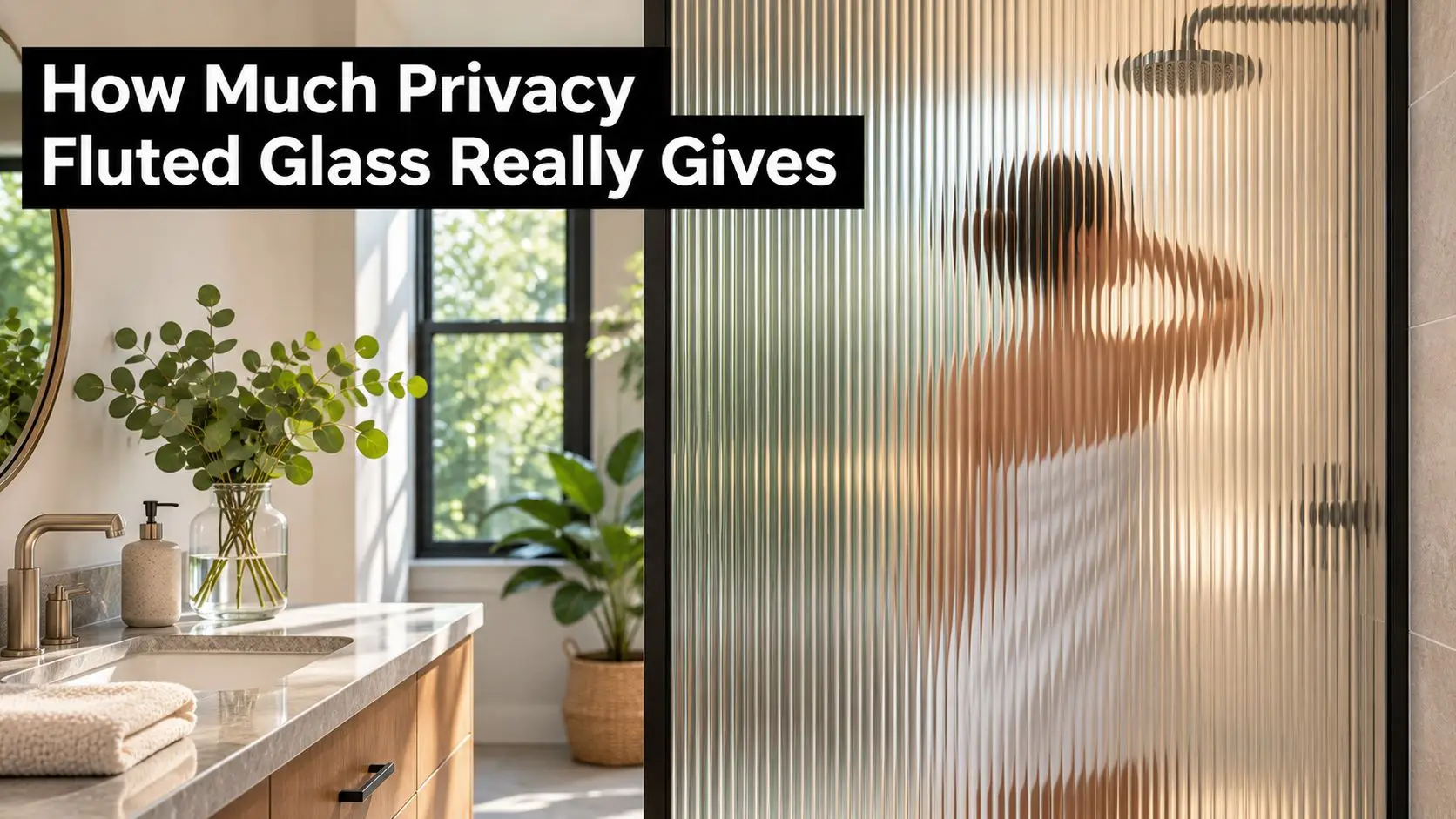
A bathroom vanity next to a modern shower enclosure featuring privacy-enhancing fluted glass with a silhouette behind.

The variables that change what you see

Flute orientation. Vertical ribs blur a standing silhouette differently from horizontal ones. Vertical is the standard for showers because it sheds water. If the worry is someone seeing you side-on from a doorway, test the alternative before you commit.

Viewing distance. At half a metre, detail survives. At three metres across a bathroom, it is gone. Where is the furthest point someone can stand and still see the screen?

Lighting contrast. A lit shower and a dark hallway turn the person inside into a bright shape. Reverse it, hallway light on and bathroom dark, and the panel conceals far more. Many people only check the screen in one lighting setup, then get a surprise at the other end of the day.

Face orientation. Ribs on the wet side collect soap film in every valley. Ribs on the dry side wipe clean. The same panel handles completely differently depending on which way it is installed, and film in the valleys softens the view further once the shower is in daily use.

Etched versus clear-backed. An acid-etched backing layer lifts the obscuring effect well above plain clear fluted glass.

A worked example, then a test

Say a family bathroom has its shower at the end of the room and a hallway window directly opposite the screen. With the hall light off during the day, the fluted panel reduces the shower to a soft shape and nobody thinks about it. At 7am in winter, with the hall light on and the bathroom dim, a figure in the shower is clearly readable from the doorway.

Test rule: a sample held at the doorway in morning daylight tells you more than any product photograph, and the same sample under the bathroom's night lighting tells you the rest.

Order a sample, hold it in place at the finished height, and check it from the doorway and from the hallway, in daylight and again at night with the lights on as you would normally use them. Then plan privacy zones: keep towels, robes and the vanity outside the direct sightline, and consider a fluted return panel or a short solid section at the end where the view is most open. If hiding people completely is the requirement, pair the layout with an obscured or solid screen instead of relying on texture.

Victorian Safety Rules for Fluted Glass Panels

Here's the part that surprises people. The pattern changes nothing about how the panel is regulated. A fluted panel in a shower is safety glazing first and a decorative finish second, and the same human-impact provisions apply to it as to a plain clear screen.

Requirement Rule Source
Lowest sightline below 2.0 m Human-impact glazing required NCC
Framed panel Grade A or Grade B safety glazing NCC
Exposed edge Toughened safety glass, minimum 6 mm NCC
6 mm safety-glass pane Maximum 3.0 m² NCC table

The trigger is height. The National Construction Code glazing provisions require glazing in bathrooms, ensuites, spa rooms and similar wet areas to meet human-impact requirements when its lowest sightline sits less than 2.0 metres above the finished floor, bath bottom or shower base. Framed panels must use Grade A or Grade B safety glazing. Panels or doors with an exposed edge must use toughened safety glass at a minimum nominal thickness of 6 mm.

That last clause catches most contemporary designs. Fluted screens are frequently partly framed or frameless, which leaves one or more edges exposed. The surface looks soft. The specification isn't.

Panel size drives thickness

The area limit is where layout becomes a glass decision. The NCC table caps a 6 mm safety-glass shower-screen pane at 3.0 m², and AGWA's guidance on glazing and AS 1288 sets out why these limits work as practical design controls rather than paperwork.

Work an example. A single fluted panel 1.2 m wide by 2.0 m high is 2.4 m², comfortably inside the cap for 6 mm glass. Take that same panel to 1.6 m wide at the same height and you're at 3.2 m², over the limit. At that point the choices are thicker glass, a different configuration, or subdividing the run into two panels with a channel between them.

Area also drives force. A larger sheet flexes more under load, and that load transfers to hinges, channels and wall fixings. A frameless panel fixed into a brick wall is a straightforward job. The same panel fixed into new stud framing needs the glazier to know what's behind the tile before anything is ordered.

What to put on the drawings

The ribbed pattern is a design choice. The compliance decisions are the classification, the thickness, the pane area, the edge exposure and the fixing method, and all of them belong on the quotation and the drawings.

What to ask for in writing: nominal thickness, safety-glass grade, maximum pane area, edge exposure, hardware rating and substrate fixing method.

One more variable applies to older homes. Standards Australia lists AS 1288:2021 as the current edition governing glass selection and installation, including human impact and special applications. An existing screen in a period Victorian bathroom may have been installed under an earlier rule set entirely, so replacing just the glass without reviewing the framing and fixing detail can leave you with a screen that satisfies nobody.

Cleaning Fluted Glass Without Hidden Buildup

How do the grooves stay clean when a flat blade never reaches the bottom of them?

A fluted panel behaves like a washboard set beside a dinner plate. On flat glass, one squeegee stroke meets the whole face. On fluted glass the blade rides the peaks, and hard-water minerals plus soap scum stay in the valleys. The ribs soften watermarks and fingerprints at eye level, so a screen can look acceptable while deposits sit in the pattern. Cosmetic concealment does not reduce buildup.

The AGWA guidance on shower screen care and maintenance sets out the routine that suits this kind of surface.

A routine that works on a ribbed panel

  1. Squeegee after every use. Glass, hardware and frame, not just the panel. The blade clears the flats. A dry microfibre cloth wiped across the ribs (across, never along) clears the valleys. Along the ribs, the cloth just pushes film from one groove into the next.
  2. Wash weekly with warm water and a pH-neutral soapy solution. A mild soap matters more than a stronger mix, and best soap for washing windows covers which mixes stay gentle on seals, coatings and metal finishes.
  3. Skip the abrasives and harsh acids. Scouring pads dull the ribs. Aggressive cleaners attack surface treatments, silicone and adjacent tapware.
  4. Check screws, channels and seals every few months. Loose fixings cause misalignment and water escape, and in the worst case they contribute to glass breakage.
Setup Spray exposure Suggested routine
Family bathroom, daily use, hard water Direct spray on one face Squeegee after every shower, deep clean weekly
Ensuite, daily use, softer water Spray reaches the edge only Squeegee most days, clean fortnightly
Guest bathroom, a few uses a week Low spray exposure Clean fortnightly, check hardware every three months

Where the wet face and the spray line matter

Orientation does a lot of the work before any cloth comes out. Ribs facing the dry side leave the wet face smooth, so it wipes in one pass. Keep the screen out of the direct spray line where the layout allows it, and make sure the bottom edge drains rather than sitting in a trapped film of water. A screen that dries quickly grows far less residue than one that stays wet between showers.

The practical test is whether the routine will happen. If a squeegee after every shower is unlikely, a smoother profile or a flat frosted panel is the easier surface to live with. Skip a day on fluted glass and the film sets in the grooves. The next wipe then has to lift mineral and soap that a flat sheet would have shed while it was still wet.

What Fluted Shower Screens Cost in Australia

What makes one fluted shower screen cost more than another? Start with the difference between a standard-size listing and a screen measured for a specific opening. Standard-size listings typically quote the product unit, while a custom screen's price depends on its glass, hardware and installation.

A listed price covers the unit; a quote covers the bathroom.

Product Configuration Typical price information
Standard-size fluted screen Fixed widths or standard configurations Listing price usually covers the unit
Custom-sized fluted screen Measured for the opening Written quote required

Why a listed price and a quote are different numbers

Five factors shape the total. Glass thickness depends partly on the panel's size and exposure. Panel size and subdivision affect the amount of glass, channel and installation work required. Hardware varies with the design, including whether the screen is framed or frameless. Curved corner profiles require shaped panels rather than a straight run.

The fifth factor is installation. Wall fixing, removal and disposal of an old screen, and work around the screen can add labour beyond the product listing. A standard-size curved corner unit and a custom single panel are different specifications, even if they look similar in a photo.

If the screen is part of a larger renovation, such as removing a bath, this guide to tub to walk-in shower conversion costs explains how the screen fits into the wider project budget.

Ask for an itemised quote showing glass, hardware, supply, installation and removal separately. The guide to frameless shower screen costs explains the main cost components of a frameless build. Check that the quoted configuration and measurements match the screen you are comparing, since listings can change with stock and sales.

Installers, Builder Registration and Pre-Order Checks

Who will install the screen, and what work does the project include? The answers affect builder registration, fixture choices and what proof to keep before the bathroom renovation begins.

Construction professionals conducting builder registration and pre-order checks for a new housing project development site.

When the $10,000 registration threshold applies

In Victoria, domestic building work costing more than $10,000, including labour and materials, requires a builder registered with the Building and Plumbing Commission. A major domestic building contract is also required above that value, according to the Consumer Affairs Victoria registration checklist. Confirm that registration is in place before work starts.

The registration class must suit the work. The Building and Plumbing Commission describes Domestic Builder (Unlimited) as covering all components of domestic building work on class 1, 2 and 4 buildings and associated class 10 buildings. A separate class is limited to bathroom, kitchen and laundry renovations.

For example, a project might combine a fluted screen with new floor tiles, a relocated vanity and wall reframing. The scope of work helps determine which registration class applies. Read more about why using a registered builder matters for your bathroom renovation.

Water efficiency belongs in the same plan

A shower screen can prompt a wider look at the bathroom's water use. Lower Murray Water says a 10-minute shower can use up to 200 litres. It recommends a dual-flush toilet with a four-star water-efficiency rating, using 4.5 litres for a full flush and 3 litres for a half flush, in its household water-saving guide. Choosing fixtures alongside the screen lets you consider water use as part of the overall renovation.

Three checks before you place the order

  1. Confirm builder registration. For domestic building work above the threshold, ask to see proof of registration and check that the class suits the project.
  2. Check water-efficiency details. Compare the proposed shower and toilet fixtures with the household's needs and the water-use guidance.
  3. Request waterproofing proof. Ask for confirmation that bathroom waterproofing is certified and applied to floors and walls in compliance with Australian Standards.

Keep the written scope and waterproofing confirmation with the project records. SitePro Bathrooms offers a free consultation, which you can request using the online form or by calling 1300 661 955.

  • siteprobathrooms

Frosted Glass Shower Screens: A Homeowner’s Guide

You're standing in a half-finished bathroom, the tile is in, the plumber's finished, and the shower screen is the last big decision hanging over the room. In a compact Victorian ensuite or family bathroom, that choice usually comes down to one thing, how much privacy you need without turning the room into a dim box. That's exactly where frosted glass shower screens earn their place in bathroom renovations, because they solve a real conflict instead of just adding another finish to the shopping list.

Why Frosted Glass Shower Screens Matter in Modern Bathrooms

A typical Highett bathroom puts you right at the point of tension. There's a window letting in useful morning light, the shower sits close to the vanity, and the household still needs enough privacy for the room to feel comfortable when two people are trying to get ready at once. In that setting, frosted glass shower screens work because they soften sightlines without blocking daylight completely, which is why they've become such a practical default in modern bathrooms and designer bathrooms across Melbourne.

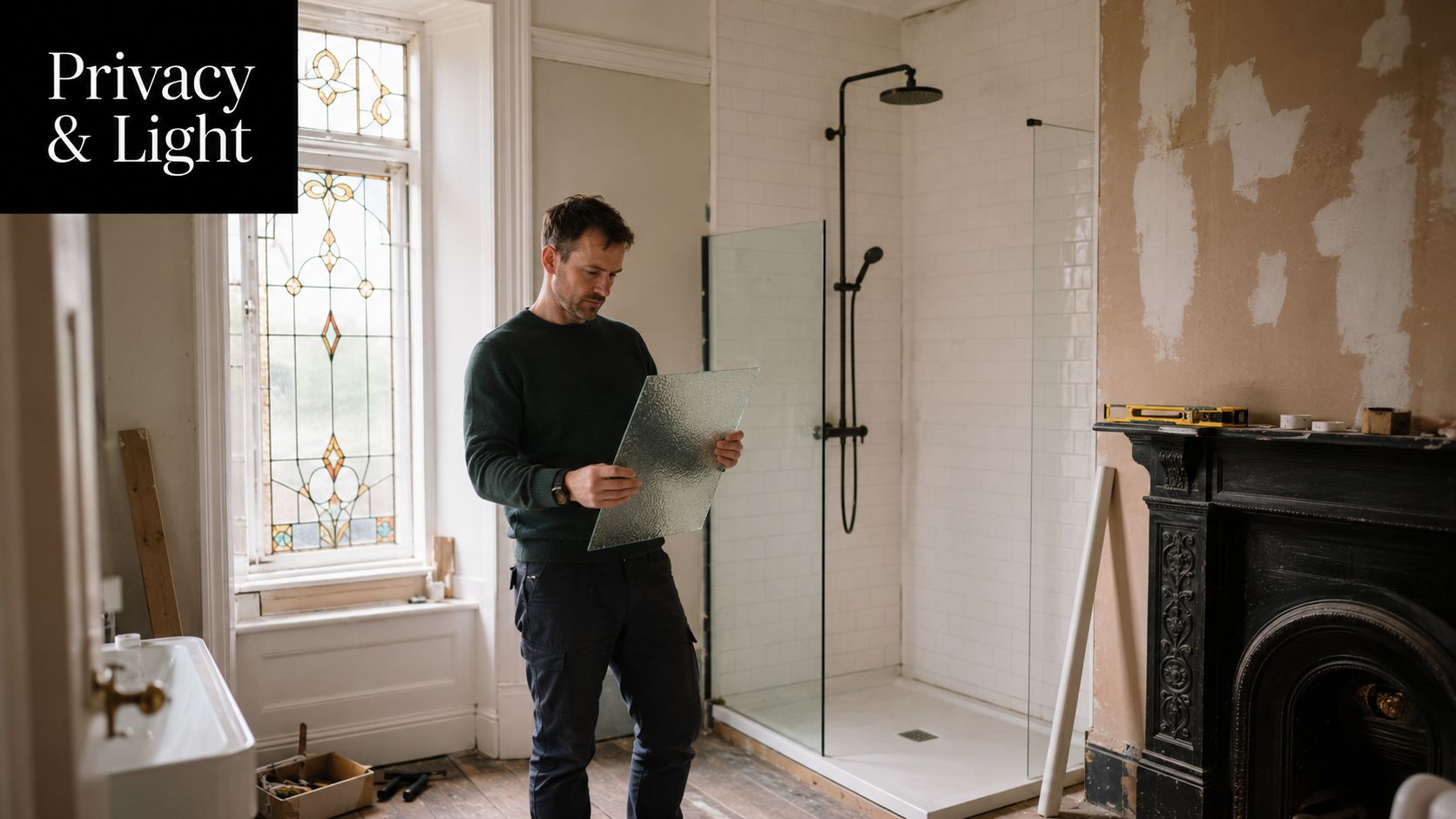
A man inspecting a piece of textured frosted glass in a bathroom undergoing renovation.

The bigger shift is that frosting isn't being treated as a gimmick or a compromise anymore. Australian trend reporting for 2026 points to more homeowners choosing textured, tinted, or frosted bathroom panels, along with bespoke sizing and custom etching, which tells you privacy-led glazing has moved into the design conversation rather than sitting on the edge of it history of glass shower screens. That shift makes sense in homes that are moving towards walk-in and curbless layouts, because those layouts open the room up visually while still needing a way to preserve personal privacy.

A frosted screen is usually doing two jobs at once. It's protecting the user's comfort, and it's helping the room keep its sense of light.

For a renovation brief, that means the screen shouldn't be an afterthought. It needs to be considered with the vanity position, window line, shower entry, and how the room reads from the door. In a small bathroom, the wrong screen can make the room feel busy and closed in. The right frosted panel can make the same room feel calm, ordered, and ready to use every morning.

What Frosted Glass Actually Is and How It Is Made

Frosted glass isn't a special structural category, it's a surface treatment. That matters because the privacy effect comes from how the surface scatters light, not from any change to the glass's role in the shower enclosure. In practice, the finish is usually created in one of three ways, acid etching, sandblasting, or film application, and each one leaves a slightly different result on the bathroom floor.

How the finish changes the look

Acid etching gives a smoother, more even frost and is often the finish people mean when they picture a clean, soft, semi-opaque panel. Sandblasting can create a stronger textured effect, which may suit a more architectural look but can also feel heavier in a small room. Film application is the most flexible in theory, because it can be used to trial a look without committing to a permanently treated panel, although it's not the finish I'd default to for a high-use family shower if longevity is the priority.

In showroom terms, it helps to separate frosted glass from the other common options. Clear glass gives the most openness. Tinted glass changes the visual tone more than the level of privacy. Low-iron glass is about colour clarity and reduced green cast, not frosting. Fluted or reeded glass still distorts sightlines, but it does that through profile and texture rather than a frosted surface.

The simplest rule is this. If you want to obscure direct view while still borrowing light from the bathroom or window, you're looking at a frosted finish. If you want the enclosure to disappear visually, clear or low-iron glass is closer to that outcome. If you want a more decorative texture with stronger visual movement, fluted glass sits in a different lane again.

Read the spec sheet for the finish, not just the marketing label. “Frosted” can describe several different treatments, and they don't all behave the same way in day-to-day use.

Popular Frosted Styles and How They Change a Bathroom

Different frosted styles suit different room sizes, and the wrong choice shows up fast in a narrow ensuite. A full-frost panel gives the strongest privacy and the most uniform look, which is why it often works best in shared bathrooms where the shower sits close to a doorway or vanity. It can be the right answer in a compact room, but it also has the highest chance of visually compressing the space if the room already lacks natural light.

Partial frost bands take a more measured approach. A lower band can shield the body while leaving the upper portion clearer, which keeps the room feeling more open. That can work well in bathrooms where the shower is visible from the door and privacy matters, but the homeowner still wants to see tile, ceiling height, or a window beyond the screen.

Matching style to room type

Gradient frost is more of a design-led move. It softens the lower or central area and eases out toward clarity, which can look excellent in designer bathrooms where the screen is part of the visual composition rather than just a barrier. Decorative etching suits a renovation where the client wants a custom feel, though it's usually better when the rest of the room is restrained. If the vanity, tile, and tapware are already expressive, too much pattern can start to feel busy.

Fluted or reeded patterns sit between practical privacy and decorative impact. They can be a smart choice for accessible curbless layouts, because they deliver visual interest without requiring a heavy framed look. In family bathrooms, they also tend to hide daily wear well.

The decision is not “which frosted style looks best on a sample board”. It's which one fits the room's job. Small ensuites need lightness. Family bathrooms need comfort and resilience. Designer bathrooms can carry a more expressive finish if the rest of the room stays disciplined. A good new bathroom ideas mood board should reflect that, instead of choosing the same style for every space.

Privacy and Light Trade-Off in Small Bathrooms

The common mistake is treating frosted glass as the automatic answer. In a compact Victorian bathroom, the core question is how much daylight and visual depth the room keeps after the frosting goes in. Privacy is easy to achieve. The harder part is keeping the room feeling open enough that people still want to use it.

Orientation matters. A north-facing bathroom with good daylight can usually absorb a frosted panel better than a south-facing room that already depends on borrowed light. Window position matters too. If the window sits high and away from the shower, frosting the screen may barely change the room's feel. If the shower screen sits directly between the window and the entry, the drop in apparent brightness can be much more noticeable.

Height and adjacency do the rest. A taller screen, or a screen placed close to bulky cabinetry, can make a small room feel more enclosed even when the glass is doing its job. That is why hybrid solutions often work well. A frosted lower section with a clearer upper section can keep privacy where the body needs it most while still letting light travel across the top of the room.

For compact layouts, planning beats guesswork. If you are working through a small ensuite layout, this small bathroom planning guide is useful background, but the live decision still comes down to how your room behaves at different times of day.

If a bathroom already feels tight, full frost can solve privacy and still leave you with a room that reads smaller than it really is.

The best test is simple. Stand in the doorway and ask whether the screen is helping the room look calmer, or whether it is creating a dark block in the middle of the layout. In some bathrooms, frosted glass is the right answer straight away. In others, a partial frost or a different glazing strategy keeps the open feel much better.

That trade-off also affects budget and upkeep in Victorian homes. More frosting can mean more time spent living with a panel that shows limescale and soap marks differently from clear glass, especially in hard-water areas where cleaning habits matter. It also shapes installed pricing, because the screen type, size, fixing detail, and finish all affect the labour and supply side of the job, and a good quote should reflect those realities rather than just the look on a mood board.

If you are choosing for a renovation, the right call is usually the one that suits the room first and the style second. A frosted screen should support the layout, not dominate it.

Glass Specs, Safety, and NCC Compliance Essentials

A shower screen quote should never start and end with the finish. The first things I look for are glass thickness, toughening, fixing details, and whether the proposed screen matches wet-area compliance requirements under the National Construction Code. The NCC is the Australian minimum standard for building work, and bathroom glazing has to satisfy safe-glazing and wet-area rules, which means decorative glass alone isn't enough for a compliant installation bathroom mountain shower screen installation.

In Australian fabrication, 6 mm toughened glass is a common baseline for frosted walk-in screens because it balances stiffness, impact resistance, and installability in framed or semi-frameless systems shower screens catalogue PDF. The frosting changes privacy and light diffusion, but it doesn't replace the engineering role of the glass. That job still belongs to the toughened substrate and the hardware holding it in place.

Frosted Shower Screen Specs at a Glance

Spec Typical Value Why It Matters
Glass type Toughened safety glass Required for safe shower use and compliance
Glass thickness 6 mm common baseline Helps balance strength and practical installation
Finish Acid etched, sandblasted, or film applied Determines privacy, texture, and cleaning behaviour
System type Framed or semi-frameless Affects rigidity, appearance, and price
Fixings Quality hinges, clips, and seals Supports safe installation and long-term performance

A compliant renovation should also show who is responsible for the installation details, not just the glass order. That's where a registered builder unlimited matters, because coordination between waterproofing, glass fixing, and final fit-off is what keeps the job clean and compliant. The waterproofing layer has to be right before the screen goes in, so the screen isn't trying to compensate for poor wet-area work. waterproofing standards in Australia sits alongside glazing compliance, not after it.

The practical takeaway is straightforward. Any quote worth considering should name the glass type, thickness, system style, and hardware spec. If it doesn't, you're comparing finish samples without knowing whether the installation underneath is up to standard.

What Frosted Screens Actually Cost in Victoria

Pricing for frosted screens sits above clear glass because the finish requires extra processing such as acid etching, sandblasting, or film application. Industry guidance puts frosted glass at about 20–30% more than clear glass of the same dimensions and thickness frosted glass shower doors. That premium is real, but it's usually easier to justify once you factor in that the screen affects both privacy and how finished the whole room feels.

There's also a broader pricing signal from glazing suppliers. One source notes that frosted glass adds about $30 per square foot compared with clear glass, reflecting the extra finishing process rather than a different core function frosted glass shower screen product page. For Victorian homeowners, the useful part of that information isn't the exact converted figure. It's the direction of travel. Frosted is a premium finish, not a baseline one.

What pushes the quote up

Custom sizing is the first driver. A standard rectangular panel is always easier to price than a screen that needs to work around a nib wall, a roof slope, or a tight mixer position. Hardware finish also changes the final number because hinges, clamps, and handles are visible design decisions, not invisible extras. Frameless systems usually sit at the sharper end of the pricing spectrum, while framed and semi-frameless options tend to be easier to keep under control without losing the frosted effect.

In a real renovation budget, that means frosted screens should be priced alongside tile selection, tapware, and waterproofing rather than treated as the last small item. They aren't small. They affect the room's privacy, brightness, and perceived quality in one move. An end-to-end quote is useful because it bundles measurement, fabrication, and installation into one figure, which makes it easier to see where the money is going.

If you're planning modern bathrooms with multiple premium finishes, frosted glass works best when the rest of the spec is disciplined. A simple room with one high-quality frosted screen often feels more resolved than a busy room where every surface is trying to make a statement.

Maintenance and Longevity in Hard-Water Victorian Homes

Frosted glass hides fingerprints and water spots better than clear glass, but it isn't maintenance-free. Texture can trap grime more readily than a smooth clear panel, so the cleaning routine matters more than some might expect. In Victorian homes where water quality and daily use vary from household to household, the key is consistency, not aggressive scrubbing.

A practical routine is simple enough to hand to everyone in the house. Keep the screen wiped down after use, give it a regular wash with a gentle bathroom cleaner, and inspect the edges and hardware for limescale or seal wear on a monthly rhythm. Existing care guidance commonly points to weekly cleaning, a deeper clean every four weeks, and monthly checks of edges and hardware for limescale and seal failure. That's sensible advice, because the finish itself lasts better when deposits aren't left to build up.

What to avoid on etched finishes

Abrasive pads are the quickest way to dull a frosted surface. So are harsh cleaners that leave the finish patchy or strip away any protective coating around it. If you're unsure, keep the product choice conservative and test it in one corner before committing to the full panel. The finish should be cleaned, not polished into clarity.

The longevity question often comes down to the whole system, not the glass alone. Seals age. Hardware loosens. Caulking needs attention. That's true for frosted, fluted, and clear screens alike, which is why I treat the upkeep conversation as part of the renovation decision rather than something to worry about later. Over a renovation lifecycle, frosted glass is often easier to live with visually, but it still rewards the same disciplined cleaning habits as any other shower screen.

A screen that hides spots well can tempt people into ignoring maintenance. That usually shortens the life of the seals before it does anything to the glass.

Choosing the Right Frosted Screen for Your Renovation

The best choice starts with the room, not the sample board. In a compact ensuite, full frost may be the cleanest answer if privacy matters more than visual openness. In a family bathroom, a partial frost or a more textured finish can keep the room feeling lighter while still softening direct views. In designer bathrooms, a custom etched or gradient treatment can make the screen feel like part of the architecture instead of just a barrier.

A useful rule is to match the screen to the way the room is used. If the shower sits near the door, think harder about how much of the screen needs to be opaque. If the room borrows daylight from one opening only, avoid over-frosting the whole enclosure. If the layout is accessible or curbless, make sure the finish, hardware, and panel geometry support easy movement as well as privacy.

The clearest decisions happen before installation, not after delivery. That's where concept drawings and 3D design visualisation help, because they let you compare how a frosted panel affects the room's sightlines before the build is locked in. For homeowners weighing options, frameless shower screen inspiration can be a useful reference point when deciding whether the room wants a lighter visual finish or a more enclosed one.

What to bring to a consultation

  • Measurements of the shower area: Exact dimensions stop avoidable fabrication surprises.
  • A note on privacy needs: Shared use, guest use, or master ensuite use changes the right finish.
  • Photos of the room in daylight: These show whether the bathroom already struggles for brightness.
  • Your preferred finish direction: Full frost, partial frost, gradient, or decorative etching.
  • A clear renovation brief: Tie the screen choice to the rest of the room, not just the shower.

If you're in Highett or anywhere across greater Victoria, bring those details to a consultation before you lock the glass in. The right screen lifts daily comfort, but it also helps the room feel more deliberate and better finished, which is what thoughtful bathroom renovations should do. Contact SitePro Bathrooms for a conversation about your bathroom, your layout, and the screen style that will work in your home.