
Terracotta Bathroom Tiles: A Practical Australian Guide
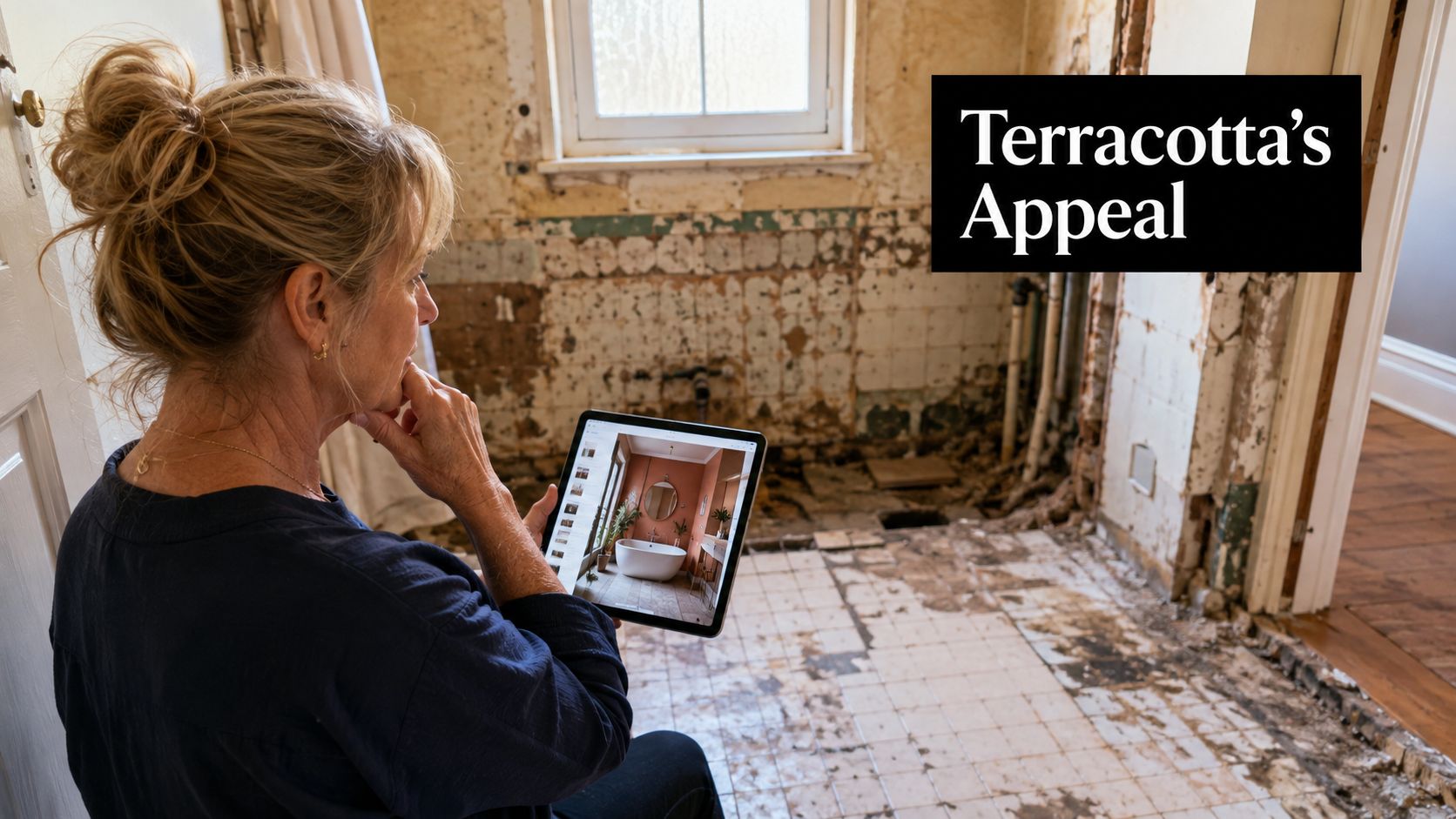
You're standing in a half-finished bathroom in Highett, staring at a pile of dust, old adhesive, and a mood board full of warm terracotta rooms that look calm, expensive, and easy to live with. Then your mate says hers stained, the builder says “depends where you use it,” and suddenly the decision stops being about colour and starts being about waterproofing, sealing, and maintenance.
That's the honest way to look at terracotta bathroom tiles. They can be beautiful in bathroom renovations, especially in heritage homes and earthy, contemporary spaces, but they're not a carefree surface. If you want the warm, grounded look without creating a cleaning headache, you need a wet-zone versus dry-zone rule, not a style mood board.
Why Terracotta Tiles Are on the Radar for Bathroom Renovations
A lot of Victorian homeowners reach this point the same way. The bathroom is stripped back, the framing is visible, and the next decision is whether to go safe and plain or lean into a warmer, more characterful finish that suits the house. Terracotta keeps landing on the shortlist because it feels at home in older properties and still works in modern bathrooms that want something softer than cold grey.
That appeal isn't new. Terracotta has a long architectural history, and by the 3rd century BCE it was already being used in bath buildings for fire- and moisture-proof ceilings before concrete was available, which tells you something important about its original purpose in wet spaces (academic reference). Its later spread was tied to the 18th and 19th century Industrial Revolution, when mechanisation enabled mass production, standardised sizing, and lower costs for fired clay products (terracotta history reference).
For a homeowner in Victoria, that history matters because terracotta isn't a novelty finish. It belongs to the long line of building materials that combine utility with character. That's why it keeps showing up in renovation conversations, especially where period authenticity matters.
Practical rule: if you like terracotta because it feels warm and grounded, treat that as a material decision first, not just a colour choice.
What Terracotta Actually Is and Why It Behaves the Way It Does
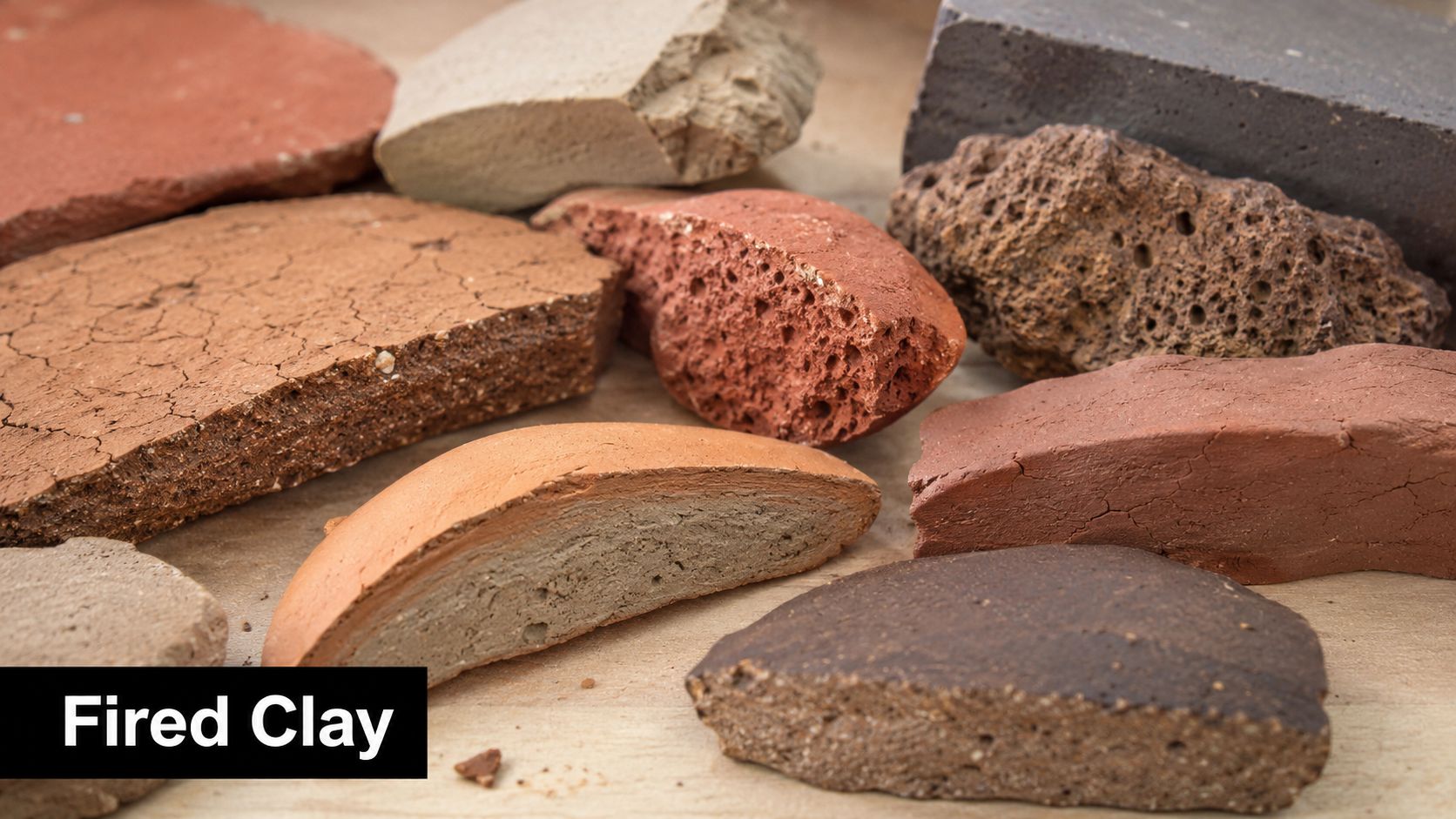
Terracotta is fired clay, not porcelain and not a generic “rustic tile” label. The clay body is shaped, dried, and fired, and that firing process is what gives it the warm red, orange, brown, and ochre range people recognise immediately. Because the body stays more porous than porcelain, its beauty and its problems come from the same place.
The material tells you what the bathroom can tolerate
The old appeal of terracotta is tied to craft, but the modern supply chain changed everything. The Industrial Revolution pushed terracotta from rare handmade work into a more standardised building product, so today you'll see real variation between reclaimed rustic tiles, machine-made pressed tiles, and extruded tiles. That variation affects thickness, consistency, and how much sealing discipline you'll need once the tiles are on the wall or floor.
There's also a reason terracotta gets respect in wet-area conversations. Its architectural use in bath buildings goes back centuries because it answered a real moisture problem, not just a decorative one. That doesn't make it automatically suitable for every Australian bathroom, but it does explain why people still trust the material's character in heritage-style projects.
A simple way to think about it is this, terracotta is a material with memory. It carries heat well, wears in rather than looking sterile, and gives you a surface that feels honest. It also asks more from the installer and the homeowner than porcelain does.
Use the finish, not the fantasy, as your guide. If the tile's porous body is part of the appeal, you need to plan for sealing and maintenance from day one.
How Tile Specs Tell You Whether Terracotta Will Survive a Bathroom
The data sheet is where the romance stops and the decision starts. For bathroom use, the most useful number is water absorption. A terracotta-bodied tile in the 3% to 6% range sits in ISO 13006/EN 14411 BIIa territory, and one product spec lists ≥1000 N breaking strength and MOR >22 N/mm² (product spec). That tells you the tile body can handle floor loading, but it doesn't remove the need for careful sealing and edge protection in a wet room.
The higher the absorption, the less forgiving the tile becomes in showers and splash zones. A terracotta guide also notes that terracotta commonly sits in AIIb/AIII groups with 6% to 15% water absorption, which is exactly why porous clay finishes need a stronger membrane, a flatter substrate, and a tighter maintenance plan (terracotta technical guide). That's a key difference between a feature tile and a shower-ready tile.
Reading tile specs for bathroom use
| Spec | Acceptable range | Why it matters in a bathroom |
|---|---|---|
| Water absorption | Lower is better, terracotta often sits at 3% to 6% or higher | Higher absorption means more sealing and more stain risk |
| Strength | ≥1000 N breaking strength is a solid signal | Helps the tile cope with floor loading |
| Modulus of rupture | >22 N/mm² in the cited product spec | Indicates body strength under bending stress |
| Slip resistance | Look for an explicit wet-area rating | Matters most on bathroom floors and shower-adjacent areas |
| Tile group | BIIa, or higher-absorption AIIb/AIII groupings for terracotta | Helps you judge how moisture-sensitive the tile is |
A terracotta-look tile with the right spec can also be engineered differently from genuine clay, which is why the product label matters as much as the colour. If you're choosing for a family bathroom, read the spec first and the mood board second. For a broader tile-selection process, see how to choose bathroom tiles.
Where Terracotta Works and Where It Causes Headaches
Use this rule and you'll avoid most of the regrets I see on site. Real terracotta belongs in dry or semi-dry zones. Put it on bathroom floors outside the shower screen, on vanity splashbacks, and on feature walls where the membrane, grout, and detailing are under control. Keep it out of shower floors if you want low drama and low maintenance.
Wet areas need proper waterproofing before a single tile goes down. The Victorian Building Authority says shower floors, shower hobs, and the bathroom floor adjacent to the shower must be waterproofed in line with AS 3740, and the membrane goes in before tiling starts. With porous finishes, that backing layer does the hard work. The tile is surface finish, not waterproofing. For the base requirements, start with waterproofing in bathroom projects.
The placement map I'd use in a real renovation
- Shower floor: use a terracotta-look porcelain tile instead of genuine clay.
- Inside the shower walls: porcelain again, unless you have specialist detailing and a maintenance plan.
- Outside the shower screen: genuine terracotta can work if the membrane is right.
- Vanity splashback: a good place for texture, warmth, and less water exposure.
- Full bathroom floor: possible, but only if you're prepared for sealing and resealing.
A lot of designer bathrooms try to force one material to do everything. That is the wrong call with terracotta. Use it where splash risk is lower, then switch to a more forgiving product in the shower zone.
If you're planning a bathroom renovation in Highett or greater Melbourne, bring in a builder who understands wet-area detailing, not just tile layout. Get the waterproofing right first, then choose the terracotta finish around that decision.
Sealing, Cleaning, and the Real Maintenance Routine
This is the part most glossy articles dodge. Terracotta is porous, so the first seal matters, and the maintenance after that matters just as much. The sensible approach is to seal before grouting, then keep a repeat schedule instead of waiting for the surface to look tired.
A routine worth living with
For a high-use family bathroom, I'd plan on annual resealing. For a guest bathroom, every two to three years is a more realistic rhythm. In a low-exposure area, every three to five years can be enough if the surface is protected and well looked after. Those intervals are practical guidance, not magic numbers, and they depend on traffic, splash exposure, and how often the room gets cleaned.
Daily care should stay simple. Use a pH-neutral cleaner, keep grit off the floor, and stay away from vinegar, bleach, and acidic cleaners. Those products can strip the seal and leave the clay more exposed to staining. If you want a deeper clean around grout lines, use a method that suits sealed surfaces rather than reaching for the harshest bottle in the cupboard. Grout cleaning guidance is worth following closely because dirty grout can make a well-chosen tile look neglected.
Signs the seal is failing
- Water stops beading. That's the easiest early warning.
- Grout lines darken unevenly. Moisture is getting in somewhere.
- The surface looks patchy after mopping. The sealer has likely thinned.
- Stains linger longer than they used to. The tile is no longer protected as well.
If you're the sort of homeowner who wants a bathroom that can be cleaned fast and ignored for months, terracotta isn't your best friend. If you're willing to keep up a simple routine, it can age beautifully.
Terracotta Compared to Terracotta-Look Porcelain
A bathroom renovation forces the choice fast. Genuine terracotta gives you real clay texture, natural variation, and a softer feel underfoot. Terracotta-look porcelain gives you the same warm colour family without the sealing burden, and that matters the moment water starts hitting the surface.
For wet zones, porcelain is the cleaner decision. A terracotta-look porcelain can be specified with a DCOF rating of at least 0.42, rectified edges, and bathroom, shower, and shower-floor suitability on the product data, like the product listing example shows. That is the kind of specification I'd trust in a shower or on a bathroom floor. Porous clay is a different story, even if the colour looks close.
Side by side
| Decision factor | Genuine terracotta | Terracotta-look porcelain |
|---|---|---|
| Water absorption | Higher, porous, needs sealing | Lower, designed for wet zones |
| Sealing burden | Ongoing | Minimal compared with clay |
| Slip and wet-zone confidence | Depends heavily on finish and detailing | Better suited to showers and bathroom floors |
| Material character | Strong, natural, variable | Controlled, consistent, easier to live with |
| Lifespan | Good if maintained | Usually the safer long-term choice in wet rooms |
My view is straightforward. Use genuine terracotta where you want material character, not where water is constant. Use terracotta-look porcelain in showers and on floors if you want the look without signing up for repeated maintenance. That trade-off suits most family homes, and it makes sense when cleaning effort and resale both matter.
Design Ideas That Make Terracotta Sing in Australian Bathrooms
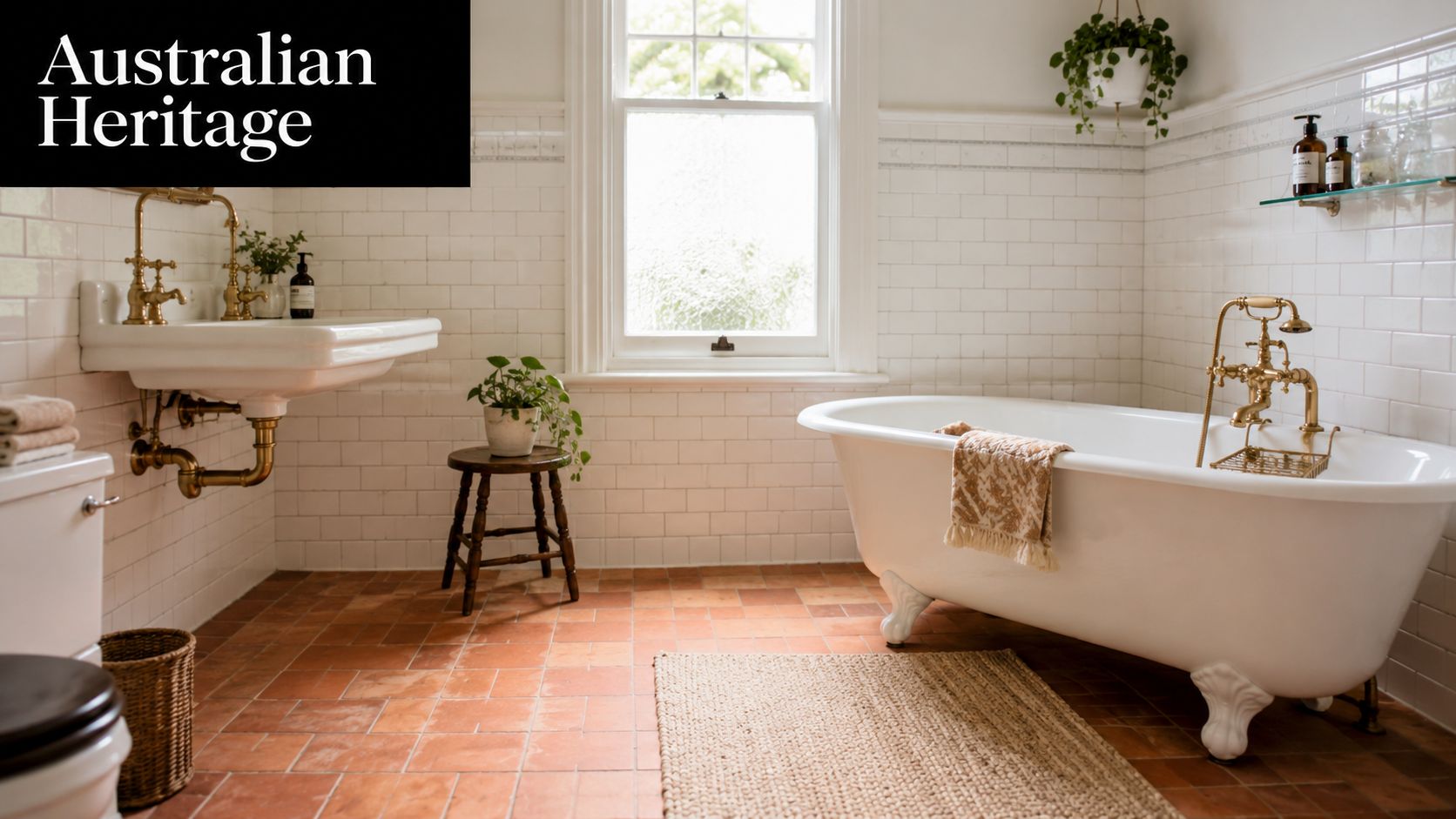
The best terracotta rooms don't use it everywhere. They use it with restraint, then let the warmth do the work. In a Highett weatherboard with a heritage feel, terracotta floor tiles can sit comfortably under a rolled-top bath, subway wall tiles, and brushed brass tapware. That combination suits older homes because the tile reads as part of the architecture, not an afterthought.
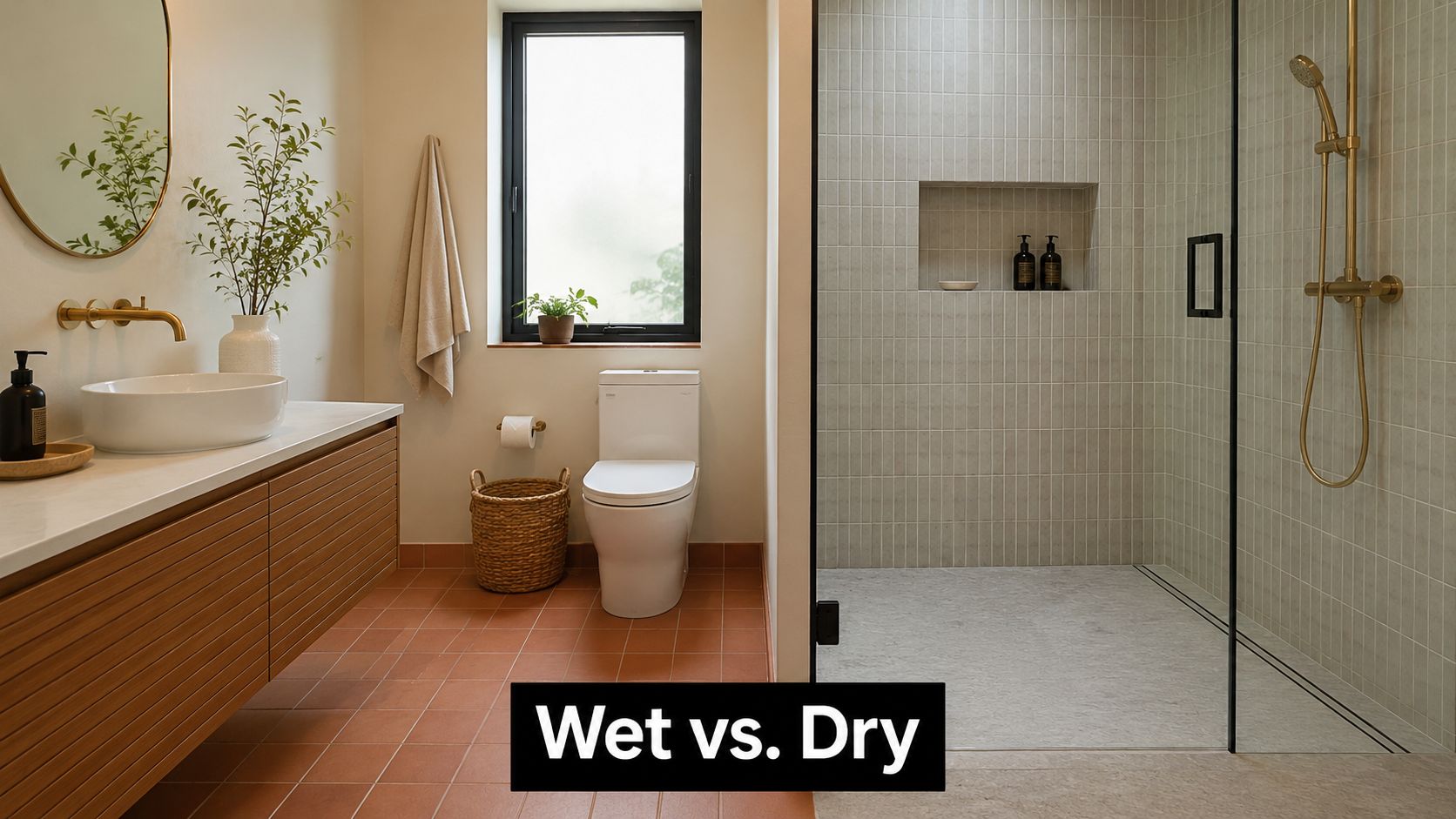
In a modern bathroom, I'd use large-format terracotta-look porcelain inside a walk-in shower, then pair it with concrete-look walls and matte black fittings. That keeps the room calm and avoids the visual clutter that can happen when too many warm tones compete. It also gives you a cleaner maintenance path, which matters more than trend language ever will.
A compact ensuite needs discipline. One terracotta herringbone feature wall can carry the warmth without closing the room in, especially if the rest of the surfaces stay light and simple. That's a far better move than trying to tile every face in the same material.
Here's the one styling rule I'd stick to:
Limit terracotta to one focal zone. The room looks richer, not busier, when the clay has space to breathe.
Underfloor heating also makes sense with genuine clay because of its thermal inertia. It stores and releases heat well, so the room feels comfortable without needing the tile to carry the whole design by itself.
Common Questions and How to Move Forward with SitePro Bathrooms
The first question is always the same. Can terracotta go in a shower? My answer is no, not as a casual choice. If you want that look in the wettest zone, use terracotta-look porcelain or have a specialist engineer the system around very careful detailing.
The second question is about cost in Victoria. Terracotta usually asks for more care in installation and maintenance than a straightforward porcelain bathroom, so the total cost difference isn't just purchase price. It's the time, sealing, and ongoing upkeep that change the equation. That's why I tell homeowners to price the whole lifecycle, not just the tile per square metre.
The third question is resale. In a heritage home, terracotta can support the character of the property if it's used well and kept in good condition. In a plain, generic bathroom, it can also look like a maintenance problem if the finish is tired. The material helps when it suits the house.
The fourth question is lifespan. A properly sealed terracotta bathroom can last well, but only if the waterproofing, substrate, grout care, and resealing are all taken seriously. Skip those parts and the room will show it fast.
If you're planning new bathroom ideas and want a layout that balances design with waterproofing, talk to SitePro Bathrooms about bathroom renovations in Highett or greater Melbourne. They handle concept development, 3D design, construction, and finishing, so you can test whether terracotta belongs in the dry zone, the shower zone, or not at all before work starts.
If you're weighing terracotta against porcelain for a Victorian bathroom, don't guess. Book a consultation, ask for a 3D concept, and get a customized renovation quote that shows exactly where real terracotta makes sense and where porcelain is the smarter call.