
Small Bathroom Remodel Cost in Highett: 2026 Price Guide
A small bathroom remodel cost in Victoria typically sits between AUD $25,000 and $45,000 in 2026. In Highett, that range is usually shaped less by room size alone and more by plumbing changes, waterproofing requirements, and the level of finish you choose.
If you're standing in a cramped ensuite or dated family bathroom wondering why quotes vary so much, you're not alone. Most homeowners start by searching online, then quickly realise the numbers are all over the place and often written for the US market, not Melbourne.
That's where confusion starts. A tiny room doesn't automatically mean a tiny budget. Bathrooms pack a lot of technical work into a small footprint, and in Victoria the cost is heavily tied to licensed trades, compliant waterproofing, and how much of the existing layout can stay put.
Thinking About a Small Bathroom Renovation
A small bathroom usually becomes a problem long before it becomes a project. The vanity is too bulky, the shower feels tight, storage is poor, and the whole room can look tired even when it's clean. In older Highett homes, the bigger frustration is often function, not style. The bathroom doesn't work for how the household lives now.
A proper renovation fixes more than surface finishes. It can improve movement through the room, make cleaning easier, add storage, and turn an awkward layout into something calm and practical. That applies whether you're planning simple bathroom renovations, collecting new bathroom ideas, or aiming for a more refined result with modern bathrooms or designer bathrooms.
What catches homeowners out
The biggest mistake is treating a bathroom like a paint-and-fittings update. In practice, even a small room can involve demolition, substrate repairs, waterproofing, tiling, plumbing, electrical work, ventilation, glazing, joinery, and final fit-off.
Practical rule: If water is involved, compliance matters more than cosmetics.
That's why online price guides often feel misleading. Many of them quote overseas numbers or leave out the work hidden behind the tiles. The room might be compact, but the trade coordination isn't.
What usually works best
For most homes, the smartest path is to decide early what matters most:
- Keep the layout: This usually protects the budget better than moving the toilet or shower.
- Spend where you touch the room daily: Vanity design, storage, lighting, and shower function change the experience more than novelty finishes.
- Choose durable finishes: In small bathrooms, every surface is close-up. Cheap selections tend to show wear faster.
- Build for the house: A rental, family home, and long-term forever home should not be specified the same way.
Homeowners who get the best outcome usually start with a clear brief, realistic allowances, and a builder who explains the trade-offs plainly.
Typical Small Bathroom Renovation Costs in Victoria
A Highett homeowner with a compact 1980s bathroom and a clear brief will usually spend very differently from someone renovating an older Melbourne home with out-of-level floors, dated plumbing, or hidden water damage. In Victoria, a realistic allowance for a proper small bathroom renovation often lands around AUD $25,000 to $45,000, depending on layout changes, finish level, site conditions, and the amount of compliance work required.
That range reflects Melbourne labour rates, licensed trade costs, waste removal, waterproofing, and the finishing items homeowners expect in a completed bathroom. It also reflects the fact that small rooms are not cheap rooms. They still need plumbers, electricians, waterproofers, tilers, and final fit-off, even when the floor area is modest.
Budget-conscious end of the range
At the lower end, the projects that stay under control usually keep the plumbing layout close to existing positions. That means the toilet, shower, and vanity remain where they are, or move only slightly to suit new fixtures.
Typical inclusions at this level are:
- Existing layout mostly retained: Less plumbing and drainage alteration keeps labour down.
- Off-the-shelf fixtures and fittings: Standard vanities, tapware, and screens are usually better value than custom pieces.
- Simple tile format and layout: Large format wall tiles or straight-set patterns are faster to install than intricate designs.
- Limited rectification work: Budgets hold up better when framing, flooring, and sheeting are still serviceable.
This price point suits owners who want a clean, durable result and better function without paying for custom detailing that adds labour but not much day-to-day benefit.
Mid-range and most common
The middle of the range is where many Highett and Bayside bathroom projects sit. The room is still small, but the expectations are higher. Homeowners often want better storage, stronger lighting, a more practical shower, and finishes that feel right for the age and value of the home.
Typical upgrades here include a wall-hung vanity, a recessed shower niche, a frameless or semi-frameless screen, better ventilation, and more considered tile selection. None of those items sounds dramatic on its own. Together, they can shift the price quickly because each one affects labour, coordination, or both.
If your bathroom project also includes a separate WC, this guide on renovating a toilet is worth reviewing early so the scope is clear before quoting starts.
Higher-end small bathrooms
At the top end, the room size stops being the main pricing factor. Detail takes over.
Custom joinery, feature lighting, full-height tiling, premium tapware, complex tile patterns, concealed fixtures, and layout rework all add time. In older Melbourne homes, higher-end jobs also tend to uncover more preparation work behind the walls and under the floor, which pushes the budget further.
A well-designed high-end bathroom can be money well spent. A poorly planned one can burn through budget on details that look impressive in photos but make very little difference in daily use. The best results usually come from being selective. Spend on storage, lighting, waterproofing quality, and fixtures you use every day. Be careful with upgrades that mainly add installation complexity.
A Detailed Line-Item Cost Breakdown
When homeowners ask what they're paying for, the best answer is to pull the project apart. A bathroom quote isn't one big number created out of thin air. It's a stack of trade packages, materials, compliance tasks, and finishing work that all need to line up in the right order.
For a mid-range small bathroom remodel, the table below shows a practical allowance structure. The percentages are estimated ranges, not fixed rates, because one item often grows when another is simplified.
Estimated Cost Breakdown for a Mid-Range Small Bathroom Remodel
| Expense Item | Estimated Cost (AUD) | Percentage of Budget | Notes |
|---|---|---|---|
| Demolition and waste removal | Qualitative only | Estimated portion of budget | Removal of old tiles, fixtures, sheeting, shower screen, and waste disposal |
| Carpentry and substrate preparation | Qualitative only | Estimated portion of budget | Floor levelling, wall straightening, framing corrections, backing for fixtures |
| Plumbing labour and fit-off | Qualitative only | Estimated portion of budget | Licensed plumbing work, fixture rough-in, drainage and final connections |
| Electrical labour and fit-off | Qualitative only | Estimated portion of budget | Lighting, switches, power points, fan connection and compliance work |
| Waterproofing | Qualitative only | Estimated portion of budget | Wet area preparation and compliant membrane application |
| Tiling and tile installation | Qualitative only | Estimated portion of budget | Floor and wall tiling, trims, adhesive, grout, set-out labour |
| Vanity and joinery | Qualitative only | Estimated portion of budget | Stock or custom vanity, shaving cabinet, storage components |
| Fixtures and fittings | Qualitative only | Estimated portion of budget | Toilet, basin, tapware, shower fittings, accessories, screen |
| Painting and silicone finishing | Qualitative only | Estimated portion of budget | Ceiling, door trims, final sealing and presentation work |
| Project management and coordination | Qualitative only | Estimated portion of budget | Scheduling, site supervision, trade sequencing, procurement handling |
| Permits or approvals if required | Qualitative only | Estimated portion of budget | Depends on project scope and building conditions |
| Contingency for hidden conditions | Qualitative only | Estimated portion of budget | Helps absorb issues found after strip-out |
Why demolition isn't just “rip out and go”
Demolition is fast compared with the rest of the job, but it sets the tone for everything that follows. Careless strip-out can damage substrate, crack adjoining finishes, or hide problems until later. A tidy demolition phase also matters in occupied homes where dust, access, and waste removal affect the rest of the property.
In older bathrooms, strip-out often reveals uneven walls, moisture damage, or previous work that needs correction before new finishes can go on. That's not overservicing. It's the difference between a bathroom that lasts and one that starts failing early.
The expensive parts are often the invisible ones
Plumbing and electrical work carry a lot of value because they involve licensed trades and strict sequencing. Homeowners naturally notice the tapware and tiles, but the rough-in behind the walls is what makes the room safe and functional.
Waterproofing sits in the same category. It's one of the least visible parts of the project once completed, but one of the most important. If someone tries to save money there, they usually create a bigger bill later.
- Plumbing costs climb quickly when fixtures move, access is tight, or the original layout doesn't suit the new design.
- Electrical costs rise when the room needs better lighting, improved ventilation, or additional outlets.
- Tiling labour changes a lot depending on tile size, pattern, substrate condition, and how many corners, niches, and trims are involved.
Cheap-looking bathrooms are often the result of rushed preparation, not just cheap products.
Where budget decisions actually make a difference
Some items are easier to control than others. Vanity selection, mirror style, tile format, and shower screen choices can usually move up or down without affecting the technical backbone of the renovation.
By contrast, these areas are poor places to cut back:
Waterproofing and wet area preparation
If this fails, the repair is invasive and expensive.Licensed trade work
Plumbing and electrical compliance protect both the home and the owner.Substrate correction
Tiles only look as good as the surface beneath them.Ventilation
A bathroom that can't clear moisture won't age well.
If you want a sharper early estimate before requesting a formal quote, one practical option is the SitePro Bathrooms calculator tool, which lets homeowners test room size, fixtures, materials, and upgrades to build a planning-level cost picture.
Key Factors That Change Your Renovation Price
Two bathrooms can look similar in photos and still have very different costs. The difference usually comes down to complexity, not just style. The cheapest-looking decision on paper can become the expensive one once trade work starts.
Layout changes versus in-place replacement
Moving fixtures is one of the fastest ways to lift the small bathroom remodel cost. Replacing old with new in roughly the same location is usually cleaner, faster, and easier to coordinate. Once a toilet, shower waste, or vanity plumbing shifts, the job becomes more involved.
That doesn't mean layout changes are a bad idea. Sometimes they're the whole reason the renovation is worth doing. But they should solve a genuine problem, such as an unusable shower entry or a vanity that blocks circulation.
Finish selection and installation labour
Material cost matters, but labour often matters more. A simple tile installed on a straightforward set-out can be efficient. A premium tile with difficult cuts, feature layouts, or strict pattern matching can add a lot of installation time.
The same applies to joinery and screens. A clean modular vanity may give you nearly all the function you need without the cost of full custom cabinetry. On the other hand, if the room has awkward dimensions, custom joinery can be money well spent because it solves dead space.
- Large-format tiles can reduce grout lines and create a cleaner look, but they demand flatter surfaces.
- Feature niches and trims sharpen the finish, though they require more precise planning.
- Custom vanities improve storage in tricky rooms, but fabrication and installation are slower.
Condition of the existing bathroom
Many older bathrooms in Melbourne look serviceable until demolition starts. Then the underlying issues emerge. Water damage, poor past renovations, out-of-plumb walls, or deteriorated sheeting all affect labour and materials.
This is why experienced builders are careful with early pricing. A quote can be honest and still need room for hidden conditions. No one can see through finished tile before strip-out.
A bathroom isn't priced only on what you want to build. It's also priced on what has to be corrected first.
Compliance and risk
The technical side of bathrooms isn't optional. Waterproofing, ventilation, plumbing, and electrical work all need to be treated as core scope. Trying to dodge them rarely saves money in the long run.
In Victoria, that matters even more on small projects because the room is compact and moisture concentrates fast. A weak fan, poor sealing detail, or rushed membrane job can affect the whole space.
Design ambition versus daily use
Some of the best modern bathrooms are surprisingly restrained. They don't rely on expensive gimmicks. They use proportion, storage, lighting, and durable finishes well.
When reviewing new bathroom ideas, ask a hard question. Does this detail improve how the room works every morning, or does it just look good in a photo? That one filter protects a lot of budgets.
A practical brief often includes:
- Better movement through the room
- Storage that reduces bench clutter
- Shower design that's easy to clean
- Finishes that suit the house, not just current trends
If you keep those priorities in front of the design, the final number is more likely to feel justified.
Sample Budgets Inspiring New Bathroom Ideas
Budgets make more sense when you can picture the finished room. The three examples below aren't case studies or fixed-price promises. They're realistic ways homeowners in Highett often frame a project.
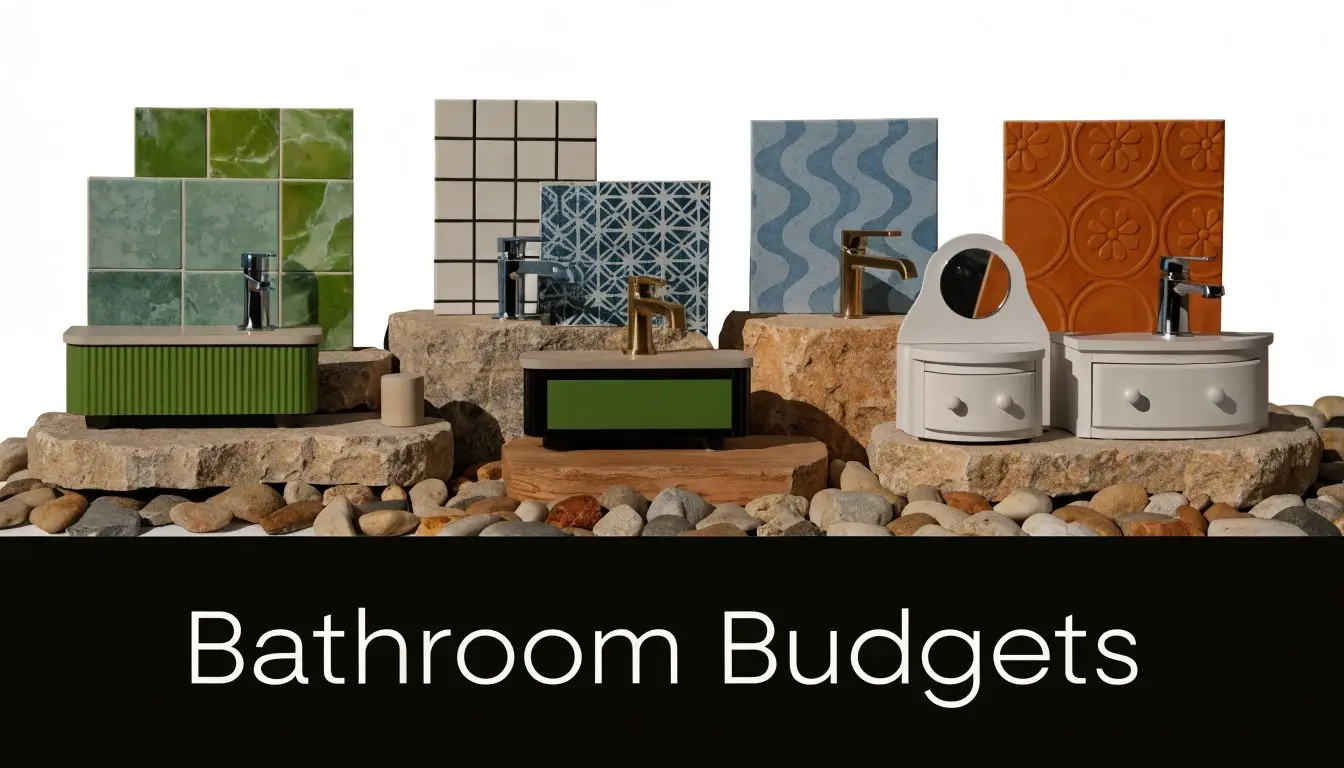
The efficient ensuite upgrade
This is the project for a tired ensuite that works poorly but doesn't need major relocation of fixtures. The layout stays familiar, but the room is rebuilt with better storage, cleaner lines, and finishes that are easier to maintain.
The spend focuses on a compact vanity, a more practical shower screen, updated tiles, and a calmer palette. This is often the best-value route for owners who want modern bathrooms without paying for unnecessary structural changes.
The modern family bathroom
This version suits a main bathroom that gets daily use and needs to work harder. The brief is usually less about luxury and more about better organisation, stronger lighting, and a layout that makes the room feel bigger than it is.
A wall-hung vanity, walk-in shower feel, recessed storage, and carefully chosen tile sizes can completely change the room. For homeowners collecting small bathroom ideas in Australia, this is often where practical design and visual polish meet.
The most convincing upgrades are usually the ones that make the room feel easier to use, not just newer.
The compact designer retreat
This is the small bathroom with a bigger design ambition. It may include custom joinery, more refined tile detailing, concealed storage, upgraded tapware, and a layout tweak that improves circulation or sightlines.
Designer bathrooms at this scale work best when every upgrade earns its place. In a small room, overdesign is easy. The strongest outcomes feel intentional, not crowded.
Common inclusions at this level might be:
- Custom vanity design to use every millimetre well
- Sharper tile detailing around niches, trims, and shower edges
- Improved lighting layers for task use and atmosphere
- Cleaner visual lines through recessed or concealed elements
The right brief here isn't “add everything.” It's “make the room feel resolved.”
The Return on Investment of a Quality Bathroom Renovation
A small bathroom renovation often starts with a daily frustration. The vanity has no usable storage, the exhaust fan leaves the room damp, and the shower layout makes a tight space feel tighter. Fix those problems well, and the gain is immediate. The room works better every day, and the home presents better when it is time to sell.
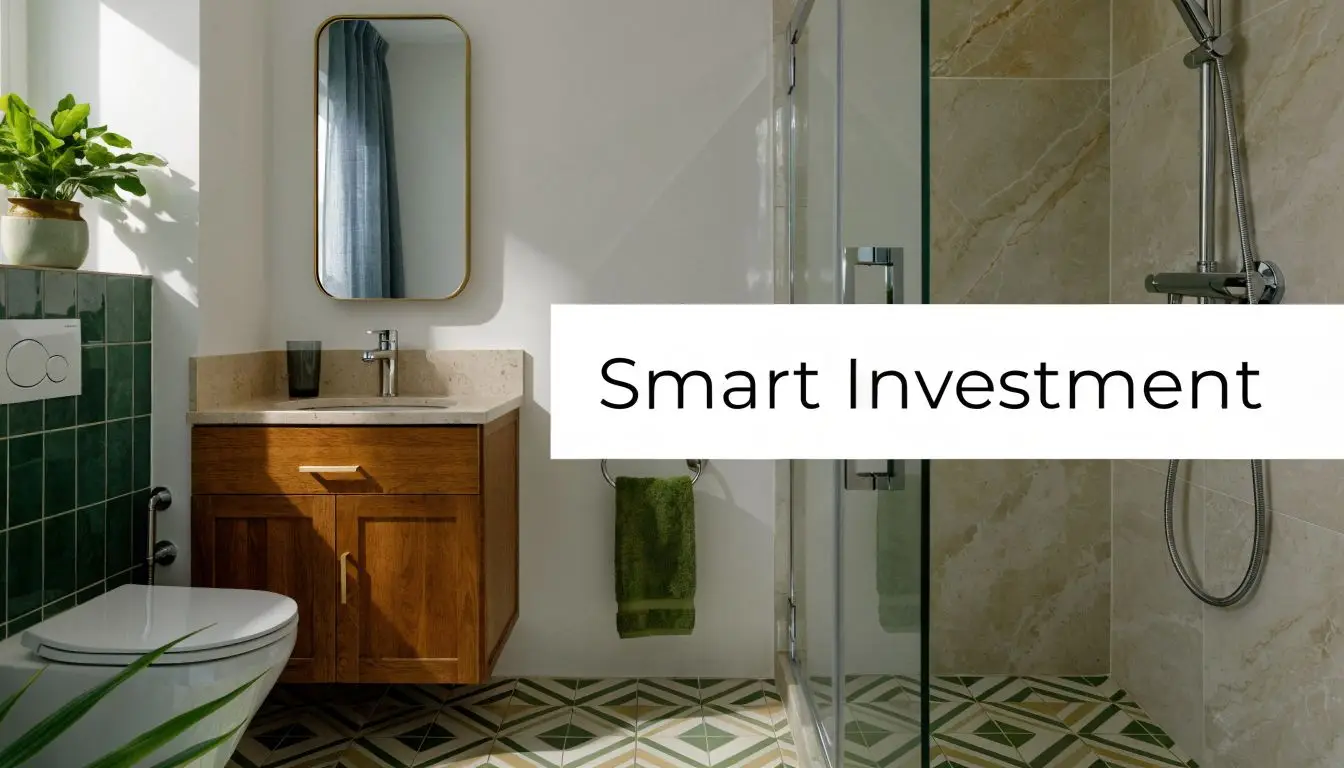
In Highett and across Melbourne, the return is usually strongest when the bathroom solves practical issues buyers notice straight away. Good ventilation, sensible lighting, durable finishes, and a layout that feels easy to use all help. Cheap cosmetic work can photograph well, but it rarely holds up in person.
Why build quality affects value
Buyers may not ask about waterproofing certificates or fall lines to the waste, but poor workmanship still shows. Cracked grout, swollen cabinetry, loose tapware, and bad tile set-out all raise questions about the rest of the house.
Quality matters because bathrooms are dense with trade work. Plumbing, electrical, waterproofing, tiling, glazing, and joinery all meet in a very small footprint. In Victoria, that detail has to be handled properly, and the room needs to perform in real conditions, not just look good on handover day.
A renovation that supports value usually has three things behind it. Clear planning, compliant construction, and finishes chosen for service life rather than showroom appeal.
What usually adds the most value
- A layout that makes the room easier to use
- Storage that reduces bench clutter
- Ventilation and lighting that improve comfort
- Materials that wear well in a wet area
- Workmanship that feels straight, solid, and well resolved
The best return often comes from restraint. In a small bathroom, one smart layout fix or a better vanity can do more for value than a long list of upgrades that push the budget without improving function.
For homeowners weighing cost against payoff, it also helps to understand the full project timeline before committing. This guide on how long a bathroom remodel should take is useful because delays, access issues, and rework can affect both cost and outcome.
A quality bathroom renovation does not guarantee a specific resale figure, and I would be cautious of anyone who suggests otherwise. What it does do is strengthen buyer confidence, reduce visible defects, and make the home easier to live in now. In practice, that is where the return sits.
Begin Your Transformation & FAQs
The best bathroom projects start with clear decisions, not guesswork. If you know your priorities, keep the brief realistic, and work through the technical requirements early, the cost becomes much easier to manage. That's true whether you're planning a clean functional update or something closer to a designer finish.
For homeowners in Highett, the most useful next step is usually a measured consultation, a defined scope, and a design that tests the layout before construction starts. If you're comparing options, this guide on how long a bathroom remodel should take helps frame the planning side properly.
Common questions homeowners ask
Do small bathrooms cost less just because they're smaller?
Not always. Bathrooms contain dense trade work, and the technical components don't shrink as much as people expect. A compact room can still require full demolition, waterproofing, plumbing, electrical, and tiling.
Is it cheaper to keep the existing layout?
Usually, yes. Retaining the general fixture positions often helps control labour and complexity. When a layout change solves a real usability issue, though, it can still be worth the added spend.
Do I need a registered builder?
For most homeowners, using properly qualified, insured professionals is the safer path. Bathrooms involve wet area detailing, licensed trades, coordination, and compliance. This isn't a room where shortcuts age well.
What should I prioritise if the budget is tight?
Keep the layout efficient, protect the technical work, and spend on the items that improve daily use. Good storage, a functional shower, and durable finishes usually matter more than novelty upgrades.
If your current bathroom feels too small, too dated, or too hard to use, the smartest move is to price the project based on real Victorian conditions, not generic overseas guides. A clear scope and honest advice at the start will save far more than hopeful assumptions later.