
Cost to Renovate a Bathroom: A 2026 VIC Guide
A basic bathroom renovation in Australia usually lands around A$10,000 to A$20,000, a mid-range renovation sits around A$20,000 to A$35,000, and a high-end bathroom starts at A$35,000+. In Highett and across Victoria, where older homes often hide compliance issues and tired plumbing, your final cost often depends less on the room's size and more on what's behind the walls.
Most homeowners start in the same place. The bathroom feels dated, the grout never looks clean, the shower screen annoys you, and you've saved a rough figure in your head without knowing whether it's realistic. Then the quotes start coming in, and the gap between “new vanity and tiles” and “full rebuild” becomes very real.
That's where the cost to renovate a bathroom gets misunderstood. People naturally focus on the things they can see. Tiles, tapware, vanity, mirror, lighting. In practice, the expensive part is often the work you can't show off when the job is finished. In Victoria, that can include waterproofing, plumbing changes, electrical upgrades, and remedial work once demolition starts.
Thinking About a Bathroom Renovation
You stand in your current bathroom after another leaking shower screen, cracked grout line, or vanity drawer that no longer closes properly, and the question sounds simple. How much will it cost to redo it? In Highett, the honest answer depends on what sits behind the tiles as much as what you want to see when the job is finished.
A “new bathroom” can mean a quick visual update, or it can mean stripping the room back to the framing, correcting old work, and rebuilding it to current Victorian standards. Homeowners often budget for fixtures first because they are easy to price online. The cost to renovate a bathroom is often misunderstood at that stage. Waterproofing, plumbing alterations, electrical work, substrate repairs, and compliance items are usually what push a project beyond the figure people first had in mind.
Start by defining the real scope
Before talking finishes, define the type of job.
- Basic renovation suits a bathroom that works reasonably well but looks tired. The layout stays largely the same, and the focus is on replacing fixtures and finishes.
- Mid-range renovation usually involves a full strip-out, better-quality fixtures, improved storage, and some changes to how the room functions.
- High-end renovation includes custom joinery, premium materials, layout changes, and more labour-intensive detailing.
That distinction matters because layout changes trigger extra trade work fast. Move a shower, toilet, or vanity and you may also be moving waste points, water lines, floor falls, power, lighting positions, and waterproofing zones. On paper it looks like a design choice. On site it changes labour, materials, coordination, and risk.
A simple rule helps. If the services are moving, treat it as a rebuild, not a cosmetic update.
Why local Victorian context matters
Highett homes often come with history. Older brick homes, weatherboards, and units around Bayside can hide failed waterproofing, swollen wall sheeting, out-of-level floors, outdated plumbing, and patch-up work from previous renovations. None of that shows in a Pinterest image or a national average.
That is why generic bathroom cost articles often miss the mark for local owners. A bathroom with easy access, modern plumbing, and sound structure is one type of project. A bathroom in an older Highett home that needs rectification, new waterproofing, or compliance upgrades is another, even if both rooms are the same size.
Registered builder involvement matters here. In Victoria, the job is not just about fitting off nice tapware. It is about coordinating licensed trades properly, handling waterproofing and wet-area requirements, and pricing the hidden work before demolition turns up surprises. That usually leads to a quote that feels more realistic from day one.
If you want a budget that holds up, start with two questions. What are you changing, and what is likely to need fixing once the old bathroom comes out?
Bathroom Renovation Costs in Victoria for 2026
A bathroom in Victoria can sit in the same footprint and still land in very different price brackets. In Highett, I see the gap come down to the age of the home, the amount of rectification needed after demolition, and whether the job is a surface update or a proper rebuild carried out to current standards.
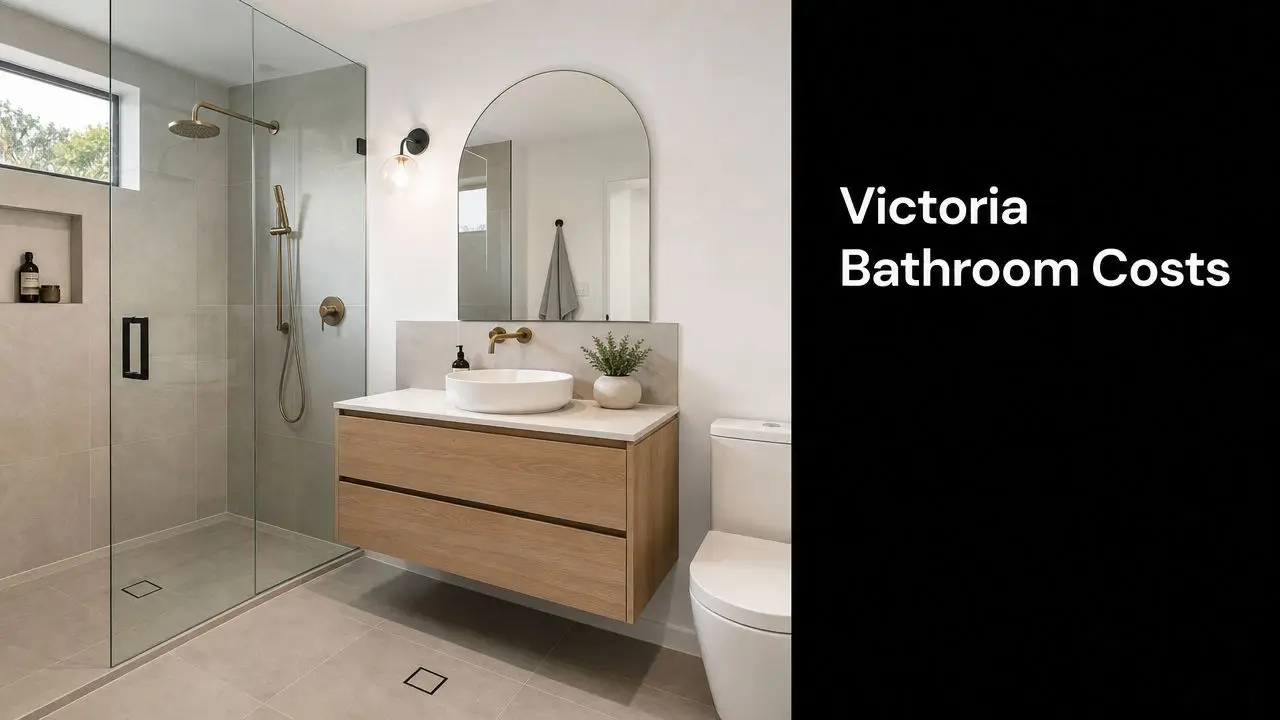
Basic bathroom renovation
A basic bathroom renovation often starts around A$10,000 and can run to about A$20,000 for a straightforward update, as noted earlier in the article.
This price range usually suits bathrooms where the layout already works and the existing services can stay put. The toilet remains in place. The shower stays on the same wall. The vanity is replaced without shifting plumbing. That keeps labour and compliance work more contained.
Typical work in this range includes:
- replacing fixtures like-for-like
- standard vanities and off-the-shelf fittings
- simple tiling selections
- new waterproofing, finishes, and fit-off within the existing layout
In Victoria, even a basic renovation still needs proper waterproofing, licensed plumbing and electrical work, and a clean sequence between trades. That is why a cheap quote can be misleading. If it does not allow for strip-out, substrate preparation, waste removal, or rectification of minor water damage, the final cost can move quickly.
Mid-range bathroom renovation
A mid-range bathroom renovation usually falls between A$20,000 and A$35,000. In many Highett homes, this is the range where a full bathroom rebuild realistically lands.
This is common for family bathrooms and ensuites that need better function, not just better finishes. Owners usually want improved storage, a larger shower, better lighting, more durable fittings, and a cleaner layout. Some service changes may be worthwhile, but the design still needs to respect the cost of moving plumbing, drainage, and power.
Here is what that level often includes:
| Scope area | What it often looks like |
|---|---|
| Layout | Mostly retained, with one or two practical changes |
| Finishes | Better tiles, tapware, shower screens, and cabinetry |
| Storage | Mirrored shaving cabinets, niches, drawer vanities, custom touches |
| Use case | Main bathrooms, family bathrooms, and higher-quality ensuites |
This bracket is often the best balance between cost and long-term value. It gives enough room to fix underlying issues properly and improve the way the room works day to day, without pushing into fully custom construction.
High-end and designer bathroom renovation
High-end bathroom renovations generally start from A$35,000 and can climb well beyond that once custom work, premium materials, or major layout changes are involved.
At this level, the room is usually being rebuilt around a specific brief. That might mean full-height feature tiling, custom joinery, recessed storage, frameless glass, underfloor heating, feature lighting, or a more complex shower area. On site, those details add labour hours, coordination, and tighter tolerances. A minimalist bathroom often costs more to build than it looks.
Clean finishes rely on precise set-out.
In older Victorian homes, high-end projects also tend to expose more hidden work. Floors may need levelling. Walls may need straightening. Existing framing may need adjustment before tiles, cabinetry, or glazing can be installed properly. If the home is in Highett or surrounding Bayside suburbs, that is not unusual. It needs to be allowed for early, especially if you want the final result to look sharp and hold up over time.
A registered builder matters more in this bracket because the margin for error is smaller. The more custom the bathroom, the more important it is to price selections accurately, confirm lead times before work starts, and make sure the room is being rebuilt to suit Victorian requirements rather than a generic online budget.
What Really Drives Your Renovation Cost
The visible bathroom is only the top layer. The true cost to renovate a bathroom sits underneath. Once demolition begins, the room becomes a coordination problem involving multiple trades in a very tight space.
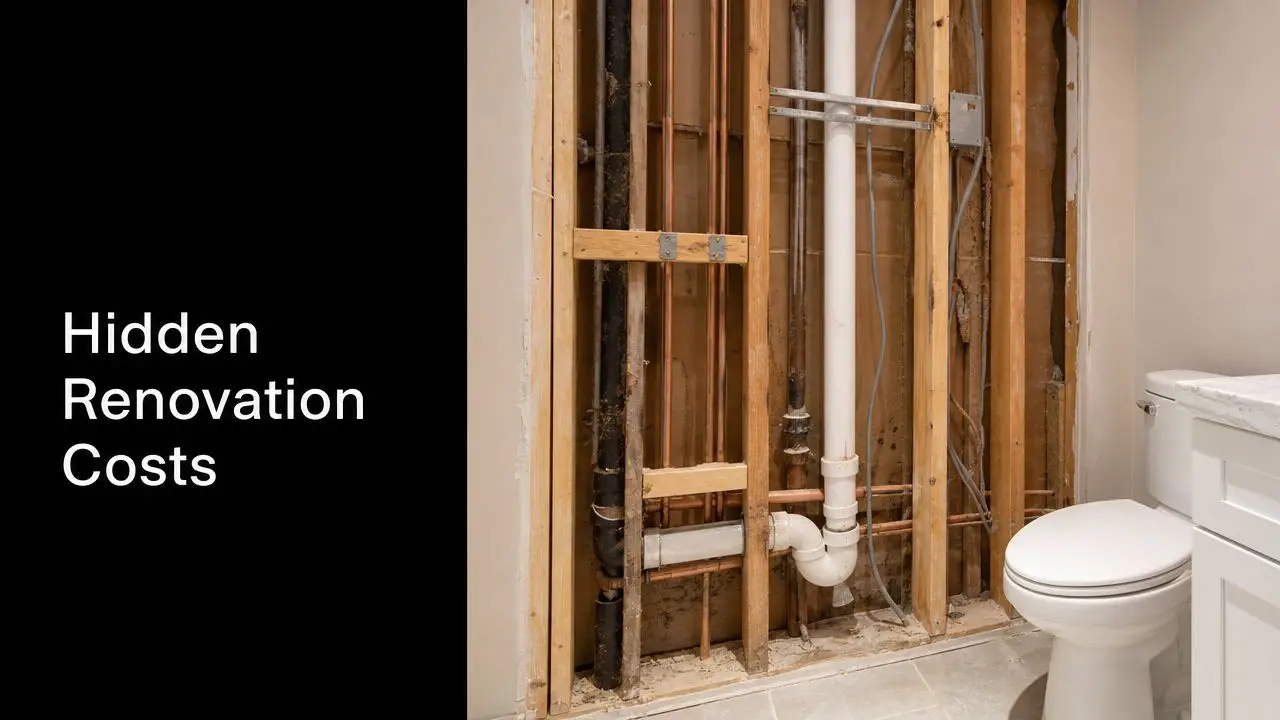
Australian cost guidance notes that bathroom renovation cost is driven more by trade density and plumbing complexity than by visible finishes, because demolition, waterproofing, plumbing, electrical, tiling, and fittings all need to come together in one compact area. It also notes that full renovations commonly move into the mid-five-figure band when layout changes or premium fixtures are involved, as outlined in this bathroom renovation cost breakdown for Australian renovators.
Labour is the centre of the budget
People often assume expensive tiles create expensive bathrooms. Sometimes they do, but labour usually decides the outcome.
A bathroom can have modest finishes and still cost more than expected because the work is dense. Trades don't get much room to move. Everything has to be sequenced correctly. The room must be stripped, prepared, waterproofed, set out accurately, tiled properly, and fitted off without shortcuts.
That's why “small bathroom” doesn't automatically mean “cheap bathroom”.
Layout changes trigger the biggest jumps
Keeping the existing footprint is usually the easiest way to control cost. Once you move the shower, vanity, toilet, or waste points, you increase the amount of trade work before the room even starts looking better.
The biggest cost triggers usually include:
- Plumbing relocation because new pipe runs, drainage adjustments, and set-out changes add labour quickly
- Electrical reworking when lighting, exhausts, power points, or heated features move
- Shower reconfiguration because waterproofing details and falls become more complex
- Custom joinery and glazing where tighter tolerances leave less room for error
Modern bathrooms can be more complex than they look
Many homeowners want modern bathrooms with floating vanities, frameless showers, recessed niches, strip lighting, and minimalist fixtures. Those features can look simple. Building them properly isn't always simple.
A floating vanity may need stronger wall preparation. A wall niche needs precise waterproofing and set-out. Linear drainage or cleaner floor lines can demand more planning during the rough-in stage. Minimal design often asks the trades to do more, not less.
If a bathroom looks calm and effortless when it's finished, someone had to solve a lot of detail behind the walls first.
The hidden layer most people miss
The first quote often reflects known work. The problem work usually appears after demolition.
Common hidden issues in older Victorian bathrooms include:
| Hidden issue | Why it matters |
|---|---|
| Previous water ingress | Substrates and framing may need repair before new finishes go in |
| Outdated plumbing details | Existing services may not suit the new set-out |
| Drainage problems | Falls and waste positioning may need correction |
| Older construction methods | The room may need more preparation than expected |
This is why two bathrooms that look similar in photos can be priced very differently in real life.
Sample Budgets for Highett Homes
The easiest way to understand bathroom costs is to look at realistic project types, not abstract averages. In Highett, three jobs come up repeatedly. A compact ensuite refresh, a practical family bathroom overhaul, and a full designer bathroom rebuild.
Smaller rooms deserve special attention because homeowners often expect them to be dramatically cheaper. That doesn't always happen. Guidance on compact bathrooms notes that while they can be cheaper per square metre, ensuites and powder rooms still carry concentrated labour and service costs, so savings aren't linear with size, as discussed in small bathroom remodel cost guidance.
The compact ensuite refresh
This is the job where the existing layout is workable, but the room feels old and cramped. The owner wants a cleaner shower, updated vanity, fresher tiles, and a better mirror and light setup. The smartest version of this job keeps plumbing positions close to where they already are.
For many homeowners exploring small bathroom remodel cost guidance, this is the point worth understanding. A compact ensuite can still take serious labour because waterproofing, plumbing, tiling, and fit-off don't shrink in proportion to floor area.
| Cost Item | Basic Ensuite Refresh |
|---|---|
| Demolition and strip-out | Included within overall build scope |
| Plumbing and electrical works | Moderate, if layout is retained |
| Waterproofing and tiling | Essential core cost |
| Fixtures and fittings | Standard to mid-range selections |
| Vanity and storage | Off-the-shelf or lightly customised |
| Typical project total | A$18,000 |
That total sits near the top end of a basic renovation because ensuites can be deceptively labour-heavy.
The functional family bathroom overhaul
This is common in older Highett homes where the bathroom still works, but not well. The storage is poor. The shower is awkward. The room needs to handle busy mornings, family use, and easier cleaning.
The mid-range family bathroom is usually where the best balance sits. The owner might improve the shower size, add a niche, choose stronger cabinetry, and update the lighting plan. The finishes feel current, but the brief stays practical.
| Cost Item | Mid-Range Family Bathroom |
|---|---|
| Demolition and preparation | Full strip-out and rebuild setup |
| Plumbing adjustments | Some changes, not a full re-route |
| Electrical and lighting | Updated layout and improved usability |
| Waterproofing and tiling | Full room waterproofing and new tile installation |
| Fixtures and screens | Better-grade selections |
| Vanity and joinery | Improved storage and family-friendly design |
| Typical project total | A$30,000 |
This type of budget usually buys a bathroom that feels properly rebuilt, not just redecorated.
The ultimate designer bathroom
At this point, homeowners stop asking what they can replace and start asking what they can create. The brief often includes custom joinery, premium finishes, feature tiling, frameless glass, and a layout shaped around comfort rather than the original room constraints.
Designer bathrooms also tend to involve more exacting construction. Alignment matters more. Visual clutter is reduced, so any installation flaw is easier to see. The end result can be exceptional, but it needs a disciplined build process.
| Cost Item | High-End Designer Bathroom |
|---|---|
| Full demolition and remedial preparation | Extensive |
| Plumbing and layout changes | Significant |
| Electrical, lighting, and feature details | Advanced |
| Waterproofing and substrate preparation | Detailed and non-negotiable |
| Premium fixtures and fittings | Higher-spec selections |
| Custom vanity and joinery | Bespoke |
| Glazing and finishing details | Premium finish standard |
| Typical project total | A$50,000+ |
Sample bathroom renovation cost breakdown
| Cost Item | Basic Ensuite Refresh (A$18,000) | Mid-Range Family Bathroom (A$30,000) | High-End Designer Bathroom (A$50,000+) |
|---|---|---|---|
| Demolition and preparation | Lower | Moderate | Higher |
| Plumbing and electrical | Moderate | Moderate to higher | Higher |
| Waterproofing and tiling | Core cost | Core cost | Major cost |
| Fixtures and fittings | Standard | Upgraded | Premium |
| Joinery and storage | Basic | Better storage | Custom |
| Finishing detail | Simple | Refined | High-detail |
These aren't fixed formulas. They're decision tools. If you know which story sounds most like your home, you're much closer to an honest budget.
Budgeting and Planning Your Project Timeline
The biggest budgeting mistake isn't choosing the wrong tapware. It's treating the quote as if nothing unexpected will happen once the room is opened up.
In Victorian homes, hidden issues matter. General cost guides often skip over this, yet guidance on bathroom remodel surprises notes that water damage, drainage problems, and pipe fixes can add meaningful cost once demolition reveals them. That's why a contingency matters for older properties, as explained in guidance on hidden bathroom remodel costs and contingency planning.
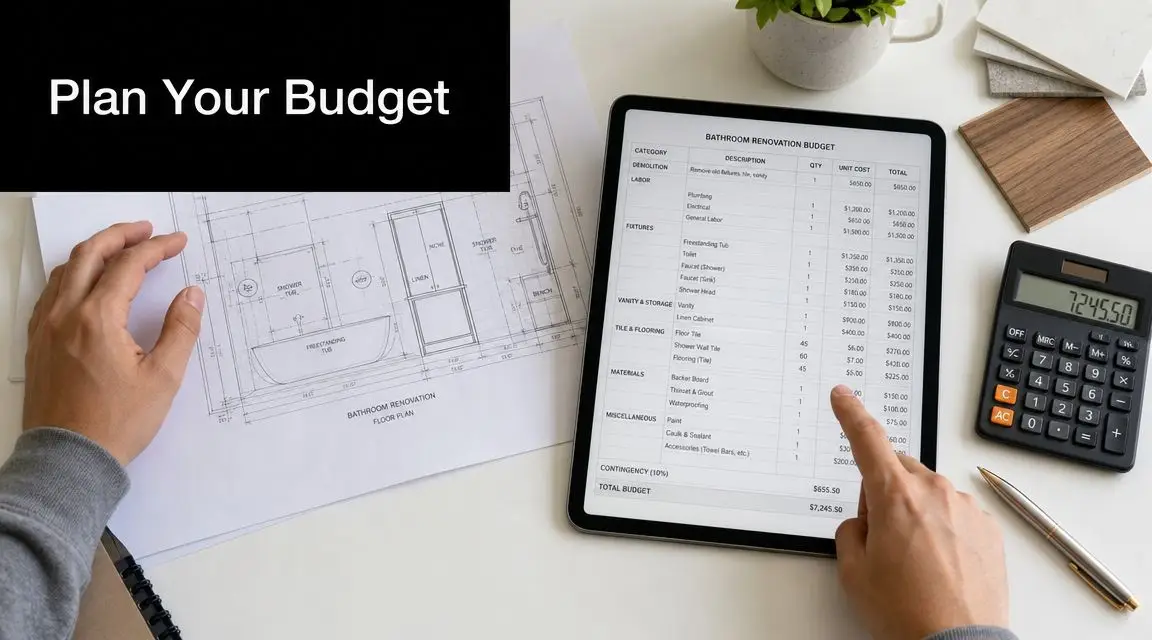
Budget for the known work and the likely surprises
A sound renovation budget has two parts. The planned spend, and the reserve for issues you can't confirm until the old bathroom is gone.
That reserve becomes important when you uncover:
- Water damage behind shower walls or around the base of the room
- Drainage corrections needed for proper falls or waste placement
- Previous poor workmanship that has to be undone before new finishes go in
- Compliance-related upgrades needed to complete the rebuild properly
If your home is older, assuming a smooth run is optimistic. A more realistic approach is to expect that some hidden work may appear and build your finances around that possibility.
Leave room in the budget for what the existing bathroom has been hiding from you.
Understand the renovation sequence
Homeowners usually feel less stressed when they understand the build order. Bathroom renovations don't move in a straight decorative line. They move in technical stages.
A standard sequence often looks like this:
- Design and selections so fixtures, tiles, and layout are resolved before site work begins
- Demolition to remove the old bathroom and expose the condition of the room
- Rough-in works for plumbing and electrical adjustments
- Preparation and waterproofing because the room has to be built on a sound, compliant base
- Tiling and surface installation once waterproofing is complete
- Fit-off and finishing including fixtures, screens, mirrors, and final details
If you want a broader sense of scheduling, this guide on how long a bathroom remodel should take is a useful starting point.
Planning decisions that save money
Good planning doesn't always make a bathroom cheap. It does stop avoidable spending.
The choices that usually help most are:
| Planning choice | Budget effect |
|---|---|
| Keep the layout workable | Reduces plumbing and electrical variation |
| Finalise selections early | Lowers the risk of delays and change costs |
| Choose practical finishes | Helps balance style with long-term maintenance |
| Allow for contingency | Prevents panic decisions mid-project |
A bathroom remodel runs better when the owner knows where they'll spend, where they'll hold back, and what they'll do if hidden work appears.
Finding the Right Builder and Asking Key Questions
The builder you choose affects more than workmanship. They affect compliance, communication, sequencing, and how variations are handled when the project becomes more complex than expected.
For substantial bathroom renovations, especially when structural work or major coordination is involved, many homeowners feel safer working with a registered builder unlimited because the project is being managed under a clearer professional framework. It's not just about who can swing a hammer. It's about who can take responsibility for the whole job.
A cheaper quote can look attractive at the start. It becomes expensive if details are vague, waterproofing documentation is missing, or the scope hasn't accounted for likely site conditions.
Questions worth asking before you sign anything
Ask direct questions and expect direct answers.
Registration and insurance
Ask whether the builder is properly registered for the work and what insurance cover is in place.Who manages the trades
Find out who coordinates plumbing, electrical, waterproofing, tiling, and finishing on site.Waterproofing process
Ask how waterproofing is handled, documented, and certified.Variations
Get clear on how changes are priced and approved if hidden issues appear after demolition.Inclusions and exclusions
Make sure the quote spells out exactly what's included, and equally, what isn't.
What a solid quote should tell you
A professional bathroom quote should show scope, not just a lump sum. You want enough detail to understand how the room is being built and where your money is going.
Good signs include:
- Clear allowances or fixed inclusions for fixtures and finishes
- Defined scope of demolition and rebuild work
- A process for dealing with unforeseen site conditions
- A realistic timeline and payment structure
For a more detailed explanation of why this matters, read why using a registered builder matters for your bathroom renovation.
The right builder doesn't just quote the pretty part of the bathroom. They account for the work that makes the room safe, durable, and compliant.
How to Get an Accurate Quote from SitePro Bathrooms
An accurate bathroom quote starts before pricing. It starts with clarity.
That means understanding how you use the room, what layout changes you're considering, what finish level you want, and whether the home itself is likely to need extra remedial work. If those points aren't defined early, the quote can only ever be a rough guess dressed up as certainty.
What helps produce a better quote
The strongest quoting process usually includes a site visit, measured planning, selection guidance, and enough design detail to stop assumptions from creeping in. That's especially important when you're comparing basic bathroom renovations with more customised modern bathrooms or fully resolved designer bathrooms.
A well-run process generally works like this:
- Initial consultation to understand the space, budget range, and priorities
- Design development so layout decisions are made before site work starts
- 3D visual planning to test new bathroom ideas before committing to construction
- Detailed fixed-price quoting so the scope is clearer and price movement is reduced
Construction costs have remained under pressure in recent years, with ABS-linked commentary noting significant price growth in building materials and services through the early 2020s. In practical terms, that makes a detailed fixed-price quote more valuable because it gives renovators stronger protection against price volatility during the project, as noted in this overview of construction-related pricing pressure and why fixed quotes matter.
Why detail protects your budget
The more detailed the quote, the less room there is for confusion later. Homeowners usually benefit when the builder has already resolved selections, layout intent, and scope boundaries before work starts.
That's where SitePro Bathrooms adds value. As a Highett-based renovation specialist, the team handles consultation, 3D design, construction, and finishing as one coordinated process. For homeowners trying to pin down the actual cost to renovate a bathroom, that matters because the quote isn't being built on vague assumptions. It's being built around your room, your priorities, and the actual work required.
If you're planning a bathroom renovation in Highett or elsewhere in Victoria, the best next step is simple. Arrange a consultation, discuss your layout and finish goals, and get a quote detailed enough to show what's included, what could affect cost, and how the project will run from demolition to handover.
If you want a bathroom quote that reflects real site conditions, practical design choices, and the standard of finish you're aiming for, contact SitePro Bathrooms to start the process.