
You notice the problems the first week you live with a small ensuite properly. The door fights the vanity, the shower entry feels tighter than it did in the showroom, and every bottle, towel, and charger seems to end up on display. A compact ensuite can still work well, but only if the layout has been resolved with precision rather than guesswork.
That is why small ensuites reward disciplined planning. In tight footprints, a few centimetres taken by the wrong vanity depth, door swing, or shower screen can make the room awkward to use and harder to waterproof, ventilate, and clean properly. I see the same pattern in renovation consults across Victoria. Homeowners often come in thinking they need more room, when what they really need is a better plan.
Good small ensuite bathroom ideas are practical before they are decorative. The best ones improve circulation, protect sightlines, reduce visual clutter, and make storage part of the layout instead of an afterthought. If you are still shaping the floor plan, this guide to designing an ensuite that works in real homes is a useful starting point.
The ideas below focus on what holds up on site, not just what looks good in inspiration photos. They also include real trade-offs, common mistakes, and three SitePro before-and-after mini case studies with notes on cost, timeline, and final result, so the advice stays grounded in actual renovation outcomes.
1. Space-Saving Wall-Mounted Fixtures
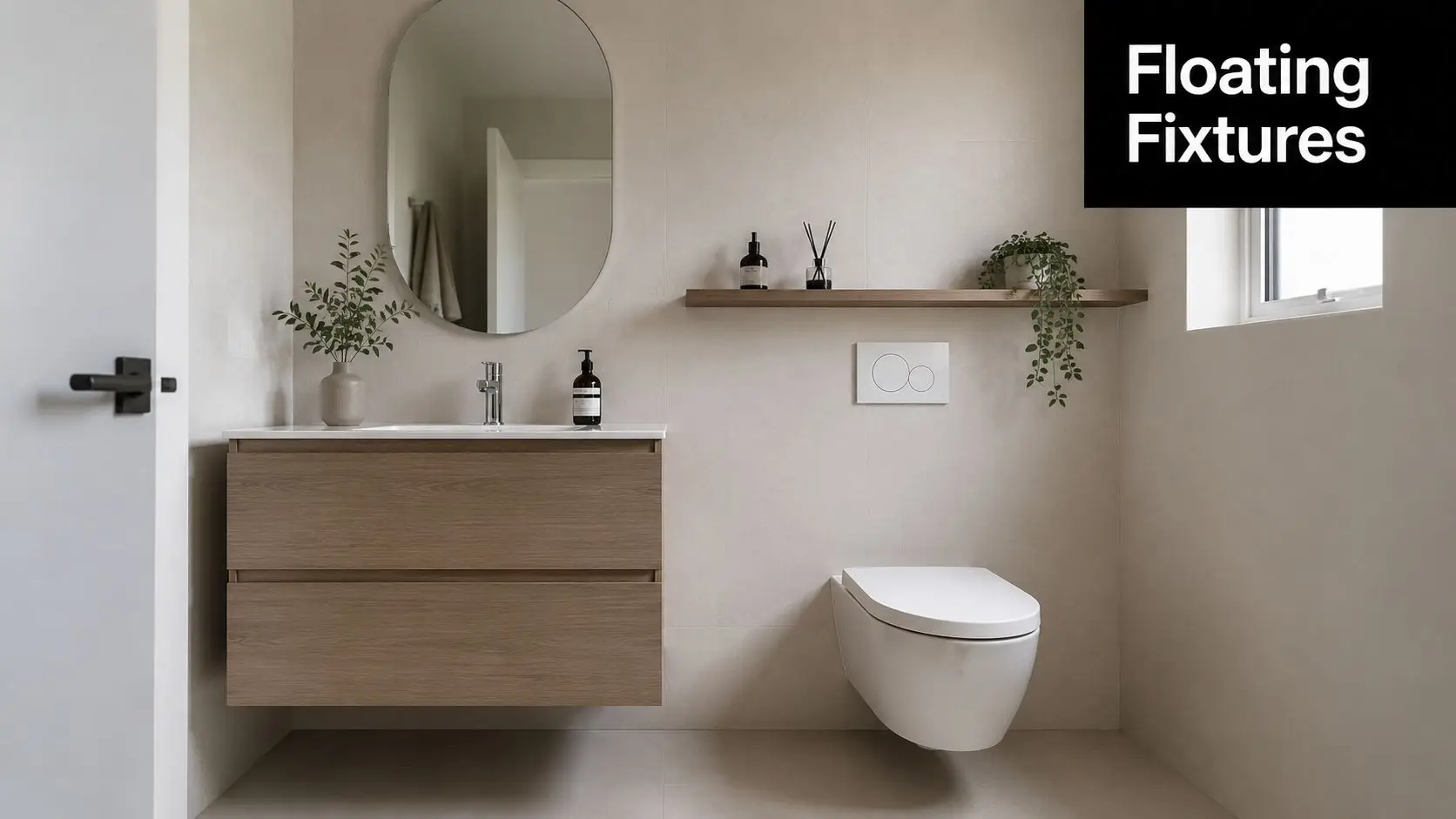
Wall-mounted fixtures earn their place early in a small ensuite plan because they solve two problems at once. They clear the floor visually, and they reduce the bulky feel that floor-mounted units create around the entry, vanity, and toilet zone.
The gain is not just visual. A floating vanity usually makes daily cleaning easier, and a wall-hung toilet removes the hard-to-reach edges around the pan. In a tight room, that matters. Small ensuites get messy faster, and awkward corners become a maintenance problem within weeks.
Standard basins can be deeper than many homeowners expect, which is why slimline basins, shorter-projection vanities, and wall-hung options show up repeatedly in well-resolved compact layouts. The right fixture depth often decides whether the room feels usable or frustrating.
Where wall-mounted fixtures work best
Use them where circulation is tight or where the room needs to feel calmer on entry. I specify them most often in ensuites with a narrow doorway approach, a toilet opposite the vanity, or limited clear floor area between fixtures.
A few combinations tend to hold up well on site:
- Floating vanity with drawers: Better storage efficiency than hinged doors in shallow cabinetry.
- Wall-hung basin: Useful where vanity depth needs to be kept to a minimum.
- Concealed-cistern toilet: Cleaner sightlines, but only if the framing and plumbing set-out are resolved early.
- Recessed mirror cabinet: Better than a deep surface-mounted cabinet when shoulder room is already tight.
Practical rule: Confirm wall structure, waste locations, cistern access, and waterproofing details before you commit to wall-mounted fixtures.
There is a trade-off. Wall-hung fittings usually cost more to install than standard floor-mounted pieces because the wall has to do more work. The frame needs to be solid, the plumbing tolerances need to be tighter, and service access cannot be treated as an afterthought. If the wall build-up is handled badly, the room can lose some of the depth you were trying to protect in the first place.
One SitePro before-and-after project made that clear. The original ensuite had a full-depth vanity that pinched the entry and left the toilet wall feeling crowded. We replaced it with a floating vanity, tightened the storage into the wall line, and simplified the toilet area so the room read as one cleaner plane. The budget impact was moderate rather than dramatic, the work stayed within a standard renovation timeline, and the finished room felt easier to move through even though the footprint did not change.
If you are still testing fixture positions, SitePro's guide to planning an ensuite layout that works in real homes will help you sort out clearances before selections are locked in.
2. Compact Corner Showers with Frameless Glass Enclosures
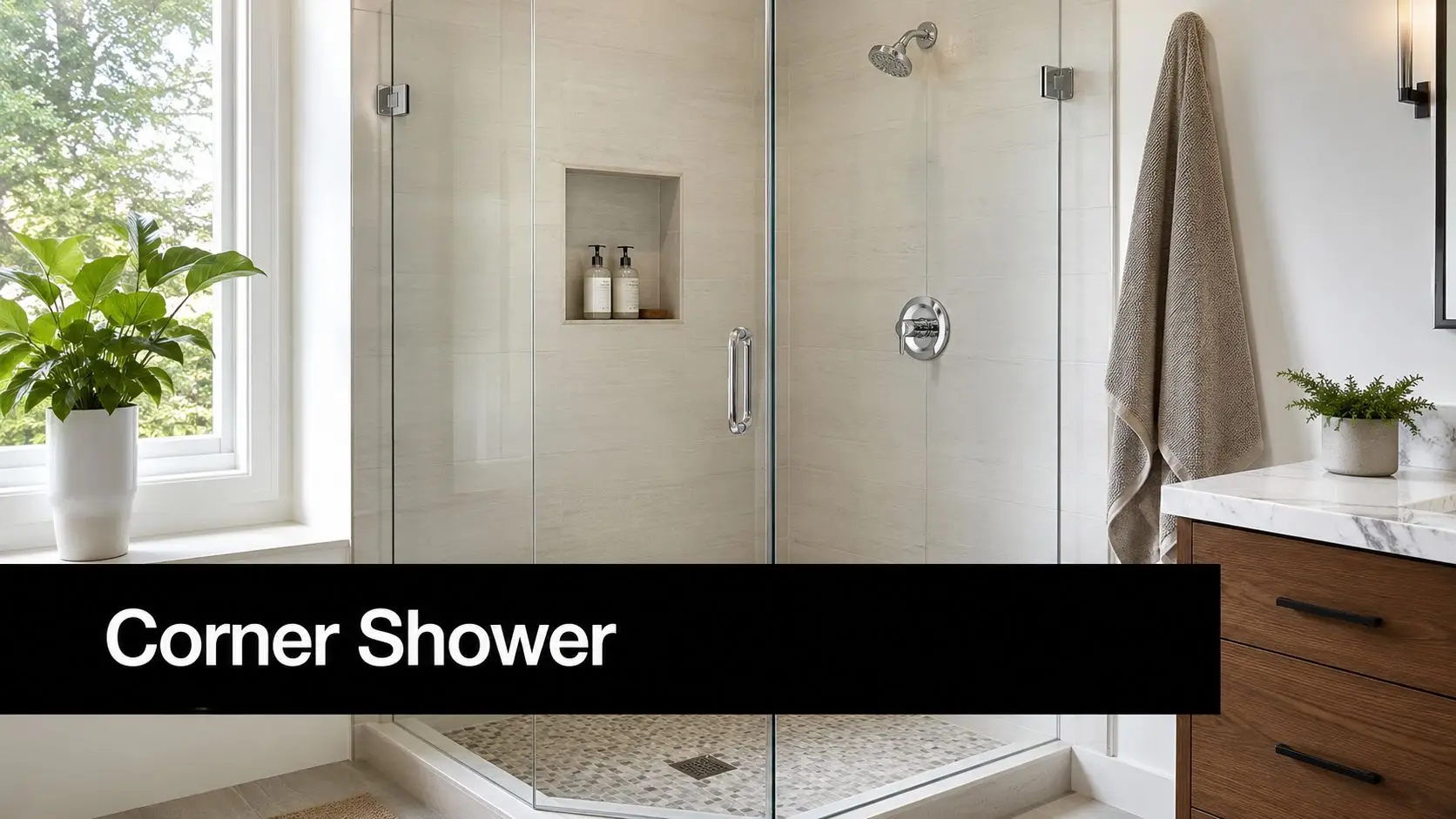
Most cramped ensuites suffer from one of two problems. The shower enclosure is too bulky, or the shower door steals valuable circulation space every time it opens. A compact corner shower with frameless glass solves both.
Frameless glass keeps the eye moving across the room instead of stopping at a heavy frame or frosted panel. Corner positioning also uses difficult real estate well, especially in narrow ensuites where a full-width shower can dominate the layout.
The trade-off most people miss
Frameless glass looks light, but it needs disciplined waterproofing and detailing. If the floor falls are poor, the seals are cheap, or the shower entry is too open for the way the room is used, you'll feel that decision every day. Good-looking glass doesn't compensate for bad drainage.
That's why I usually steer people towards one of these approaches:
- Quadrant enclosure: Softens corners and can improve movement in very tight rooms.
- Frameless corner screen: Best when you want the room to read as one open space.
- Wet-room style shower zone: Strong option where floor grading and waterproofing can be handled properly.
A SitePro before-and-after project in a tight ensuite replaced a dated shower with a cleaner corner layout and frameless glass screen. The old room felt shut in because the enclosure visually chopped the space in half. After the renovation, the shower read as part of the whole room rather than a separate cubicle, which is exactly what compact modern bathrooms need.
Good small showers don't feel small because of fancy fittings. They feel generous because the entry is easy, the glass disappears, and the floor flows properly.
If you're weighing a corner shower against a full wet-room setup, think about maintenance as much as aesthetics. Frameless glass is easier on the eye, but you still need practical details like a recessed niche, dependable water sealing, and tile selection that won't make soap residue look worse than it is.
3. Strategic Mirror Placement and Oversized Mirrors
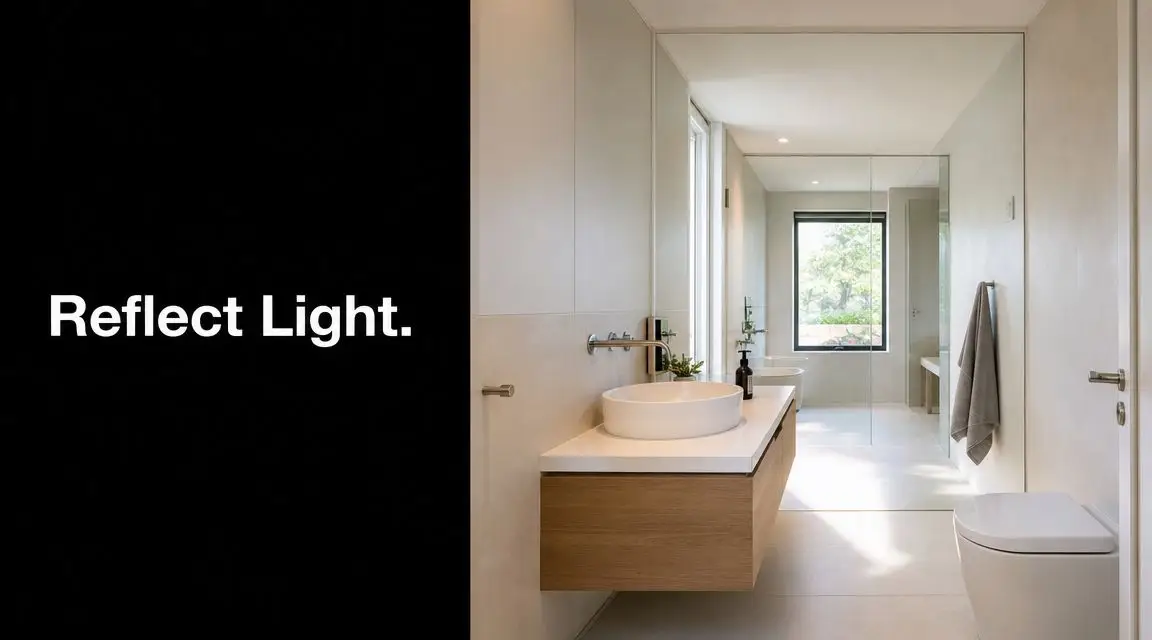
If you want one of the fastest visual upgrades in a small ensuite, make the mirror bigger. Not fancier. Bigger. In compact rooms, an undersized mirror makes the wall feel chopped up and meaner than it needs to.
An oversized mirror reflects light, repeats finishes, and gives the room more visual depth. Full-width vanity mirrors work especially well when the ensuite doesn't have much natural light. They also make slim vanities and floating joinery look more intentional.
Where mirror placement helps and where it doesn't
Place the mirror where it reflects the brightest part of the room. That might be a window, a pale tiled wall, or the main lighting source over the basin. Don't use a mirror just because there's an empty wall. In a bad position, it can double visual clutter or reflect the toilet directly from the doorway, which never improves an ensuite.
For practical performance, I like to combine:
- Full-width vanity mirrors: Best for broadening the room visually.
- Demisting mirrors: Worth considering in ensuites that get heavy daily use.
- Integrated lighting: Clean solution where wall space is limited.
One SitePro update used an oversized mirror to fix a common problem. The previous ensuite had a standard mirror with dark edges, a chunky cabinet, and poor side lighting. The new layout replaced that visual interruption with a broader mirror plane and simpler lighting arrangement. The room immediately felt brighter and less pinched, even before the rest of the finishes were taken in.
This is one of those new bathroom ideas that looks decorative but is really about proportion. In small rooms, scale matters more than ornament. A large mirror with clean edges almost always beats a small feature mirror with a heavy frame.
4. Neutral Colour Palettes with Strategic Accent Elements
A small ensuite doesn't need to be all white, but it does need restraint. The easiest way to make a compact bathroom feel busy is to combine too many feature tiles, too many metals, and too many colour changes in a room that already has a lot going on.
Neutral palettes work because they calm the background. Warm white, soft beige, pale greige, and light stone tones let the layout and materials do the work. Then you add one accent direction, not five. That could be brushed brass, matte black, fluted timber, or a feature tile in a controlled area.
The right way to add personality
Accent elements should sharpen the scheme, not dominate it. Good places to use them include the vanity joinery, tapware finish, niche tile, or mirror detail. Bad places include every wall, every fitting, and every accessory bought in a burst of enthusiasm after tile selections are done.
A practical approach is:
- Choose one metal finish: Keep taps, handles, shower fittings, and hooks consistent.
- Use texture instead of extra colour: Timber grain, stone-look porcelain, and matte surfaces add warmth without crowding the room.
- Keep feature tiles contained: Inside a niche, on a vanity splashback, or on one wall only.
I've seen plenty of ensuites where owners wanted “designer bathrooms” and ended up with a mix of trends that dated the room before the grout cured. The more compact the room, the more disciplined the palette needs to be.
One SitePro ensuite transformation leaned into warm neutrals with subtle timber detail and restrained hardware. The previous room had several competing finishes and looked smaller because every surface demanded attention. Once those choices were edited back, the bathroom felt more expensive, even though the improvement came from design discipline rather than visual excess.
5. Integrated Storage Solutions and Recessed Niches
A small ensuite starts to feel cramped the moment everyday items end up on display. One shampoo bottle on the floor turns into six. The vanity top disappears under skincare, razors, chargers, and spare toilet rolls. Good storage planning stops that slide early.
Integrated storage works because it uses wall depth and joinery layout instead of stealing usable floor area. In practical terms, that means recessed shower niches, mirrored shaving cabinets, vanity drawers with proper internal divisions, and tall storage only where the wall can carry it without tightening the room. In compact ensuites, the goal is simple. Keep necessities close at hand and keep surfaces clear.
A useful way to plan it is to treat the room as a movement problem, not a furniture problem. Storage should support the path through the room, not interrupt it. That usually leads to choices like:
- Recessed shower niches: Better access than wire caddies, with a cleaner finish and fewer visual distractions.
- Drawer-based vanities: Easier to use than deep cupboards, especially for small items that otherwise vanish at the back.
- Mirror cabinets: They add storage at eye level without increasing the vanity footprint.
- Tall joinery on one controlled wall: Effective for linen and bulk items, but only if door swings and entry clearance still work.
The trade-off is that integrated storage has to be resolved early. A recessed niche affects framing, waterproofing, tile set-out, and sometimes plumbing positions. Get it wrong and the niche lands in an awkward spot, cuts across tile lines, or ends up too shallow for the products the household uses. If you are still weighing up tile sizes and layout, SitePro's guide on how to choose bathroom tiles for a small bathroom helps with the planning side of that decision.
One SitePro before-and-after ensuite in Highett shows the difference clearly. The original room had almost no useful storage, so everything sat out on the vanity and shower floor. The renovation added a recessed niche, a custom vanity with full-extension drawers, and a mirrored cabinet sized to the wall rather than picked off the shelf. The build cost stayed controlled because these items were designed into the renovation from the start, not added late as fixes. The result was a bathroom that looked calmer and worked better every morning.
Hidden storage is often what makes a compact ensuite feel complete.
I usually tell clients to be honest about what needs to live in the room. Two people using an ensuite need different storage from a guest bathroom. If one person uses large pump bottles, electric grooming tools, or backup toiletries, the joinery has to allow for that. Storage that suits real habits will keep the room tidy long after the renovation is finished.
6. Large-Format Tiles for Visual Continuity
Large-format tiles do something small mosaics and busy patterns can't. They reduce visual interruption. In a compact ensuite, fewer grout lines usually means a calmer room, and a calmer room almost always feels larger.
That doesn't mean large tiles are always easier. They demand a flatter substrate, more careful set-out, and a tiler who knows how to manage lippage and pattern alignment. But when they're done properly, they give compact ensuites a clean, architectural finish that suits modern bathrooms especially well.
Where they work best
I like large-format tiles on walls first, then on floors if the room proportions and falls allow for them. Matching or closely related floor and wall tones can make the room read as one envelope rather than a patchwork of separate surfaces.
A few practical rules help:
- Use restrained grout colour: Contrasting grout can make a small room busier than it needs to be.
- Think about slip resistance: Floor selection still has to suit a wet area, no matter how refined the tile looks.
- Set out around niches and edges: Poor tile planning around fixtures ruins the clean effect quickly.
One of the reasons large-format porcelain works so well in designer bathrooms is that it supports visual quiet. The eye reads more surface and fewer breaks. In a compact ensuite, that's a real advantage.
If you're comparing finishes, sizes, and layouts, SitePro's guide on how to choose bathroom tiles helps narrow the decision before you commit to samples.
7. Smart Lighting Design with Layered Illumination
Lighting is where many ensuite renovations fall short. A single centre downlight might technically illuminate the room, but it won't flatter faces at the mirror, soften the shower zone, or make the space feel considered. In a compact bathroom, lighting has to work harder because there's nowhere for poor placement to hide.
Layered lighting is the answer. You want ambient light for the whole room, task lighting where grooming happens, and a small amount of accent light if you want depth and atmosphere. That combination makes a practical ensuite feel more like a private retreat.
A better lighting mix
Vanity lighting matters most because that's where people use the room in detail. Side lighting or well-placed mirror lighting reduces harsh facial shadows better than relying only on ceiling fittings. Then ceiling lights can do the background work without trying to solve every lighting need at once.
A strong setup often includes:
- Task lighting at the vanity: Better for shaving, makeup, and everyday grooming.
- General ceiling lighting: Keeps the room evenly usable.
- Accent LED lighting: Works under floating vanities, inside niches, or behind mirrors when done with restraint.
- Dimmers where possible: Helpful for shifting from bright mornings to softer evening use.
One SitePro after-shot that stood out to me used simple layered light rather than flashy fittings. The original ensuite felt flat and slightly gloomy despite having enough wattage. Once the vanity lighting, mirror reflection, and general room lighting were coordinated, the same footprint felt more spacious and far more polished.
For wet-area lighting basics and placement ideas, SitePro's article on downlights in a bathroom is worth reading before the electrical plan is finalised.
8. Efficient Ventilation and Moisture Management Systems
A beautiful ensuite won't stay beautiful if moisture isn't controlled. This is the least glamorous part of bathroom renovations, but it's one of the most important. Small ensuites trap steam quickly, and once condensation settles into paint, grout lines, cabinetry, or silicone joints, the room starts ageing faster than it should.
Ventilation needs to be designed, not assumed. A weak fan, poor duct run, or exhaust that doesn't vent properly to the outside will leave you with recurring moisture issues no matter how good the finishes look on day one.
What holds up over time
Ducted extraction is usually the smarter option for enclosed ensuites, especially where showers are used daily. Humidity-sensing controls can also help because they keep ventilation running based on actual moisture, not guesswork. And any complicated ducting or structural coordination should be handled by properly qualified trades and registered builders unlimited where the project scope requires it.
Focus on these details:
- External discharge: Exhaust air must leave the building properly, not dump into the ceiling cavity.
- Short, efficient duct paths: Long or awkward runs reduce fan performance.
- Moisture-resistant materials: Cabinet finishes, paint systems, and joinery selections all matter in steamy rooms.
- Ongoing access for maintenance: Fans need cleaning and servicing to keep working well.
Ventilation doesn't sell the renovation in the showroom. It protects the renovation after handover.
The best new bathroom ideas aren't only the visible ones. Good moisture management keeps your tiles, paint, joinery, and air quality in better condition, and it helps your ensuite feel fresh every day instead of damp by mid-winter.
8-Point Comparison: Small Ensuite Bathroom Ideas
| Design Option | Implementation Complexity | Resource Requirements | Expected Outcomes | Ideal Use Cases | Key Advantages |
|---|---|---|---|---|---|
| Space-Saving Wall-Mounted Fixtures | Medium–High: requires wall reinforcement and concealed plumbing | Structural reinforcement, concealed cisterns, professional plumber/joiner, higher-cost fixtures | Frees floor space, cleaner lines, easier floor cleaning | Small ensuites, modern renovations where floor area and hygiene matter | Maximises usable floor area, contemporary look, easier cleaning |
| Compact Corner Showers with Frameless Glass Enclosures | Medium: precise glass fitting and waterproofing needed | Frameless glass panels, skilled glazier/tiler, quality seals and drainage | Visual openness, better light flow, efficient corner use | Tight bathrooms with unused corners, projects seeking premium aesthetic | Opens space visually, easy-to-clean surfaces, flexible sizing |
| Strategic Mirror Placement and Oversized Mirrors | Low–Medium: anchoring, moisture protection and safety considerations | Large mirror panels, moisture-resistant backing, fixings, optional demister | Increased perceived space and brightness, improved grooming functionality | Cost-conscious updates, rooms with natural light, quick refurbishments | Very cost-effective, multiplies light, fast visual impact |
| Neutral Colour Palettes with Strategic Accent Elements | Low: material and finish selection, simple application | Paint/tiles, trim, hardware finishes, textured materials | Visually expands space, timeless calming aesthetic, resale-friendly | Full-suite refreshes, resale-focused projects, minimal structural work | Timeless look, visually enlarges space, flexible for future updates |
| Integrated Storage Solutions and Recessed Niches | High: requires careful planning, custom joinery and waterproofing | Custom cabinetry, joinery labour, design time, moisture-resistant materials | Eliminates clutter, maximises storage without using floor area | Small ensuites lacking storage, bespoke renovations, long-term solutions | Maximises hidden storage, premium integrated appearance, efficient use of space |
| Large-Format Tiles for Visual Continuity | Medium–High: skilled tiling, precise subfloor preparation | Oversized porcelain tiles, specialised cutting tools, experienced tiler | Seamless visual flow, fewer grout lines, premium modern finish | Projects aiming for high-end look and visual continuity | Creates spacious feel, durable and easier to clean, modern aesthetic |
| Smart Lighting Design with Layered Illumination | Medium: electrical planning and correct fixture placement | LED fixtures, dimmers, wiring, electrician, IP-rated fittings | Improved functionality, depth and mood control, reduced shadows | Low-natural-light ensuites, high-use bathrooms, luxury upgrades | Enhances function and ambience, energy-efficient, adaptable lighting scenes |
| Efficient Ventilation and Moisture Management Systems | Medium: ducting planning and correct installation required | Ducted exhaust fan, humidity sensors, external venting, insulation | Prevents mould, improves air quality, protects finishes and structure | Small enclosed ensuites, older homes, high-humidity bathrooms | Protects structure and finishes, improves health and longevity of fittings |
Ready to Start Your Bathroom Renovation?
These small ensuite bathroom ideas prove that a compact space isn't a limitation. It's a design test. If the planning is right, even a tight ensuite can feel calm, functional, and polished. If the planning is poor, no amount of expensive tapware or trendy tiles will rescue it.
The most successful ensuites all share the same logic. They protect circulation, reduce visual clutter, and make every fixture earn its place. That's why wall-mounted fittings, frameless corner showers, oversized mirrors, integrated storage, and disciplined lighting keep showing up in strong results. They're not just stylish choices. They solve the problems that make small bathrooms frustrating to live with.
The trade-offs matter too. Frameless glass looks great, but only if drainage and waterproofing are done properly. Large-format tiles can enhance a room, but they expose poor substrate preparation. Floating vanities make the floor feel larger, but they need proper wall support and plumbing coordination. Good renovation advice doesn't pretend every idea is effortless. It helps you choose the right compromises before construction starts.
For homeowners planning bathroom renovations in Highett and greater Victoria, that early planning stage holds the most value. A compact ensuite leaves very little room for guesswork. Layout, storage, tile set-out, lighting, ventilation, and fixture depth all need to work together from the start. That's how modern bathrooms feel easy to use instead of carefully squeezed in.
SitePro Bathrooms approaches this with detailed 3D design, practical renovation experience, and an end-to-end process that helps clients see the room clearly before work begins. That matters in small ensuites because a few centimetres in the wrong place can change how the whole room functions. It also matters if you're balancing aesthetics with buildability and want designer bathrooms that still stand up to everyday use.
Whether you're refining a tired ensuite, collecting new bathroom ideas, or planning a full renovation with registered builders and trusted trades, the goal is the same. Build a room that looks better, works better, and stays that way.
Contact SitePro Bathrooms to discuss your ensuite renovation and turn a cramped, awkward room into a space that feels considered from every angle.