
A professional ensuite renovation in Victoria typically lands between $25,000 and $35,000. A light cosmetic update can come in lower, while a luxury project with layout changes, structural work, and premium finishes can rise well beyond that.
If you're pricing an ensuite right now, you've probably already noticed how wide the numbers are. One guide says it's straightforward, another makes it sound cheap, and then the first real quote arrives and the budget shifts fast. That gap usually comes down to two things generic guides miss. Victoria's labour rates are high, and apartment or townhouse projects often carry approval costs and delays that don't show up in headline pricing.
That's why the smartest way to look at ensuite renovation cost isn't as one average figure. It's to understand the renovation tier you're planning, where your money goes, and which choices increase cost without always increasing value.
Ensuite Renovation Costs in 2026 What to Expect in Victoria
For Victorian homeowners, the biggest budgeting mistake is treating an ensuite like a small room that should have a small price tag. In practice, compact bathrooms are often expensive rooms to renovate because they still need the same licensed trades, waterproofing, demolition, tiling precision, and fixture installation as larger bathroom renovations.
Market data and contractor quotes for smaller ensuites in 2025 and 2026 indicate that a realistic budget starts between $25,000 and $30,000 for a standard renovation with professional trades in Victoria, according to Victorian ensuite pricing guidance for standard professional renovations. That starting point catches many homeowners off guard, especially if they've only seen broad national guides.
Cosmetic refresh
A cosmetic refresh is the lower-cost end of the spectrum. It usually means keeping the layout, keeping much of the existing structure, and focusing on surface-level improvement. Think updated tapware, fresh lighting, paint, mirrors, and selective replacement of fittings that are worn but not failing.
This type of work can sit closer to the lower renovation tiers seen across Australia, where basic ensuite renovations are often placed between $12,000 and $15,000 when the work is limited to fixture replacement and minor tiling, based on Australian ensuite tier ranges by scope. In Victoria, though, that figure is only realistic when the scope stays tight and avoids hidden rectification work.
Mid-range renovation
Most homeowners gravitate towards this choice. It usually includes new wall and floor tiling, a new vanity, updated lighting, fresh shower screen, and selected plumbing upgrades without a major relocation of services. For an average-sized ensuite, this is often the sweet spot between visual improvement and sensible spending.
At a broader national level, the most common spend for an average-sized bathroom sits between $25,000 and $30,000 for a standard quality upgrade that includes new tiling, vanity, and tapware, according to Canstar's bathroom renovation cost guide. That aligns closely with what many Victorian homeowners face for a properly managed ensuite.
Practical rule: If you want a genuinely new ensuite, not just a few swapped fittings, budget for a proper renovation rather than a patch-up.
Full-gut and high-end renovation
A full-gut renovation strips the room back and rebuilds it. This is the category for layout changes, larger showers, recessed storage, premium tiles, custom joinery, upgraded ventilation, and the finishes people often associate with modern bathrooms or designer bathrooms.
Builders also sometimes cost bathroom renovations by area, with rates ranging from $2,300 to $4,600 per square metre, while tiling labour alone can sit between $35 and $120 per square metre, according to bathroom renovation pricing by square metre and tiling rates. Once you start adding premium surfaces and detailed installation, the cost rises quickly.
For homeowners collecting new bathroom ideas, the key trade-off is simple. Keeping the existing layout protects the budget. Changing plumbing positions, chasing a more custom look, and specifying higher-end finishes is what pushes an ensuite from standard into premium.
Itemised Breakdown Where Your Renovation Budget Goes
Once homeowners move past the headline number, the next question is usually more useful. Where does the money go?
In Victoria, labour typically accounts for 40% to 50% of the total ensuite renovation budget, and that has a direct effect on the full quote. Plumbers charge about $100 to $150 per hour, while electricians charge about $70 to $95 per hour plus a service fee, according to Victorian ensuite labour and trade rate benchmarks. That's why an ensuite can feel expensive even before you've selected feature tiles or upgraded tapware.
Typical Ensuite Renovation Cost Allocation Victoria
| Expense Item | Percentage of Budget | Estimated Cost Range |
|---|---|---|
| Labour and licensed trades | 40% to 50% | Qualitatively, this is often the largest single share of the budget |
| Plumbing work | Included within labour-led costs | Affected by plumber rates of $100 to $150 per hour |
| Electrical work | Included within labour-led costs | Affected by electrician rates of $70 to $95 per hour plus service fee |
| Tiling labour | Varies by scope | $35 to $120 per square metre |
| Tile materials | Varies by specification | $20 to $28/m² for standard white ceramic wall tiles, $86 to $159/m² for handmade or artisan ceramic tiles |
| Contingency | 10% to 20% | Reserved for hidden issues and changes |
That table doesn't show every single line item because quotes are assembled differently from builder to builder. Some package demolition, waterproofing, installation, and site management together. Others split them out. What matters is understanding which costs are fixed necessities and which are driven by your selections.
The parts homeowners underestimate
The first is preparation. Demolition sounds simple, but careful strip-out matters in a wet area. If the existing substrate is damaged or the framing needs rectification, the job can't move straight into finishes.
The second is waterproofing and tiling. These are not cosmetic extras. They are core performance items. Cheap work here can undo the whole renovation.
A common issue in budget conversations is the DIY assumption. Some homeowners see broad estimates suggesting a tiny ensuite can be completed cheaply if they source a few trades themselves. In Victoria, that usually falls apart at the waterproofing and tiling stage, where compliance requirements and labour pricing are much harder to compress than online guides suggest.
Good ensuite budgets don't start with the tile colour. They start with the non-negotiables: demolition, substrate prep, waterproofing, plumbing, electrical, and installation.
What a solid quote should make clear
When reviewing quotes from registered builders unlimited or specialist renovation teams, look for clarity around:
- Scope of demolition: What's being removed, protected, and disposed of.
- Plumbing extent: Whether the quote allows for like-for-like replacement or actual service relocation.
- Electrical inclusions: Lighting, exhaust, power points, heated mirrors, and switch positions.
- Waterproofing responsibility: Who performs it and how it's documented.
- Tile specification: Labour range changes sharply depending on tile size, cuts, and pattern.
- Joinery detail: Off-the-shelf vanity pricing is very different from custom cabinetry.
The reason detailed quotes matter is simple. A vague low quote often becomes an expensive project later.
Key Factors That Drive Your Renovation Cost
Two ensuites can be almost the same size and finish at very different prices. The room size matters, but it isn't the main driver. Scope, access, product selection, and site conditions are what usually decide whether a project stays sensible or drifts.
Layout changes versus like-for-like replacement
The cheapest version of a renovation is usually the one that respects the existing plumbing and electrical locations. If the shower stays where it is, the toilet stays where it is, and the vanity remains on the same wall, the job is simpler to sequence and easier to control.
Once you start moving services, your ensuite renovation cost changes direction. Wall chasing, new pipe runs, changed wastes, revised lighting positions, and more detailed patching all add labour. If you're still shaping the room, it helps to review practical ensuite design planning ideas before locking in a layout that costs more than it gives back.
Material grade and finish level
Style decisions create the biggest spread. Standard ceramic finishes, simple framed mirrors, and stock vanities can deliver clean modern bathrooms without overloading the budget. Imported tiles, artisan surfaces, custom shower screens, and bespoke joinery move the project toward designer bathrooms.
The difference isn't only the purchase price. Premium products often take longer to install, need more careful handling, or require supporting trades to alter walls, fixings, or lighting around them. That means the finish selection affects both materials and labour.
Why contingency matters
Bathroom renovations expose what the old room has been hiding. Damaged sheeting, past leaks, uneven floors, outdated wiring, and messy previous repairs often only become obvious after demolition.
Across Australia, renovators are advised to allow a 10% to 20% buffer for hidden plumbing, electrical, and structural issues, and labour commonly makes up 40% to 50% of the total renovation budget, according to this bathroom renovation cost breakdown and contingency advice.
Budget test: If removing one upgrade would make you nervous about the total, the allowance is too tight.
A contingency isn't there to encourage overspending. It protects the decision-making process. Without one, homeowners often end up compromising the wrong things. They keep the statement tile and cut back on practical items like storage, ventilation, or proper preparation.
For most projects, the best value comes from a balanced specification. Keep the layout sensible, choose one or two visual features you care about, and spend confidently on the parts you'll never want to reopen later.
Budgeting in Action Three Ensuite Renovation Examples
Real budgeting becomes easier when you stop thinking in categories and start thinking in outcomes. Most homeowners aren't buying “mid-range”. They're buying a cleaner daily routine, better storage, less maintenance, or a more attractive home for future sale or leasing.
Cosmetic update for a tired ensuite
The owner doesn't hate the room. They hate how dated and worn it feels. The waterproofing isn't being opened up, the layout remains untouched, and the goal is presentation rather than transformation.
This sort of project usually focuses on selective replacement. New tapware, refreshed lighting, updated mirror, painting, resealing, and a few finish upgrades can lift the room sharply. It works best when the original bones are sound. It doesn't work when there's hidden water damage, poor ventilation, cracked tiling, or old shower issues that need proper rectification.
Standard family ensuite renovation
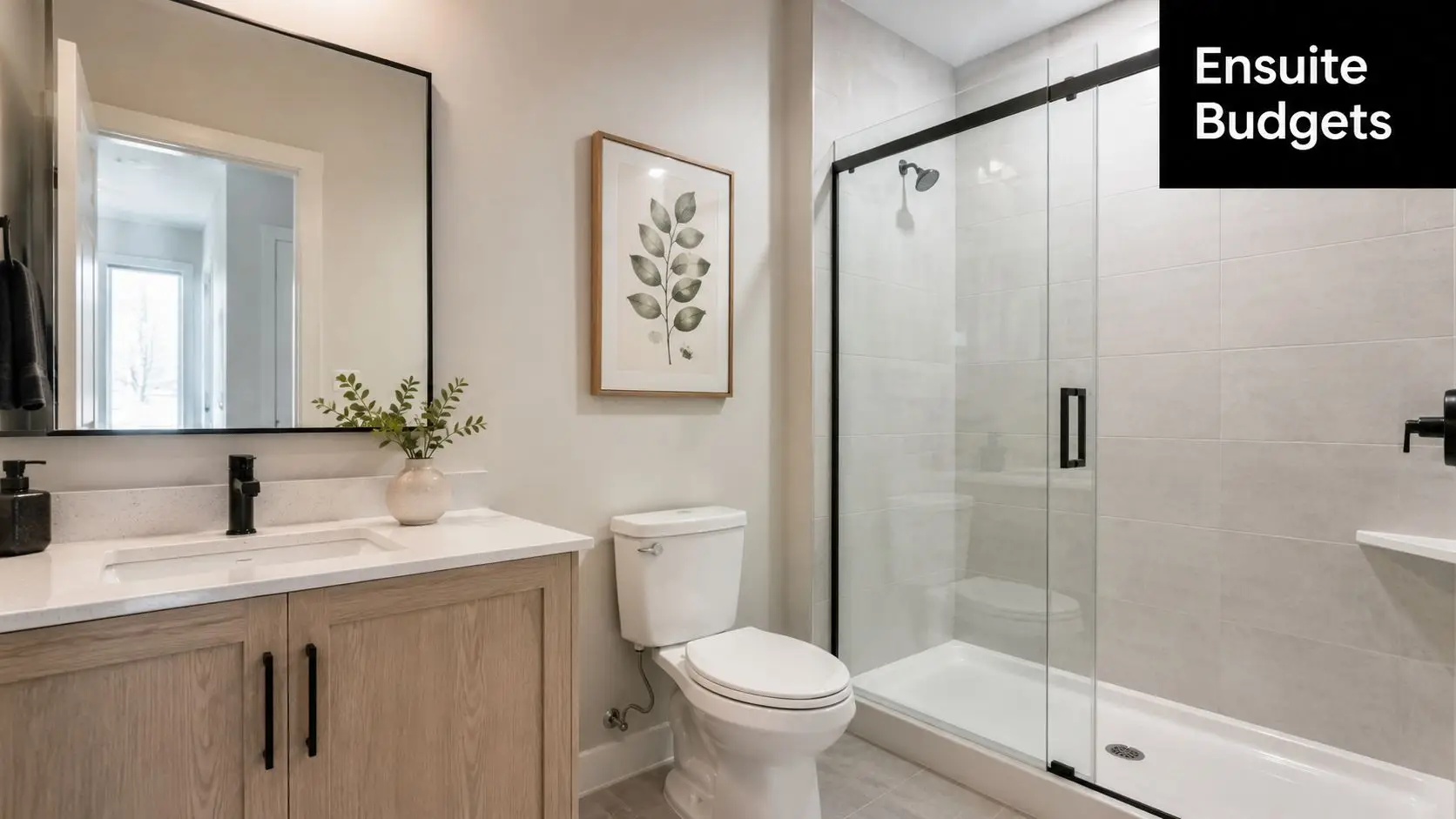
This is the most common practical brief. The owners want a room that feels new, functions better, and looks current without drifting into luxury for luxury's sake. The old vanity is gone, the shower is rebuilt, the room is retiled, storage improves, and the lighting is upgraded.
Many professional Victorian projects attain this standard. The result often looks like the kind of modern bathrooms people save to their inspiration boards, but the successful versions don't chase every trend. They use durable finishes, maintain sensible plumbing positions, and choose fittings that are easy to service later.
A family ensuite at this level usually gives the best value because the money goes into daily use. Better drawer storage. A larger mirror. Easier-clean shower glazing. Better lighting over the vanity. A cleaner tile palette that won't date too quickly.
If you want a room that still feels right in a few years, prioritise function first and style second. The best-looking bathrooms usually follow that order.
High-spec custom ensuite
This brief is different from the start. The owners want a stronger design statement and they're prepared to spend for it. The room may be reconfigured for a larger shower, double vanity, custom niches, frameless glass, feature lighting, and selected premium tiles.
Designer bathrooms earn their cost only if the detailing is handled properly. A beautiful render means very little if storage is awkward, mirror lighting is harsh, cleaning is difficult, or custom pieces crowd a compact room. The projects that justify a higher spend combine custom joinery, disciplined material choices, and proper construction sequencing.
For homeowners collecting new bathroom ideas, the lesson from all three examples is straightforward. Spend according to the problem you're solving. If the room is structurally sound and only looks tired, a cosmetic update may be enough. If the room fails functionally every day, a full rebuild is usually better value than repeated patching.
Beyond the Quote Timeline Contingency and ROI
One of the most misleading assumptions in renovation planning is that the quote tells you the whole story. It doesn't. Price matters, but timing, approvals, and risk planning often decide whether the project feels smooth or stressful.
The timeline isn't just construction
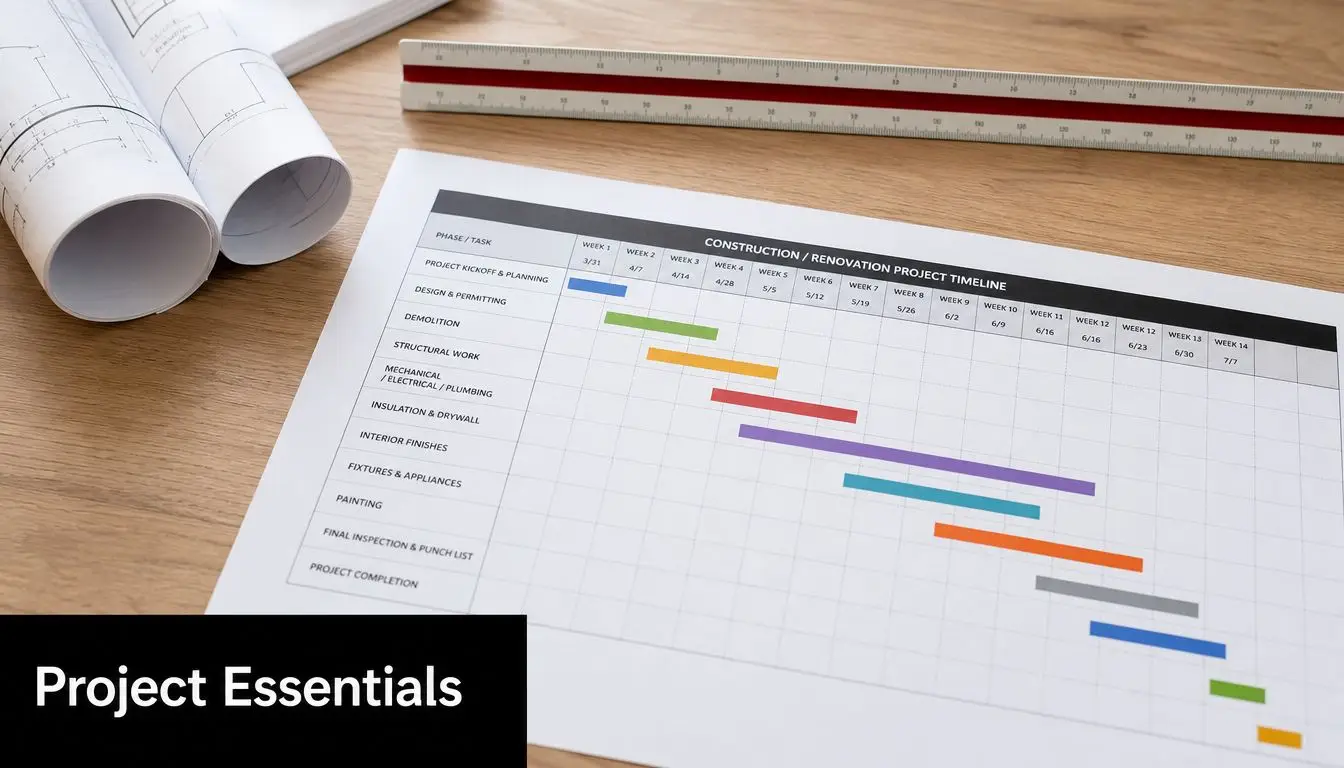
Homeowners often think in terms of demolition to handover. In reality, the process starts earlier with selections, final scope confirmation, trade scheduling, and access planning. For apartments and some townhouse settings, there's another layer before work even begins.
In Victoria, strata approvals can add 2 to 4 weeks and 15% to 25% in administrative fees to the total budget, and a 2025 Housing Industry Association report noted that “strata approvals add cost and time”, with 60% of 2024 Melbourne renovations facing delays due to approval processes, according to this Victorian strata approval and renovation delay report. That's a major issue for owners in buildings where water, noise, common property access, and waste removal all need formal approval.
A useful reality check is to treat the timeline as two separate clocks:
- Pre-construction clock: approvals, selections, documentation, ordering, and scheduling
- On-site clock: demolition, rough-in work, waterproofing, tiling, installation, finishing, and defects
If you want a clearer sense of what affects project duration, this guide on how long a bathroom remodel should take breaks down the moving parts.
Where the hidden spend shows up
The quote can be accurate and the project can still cost more than expected if the owner hasn't allowed for surrounding decisions. Temporary access arrangements, building rules, longer lead times for selected fixtures, and surprise substrate repairs can all affect the final cost path.
A renovation runs best when the budget covers the room itself and the process around the room.
What value actually looks like
Return on investment isn't only resale maths. A strong ensuite renovation improves daily use, presentation, and maintenance. It can also support rental appeal and property positioning, especially when the old room is clearly dragging down the rest of the home.
The highest ROI usually doesn't come from the flashiest room. It comes from a well-resolved one. Good waterproofing, durable finishes, smart storage, proper lighting, and a layout that works every morning are what hold value longest.
Get an Accurate Quote for Your Dream Ensuite
By the time you've compared ranges, scopes, approvals, and finish levels, the main takeaway is simple. Ensuite renovation cost is only predictable when the scope is documented properly. Loose allowances create stress. Clear selections and a fixed process create control.
That's where a specialist project team makes the difference. SitePro Bathrooms starts with a proper consultation, not a guess. The first step is understanding how you use the room, what isn't working, and which new bathroom ideas are worth pursuing in your space rather than just looking good online.
From there, the process moves into detailed planning and 3D design so you can see the layout, storage, fixtures, and finish direction before construction begins. That's especially useful for compact ensuites where every decision affects movement, cleaning, and storage. It also reduces the risk of expensive late changes.
A professionally managed renovation should also cover the practical side homeowners often dread. Trade coordination, ordering, permits, sequencing, site management, and quality control all need one point of accountability. That's why many owners prefer working with a specialist team backed by registered builders unlimited, rather than trying to stitch trades together themselves.
If you want a customized starting point for your own project, use the SitePro Bathrooms renovation cost calculator to estimate a realistic budget range. Once the scope is clear, it becomes much easier to decide what to keep, what to upgrade, and where the value really sits.
A good ensuite doesn't happen because the room is small. It happens because the planning is disciplined, the pricing is honest, and the build quality holds up long after the handover. If you're ready to move from rough figures to a quote that reflects your home, your building conditions, and your design goals, SitePro Bathrooms can help map it properly from day one.