
Planning a bathroom renovation and wondering which 2025 trends will still make sense after the first few months of real use?
That question matters more than the mood boards. A bathroom can photograph well and still fail in daily life. Tight clearances, poor storage, weak lighting, slippery finishes, and hard-to-clean tile choices show up fast once the room is in use. In Melbourne homes, especially older properties around Highett, the better renovations balance style with layout, ventilation, waterproofing, and materials that suit the household.
From what we're seeing on site, homeowners are asking for bathrooms that feel calmer, work harder, and age better. Some want a cleaner, more minimal look. Others want warmth, colour, or better accessibility for the next stage of life. The common thread is practical performance. Good design now means choosing what earns its place, not filling the room with features that add cost and maintenance.
That is the lens for this guide.
Across these nine bathroom trend 2025 ideas, the focus is on what actually changes the result. Each trend includes a before-and-after style scenario, notes on likely cost and value for Highett and wider Melbourne projects, and implementation advice grounded in how registered builders approach planning, compliance, and construction.
Recent renovation reporting also points to the same broad shift toward wellness, accessibility, and larger-scope bathroom updates. Houzz's 2025 U.S. Bathroom Trends Study, cited in Qualified Remodeler's summary of the research, found strong homeowner interest in accessibility features, wet rooms, and substantial remodels. The figures are U.S.-based, but the direction is familiar in Victoria, where clients are spending more carefully and expecting more from every square metre.
The trends ahead are worth considering because they affect how the room feels, what it costs to maintain, and how well it serves the home over time.
1. Spa-Like Wellness Bathrooms
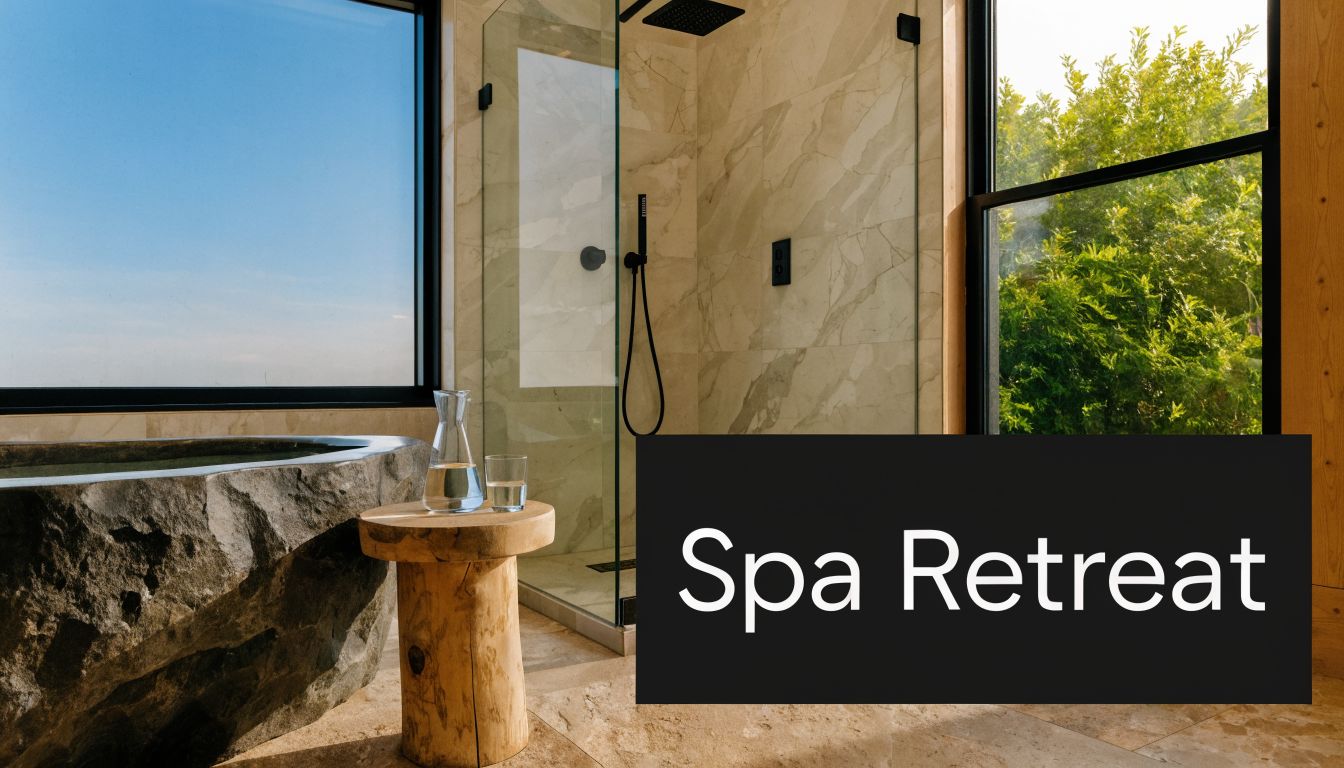
A wellness bathroom works when it feels calm on a Monday morning, not just impressive on quote day. The best versions aren't overloaded. They usually centre on one hero feature, then support it with quieter choices like softer lighting, warmer finishes, and a layout that separates splash zones from dry zones.
A common before-and-after scenario in Highett is an older bathroom with a boxed-in shower, bulky vanity, and cold lighting. The after version often swaps that for a larger walk-in shower, cleaner wall lines, better extraction, and one indulgent feature such as underfloor heating or a deep soaking bath. It feels more expensive even when the material palette is restrained.
What actually works
Statista's 2025 survey of U.S. experts projected spa-like bathrooms as a leading direction, favoured by over 70% of respondents, with organic materials also featuring strongly in the same trend set, according to Statista's bathroom design trends survey. In practice, that lines up with what many Melbourne homeowners ask for: less visual noise, more retreat-like finishes.
The mistake is trying to build a day spa into a standard suburban footprint. Steam showers, freestanding baths, stone walls, heated floors, feature lighting, and custom joinery can work together, but only if the ventilation, waterproofing, and circulation space are designed first.
- Start with one luxury move: Heated flooring, a larger shower, or a better bath usually gives more day-to-day value than trying to add everything.
- Protect the build behind the tiles: Wellness bathrooms create more moisture. Membranes, falls, drainage and extraction need to be right before the nice finishes go in.
- Keep the room easy to clean: Frameless glass and natural stone look great, but they need more maintenance than many homeowners expect.
Practical rule: If the room can't be ventilated properly, don't treat it like a steam zone.
2. Sustainable And Eco-Friendly Bathrooms
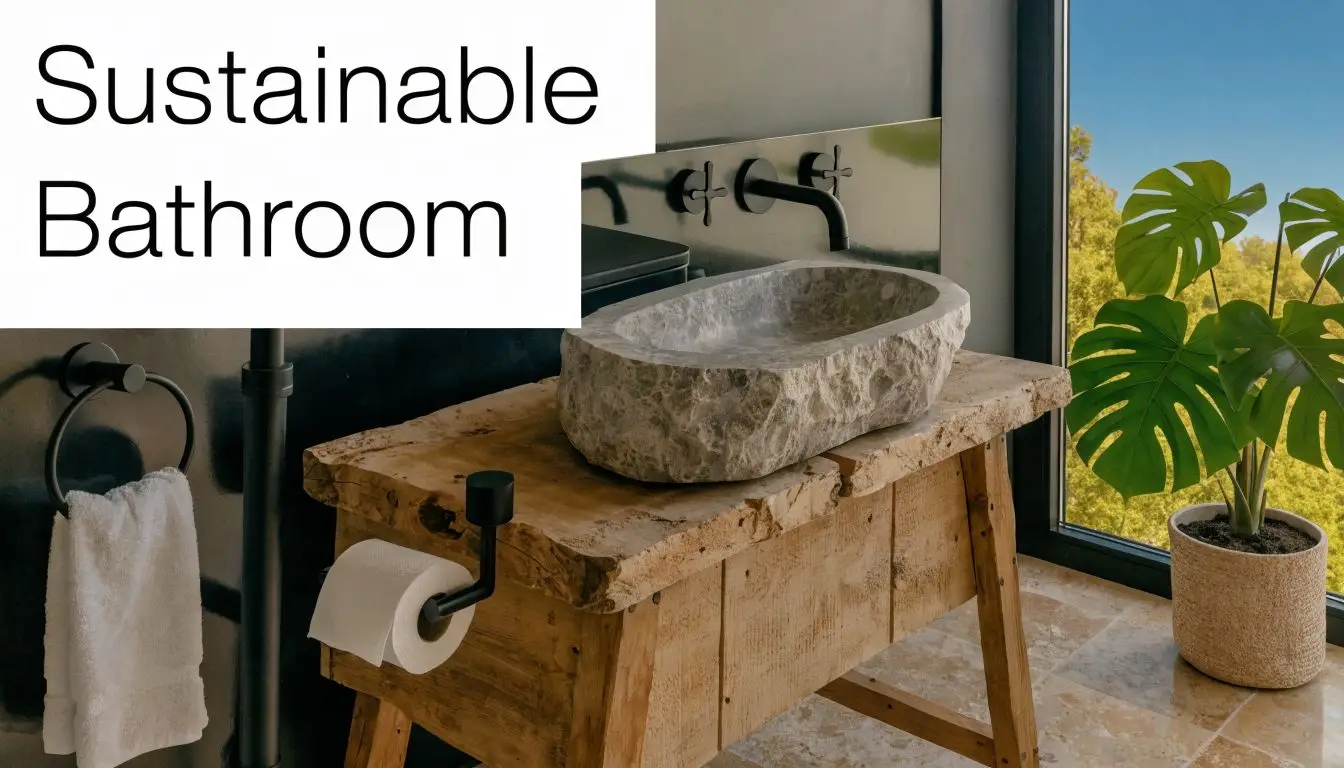
Sustainability is one of the easiest trends to get wrong because some products market themselves as eco-friendly while performing poorly in wet conditions. In bathroom renovations, sustainable choices need to do two jobs. They need to reduce waste or resource use, and they need to hold up under daily moisture, cleaning, and wear.
For a practical Melbourne example, think of a family bathroom where the old setup had dated laminate, a leaking shower base, and poor task lighting. A better sustainable update might use water-efficient fixtures, durable porcelain instead of fragile trend materials, low-toxicity finishes, and a vanity made from responsibly sourced or recycled content. It's less about signalling and more about long-term performance.
Better choices for real homes
Master Builders Australia reported that bathroom renovations made up 25% of 2024 residential projects, while sustainability-focused features such as water-saving fixtures rose 40% year-on-year, as cited in the verified data tied to this House Beautiful trend roundup reference. That doesn't mean every project needs advanced systems. It means efficient fixtures and durable material selections are moving into the mainstream.
A good rule is to choose high-impact basics first. Water-efficient tapware, dual-flush toilets, LED lighting, and long-life surfaces do more for most homes than chasing niche products with weak local support.
If you're weighing materials, sustainable construction building for the future with eco-friendly materials is a sensible starting point for thinking beyond the showroom label.
- Choose proven wet-area materials: Recycled content is a bonus, but bathroom-grade performance comes first.
- Think about replacement cycles: A cheap fitting that fails early creates more waste than a better product that lasts.
- Source for maintenance, not just looks: Timber-look finishes and textured surfaces can be easier to live with than delicate porous products.
The most sustainable bathroom is often the one that doesn't need to be redone in a few years.
3. Smart Bathrooms With Connected Technology
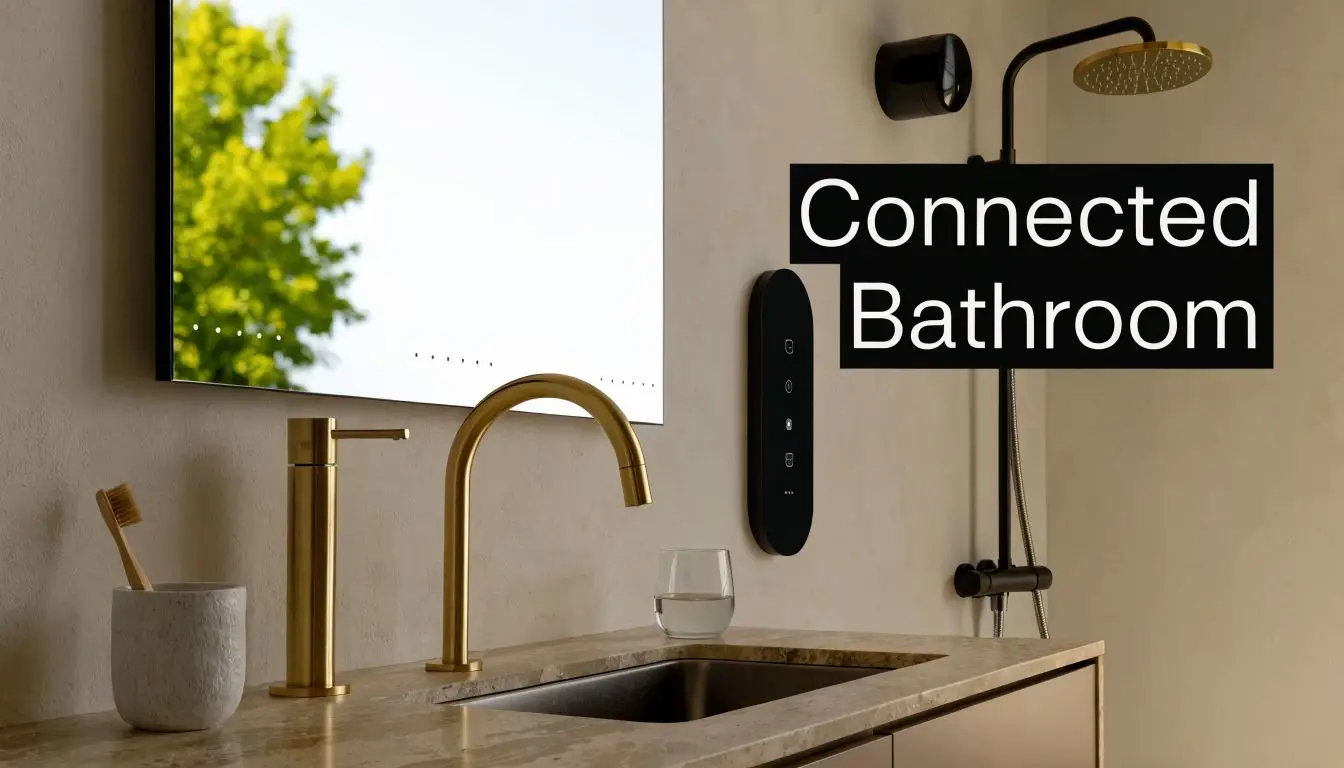
Smart bathroom tech has moved past novelty. When it's planned properly, it solves real annoyances. Better mirror lighting for morning routines, timed heating, demisters, sensor lighting for night use, and app-controlled comfort features can all make sense.
The problem is that many smart bathroom ideas get added too late. If wiring, switching, Wi-Fi coverage, and manual overrides aren't thought through during design, the room ends up more complicated than useful.
A realistic upgrade path
One practical scenario is a compact ensuite for busy professionals. Before renovation, the room has one harsh ceiling light, no power where it's needed, and a mirror that fogs up every morning. After renovation, the same footprint can feel far more current with backlit mirrors, integrated demister pads, niche lighting, heated towel rails on timers, and power placement that suits hair tools and charging.
According to the Houzz study PDF referenced in the verified data, user satisfaction reached 92% for projects that used 3D design visualisation pre-construction, with change orders reduced by 30% and perceived value lifted by 18%, as cited in the 2025 U.S. Houzz Bathroom Trends Study PDF. For smart bathrooms, that matters because technology needs coordination early, not after tiling.
What works best is selective integration:
- Start with daily-use tech: Mirror demisters, motion lighting, underfloor heating controls, and heated rails are easier to justify than novelty screens.
- Keep a manual backup: If a system goes down, you still need the fan, lights, and shower to work.
- Coordinate with the electrical plan early: Retrofits are usually messier and more expensive than proper rough-in during renovation.
A modern bathroom should still be simple to use for guests, tenants, and future buyers. If the controls need a tutorial, it's too much.
4. Minimalist And Japandi Design
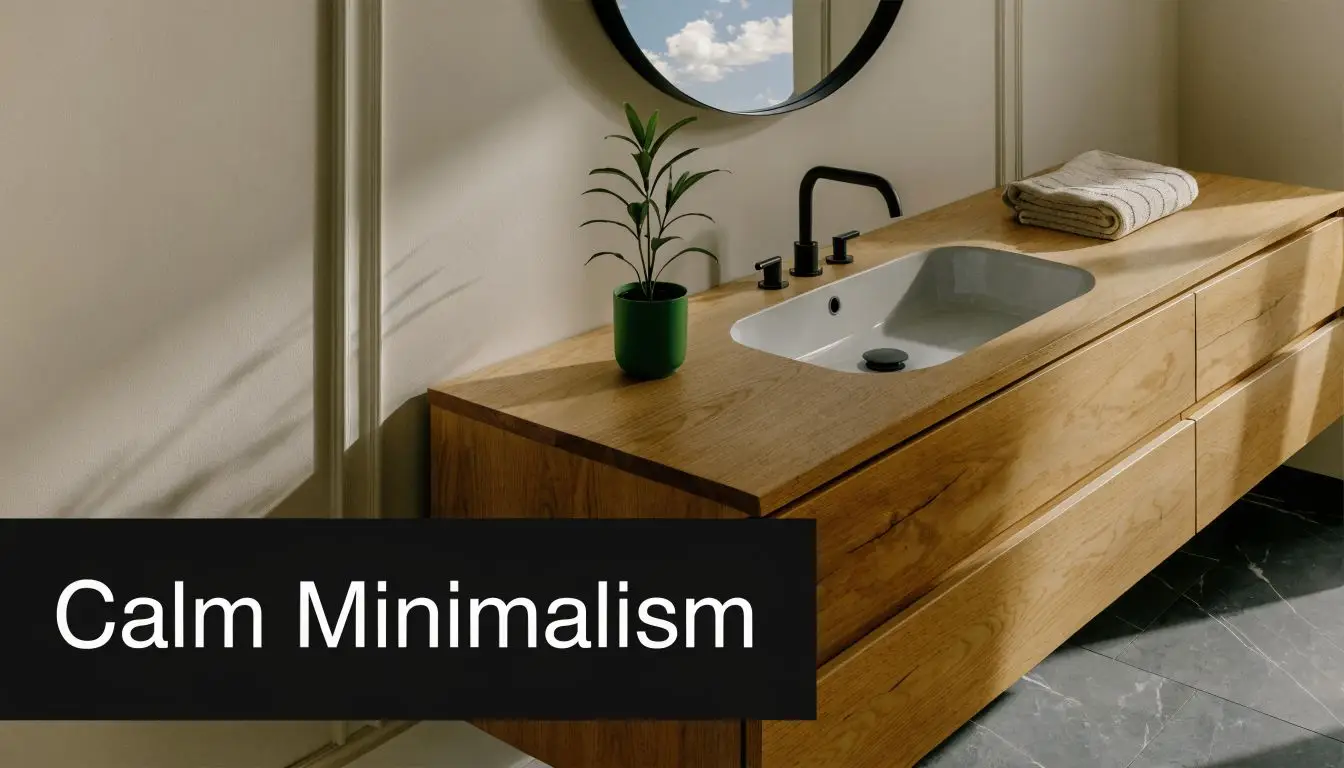
Minimalist and Japandi bathrooms look effortless when they're done well. They are some of the hardest modern bathrooms to execute because every decision is more visible. You can't hide poor proportions, awkward tile cuts, or cheap fittings in a pared-back room.
This style suits smaller Melbourne bathrooms particularly well because it relies on calm repetition rather than visual clutter. Floating vanities, timber accents, off-white or stone tones, and concealed storage can make a compact room feel more settled.
The trade-off nobody mentions
Minimalist design only works if storage is handled aggressively. Open benches and clean walls look great for photos, but real bathrooms still need toothbrushes, skincare, spare rolls, cleaning products, and kids' bath gear somewhere.
NKBA's 2025 trend direction highlighted demand for larger showers, wall removals, bathtub eliminations, and dual-function layouts, all of which support cleaner, less crowded bathroom planning in the bathroom trend 2025 conversation. That trend is easy to understand on site. When the room is stripped back visually, the layout has to carry more of the design weight.
A common before-and-after example is a family bathroom with too many finishes, a mirrored shaving cabinet that dominates the wall, and storage spilling onto every surface. A cleaner redesign might use one timber vanity, one tapware finish, one wall tile, and one floor tile, then hide the rest behind joinery.
- Limit the palette: Two or three tones are enough.
- Repeat materials deliberately: Repetition creates calm and makes smaller rooms feel more resolved.
- Spend on joinery accuracy: In a minimalist room, crooked lines stand out immediately.
Restraint is only convincing when the workmanship is sharp.
5. Bold Colours And Statement Tiles
Want a bathroom that feels memorable the moment the door opens? Colour and pattern can do that fast, but only when the room has one clear focal point and the rest of the finishes know their role.
In practice, this trend lands best in powder rooms, ensuites, and smaller renovations where a bold move feels intentional instead of scattered. A common Highett before-and-after is a flat builder-grade ensuite with white gloss wall tiles, a basic mirror, and no visual anchor. The stronger version keeps the layout, then swaps in a patterned porcelain floor or a deep-toned feature wall, adds a vanity in olive, navy, or oxblood, and warms up the scheme with brushed metal or timber.
The main trade-off is longevity. Statement tiles photograph well, but they are harder to replace later if the pattern dates or the batch is discontinued. I usually steer clients toward one hero surface only. That keeps the room interesting without locking the whole renovation to one bold choice.
For period-inspired homes, colour works especially well when the detailing has some discipline. An Art Deco bathroom approach can bring in stronger geometry and richer tones without making the room feel theatrical.
A few builder-level checks matter before anything is ordered:
- Choose one feature zone: Floor, shower recess, or vanity wall. One is usually enough.
- Check slip rating and grout width: Great-looking tiles still need to perform in wet areas.
- View samples under the actual lighting plan: Dark greens, rusts, and charcoal tones can read very differently once downlights and natural light hit them.
- Price for wastage early: Patterned tiles often need more cuts, more labour, and extra spare stock for future repairs.
In Melbourne projects, the cost jump usually comes less from the tile itself and more from labour, substrate prep, and layout accuracy. A simple rectangular tile is forgiving. A patterned encaustic-look tile or stacked feature wall is not. If budget is tight, put the money into a smaller hero area and keep the remaining tile field simple.
Lighting also carries more weight in a bold bathroom, as noted earlier. Stronger colours absorb light, and heavy pattern can flatten out if shadows are wrong. Good mirror lighting and careful downlight placement stop the room feeling smaller than it is.
6. Maximalist And Vintage Revival Bathrooms
Maximalism isn't about cramming in every interesting thing you find. The good version feels layered and collected. The bad version feels unresolved and hard to clean.
This trend suits character homes, heritage renovations, and clients who want something less predictable than contemporary showroom styling. Think fluted timber, checkerboard floors, antique-look mirrors, coloured basins, decorative sconces, or period references mixed with new waterproof construction behind the scenes.
Old character, new build quality
A realistic before-and-after scenario is a dated bathroom in a Victorian home where the original charm has already been stripped out, leaving a room that feels neither classic nor modern. A vintage revival approach can bring back identity through panel detailing, richer colours, and decorative fittings, while still upgrading plumbing, waterproofing, and ventilation to current standards.
If Art Deco is your reference point, art deco bathroom shows how to carry that influence without turning the room into a theme set.
The trade-offs are practical:
- Source pieces early: Vintage mirrors, wall lights, and furniture-style vanities can affect rough-in points.
- Mix periods carefully: One or two historical influences are easier to control than five.
- Respect cleaning realities: Ornate details look beautiful, but every ledge and groove collects dust and moisture.
Natural materials are part of why this trend is returning. Statista's 2025 survey also noted organic materials at nearly 50% within the expert trend mix linked earlier. That supports the move towards warmer, less sterile bathroom finishes, even in more expressive spaces.
7. Luxe Materials And Premium Finishes
Luxury doesn't come from using expensive material on every surface. It comes from choosing one or two standout elements and installing them properly. A marble vanity top, terrazzo floor, brushed brass tapware, or full-height stone splashback can enhance a room quickly if the rest of the selections stay disciplined.
The rooms that miss the mark usually chase too many premium touches at once. Marble wall tiles, stone basins, brass everything, feature lighting, and highly patterned floors can start competing with each other.
Spend where people notice and where it lasts
For Highett and greater Melbourne homeowners, a common premium upgrade path is replacing a standard vanity and acrylic shower base with custom joinery, tiled shower floors, higher-grade tapware, and one hero material. That shift gives the room a designer bathrooms feel without forcing every finish into the luxury category.
Verified data linked to Australian proxies notes median AU bathroom renovation costs hovering around AUD 20,000 to AUD 30,000 through HIA-based references within the same Statista-backed trend summary. That reinforces a practical point. Most projects have a ceiling, so premium selections need to be targeted rather than scattered.
Buy fewer better things. You'll usually get a stronger result than spreading the budget thinly across every surface.
A few material realities matter:
- Natural stone needs sealing and ongoing care.
- Brass and special finishes vary a lot by manufacturer.
- Large-format premium tiles need skilled set-out to avoid awkward cuts and lippage.
In modern bathrooms, luxury is often less about excess and more about precision.
8. Accessible And Universal Design Bathrooms
What makes a bathroom easier to use now without dating it later?
Accessible and universal design answers that question better than almost any other 2025 bathroom trend. In practice, this is less about specialist products and more about planning the room so it works for older homeowners, growing families, guests with limited mobility, and anyone who wants a safer bathroom with fewer awkward movements.
The best results are almost invisible. A step-free shower, better task lighting, clear circulation space, easy-to-grip tapware, stronger contrast between surfaces, and flooring with appropriate slip resistance make the room feel calmer and more forgiving to use every day.
Plan for access early, not after a fall
A common before-and-after scenario in Melbourne renovations starts with a bathroom that has a raised shower hob, a tight vanity corner, poor lighting at the mirror, and floor tiles that look good in the showroom but become risky under soap and steam. The revised layout opens the entry path, removes the shower step, allows easier turning space, and includes wall reinforcement for future grab rails. The finished room looks current, not clinical, which is exactly the point.
As noted earlier, recent homeowner trend reporting shows accessibility is shifting from a reactive decision to a standard part of bathroom planning. I see the same pattern on site. Clients often start by asking for a cleaner look or easier shower access, then realise those choices also support ageing in place and improve resale appeal.
For Highett and wider Melbourne homes, the cost difference is often modest if these decisions are made during the strip-out stage. Reinforcing walls, adjusting set-outs, specifying a hobless shower, and allowing better clearances usually cost far less during a full renovation than retrofitting them later after waterproofing and tiling are complete. The return is practical first. Better safety, easier cleaning, and a bathroom that does not need to be redone when household needs change.
Victorian compliance should be checked against current Australian Standards, the National Construction Code, and official Victorian Building Authority guidance relevant to the project scope, especially for slip resistance, waterproofing transitions, and layout constraints in small bathrooms. Registered builders should confirm what applies before fixtures are locked in.
A few implementation choices consistently pay off:
- Reinforce shower and toilet walls during renovation. Even if rails are not needed now, the room can be adapted later without opening finished walls.
- Choose floor tiles for grip, not just colour. Slip resistance matters more in real use than a polished showroom finish.
- Protect circulation space. Oversized vanities, nib walls, and inward-swinging doors can make an otherwise attractive bathroom frustrating to use.
- Use showers with minimal thresholds. They improve access, simplify cleaning, and usually make compact bathrooms feel larger.
Universal design works best when it is built into the layout, not added as a correction later. That is why this trend has staying power. It solves real problems while still delivering a bathroom that feels modern and well resolved.
9. Nature-Inspired And Biophilic Bathrooms
A nature-led bathroom isn't just about adding a plant to the vanity. The stronger version uses daylight, texture, stone-look finishes, timber tones, and softer colour transitions to make the room feel less synthetic.
This trend works especially well in homes where the bathroom currently feels closed in. A dated room with glossy wall tiles, no visual warmth, and poor artificial light can be transformed with a skylight, warmer neutrals, textured porcelain, and a vanity finish that brings in some grain and depth.
The version that lasts
There's a difference between biophilic design and high-maintenance styling. Real bathrooms need materials that can handle steam, cleaning products, and irregular airflow. That's why many successful projects use nature-inspired finishes rather than too many living elements.
One local-style example would be a family bathroom that replaces shiny grey surfaces with stone-look porcelain, brushed metal fixtures, a timber-look vanity, and a few moisture-tolerant plants near natural light. It feels softer straight away, but it still behaves like a practical bathroom.
Verified trend data also notes that wet rooms are often chosen for space optimisation, aesthetics, and accessibility in projects where homeowners want a more open, relaxed layout, as summarised in the previously cited Houzz report coverage. That links naturally with biophilic planning because open shower zones and visual continuity help a room feel less boxed in.
- Use natural references, not fragile materials everywhere: Stone-look porcelain often outperforms real stone in busy households.
- Choose plants carefully: Moisture-loving varieties are easier to keep healthy in bathrooms.
- Make ventilation part of the aesthetic plan: Timber tones, greenery, and warm textures all suffer if condensation isn't controlled.
Bathroom Trends 2025, 9-Point Comparison
| Style / Trend | Implementation complexity | Resource requirements | Expected outcomes | Ideal use cases | Key advantages |
|---|---|---|---|---|---|
| Spa-Like Wellness Bathrooms | High, steam/heating/plumbing integration | Premium fixtures, professional installers, higher energy use | Luxury feel, increased property value, improved wellbeing | High-end homes, ensuite upgrades, investor premium listings | Strong ROI; daily spa experience; wellness positioning |
| Sustainable & Eco-Friendly Bathrooms | Medium, fixture swaps and plumbing planning | Water-efficient fixtures, recycled materials, certification checks | Lower utility bills, improved indoor air, eco credibility | Eco-conscious homes, rebates-driven renovations, rentals | Reduced running costs; market differentiation; rebates |
| Smart Bathrooms with Connected Technology | High, IoT integration, wiring, software | Smart devices, robust Wi‑Fi, integrator expertise | Convenience, automation, energy/water monitoring | Tech-forward apartments, younger renter markets, luxury homes | Differentiation; accessibility; automated efficiency |
| Minimalist & Japandi Design | Medium, careful layout and storage planning | Natural materials, bespoke cabinetry, quality finishes | Calm, timeless aesthetic; perceived larger space; low clutter | Small apartments, broad-market renovations, show homes | Broad appeal; easy maintenance; longevity of style |
| Bold Colours & Statement Tiles | Medium, precise tiling and colour coordination | Custom/premium tiles, specialist installers, quality grout | Strong visual impact; memorable listings; hides wear | Creative or boutique rentals, feature ensuites, marketing shoots | Distinctive look; photogenic; expressive design |
| Maximalist & Vintage Revival Bathrooms | High, curated sourcing and complex layering | Vintage pieces, bespoke fixtures, skilled design input | Unique, narrative-driven spaces; niche appeal | Owner-occupied homes, creative rentals, boutique properties | Memorable character; high visual interest; storytelling |
| Luxe Materials & Premium Finishes | High, specialist handling and installation | Marble, brass, terrazzo, custom joinery, expert trades | Maximum property value uplift; durable elegant finish | Luxury developments, premium renovations, show homes | Highest perceived quality; long-term durability; strong ROI |
| Accessible & Universal Design Bathrooms | Medium–High, standards compliance and layout changes | Accessible fixtures, non-slip surfaces, specialist consultants | Greater market reach; safety and future-proofing | Aging-in-place homes, inclusive rentals, social housing | Broad tenant pool; reduced modification costs; increased safety |
| Nature-Inspired & Biophilic Bathrooms | Medium, plant care, waterproofing and ventilation | Living plants, natural stone/wood, ventilation, lighting | Calming, restorative spaces; wellness benefits; premium appeal | Wellness-focused homes, retreats, nature-connected urban flats | Mental wellbeing benefits; timeless natural appeal; sensory richness |
Ready to Build Your 2025 Dream Bathroom?
The top bathroom trend 2025 takeaway isn't a single tile colour, tap finish, or layout trick. It's the move towards bathrooms that are more personal, more functional, and more considered from the start. That's why the best results don't come from copying a showroom display. They come from matching the right idea to the way your household lives.
For some homes, that means a spa-like ensuite with better lighting and a calmer material palette. For others, it means an accessible walk-in shower, smarter storage, or finishes that can handle family life without looking tired in two years. Investors might care more about durability and broad appeal. Owner-occupiers might prioritise comfort, layout flow, and details that make mornings easier. Both approaches can work if the renovation is planned properly.
The common thread across modern bathrooms is intention. Good design is no longer just visual. It includes waterproofing strategy, fixture placement, storage planning, electrical coordination, and realistic material choices. That's where many new bathroom ideas either become a durable upgrade or an expensive compromise.
This is also where experienced renovation delivery matters. A beautiful concept can still fail if the fall to waste is wrong, the vanity feels oversized in the room, the extraction is underpowered, or the tile set-out hasn't been thought through before installation. Registered builders see those issues before they happen. That's the difference between a project that looks impressive on handover day and one that still performs years later.
At SitePro Bathrooms, we approach bathroom renovations with that full-picture view. As registered builders unlimited in Highett, we help clients shape designer bathrooms that suit their space, budget, and long-term goals. The process isn't just about picking finishes. It's about turning ideas into a buildable plan, then managing the job from concept through construction and final detailing.
If you're weighing layouts, finishes, or which bathroom trend 2025 direction makes sense for your home, the smartest next step is to get clarity before work begins. SitePro Bathrooms can help you explore options through 3D design, refine the practical details, and deliver a bathroom that feels current without becoming hard to live with. Contact the team to start planning a bathroom that's built for the way you live now, and for the way your home needs to work next.