
What Are Finishes in Construction: The Complete 2026 Guide
Construction finishes are the final surface layers applied to floors, walls, ceilings and fixtures. They provide aesthetic appearance and protective performance, and in wet areas such as bathrooms they also form part of the required waterproofing system under Australian standards. Australia recorded $82.5 billion in construction work done in the June quarter of 2026, showing the scale of the industry in which these final layers help determine build quality and cost control.
You may be standing in that decision-making gap now, surrounded by tile samples, paint cards, benchtop brochures and tapware finishes. Every sample looks convincing on its own, but the difficult questions come later. Will the floor cope with water? Will the painted wall show every joint under bright lighting? Will the grout, hardware and benchtop still be practical to clean?
For a homeowner planning bathroom renovations or a kitchen upgrade in Victoria, finishes are where design choices meet building performance. They determine how a room feels, but they also influence moisture control, durability, maintenance, safety and compliance.
Why Finishes Make or Break a Renovation
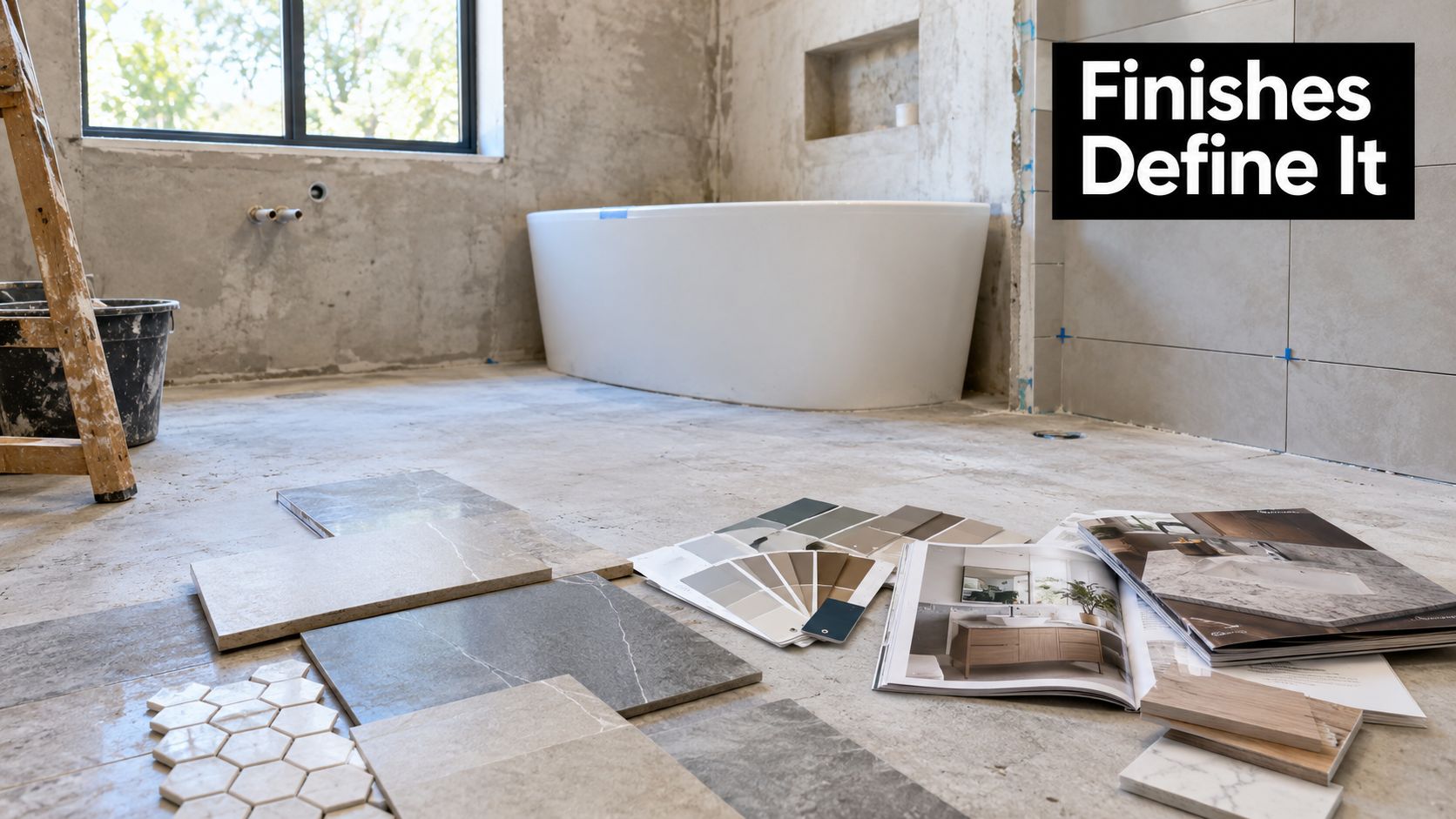
Three weeks into a bathroom renovation in Highett, a homeowner can easily become overwhelmed by attractive options. A soft stone-look tile may suit the mood board, a warm paint colour may complement the vanity, and brushed metal tapware may look right in the showroom. None of those samples, by themselves, explain how the completed room will respond to steam, splashes, cleaning products and everyday use.
A Highett bathroom project makes the point clearly. The owner wanted a refined floor tile and a larger wall tile, but the important conversation started underneath those visible surfaces. The installer checked the substrate, planned the finished levels around the waste, and coordinated the tile layout with the waterproofing details. That preparation reduced the risk that a beautiful finish would conceal a weak or poorly sequenced installation.
More than a decorative layer
A finish is the part of the building you see, touch, walk on, wipe down and live against. It can be a tile, paint system, stone surface, timber trim, cabinet coating, tapware finish or ceiling treatment. Some finishes protect the underlying structure from moisture and abrasion, while others help the room meet practical requirements for cleaning, slip resistance or access.
Australian construction activity demonstrates why this stage deserves careful planning. The Australian Bureau of Statistics reported $82.5 billion in total construction work done in the June quarter of 2026, with Victoria accounting for $19,733.7 million in that period, as shown in the ABS building activity release. Those figures describe a large construction market, but the homeowner experiences its value through smaller decisions, including whether a bathroom floor drains properly and whether a kitchen surface remains usable.
Practical rule: A finish should look right, perform in its location and remain maintainable after handover. If it only satisfies the first test, it isn't a complete solution.
The bridge between structure and living
The structure provides the frame, walls, floors and services. Finishes turn that framework into a usable home. A bathroom isn't complete when the pipework is connected, and a kitchen isn't complete when the cabinetry carcasses are installed. The final layers determine whether the spaces feel durable, comfortable and resolved.
That is why finishes can make a renovation feel like a lasting upgrade or a cosmetic repair. The right combination protects the work beneath, supports daily routines and gives the design its character.
The Main Categories of Construction Finishes
A bathroom renovation in a Victorian weatherboard home may involve the same tile as a new townhouse, yet the finish still has to suit the room's substrate, moisture exposure, ventilation and daily use. Construction finishes are therefore more than visible decoration. They form a performance envelope, with each layer helping the room resist water, wear, staining and movement.
Floors and walls
Floor finishes include ceramic and porcelain tiles, natural stone, engineered timber, vinyl planks and polished concrete. In a bathroom, the choice must work with waterproofing, drainage falls, slip resistance, cleaning and regular contact with wet feet. A kitchen floor faces a different test: dropped cookware, food spills, chair movement and traffic between the sink, cooktop and refrigerator.
Wall finishes include plasterboard, paint systems, tiles, waterproofing membranes and specialist coatings such as microcement. Painted plasterboard can provide a smooth surface in a dry kitchen or living area. Tiles and suitable coatings can handle more contact around a kitchen sink, splashback or shower. The waterproof membrane sits behind the visible surface, so a shower tile is only one component of a larger wet-area assembly.
Paint also has a protective job. Historic practice used oil paints on timber, metal and plaster, with glossy natural-oil finishes helping resist water and corrosion. The supplied New South Wales heritage fact sheet link, however, leads to an article about construction completion timing rather than a heritage publication, so it does not support that historical paint claim. The practical lesson remains sound: choose a coating for the material beneath it and the conditions surrounding it.
Fixtures, trims and ceilings
Fixture finishes appear on tapware, shower fittings, vanity surfaces, handles, drains and other hardware. Chrome, brushed nickel, brass and dark finishes create different visual effects. Their suitability also depends on cleaning routines, visible water marks and the quality of the product beneath the coating.
Trim finishes include skirting boards, architraves, door frames, cornices and cabinetry edges. Painted timber and MDF are common in Victorian kitchens and bathrooms, but sharp corners and neat joints depend on preparation, sanding and the correct coating system.
Ceilings may use painted plasterboard, moisture-resistant board systems or exposed structural treatments. In bathrooms, ventilation and surface preparation matter alongside colour, because condensation can reveal weak joints and unsuitable paint.
Because the membrane sits below the tile, specify the wet-area system as one assembly, substrate, membrane, adhesive and tile, rather than choosing the tile alone.
How to Choose the Right Finishes for Your Space
Selection becomes easier when you stop asking which finish is most attractive and start asking which finish suits the conditions. A bathroom floor, kitchen benchtop and hallway wall each face different combinations of moisture, impact, cleaning and visual scrutiny.
Start with performance
Moisture resistance comes first in bathrooms and around kitchen sinks. Confirm what sits behind the visible surface, how water will drain, and whether the selected product is suitable for its location. A honed travertine floor may offer warmth and texture, but it needs a maintenance commitment that a homeowner may not want. A porcelain-look tile can create a similar visual direction with a different care routine.
Durability depends on use. A floor in a busy family bathroom faces repeated wet feet and cleaning, while a guest ensuite may experience lighter use. Benchtops need resistance to spills, heat and abrasion, and cabinet finishes need to tolerate contact around handles and work areas.
Maintenance should be judged candidly. Ask whether the surface needs sealing, specialised cleaning or regular attention to preserve its appearance. A finish that demands more care isn't automatically a bad choice, but the commitment should be clear before installation.
For practical tile planning, use this guide to choose bathroom tiles alongside your installer's advice about substrate, drainage and layout.
Compare the whole finish system
A room feels coherent when the floor, walls, fixtures, trims and cabinetry share a deliberate relationship. That doesn't mean every surface needs to match. A textured wall tile may work with a calm floor, while a warm vanity can balance cooler tapware. The finish hierarchy should also reflect the budget. Spend more on surfaces that face water and heavy use, then simplify lower-risk decorative details.
| Finish Combination | Moisture Resistance | Durability | Maintenance | Budget Impact |
|---|---|---|---|---|
| Porcelain tile, painted plasterboard and chrome hardware | Strong when correctly installed | High for typical bathroom use | Straightforward cleaning | Moderate |
| Natural stone, stone benchtop and brushed metal hardware | Depends on sealing and product selection | Good, with care | Regular maintenance may be needed | Higher |
| Textured tile, painted vanity and dark hardware | Strong for suitable wet-area tile | Good, though texture can hold residue | More attention around grooves and edges | Moderate |
| Microcement surfaces, floating vanity and concealed hardware | Dependent on professional application and sealing | Suitable when specified for the location | Resealing and careful cleaning may be required | Higher |
| Terrazzo-look tile, timber-look cabinetry and warm metal hardware | Strong when tile and cabinetry are correctly selected | Good for busy rooms | Generally manageable, with grout care | Moderate to higher |
In wet areas, performance precedes style. A finish that fails can lead to water damage, disruption and remediation, not merely a disappointing colour choice.
Finishes in Action, The Bathroom Renovation Sequence
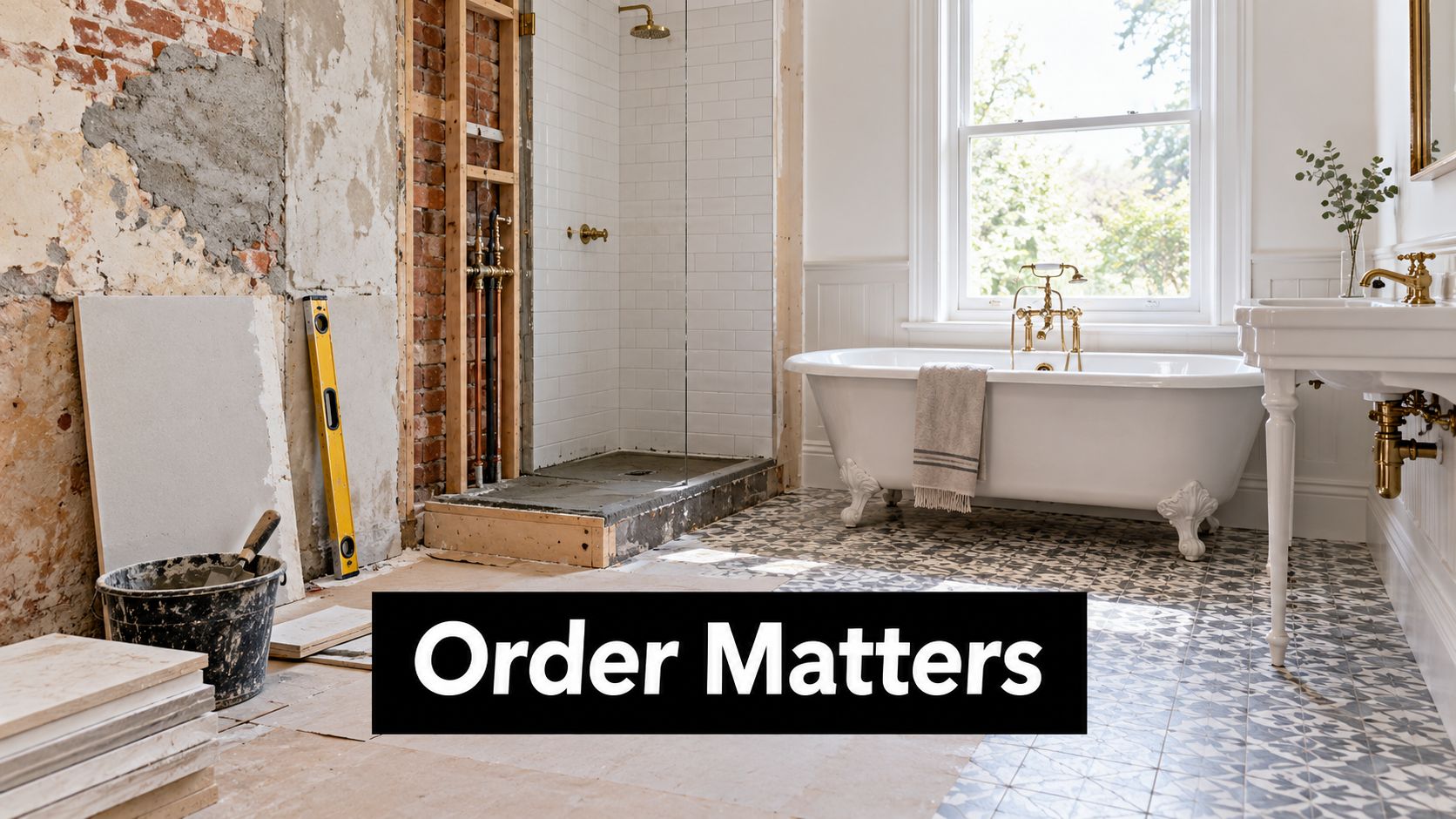
A bathroom renovation works from the substrate outward. Each visible finish relies on the layer beneath it, so changing the tile or vanity late in the process can affect levels, clearances and waterproofing details.
Prepare before covering
The sequence starts with demolition, substrate preparation and service coordination. The builder or relevant tradesperson checks that walls and floors are sound, suitably even and ready to receive the planned system. Drainage falls, step-downs, hob details and penetrations need to be resolved before the waterproofing membrane is applied.
Under the NCC-referenced AS 3740:2021 framework, domestic wet areas require waterproofing materials and installation details for floors, walls, junctions and penetrations. At a shower floor and wall junction, waterproofing must extend at least 150 mm above finished tile level or 25 mm above the maximum retained water level, whichever is greater, as explained in the Australian wet-area waterproofing guidance.
That requirement makes finished levels important from the beginning. If the tile thickness, waste position or shower detail changes after waterproofing has been planned, the team may need to revisit the entire build-up.
Install the visible layers in order
Once the waterproofing has been inspected and accepted, the tiler installs the floor and wall finishes, maintaining the planned falls towards the waste. Large-format tiles can create a calm appearance, but their suitability depends on the substrate, room geometry, handling and drainage design. Review the installation implications before choosing large-format bathroom tiles.
Painted areas require their own quality check. Queensland's Standards and Tolerances Guide identifies Level 4 as the default plasterboard finish, with AS/NZS 2589 commonly used to describe finish levels from Level 0 to Level 5. A higher-gloss coating can reveal joints, fastener heads and waviness, so the finish level should be agreed before sanding and painting.
The final sequence includes moisture-suitable paint, cabinetry, vanity tops, tapware, shower fittings, mirrors, trims and hardware. A careful defect inspection checks grout, silicone, paint edges, alignment, drainage and the operation of doors and drawers.
A common mistake is choosing decorative tiles before confirming the waterproofing and substrate plan. The tile is visible, but the preparation decides whether the finish can perform.
2026 Finishes Trends for Kitchens and Bathrooms
A Victorian bathroom renovation often starts with a mood board, then meets practical limits such as a narrow footprint, limited daylight or a busy family routine. The strongest 2026 direction combines warmth and texture with finishes that can handle moisture, cleaning and daily wear. The result should work as a performance envelope, with the visible surface supported by sound substrate preparation, compliant waterproofing, appropriate paint levels and durable materials.
Australian design coverage points towards warm neutrals, curved forms, floating vanities, timber, stone, textured surfaces and freestanding baths in contemporary bathrooms, as described in this Australian modern bathroom design overview. These choices can soften compact rooms and older Victorian homes. They still need to suit ventilation, available space, cleaning routines and the way the room is used.
Texture with a practical purpose
Fluted cabinetry, reeded glass, ribbed wall treatments and textured tiles add depth to bathrooms and kitchens. Their grooves and edges can also collect dust, soap residue and cooking splashes. Use texture selectively, keep frequently touched areas accessible, and confirm that the surface can be cleaned with ordinary household methods.
Microcement and terrazzo-style finishes create a more continuous appearance, with fewer visible joints. Microcement suits contemporary interiors when professionally applied, although high-wetness areas may require periodic resealing. Terrazzo can provide a durable patterned surface, but the selected product and installation method determine how it responds to moisture, impact and cleaning.
The Australian bathroom trend coverage for 2026 describes freestanding baths as centrepieces, double vanities extending beyond ensuites, and tactile details such as fluted cabinetry and ribbed glass becoming more common. These ideas earn their place when they improve storage, movement, comfort or cleaning, rather than creating a showroom effect alone.
Choose the trend that earns its place
Recycled-content materials and low-silica surfaces are becoming important considerations in Australian bathroom and kitchen selection, according to 2026 Australian interior trend reporting. Ask suppliers for product information, installation requirements, maintenance guidance and any relevant compliance details. Sustainability claims need to be matched with evidence and a realistic care plan.
For styling and accessory guidance that complements these directions, see our overview of bathroom decor in Australia.
A finish earns its place when it suits the moisture level, tolerates expected use, remains serviceable and fits the wider palette. Warm neutrals and tactile materials can create a calm result, but they cannot compensate for poor waterproofing, an unsuitable substrate or paint preparation that does not match the lighting and coating.
Common Finish Mistakes That Cost Victorian Homeowners
Most expensive finish problems begin before the final surface is installed. A tile may crack because the substrate wasn't prepared properly, or a painted wall may reveal defects because the specified finish level didn't match the lighting and coating.
Four decisions that deserve extra scrutiny
Ignoring substrate preparation creates trouble beneath the surface. Uneven walls, movement, poorly treated junctions and compromised waterproofing can lead to cracked tiles, hollow areas, ponding or leaks. Ask who will inspect the substrate and how the team will record waterproofing and pre-tile checks.
Choosing the wrong plasterboard finish can leave joints and fastener heads visible once paint dries. The required finish should reflect the room, lighting conditions and coating sheen. Agreeing this before construction prevents a dispute after the painter has completed the work.
Putting appearance ahead of safety and care is another common error. A highly polished stone floor may look striking, but a wet bathroom also needs an appropriate slip-resistant surface and a cleaning routine the household can follow. A finish that demands constant care may be unsuitable for a busy family even if it looks impressive on installation day.
Skipping Victorian compliance documentation creates avoidable risk. Structural work must be performed by a registered builder, and Victoria requires a written major domestic building contract for residential building work worth more than A$10,000, according to the Victorian domestic building contract guidance. Check that the person engaged has the appropriate registration, including whether a registered builder unlimited registration is relevant to the scope.
Plumbing, gasfitting and drainage work must be carried out by a plumber registered or licensed with the Building and Plumbing Commission. For plumbing work over A$750, the plumber must provide a compliance certificate, as set out in the Victorian home improvement checklist.
Check before you approve the order
- Compliance: Confirm the builder, plumber and required documentation for the scope.
- Slip performance: Ask for the product's suitability and slip information for wet floors.
- Warranty coverage: Keep product warranties and installation requirements together.
- Maintenance: Understand sealing, cleaning and repair expectations before purchase.
Turning Finish Choices Into Confident Decisions
The homeowner in Highett who began with a table covered in samples can now sort those choices into useful questions. Which surfaces face water? Which receive heavy contact? What preparation does each product need? How will the colours, textures and hardware work together once the room is viewed as a whole?
That framework makes bathroom renovations and kitchen projects easier to manage. You identify the categories, set performance requirements, choose a finish level, confirm the installation sequence and then select the style that fits. Trends become options rather than instructions.
Victoria's construction total mentioned earlier shows that finishes sit within a substantial regional building market. For an individual homeowner, the investment is personal, but the decision still has a material effect on durability, maintenance and the cost of future repairs.
A successful renovation should look considered when the trades leave and remain practical through ordinary daily life. The best finish choices bring engineering, design and living together. They protect the work beneath, support the way your household uses the room and give the project its final sense of completion.
If you're planning a bathroom or kitchen renovation in Highett or greater Victoria, contact SitePro Bathrooms to discuss your layout, finishes, waterproofing requirements and construction sequence. Bring your preferred tiles, colours or new bathroom ideas to the consultation, and request a coordinated plan that connects the design with the practical work required for a durable result.