

A like-for-like bathtub replacement in Australia commonly costs about AU$1,200–AU$5,000+ installed, while broader bathroom renovation budgets run from roughly AU$8,000 to AU$35,000+, depending on scope. Premium bathtub upgrades can exceed AU$10,000, particularly when the layout, plumbing, waterproofing or finishes change.
That gap between the bath advertised online and the amount on the final invoice catches out Victorian homeowners every week. A product page might show a tidy price for an acrylic bath, but it doesn't include demolition, rubbish removal, wall repairs, plumbing adjustments, waterproofing, tiling, tapware, screens or the labour needed to make everything work together.
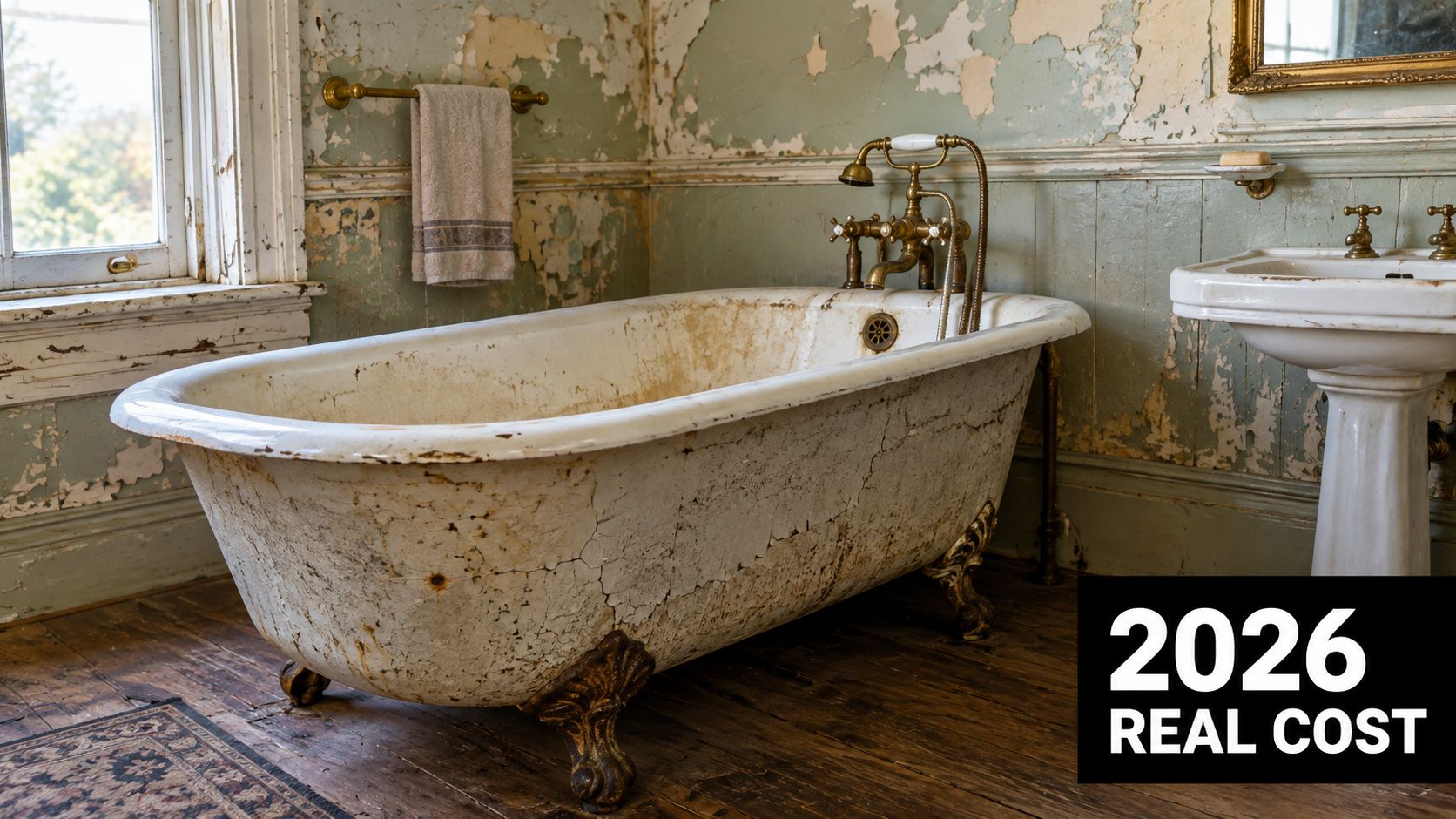
If you're standing in a Highett bathroom looking at a cracked, stained or dated tub, budget for the installed project, not the product. The right number depends on whether you're making a simple swap, rebuilding the wet area or converting the bath into a shower.
What a Bathtub Remodel Really Costs in 2026
The most useful starting point is the national like-for-like benchmark. In Australia, a straightforward bathtub replacement commonly lands around AU$1,200–AU$5,000+ installed, while a broader replacement estimate can range from AU$500 to AU$10,000, depending on the bath, access and installation complexity, as outlined in this Australian bathtub renovation cost guide.
Those figures describe very different jobs. A simple swap keeps the existing footprint, waste position and wall finish. A more involved remodel may uncover damaged substrate, require new waterproofing, alter the plumbing set-out or demand structural support for a heavy bath. The bath itself is only one part of the bill.
Practical rule: If a quote only names the bath and installation, it isn't a complete bathtub remodel budget.
For a Victorian homeowner, the broader bathroom renovation context matters. Full bathroom renovations in Victoria commonly sit around AU$18,000–AU$40,000, with some standard-renovation benchmarks between AU$20,000 and AU$32,000. A national benchmark sits near AU$26,000, according to Victoria bathroom renovation pricing guidance. A bathtub update inside that larger scope can be modest, but it can also become the project's trigger for replacing the entire wet area.
How to judge a quote before signing
Use this sequence:
- Identify the scope. Is it a straight replacement, a partial remodel or a full bathroom renovation?
- Check the plumbing assumption. Keeping the existing waste and taps is cheaper than relocating them.
- Confirm waterproofing. The quote should say whether existing membranes are retained, tested or replaced.
- Ask about demolition and disposal. Removing the old bath and taking the waste away shouldn't be left vague.
- Review exclusions. Look for plaster repairs, tile matching, access limitations, permits and electrical work.
Melbourne and greater Victoria labour availability, site access and supply choices all affect the final figure. Standard acrylic baths usually offer the cleanest path to a controlled budget. Steel baths bring a different balance of durability and weight, while custom, freestanding and stone-resin options demand more careful floor, plumbing and delivery planning.
For a broader planning framework, compare your scope with this bathroom remodelling cost guide. The key question isn't whether the quoted bath is cheap. It's whether every necessary task is included.
The Line Items That Drive Your Final Quote
A reliable quote lets you trace the money from demolition to final silicone. The following figures are practical planning allowances for the individual parts of a bathtub remodel, but the final amount depends on access, condition and finish selection.
| Line Item | Budget Range (AUD) | Notes |
|---|---|---|
| Demolition and disposal | AU$200–AU$600 | Remove the old bath, rubble and rubbish |
| Acrylic bath | AU$300–AU$1,200 | Standard replacement option |
| Steel bath | AU$250–AU$800 | Heavier and often more demanding to handle |
| Freestanding acrylic bath | AU$900–AU$3,500 | Requires careful waste and floor planning |
| Cast iron bath | AU$2,000+ | Heavy, durable and difficult to move |
| Surround or wall lining | AU$500–AU$3,500 | Depends on lining type and finished area |
| Tiling | AU$40–AU$120 per m² installed | Includes tile installation, not necessarily all substrate repairs |
| Plumbing alterations | AU$300–AU$1,500 | Set-out, valves, waste and pipe adjustments |
| Waterproofing | AU$500–AU$1,200 | Scope depends on the wet-area repair or rebuild |
| Straight-swap labour | AU$650–AU$1,500 | Assumes the layout and surrounding surfaces cooperate |
| Permits and compliance | Varies | Required where the work triggers applicable approvals |
Demolition is often underestimated because homeowners see it as a quick removal job. In reality, trades may need to disconnect plumbing, protect adjacent surfaces, remove fixed wall finishes and carry heavy materials through the property. Disposal is a separate logistical task, not an automatic free extra.
The surprises that appear on quote day
The old bath can hide damaged plaster, swollen framing or a failed substrate. Matching discontinued tiles can also force a larger wall repair than expected, particularly when the replacement bath has a different height or edge profile.
Valve and set-out changes create another common jump. A new bath may fit the room but not align with the existing waste, spout or tap positions. The installer then has to open the wall or floor, alter pipework and repair the finish.
A low-cost acrylic bath at AU$300 can therefore become a mid-range project once demolition, plumbing, waterproofing, tiling and labour are included. That's why two quotes with the same bath model can differ sharply without either contractor padding the price.
Don't compare totals until you compare inclusions. A fair quote should separate the product, trades, preparation, disposal, compliance requirements and finish repairs.
Refinish, Replace, or Convert to a Shower
Refinishing is the lowest-disruption option, but it's only suitable when the bath is cosmetically tired rather than structurally compromised. The typical cost sits around AU$500–AU$1,200, and the work can often be completed in a day. A quality refinish may provide roughly 5 to 10 years of service, but it won't solve structural cracks, movement, leaking waste connections or failed waterproofing.
Full replacement makes more sense when the bath surround is tired, the plumbing is corroded or the existing installation no longer feels reliable. A like-for-like replacement commonly lands between AU$1,800 and AU$5,000 installed, depending on the bath and surrounding work. Keeping the layout is the main cost-control decision.
A tub-to-shower conversion typically costs AU$3,500–AU$8,500, according to the planning figures for this comparison. It suits households that never use the bath, people planning for easier access and smaller bathrooms where a clear shower zone improves daily movement. Before choosing it, consider whether the property needs a bath for family use or market appeal.
| Option | Typical Cost (AUD) | Lifespan | Best For |
|---|---|---|---|
| Refinish | AU$500–AU$1,200 | Roughly 5 to 10 years | Sound baths with surface wear |
| Like-for-like replacement | AU$1,800–AU$5,000 installed | Depends on product and installation | Tired baths with a workable layout |
| Convert to shower | AU$3,500–AU$8,500 | Depends on construction and fixtures | Accessibility, unused baths and compact rooms |
Make the decision with the whole wet area in view
Refinishing doesn't help if the wall lining is failing. Replacement doesn't deliver value if the surrounding tiles, screen and tapware are already at the end of their useful life. Conversion can improve access dramatically, but the screen, floor falls, grab-rail provisions and waterproofing need equal attention.
For a more detailed comparison of wet-area layouts, review this guide to wet rooms and walk-in showers. My recommendation is straightforward. Refinish a sound bath when appearance is the only problem. Replace it when the installation is tired but the layout works. Convert it when access and usability matter more than having a bath.
Real Project Budgets From Budget to Premium
A local budget becomes easier to understand when you attach it to a real scope. These examples use Bayside-style scenarios to show how the bathtub remodel cost changes as the work expands.
The Bayside budget swap replaces a builder-grade acrylic bath without moving the plumbing. It includes controlled demolition, disposal, a standard acrylic bath, minor preparation, reconnection and basic finishing. The realistic installed range is AU$1,800–AU$2,800, provided the existing wall and floor conditions are sound.
The Caulfield standard project is a proper wet-area update. It replaces a worn pressed-steel bath, renews the surrounding tiles, installs a screen and updates tapware while retaining the basic layout. A realistic total is AU$8,000–AU$14,000, because the bath is no longer the only major element.
The Brighton premium reconfiguration changes the room rather than merely replacing a fixture. It may include a freestanding stone-resin bath, full-height tiling, in-floor heating and upgraded plumbing. The likely budget is AU$25,000–AU$35,000+, depending on design and site conditions.
| Scenario | Scope of Work | Tub & Materials | Labour | Total Installed Cost |
|---|---|---|---|---|
| Bayside budget swap | Demolition, disposal, like-for-like installation and basic making good | Builder-grade acrylic and standard finishes | Straight-swap trades | AU$1,800–AU$2,800 |
| Caulfield standard project | Bath replacement, new tiling, screen and tapware | Pressed steel bath, mid-range tiles and fittings | Plumbing, tiling, waterproofing and installation | AU$8,000–AU$14,000 |
| Brighton premium reconfiguration | Layout work, full-height tiling, heating and plumbing upgrades | Freestanding stone-resin bath and premium finishes | Coordinated multi-trade renovation | AU$25,000–AU$35,000+ |
Don't treat these as fixed promises. Add a realistic allowance for scope drift over the life of the project, particularly when demolition exposes problems. A budget quote that excludes substrate repairs, access constraints or tile changes may look attractive but won't remain comparable.
The wider Victorian market supports this tiered approach. Australian renovation guides commonly place budget bathroom renovations around AU$8,000–AU$15,000, standard work around AU$15,000–AU$35,000, and premium renovations at AU$35,000+, as shown in this Australian renovation cost breakdown. A bath-only job should sit below a full renovation unless it involves full wet-area work.
How Long the Work Actually Takes
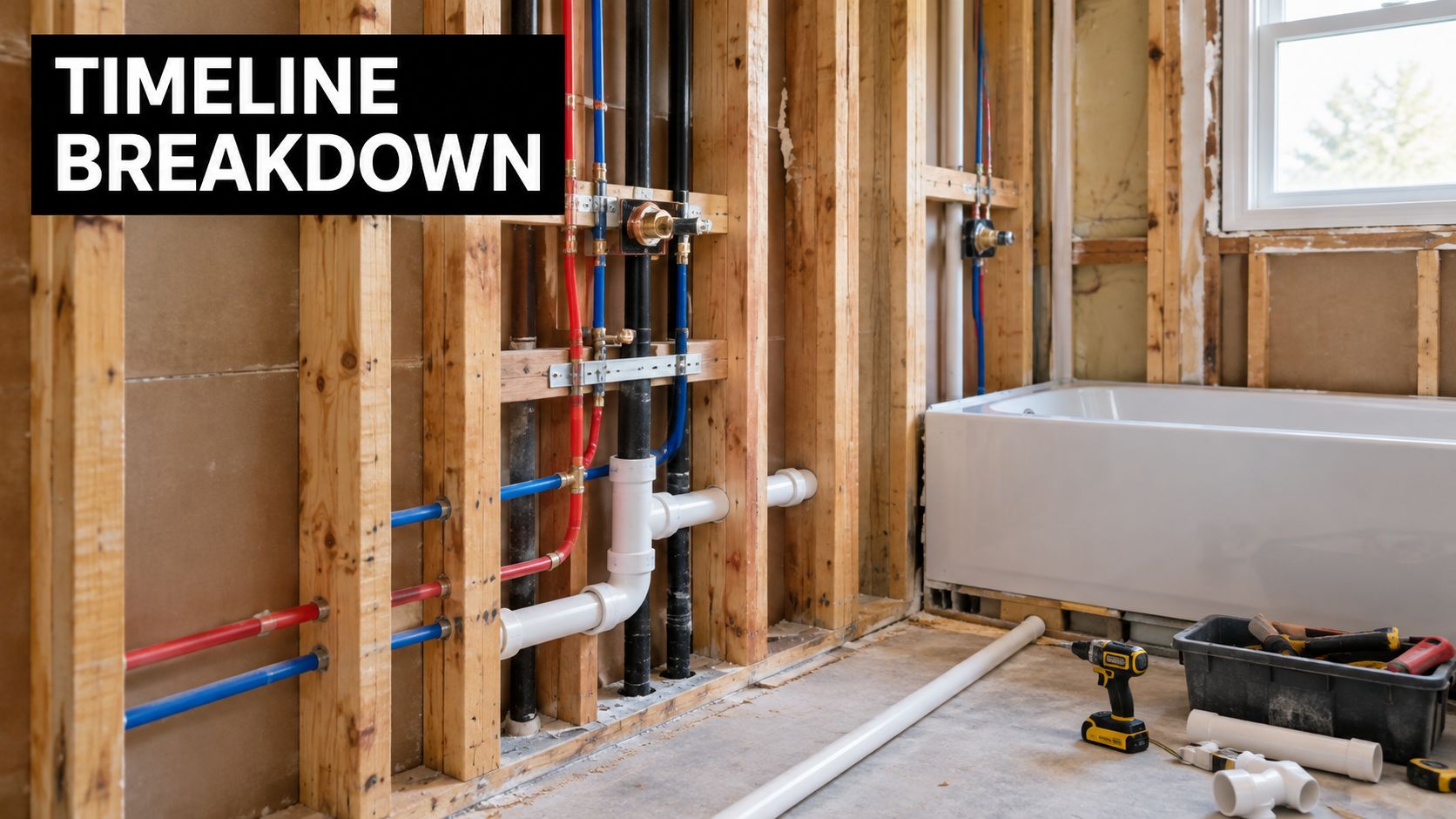
A standard bathtub replacement isn't a one-day job once demolition, waterproofing and finishes are included. Plan for roughly four to six weeks of disruption for a standard project, while a full wet-area reconfiguration can run eight to twelve weeks.
A realistic Victorian sequence
Week one usually covers protection, demolition and disposal. The installer removes the bath, opens the necessary areas and checks what sits behind the visible finishes.
Weeks two to three focus on plumbing rough-in, substrate preparation and waterproofing. Waterproofing needs appropriate curing time before tiling proceeds. Rushing this stage is a false saving because leaks cost far more than a controlled programme.
Weeks three to four are generally occupied by tiling, screed work and grout preparation. Tile availability can affect the sequence, so products should be selected and ordered before demolition begins.
Weeks four to five cover bath installation, tapware, screens, accessories, electrical fit-off where applicable and silicone sealing. The room still needs a careful quality check before it returns to daily use.
Where the programme slips
Scope creep usually appears after the walls or floor open up. Behind-the-wall rot, asbestos testing in pre-1990 homes, delayed tiles and last-minute tapware swaps can each interrupt the planned sequence. Allow two to seven additional days when one of these issues arises.
The most useful preparation is simple. Choose the bath, screen, tiles and tapware before work starts, and ask the contractor to identify decisions that could affect the critical path. This bathroom renovation timeline guide is useful for checking whether a proposed programme accounts for the wet trades and curing stages.
Remodel Value and 2026 Style Trends
A bathroom remodel can improve saleability, rental presentation and daily comfort, but not every expensive finish pays back financially. Spend first on the parts buyers and tenants can see and rely on, waterproofing, clean installation, practical storage, ventilation and a coherent layout.
Current Australian design direction is moving towards warm neutrals, natural stone and earthy tiles rather than stark white schemes and glossy subway tile treatments, according to this Australian bathroom trend forecast. That shift suits Victorian homes because warmer surfaces can soften older architecture without forcing a period imitation.
Large-format 600×600 porcelain tiles create fewer grout lines and a calmer visual field. Fluted glass screens add texture, while brushed brass, matte black and other strong tapware finishes provide contrast. Freestanding stone-resin baths create a designer focal point, but they also demand more floor space, careful waste planning and disciplined cleaning.
| 2026 Trend | Typical Added Cost | Estimated Resale Payback | Verdict |
|---|---|---|---|
| Large-format 600×600 porcelain tiles | Varies by tile and installation | Qualitative, strongest where layout and workmanship are sound | Spend when the substrate supports clean installation |
| Fluted glass shower screen | Varies by glass and hardware | Qualitative visual appeal | Worth considering, but not at the expense of easy cleaning |
| Brushed brass tapware | Varies by range and installation | Qualitative | A controlled style upgrade if replacement parts remain available |
| Freestanding stone-resin bath | Varies by product, delivery and plumbing | Qualitative, often comfort-led | Choose for long-term enjoyment, not guaranteed resale recovery |
| Matte black fittings | Varies by range and installation | Qualitative | Effective in moderation, risky as an entire room theme |
Some renovation guidance claims that a refreshed bathroom returns sixty to seventy percent of its cost at resale in Melbourne metro and that dated bathrooms can drag comparable sale prices down five to ten percent. Those figures aren't included in the verified Australian cost data available for this article, so I won't present them as established benchmarks.
The practical conclusion is clearer than a speculative payback percentage. Buyers notice poor waterproofing, awkward layouts, damaged grout and cheap-looking installation immediately. They may admire designer fittings, but they rarely pay back every premium dollar you spend on them.
Where to Spend and Where to Save
Spend on the work that protects the room. Waterproofing membranes, licensed plumbing rough-in, sound substrate preparation and ventilation deserve priority over decorative upgrades. A recognised Australian-supplied pressed-steel or acrylic bath is usually a sensible choice when the room needs reliability without a theatrical price tag.
Use a solid composite surround or full-height tiling where water exposure is high. A quality exhaust fan that meets Victorian building requirements also earns its place because moisture management protects finishes and reduces recurring maintenance.
The savings that don't look cheap
Keep the existing tap positions if they work. Reuse plumbing only after inspection, choose mid-range floor tiles and reserve a feature tile for one wall, and retain the existing door position unless it significantly damages the layout.
Underfloor heating is another easy place to cut. Unless the slab is already exposed and the electrical plan is already being revised, it often adds comfort rather than essential daily function.
Spend on what gets wet, moves or stays behind the wall. Save on surfaces that can be changed later.
Imported designer taps can also blow out the programme when delivery or replacement parts become uncertain. A brass-bodied diverter from a dependable range is a safer choice than a visually impressive fitting that requires a full strip-out when it fails. Product support matters more than a showroom label.
DIY tiling is a false economy when it compromises falls, joints or waterproofing warranties. The same applies to choosing a cheap bath with poor support. If the base flexes, sealant and connections will eventually suffer.
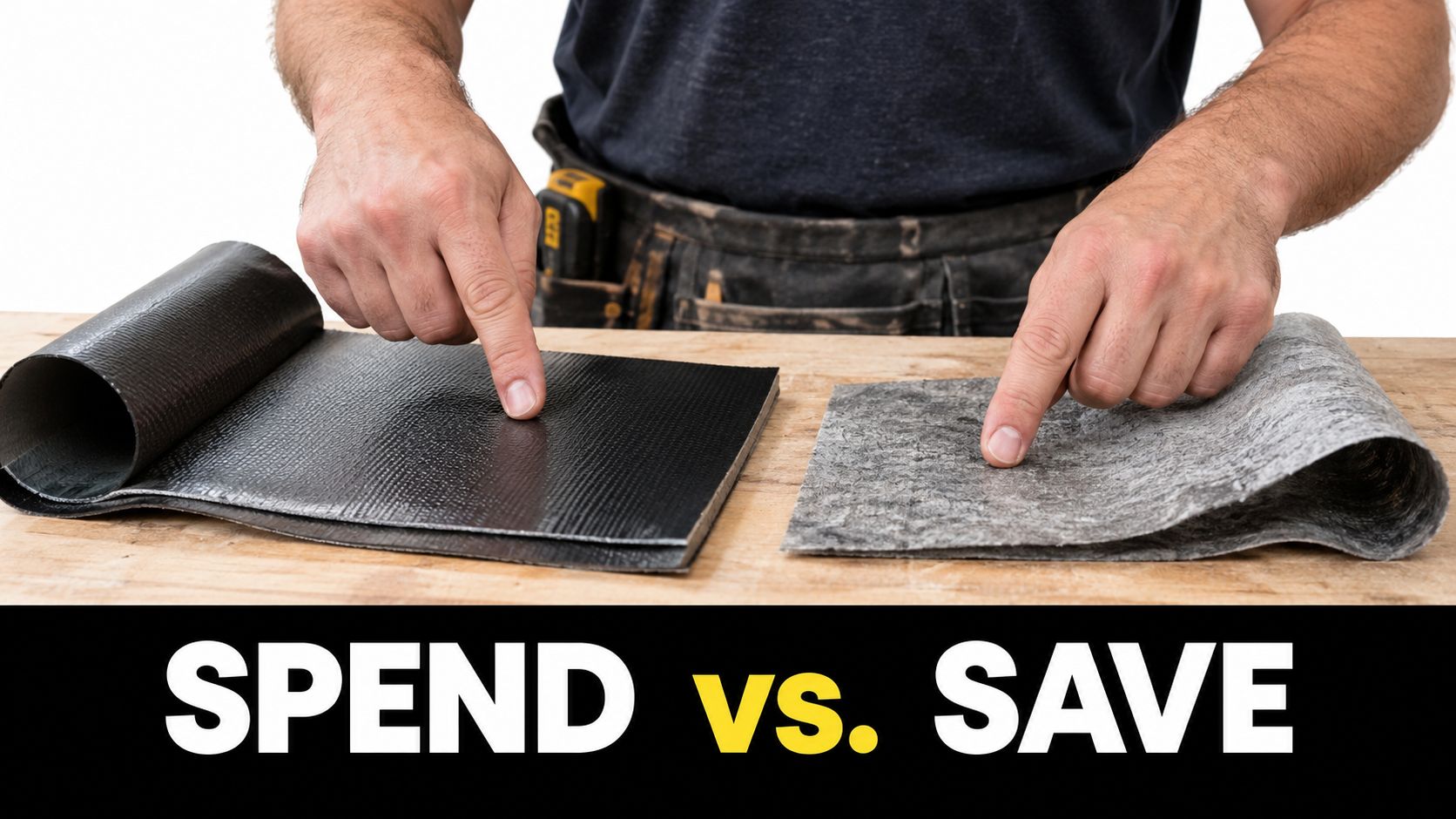
My blunt threshold is this: stop paying for a premium finish when it no longer improves cleaning, comfort, durability or fit. Keep paying when the extra money protects waterproofing, plumbing access, structural support or the quality of the installation.
Getting a Tailored Quote From SitePro Bathrooms
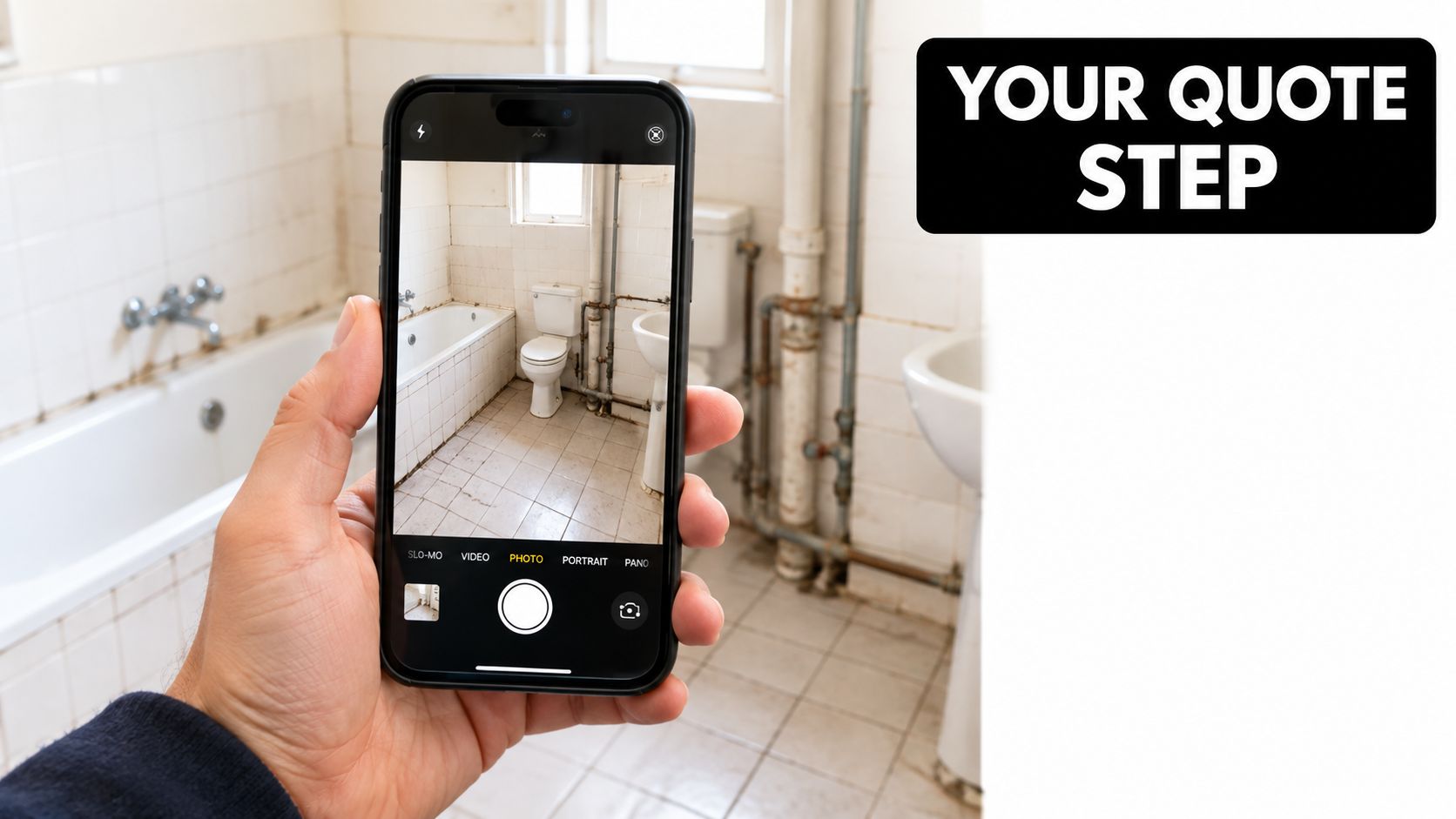
A useful quote starts before the first site visit. Send clear photographs of the existing bathroom, rough measurements, the ceiling type and the approximate age of the home. Include one wide image, close-ups of the bath edges and taps, and any visible staining, movement or cracked grout.
Prepare the right brief
Your initial message should include:
- Property details: Provide the Highett or greater Melbourne address and the approximate build year.
- Existing conditions: Include the current layout, access constraints and photographs of the bath, walls and floor.
- Project goal: State whether you want a like-for-like swap, a full bathroom remodel or a tub-to-shower conversion.
- Budget direction: Give a budget band rather than hiding the number. It helps the renovator recommend finishes that belong in the same cost tier.
- Timing: Explain your preferred start window and any deadline linked to tenants, holidays or a property sale.
You can phone or submit the online enquiry form to SitePro Bathrooms with that information. The business provides end-to-end bathroom renovation services, including concept development, 3D design, construction and finishing, so the early discussion should focus on both the practical scope and the design direction.
An in-home measure and quote visit is usually arranged within 5–7 business days, based on the planned quoting process. During the visit, the renovator should check plumbing locations, wall framing, waterproofing status, floor conditions and demolition access. Those checks matter because a website bath price can't reveal what sits behind the wall.
Demand an itemised written quote
Expect a written line-item quote within 3–5 business days after the measure, covering:
- Demolition and disposal.
- Waterproofing and substrate preparation.
- Plumbing and electrical work.
- Tiling, bath, screen and fittings.
- Labour, timeline and warranty terms.
Ask questions about exclusions before you sign. Confirm who handles permits or compliance requirements where applicable, how variations are approved and what happens if demolition finds damage.
Once the scope is clear, confirm the selected products, sign the agreement and pay the deposit to lock the start date. Don't accept a vague lump sum for a wet-area remodel. Send SitePro Bathrooms your property address, council, approximate build year, existing layout photos, project type, budget and preferred timing so the first estimate has enough information to be useful.
If your bath is cracked, leaking or no longer suits the way your household uses the room, request a customized quote now. Get the existing bathroom measured, insist on every line item in writing and choose the remodel scope that solves the underlying problem rather than buying the cheapest bath online.