

You're probably looking at a bathroom plan where the shower meets the vanity and thinking the same thing many clients do. That little leftover strip looks awkward, won't be pleasant to clean, and doesn't feel like a proper finished detail.
That's exactly where a nib wall often earns its place. In the right layout, it can make a bathroom feel resolved instead of compromised. In the wrong layout, it can chew up room, complicate the glass, and add cost without giving much back.
From a builder's perspective, a nib wall in shower design isn't a styling extra. It's a construction decision that affects framing, waterproofing, tile set-out, and the way the shower screen is made and installed. If you're planning bathroom renovations and weighing up new bathroom ideas for modern bathrooms or more customized designer bathrooms, it's worth understanding what this small wall really does.
What Exactly Is a Nib Wall in a Shower
A nib wall is a short partial wall that projects from an existing wall. In Australian renovation practice, it's commonly built as a bricked and tiled section between the shower and another fixture, most often the vanity, or sometimes to create separation around a toilet area. One Australian renovation guide describes it as a short wall used to define zones in tight bathrooms where every bit of space matters, not just to hide plumbing or fill a gap (Australian nib wall guidance for small bathrooms).
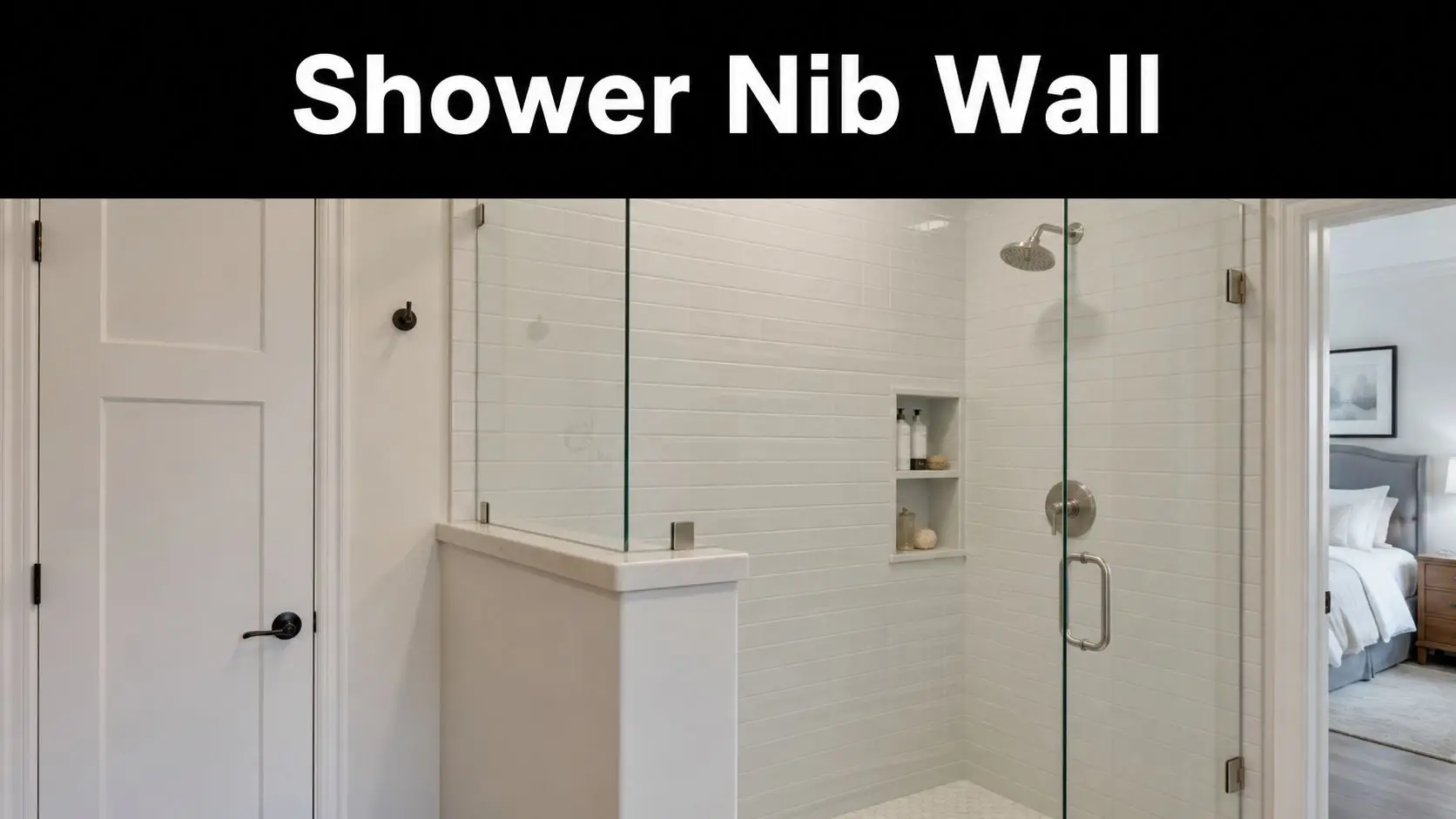
In plain terms, it's the bit of built structure that stops a bathroom from ending in an odd, unfinished sliver. Instead of running glass hard up against the vanity, or leaving a narrow dead gap beside the screen, the nib wall creates a deliberate edge. It gives the shower a proper boundary and gives the rest of the room a cleaner line.
Why homeowners notice it so late
Renovations rarely begin with the specific request for a nib wall; instead, an existing problem is identified first. The vanity feels too close to the shower. The screen looks like it's landing in the wrong spot. The room needs a divider, but a full-height wall would make the bathroom feel boxed in.
That's where a nib wall works well. It sits in the middle ground between open and enclosed.
A good nib wall doesn't call attention to itself. It makes the whole bathroom layout feel like it was always meant to work that way.
In compact ensuites and family bathrooms, that matters. You want enough separation between wet and dry zones, but you don't want to lose openness, light, or ease of movement. A nib wall can help give structure without turning the room into a maze.
What it looks like in a finished bathroom
Most nib walls are tiled to match the shower or surrounding walls, so they read as part of the architecture rather than an add-on. Some sit at vanity height for a neat visual line. Others extend higher if the layout needs more privacy or stronger support for the screen.
If you want to see how small layout changes can completely alter the feel of a room, these bathroom renovation before and after examples show why details like wall placement matter more than people expect.
The important thing is this. A nib wall isn't there to decorate the shower. It's there to solve a layout problem in a way that also improves the final look.
The Practical Benefits of a Shower Nib Wall
The biggest practical win is simple. A nib wall removes that awkward strip beside the shower where dust, water splash, and grime tend to collect. In Australian bathroom renovation practice, it's commonly used to eliminate the gap between a vanity or adjacent fixture and the shower screen, and one Perth renovation source notes that a practical access gap should be about 100 mm for cleaning and maintenance if that gap is left open (Perth renovation guidance on nib wall versus shower gap).
If the layout leaves only a skinny leftover space, that gap usually becomes a nuisance rather than a feature. It's hard to reach, hard to clean, and visually untidy. Closing it with a nib wall gives the room a sharper finish.
Where the nib wall helps most
A nib wall usually pays off when the bathroom has one of these issues:
- A vanity-shower pinch point where the screen can't land neatly without creating a narrow cavity.
- A need for privacy so the shower or toilet isn't fully exposed from the doorway.
- A walk-in shower layout that needs definition without using a full-height partition.
- A modern minimalist plan where too much glass would feel cold or too exposed.
That's why nib walls show up so often in modern bathrooms. They let the room feel open, but not unfinished.
Benefits clients tend to appreciate after handover
The visual benefit is immediate, but the day-to-day advantages are what usually matter most after the renovation is done.
- Cleaner junctions: Fewer awkward edges mean less build-up in spots that are annoying to wipe down.
- A stronger shower edge: Glass feels more intentional when it lands on a tiled wall rather than hovering beside cabinetry.
- Better privacy: Even a low wall can block direct sightlines in a useful way.
- A more solid feel: All-glass showers can look sleek, but a nib wall often gives the room more substance.
Practical rule: If a detail makes cleaning harder and doesn't improve function, it usually shouldn't stay in the design.
There's also a styling upside. A nib wall can make a bathroom feel more custom because it introduces a built element instead of relying on standard screen geometry alone. That's often why it shows up in designer bathrooms. Not because it's trendy, but because it resolves several problems at once.
What doesn't work is adding a nib wall just because you've seen one in a photo. If the room already has enough separation and clear screen placement, a nib wall can become extra bulk with no real payoff. The best ones are there for a reason.
Construction and Dimensions Deep Dive
A nib wall looks simple in the finished bathroom. It isn't simple once construction starts. This is one of those details that has to be built accurately from the inside out or it causes follow-on problems with waterproofing, tile alignment, and glass installation.
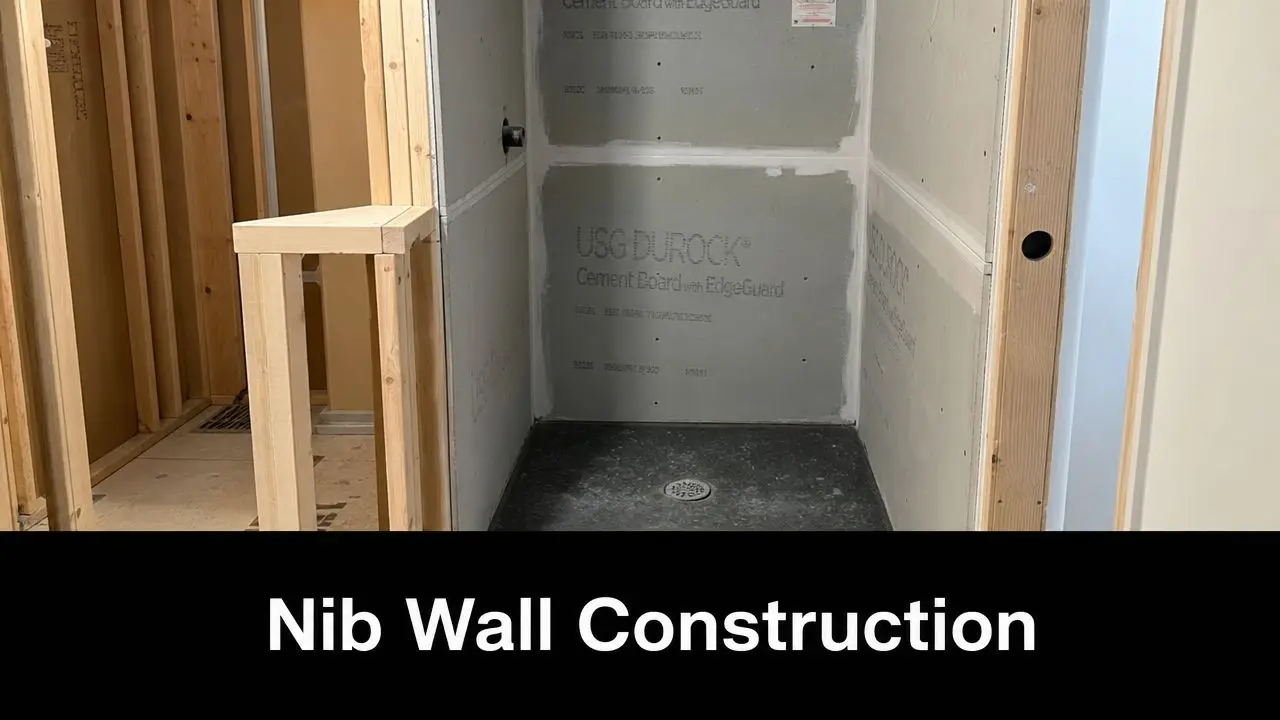
How a nib wall is built properly
On site, the sequence matters. The wall has to be locked into the room as a built element, not treated like a piece of trim.
Frame it square and solid
The structure needs to be stable enough to carry tile, resist movement, and support whatever glass detail is being fixed to or beside it. If the wall has any flex, the finish won't last well.Sheet it with the right substrate
Wet area linings need to suit the application. The wall face, top, and returns all need proper preparation before any membrane goes on.Waterproof the full wet interface
A lot of DIY thinking often falls short at this stage. The top of the nib wall, the junctions into the floor and main wall, and the transition into the shower area all need careful waterproofing. Water doesn't only hit the front face. It tracks into edges, corners, and penetrations.Tile to the actual glass dimensions
The finished wall thickness matters. Tile build-up, trims, falls, and edge details all influence where the glass sits.
Height and thickness choices
There isn't one universal nib wall height that suits every bathroom. The right height depends on what the wall needs to do.
A lower nib wall can line up neatly with the vanity and keep the room feeling open. A taller one gives more privacy and a stronger visual divide. The wrong height usually looks accidental. It either feels stumpy and unresolved, or it blocks too much sightline and light.
Thickness matters too. Too thin, and it can look flimsy or become difficult to finish cleanly. Too bulky, and it starts stealing usable space. In a tight ensuite, even a small overbuild can make circulation feel cramped.
A practical builder will test this in plan before anything is framed. The wall has to work with:
- Door swing
- Vanity depth
- Screen position
- Tile module
- Shower entry clearance
If a nib wall only works on paper and not in movement, it's the wrong nib wall.
Why this isn't a casual add-on
This is also why professional coordination matters. A nib wall touches multiple trades, and every one of them needs the same set-out. Framing, waterproofing, tiling, and glazing all follow the same line. If one trade guesses, the rest inherit the problem.
For homeowners comparing quotes, this is where experienced renovation teams and registered builders unlimited stand apart. The detail isn't difficult because it's fancy. It's difficult because every layer has to finish in exactly the right place.
Large-format tile work raises the stakes again because small set-out errors become more visible. If you're considering that finish, this guide to installing large-format porcelain tiles is worth a look before you lock in the design.
Design Variations and Finishing Touches
The best nib walls don't all look the same. Some disappear into the room and let the glass do the talking. Others become a feature that gives the bathroom its character.
The quiet version
In pared-back modern bathrooms, the nib wall is often tiled to match the surrounding walls. Same tile, same grout tone, same clean edge. That approach keeps the room calm and architectural.
This works especially well when the aim is to make the shower zone feel integrated, not highlighted. The wall reads as part of the bathroom shell, and the screen feels lighter because it's anchored by something solid.
The feature version
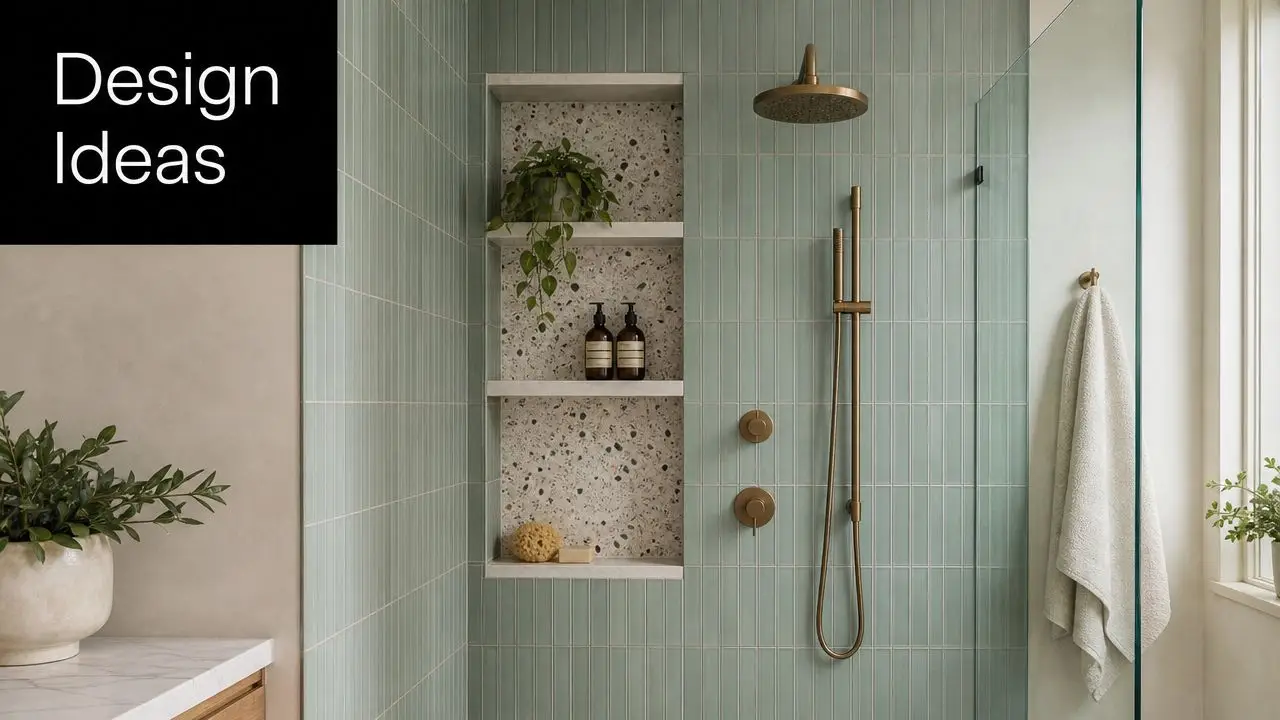
For clients chasing stronger new bathroom ideas, the nib wall can carry a different tile or a more expressive finish. Vertical stack tiles, stone-look porcelain, textured ceramics, or a tile wrap with a crisp trim can all make the wall feel intentional.
Used carefully, this is one of the easiest ways to create a focal point without cluttering the room. A small wall can do a lot of visual work.
- Matching tile finish: Best when you want an uninterrupted, spacious feel.
- Contrasting feature tile: Stronger personality and more visual definition.
- Stone-look wrap: Adds weight and a premium finish.
- Integrated niche or ledge: Useful where the wall can also contribute storage.
Planning details that affect the finish
The nib wall has to be designed early, not squeezed in late. Technical planning guidance for shower enclosures notes that the wall affects glass dimensions, door swing, circulation clearances, and tile set-out, and installers treat it as a custom interface between the waterproofed wet area and frameless glass hardware, not as a decorative extra (technical planning for shower enclosure layout).
That builder's view matters because some of the nicest design ideas only work if they're coordinated upfront.
For example:
| Design choice | What it changes |
|---|---|
| Frameless screen landing on nib wall | Requires precise finished dimensions |
| Feature tile on nib wall only | Changes tile set-out and edge detailing |
| Recessed niche into adjacent wall | Needs framing and waterproofing planned early |
| Higher nib wall for privacy | Alters sightlines and room openness |
Early decisions make better bathrooms. Late nib wall decisions usually create compromises.
If you're sorting through finishes, this guide on how to choose bathroom tiles is useful because the tile selection and nib wall design should always be considered together.
A good nib wall can support the look of designer bathrooms without forcing the room into a showpiece. It just gives the space enough built structure to feel composed.
Nib Walls vs Alternatives for Your Shower
If you're deciding between a nib wall and other enclosure options, it helps to think in trade-offs rather than absolutes. None of the common choices is perfect. Each one prioritises something different.
Option comparison
| Option | Works well when | Main upside | Main drawback |
|---|---|---|---|
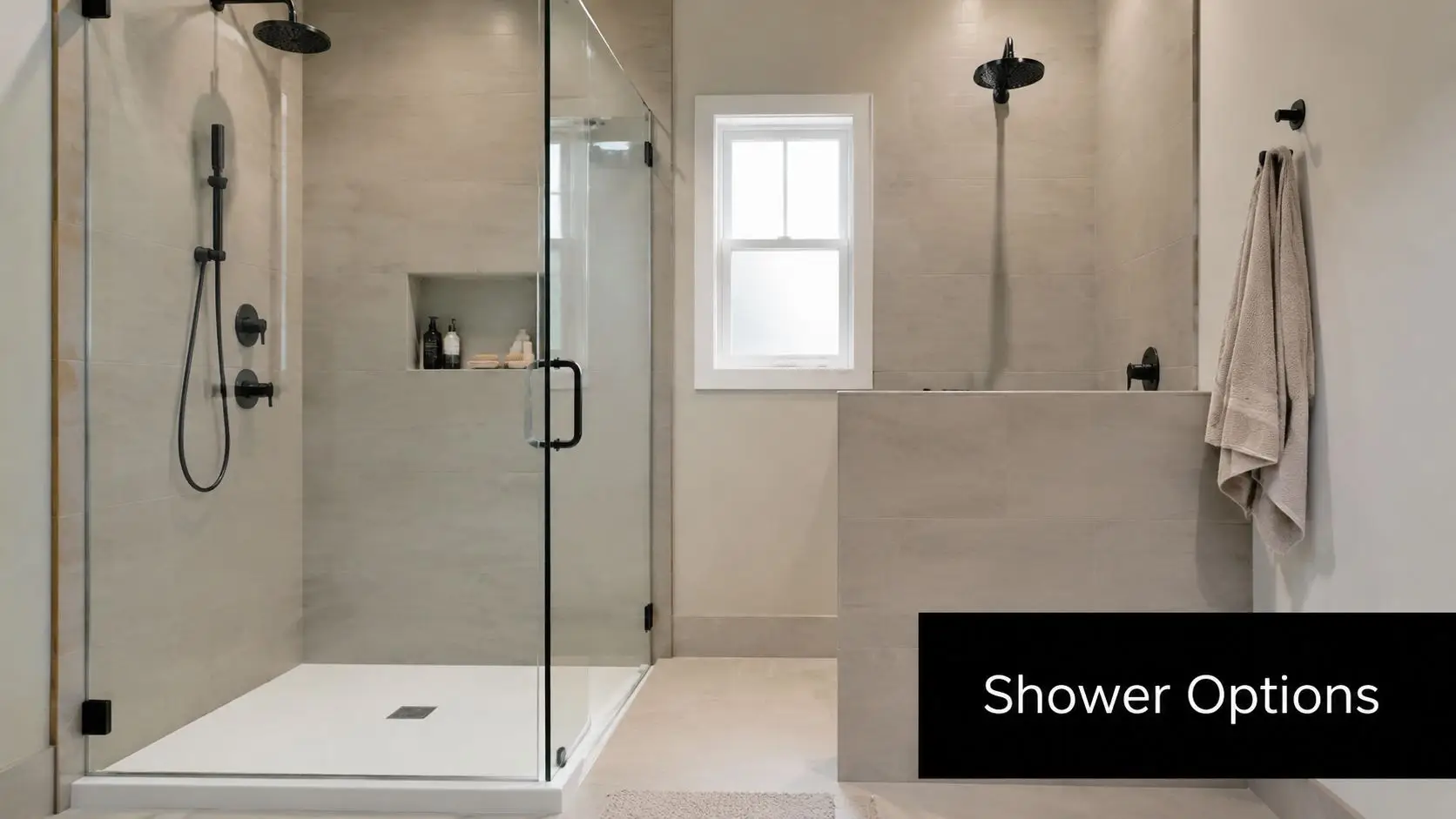
| Nib wall with glass panel | You need a tidy divider without fully closing the room | Balanced privacy, structure, and openness | Adds building and tiling work |
| Full frameless glass screen | You want the lightest visual footprint | Open feel and minimal visual interruption | More glass to clean and less concealment |
| Full-height tiled partition wall | You want stronger separation and privacy | Solid division and reduced splash visibility | Can make a smaller bathroom feel heavier |
What tends to work in real bathrooms
A full glass screen suits bathrooms where the layout is already clean and there's enough space for the glazing to sit naturally. It's often the simplest visual answer. But if the screen ends beside a vanity in a tight plan, it can expose exactly the sort of awkward junction that is typically avoided.
A full-height partition wall gives a lot of privacy and can be useful when the room needs stronger zoning. The downside is that it can shut the bathroom down visually. In smaller rooms, that loss of openness is hard to ignore.
The nib wall in shower layouts often lands in the sweet spot. It gives the shower a proper edge, helps with visual order, and still allows glass above or beside it so the bathroom doesn't feel too enclosed.
Budget and maintenance trade-offs
Clients usually have to choose what they care about most.
- If easy cleaning matters most, avoiding awkward dead spaces is usually smarter than chasing the most minimal look.
- If openness matters most, glass wins, but you'll accept more exposed surfaces.
- If privacy matters most, a taller built wall may be worth the visual weight.
- If you want a middle-ground solution, the nib wall often delivers the best mix.
A nib wall won't suit every bathroom. But when a layout needs structure and a frameless screen alone won't solve the practical issues, it's often the most balanced answer.
Is a Nib Wall Right for Your Bathroom
The right question isn't whether a nib wall looks good. It's whether it solves enough problems in your bathroom to justify its place.
If your plan has an awkward shower-to-vanity relationship, a nib wall can be one of the smartest decisions in the renovation. If your bathroom is already spacious and the screen can sit cleanly without it, the wall may be unnecessary. Good design is usually about restraint as much as features.
Quick decision filter
Ask yourself these questions:
- Do you have an awkward leftover gap? If yes, a nib wall may resolve it cleanly.
- Do you want more privacy without a full wall? That's one of its best uses.
- Are you trying to keep the room open? A nib wall can help, but only if it's sized properly.
- Are you comfortable with added construction complexity? It needs proper integration, not an afterthought.
- Do you want the bathroom to feel more custom-built? A well-detailed nib wall often helps achieve that.
The best nib wall is the one that improves function, supports the glass, suits the tile layout, and still leaves the bathroom feeling easy to use.
In practical terms, a nib wall is part of the broader bathroom renovations scope. It affects labour, materials, waterproofing, glazing, and finishing. That means it should be priced and designed as part of the full room, not treated as a last-minute extra.
If you're in Highett or elsewhere in Victoria and want clear advice on whether a nib wall suits your layout, SitePro Bathrooms can help. The team handles design, planning, and construction from concept through to handover, so you can see how the wall will affect the look, function, and buildability of the space before work begins. Get in touch to discuss your bathroom, compare layout options, and request a customized quote.