
Art Deco Bathroom: A 2026 Renovation Guide
You’re probably here because you like the look of an art deco bathroom, but you’re also trying to work out whether it will suit your home, your budget, and the way your household uses the space every day. That’s the right question to ask.
A good Art Deco renovation isn’t just about black tiles and gold tapware. It relies on symmetry, disciplined material choices, and careful detailing. Get that right and the room feels elegant for years. Get it wrong and it starts to look like a theme.
In Victoria, that balance matters even more. Many bathroom renovations sit inside older homes where layout limits, heritage considerations, waterproofing requirements, ventilation, and buildability all need to be resolved before anyone orders a tile. The strongest results come from treating style and construction as one job, not two separate decisions.
Embracing the Art Deco Aesthetic
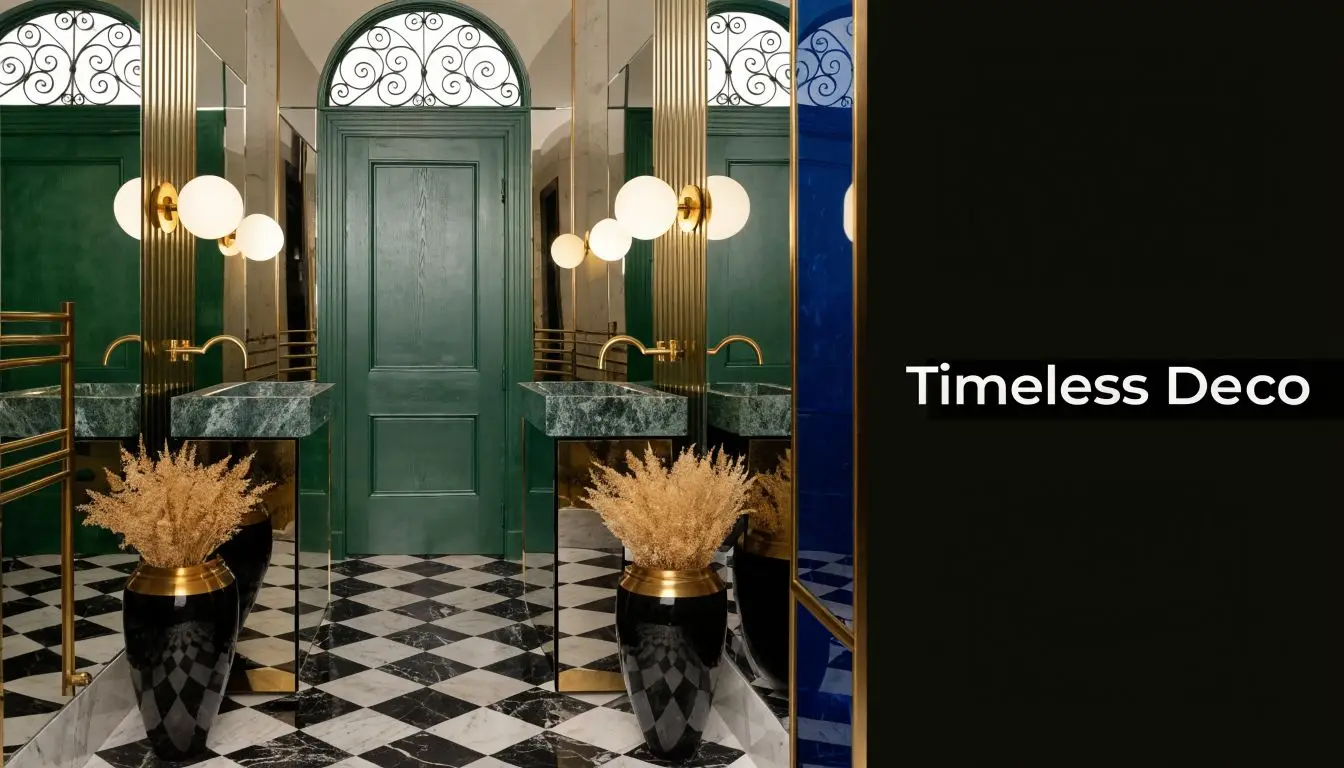
The Art Deco style is recognizable on sight, though its underlying appeal is not always easily articulated. In a bathroom, the style is built on three things: geometry, symmetry, and glamour with restraint.
Know the visual language
If you want the room to feel authentic, start with the forms that define the style.
- Geometry first: chevrons, zig-zags, stepped profiles, fan patterns, sunbursts, and strong vertical lines.
- Symmetry always matters: mirror-centred layouts, paired lights, repeated tile lines, and balanced joinery.
- Luxury through finish: polished surfaces, reflective metals, glass, stone, and crisp edges.
- Controlled colour: strong contrast usually works better than too many tones fighting each other.
The movement began in western Europe in the 1910s and 1920s, came to prominence at the 1925 Paris Exposition, and later became a major style in the United States during the 1930s. Its design language included geometric patterns such as chevrons, zig-zags, and sunbursts, along with materials like chromed steel and terrazzo that helped democratise high-style interiors. That long history is one reason the look still holds up in Victorian homes today, as outlined in Britannica’s history of Art Deco.
What makes it timeless
A proper art deco bathroom doesn’t chase trends. It uses order.
That’s why the style still feels relevant in modern bathrooms. Even when the fixtures are contemporary and the waterproofing, lighting, and ventilation are completely current, the room can still feel distinctly Deco if the layout is disciplined and the detailing is sharp.
Practical rule: If a feature doesn’t strengthen symmetry or geometry, it usually weakens the room.
One common mistake is confusing Art Deco with “old-fashioned”. They’re not the same thing. Generic vintage styling tends to lean soft, decorative, and mixed. Art Deco is more structured. The lines are cleaner. The contrasts are stronger. The room feels composed, not nostalgic.
Start with one dominant idea
Before selecting finishes, decide what will carry the design.
For some bathrooms, it’s the floor pattern. In others, it’s a stepped vanity wall, a dramatic mirror, or a pair of wall lights over a pedestal basin. Once that anchor is clear, the rest of the space should support it rather than compete with it.
A few combinations consistently work well:
- Black and white geometry for a crisp classic look
- Mint with black accents for a softer period feel
- Rose with dark trim if you want something more expressive
- Terrazzo and chrome when you want Deco character with a slightly cleaner modern edge
New bathroom ideas often fail because they try to include every Deco reference at once. Better designer bathrooms edit hard. One statement floor, one strong mirror, one confident metal finish. That usually gives a better result than piling in decorative elements.
Planning Your Art Deco Renovation Project
Art Deco looks expensive because it punishes shortcuts. Cheap planning shows up fast in this style. Off-centre fittings, uneven set-outs, poor lighting placement, and substitute materials are all easy to spot.
That’s why the planning phase carries more weight here than it does in many standard bathroom renovations. Before construction starts, the layout, finishes, compliance pathway, and sequencing should already be resolved.
Budget for the style you actually want
The biggest budget tension in an art deco bathroom is material authenticity versus cost control. Feature tiling is the clearest example.
According to this Art Deco renovation cost reference, geometric tiling can cost $150/sqm versus $80/sqm for standard tiling, and well-executed Art Deco-inspired renovations can boost Victorian property values by 12-15%. In Highett, investors have reportedly seen up to a 22% rental uplift post-reno. That doesn’t mean every bold renovation pays back equally, but it does support spending properly on the visible elements that define the room.
Here’s how that plays out in practice:
- Spend on what the eye reads first: floor pattern, vanity wall, basin choice, mirror, and lighting.
- Save in low-impact zones: concealed storage details, secondary wall areas, or simpler shower glazing where it doesn’t affect the style.
- Avoid false economy: if you downgrade the main tile or trim package after the design is set, the whole room can lose coherence.
The rooms that hold value are usually the ones where the planning decisions stay consistent from concept to handover.
Compliance and builder selection matter
Many projects drift off course when fundamentals are overlooked. An Art Deco bathroom may look decorative, but the build still depends on the same fundamentals as any serious renovation: substrate preparation, waterproofing, falls, ventilation, electrical coordination, and fixture rough-ins that suit the final layout.
If your home has period character or sits within an area where original features matter, that planning gets more sensitive. Some homes also carry planning protections, so preserving the right details can be important to long-term value and approval pathways.
That’s why I’d always treat builder selection as a design decision, not just a contract decision. If you’re weighing up qualifications, approvals, and accountability, this guide on why using a registered builder matters for your bathroom renovation is worth reading.
Lock the design before demolition
A detailed design package prevents the most expensive renovation habit of all: changing your mind mid-build.
For Art Deco work, that package should clearly show:
- Centrelines and symmetry points for mirrors, lights, niches, basins, and feature walls
- Tile set-outs so cuts fall in the right places
- Fixture selections before rough-in starts
- Joinery and stone profiles that match the intended era character
- Lighting locations relative to mirrors, not just the room plan
Three-dimensional design is particularly useful here because symmetry can look fine on paper and still feel wrong once the room is built. If the bathroom has a tight footprint, seeing proportions before construction helps avoid awkward compromises.
Selecting Core Materials and Fixtures
Art Deco bathrooms have strong bones. If the foundational pieces are wrong, no amount of styling fixes the room later.
The best approach is to choose the permanent elements first. That means the basin type, floor material, wall treatment, metal finish, and bath or shower format. Accessories come after that.
Fixtures that suit the era
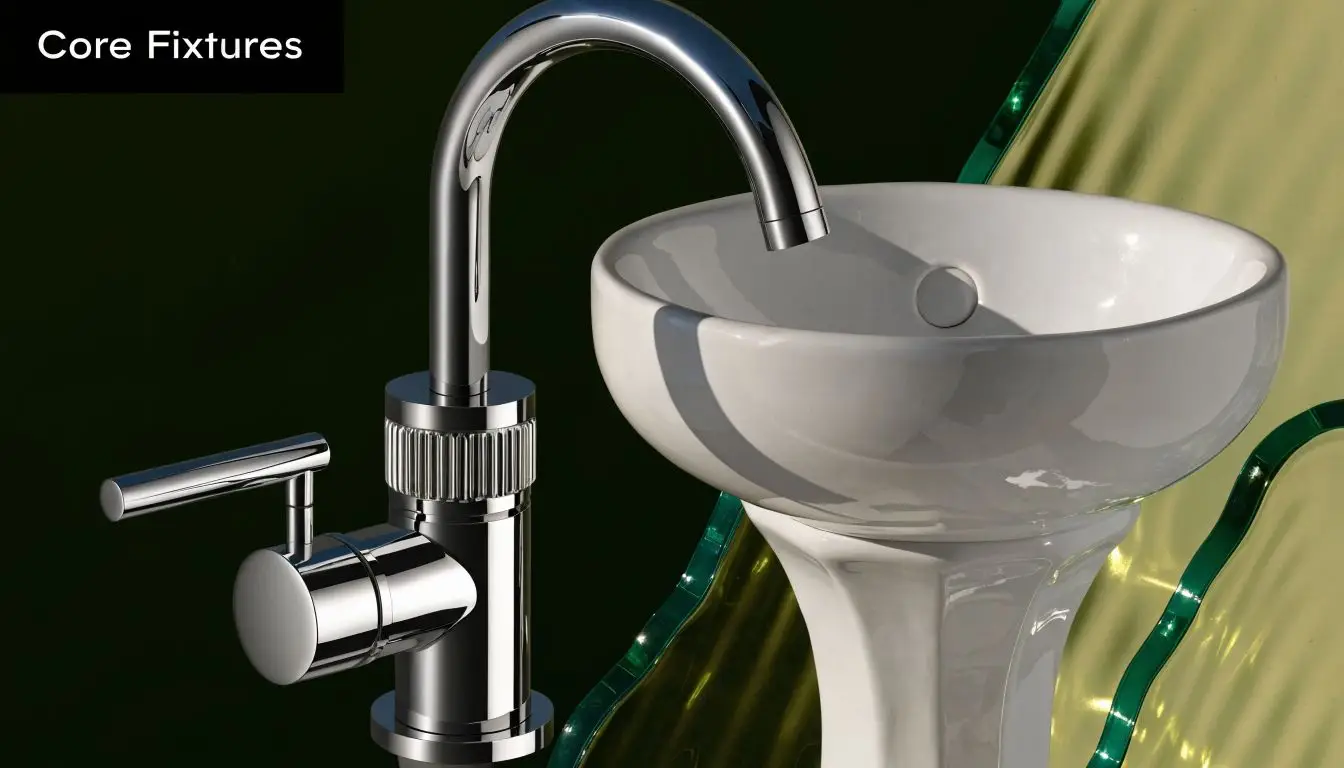
Historically, Art Deco bathrooms helped establish features that are standard now, including separate shower spaces and pedestal basins. The style also favoured marble or geometric floor tiles, along with coloured enamels and porcelains introduced in the 1920s. In heritage homes, preserving or carefully echoing those features helps maintain the property’s character, as noted in this guide to Art Deco bathrooms.
That history matters because it gives you a clear filter for choosing fixtures today.
- Pedestal basin or console-style basin: usually a better fit than a bulky vanity box if you want authentic Deco character
- Framed mirror: works better than a soft organic shape
- Separate shower zone: keeps the room feeling ordered
- Chrome hardware: usually reads more authentic than trend-driven finishes
- Structured bath form: a simple silhouette generally works better than an overly sculptural contemporary tub
Modern bathrooms still need storage, of course. In a family bathroom, that often means using a vanity with stronger furniture detailing rather than forcing a strict period basin where it won’t be practical.
Choose surfaces with discipline
The easiest way to lose the style is to mix too many surface languages. Art Deco asks for clarity.
Below is a practical comparison for common material directions.
| Art Deco Material Comparison | Authenticity | Typical Cost (per sqm) | Maintenance Notes |
|---|---|---|---|
| Geometric feature tiling | High | $150/sqm | More grout lines and pattern alignment require careful cleaning and precise installation |
| Standard tiling | Lower for Deco use | $80/sqm | Easier to source and simpler to maintain, but can look flat if overused in a Deco scheme |
| Marble | High | Qualitatively higher than standard tile options | Elegant and period-appropriate, but needs considered maintenance |
| Terrazzo | High | Qualitatively varies by selection | Durable and well suited to Deco styling, especially with controlled colour palettes |
What works and what doesn’t
Some combinations consistently age well. Others date quickly.
What works
- Polished chrome with strong tile geometry
- Black, white, green, or blush used with restraint
- Stone or porcelain with crisp edging
- Vanity detailing that references furniture rather than flat-pack cabinetry
What usually doesn’t
- Timber-heavy rustic finishes
- Soft coastal palettes
- Matte black hardware paired with period styling
- Too many curves competing with geometric tilework
In designer bathrooms, the best fixture choice isn’t always the newest one. It’s the one that supports the room’s structure.
If you want an art deco bathroom that still functions for daily life, make every selection answer two questions. Does it fit the style, and will it wear well under real use? If one answer is no, keep looking.
Mastering Tiles and Geometric Patterns
In an Art Deco bathroom, tiles do most of the talking. They create the rhythm, define the symmetry, and set the room’s level of confidence. If the tile design is weak, the bathroom won’t read as Deco no matter how good the tapware looks.
Use pattern with intent
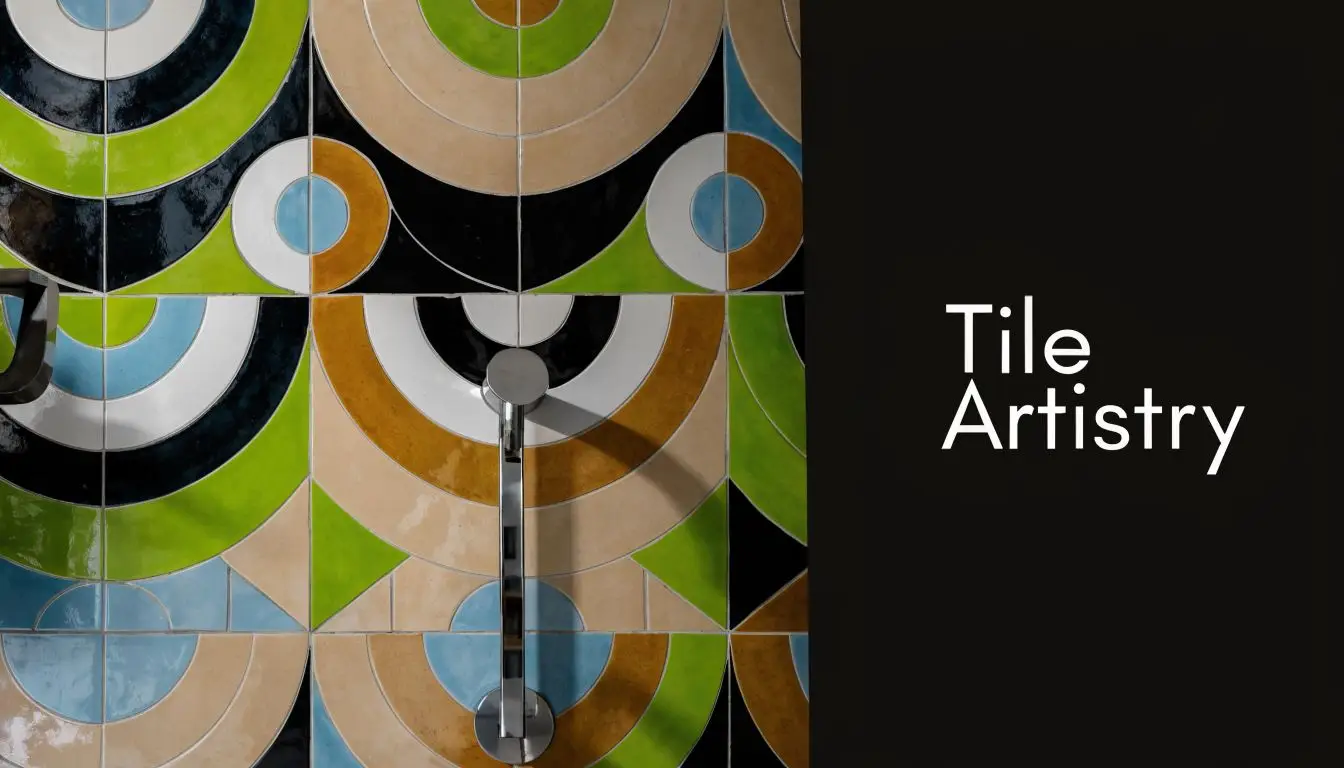
A strong pattern needs room to breathe. That means deciding where the geometry belongs instead of spreading it across every surface.
Common layouts that work well include:
- Feature floor, quieter walls: ideal when you want drama without visual overload
- Framed wall sections: useful behind the vanity or bath
- Bordered compositions: especially effective in narrow bathrooms because they make the room feel more deliberate
- Repetition with one accent tone: gives depth without chaos
Classic Deco palettes still perform well. Black and white is the most architectural. Mint with black feels distinctly period. Rose with darker trim can work beautifully if the rest of the room stays controlled.
The tiling method matters
A decorative tile design is only as good as the set-out. In practice, the set-out often determines the success or failure of many bathroom renovations.
According to this tiling guide for Art Deco bathrooms, an expert installation method includes using laser levels for symmetry with error under 2mm, using large-format wall tiles to reduce grout lines, adding contrasting marble borders to widen narrow spaces visually, and finishing with gloss black pencil trims and R11-rated mosaic floors. The same source notes that mismatched grout causes 25% of rework in HIA Victoria stats.
That aligns closely with what works on site.
- Start from the room’s centreline, not from the nearest corner.
- Lock the feature pattern before any cuts are approved.
- Match the grout tone to the design intent. If you want the geometry to read sharply, don’t blur it with the wrong grout.
- Use trims deliberately. They should frame the composition, not look like an afterthought.
If you’re using larger porcelain formats on walls as part of the overall scheme, this article on installing large-format porcelain tiles is a useful companion read.
Wrong grout can undo good tile selection. The pattern loses definition, and the whole room starts to feel messy.
Common errors to avoid
The most common tile mistakes in an art deco bathroom are predictable:
- Off-centre feature lines
- Competing patterns on floor and walls
- Cheap trims that flatten the finish
- Glossy surfaces in high-touch family zones where marks become annoying
- Tiny tile cuts in visible corners
The best rooms don’t just use geometric tile. They organise it. That’s the difference.
Lighting and Hardware The Finishing Touches
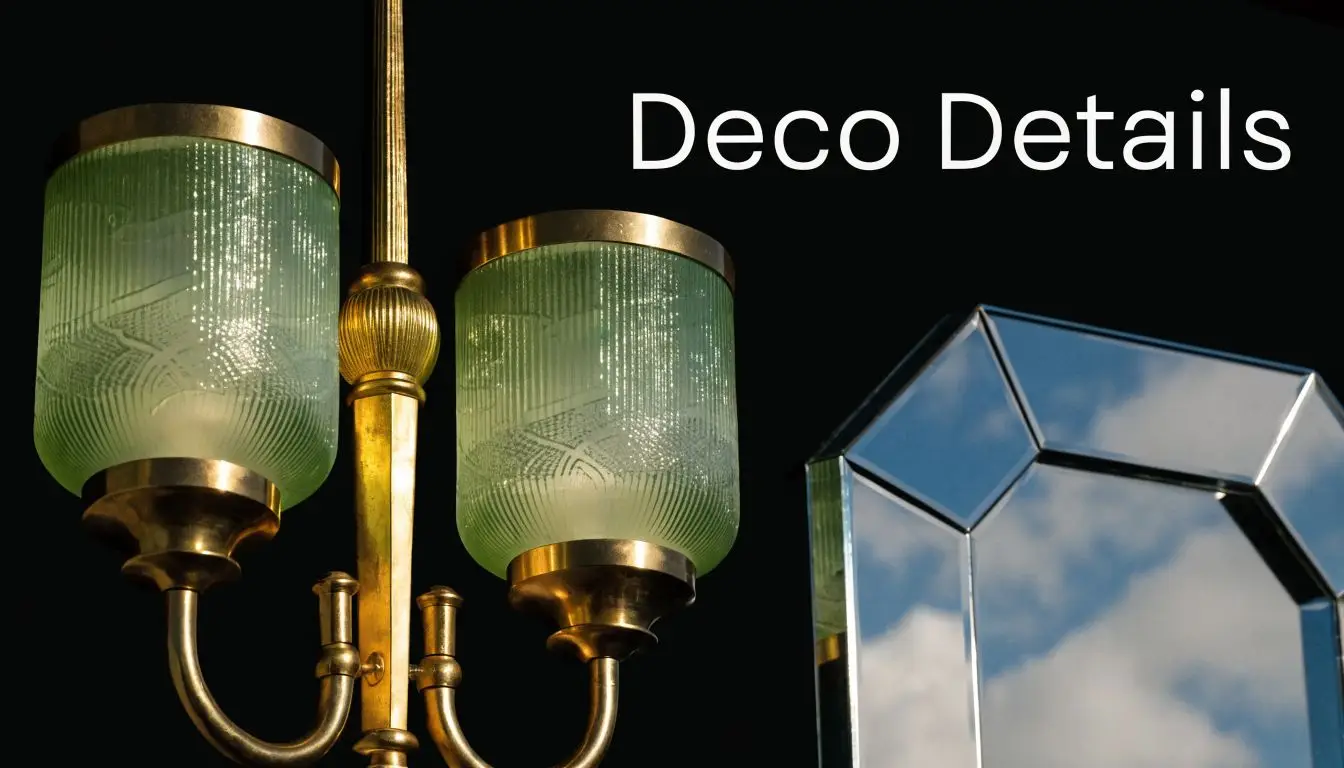
An Art Deco bathroom often comes together in the last layer. The room may already be waterproofed, tiled, and painted, but it won’t feel complete until the mirror, lighting, and hardware start working as one composition.
Build the mirror wall properly
The mirror wall usually sets the tone for the whole bathroom. In Deco rooms, it should feel centred, framed, and intentional.
A few details make a big difference:
- Pair the lights symmetrically: one each side of the mirror usually reads better than relying on a single overhead fitting
- Choose a geometric mirror shape: stepped corners, arches with structure, or strong rectangular forms tend to suit the style
- Keep hardware consistent: don’t mix too many metal tones in the same sightline
Wall lighting is particularly effective in this style because it reinforces balance. It also improves task lighting at the basin, which matters in everyday use.
Treat hardware like jewellery
Towel rails, robe hooks, handles, shower frames, and tapware should all support the same design language. Angular profiles, polished finishes, and crisp mounting points generally suit the room best.
Restraint proves its worth once more. If the tilework is busy, the hardware should be cleaner. If the room is more pared back, the hardware can carry a bit more visual weight.
Small fittings do a lot of visual work in an Art Deco space. If they look generic, the room loses sharpness.
Adapting the look for smaller bathrooms
A lot of people assume Art Deco only works in a large room. It doesn’t. You just need to compress the language without losing the order.
For compact ensuites and narrower rooms:
- Use one hero mirror rather than several decorative moments
- Run vertical lines to draw the eye upward
- Keep the floor pattern tight and controlled
- Use glass carefully so the shower doesn’t break the room into pieces
- Repeat key finishes so the space feels coherent
In smaller modern bathrooms, a full period recreation can feel forced. A better move is often a Deco-inspired composition with one or two classic references handled well. That might mean a pedestal-style basin silhouette, chrome hardware, geometric floor tile, and symmetrical sconces, while the rest of the room stays pared back.
The result still reads as a designer bathroom, but it functions like a contemporary one.
Frequently Asked Questions about Art Deco Bathrooms
Is an art deco bathroom just a trend
No. The style has lasted for more than a century, which is why it still appeals to homeowners who want a room with identity rather than a short-lived fashion look. What changes over time is how strongly you apply it.
If you want longevity, keep the permanent items classic and let the bolder personality come through mirrors, lighting, colour accents, and feature tile rather than making every single surface dramatic.
Does Art Deco work in family bathrooms
Yes, if you choose materials carefully. Family bathrooms need surfaces that clean well, layouts that don’t waste space, and fixtures that can handle daily use.
The trick is to separate the decorative layer from the hard-wearing layer. Use durable tile, practical storage, and easy-clean shower zones, then bring in Deco character through shape, symmetry, and controlled contrast rather than delicate ornament.
Can you mix Art Deco with modern bathrooms
Yes, and in many Victorian renovations that’s the smartest approach. A full historical recreation isn’t always practical, especially when you need better storage, stronger lighting, improved ventilation, and current waterproofing standards.
The blend works best when the architecture stays clean and the Deco influence appears in selected moments, such as the floor pattern, metal finish, mirror profile, or wall lights.
Is it suitable for smaller ensuites
It can be excellent in small spaces because symmetry creates order. The room feels considered rather than cramped.
What doesn’t work is overscaling the pattern or crowding the room with too many decorative references. In a compact bathroom, one strong idea nearly always performs better than five smaller ones.
How long should this kind of renovation take
The honest answer depends on site conditions, fixture lead times, design changes, and whether structural or compliance issues appear once demolition begins. Deco-style bathrooms can also need more coordination because set-outs and finish details matter so much.
If you’re trying to set realistic expectations before committing, how long a bathroom remodel should take gives a practical overview of the variables.
Do I need original period fixtures
No. You need the right proportions and finish quality more than you need authentic old pieces.
Many new bathroom ideas borrow the Deco vocabulary successfully without pretending the room is original. The key is choosing fixtures that respect the style. If the silhouette, placement, and materials are right, the bathroom will feel convincing and live much better day to day.
What’s the biggest mistake people make
They confuse “more” with “better”. Too many patterns, too many metals, too many decorative add-ons.
The strongest art deco bathroom usually comes from a disciplined plan: one dominant tile idea, one main mirror statement, one consistent hardware finish, and a layout that feels centred from the moment you walk in.
If you’re planning bathroom renovations in Highett or across greater Victoria and want an art deco bathroom that balances period character with buildable detail, SitePro Bathrooms can help with design, 3D visualisation, and end-to-end delivery by a team focused on durable, well-resolved results.